
Gabriel Dawe’s Rainbows of Thread: The Plexus Installations
How Gabriel Dawe turns miles of colourful embroidery thread into room-scale spectra—craft, tension, and the illusion of light.
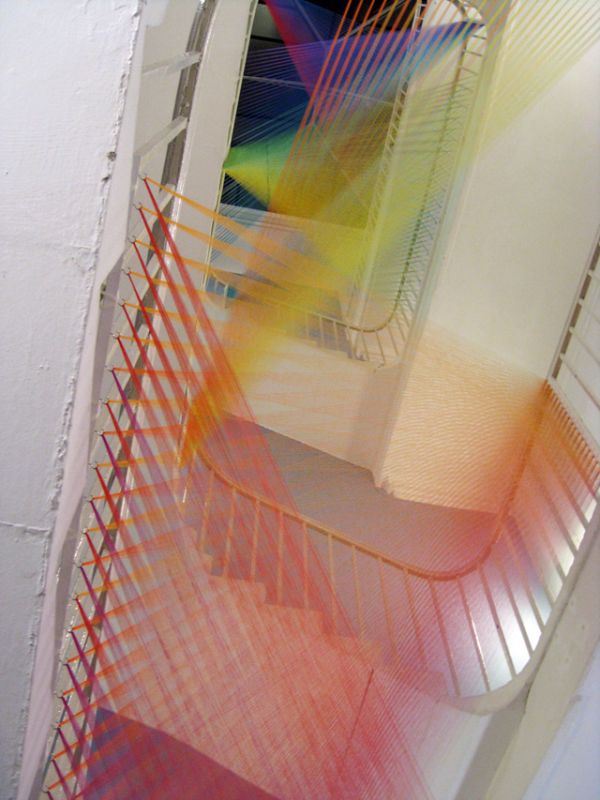
From across a gallery, Gabriel Dawe’s installations often look like light itself—soft beams, a caught rainbow, a prismatic haze hanging in midair. Step closer and the illusion thins into craft: thousands of strands of embroidery or sewing thread, tensioned from floor to ceiling, layered until color behaves like atmosphere. The work is architectural in scale and intimate in material. Thread, associated with clothing and domestic labor, becomes structure you can walk around but not quite touch without breaking the spell.
Dawe, a Mexican-born artist known for the ongoing Plexus series, builds site-specific spectra that respond to each room’s height, daylight, and sightlines. The photographs gathered here catch that double reading: spectacle at a distance, discipline up close. They also preserve a moment in contemporary installation art when textile methods claimed the kind of awe usually reserved for light projections and monumental sculpture.
Thread instead of pigment
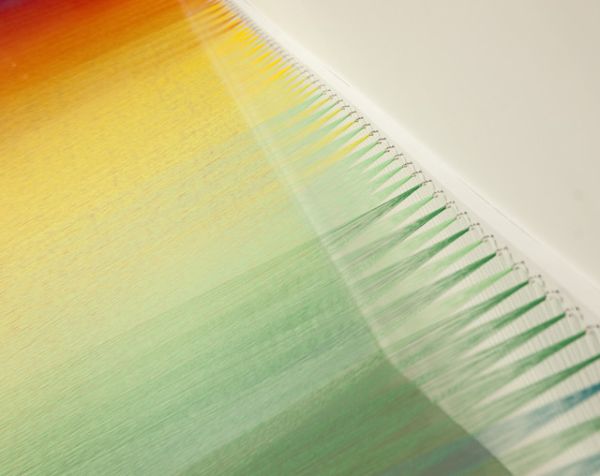
Most color in galleries arrives as paint, projection, glass, or dyed object. Dawe’s method is additive and linear. Individual filaments are hooked and pulled in repeating paths until gradients form. A controlled set of hues can stand in for the visible spectrum; overlapping layers create optical mixtures the eye resolves as glow. The material often remains humble—polyester sewing thread—while the effect feels almost dematerialized.
That gap between stuff and appearance is central. Viewers frequently guess laser, mist, or stained glass before they accept sewing supplies. The installations argue that perception is collaborative: architecture, illumination, and the moving body of the visitor all finish the piece. A photograph can freeze one of those collaborations, but in the room the rainbow changes as you circle it.
There is also a quiet joke in the craft. Embroidery traditionally stays close to the hand and the garment. Here, the “stitch” is stretched across air until it becomes architecture. The needle’s logic remains—one line after another, order through repetition—but the product is spatial rather than wearable.
Why “Plexus”
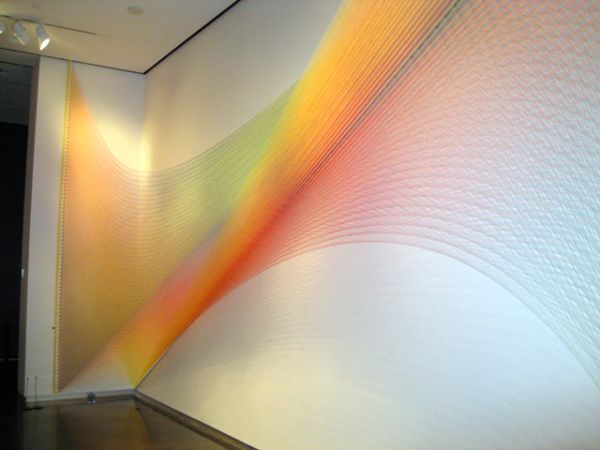
Dawe has explained the series title through the biological sense of plexus: an interlacing network of nerves or vessels that connects systems inside a body. The metaphor fits on several levels. The installations are literal networks under tension. They also propose a relationship between body and environment—how we stand inside color, how a room’s air seems to thicken when filled with line.
There is a social reading as well. Sewing and embroidery carry histories of gendered labor, care, and invisible maintenance. Scaling those materials into public rooms reframes craft without abandoning its intimacy. The rainbow, often a symbol of hope or spectrum, here is also an engineering problem: sequence, spacing, and endurance across days of installation.
Dawe has spoken of rainbows in nature as brief glimpses of order behind apparent chaos. Indoors, his thread spectra make a similar claim: that beauty can be a diagram of connection, not only a decorative effect. The work looks ethereal, but its meaning is structural.
How the installations are built
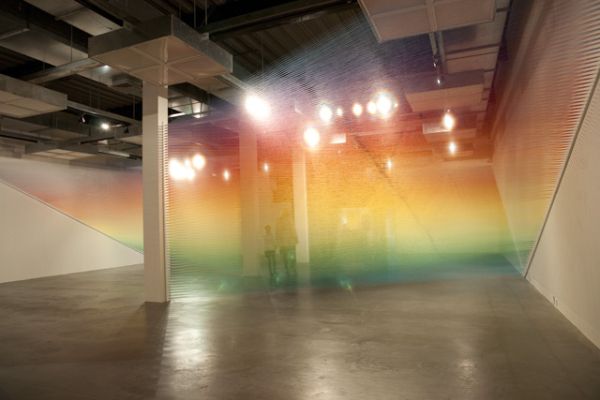
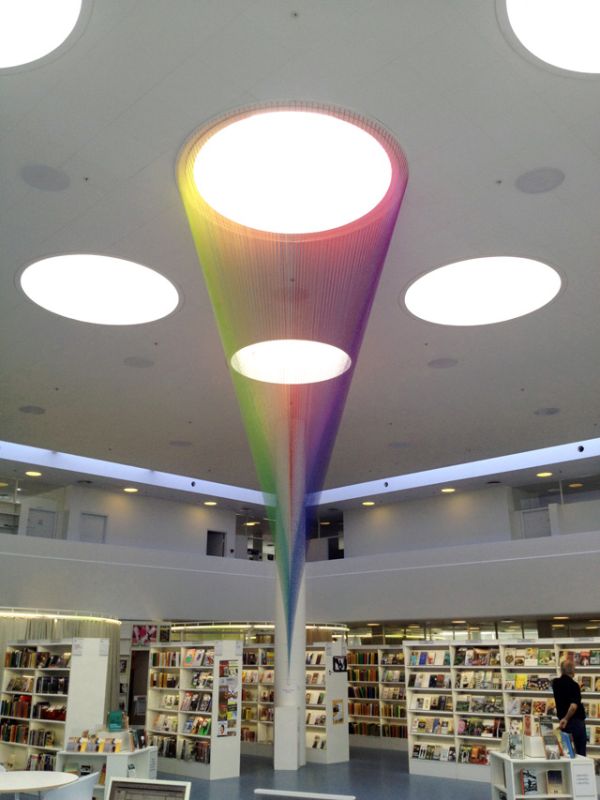
Despite their weightless look, the works are methodical. Dawe typically plans for a specific volume, then attaches hooks and strings thread layer by layer so hues shift in a controlled gradient. In large rooms he has used lifts and helpers, along with a custom tool that functions like an oversized needle to carry thread up and down across high spans. Later museum pieces in the series—such as Plexus A1 at the Smithsonian’s Renwick Gallery—used tens of miles of thread and many days of labor to span tall historic interiors. Earlier gallery works established the same vocabulary at varied scales, including the kinds of room-sized rainbows documented in this set.
Order matters. Gradients fail if colors are placed carelessly; luminosity fails if strands are spaced too far apart or crowded into mud. The process is closer to weaving a volume than to painting a wall. Mistakes are hard to hide because every filament remains visible as line.
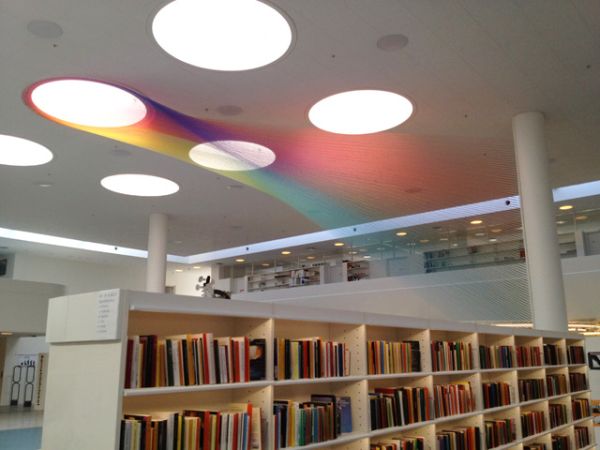
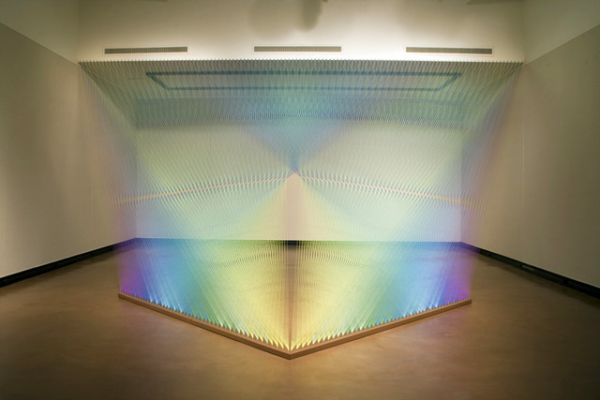
Photography flattens some of that labor and can exaggerate the glow. Still, these images preserve useful information: the way strands catch side light, how moldings and ceilings frame the spectrum, and how a human figure (when present) recalibrates the size of what looked like weather. Wide shots sell wonder; details sell credibility—hooks, slight sag across a long span, the stubborn ordinariness of thread.
Looking in person versus on screen
In a gallery, these pieces reward the same slow circling you might give a chapel or a greenhouse. From one angle the colors fuse; from another, individual lines separate like harp strings. Overhead lights can bleach the effect; side light can set the threads shimmering. Because the work occupies air, your own path through the room becomes part of composition—blocked views, sudden openings, the decision to stand under a denser band of color.
On screen, try toggling between whole-room shots and tighter crops. Ask what the photograph cannot give you: the faint vibration of tensioned filaments, the sound of a busy museum around a silent spectrum, the way your eyes tire and then reset when you look away to white walls. The images are invitations, not substitutes.
It also helps to notice what surrounds the rainbow. Historic moldings, plain drywall, dark floors, and window glare all change how spectral the thread appears. Dawe’s practice is site-specific for a reason. The same spool of color would not behave identically in every volume.
Where the work sits in contemporary art
Dawe’s thread spectra join a longer conversation about light art and textile sculpture, yet they remain recognizable on sight. Few artists have made sewing thread do this particular public work: domestic fiber scaled to civic rooms, order made visible as color. Related practices exist—string installations, yarn bombing, optical environments—but Dawe’s gradients and architectural tension give the Plexus works a signature silhouette.
The series also travels well as documentation because the core contrast is easy to grasp even without wall text: ordinary material, extraordinary volume. That accessibility is not simplicity. Behind the crowd-pleasing rainbow is patient labor, risk of breakage, and a careful theory of connection.
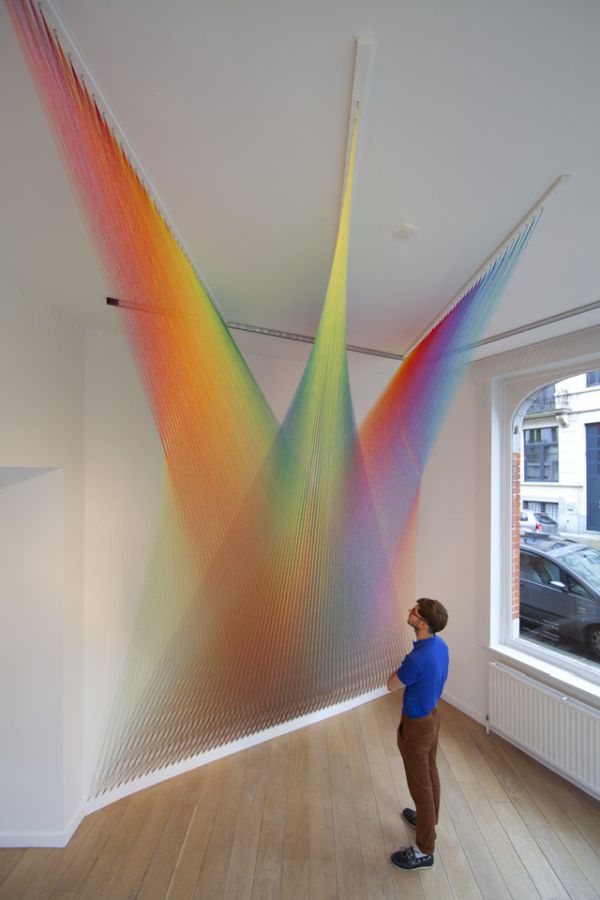
Look once more at the densest band of color in the final frame. Somewhere in that brightness is only thread under tension, repeating a simple action until the air itself seems dyed. The craft is patient; the effect is sudden. Hold that pair of tempos—the miles of stringing and the one-second gasp—and you have the lasting charge of Gabriel Dawe’s colourful-thread rainbows.

Comments
Continue reading
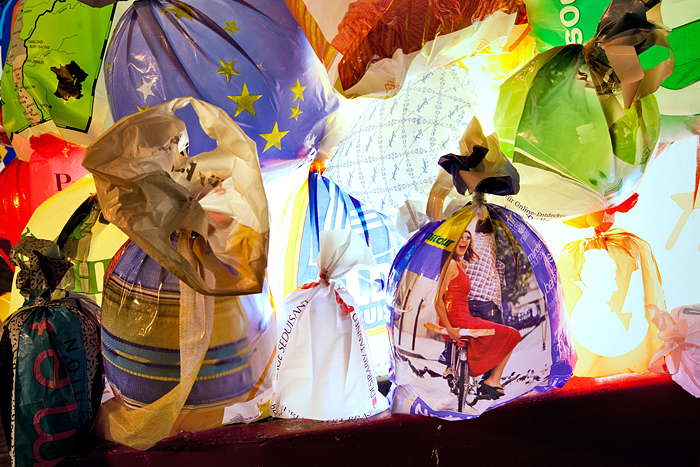
Luzinterruptus: Plastic Garbage Bags Lighting Installation in Winterthur
Luzinterruptus’s 2012 Winterthur installation Plastic Garbage Guarding the Museum—5,000+ illuminated bags left outdoors for four months.
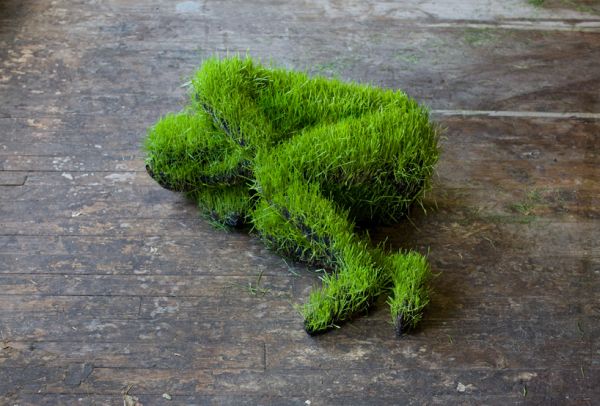
Mathilde Roussel’s Lives of Grass: Hanging Living Sculptures
Paris artist Mathilde Roussel hangs anthropomorphic forms of recycled metal, fabric, soil, and wheatgrass—living sculptures that grow, yellow, and decay.
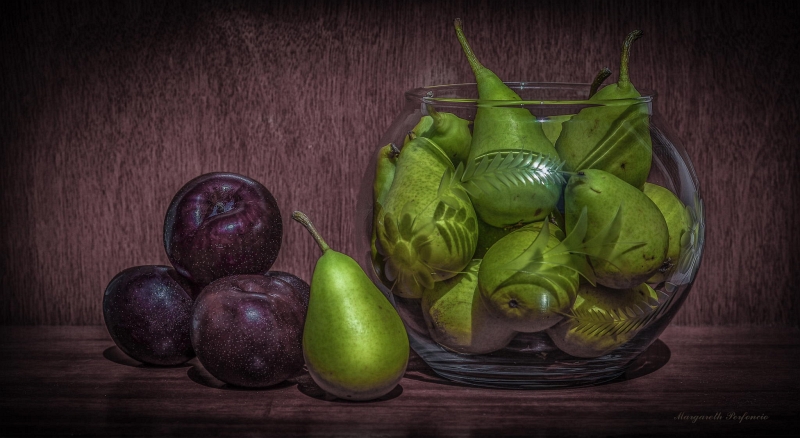
Still-Life Photography by Margareth Perfoncio
São Paulo photographer Margareth Perfoncio’s still lifes of food and flowers—Old Master light, dark wood, and tables that feel inevitable.