
Mathilde Roussel’s Lives of Grass: Hanging Living Sculptures
Paris artist Mathilde Roussel hangs anthropomorphic forms of recycled metal, fabric, soil, and wheatgrass—living sculptures that grow, yellow, and decay.
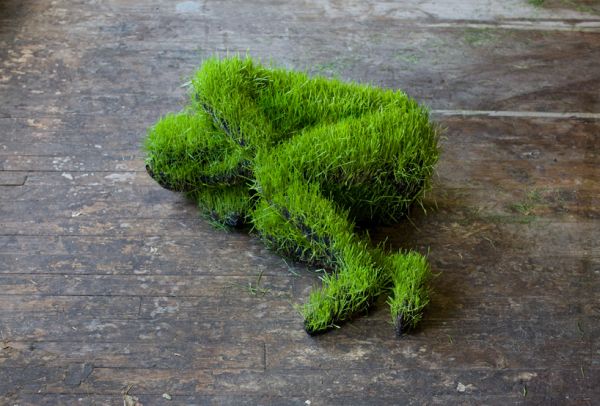
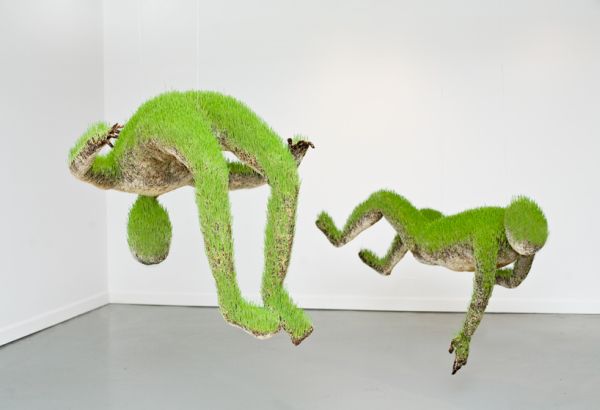
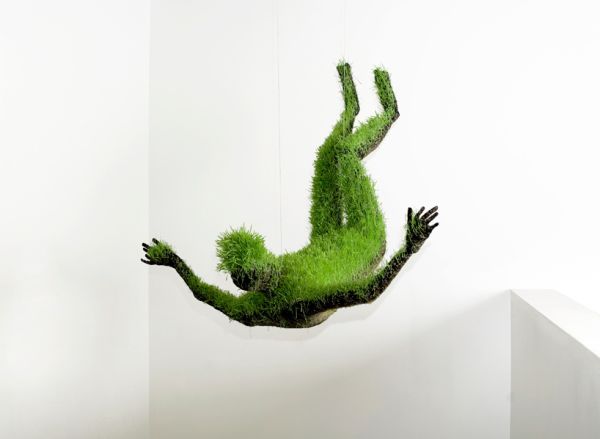
French artist Mathilde Roussel’s Lives of Grass (sometimes styled Lifes of Grass in early coverage) hangs anthropomorphic bodies in gallery air and lets wheatgrass finish the sculpture. Recycled metal and fabric form the armatures; soil and seeds fill them; time does the rest. Green rises, yellows, dries, and dies. The figures change while you watch, which is the point: transformation of material as a metaphor for transformation of the body.
Roussel’s own description of the work is unusually clear for installation art. Food, once ingested, becomes part of a human being. Origin and transport matter beyond taste. The power inside what we eat reaches organs we never see. Watching nature—and noticing what and how we eat—might make us more sensitive to global food cycles of abundance and famine, and more able to feel physically, intellectually, and spiritually tied to that wider reality. The hanging grass bodies are that argument made visible.
How the sculptures are built
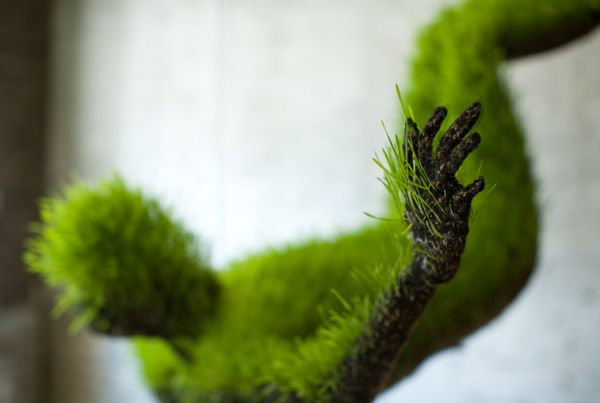
The construction is humble and exact. A recycled metal structure gives volume and hanging points. Fabric contains a growing medium. Soil and wheat seeds occupy the body cavities and surfaces that will sprout. Once installed, the sculpture is alive enough to demand care and mortal enough to fail on schedule. After a few weeks, as Roussel has noted, the wheatgrass yellows, then slowly dries and dies. In that arc the piece contains a compressed life cycle—plant and human metaphor braided together.
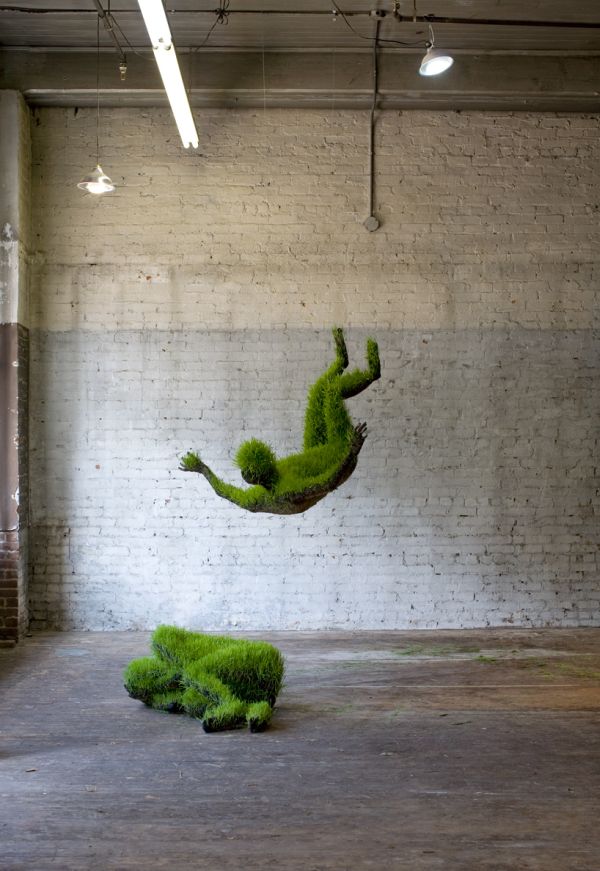
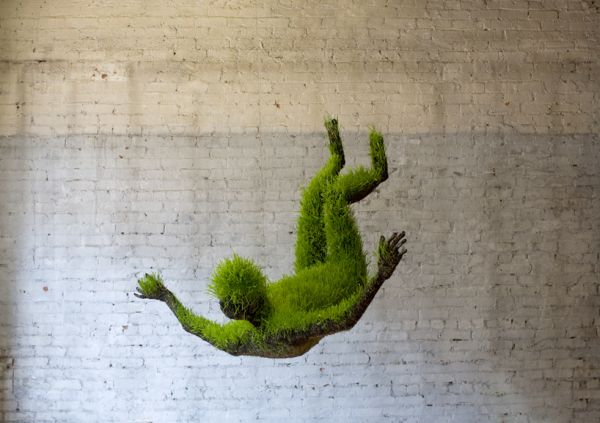
Photographers such as Matthieu Raffard documented the works in clean, almost clinical light that still leaves room for uncanny posture: limbs dangling, torsos suspended, figures that look as if they floated out of anatomy class into a greenhouse. The hanging is not a gimmick. Suspension removes the sculptures from ordinary pedestal sculpture and puts them closer to bodies in space—vulnerable, gravity-dependent, oddly ritual.
Body, food, and decay as one subject
Plenty of contemporary art uses plants as decoration. Roussel uses growth as narrative. The sculptures are handsome when green, then deliberately less handsome as they fade. Decay is not a maintenance failure; it is content. HuffPost and design press in 2012 framed the series as a metaphor for bodily change over time and as a reminder that human life depends on soil—the same resource erupting through the fabric skins.
That double reading keeps the work from collapsing into either pure eco-slogan or pure body horror. You can stand in front of a hanging torso and think about compost, appetite, mortality, agriculture, and your own soft animal life without needing a wall text to choose one moral. The artist’s statement already threads those concerns together: food cycles, organs, abundance, famine, connection.
Egyptian mythology also enters Roussel’s framing through Osiris—god of renewal, fertile land, death and rebirth, dryness and fertility. The reference is not costume Egyptology. It is a way of saying the sculptures participate in an old story about bodies returning to earth and earth returning as life. Wheatgrass becoming yellow is a small seasonal drama inside that larger myth.
Where the work has been seen
By the early 2010s, Lives of Grass had circulated through gallery spaces in Brooklyn and Manhattan and appeared in exhibitions such as Anatomia Botanica at Cheekwood Botanical Garden and Museum of Art in Nashville. Botanical-garden venues sharpen the piece’s double identity: sculpture and horticulture at once. Visitors used to flower beds meet hanging human forms that behave like planters with mythology attached.
Designboom, Urbanist, CollabCubed, and other art-and-design outlets amplified the project around 2012, often pairing process notes with installation photographs. The coverage helped fix the work in a particular internet-art moment: shareable living sculpture that still carried a serious ecological brief. Roussel’s Paris base and the works’ recycled-material ethic fit easily into that conversation without reducing the pieces to craft DIY.
Related strands in Roussel’s practice—series such as Echology, with plant elements in jars labeled as body parts, and Fertile Landscape, ceramic vessels erupting grass in fertility-goddess echoes—show that Lives of Grass is not a one-off novelty. It belongs to a sustained inquiry into vegetal and human systems sharing space, labels, and destiny.
How to look at hanging grass bodies
Start with structure. Find the metal logic under the green—where the armature holds, where fabric sags, where gravity pulls a limb downward. Then read growth stage. Fresh green reads as vitality; yellowing reads as time made visible. Then read metaphor without forcing a single slogan. Is this a body becoming landscape, or landscape insisting it was always a body?
Pay attention to the hang points. Suspension creates drama and a faint sense of ritual, as gardening writers noted when the works circulated. How do they stay alive aloft? Who waters them? What happens when the gallery week ends? Those practical questions are part of the aesthetic experience. Living sculpture recruits maintenance into meaning.
Also notice the hybrid of industrial recycle and earth material. Metal and fabric are human-made containers; soil and seed are earth systems temporarily housed. Control is shared awkwardly among artist, structure, and plant. That awkwardness is productive. It keeps the work from pretending nature is a pure outside or that design fully masters growth.
Why the series still matters
Food systems discourse has only grown louder since these sculptures first circulated widely. Roussel’s hanging figures remain useful because they refuse abstract charts. They offer a body you can walk around—soft, seeded, doomed to yellow—while asking you to connect appetite with global cycles. The work is gentle enough for a botanical garden and strange enough to unsettle a white-cube afternoon.
For students of unusual materials, the recipe is worth keeping on a studio wall: recycled metal, fabric, soil, wheat seeds, time. For viewers who only meet the photographs, remember that the images freeze one stage of a process that was designed to keep changing. The green you see here is temporary by contract.
If you return to Roussel’s statement after the last image, the sculptures click into place. Food becomes us. Earth becomes form. Form decays. Somewhere in that loop—between Osiris myth and a gallery watering can—Lives of Grass does its quiet, hanging work.

Comments
Continue reading
Steven Backman’s Mini Toothpick Sculptures
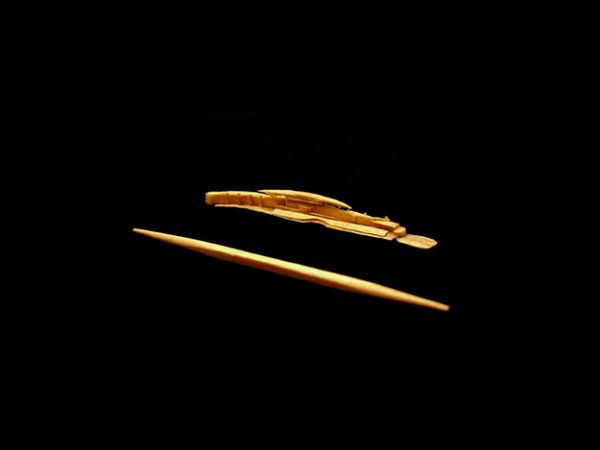
San Francisco artist Steven Backman assembles miniature sculptures from toothpicks and glue—compact lattices where joinery, patience, and structural logic replace fancy materials.
Inspirational Quotes for Your Walls: Typography and Placement
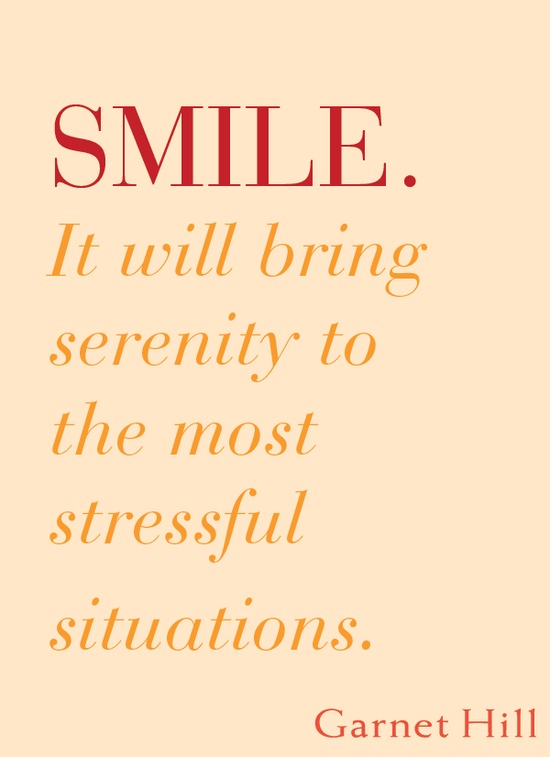
How to choose, typeset, and hang wall quotes so the words work as home décor—scale, materials, room-by-room placement, and lines that still feel true daily.
Gabriel Dawe’s Rainbows of Thread: The Plexus Installations
How Gabriel Dawe turns miles of colourful embroidery thread into room-scale spectra—craft, tension, and the illusion of light.