
Steven Backman’s Mini Toothpick Sculptures
San Francisco artist Steven Backman assembles miniature sculptures from toothpicks and glue—compact lattices where joinery, patience, and structural logic replace fancy materials.
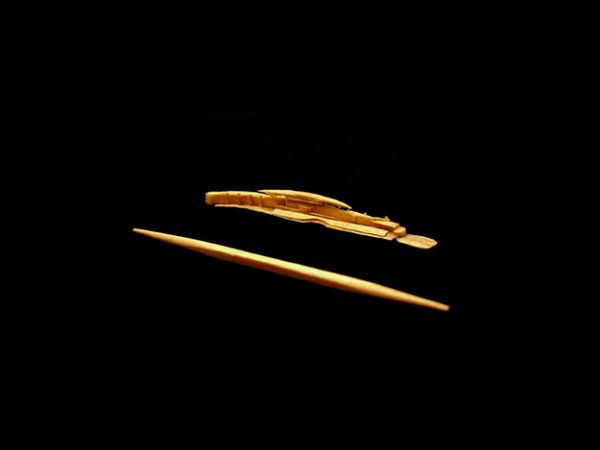
Steven Backman builds worlds from one of the least respected materials in any wood shop: the toothpick. Working from a San Francisco base and practicing the medium for decades, he turns birch splinters into landmarks, abstract figures, and miniature studies that look engineered rather than casually cute. Glue, pliers, razor blades, and uninterrupted time do the rest. In the purest pieces there is no hidden armature of wire or cardboard—only sticks joined until a form stands on its own structural logic.
The gallery here focuses on the smaller end of that practice: compact sculptures that live at desk scale in the imagination. They reward close looking. Edges catch light like tiny beams; curves appear where straight blanks have been bent with needle-nose patience; negative space between sticks becomes as important as the wood itself. What looks delicate in a thumbnail often reveals, on a second zoom, a stubborn plan—triangulation, parallel runs, thickened joints where stress would gather if the object were steel.
A medium chosen early and kept honest
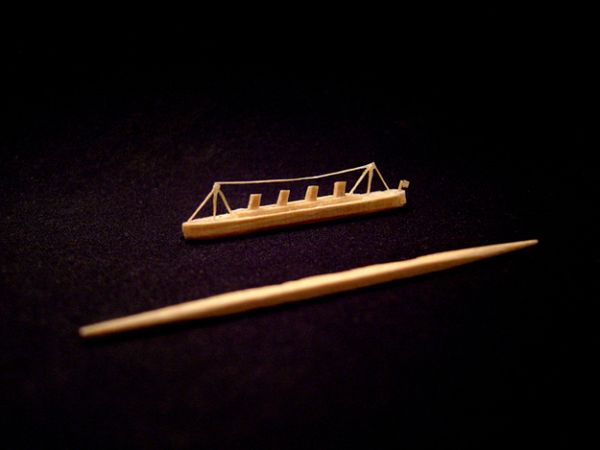
Backman’s relationship with toothpicks began in childhood school projects that demanded structure from humble parts, then matured while he studied industrial arts. The material stuck when other media might have seemed more serious or more flexible. That stubbornness is part of the work’s charm and its rigor. A toothpick has fixed thickness, a taper, and a limited bend before it snaps. Designing inside those rules is closer to constrained engineering than to free modeling clay, and the photographs make that constraint visible.
He has used both pointed toothpicks and “blanks” without tips, choosing geometry the way a welder chooses stock. Glue is structural, not cosmetic. Joints must carry load. When a piece curves, the curve is earned by careful deformation rather than by switching to a more obedient material. That honesty reads on camera: you can see how each member contributes, and you can almost feel where a joint would fail if the angle were greedier than the wood allows.
Scale games: monumental feats and quiet miniatures
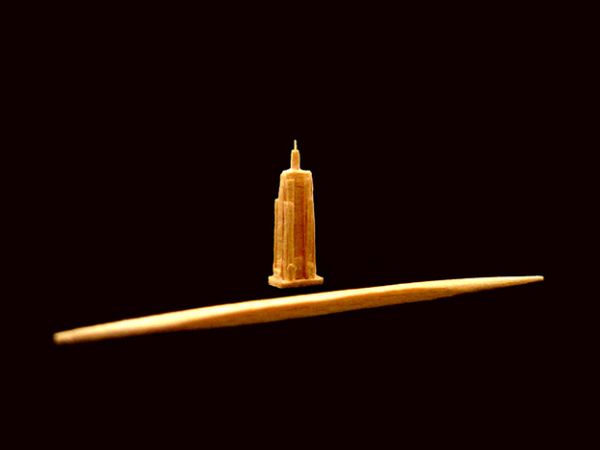
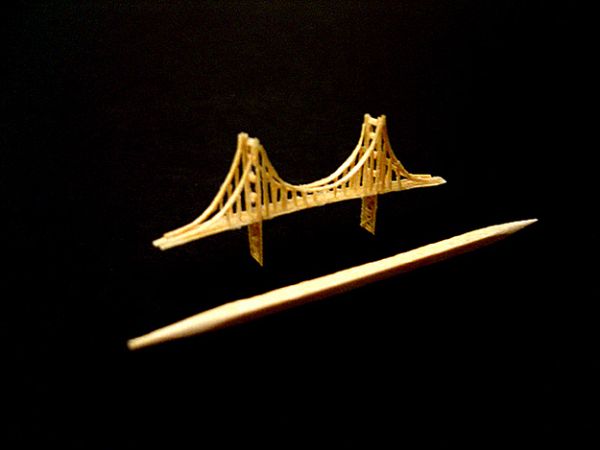
Public attention sometimes jumps to Backman’s largest feats—tens of thousands of toothpicks assembled into a lengthy Golden Gate Bridge replica, complete with lighting in some displays, or tall building models counted stick by stick for exhibition crowds. Those projects prove stamina and spectacle. The miniature works prove something subtler: that the same vocabulary can whisper without losing intelligence.
At small scale, the eye reads silhouette first. A successful mini sculpture has a clear outer shape even before you count members. Then, on a second look, the lattice resolves into repeating decisions—parallel runs, braced triangles, denser weave where a real structure would thicken. Backman’s industrial-arts background shows in that logic. These are not random nests of wood. They are little systems that happen to be made from a joke material, which is why they keep surprising people who expect novelty and find design instead.
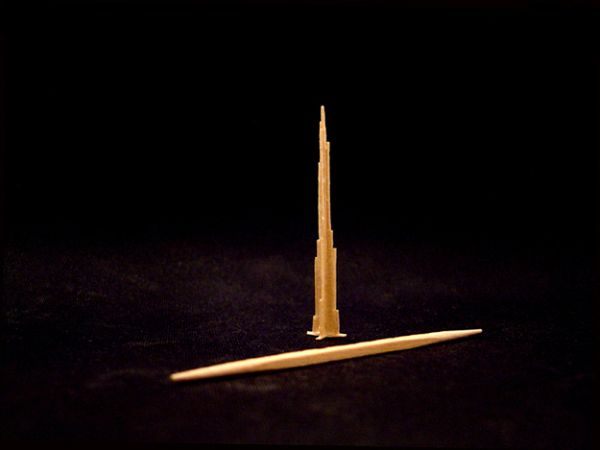
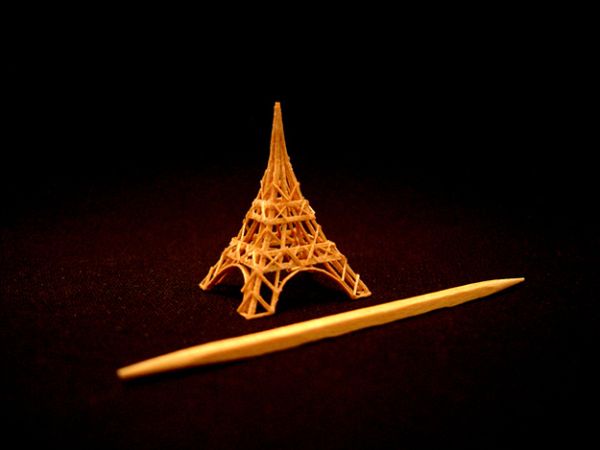
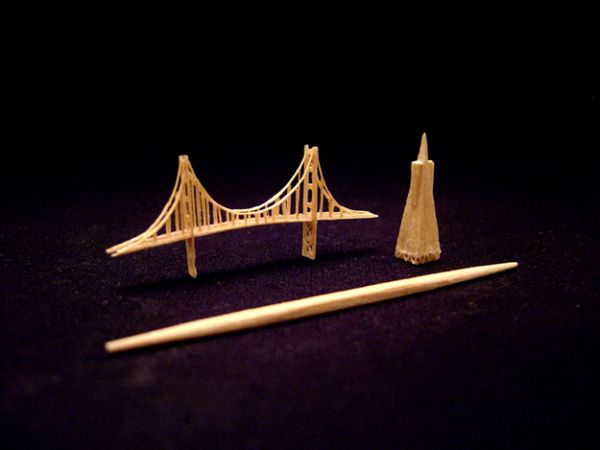
Later in his career he also pushed the opposite extreme: carving landmarks from a single toothpick with a razor and tweezers, releasing a form from one stick instead of assembling many. That body of work sharpens the same theme—respect for a limited blank—but the images collected on this page speak mainly to assembled miniature sculpture, where multiplicity and joinery dominate the look and the labor.
How to look at the photographs
Because toothpick wood is pale, lighting makes or breaks documentation. Side light opens the lattice so depth appears; flat light turns the object into a beige tangle. In the stronger frames of this set, shadows pool inside the structure and make the volume readable. Backgrounds stay quiet on purpose. Scale is implied by the tightness of the weave rather than by a coin in the corner—though your brain still searches for a reference object, which is part of the pleasure of miniature craft photography.
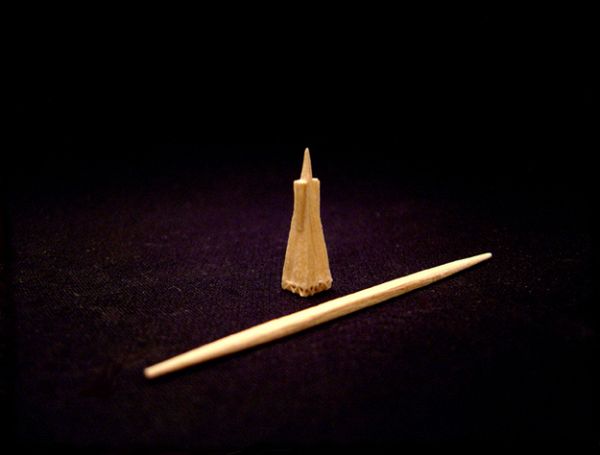
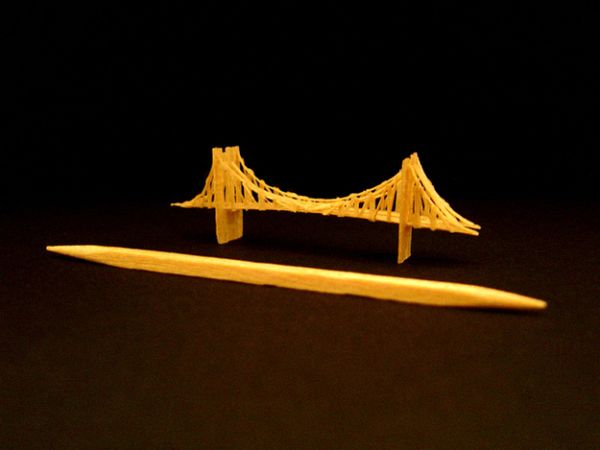
Try a slow look with four practical questions:
- Count directions. How many primary axes do the sticks follow? Order usually means intent rather than accident.
- Find the thickest joint. That is often where the sculptor solved a load or alignment problem.
- Follow one stick end to end. You will see whether members are continuous runs or short segments butted together with glue.
- Ask what the piece would be in steel. If you can imagine a truss or armature, the toothpick version is doing real design work, not only decoration.
Those questions keep the gallery from becoming a mere curiosity scroll. They also explain why makers in other slow crafts recognize Backman immediately: the work shows its decisions instead of hiding them behind seamless finish.
Patience as technique, not slogan
Coverage of Backman returns often to concentration—long sessions without distraction, because a misplaced glue joint cannot be undone cleanly once set. Impatience has a literal cost in this medium; he has told the story of injuring his hand as a child when frustration met a model. Adult practice replaces that urgency with pace. Glue needs minutes. Alignment needs stillness. Complex curves need incremental bends rather than heroic force that snaps the blank.
For anyone in a slow craft, the transferable lesson is pacing the irreversible step. Dry-fit until the silhouette is right. Glue only when your hands are careful rather than clever. Step away when ambition outruns steadiness. Toothpicks punish cleverness and reward sequence, which is why the finished miniatures feel calm even when the labor behind them was intense.
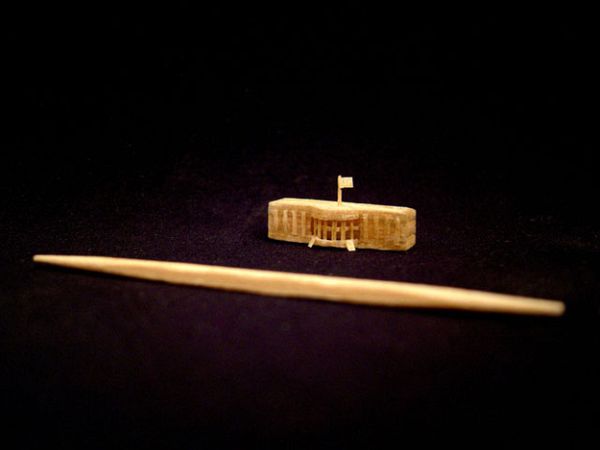
Why the sticks still cut through a noisy feed
Trends in sculpture lean toward new resins, scans, and software. Backman’s sticks look almost stubbornly analog, which is precisely why they cut through a crowded image feed. You can understand the labor without a wall text. Each joint is a visible decision. In an era of seamless CGI, seams become interesting again. Limitation stops being an apology and becomes the subject of the piece.
There is also a San Francisco through-line—bridges, engineering culture, maker fairs, the pleasure of proving that a disposable object can carry serious structure. Whether the object is a desk-sized abstract or a museum-scale span, the argument holds: constraint can be a partner if you respect its physics and refuse shortcuts that would break the rules of the medium.
Keep the last image open while you imagine lifting the piece between two fingers. Feel, in the mind, how light it would be and how brittle at the joints. That imagined weight is part of the aesthetic. Steven Backman’s mini toothpick sculptures succeed when they make you respect a throwaway stick that refused to stay throwaway—and when the lattice looks inevitable only because every joint was chosen with patience you can almost count.

Comments
Continue reading
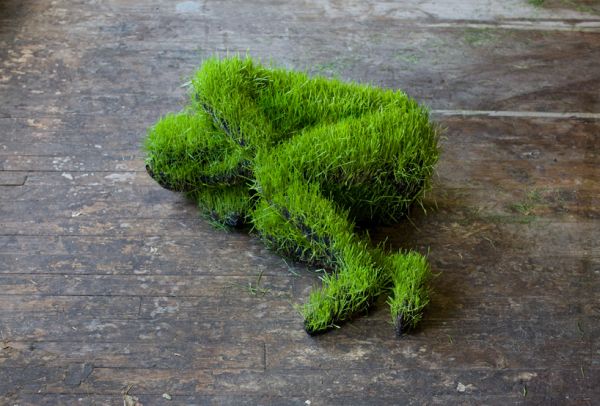
Mathilde Roussel’s Lives of Grass: Hanging Living Sculptures
Paris artist Mathilde Roussel hangs anthropomorphic forms of recycled metal, fabric, soil, and wheatgrass—living sculptures that grow, yellow, and decay.
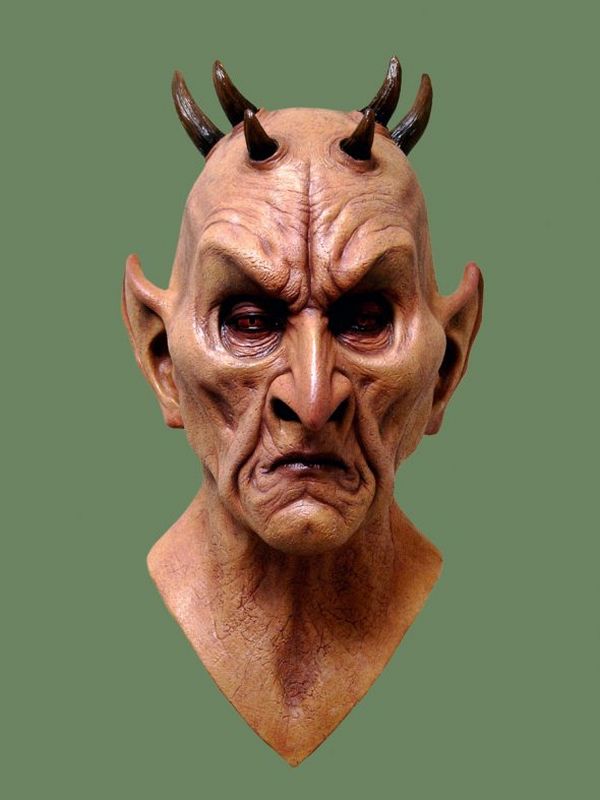
Monster Sculptures by Jordu Schell
Hollywood creature sculptor Jordu Schell’s clay monster busts—horned, alien, and decaying—read as character studies as much as scare pieces.
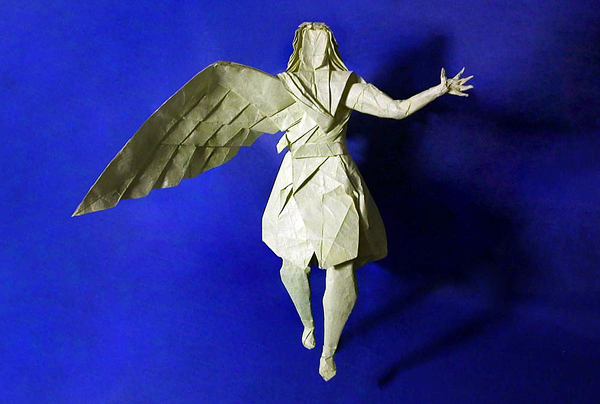
3D Origami Sculptures by Jaroslav Mishchenko
Kyiv artist Jaroslav Mishchenko folds painted three-dimensional origami sculptures—animals, objects, and abstract forms—where crease, color, and careful light share the work.