
Monster Sculptures by Jordu Schell
Hollywood creature sculptor Jordu Schell’s clay monster busts—horned, alien, and decaying—read as character studies as much as scare pieces.
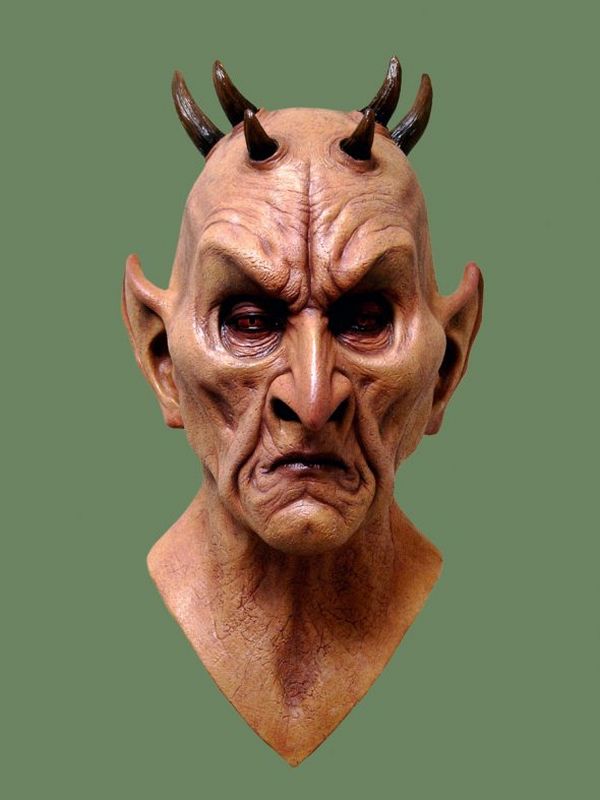
Jordu Schell sculpts monsters the way some portraitists paint faces: as if the creature had a biography before the clay cooled. The heads in this gallery—horned and weathered, bulbous and furious, green and half-ruined—are not generic Halloween masks. They are character studies in polymer and paint, the kind of work that made Schell’s name in Hollywood creature shops and then traveled, in 2012, through curiosity blogs that could not stop staring at the pores.
Boing Boing pointed readers that May to a large Monster Brains survey of Schell Sculpture Studios work; Laughing Squid and Trend Hunter circulated similar awe the same season. The photographs here belong to that wave of attention: studio busts against plain olive grounds, lit so every wrinkle argues for realism. The article’s job is simple and durable—look at the sculptures, then understand why a film sculptor’s personal monsters still stop the scroll.
A sculptor who thinks in characters
Schell’s professional résumé reads like a creature-fan checklist: early breaks around the late 1980s, then credits touching worlds such as Edward Scissorhands, Predator 2, Men in Black, Alien: Resurrection, The X-Files movie, Hellboy, 300, The Mist, Avatar, and more. The point of listing films is not celebrity adjacency; it is method. Screen creatures must read under harsh light, from awkward angles, and in motion. A bust that only looks good in one flattering photo will fail on a stage or a set. Schell’s gallery monsters inherit that discipline. Skin maps are complex. Horns have growth logic. Eyes sit in sockets that feel surgically considered even when the anatomy is impossible.
In interviews he has described himself as primarily a designer in clay—stronger, by his own account, as a sculptor than as a pure draftsman—and has talked about pushing clay to discover a character when demonstration work is free of a client brief. That exploratory habit shows in personal monster busts. They do not feel traced from a single movie still. They feel encountered.
Nature study feeds the weirdness. Schell has spoken about insect anatomy and museum collections as inspiration sources; the Natural History Museum of Los Angeles has even framed his practice inside local monster-making culture. Scales, plates, mandibles, and asymmetrical growth patterns from the real world sneak into fantasy heads so the unreal still obeys some biological gossip. Viewers call the result “so real”—the old excerpt’s instinct—because the lies are supported by anatomical truthfulness.
Three temperatures of horror in one gallery
The horned bust leads with mythic menace: ridged dark horns, sun-leather skin, hooked nose, pointed ears, a stern mouth that refuses comedy. It is devil-adjacent without becoming a costume-shop Satan. Age is written into the forehead. You believe this creature has waited a long time to be angry.
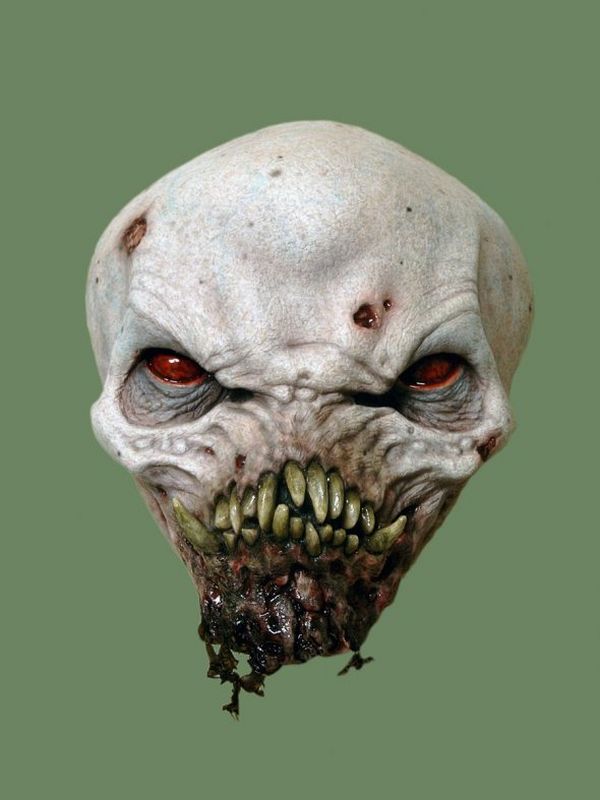
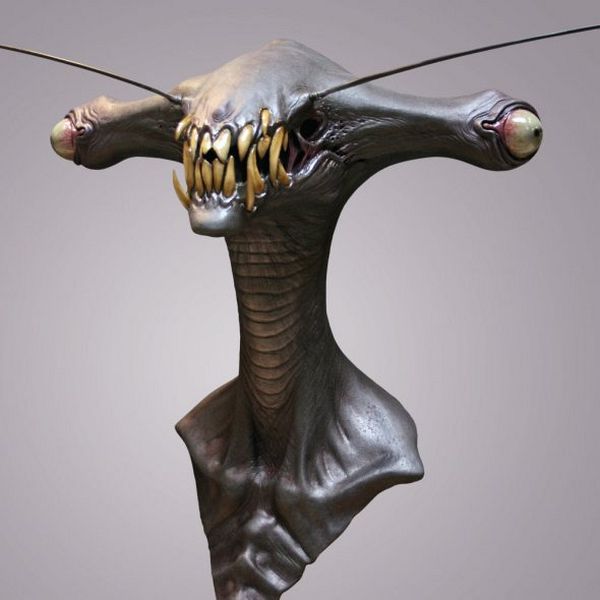
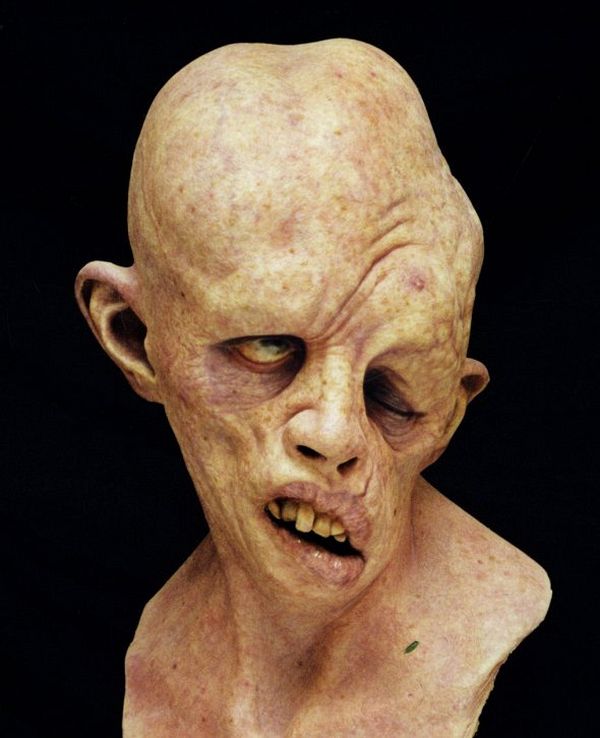
The pale, bulbous head shifts toward visceral sci-fi horror—overgrown cranium, tiny glowing red eyes under a heavy brow, teeth without polite lips, lower face ruined into wet darkness. Personality here is rage compressed into a skull that looks too large for mercy. Schell’s detail work on sores and asymmetries keeps the fantasy from smoothing into plastic.
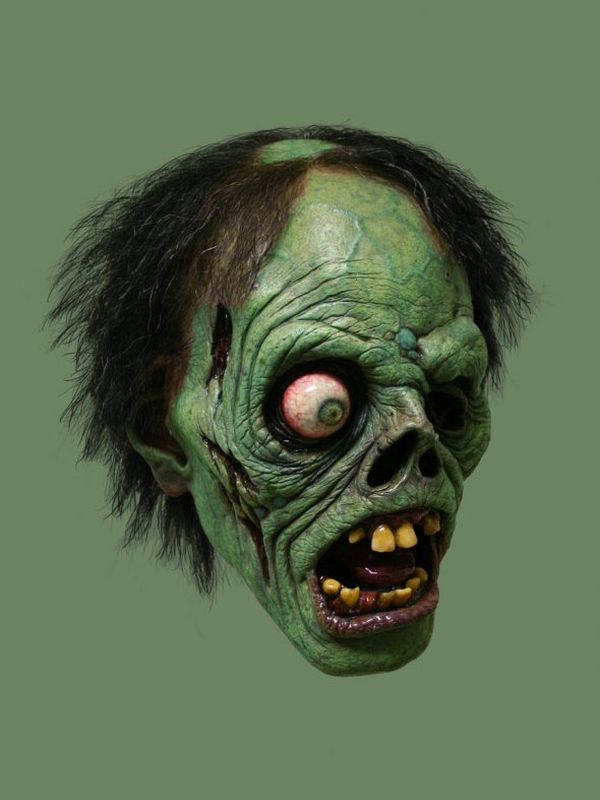
The mottled green head is decay theater: one bloodshot staring eye, one ruined socket, wisps of hair around bald bone-like crown, snarl of yellowed teeth, leathery wrinkles catching sick light. Zombie vocabulary appears, but the craft elevates it. This is not a foam party mask; it is a study in how death might rearrange a face and still leave expression.
Seen together, the three argue that “monster” is not one genre. Schell moves between infernal portraiture, alien aggression, and undead collapse without repeating a single skin recipe. That range is why film supervisors trust creature designers who can invent families of beings rather than one lucky maquette.
Clay, speed, and the teaching instinct
Time-lapse videos of Schell building a monster in under an hour became part of the 2012 viral package for a reason. Speed looks like magic until you recognize underlying fluency: armature habits, form-blocking order, tool vocabulary, paint logic. Stan Winston School and later teaching platforms have hosted Schell demonstrating maquette workflow—wire structures, clay rough-ins, dynamic pose, refinement, finishing. Domestika and New Masters Academy courses extend the same pedagogy: design and sculpture for film, accessible materials, personality first.
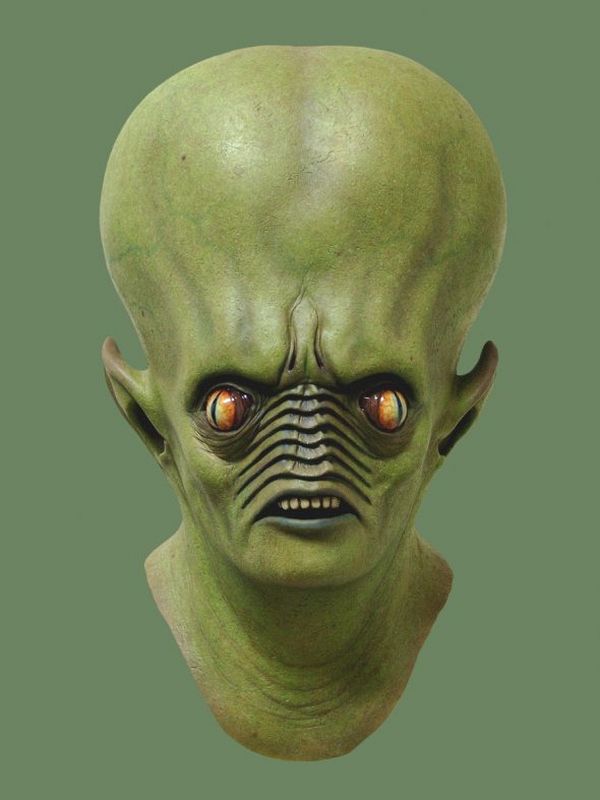
Even if you never take a class, the gallery photographs teach by staring. Notice how paint is not flat local color. Veins, bruises, horn keratin, tooth enamel, and wet-look gums each need different finishes. Notice how asymmetry prevents mannequin deadness. Notice how necks and jaw hinges suggest the rest of a body you cannot see. Schell often talks about capturing attitude—expression in a bust, motion in a full maquette. These heads are all attitude.
Collectors and effects legends have reportedly held his work; Sketch Theatre’s 2012 interview wave situated him among peers who treat sculpture as entertainment design’s most honest prototype. Digital tools have since multiplied, but clay remains a fast truth serum. A bad proportion shows up under a rotating light long before a render farm finishes arguing.
Why these photos still work as art posts
Internet monster galleries can become numbingly samey: gray aliens, dripping zombies, horns on everything. Schell’s pieces survive repetition because each bust seems privately known to its maker. The olive seamless backgrounds help; nothing competes with the face. Scale feels confrontational—heads large enough to meet you as equals. For an art-illustration audience, that confrontation is the entertainment. You came for scare; you stay for craft.
There is also a cultural nostalgia layer. Practical creature effects defined a long stretch of late-20th-century genre film. Schell’s career bridges that tactile era and the mixed pipelines of later blockbusters. Looking at personal sculptures in 2012—and looking again now—is a way to remember that monsters are still built by hands before they are composited by software. The clay remembers fingerprints; the paint remembers decisions.
A way to look without rushing
Try one slow pass per bust. Start at the eyes, then move to the mouth, then to the silhouette of the cranium, then to the smallest skin defects. Ask what emotion the sculptor locked in before detail arrived. Ask which real-world animal or human age cue is being borrowed. Ask what the missing body would have to look like to support this head.
If you sculpt, steal process questions rather than surface clichés:
- Where does the form block-in end and the storytelling texture begin?
- Which asymmetries feel intentional rather than accidental?
- How does paint separate living tissue from horn, tooth, or wound?
- What would break if this head had to turn fifteen degrees on camera?
Leave the gallery with at least one specific memory—not “cool monsters,” but a particular horn curve, a particular ruined jaw, a particular red stare. Schell’s sculptures earn that specificity. They are scary because they seem convinced of themselves. In clay, conviction is the rarest special effect.

Comments
Continue reading
Steven Backman’s Mini Toothpick Sculptures
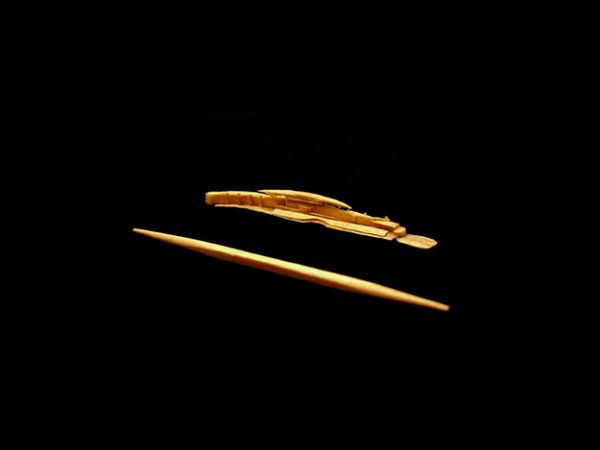
San Francisco artist Steven Backman assembles miniature sculptures from toothpicks and glue—compact lattices where joinery, patience, and structural logic replace fancy materials.
Mathilde Roussel’s Lives of Grass: Hanging Living Sculptures
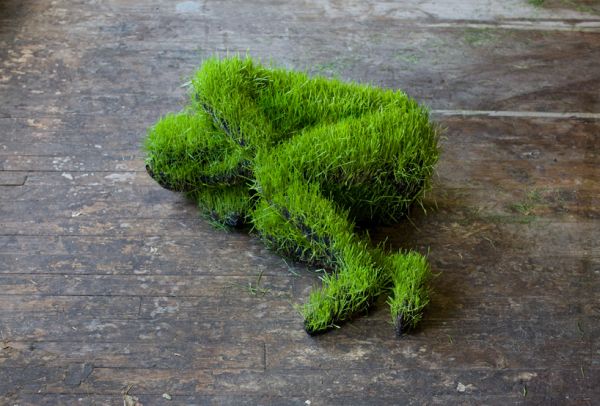
Paris artist Mathilde Roussel hangs anthropomorphic forms of recycled metal, fabric, soil, and wheatgrass—living sculptures that grow, yellow, and decay.
3D Origami Sculptures by Jaroslav Mishchenko
Kyiv artist Jaroslav Mishchenko folds painted three-dimensional origami sculptures—animals, objects, and abstract forms—where crease, color, and careful light share the work.