
3D Shoes by Continuum Fashion: The 2012 STRVCT Heels
Continuum Fashion’s STRVCT line—Mary Huang and Jenna Fizel’s custom 3D-printed nylon heels with lattice structure, patent insoles, and a $900 made-to-order pitch.
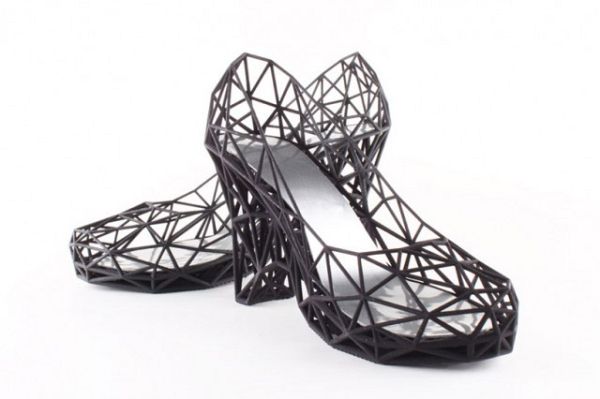
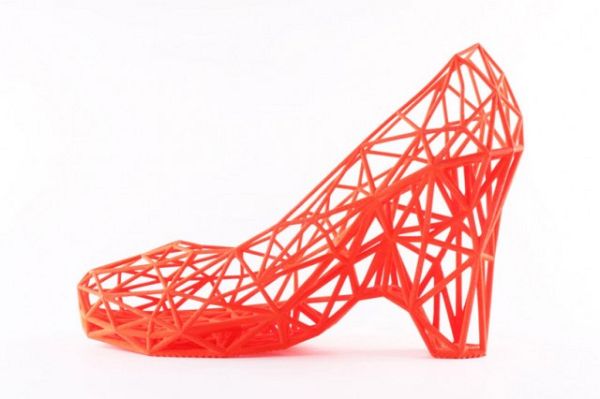
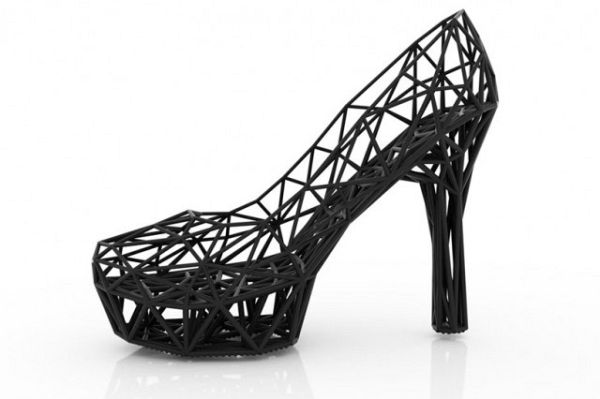
In August 2012, Continuum Fashion put high heels on the internet that looked more like bridges than boutique footwear. The collection was called STRVCT—“structure” with the vowels stripped out—and it offered custom 3D-printed nylon shoes for about $900 a pair. Designers Mary Huang and Jenna Fizel lined the lattice shells with patent leather and coated the bottoms in synthetic rubber so the geometric cages could meet real sidewalks. Tech blogs and fashion blogs argued the same week: were these art objects, or shoes you could actually wear?
Continuum’s answer was careful. Huang said publicly that the pairs were not the softest shoes on earth, but that they were wearable in the same imperfect way many designer heels are wearable. That framing mattered. STRVCT never sold itself as athletic cushioning. It sold itself as a printed silhouette you could still call footwear—an austere pump and related sandal ideas that photographed like architecture and priced like contemporary designer shoes.
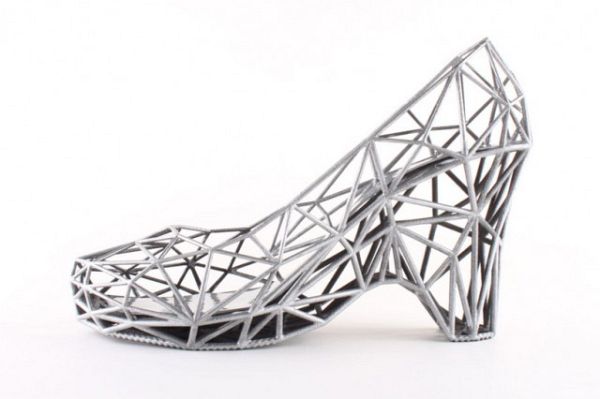
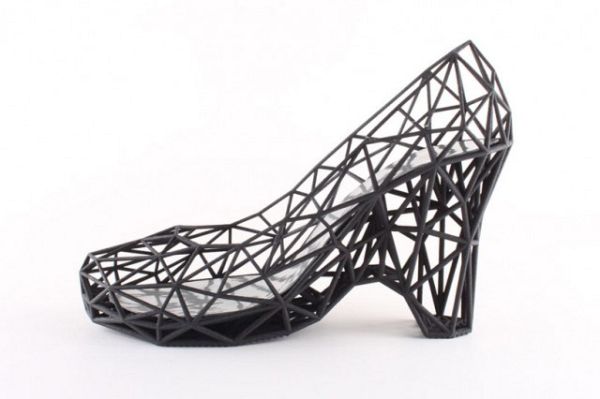
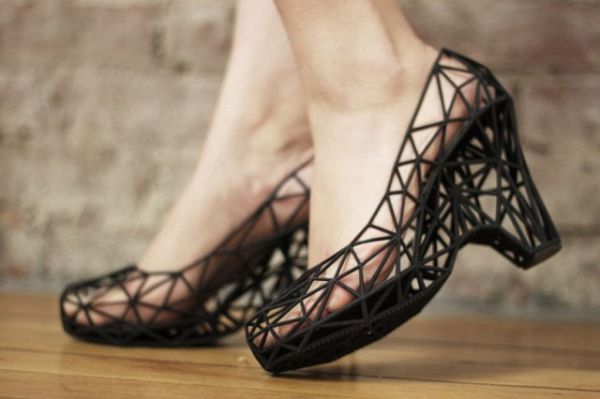
The photographs that defined the launch—and that still define this gallery—show open triangular shells, wedge profiles that seem almost transparent, and sandals that mix rigid printed bases with softer decorative accents. They look severe at first glance. Spend a minute with them and the severity starts to read as intentional lightness: material removed on purpose so the remaining members can do structural work.
From printed bikini modules to printed heels
Continuum Fashion had already been testing garments that refuse ordinary cut-and-sew logic. Their modular 3D-printed bikini—built from waterproof nylon “dots”—proved the studio liked repeating units, openwork, and fabrication through print bureaus rather than traditional factories. Shoes raised the stakes. Soft failure becomes hard failure when body weight concentrates on a heel column in front of an audience.
STRVCT kept Continuum’s geometric dialect and applied it to a triangulated spin on the classic wedge pump. Coverage at launch repeatedly reached for Cinderella’s glass slipper: transparency, delicacy, a magical object that somehow still holds. A sandal variant paired a printed base with origami-like Tyvek butterflies, softening the engineering look with couture play. Nylon, as described then, was both extremely strong and extremely lightweight, able to carry complexity that short-run tooling would punish financially.
Customization was baked into the pitch. Buyers could ask for colors, styles, and heel lengths. Orders began by email; Huang talked about a forthcoming web configurator so customers could choose features before paying. Production ran through Shapeways, with turnaround commonly quoted between two and four weeks. For a tiny studio, that pipeline was the factory: no warehouse of leather scraps, no endless last inventory, just files, finishing steps, and shipping labels.
The Verge, 3ders, and other 3D-industry outlets covered the launch within days of one another in mid-to-late August 2012—the same window as this site’s dating for the post. Image sets like the ones here moved through Fubiz-style inspiration blogs as visual proof that printed fashion had left the pure-concept stage and entered a weird boutique reality.
Why a lattice can carry a person
Open mesh looks unsafe. People imagine sharp edges and pancake collapse. Continuum’s engineering story was triangulation: many small members sharing load the way a truss does, so the object can look airy while resisting buckling. The patent insole was the human interface—smooth where skin and sock meet. Rubber on the outsole admitted a boring truth: fashion still needs grip when the street is wet or polished.
That hybrid—printed structure plus traditional comfort and traction layers—is the quiet lesson of STRVCT. “Fully printed” headlines often ignore the finishing that makes an object habitable. Continuum did not pretend nylon mesh alone was enough against blister and slip. They printed the fantasy and then civilised the contact surfaces.
Walkability claims deserve context. A shoe can be “easy to wear” relative to other statement heels and still be demanding compared with sneakers. STRVCT lived in that relative zone. It asked wearers to accept fashion compromise in exchange for a silhouette that could not be cut from a single sheet of leather without waste and tooling drama.
Comparisons arrived fast. Other designers had already shown web-like heels; Brazilian designer Andreia Chaves was among names floated in contemporary coverage. Continuum’s edge was less “first mesh ever” and more “configurable print boutique with a prior vocabulary of nylon modules.” At $900, the shoes sat beside high-end heels, not beside desktop-printer toys. Home machines of 2012 could not honestly match this quality, which is why Shapeways-class production was the real stage.
Fashion business, design museums, and the afterlife of a launch week
For fashion businesses, STRVCT gestured at inventory strategy: print after the order, tweak heel height without retooling steel, offer colorways without dyeing vats. For industrial designers, it was a portfolio proof that lattice aesthetics could leave the gallery plinth. For skeptics, email ordering and boutique pricing kept the experiment exclusive—interesting, not democratic, and deliberately scarce.
Cooper Hewitt later collected Continuum work connected to STRVCT shoes and CONSTRVCT fabric, crediting Huang, Fizel, and the studio, and describing 3D-printed nylon with patent leather insole and synthetic rubber coating. Museum language matters. It files the heels as design history: fantasy-inspired, on-demand objects exploring what nylon can do when form is grown in a printer rather than carved from a last.
Seen from later years of printed midsoles and athletic lattices, Continuum’s pumps look like an early couture fork. Later industry work often chased cushioning metrics and scale manufacturing. STRVCT chased silhouette and manufacturing theater. Could a heel be a printed cage and still enter a room as shoes? For a brief boutique window, the answer was yes—with patience, a premium price, and honesty about comfort.
That honesty is why the project still teaches. Many 3D-fashion demos collapse into either pure sculpture or pure hype. Continuum tried to occupy the awkward middle: expensive, slightly uncomfortable, photographically unforgettable, and finished enough to survive a night out if the wearer chose carefully.
How to look at these frames
Start with negative space. The triangles are the wall, not decoration glued onto a hidden conventional pump. Notice how wedge mass stays visually light because material is missing on purpose. Trace the sole edge for the rubber story under the crystal fantasy. On sandal versions, watch soft accents negotiate with a rigid printed base—the same hybrid instinct many experimental wearables still use when they mix hard shells with textiles.
If you design footwear, jewelry, or props, STRVCT is a reminder that “printable” is not automatically “humane.” Edge finishing, insole logic, and traction decide whether a lattice is a shoe or a photoshoot prop. Continuum’s $900 pair tried to occupy both categories at once: statement object and stepable product.
That ambition is why the images still earn space in a visual magazine. They freeze a moment when fashion and fabrication blogs shared one obsession, and when a triangulated nylon heel could look like the future arriving in a Shapeways box—strange, expensive, slightly uncomfortable, and difficult to scroll past without stopping.
via: fubiz (period image circulation)

Comments
Continue reading

Funny Animal Signs That Warn People (While Animals Ignore Them)
From a seagull on a no-birds disc to classic zoo and park ironies—why animal warning signs get funny, and what the rules are still for.
How to Find Local Amenities on Vacation: Mechanics, Haircuts & More
Locate trustworthy local services and everyday spots while traveling or settling in—using publications, reviews, map apps, neighbor tips, and low-pressure exploration.
Kristen Stewart for V Magazine, Spring Preview 2013
V81’s Wild at Heart cover story—Kristen Stewart shot by Inez & Vinoodh, styled by Joe McKenna, in pale minimal spring glamour.