
Still-Life Photography by Margareth Perfoncio
São Paulo photographer Margareth Perfoncio’s still lifes of food and flowers—Old Master light, dark wood, and tables that feel inevitable.
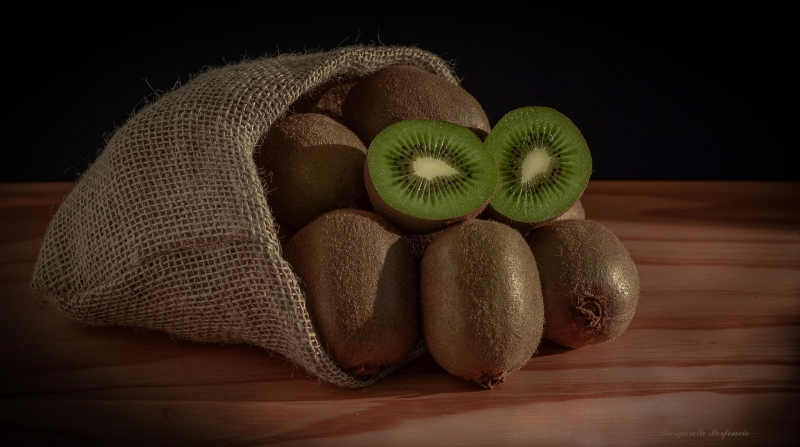
Still life is often treated as quiet subject matter—fruit that will not complain, flowers that will not blink. São Paulo–based photographer Margareth Perfoncio treats that quiet as theater. Her frames borrow the grammar of Old Master painting: directional light, deep shadow, tactile surfaces, and arrangements that feel inevitable only after you notice how carefully they are staged. Food and flowers are the cast. Wood grain, glass, lace, burlap, and ceramic are the set.
What follows is a survey of that painterly habit—pears in etched glass, citrus under lace, wine that has already spilled a little story, peppers that refuse to stay in a tub. The photographs do not need a platform pitch. They need looking: where highlight meets rind, where a petal falls as if by accident, where a cracked mug keeps its dignity.
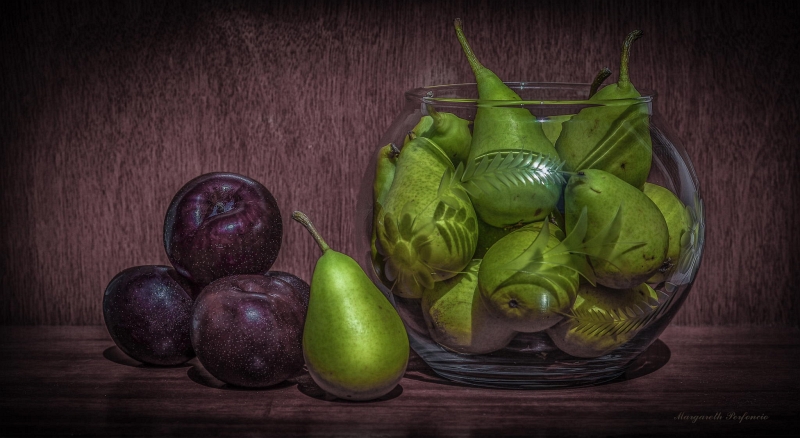
Green pears crowd an etched glass bowl on dark wood; one pear sits free in the foreground beside a small stack of purple plums. Side light from the right draws leaf patterns on the glass and long shadows leftward. Chiaroscuro here is not nostalgia cosplay—it is how volume is proven when color alone would flatten.
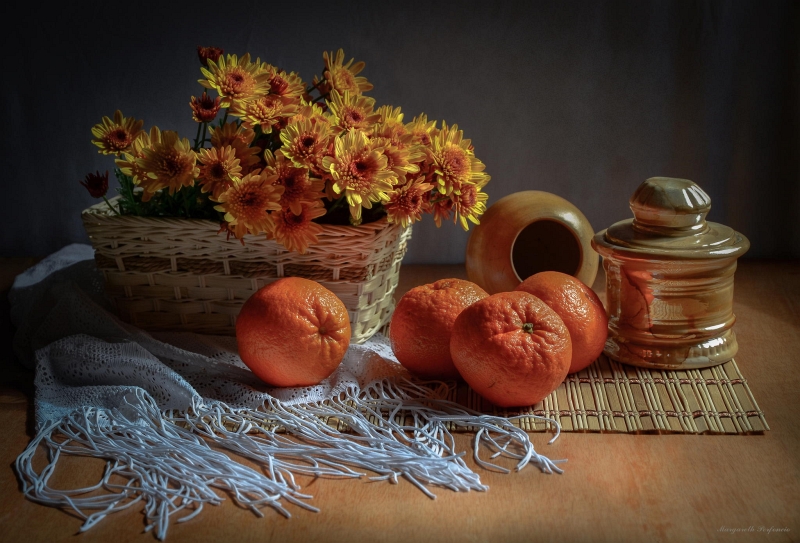
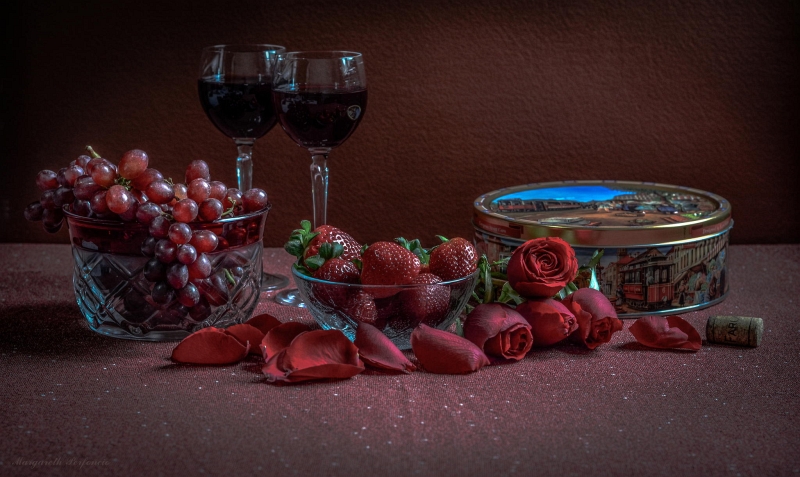
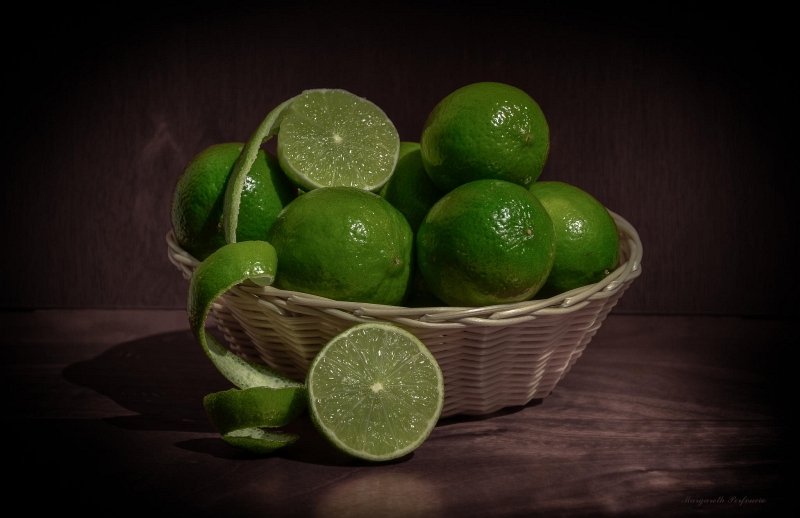
Warmth and evening moods alternate. Yellow-orange blooms fill a white wicker basket beside tangerines, lace fringe, bamboo mat, and earthy ceramics. Elsewhere, crystal and wine glasses meet dark grapes, a strawberry bowl, rose petals, buds, a vintage tin, and a lone cork—reds tuned for a late hour. Limes answer with sharp green: a woven basket, halved fruit showing segments, a long curling peel draped like a ribbon of citrus scent you can almost invent.
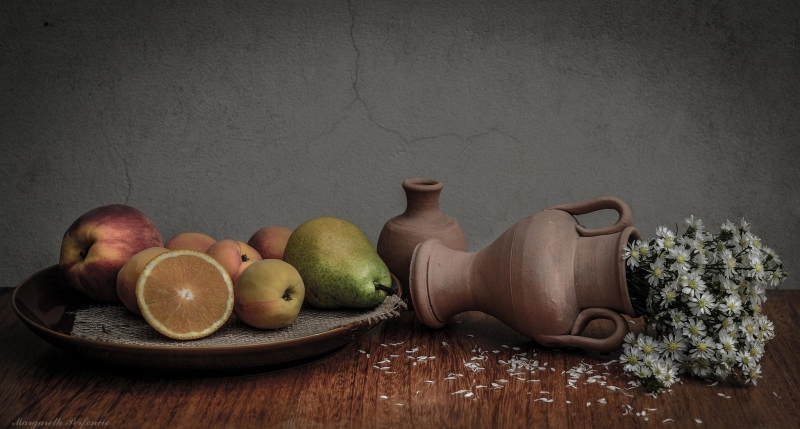
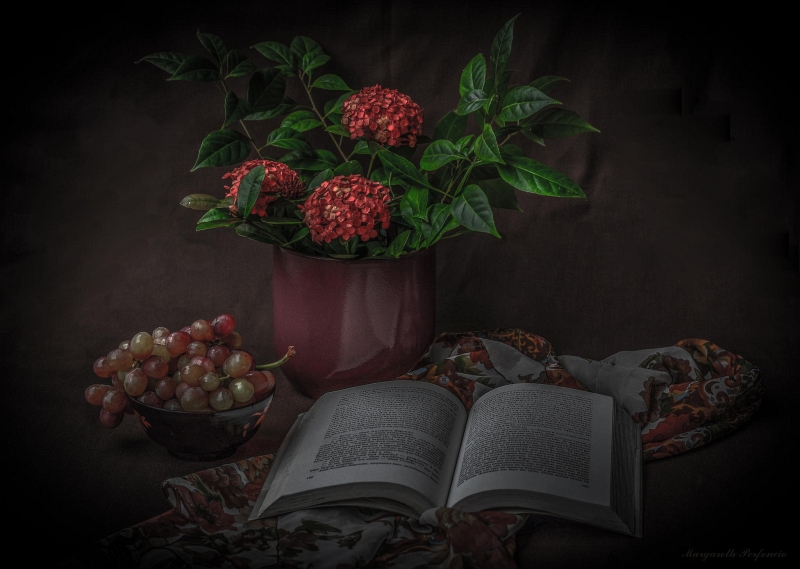
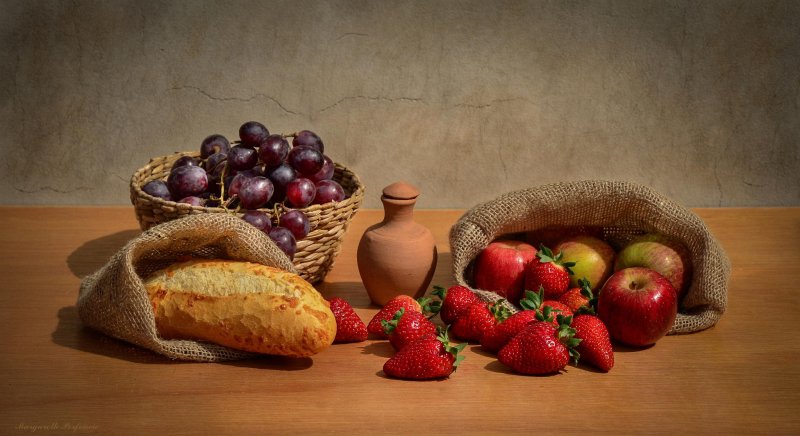
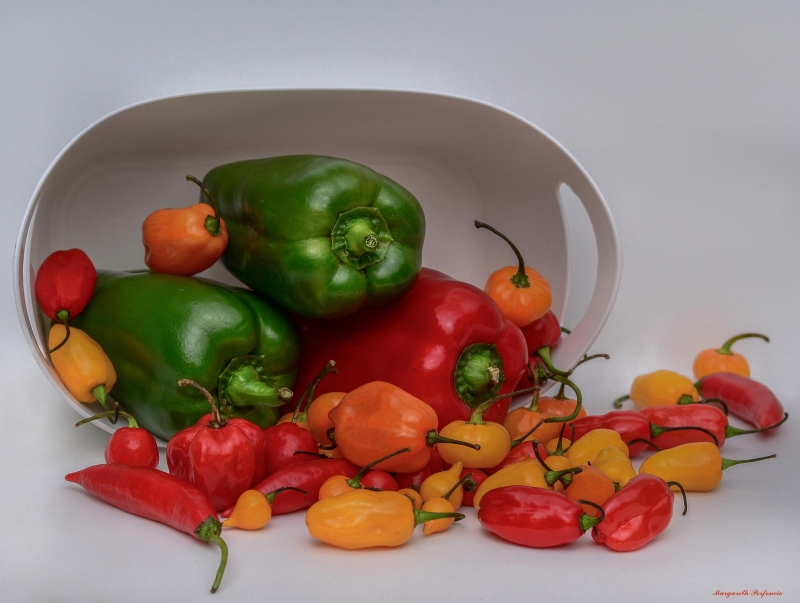
A ceramic bowl on burlap holds peach, halved orange, pear, and small stone fruit; a terracotta jug on its side spills white daisy-like blooms, petals scattered as if time had already begun its work. A plum vase of small red flowers stands over an open book on patterned cloth, grapes nearby—reading and blooming in the same shadow. Rustic abundance follows: grape basket, crusty bread in burlap, lidded clay jar, strawberries, apples spilling from a sack against a cracked beige wall. Then the palette flips bright: a white tub tipped, bell peppers and a scatter of smaller chilies in red, green, orange, yellow—soft light, less gloom, same obsession with form.
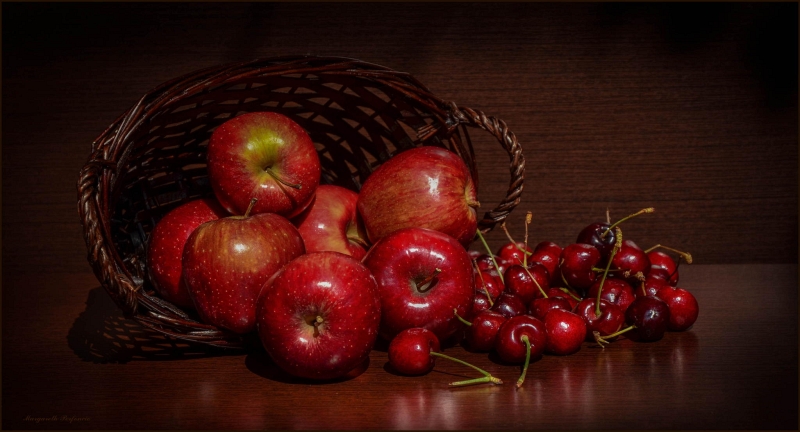
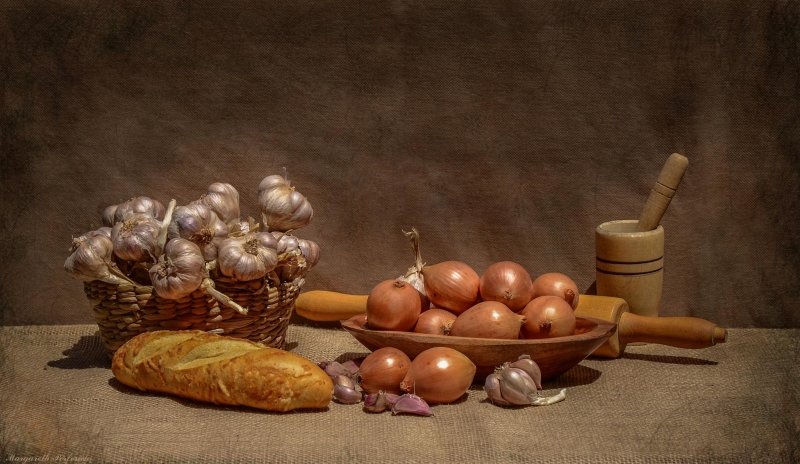
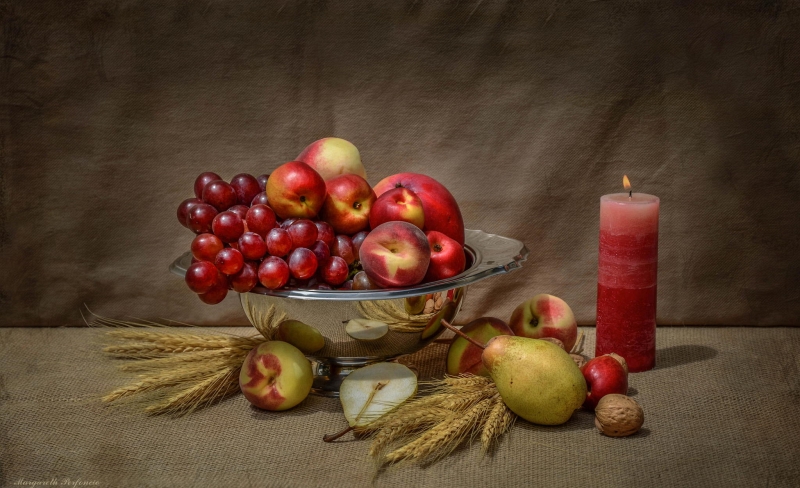
The fruit-and-flower jug returns as a refrain—series thinking, not repetition for lack of invention. Apples spill from a tipped wicker basket toward a dark cherry pile; stems tangle like calligraphy. Kitchen staples claim their own nobility: garlic heads in a small basket, baguette, copper onions in a wooden bowl, rolling pin, mortar and pestle on coarse cloth. A polished silver footed bowl overflows with grapes and peaches; wheat stalks, a halved pear, a walnut, and a lit red pillar candle push the frame toward ceremony without leaving the table.
Tea, spice, and the fallen glass
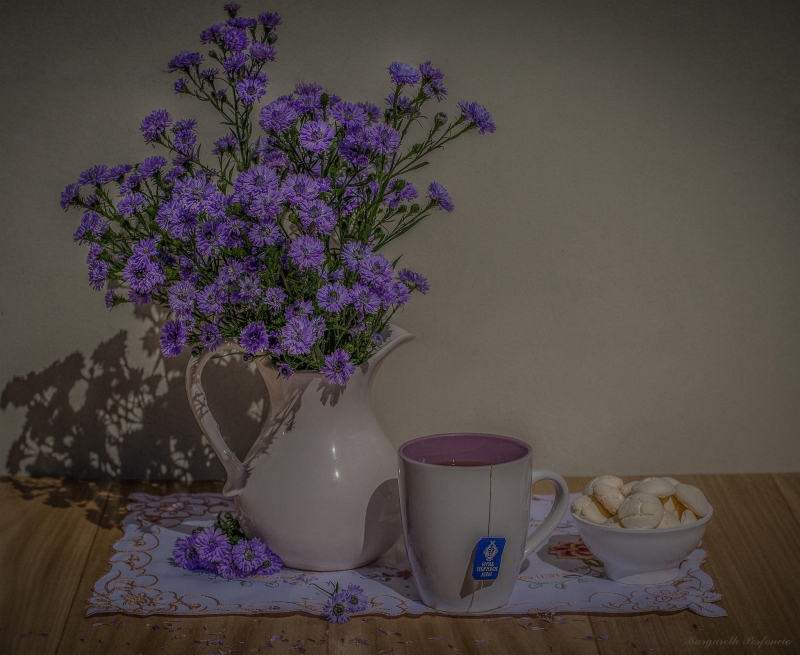
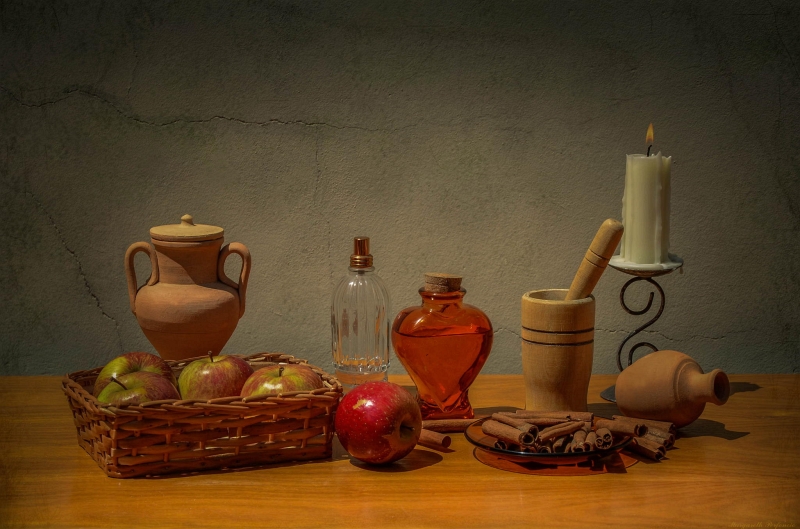
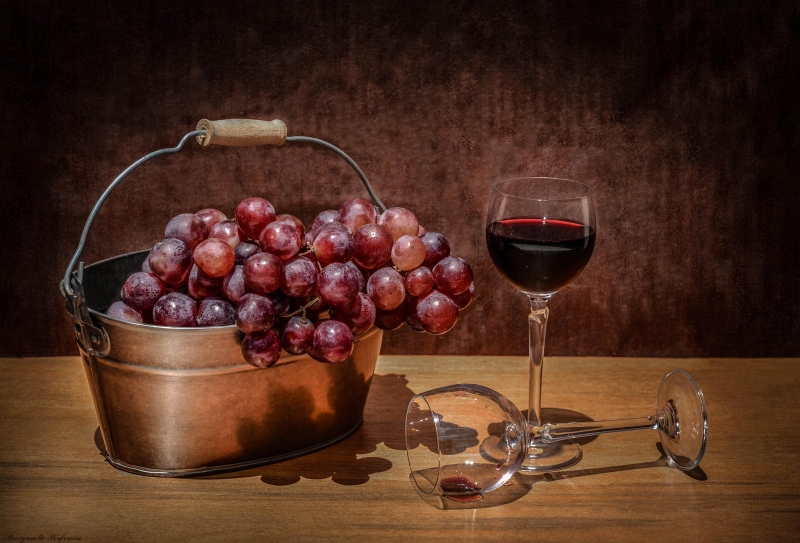
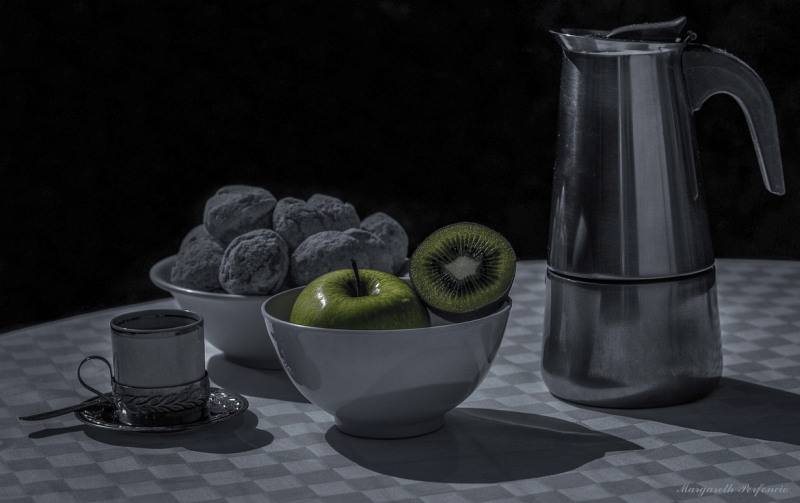
Purple daisy-like blooms fill a white pitcher on lace; a cracked mug holds tea with a dangling tag; meringues wait in a small bowl. Imperfection is allowed to stay—the crack is not retouched out of existence. Nearby, apples in a basket, terracotta amphora, perfume and amber bottles, mortar, cinnamon sticks, a tiny jug on its side, and a lit white candle on wrought iron widen the domestic inventory into scent and flame. Then narrative: a metal bucket overflows with red grapes; one wine glass stands half full; another lies tipped with a dark puddle still in the bowl. Vanitas without a skull—time marked by a spill that has not yet been cleaned.
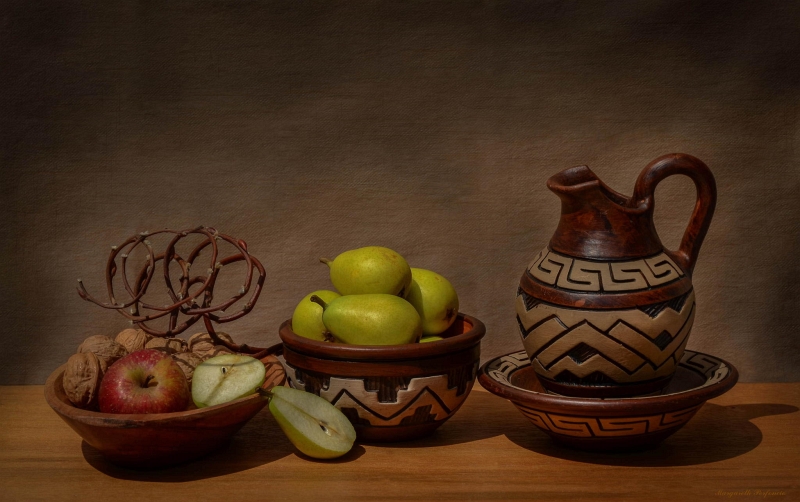
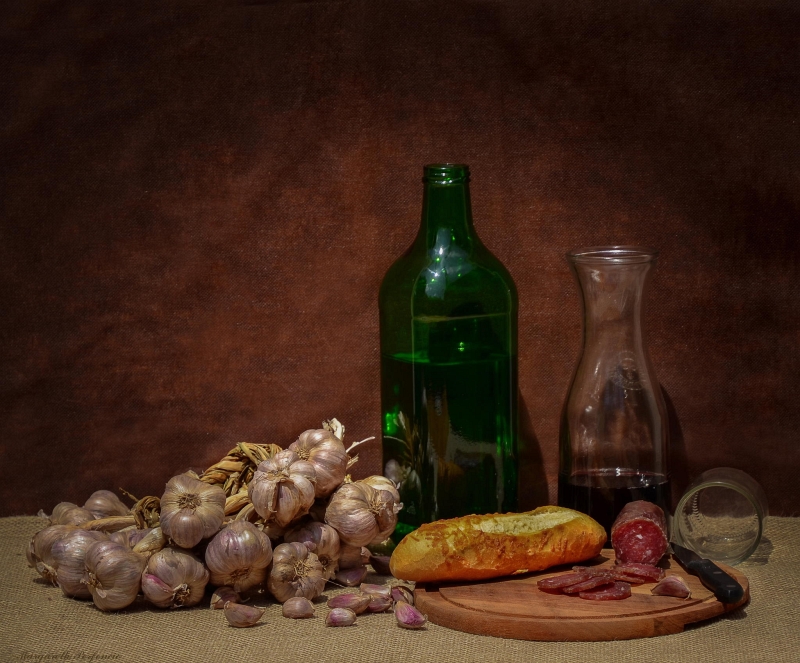
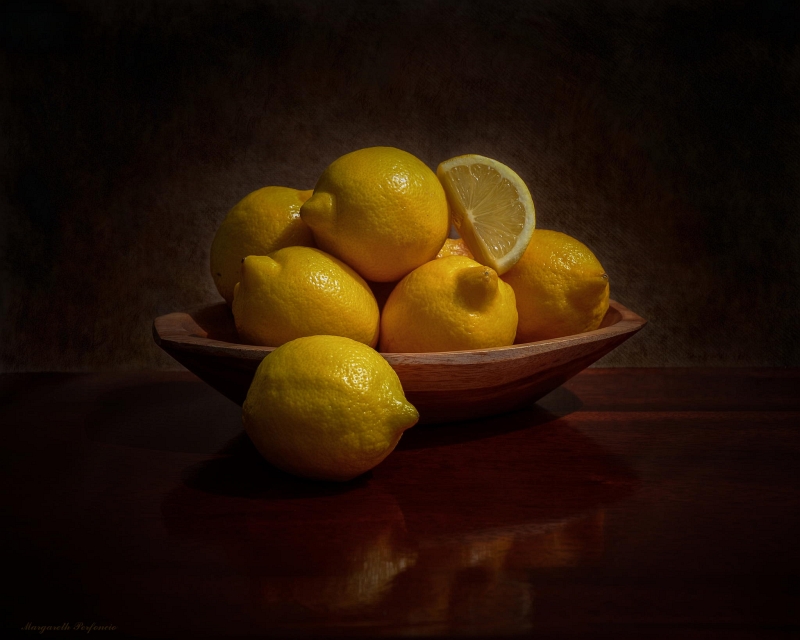
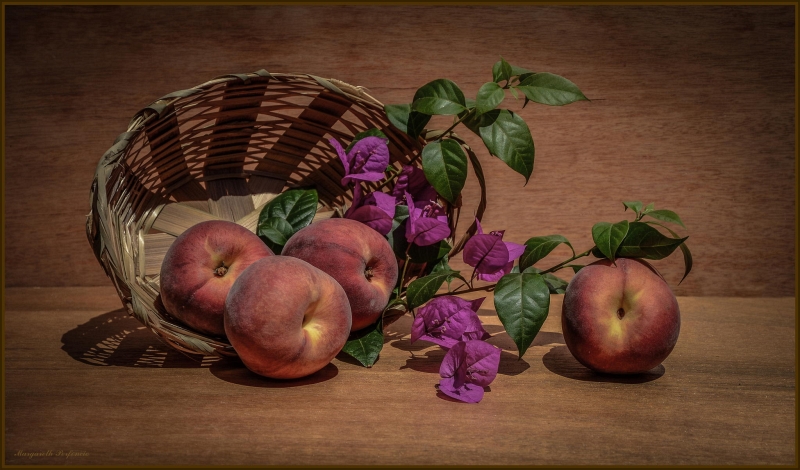
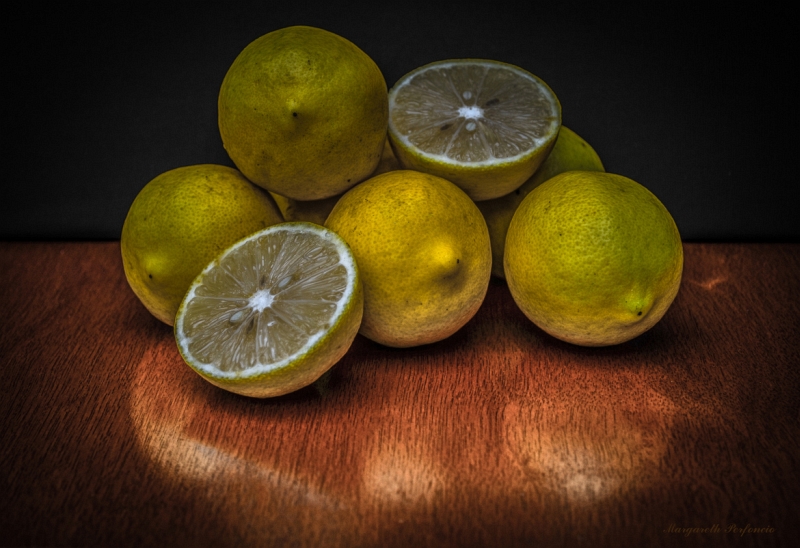
Greek-key pottery holds green pears beside walnuts, a red apple, looped twigs, and a halved pear on wood—pattern against flesh. A garlic braid, green bottle, wine carafe, tipped glass, bread roll, and salami with knife on a board turn the table into a pantry still. Lemons in a shallow wooden bowl, one wedge perched to show segments, prove how a single hue can carry drama when light is strict. Peaches tumble from a tipped split-wood basket under magenta bougainvillea-like bracts; purple petals on the wood keep the arrangement from looking sealed under glass.
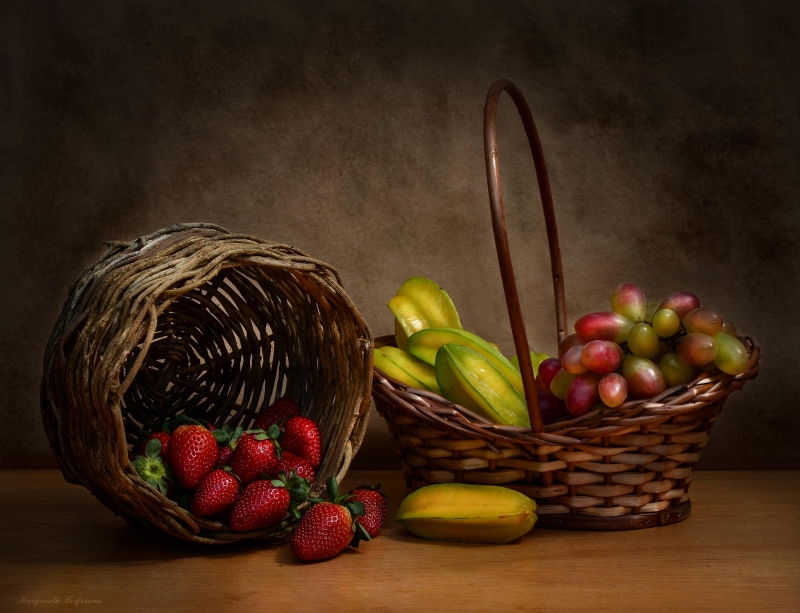
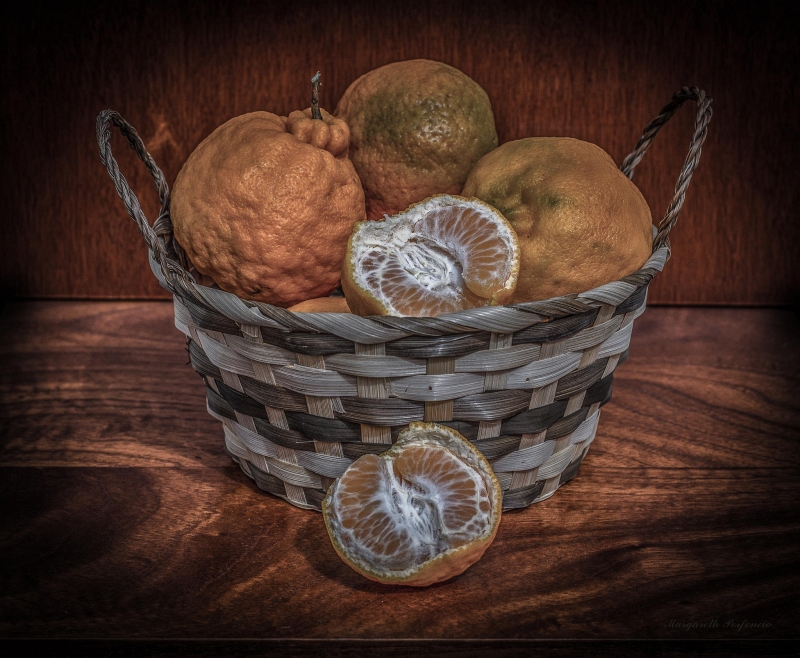
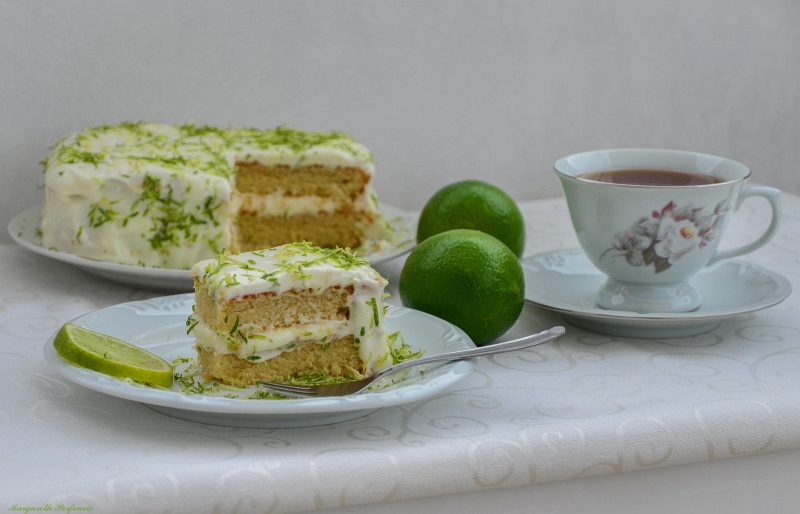
The gallery keeps shifting temperature. Some frames stay in deep brown theaters; others open into high-key white cloth. Strawberries spill from a vine basket while starfruit and grapes fill a handled wicker neighbor—tropical geometry beside familiar red. Further along, a lime-zest cake with a slice plated beside whole limes and a floral teacup turns still life toward invitation: eat, sip, stay. Soft daylight replaces candle drama without abandoning care in placement.
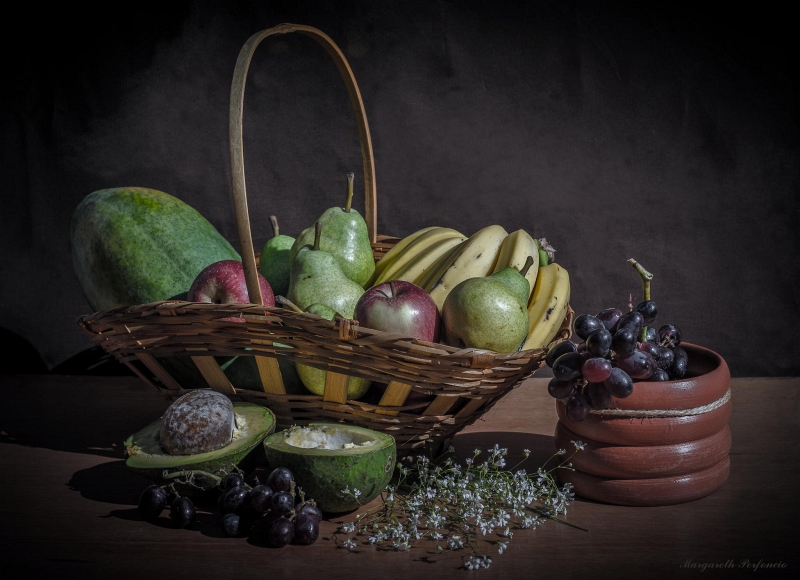
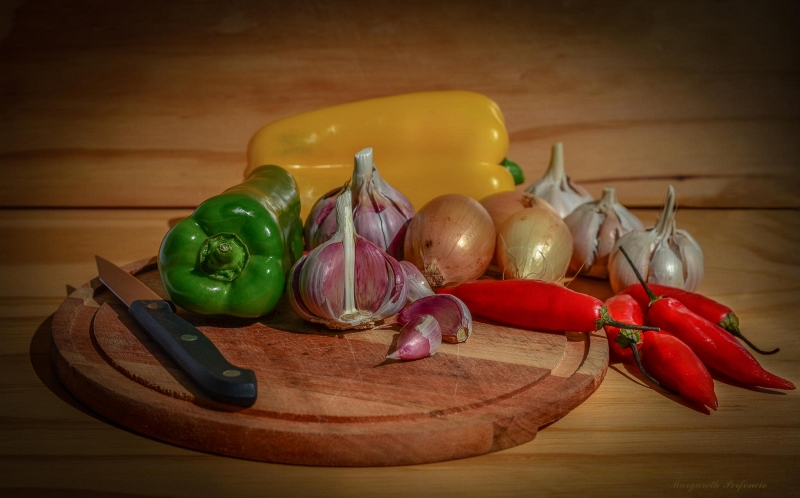
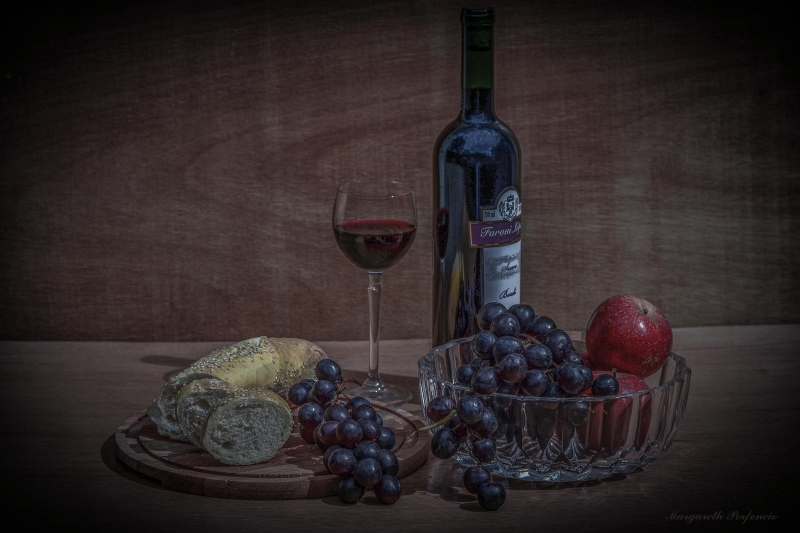
A handled basket gathers pears, apples, bananas, avocado halves, grapes, and a spray of tiny white flowers—abundance arranged so edges still breathe. Neighboring frames continue the fruit-and-vessel conversation with the same patience: surfaces polished enough to reflect, shadows soft enough to suggest air. Wine returns with labeled bottle, stemmed glass, seeded bread on a round board, dark grapes and red apples in faceted glass—pantry luxury without leaving the wood grain.
What holds across the set
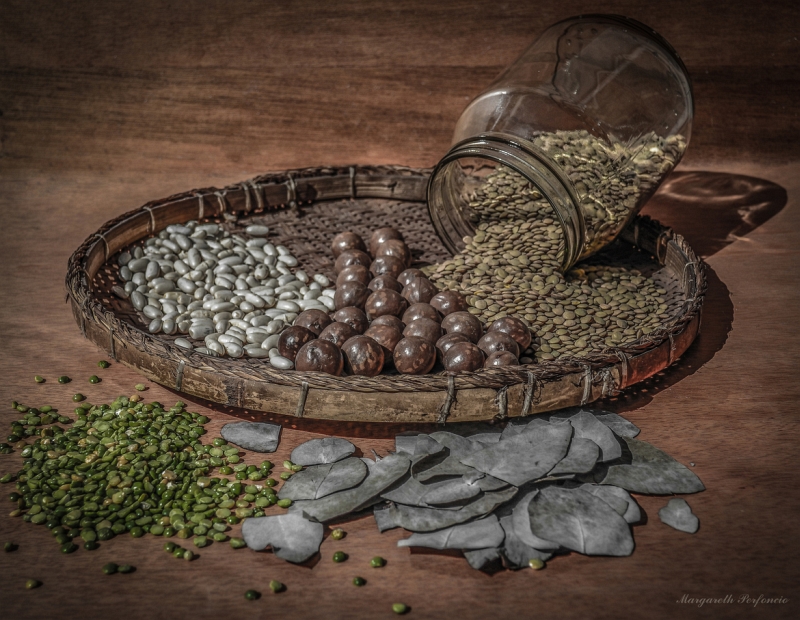
Even when subjects thin to beans, glossy nuts, spilled lentils from a tipped jar, bright green peas, and stacked dried leaves on a woven tray, the method stays constant: isolate, light from one decisive direction, let texture argue. Perfoncio’s São Paulo practice sits in a long conversation with European still-life traditions, but the photographs are not copies. They are contemporary tables that remember how painters once made ordinary hunger look ceremonial.
Technical habits repeat usefully. Dark or neutral grounds protect chroma. Side light builds form. Props—lace, burlap, wrought iron, etched glass—are chosen for how they catch or refuse light, not for brand storytelling. Signatures tuck into corners. A few frames allow narrative (fallen glass, cracked mug, cut cake) without turning into melodrama. Most prefer the quieter claim: look how a lemon’s pores hold highlight.
Series rhythm matters as much as any single hero shot. After a dark wine spill, a high-key lime cake resets the eye. After a pepper spill in white plastic, pears in Greek-key pottery return to earth tones. That oscillation keeps a long gallery from numbing. Viewers who only skim will still catch color; viewers who stay will catch decisions—why the peel curls there, why the candle sits just off the fruit mass, why one apple is allowed to isolate while others cluster.
Still life photography thrives online because it is both decorative and demanding. Anyone can place fruit on a table; few can make the table feel inevitable. Margareth Perfoncio’s strength is that inevitability—arrangements that seem found, light that seems weather, shadows that seem patient. After the last tray of legumes, you may find your own kitchen counter suddenly worth a second look. Not because it has become a museum, but because these pictures train the eye to notice rind, bloom, and the thin bright edge where an object ends and air begins.

Comments
Continue reading

Meaningful Love Quotes for Inspiration (and Ink)
Meaningful love quotes that still feel true — short lines for tattoos, gifts, and everyday reminders, with placement and wording tips.

Christina Hess’s Animals From History: Costumed Pets as Playful Portraits
Illustrator Christina Hess reimagines historical icons as ornate animal portraits—Elvis Petme and friends—mixing puns, costume detail, and soft history lessons.

Oru Burus: Supinfocom’s Little King Who Lost the Sun
Anton Brand, Guillaume Klein, Charlotte Quillet, and Raphaël Théolade’s dialogue-free 2012 graduation short turns a tiny monarch’s fight with the sun into cosmic comedy.