
Christina Hess’s Animals From History: Costumed Pets as Playful Portraits
Illustrator Christina Hess reimagines historical icons as ornate animal portraits—Elvis Petme and friends—mixing puns, costume detail, and soft history lessons.
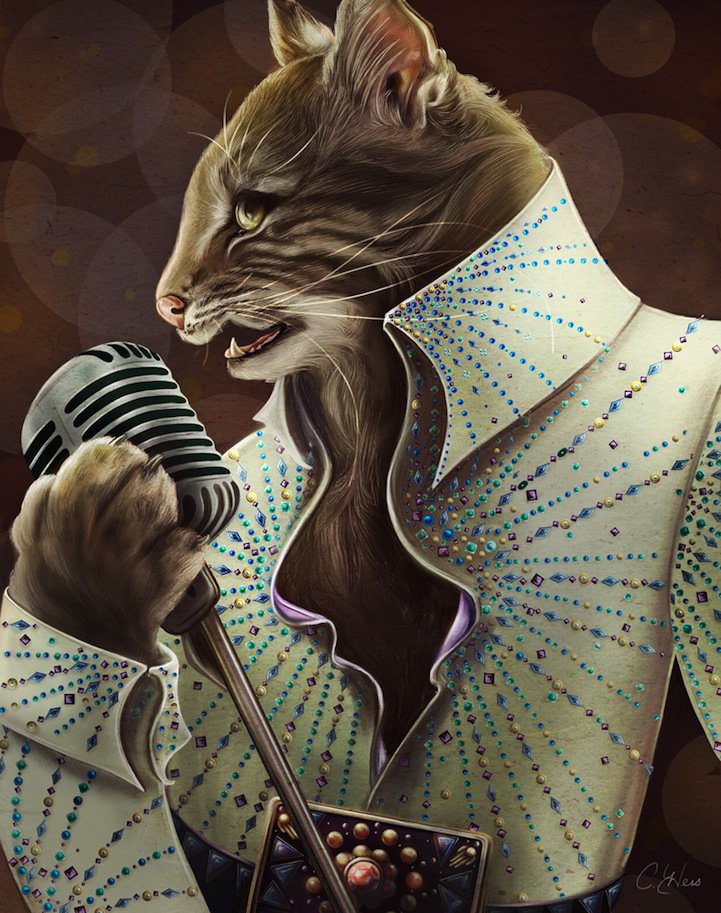
Christina Hess builds worlds where history wears fur. In her ongoing personal series Animals From History, queens become cats, generals become hounds, and pop icons borrow whiskers without losing their silhouette of fame. The illustrations are ornate, richly colored, and deliberately charming—detailed enough for adults who love costume and craft, playful enough for kids who laugh at a pun before they ask who the person was.
The page you are reading grew from a short 2013 showcase that featured Hess’s work and a single hero image: Elvis Petme, a wildcat in jumpsuit rhinestones mid-song at a vintage microphone. That picture still explains the series at a glance. Costume is researched and sparkling. The animal is painted with serious attention to fur, eye, and expression. The joke is the premise; the craft is the reason you stay.
An illustrator of nature, people, and playful history
Hess is an illustrator whose broader practice moves across nature, animals, and human subjects, in media that have included graphite, watercolor, oils, and digital work. Her professional range reaches far beyond pet portraits: coin and numismatic design for the U.S. Mint, cookbooks, exhibition circuit recognition, and teaching—later including leadership in illustration education. That résumé matters because it explains why Animals From History does not look like casual meme art. Under the puns sits training in likeness, costume, lighting, and finish.
The series itself began almost accidentally. Around 2009–2010, a family friend asked Hess to portray a white cat, Lady, as Queen Elizabeth I—eventually titled Queen Elhissabeth. Hess has said she hesitated at first, not wanting to become “that” artist who dresses animals in clothes. The commission proved unexpectedly satisfying. A cairn terrier followed as William Wallace—William Pawllace. Hess’s own basset hound, Roscoe, became Napoleon Boneaparte. A private joke became a public vocabulary.
From there the cast expanded. Cleopatra as Cleocatra, Joan of Arc as Joan of Bark, Marie Antoinette as Marie Antoinippe, Elvis as Elvis Petme, and dozens of other historically inspired creatures filled an illustrated court. Some characters are invented animal stand-ins; others began as living or remembered pets belonging to clients. The through-line is portraiture with a biographical wink: each image arrives with a tag line or short tale that mixes real history and imaginative twist.
What the pictures are doing
At surface level, the series is entertainment—ornate garb, decorative props, and names engineered for a smile. Look longer and a teaching strategy appears. Hess has described the collection as a fun way for people to become introduced and reintroduced to history while letting imagination pull interest forward. A child who giggles at Joan of Bark may ask who Joan of Arc was. An adult who recognizes Napoleonic costume on a basset hound is rehearsing visual literacy: silhouette, medal, posture, era.
That double audience is hard to hit. Too cute, and the history collapses into novelty merch. Too didactic, and the joy dies. Hess’s balance depends on painterly seriousness. Fur reads as fur. Jewels catch light. Backgrounds can feel like stage or parchment atmosphere rather than clip-art voids. In Elvis Petme, the bobcat-or-lynx face is not a sticker on a jumpsuit; the jumpsuit is built around the animal’s chest and collar the way a real costume must negotiate a body. Rhinestone starbursts in teal, purple, and gold do the glamorous work Elvis iconography demands, while the microphone and belt buckle complete the Vegas grammar.
Costume research is part of the pleasure for viewers who know the originals. Elizabethan ruffs, Roman armor, Napoleonic bicorne energy, Aladdin Sane lightning—each reference is a breadcrumb. You can enjoy the picture without the citation. With the citation, the picture becomes a small museum label wearing a grin.
Names, stories, and the soft pedagogy of puns
The naming system is half the brand. Wordplay turns historical identity into animal identity without erasing either: Boneaparte, Pawllace, Petme, Cleocatra. The accompanying short texts—love letters, mock chronicles, one-line biographies—extend the joke into narrative. Napoleon’s soft side belongs to Josephine, his squeaky toy. Kublai Khat decrees a pleasure dome of dairy excess. The tone stays affectionate rather than cruel; the animals are not mocked so much as cast.
This matters culturally because anthropomorphic animals have a long lineage—from political cartoons to children’s books to advertising mascots. Hess’s contribution is specific: museum-portrait form plus pet intimacy plus pop-historical literacy. The pictures have circulated through features on outlets such as My Modern Met, Juxtapoz, Mental Floss, Jezebel, and broader news blogs, which is how a personal project becomes a recognized series. Prints, calendars, and related merchandise followed the usual path of successful illustration IP, including releases noted around fall 2013 for digital storefronts in early coverage.
Importantly, the project kept growing rather than freezing as a one-season gag. Hess continues adding characters over years, which keeps the world feeling inhabited. A fixed set of ten jokes would age; an expanding court suggests a practice.
How to look at a Hess historical animal
Start with species and stance. Is the animal naturally compact, regal, mischievous, solemn? Then read costume: what era is being quoted, and which accessories do the heavy signaling? Next, find the hinge between animal anatomy and human gesture—how a paw holds a mic, how a ruff frames a muzzle, how a crown sits on ears. That hinge is where the illustration’s difficulty lives.
Then read the mood. Some portraits lean comic; others lean surprisingly dignified. Elvis Petme is showmanship: mouth open on a note, stage bokeh behind, signature tucked in the corner. Other pieces in the wider series lean toward court formality or mythic calm. The range prevents the project from becoming a single punchline repeated.
Finally, let the pun open a door instead of closing one. If you only remember the joke, the art still worked as delight. If you leave curious about the human original—policy, myth, music, martyrdom—the art worked as invitation. Hess designs for both exits.
Why the series fits a larger illustration career
It is tempting to treat Animals From History as a side hobby detached from “serious” work. Hess’s path suggests otherwise. Historical costume, emblematic objects, and character clarity are the same muscles used in commemorative coin design and narrative illustration. Mentoring students, exhibiting in illustration showcases, and sustaining a personal series for years are related habits: keep making, keep refining voice, keep public work that people can love without a brief.
For viewers, the series also models a healthy relationship to viral art. The images are shareable, yes. They are also slow to make—detail-rich, color-planned, historically flavored. In a culture that often rewards the fastest gag, Hess’s animals argue for finish. The sparkle is not only rhinestones; it is craft time made visible.
A lasting invitation
If you meet the series only through Elvis Petme, you have already met its thesis: history can be glamorous, animals can be noble, and imagination can be a tutor rather than a distraction. Christina Hess did not invent dressing animals in human roles. She made the dress-up specific, researched, and warm enough that pet owners and history buffs could stand in the same gallery without arguing about who the work is “for.”
Keep the image open a moment longer than the joke needs. Notice the whiskers against the open collar, the green-gold eye, the way stage light softens into brown atmosphere. Then, if you like, follow the breadcrumb to Elizabeth, Napoleon, Joan, Cleopatra, or whoever the next pun names. The animals will still be there when you return—patient, costumed, and oddly persuasive teachers of how delight and memory can share a frame.

Comments
Continue reading
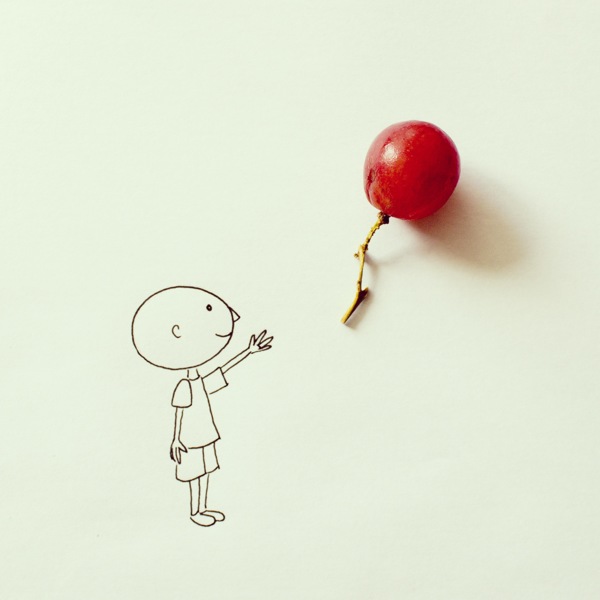
Everyday Objects Reimagined in Art by Javier Pérez
Ecuadorian illustrator Javier Pérez (cintascotch) turns grapes, condiments, and desk clutter into witty photo-doodles—minimal lines, maximum double takes.
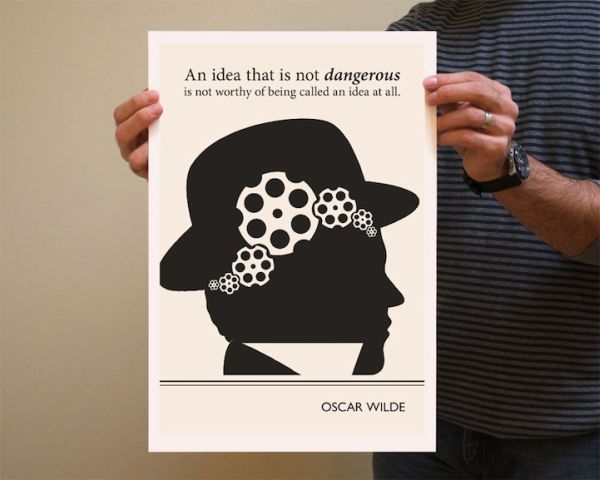
Evan Robertson’s Illustrations from Underlined Book Quotes
Through Obvious State, designer Evan Robertson turns underlined literary lines into black-and-white posters where text and drawing think together.
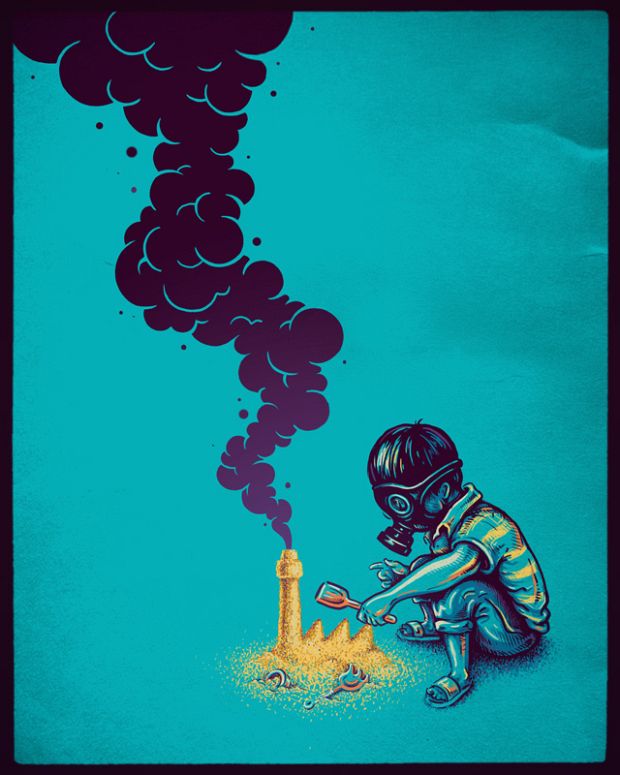
Enkel Dika’s Surreal Illustrations: Wit, Space, and Sharp Concepts
A look at Macedonian illustrator Enkel Dika’s graphic surrealism—gas-mask play, lunar chores, and pop-culture collisions built for a one-second read and a longer second look.