
Photo-Realistic Muscle Car Paintings by Cheryl Kelley
Cheryl Kelley’s glossy oil paintings of classic muscle cars—photo-based realism, chrome reflections, and a feminine take on automotive glamour, with gallery images.
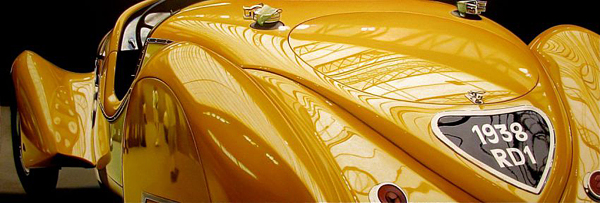
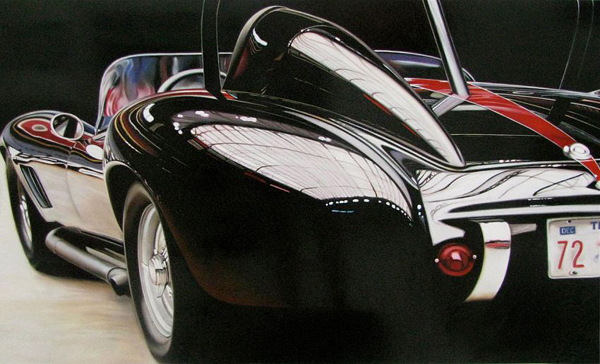
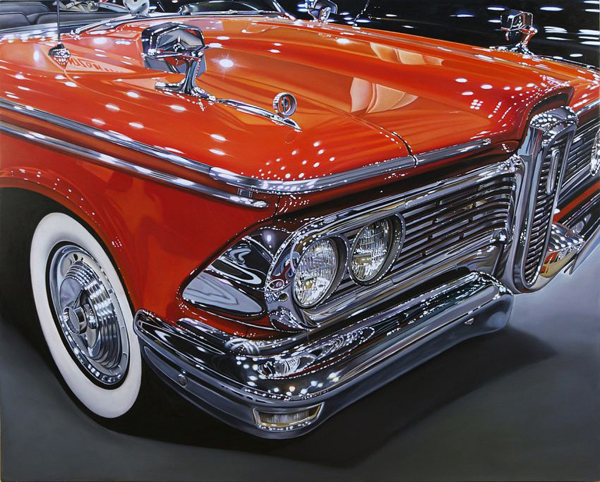
Cheryl Kelley paints classic American muscle cars—and other gleaming automobiles—with a fidelity that makes viewers check twice for a camera. Oil, careful photography of real cars, and high-gloss varnish combine until chrome seems to throw real reflections and candy-colored paint looks wet enough to touch. The Houston-born artist grew up as the original muscle-car era faded into memory, and that childhood charge never quite left. What she brings to the subject is not only technical polish. She treats machines often coded as masculine trophies as bodies of curve, sheen, and complicated desire—vehicles that look loud with horsepower yet read, up close, like jewelry designed at industrial scale.
She has called the work photo-based realism. She shoots at car shows and museums, then pushes the image in paint until it feels, in her words, somewhat more real than the photographic predecessor. Brushwork shifts from tight blends to looser, gestural passages so depth opens and closes as you change your viewing distance. Smooth surfaces and glossy varnish mimic a showroom finish. Stand back and you may swear you are looking at a photograph; step closer and the hand announces itself. That double reading, she suggests, suits the American Dream in all its complexity: gleaming promise from afar, labor and gesture when you get near enough to see how the shine was made.
“My work could be called photo-based realism. I work from photographs that I take at car shows and museums. The images are manipulated and become somewhat more real in the painting than their photographic predecessor. I use oil on canvas because I believe it is the most sensual of all mediums and it allows me the freedom to have varying techniques within my work. My brush strokes range from very tight and smoothly blended to very loose and expressive to create an illusion of openness and depth. My surfaces are smooth and a high gloss varnish is used to mimic the surface of a car. These works can appear both photo realistic and gesturally abstract depending on the position of the viewer which seems to me to be a perfect metaphor for the American Dream in all its complexity.”
Curves, chrome, and a gendered irony
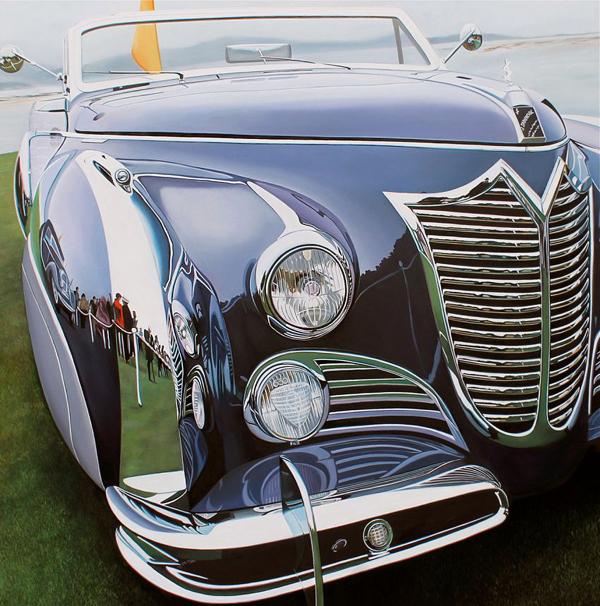
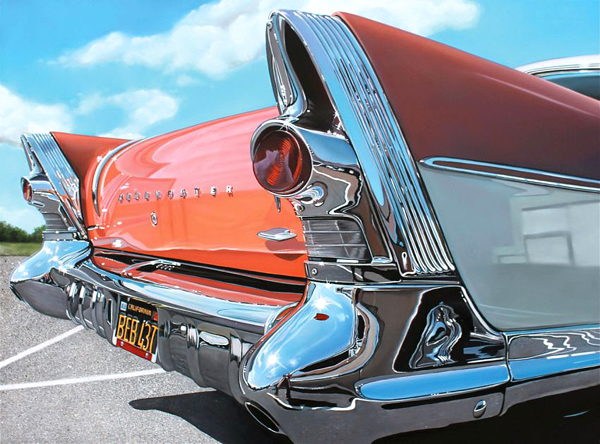
Muscle cars carry a cultural script: horsepower, youth, dominance, the roar as swagger. Kelley knows that script and quietly rewrites it. She has noted that cars seemingly fueled by raw testosterone are, in form, deeply feminine—hips of fenders, lips of chrome, flanks polished like jewelry. Low angles and close crops emphasize sensuous contour over mechanical diagram. You rarely get a textbook three-quarter catalog view. Instead you get intimacy: a shoulder of steel, a grille’s smile, a river of hood that refuses to end where the frame ends.
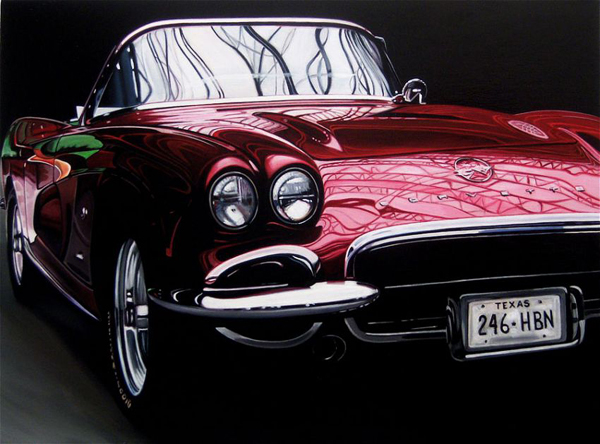
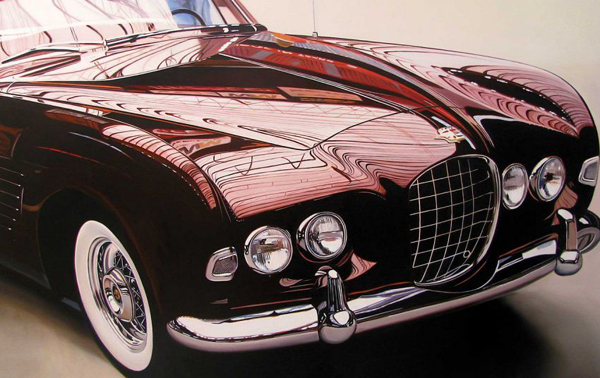
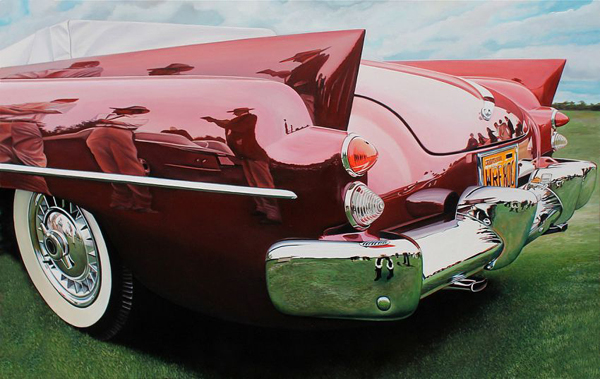
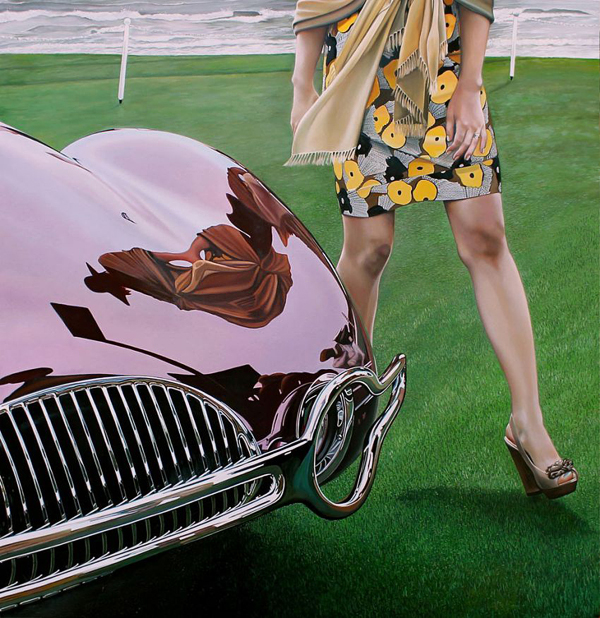
Reflections on hoods and doors open portals. Architecture, sky, banners, and passerby silhouettes swim inside the paint as if the car were a mirror-world. Those reflections are not decorative leftovers. They are where fantasy and documentary meet. The metal body is “real”; the world bent across it becomes dream space. Kelley has spoken of the car as reality and the reflection as fantasy, inviting you to travel between them without leaving the panel. In that travel sit questions of power and freedom: who gets to own speed, who gets to look, and what kind of beauty a culture allows an automobile to carry when the viewer is not the expected boy with a poster on his bedroom wall.
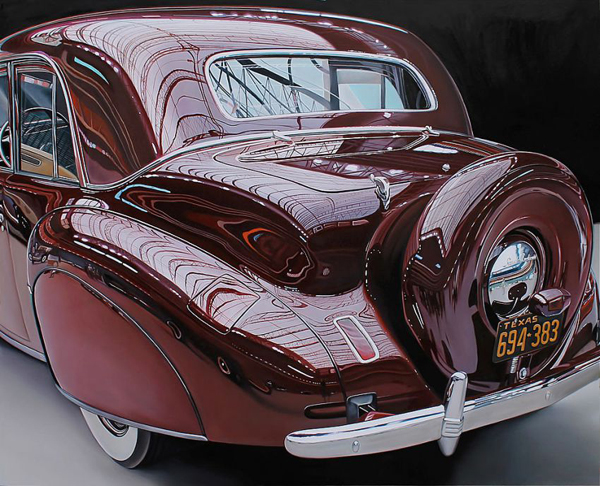
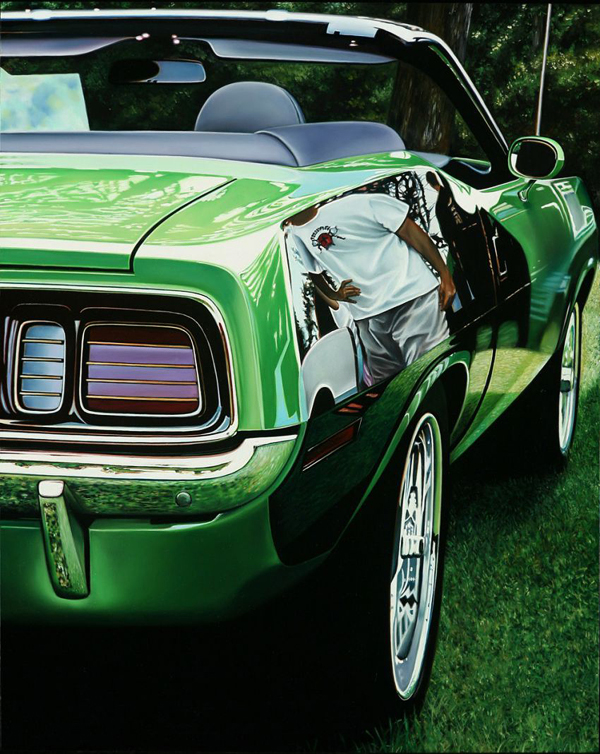
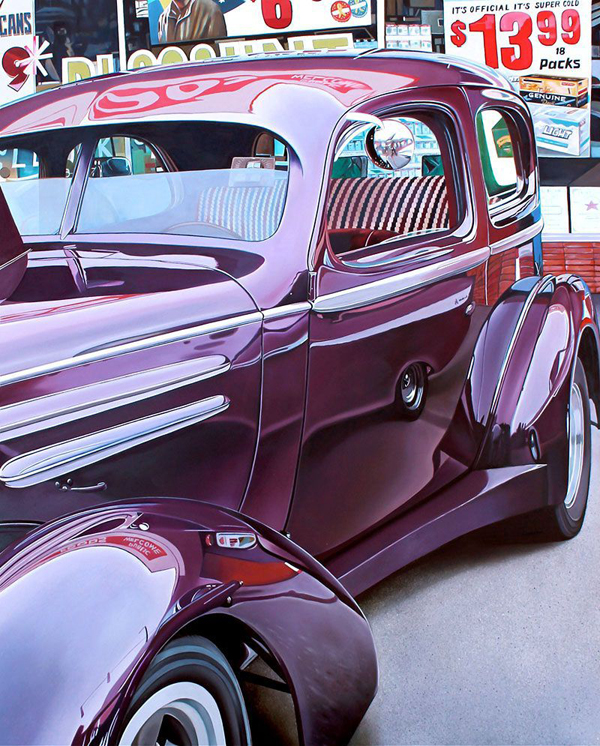
From abstract beginnings to aluminum sheen
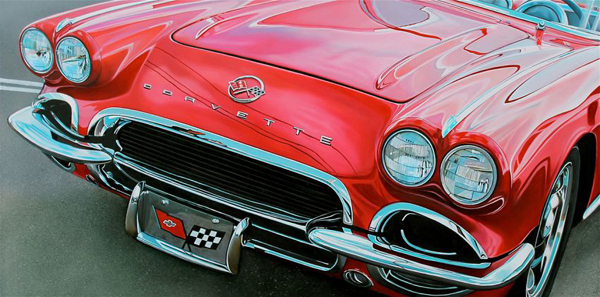
Kelley began as an abstract expressionist before turning her attention to historical automobiles. That early training shows in the way large color fields of red, teal, or black still behave like abstract shapes even when they resolve into a Corvette or Camaro. A fender can read as a sweep of pure hue before it becomes metal. Later she expanded from oil on canvas to oil on aluminum panels, a support that heightens the industrial glamour of the subject. The hard panel and the hard car answer each other; varnish seals the conversation so light skips across the surface the way it skips across a freshly waxed show car.
Subject matter widened beyond pure muscle into classics and occasional European marques, yet the signature remains: luscious surface, intimate framing, and reflections that feel almost liquid. Naming specific models—1968 Camaro, 1970 Nova, 1965 Corvette—does more than label paint jobs. For Kelley those names unlock childhood atmospheres. As she grew into loving the machines, she also grew aware that the muscle car had been framed as a last bastion of young male dominance. Painting them with charm and mystique becomes a reclaiming look rather than a fanboy inventory. The cars keep their power; the gaze changes ownership.
How to look at this gallery
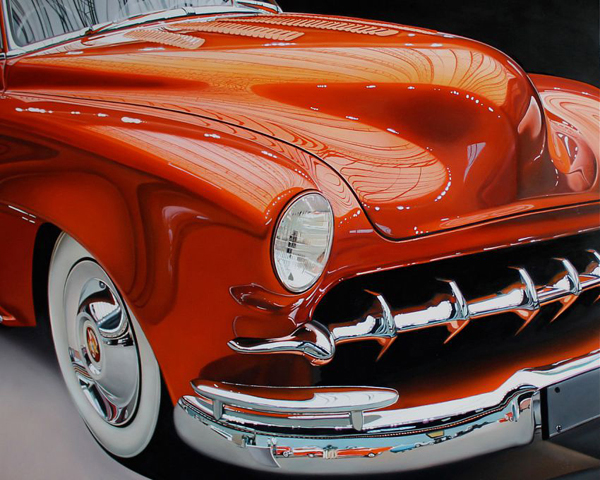
First, enjoy the fetish of finish—the wet look, the deep candy coats, the chrome that seems colder than the screen can render. Second, hunt reflections for miniature worlds: buildings, banners, human shapes folded into doors like secrets. Third, notice crop. Kelley often denies you the full car-as-diagram; she gives you fragments that eroticize the machine without needing a driver in the frame. Absence of a driver is useful. It keeps the car from becoming a prop in someone else’s story and lets the object itself hold the stage.
Compare two neighboring images for temperature. One may burn with hot reds; another cools into greens and blues. Color here is mood as much as brand identity. Also watch edges where photoreal detail loosens into painterly suggestion. That looseness is not a flaw in the illusion; it is the breath that keeps the work from becoming a sterile copy of a photograph. If every inch were equally tight, the painting would feel airless. Kelley’s shifts of touch create the sensation of depth you get when a real car’s curves catch light unevenly in a crowded show hall.
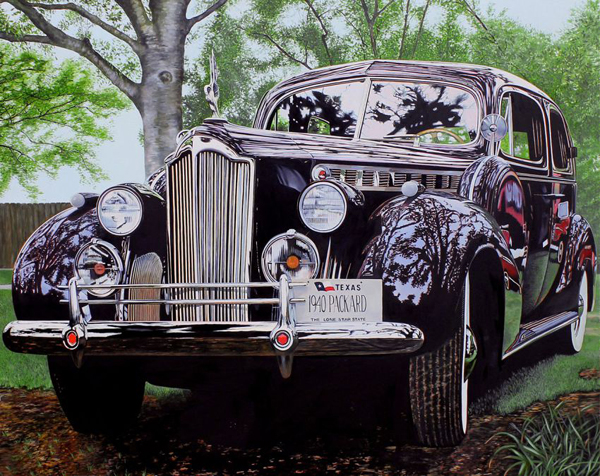
Why paint cars when photographs exist?
The question haunts every photorealist. Kelley’s answer is embedded in process: photography gathers information; painting edits desire. She can intensify a reflection, deepen a red, soften a transition, or heighten a curve until the car becomes more itself than a documentary frame allows. Oil’s sensuality—her word—matters. A camera freezes light; a brush builds light through decisions repeated over weeks. That duration shows even when the finish looks instantaneous.
There is also cultural nostalgia with teeth. Many of these designs belong to decades when cars announced personality more loudly than today’s efficiency boxes. Painting them keeps that design language vivid without requiring a garage full of restorations. Enthusiasts recognize models and argue lineage; non-enthusiasts can still feel the glamour. The work speaks both dialects. It can hang in an automotive museum conversation and in a contemporary gallery conversation about gender, surface, and American myth without changing a single highlight.
Exhibitions over the years—including New York gallery shows that framed the cars as reflective presence rather than mere memorabilia—helped place Kelley among painters who take popular machines seriously as form. Serious does not mean humorless. There is pleasure here, almost comic in how seductive a door panel can become when isolated and polished into an icon.
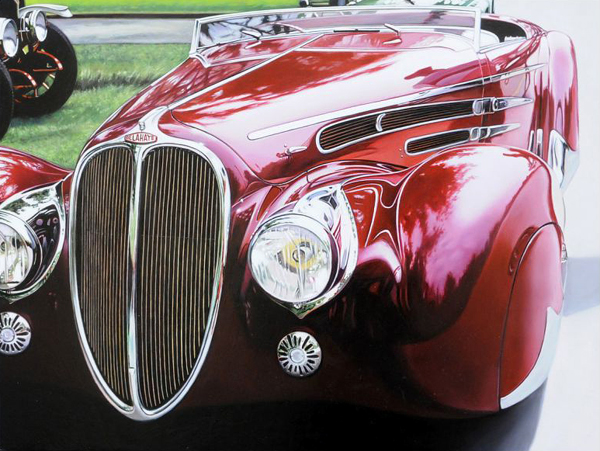
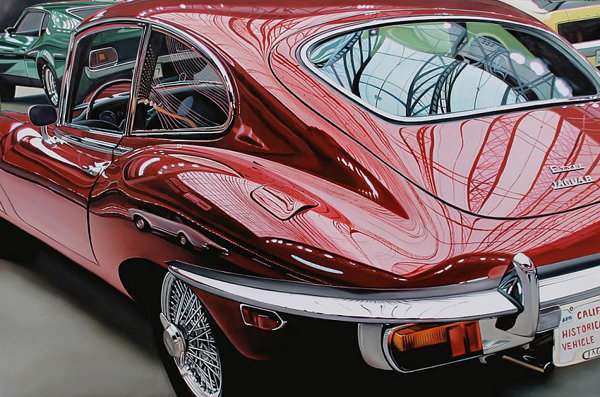
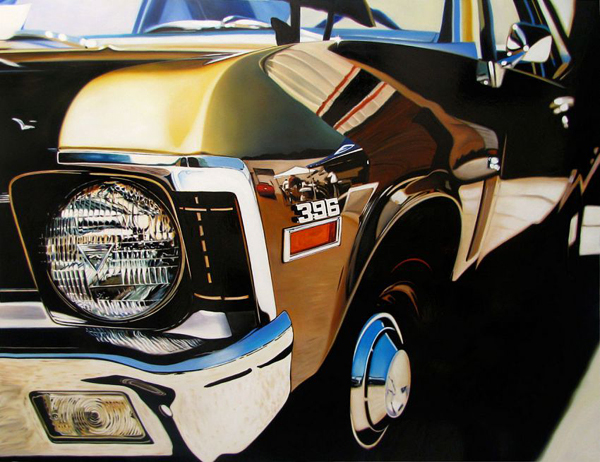
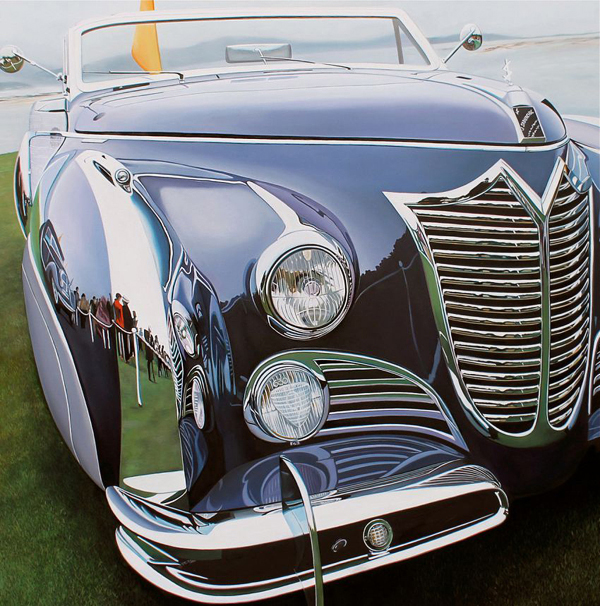
Before you leave the last frame, pick one reflection and describe it in a single sentence as if it were a separate landscape—a strip of building, a smear of sky, a ghost of a person. Then look back at the car that holds it. The machine and the mirage are the same painting. Cheryl Kelley’s particular talent is making you believe both at once, then making you wonder which one you wanted more.

Comments
Continue reading
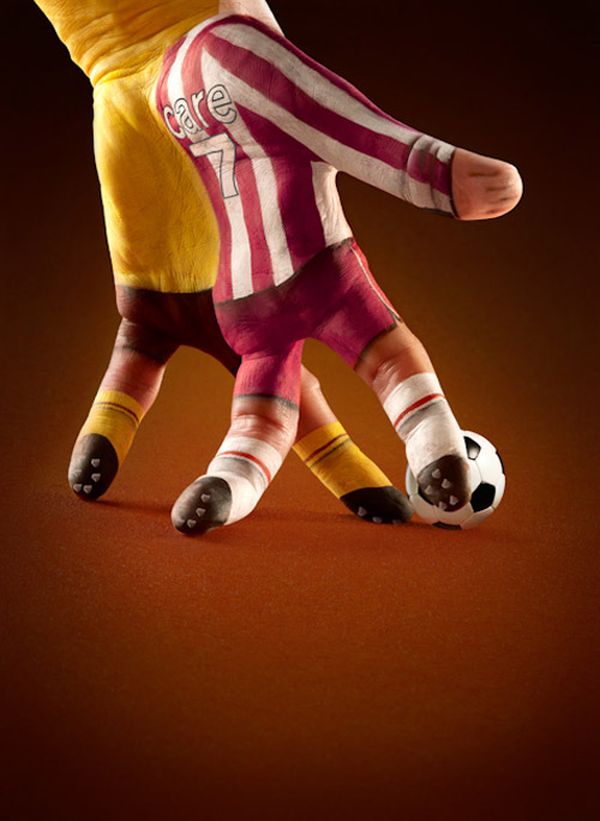
Ray Massey’s Hand Paintings: Trompe-l’oeil Athletes, Castles, and Everyday Objects
Ray Massey’s painted-hand photographs turn fingers into footballers, sprinters, castles, pencil cups, and bananas—studio trompe-l’oeil with lasting wit.

Evgeny Lushpin’s Evening Journey: Twilight Cities, Canals, and Cable Cars
A gallery walk through Evgeny Lushpin’s twilight paintings—from St. Petersburg roofs and European canals to Montmartre rain and the San Francisco Evening Journey canvas.

Photo-Realistic Paintings by Patrick Kramer
Utah painter Patrick Kramer’s photoreal oil works—why handmade perfection still matters beside photography, with a look at process and portfolio images.