
Imaginative Underwater Photos by Martha Suherman
Indonesian photographer Martha Suherman stages models in flowing dresses underwater, then recovers color and composite glamour where water rewrites fabric, light, and breath.
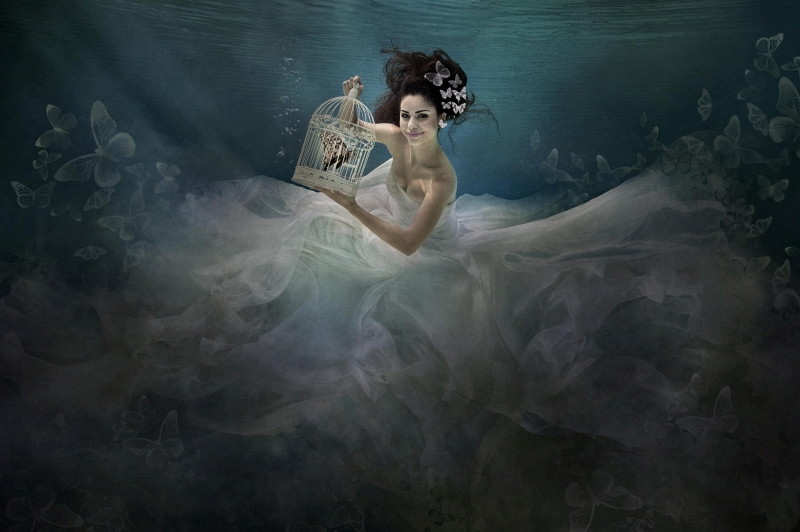
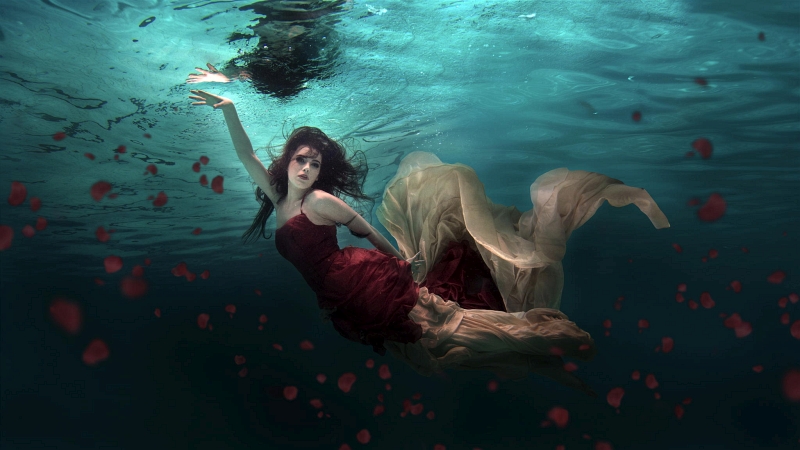
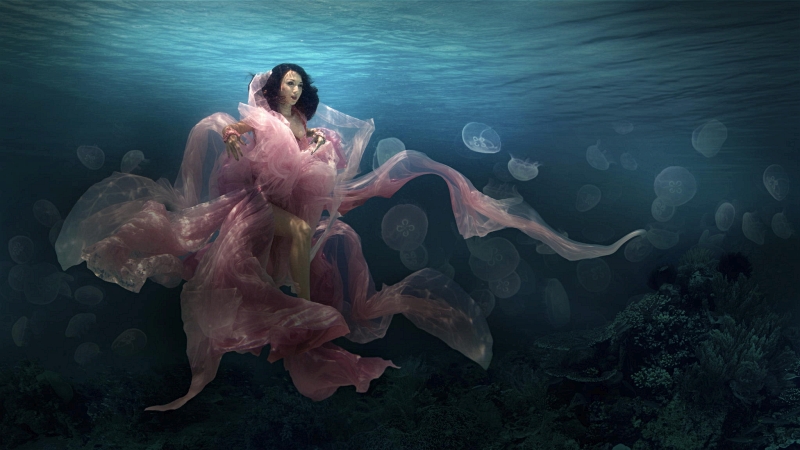
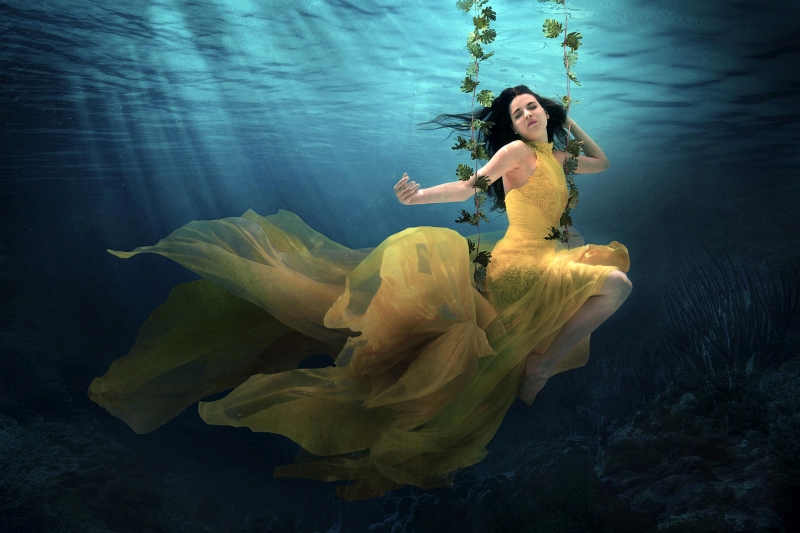
Martha Suherman takes models in gorgeous dresses into water and photographs them where fabric, hair, and gesture obey a different physics. Bubbles rise. Skirts bloom. Color shifts toward blue and green until skin and cloth need careful recovery in post. The imaginative underwater photos that made her name are not vacation snapshots. They are controlled collaborations between diver-models, fashion, and a photographer who treats the pool or sea as a studio with its own stubborn rules.
Suherman is an Indonesian visual artist whose practice spans landscape, digital composite, and portrait photography, with additional work in watercolor and acrylic. Among those fields, the underwater series stands out because it combines fashion glamour with environmental difficulty. She has also built a commercial reputation around movement and underwater imagery—work that later included campaign and television collaborations—but the core fascination remains visible in these frames: beauty suspended, dresses behaving like living organisms, portraits made where breathing is a timed resource rather than a given.
Why underwater changes every photographic habit
Above water, you can talk a model through micro-expressions and adjust a light stand between takes. Underwater, communication shrinks to signals and rehearsal. Weight, buoyancy, and breath set the schedule. Water absorbs warm light, so straight-out-of-camera files often look cooler and less flattering than the scene felt to the human eye. Fabric that drapes elegantly on land can tangle or go limp—or, if you choose well, explode into shapes no wind machine can fake for long.
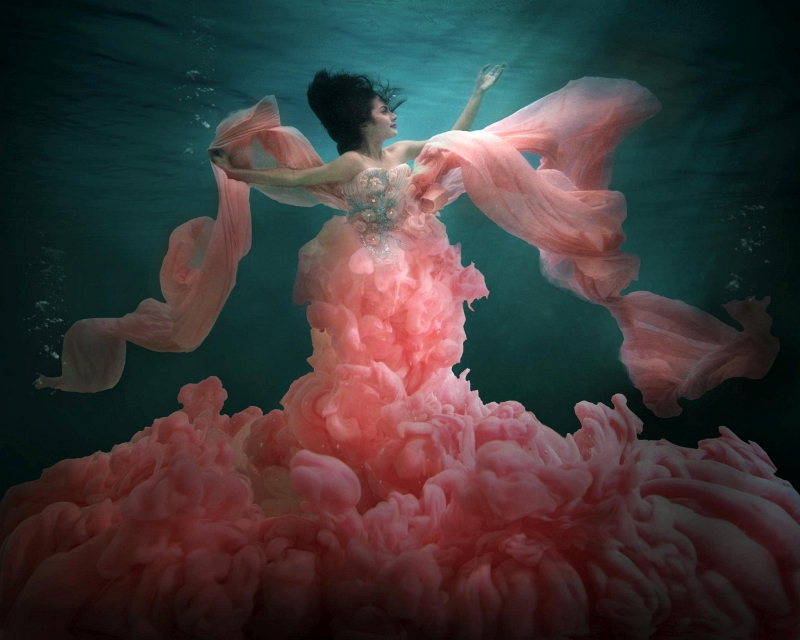
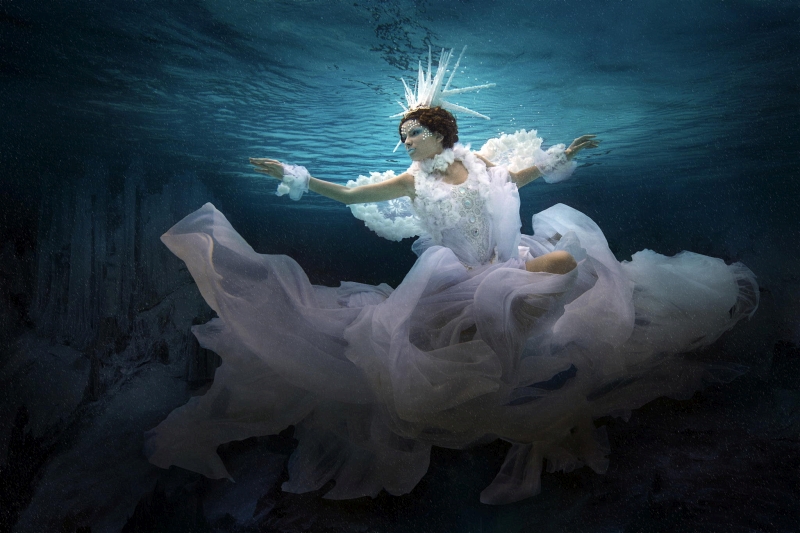
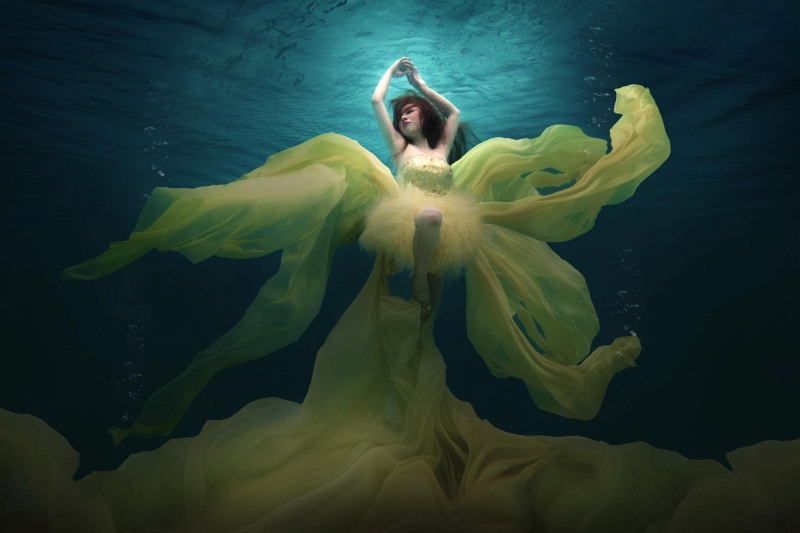
Suherman’s underwater pictures lean into that second outcome. Dresses are not obstacles; they are kinetic sculpture. The model’s job is partly athletic: hold a pose, keep eyes usable, manage panic and cold, then surface. The photographer’s job is to anticipate peak bloom—the fraction of a second when cloth, limbs, and face align—then protect color and composite polish afterward. Glamour here is not laziness. It is the refusal to let a hard environment produce only documentary grit.
Conditions that define the look:
- Color cast management — correcting blue and green bias without making skin look plastic or chalky.
- Fabric engineering — garments chosen or extended for underwater volume and readable silhouette.
- Movement literacy — knowing how bodies drift and how hair writes lines through denser fluid.
- Composite finishing — sometimes adding cloth or cleaning distractions so glamour holds.
- Safety and briefing — dive instruction before beauty, every time, without exception.
From graphic design to underwater specialist
Suherman studied graphic design at Trisakti University in Jakarta and began as a graphic designer before committing to photography. She found photography in 2000 and worked professionally from 2007 onward. That design background shows in how cleanly her underwater images read as compositions: strong silhouettes, intentional negative space, fashion hierarchy preserved even when bubbles compete for attention. The frame still has a focal order. Chaos is allowed only where it serves atmosphere.
She has described using organized RAW workflows and color tools to handle the stubborn underwater palette, then moving selects into Photoshop for composite work—often adding fabric to heighten glamour. The imaginative quality of the final frame is therefore partly shot and partly constructed, without pretending the water was easy. Landscape and portrait skills feed the same eye: place a figure in an environment, then decide how much of that environment should remain wild and how much should be refined into a usable beauty image.
How to look at one of these frames
Ignore the novelty of “people underwater” for a moment and read the picture as fashion portraiture made in a hostile medium:
- Find the face first. Is expression serene, fierce, dreamy? Underwater faces fight distortion, pressure, and chill.
- Map the fabric. Where does the dress create the largest abstract shape, and does that shape lead the eye?
- Track bubbles and particles as atmosphere—useful texture that sells wetness, or clutter that steals focus?
- Notice depth cues — distance to surface light, darkness below, floating limbs, the sense of up and down.
- Ask what was likely refined later — extended cloth, cleaned color, removed distractions—without needing a forensic software answer.
This looking style keeps the series from collapsing into generic “wow, diving” tourism. Suherman’s contribution is taste under pressure: glamour that still feels bodily and wet, not airbrushed into a dry studio fake with a water filter slapped on.
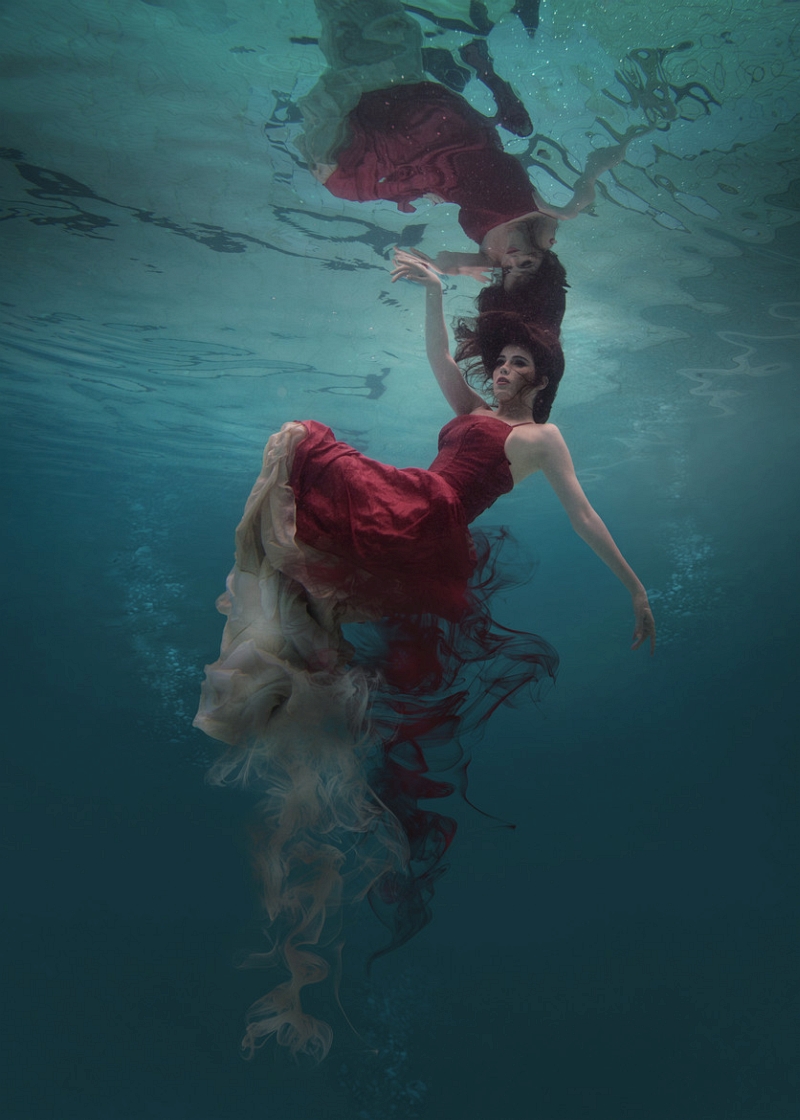

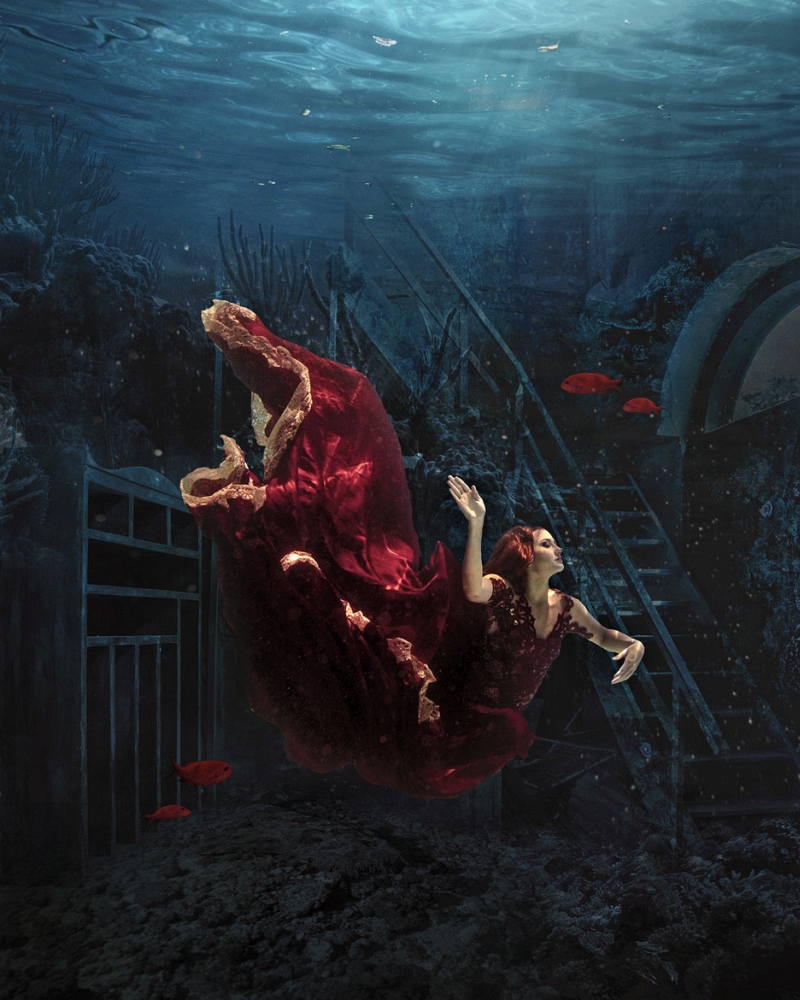
Imaginative underwater vs. documentary dive photos
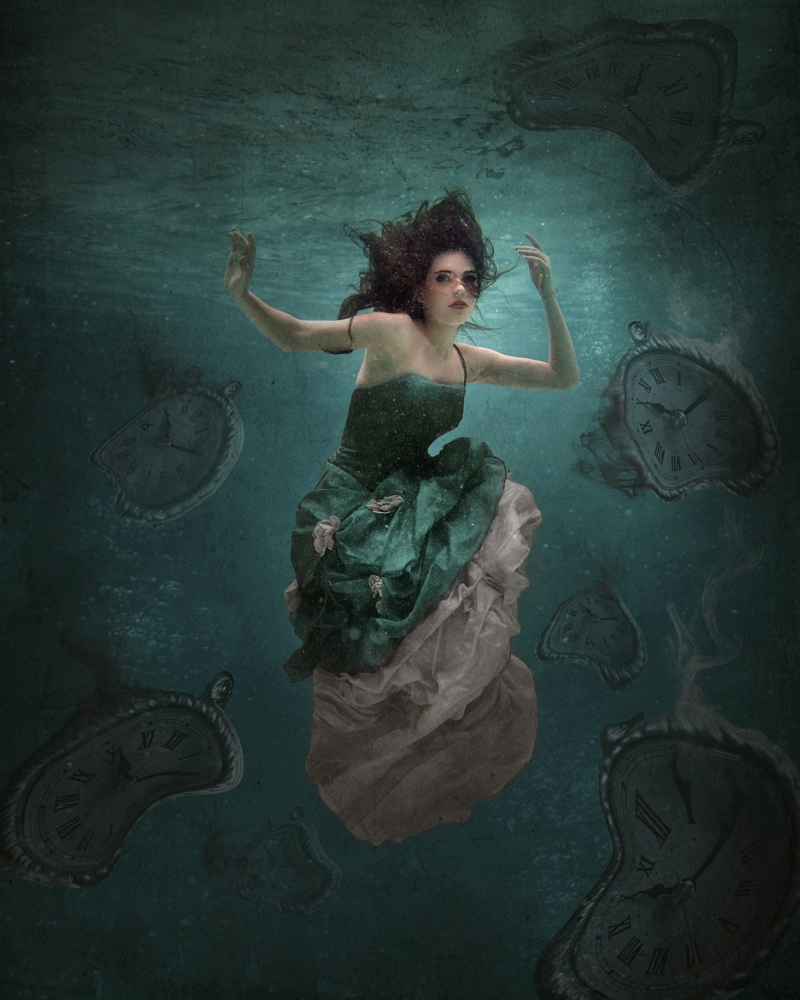
Reef photography celebrates ecology, clarity, and the ethics of showing a place as it is. Suherman’s imaginative underwater photos celebrate staged beauty. Models wear formal dresses that would be absurd for actual swimming or scientific diving. The unreality is the point. Water becomes a dream set where gravity loosens and couture grows tentacles of silk. Digital composite work can push that dream further, but the base magic is physical: cloth in motion through denser fluid, captured before the breath runs out.
That distinction also separates her from moon-illusion play built on optical alignment, or from painterly desktop surrealism built primarily in layers. Her primary theater is wet. Risk, briefing, and breath are part of the aesthetic even when the final file looks serene. Viewers sense the cost without needing a behind-the-scenes reel. Serenity underwater is earned, and the dresses are how that earning becomes visible as design.
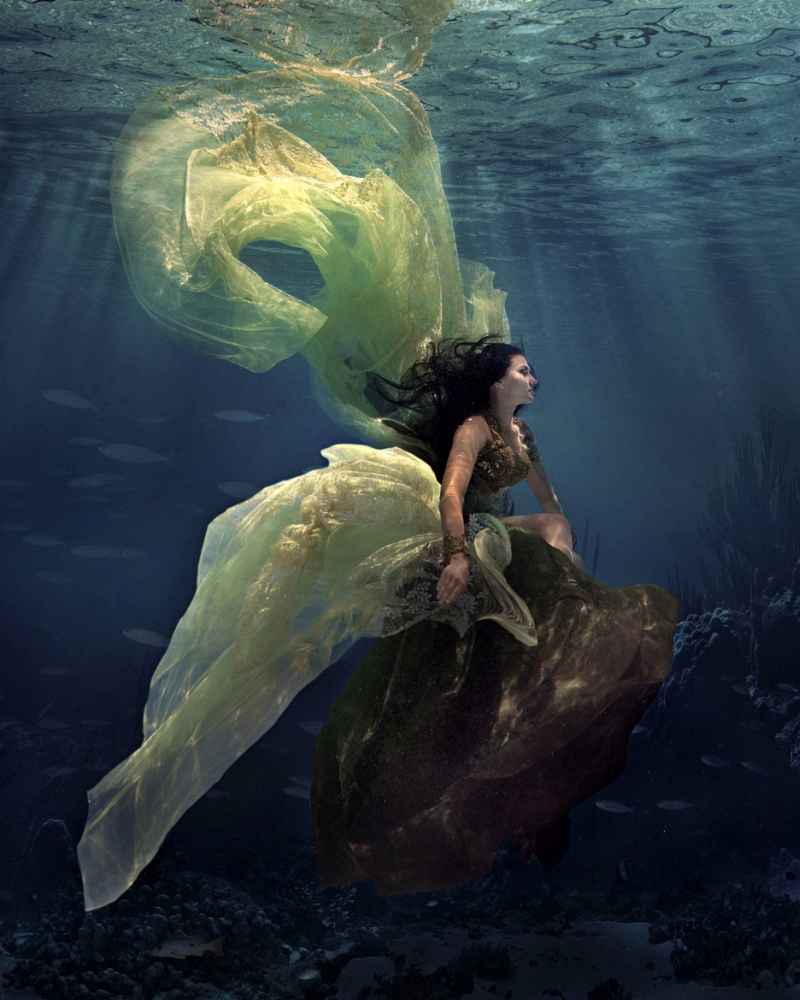
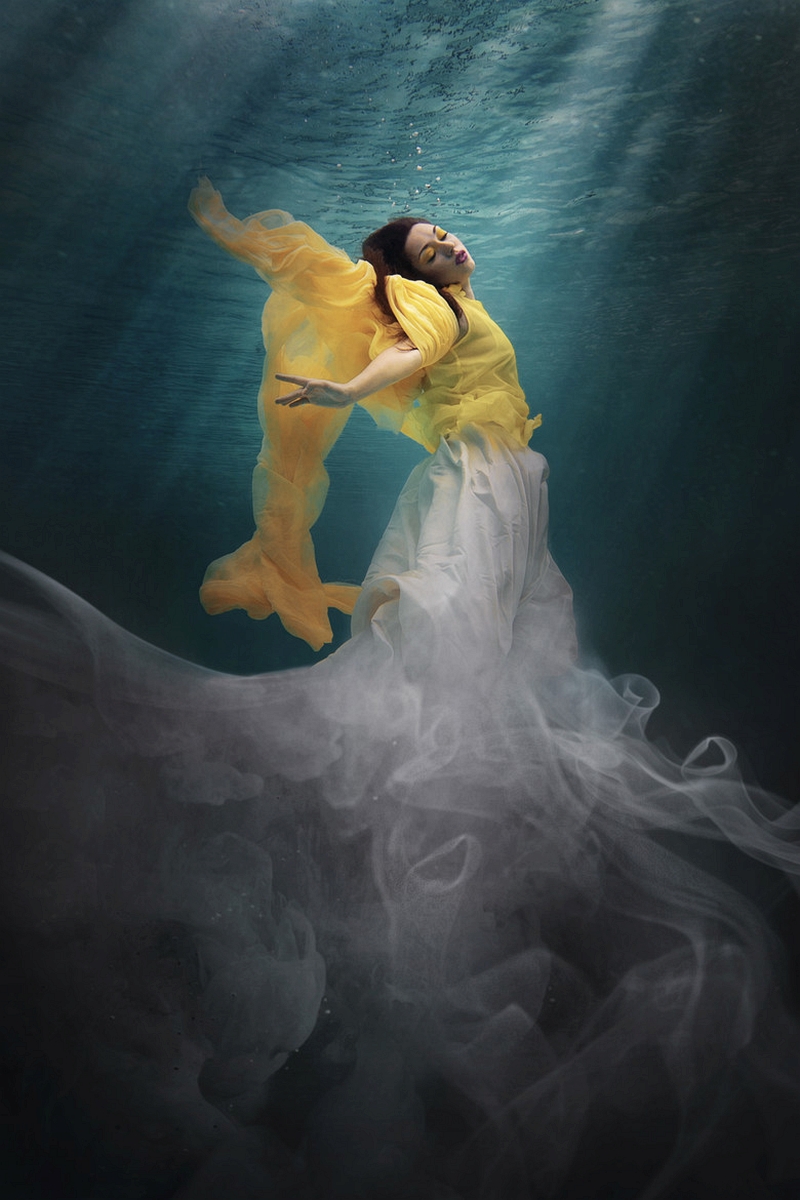
Craft reminders for anyone planning a first pool session
If these images inspire a shoot, start smaller than an open-water fantasy sequence:
- Use a controlled pool with safety support before attempting sea work.
- Brief models with a dive instructor; never prioritize the shot over breath or panic management.
- Choose fabrics that bloom rather than cling into a sad second skin.
- Shoot RAW and plan color recovery; trust SOOC skin tones less than you would on land.
- Build a select system so composites do not drown in near-duplicate files.
- Accept that many frames will fail; underwater hit rate is merciless compared with dry portraiture.
What the dresses are doing in the frame
Return to a single concrete idea as you leave the gallery: in Martha Suherman’s imaginative underwater photos, the dress is not costume alone. It is the instrument that makes water visible as movement. Without volume and color in the fabric, many frames would be simply people holding their breath in a blue box. With it, the pictures become soft explosions of shape—fashion speaking fluent underwater. That is the specialty on display here, and it still looks as unlikely, deliberate, and physically costly as it did when these images first circulated among photography and design readers.

Comments
Continue reading

Dramatic Photo Art by Sukron Ma’mun (Ipoenk Graphic)
Cirebon, Indonesia photographer Sukron Ma’mun uses theatrical natural light to frame village life, play, and place in lyrical photo art.

Bird’s-Eye Views: Florian Beaudenon’s Instant Life
Paris photographer Florian Beaudenon’s Instant Life series captures people in their rooms from above—intimate, collaborative overhead portraits of everyday joy.

Abandoned Cars Reclaimed by Nature: Rust, Growth, and Quiet Ruin
When neglected vehicles are left outdoors long enough, rust, moss, and trees rewrite them into strange still lifes—sad, photogenic, and slowly returning to the ground.