
Silent World: People-Free Cities by Lucie & Simon
Paris duo Lucie & Simon empty New York, Paris, and Beijing in Silent World—long-exposure, ND-filtered visions of landmark cities with one or two symbolic witnesses left behind.
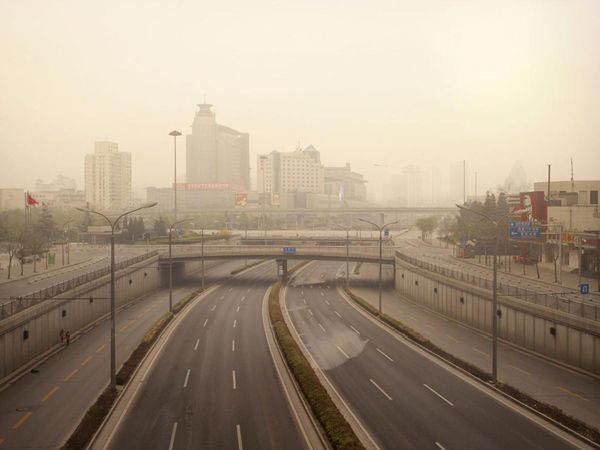
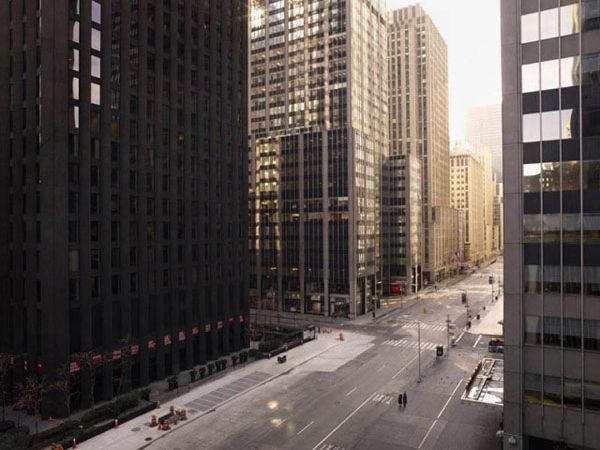
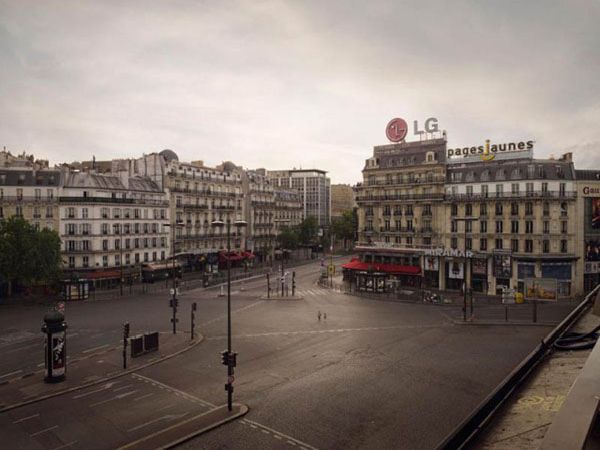
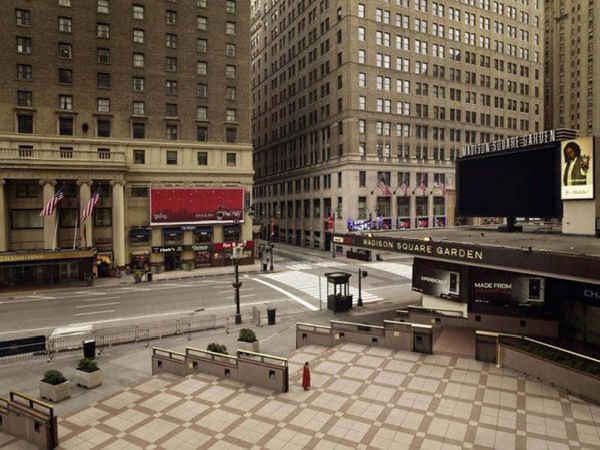
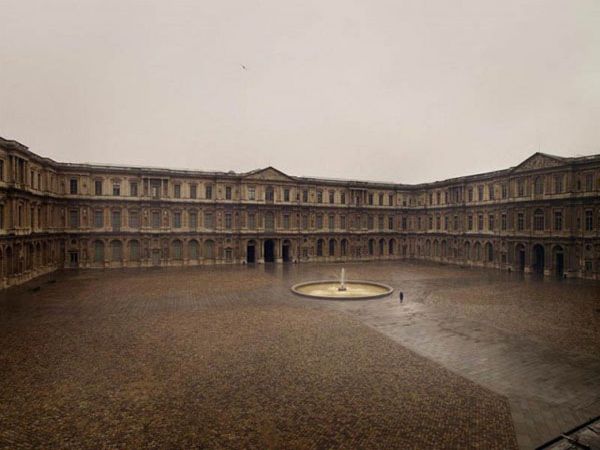
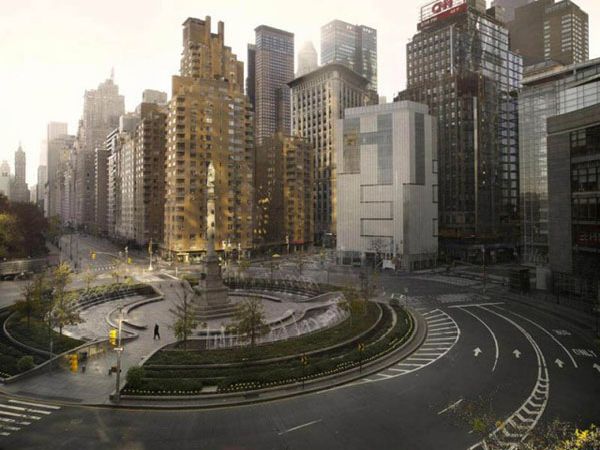
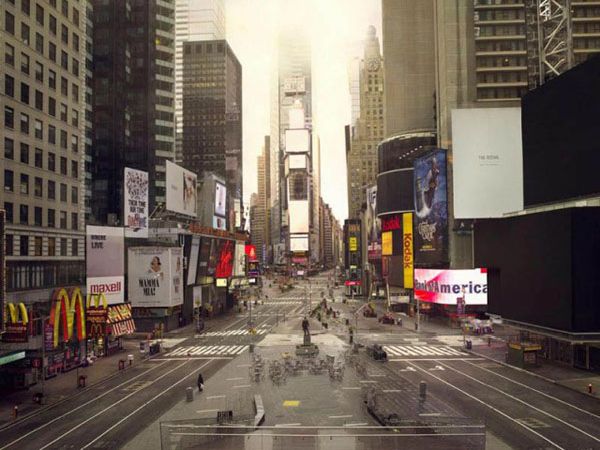
Paris-based artistic duo Lucie & Simon spent years emptying the world’s busiest public spaces of their crowds. Their series Silent World presents New York, Paris, Beijing, and other metropolises as if the population had stepped offstage—plazas, bridges, ring roads, and tourist magnets held in a suspended calm. The photographs are not simple tourist shots taken at dawn. They are constructed visions of “impossible places,” made with long exposures, extreme neutral-density filtration, and careful post-production so that moving bodies and vehicles dissolve while architecture remains.
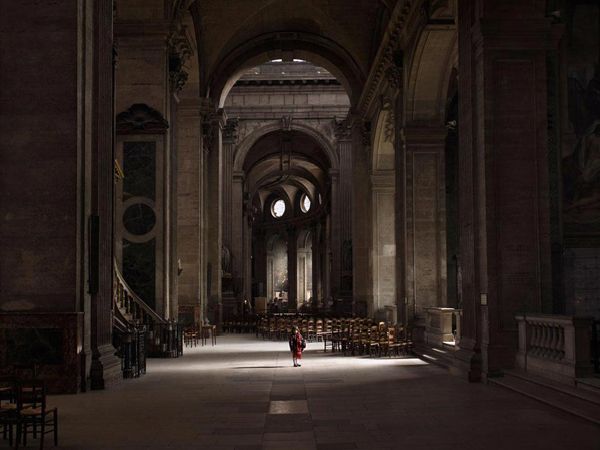
What keeps the series from becoming pure vacancy is the duo’s decision to leave one or two symbolic figures in many frames. A solitary witness—often a child—stands inside the emptied city as a sign of life, hope, or disorientation. Lucie & Simon have described those small intrusions as disruptions of majestic calm: the viewer must renegotiate scale, time, and belonging. This page stays with their authorship and with the people-free city idea that made Silent World circulate so widely around 2012, when design and photography sites shared the work as both spectacle and quiet warning.
How Lucie & Simon emptied a city
The technical story is part of why the work stuck in photography conversations. Instead of relying only on cloning tourists out of a midday snap, Lucie & Simon used high-density neutral filters—filters extreme enough that NASA-type astronomy contexts are often mentioned in explanations—to force very long daytime exposures. Anything that moves during that exposure softens into invisibility. Cars streak away; pedestrians vanish; only relatively still structures hold their edges. The city becomes a stage set built from stone, steel, glass, and signage.
Long exposure alone does not finish the picture. Contemporary accounts of the project note that the artists then combined and refined frames in post-production so the final city reads as a coherent empty stage rather than a blurry accident. The goal was not documentary purity. The goal was a readable fiction: a known place made unknown. That hybrid method—optical disappearance plus deliberate finishing—explains why the images feel cleaner than a single timed shutter click usually allows in a crowded square.
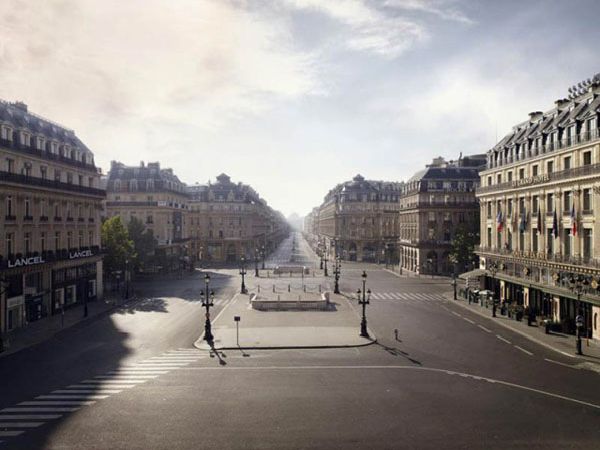
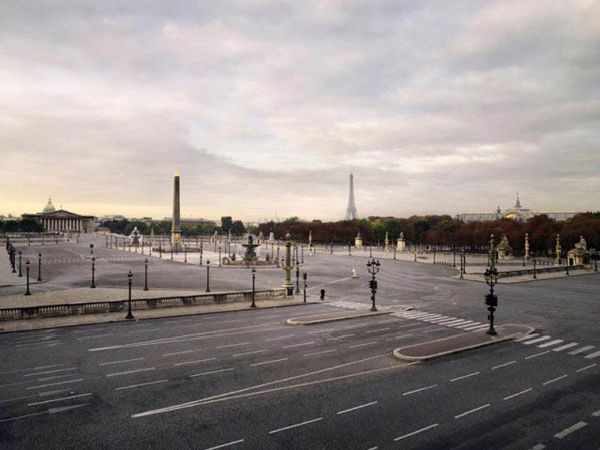
That method matters when you look at Times Square, Place de l’Opéra, Tiananmen Square, Columbus Circle, the Queensboro Bridge, the Cour Carrée of the Louvre, Beijing ring roads, Madison Square, Place de la Concorde, Sixth Avenue, Place Montparnasse, and related sites that appear across the series. You recognize the landmarks instantly. Recognition is the trap. Once the landmark registers, the missing crowd does the emotional work, and the brain supplies the sound that is no longer pictured.
Why one remaining figure changes everything
An entirely empty city can look like a 3D render or a film still from a disaster franchise. Lucie & Simon’s lonely figures pull the images back toward parable. The artists have said they wanted viewers to question their place and role in relation to the world and its future. A child in an emptied plaza is not a prop for cute scale comparison; it is a narrative hinge. Time feels suspended. The city becomes a landscape the character must confront, and the viewer becomes implicated as another potential last witness.
That hinge also protects the work from being misread as pure nostalgia for quieter streets. These are not “city without tourists” travel tips, and they are not advice for photographers chasing empty mornings. They are speculative atmospheres. The silence is theatrical. You can almost hear your own footsteps in the photograph because the usual audio bed of engines and voices has been removed from the visual field, leaving architecture to perform alone.
Compare that approach to related empty-city projects that circulated in the same era—Matt Logue’s emptied Los Angeles, Masataka Nakano’s Tokyo Nobody, and other depopulated urban series. Lucie & Simon sit in that conversation, but their franco-german, Paris-based practice and their insistence on symbolic witnesses give Silent World a specific authorship you should not blur into a generic “empty cities” meme. Credit the duo whenever the images travel; their names are part of the meaning.
Cities as characters: New York, Paris, Beijing
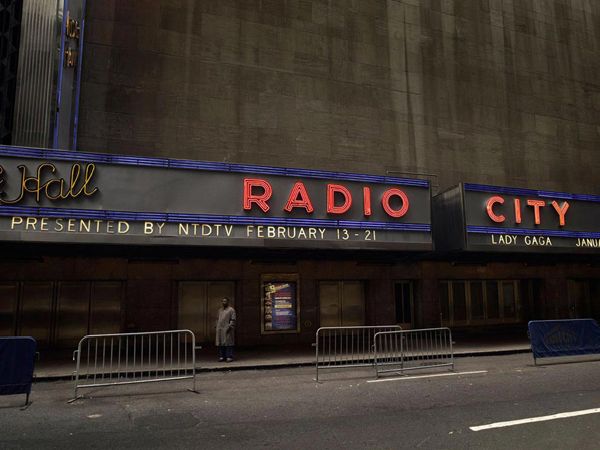
New York in Silent World loses the kinetic identity that usually defines it. Times Square without the crush becomes a canyon of screens and signage performing for nobody. Bridges and avenues reveal their engineering scale once the traffic film is wiped away. The city’s vertical ambition reads differently when no one is rushing through the foreground; billboards look almost ceremonial.
Paris, by contrast, often looks eerily classical when emptied: opera façades, Louvre courtyards, and ceremonial plazas regain the monumentality planners imagined before souvenir economies filled every square meter. Without the queue, the courtyard becomes geometry again. Without the crosswalk crowd, Place de la Concorde becomes a stage of axes and fountains. Lucie & Simon’s Paris plates remind you that the city’s beauty was designed to be seen at civic scale, not only at postcard proximity.
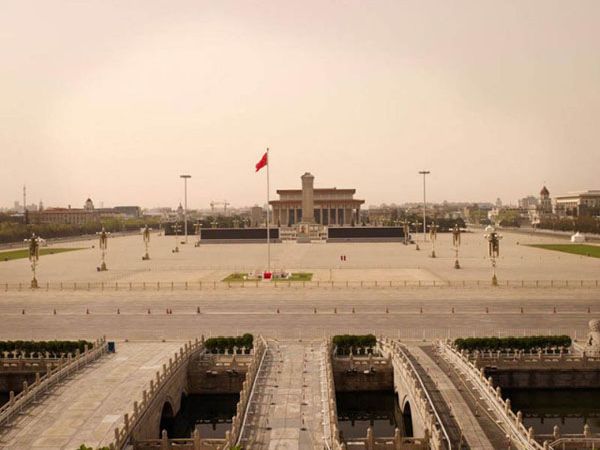
Beijing’s ring roads and vast squares introduce another register—infrastructure and political space at a scale Western postcard cities rarely match. Without the human density that normally softens those geometries, the photographs can feel colder, more systemic, more about circulation systems than street life. Across all three cities, Lucie & Simon keep the same grammar: landmark recognition, absence of crowd, optional witness figure, large-format print ambition. Many works exist as substantial C-prints measured in meters, not casual web crops, which is why exhibition context changes the emotional temperature of the same image.
When you scroll this gallery, try naming the city before you name the feeling. That order respects how the artists built the series—place first, then the uncanny. If you start with “apocalypse vibe” alone, you miss the careful civic specificity that makes each plate more than a mood board for science-fiction production design.
Beyond the still: film, scale, and credit
Around the series’ wider circulation, Lucie & Simon also presented moving-image companions—short film work associated with the project, including music choices that amplify the suspended-time feeling. Exhibition prints at mural scale change the experience again: a web thumbnail of an empty Times Square is uncanny; a wall-sized C-print can feel like standing inside the hush. Online galleries compress that ambition, so it helps to remember that Silent World was built for rooms as well as feeds.
Self-taught and working as a pair, Lucie & Simon built a practice where collaboration itself is part of the authorship. That detail is easy to lose in slug-friendly titles that compress them to a single line. Preserve both names. Preserve the series title. Preserve the cities. That is how the work remains searchable as art history rather than as a disposable “wow” gallery stripped of makers. The people-free city is their idea executed their way; copying the look without the credit misses the point of looking carefully in the first place.
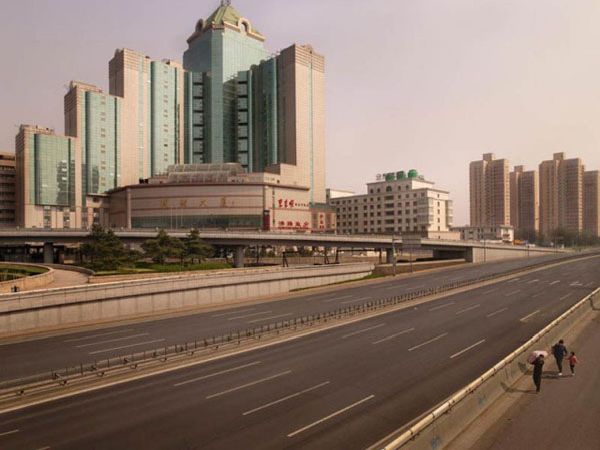
Look once more at a plate where a single figure stands in a monumental void. Would the photograph still unsettle you if the figure were gone—or does the loneliness need a witness to become story? Lucie & Simon built Silent World so that question has no easy answer, and that unresolved quiet is exactly why people-free cities, in their hands, still feel inhabited by thought.

Comments
Continue reading
Eiffel Tower in Photographs: Fireworks, Fog, and Fresh Angles
An editorial gallery of Eiffel Tower photographs—from Bastille bursts and aerial night grids to rain on glass, snow at Trocadéro, and a shopping cart under the mist.
Enigmatic Pictorial of Manhattan’s Chinatown
Franck Bohbot’s 2014 nocturnal Chinatown series trades daytime crowds for deserted streets, cinematic light, and a quiet, science-fiction calm.
New York City Lights: Night Photographs by Ben Leshchinsky
Ben Leshchinsky’s New York night cityscapes—Midtown window grids, bridges, and long-exposure lights—from his early-2010s Flickr-era series.