
Eiffel Tower in Photographs: Fireworks, Fog, and Fresh Angles
An editorial gallery of Eiffel Tower photographs—from Bastille bursts and aerial night grids to rain on glass, snow at Trocadéro, and a shopping cart under the mist.
Built for the 1889 Exposition Universelle to mark a century after the French Revolution, the Eiffel Tower was never meant to be modest. Gustave Eiffel’s iron lattice rose above the Champ de Mars as a temporary spectacle and somehow became permanent—first contested, then beloved, now the silhouette most people mean when they say “Paris.” This gallery collects photographs that treat the landmark as more than a checklist postcard: fireworks and fog, worm’s-eye geometry, aerial grids, street-level weather, and a few frames that refuse the brochure entirely.
What follows is not a travel itinerary. It is a tour of how photographers keep finding new angles on a structure everyone already recognizes.
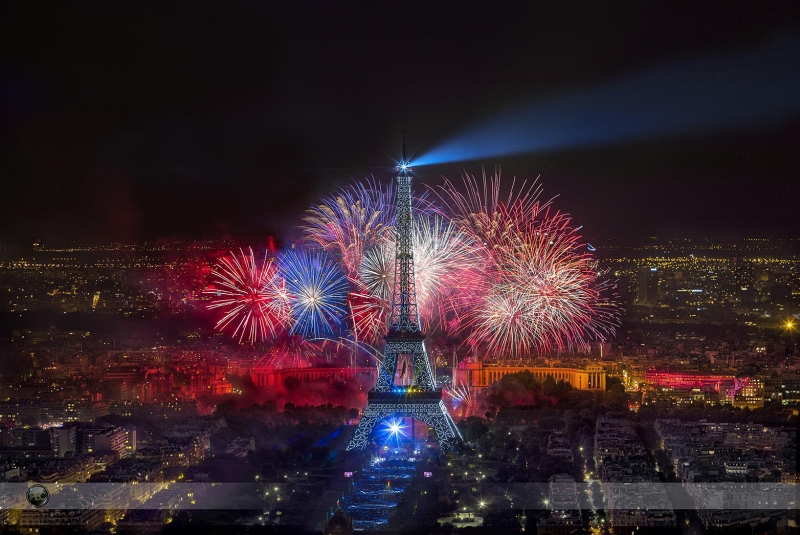
Start with celebration. Red, white, and blue bursts bloom behind the illuminated tower while a blue beam cuts the sky from the summit. The city below is a carpet of warm streetlights; the Palais de Chaillot catches reflected color. National spectacle turns the iron into a stage set—the tower as conductor of light rather than a lonely silhouette.
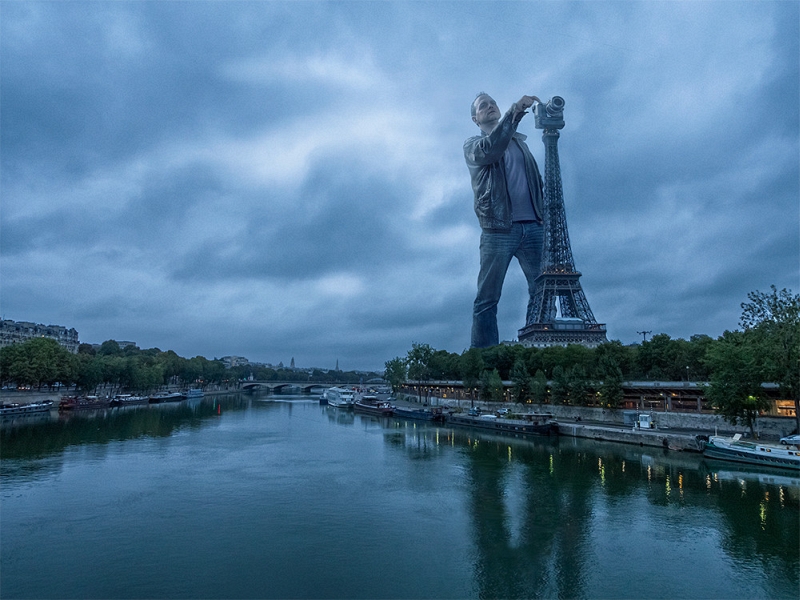
Next, a deliberate joke about scale. A giant figure in a leather jacket leans over the Seine and plants a vintage camera on the tower’s tip as if the monument were a tripod. Canal boats and green banks stay realistic; only the human is impossible. The edit says what every visitor feels: the tower looks big until imagination makes it a prop.
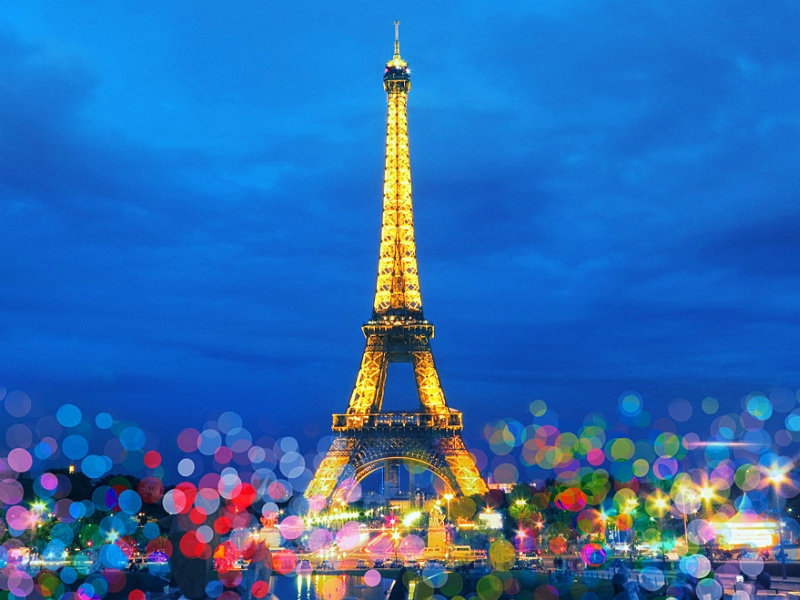
Blue hour softens the sky to navy; the lattice glows gold. Foreground orbs of cyan, magenta, and green smear into candy-colored bokeh. The landmark stays sharp enough to read; the city becomes mood. Tourist snapshots chase clarity. This frame chases atmosphere.
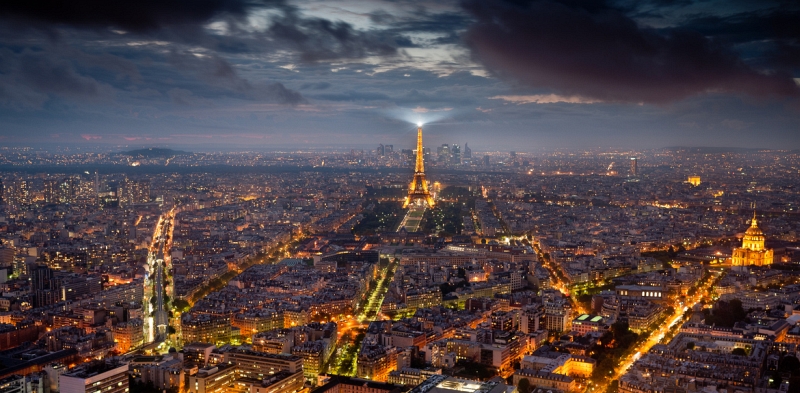
From high above—Montparnasse height or similar—the tower sits in a web of orange avenues. Les Invalides’ dome burns golden to the right; La Défense glimmers on the far horizon. Heavy cloud presses down. The photograph argues that the monument is a node in a living city grid, not an isolated souvenir.
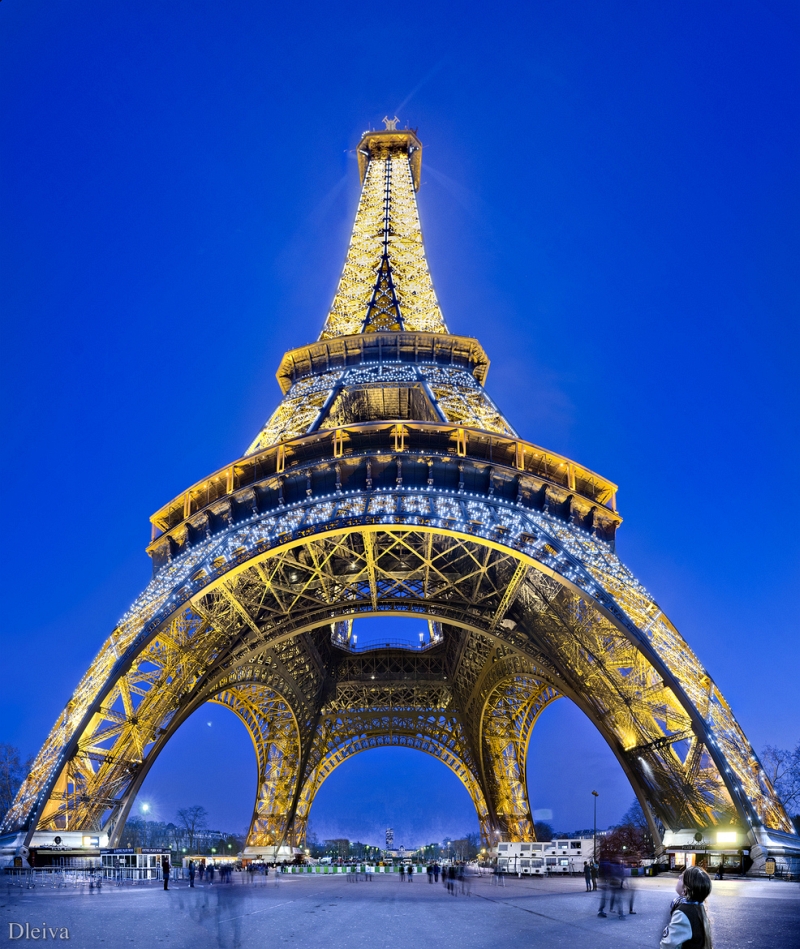
Stand under the arch and aim straight up. Four legs race inward; platforms stack; sparkle lights rim the midsection against twilight blue. Long exposure turns pedestrians into soft ghosts at the base. Engineering becomes cathedral: rivets, diagonals, and vanishing point instead of stained glass.
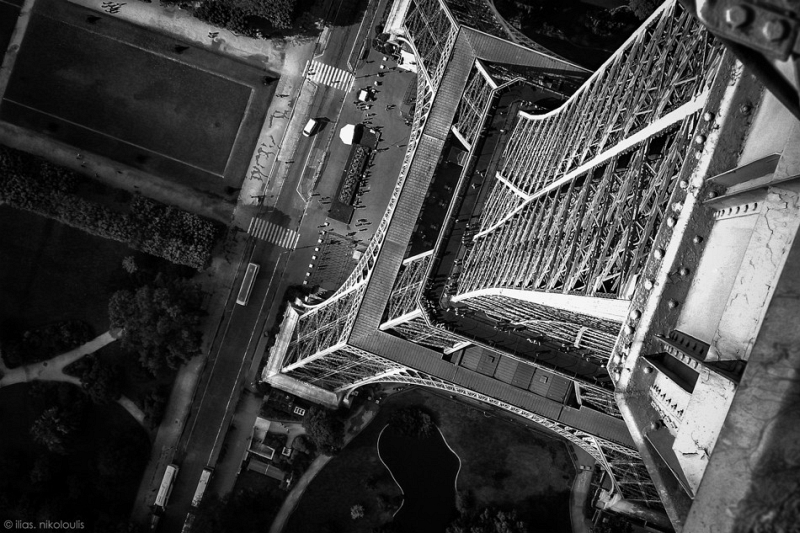
From high on the structure, black-and-white looking down: iron fills half the frame while Champ de Mars paths, buses, and speck-people shrink below. Texture matters more than postcard color. You feel height in your stomach before you name the landmark.
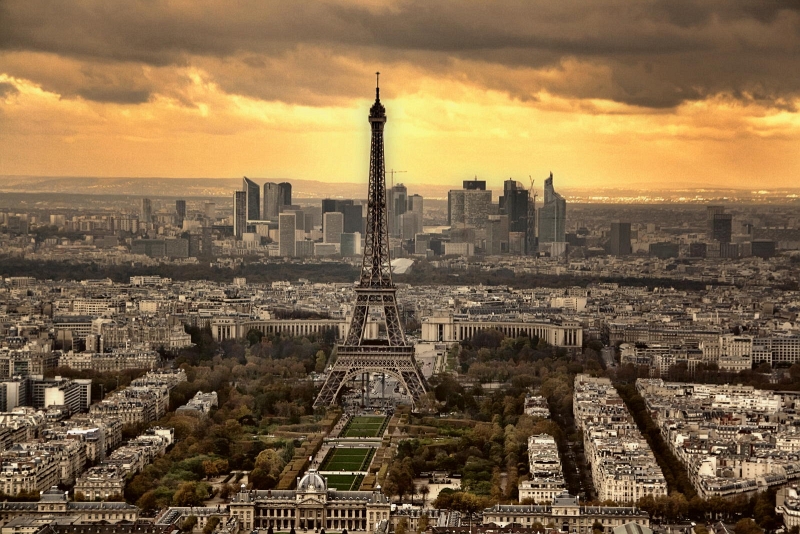
Symmetry from altitude: École Militaire and the green Champ de Mars lead the eye to a centered tower under broken sunset cloud. Haussmann roofs flank the park; La Défense marks the distant skyline. Warm sepia light makes 1889 iron and twenty-first-century glass share one hour.
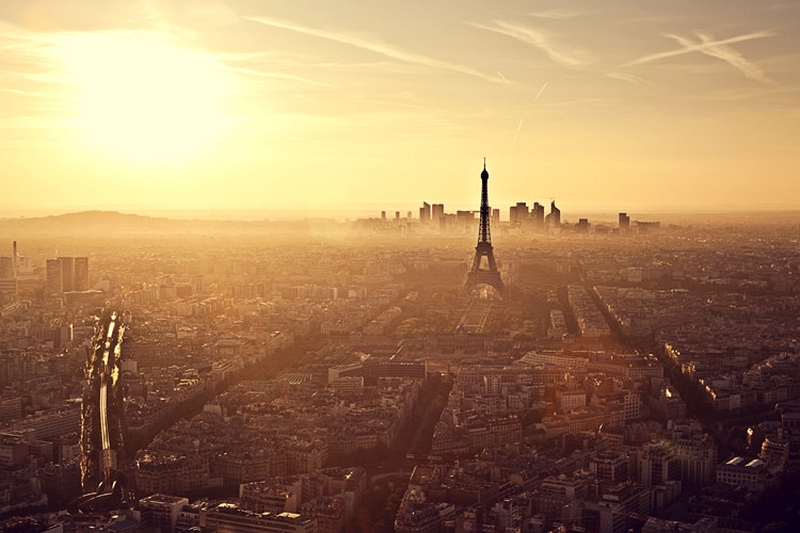
Haze and a hard sun disk wash the rooftops gold. The tower rises from a sea of uniform Parisian blocks while contrails scratch the upper sky. Soft distance is the point: romance here is atmospheric, not sharp HDR.
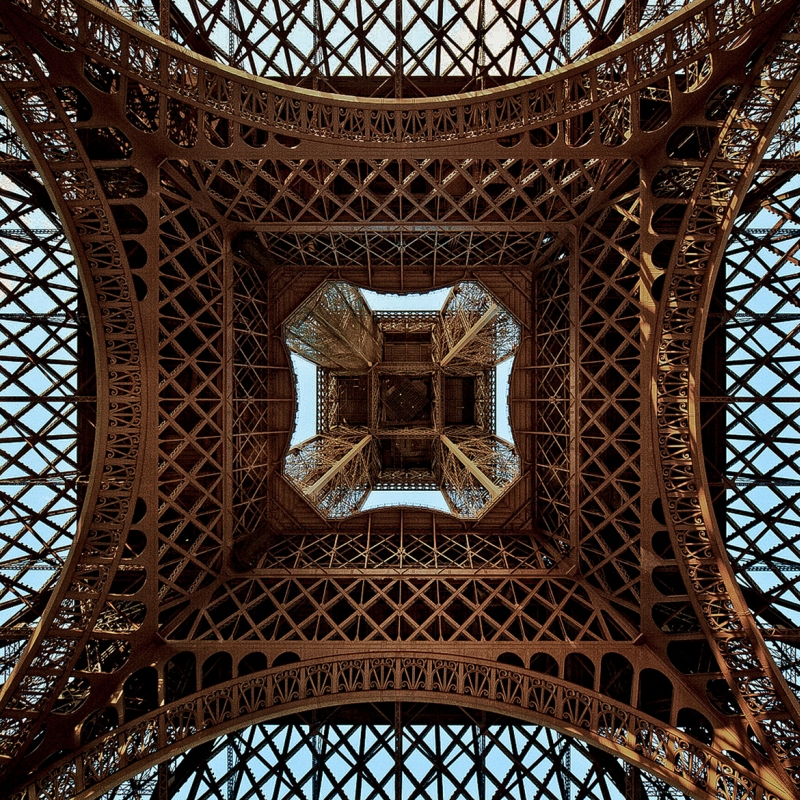
Daylight version of the under-tower stare: bronze iron against solid blue, concentric squares nested like a kaleidoscope. No fireworks, no crowd faces—only pattern. The landmark becomes abstract sculpture for a few seconds.
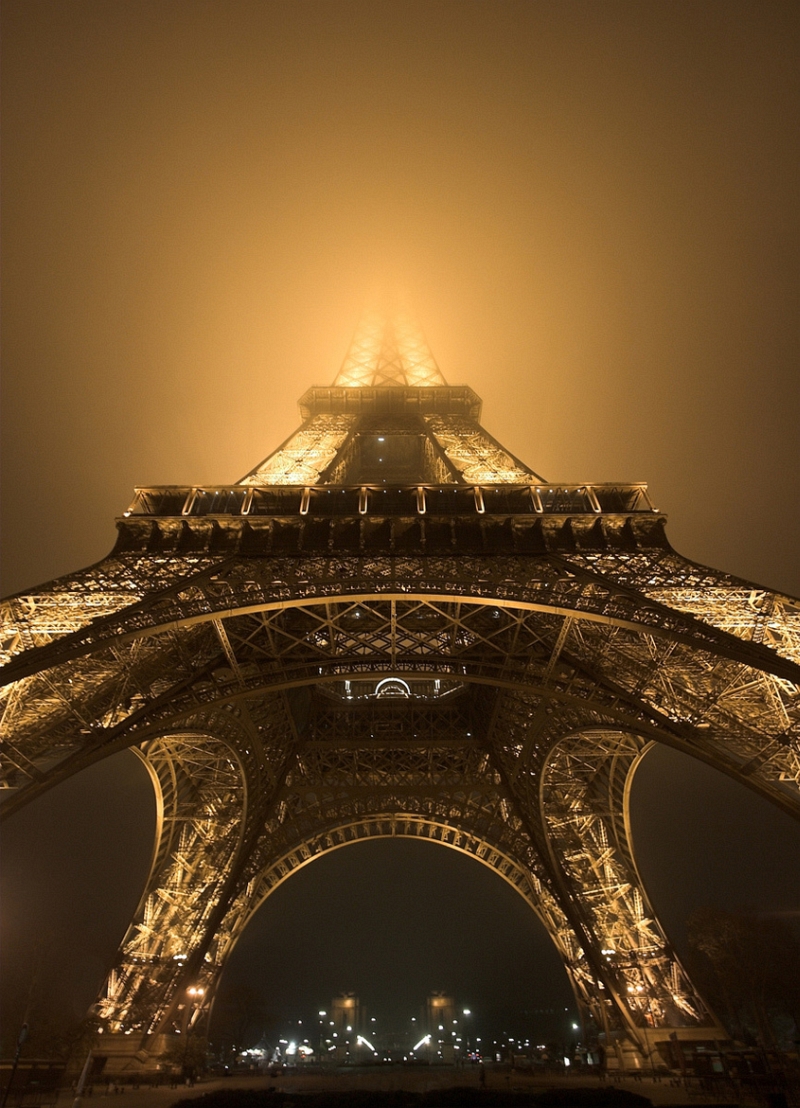
Fog swallows the upper shaft. Golden light turns the mist orange; the summit vanishes. Through the arch, tiny streetlights and tree silhouettes ground the scale. Weather edits the icon into something closer to a myth than a measured height.
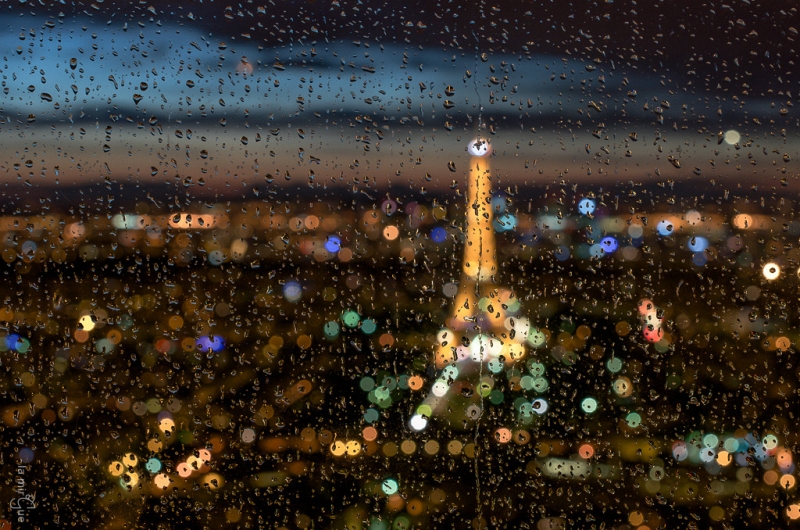
Rain on glass, tower blurred to a golden taper, city lights melting into bokeh. Sharp drops in the foreground; soft monument beyond. Intimacy replaces clarity—the view from a warm room looking out at a famous night.
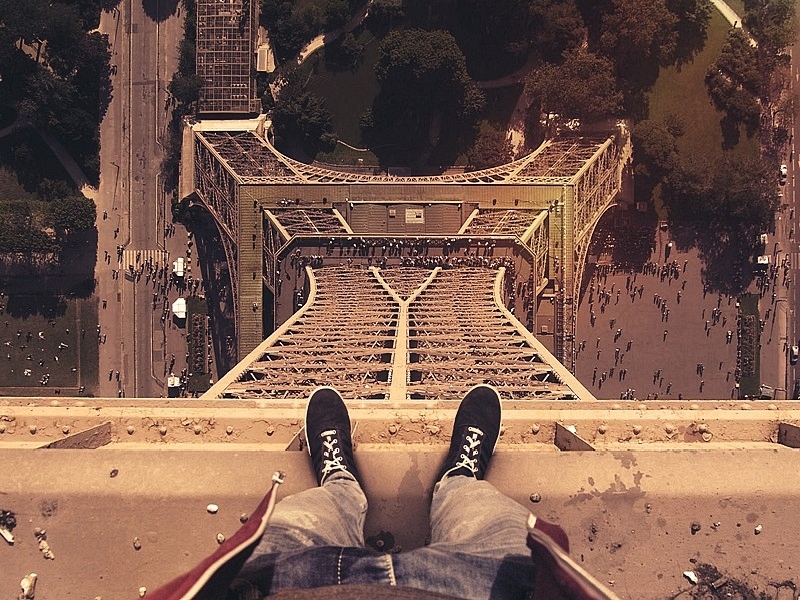
Sneakers on a riveted ledge, jeans, and a drop through the lattice to ant-sized visitors and green lawns. Whether literal or staged for drama, the frame sells vertigo. Height is not explained; it is felt.
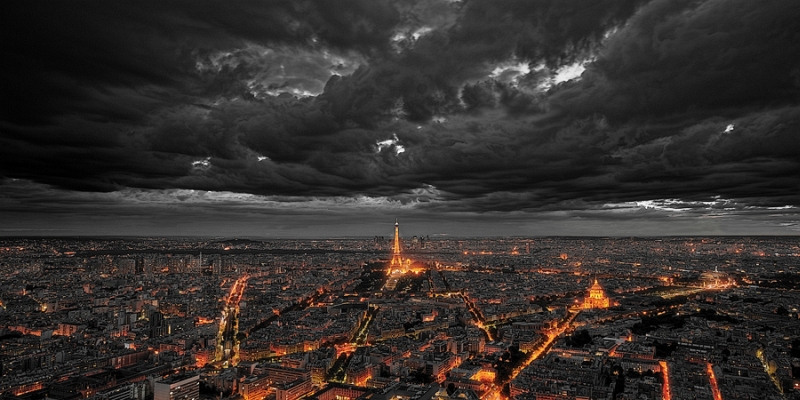
Storm-weight clouds crush the upper half of the frame while the tower and Invalides burn orange in a dark city. High contrast, low cheer—cinematic rather than pretty. The City of Light can look severe.
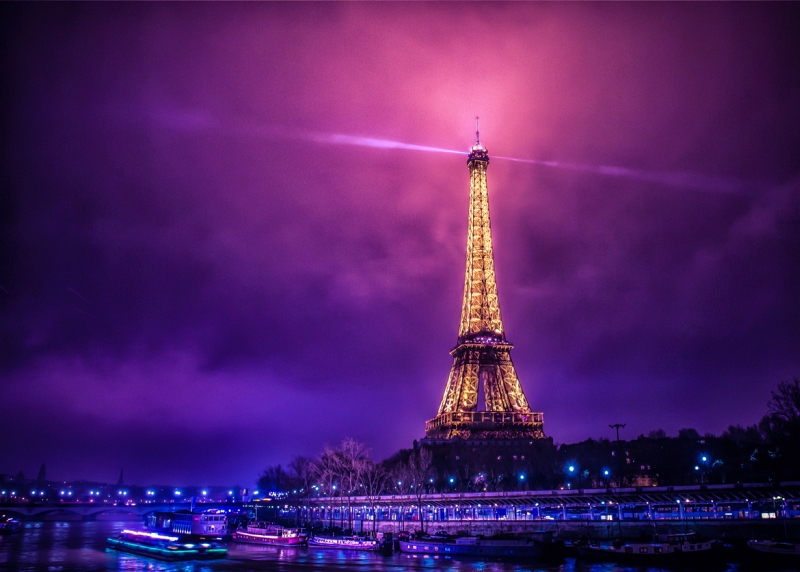
Another night approach from the surrounding city fabric: warm illumination against cool sky, the lattice readable as both machine and monument. Frames like this remind you that “iconic” is a habit of looking, not a single correct angle.
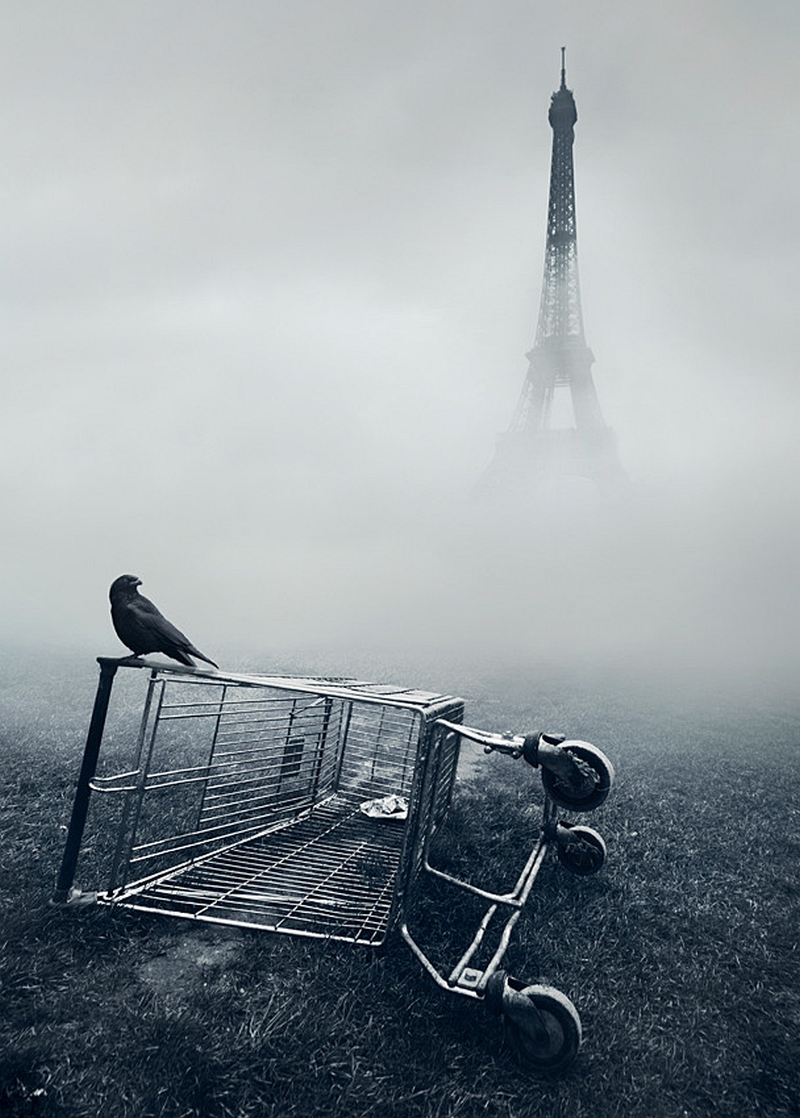
Fog eats the mid-distance. In the foreground, an overturned shopping cart and a black bird refuse grandeur. Monochrome makes the joke sharper: tourism fantasy versus leftover urban junk. The tower remains; the brochure does not.
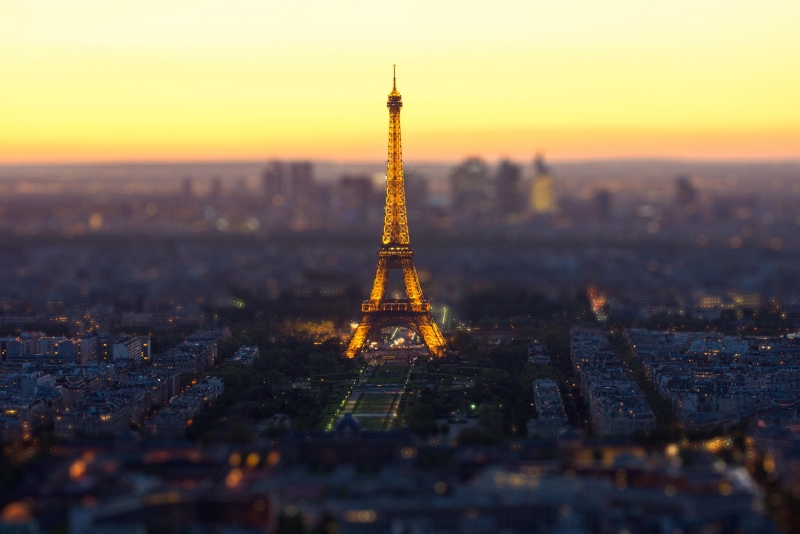
Wider landscape breathing room: the tower as one vertical among roofs, trees, and sky. Not every strong photograph needs fireworks. Sometimes the landmark earns its place by simply holding the horizon.
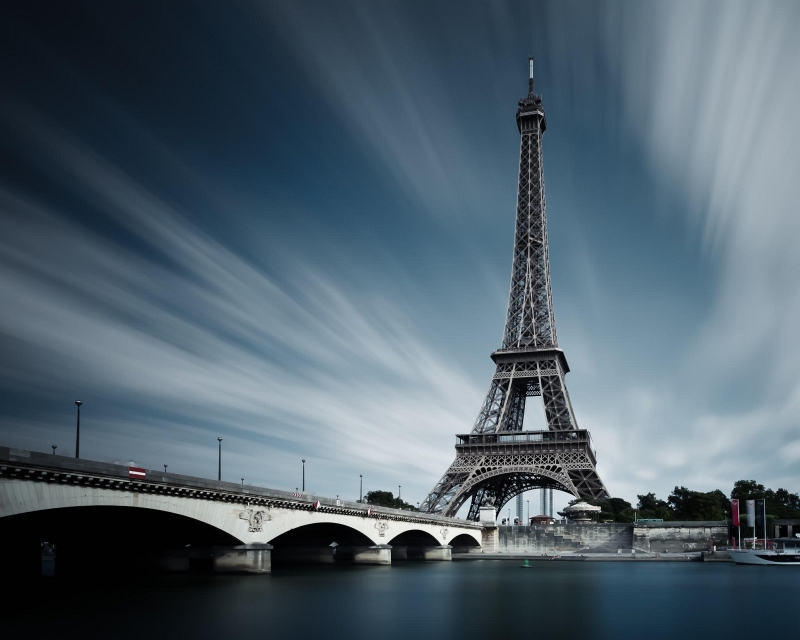
Tight editorial craft again—exposure, color, and crop tuned so iron reads as subject rather than background for a selfie. The difference between a visit photo and a gallery frame is often patience at the same famous spot.
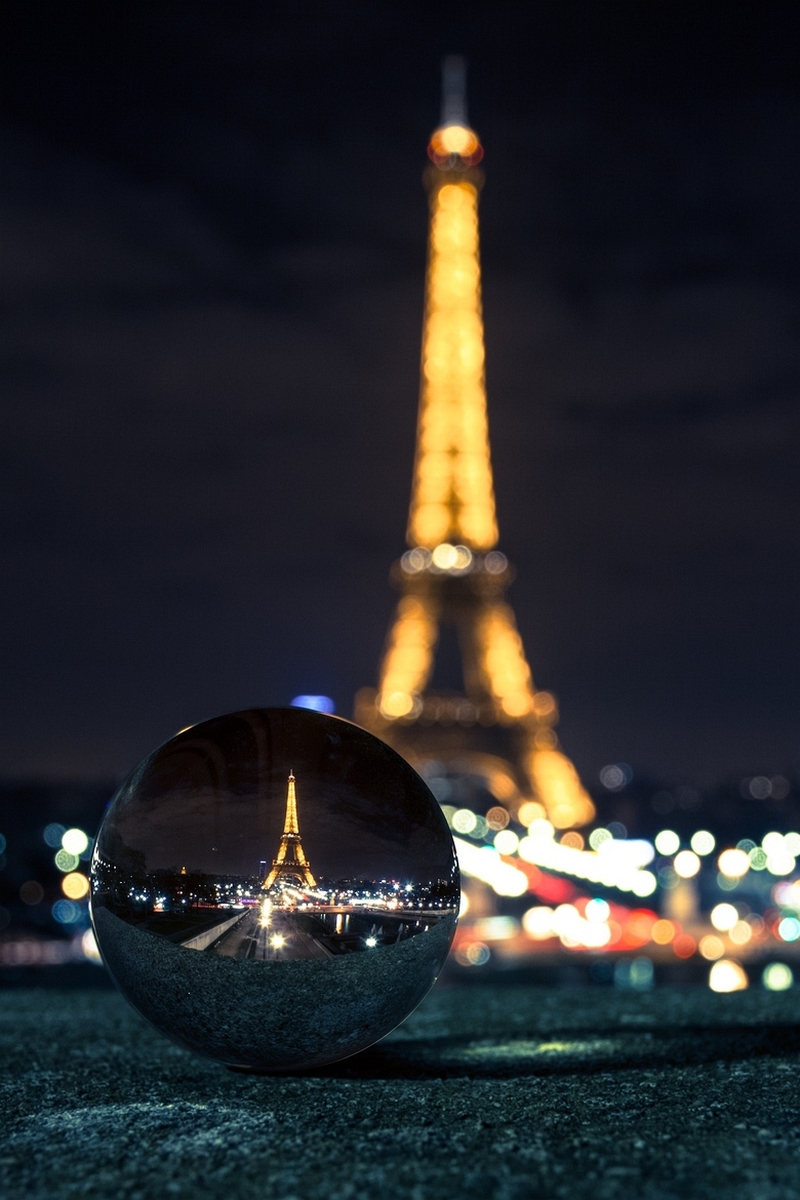
A glass lensball on stone flips the night into a miniature: tower sharp inside the sphere, soft golden blur and traffic bokeh outside. Novelty optics, yes—but also a neat metaphor. Everyone carries a personal Paris in a small circle of focus.
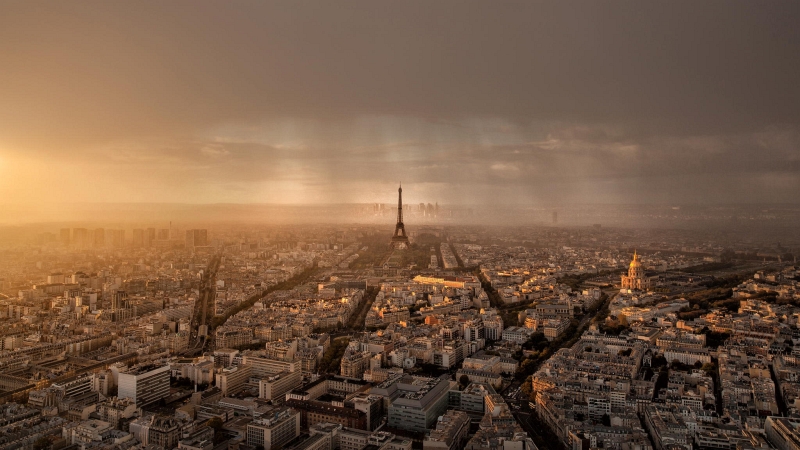
Another skyline reading: light, weather, and the long horizontal of the city working with the vertical needle. The set keeps circling the same object so the variations become the story.
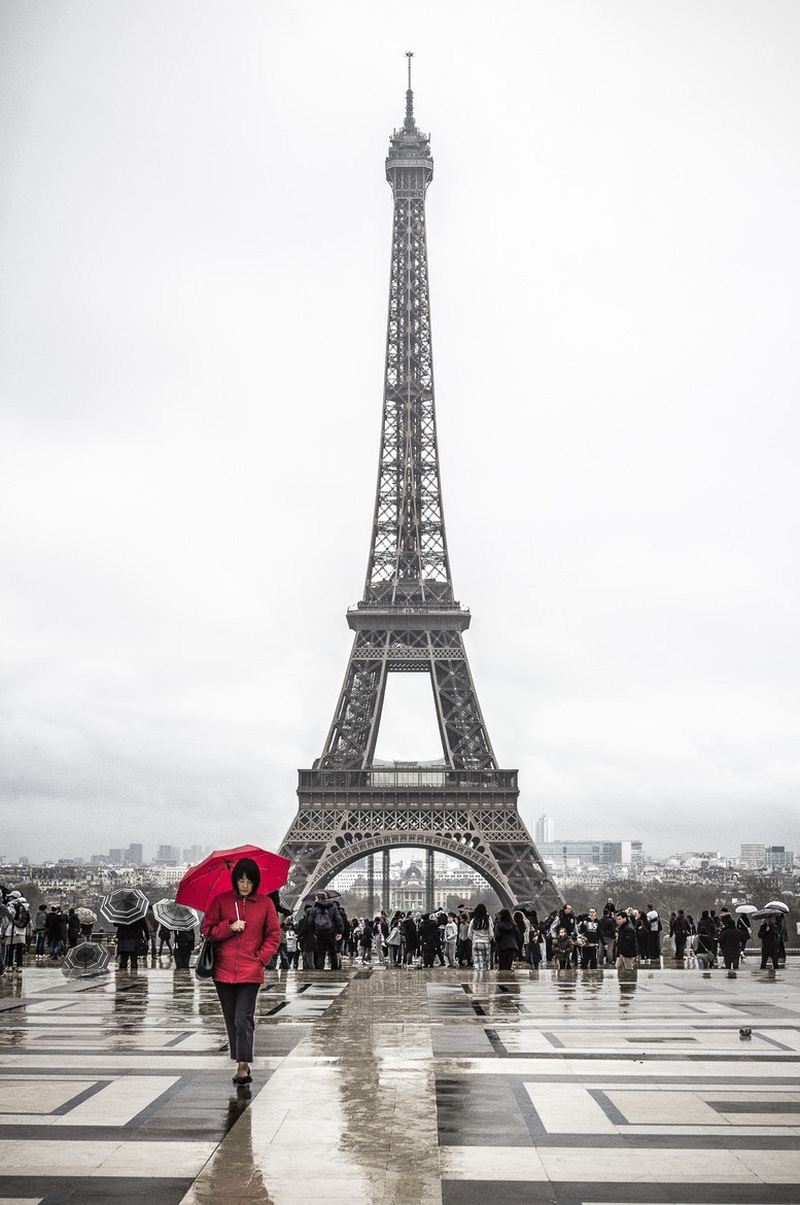
Rain day at Trocadéro: grey sky, wet geometric stone, a crowd of dark coats—and one bright red jacket with a matching umbrella walking toward the lens. The tower centers the frame; the color figure gives the picture a human pulse. Bad weather is an ally when reflections and contrast cooperate.
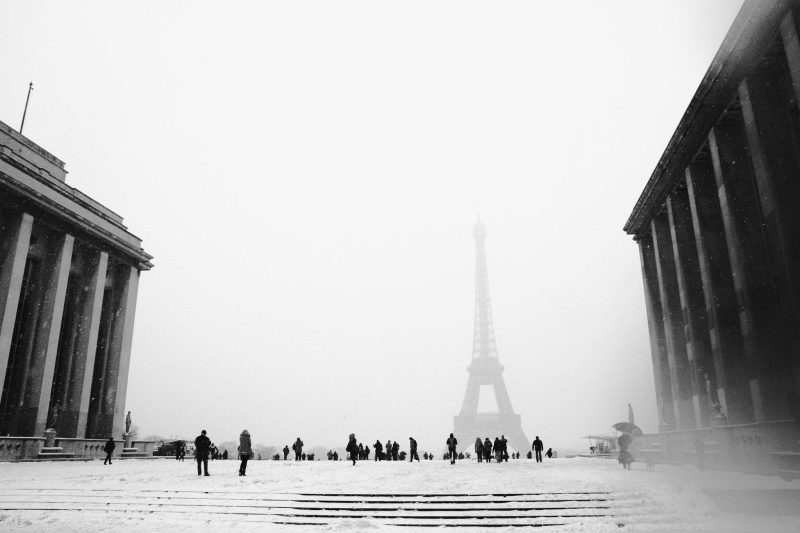
Snow and fog turn the tower ghostly between the columns of Palais de Chaillot. Dark figures speck the white plaza; an umbrella tilts on the right. Quiet replaces glitter. Same coordinates as a thousand sunny tourist shots; entirely different temperature.
Why the tower still photographs well
Familiarity should kill interest. It doesn’t, because the Eiffel Tower is both fixed and changeable. The iron stays; light, weather, elevation, and intent do not. Fireworks make it civic theater. Fog makes it myth. Rain on glass makes it private. A shopping cart under it makes it street. A crystal ball makes it toy. Each approach answers a different question about the same 324-meter fact.
Built as a temporary fairground boast, kept as a permanent skyline grammar, the tower rewards photographers who treat recognition as a starting point rather than a finish line. Scroll back to the fireworks frame if you want pure spectacle—or stop on the bird and the cart if you prefer Paris without the brochure smile.

Comments
Continue reading
Silent World: People-Free Cities by Lucie & Simon
Paris duo Lucie & Simon empty New York, Paris, and Beijing in Silent World—long-exposure, ND-filtered visions of landmark cities with one or two symbolic witnesses left behind.
Dramatic Photo Art by Sukron Ma’mun (Ipoenk Graphic)
Cirebon, Indonesia photographer Sukron Ma’mun uses theatrical natural light to frame village life, play, and place in lyrical photo art.
Bird’s-Eye Views: Florian Beaudenon’s Instant Life
Paris photographer Florian Beaudenon’s Instant Life series captures people in their rooms from above—intimate, collaborative overhead portraits of everyday joy.