
New York City Lights: Night Photographs by Ben Leshchinsky
Ben Leshchinsky’s New York night cityscapes—Midtown window grids, bridges, and long-exposure lights—from his early-2010s Flickr-era series.
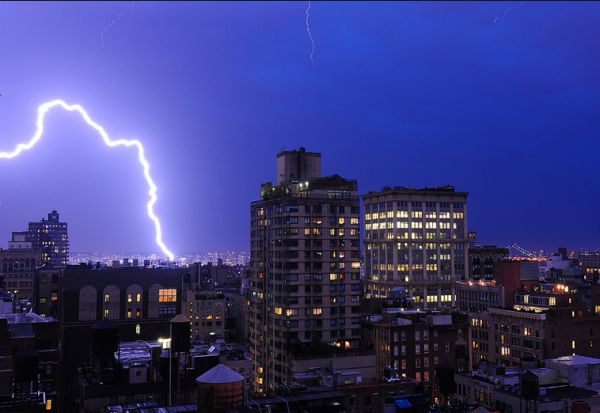
Ben Leshchinsky’s New York night photographs treat the city as a machine made of windows. In the set gathered here—shared from his Flickr stream in the early 2010s—Midtown’s towers become fields of lit rectangles, bridges draw bright lines across dark water, and street-level traffic turns into soft ribbons under long exposure. The series is not a tourist checklist of landmarks shot at noon. It is a study of how New York looks when interior light becomes the subject and architecture turns into a constellation.
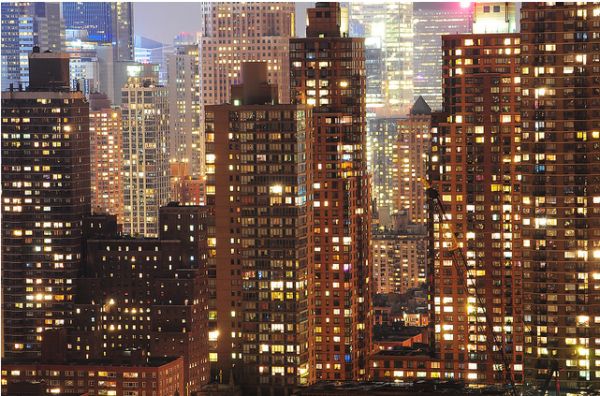
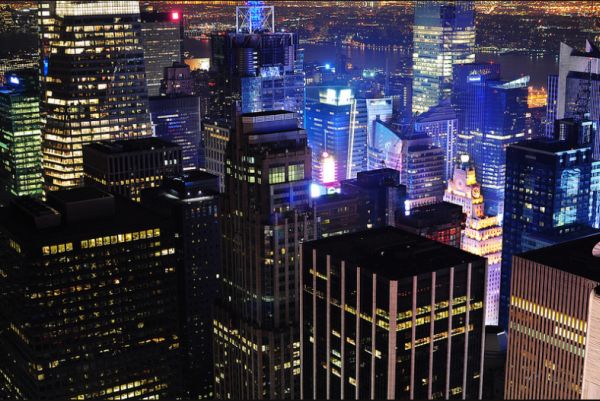
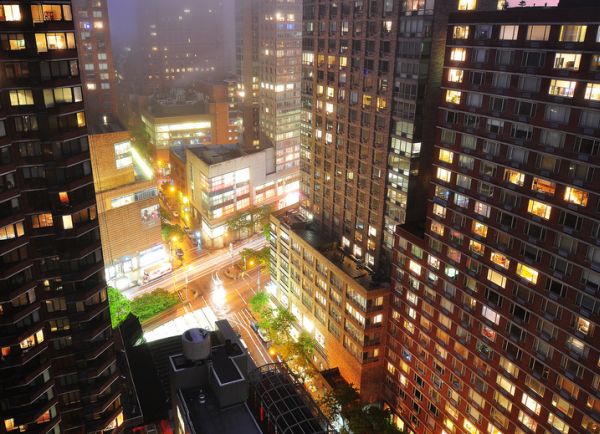
Been a while since I could post, but thought I would share this view of dense Midtown Manhattan, and its thousands of brilliant windows.
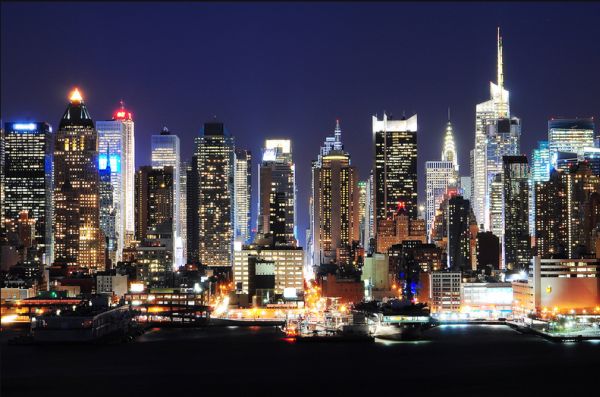
That note, attached to the Midtown view that opens many circulations of this gallery, is the right key. Leshchinsky is pointing at density and brilliance together: crowded buildings, countless rooms still awake, a skyline that refuses to go fully dark. One well-known frame in his wider New York work was shot from Weehawken’s Hamilton Park looking toward Midtown, with Time Square’s glow bouncing off glass. Whether a given print in this page’s sequence was taken from New Jersey, a Manhattan rooftop, or a Brooklyn shoreline, the obsession stays consistent—city light as weather.
Who Ben Leshchinsky is in this frame
Leshchinsky works as a fine-art photographer drawn to landscape and cityscape, with night work as a recurring strength. In the early 2010s his Flickr presence under the benalesh handle circulated New York frames widely enough that blogs and local culture sites picked up individual images—Midtown lights among them. He has also been associated with print sales and stock distribution of city and nature work, but the pictures on this page should be read first as authored photographs, not as anonymous stock wallpaper. Credit stays with Ben Leshchinsky.
That credit matters because night skyline photography is easy to flatten into generic “NYC aesthetic.” Anyone with a tripod can point at Midtown. What distinguishes a coherent set is viewpoint discipline, exposure choices that keep window grids readable instead of blown to white, and a patience for weather—cloud ceilings, wet streets, haze that turns distant towers into layered silhouettes. Leshchinsky’s New York lights lean into those variables. Some frames feel crisp and architectural; others accept atmosphere as a second subject.
His broader galleries—night, mountains, forest, desert—suggest a photographer comfortable moving between wilderness quiet and urban voltage. The New York work is the urban voltage chapter: human density expressed as electricity. You rarely need faces in the frame. The windows stand in for people.
Reading Midtown as a grid of rooms
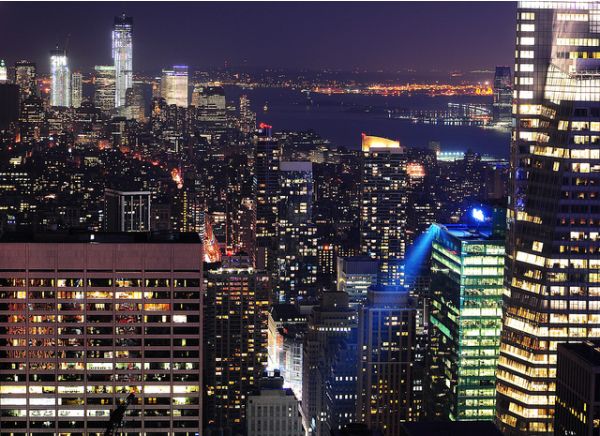
The Midtown views are the thesis shots. From across the Hudson or from an elevated city vantage, office and residential towers stack into a textured wall of light. Individual windows remain small, but their collective pattern becomes almost textile—warp and weft made of glass and lamps. Photographers love this effect because it converts architecture into abstraction without leaving documentary truth behind. You still know it is New York. You also see it as pure luminous geometry.
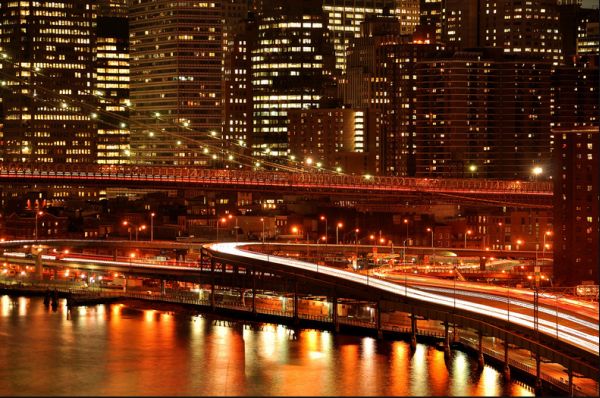
Long exposure helps. Traffic softens. Flags and clouds may streak. What stays sharp is the building mass and the window mosaic. That technical choice matches the emotional claim of the caption: thousands of brilliant windows. The camera is aggregating lives without invading any single apartment. Privacy becomes pattern. Density becomes beauty instead of only stress.
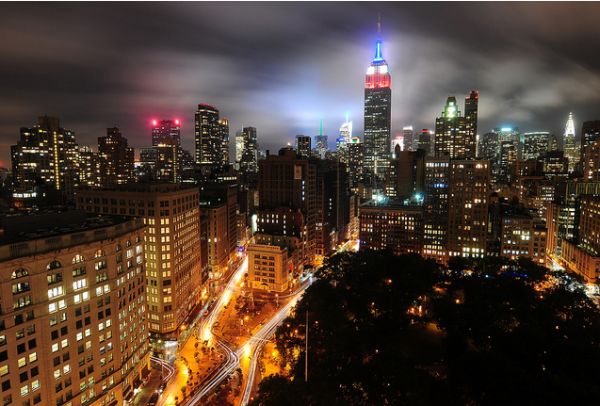
Other frames in the set pull back toward classic New York silhouettes—bridges, downtown clusters, park-edge views where a landmark tower anchors the composition while foreground streets keep moving. One of Leshchinsky’s circulating night pictures from the same era places the Empire State Building beyond Madison Square Park under a dramatic cloudy sky, Broadway traffic glowing in front. Even when a famous spire appears, the interest often remains the relationship between landmark and surrounding light weather, not a postcard centered on one building alone.
Brooklyn, Manhattan, and the waterline
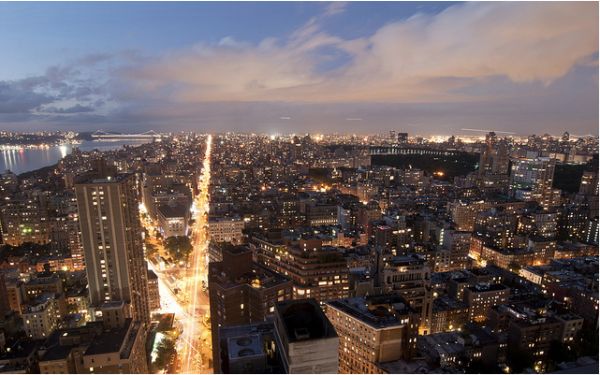
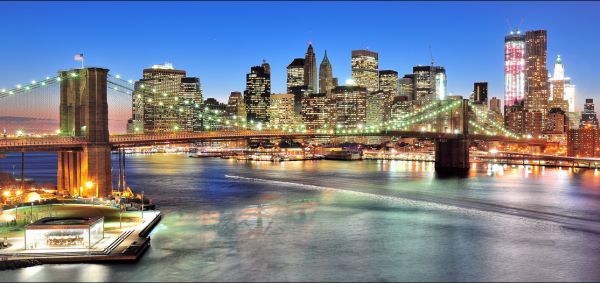
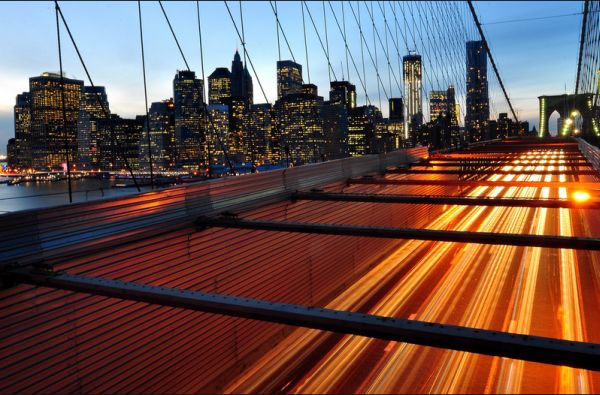
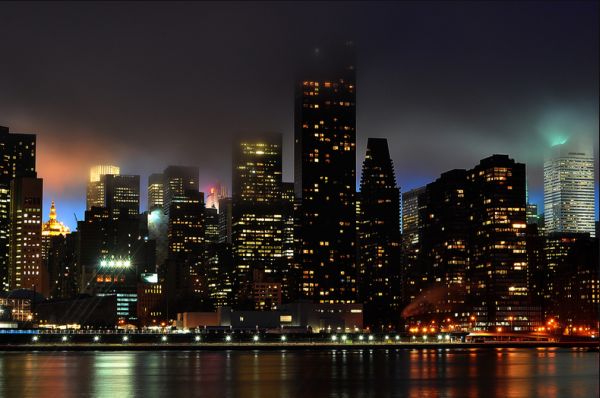
Tags on this gallery’s original page pointed toward Brooklyn and Manhattan for good reason. New York night photography often lives on the waterline: East River and Hudson viewpoints that let bridges and downtown massing read as layered stages. From those edges, you get reflection, distance haze, and the luxury of seeing multiple neighborhoods as one luminous organism. Leshchinsky’s frames participate in that tradition without needing a lecture about every pier name.
Waterline shooting also clarifies scale. A bridge span gives the eye a measuring stick. Towers behind it stop being an undifferentiated glow and become a skyline with depth. When exposure holds highlight detail in the windows while still describing the bridge cables or roadway, the photograph earns its keep as both mood piece and city document.
Move through the set slowly and you will notice rhythm changes: some images compress Midtown into an almost abstract rectangle of light; others open into wider horizontal compositions where sky and river claim equal space. That variety keeps a lights gallery from becoming one idea repeated twelve times. It is the same city and the same photographer’s eye, tested against different distances.
How to look—and what not to do with the pictures
Start with the densest Midtown window wall. Count nothing; just let the pattern settle. Then look for cooler frames where cloud and distance soften the towers. Ask which version of New York you prefer on a given night: sharp electricity or atmospheric veil. Both are honest. The city offers both within a single week of weather.
If you make photographs yourself, borrow Leshchinsky’s subject more than any supposed secret setting. Seek a vantage where windows remain individually readable. Protect highlights. Use a tripod. Decide whether traffic streaks help or distract. Most of all, caption your work with a real observation—the way his Midtown note names density and brilliant windows—rather than a generic “beautiful NYC” line. Specific looking is the craft.
What this page does not do is strip the photographer’s name for the sake of a moodboard. Ben Leshchinsky made these night studies; the Flickr-era circulation that brought them to blogs in 2012 is part of their history. Keep the credit when you share a favorite frame. The lights belong to New York. The photographs belong to the person who waited for the exposure.
One practical pass before you leave: pick three images—one pure grid of windows, one bridge or waterline view, one frame where weather does half the work. That mini-triptych usually reveals what you actually love about night city photography. If the grid wins, you are after human density as pattern. If the waterline wins, you are after classic skyline theater. If the weather frame wins, you are after atmosphere that no landmark brochure can schedule. Leshchinsky’s set supports all three answers without arguing which is correct.

Comments
Continue reading
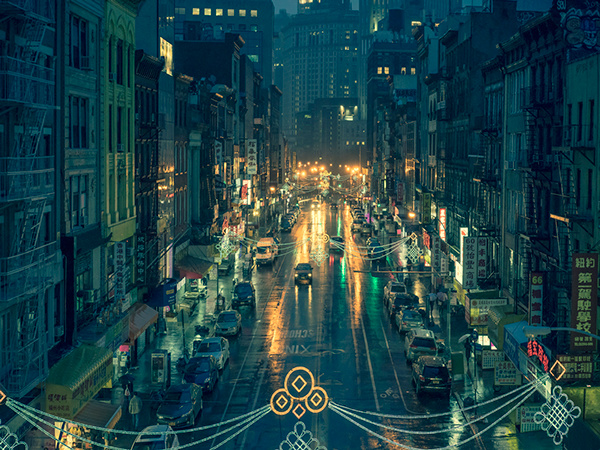
Enigmatic Pictorial of Manhattan’s Chinatown
Franck Bohbot’s 2014 nocturnal Chinatown series trades daytime crowds for deserted streets, cinematic light, and a quiet, science-fiction calm.
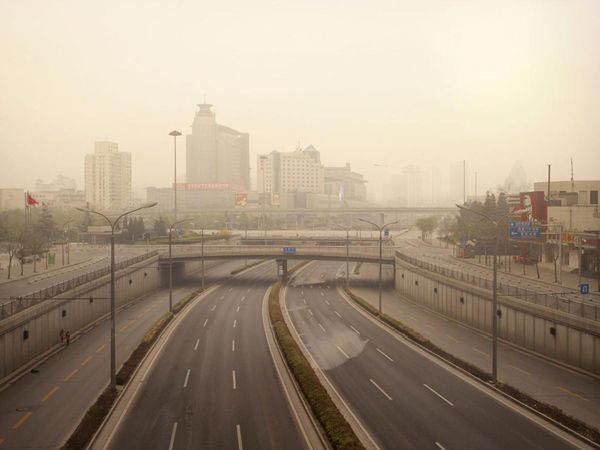
Silent World: People-Free Cities by Lucie & Simon
Paris duo Lucie & Simon empty New York, Paris, and Beijing in Silent World—long-exposure, ND-filtered visions of landmark cities with one or two symbolic witnesses left behind.
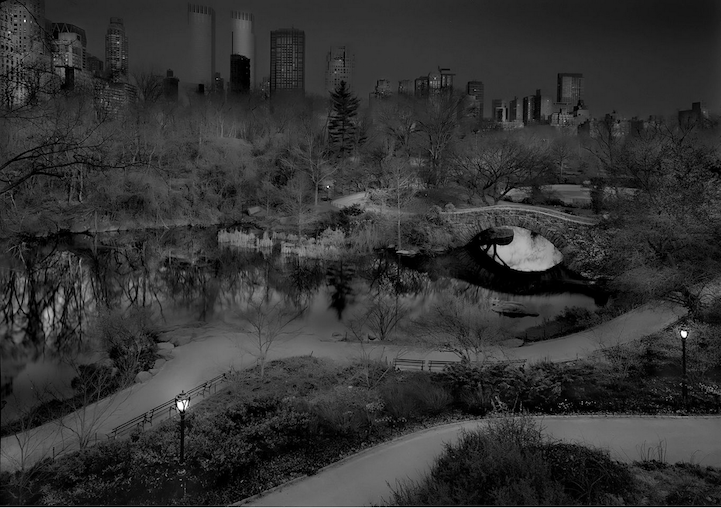
Michael Massaia’s Deep in a Dream: Central Park After Midnight
Large-format black-and-white photographs of an empty Central Park, made between 2 a.m. and 6 a.m.—isolation, craft, and a landmark seen without its crowds.