
Enigmatic Pictorial of Manhattan’s Chinatown
Franck Bohbot’s 2014 nocturnal Chinatown series trades daytime crowds for deserted streets, cinematic light, and a quiet, science-fiction calm.
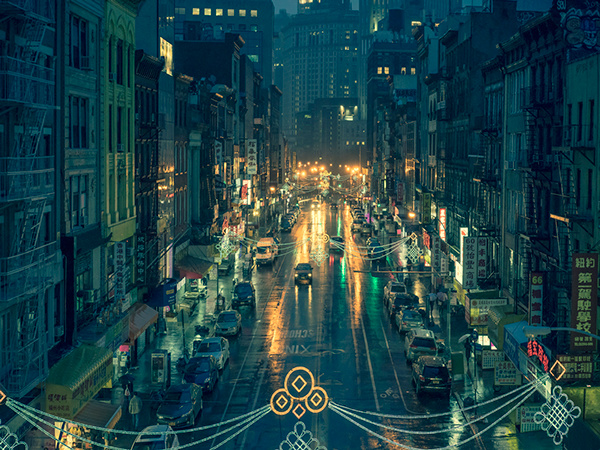
Manhattan’s Chinatown is usually photographed as a daytime argument: delivery trucks, crowded sidewalks, tourists negotiating Mott and Canal, storefronts stacked with goods. In 2014, French photographer Franck Bohbot—then based in Brooklyn—turned that expectation inside out. His series simply titled Chinatown waits for night, empties the frame of the usual hustle, and lets the neighborhood become a set of quiet stages lit by signs, lobby glow, and street lamps.
The result is not a denial that Chinatown is busy. It is a deliberate alternate weather: deserted streets, cinematic color, and the occasional passerby who lands in the frame like a visitor from another movie. New York remains the only main character; people, when they appear, feel almost provisional.
Against the daytime cliché
Bohbot’s own framing of the project, shared through Behance and later picked up by photography sites, is unusually clear about intent. He wanted to step off the well-worn Chinatown postcard: noise, incessant deliveries, hasty pedestrians, tourist density. Night replaces that script with silence. Storefronts become luminous boxes. Alleys read like corridors in a film that has not yet started. The neighborhood’s architecture—low commercial frontage against taller Manhattan walls—suddenly has room to speak.
That choice is also historical. Chinatown in southern Manhattan has shifted borders over decades, pressing against the Lower East Side and what remains of Little Italy, while other Chinese communities in the city (Flushing among them) have grown in parallel. Bohbot’s series does not attempt a demographic essay. It attempts an atmosphere. By removing the daytime crowd, he makes the built environment legible as mood rather than as market.
Science fiction without spaceships
Writers covering the series reached for the same metaphors Bohbot invites: science-fiction cinematography, film-noir calm, a Jim Jarmusch kind of quiet tension. Long exposures and careful color work turn wet pavement, neon, and fluorescent shop interiors into something slightly unreal. A seafood window with misted glass, a hotel lobby washing the sidewalk in warm light, a bus stop that looks abandoned mid-scene—these are ordinary Chinatown facts restaged as speculative sets.
The “UFO-like passerby” line that circulated with the project is less comic than descriptive. In an emptied night street, a single human figure breaks scale. The person does not explain the neighborhood; the neighborhood explains how strange a lone walker can look when commerce sleeps. That is the series’ quiet joke and its seriousness at once.
Technique as patience
Bohbot has spoken, in project notes, about marrying colorimeter and urban lighting, combining technical control with photographic patience. Some frames are instinctive; others are contemplative waits. Night work in a dense city is never only about aperture and ISO. It is about standing still long enough for the street to stop performing for you—and about accepting that available light will cast odd temperatures across signs in Chinese and English, plastic awnings, and glass.
The pictorial quality that earned the series adjectives like “enigmatic” and “fantasy-like” comes from that patience. Bohbot is not hunting decisive-moment street chaos. He is composing stillness. Where classic street photography thrives on collision, this Chinatown thrives on aftermath—what the block looks like when the argument of the day has gone indoors.
What the images ask you to notice
Spend time with the series and a few recurring subjects emerge:
- Storefronts as aquariums. Lit interiors behind glass become miniature stages; fish tanks and stacked goods read as set dressing.
- Vertical pressure. Low neighborhood buildings against higher Midtown and downtown towers remind you Chinatown sits inside a taller city.
- Signage as weather. Neon and LEDs do not merely identify shops; they paint the air.
- Empty asphalt as narrative space. Without crowds, perspective lines and parked cars carry plot.
- Moisture and haze. Rain-slick streets and fogged windows soften edges until the block feels half-dreamed.
Those motifs are why the work travels well beyond local interest. You do not need to know Canal Street’s daytime map to feel the uncanny calm. If you do know it, the shock is sharper: this is the same geography wearing a different hour.
Bohbot’s wider city eye
By 2014, Franck Bohbot was already known for series that treat vernacular architecture and public spaces with a cinematic, often frontal clarity—think of other projects that linger on theaters, courts, and urban rooms. Chinatown fits that habit: places designed for crowds, photographed when the crowd is gone, so design and light take over. The series is less anthropology than stage photography of a real neighborhood.
Credit matters here. The photographs are Bohbot’s; the Behance gallery published in May 2014 helped the work circulate among design and photography audiences; magazines and blogs followed with selections that emphasized the deserted nocturnal streets. When you share or teach the series, keep the name attached. Night Chinatown images are easy to orphan online; authorship is part of the meaning.
How to look without turning it into a scavenger hunt
It is tempting to treat photo series like puzzles—name that corner, find that restaurant. Bohbot’s Chinatown rewards a slower habit. First look for light temperature: cold LED versus warm tungsten spilling onto sidewalk. Then look for absence: where you expect a crush of bodies, you get geometry. Finally look for the rare figure, if one appears, and notice how much narrative weight a single silhouette can hold.
If you photograph cities yourself, the practical lesson is not “go to Chinatown at 2 a.m.” It is: pick a place famous for density and ask what remains when density clocks out. The answer will not always be science fiction. Sometimes it will only be quieter commerce and locked gates. Bohbot’s achievement is that his quieter Chinatown still feels charged—poised, as one early write-up put it, like the setting of potential action that never quite arrives.
A neighborhood as sole protagonist
The project’s lasting claim is simple and strange. Strip away the daytime cliché, and Manhattan’s Chinatown can look like a pictorial voyage through fantasy without leaving the thick of night. Silence becomes the subject. Architecture becomes the actor. The city backdrop does not need celebrities walking through it to hold attention.
That is why the series still belongs in conversations about New York photography that refuse only the obvious postcard. Bohbot did not invent nocturnal street work, and he does not pretend to. He found a specific neighborhood’s after-hours face and stayed with it until the familiar turned enigmatic. For viewers who know Chinatown only as noon chaos, these pictures are a second introduction. For viewers who live nearby, they are a reminder that the same blocks keep another schedule—one measured in reflections on wet asphalt rather than in the count of footsteps.

Comments
Continue reading
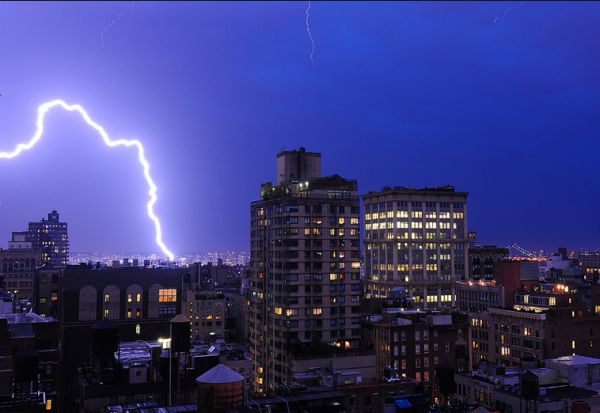
New York City Lights: Night Photographs by Ben Leshchinsky
Ben Leshchinsky’s New York night cityscapes—Midtown window grids, bridges, and long-exposure lights—from his early-2010s Flickr-era series.
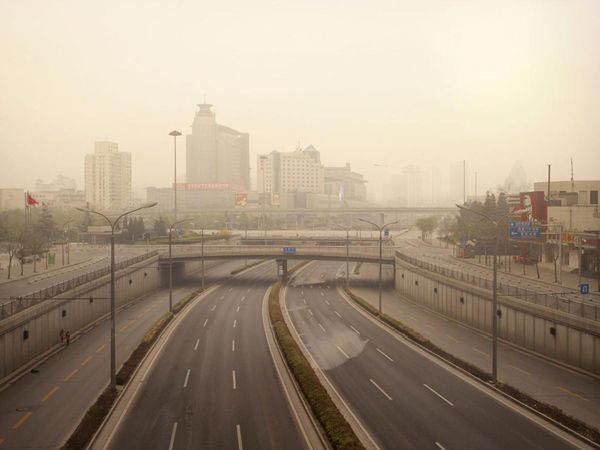
Silent World: People-Free Cities by Lucie & Simon
Paris duo Lucie & Simon empty New York, Paris, and Beijing in Silent World—long-exposure, ND-filtered visions of landmark cities with one or two symbolic witnesses left behind.
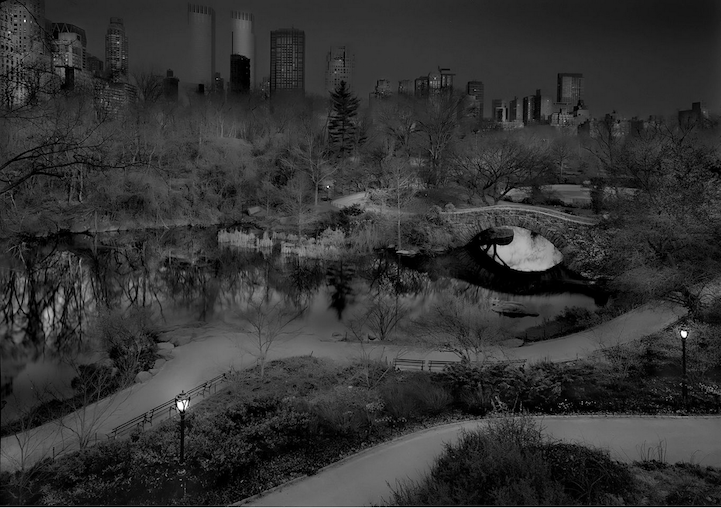
Michael Massaia’s Deep in a Dream: Central Park After Midnight
Large-format black-and-white photographs of an empty Central Park, made between 2 a.m. and 6 a.m.—isolation, craft, and a landmark seen without its crowds.