
Michael Massaia’s Deep in a Dream: Central Park After Midnight
Large-format black-and-white photographs of an empty Central Park, made between 2 a.m. and 6 a.m.—isolation, craft, and a landmark seen without its crowds.
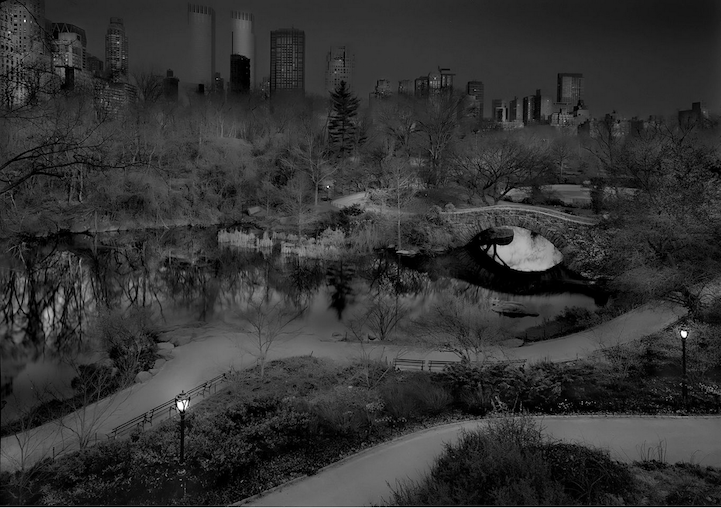
Between two and six in the morning, Central Park sheds the crowds that define it by day. Paths empty. Bridges stand alone. Lawn and water take on a stillness that feels almost private inside one of the world’s busiest cities. Photographer and printmaker Michael Massaia has spent years in that narrow window, making large-format black-and-white pictures for his series Deep in a Dream—images of isolation and quiet spectacle that treat the ordinary park as something briefly transformed.
Massaia’s broader subject matter returns often to disconnection and to the overlooked. In Deep in a Dream, that interest lands on New York’s great park after the last late walkers have gone home. He has described the project as an attempt to catch the city in its most haunting, desolate, and still strangely inviting hours. The photographs that resulted—silver and platinum prints with a luminous, handcrafted finish—helped introduce a wide audience to a Central Park that daytime visitors rarely see.
Insomnia, night walks, and a series that began in 2007
The work did not start as a commission. In the mid-2000s Massaia struggled with severe insomnia. Night walks into Manhattan became a way to fill sleepless hours, and Central Park kept drawing him in. Around 2007 he began documenting the park at its most vacant. What might have remained a private coping habit became a long-term photographic project spanning multiple chapters—Central Park, later Sheep Meadow with figures, and further returns to the park’s nocturnal landscape across the 2010s.
He often preferred the cooler stretch of early spring, when trees and shrubs were only beginning to leaf and the park’s structure stayed visible through the branches. The hour before hard sunlight mattered: enough ambient glow to describe stone, water, and path, not so much that deep shadows flattened into ordinary daylight documentary. Empty benches, wet pavement, and the glow of distant buildings become characters when people are absent. The schedule itself—those 2 a.m. to 6 a.m. visits—is part of the meaning of the work.
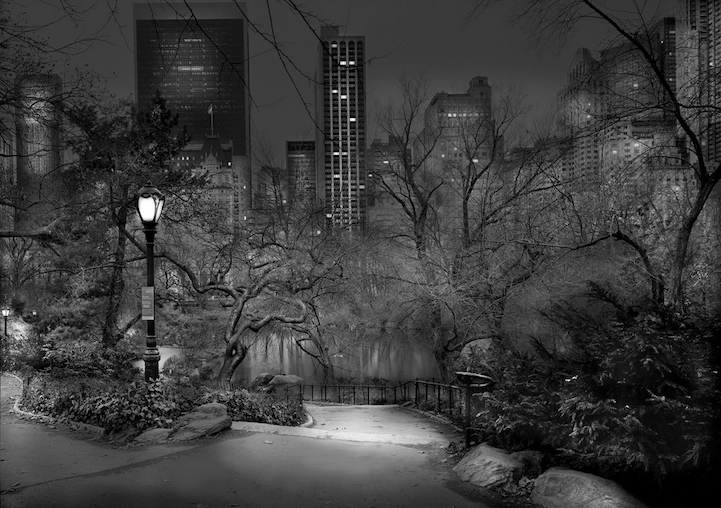
Large format, long nights, and handcrafted prints
Massaia works with large-format cameras he has often modified himself. The format favors careful composition and a density of detail that rewards big prints on a gallery wall. Long exposures in low light turn water into soft planes and leave paths etched by whatever faint illumination the city offers. The pictures feel deliberate rather than snatched; you sense waiting as part of the method, the same patience insomnia forced on the walks that began the project.
In the darkroom and studio he is known for exacting printmaking—enlarging negatives, contact printing, and working in silver and platinum processes that give the images their particular glow. The park’s night surfaces—wet asphalt, leaf, stone balustrade—take on a tactile presence that screen-sized JPEGs only hint at. Looking at the work in person, or in high-quality reproductions of the prints, matters; the series is as much about craft as about place. Process films and interviews from the period show how much of the final mood lives in the print, not only in the negative.
What the empty park shows
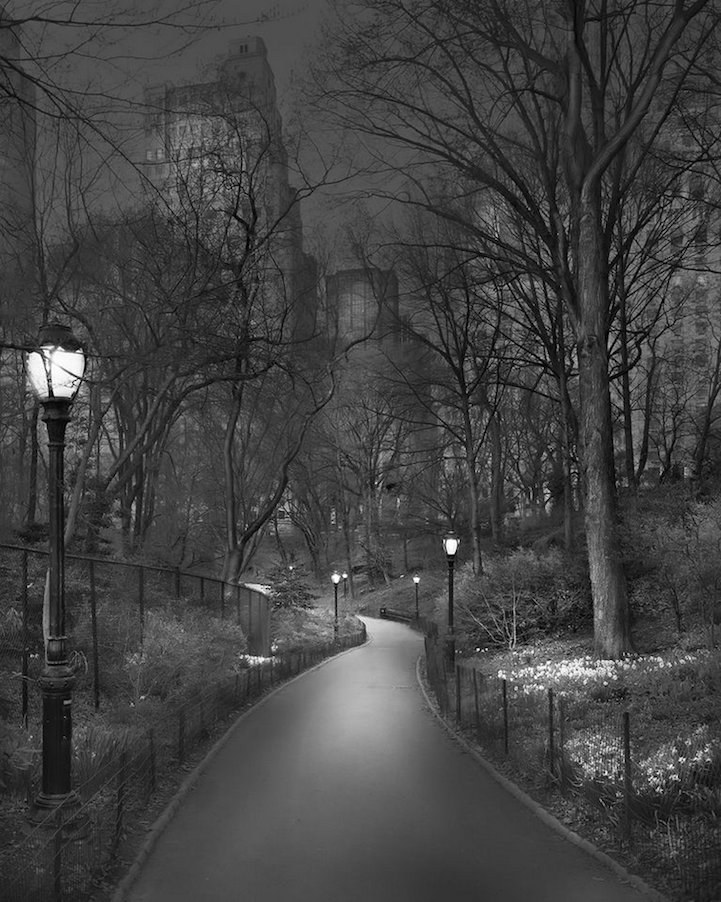
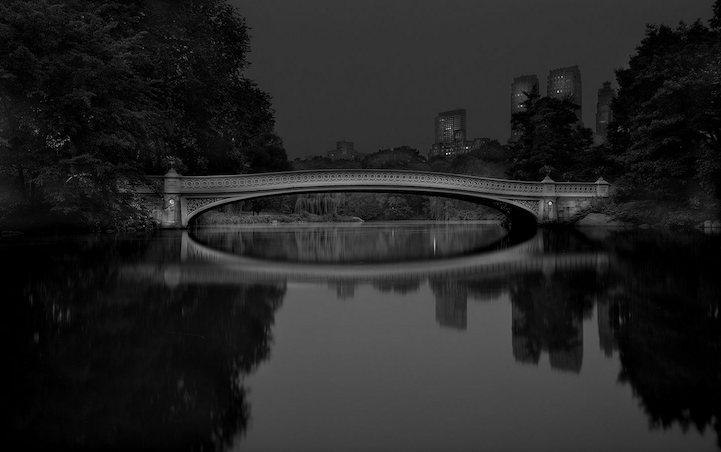
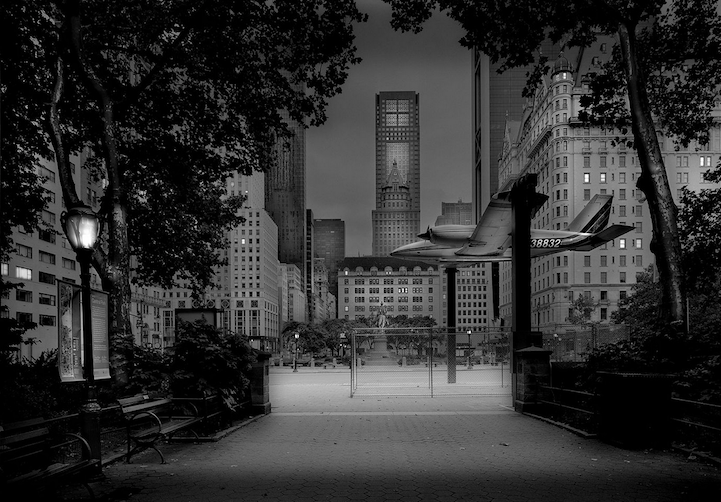
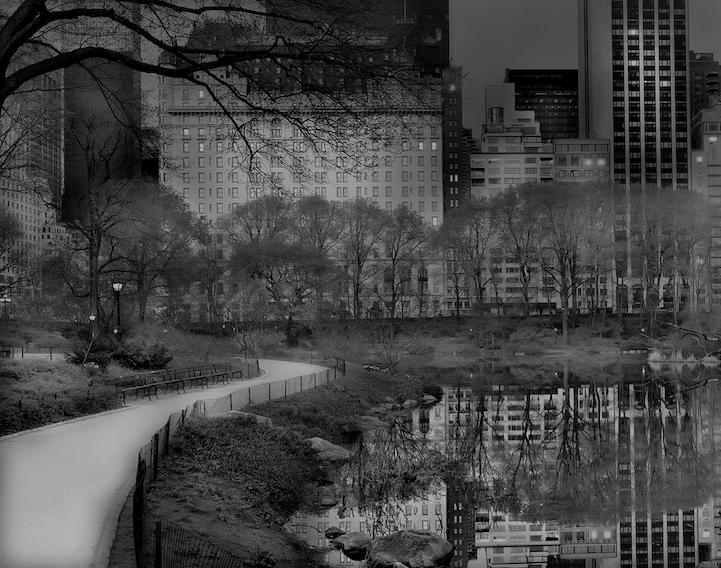
By day, Central Park is social infrastructure: joggers, tourists, picnics, performances. Massaia’s frames remove that layer. Without crowds, the designed landscape of Olmsted and Vaux reads as stage set—bridges, malls, water, and planted hills arranged for a drama that has temporarily left the theater. The mood can tip toward unease or toward invitation depending on the frame: a path that pulls you forward, a railing that holds you at a threshold, a body of water that mirrors a faint sky.
Isolation here is not always loneliness. Sometimes it is relief—the rare chance to see a famous place without performing being there. Other times the emptiness feels uncanny, as if the city forgot to turn the park back on. That double register is part of why the series traveled so widely in photography blogs and gallery contexts around 2014: the pictures are beautiful, but they also revise a landmark everyone thinks they already know. A tourist postcard promises energy; these prints offer stillness as the main event.
A New York photographer close to home
Raised in New Jersey and based in the New York metro area, Massaia has repeatedly worked places within reach of those night walks: parks, boardwalks, and later series that stay tied to the region’s light and weather. Self-taught in many of his technical habits, he built a practice that values patience over spectacle. The Central Park work sits in a lineage of nocturnal city photography—earlier artists who found drama in empty streets and fog—yet it remains specific to one park’s paths and to one photographer’s insomnia-shaped schedule.
When the pictures circulated widely in the mid-2010s, viewers often remarked on how little the park resembled postcard New York. The skyline might glow at the edge of a frame, but the emotional center is usually the ground plane: a curve of path, a run of fence, a stretch of water. Ordinary civic furniture becomes monumental when given that much quiet. The series asks you to look down as much as out—to treat the park as a landscape of surfaces rather than a backdrop for human activity.
Reading the frames
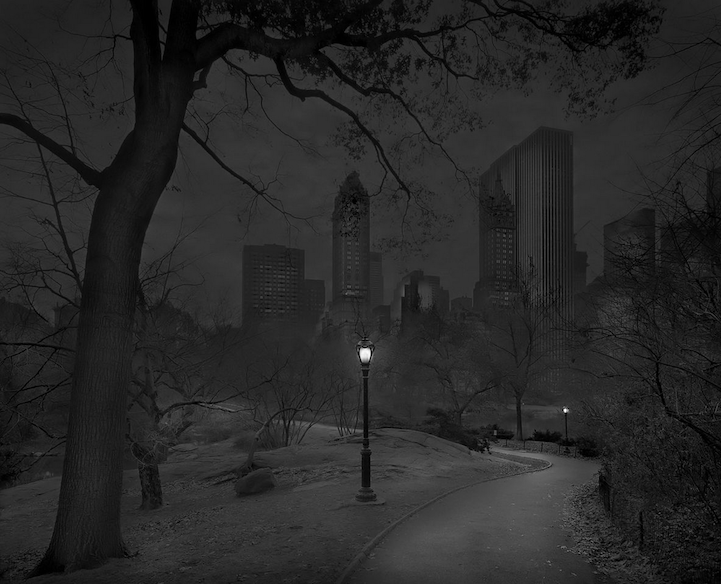
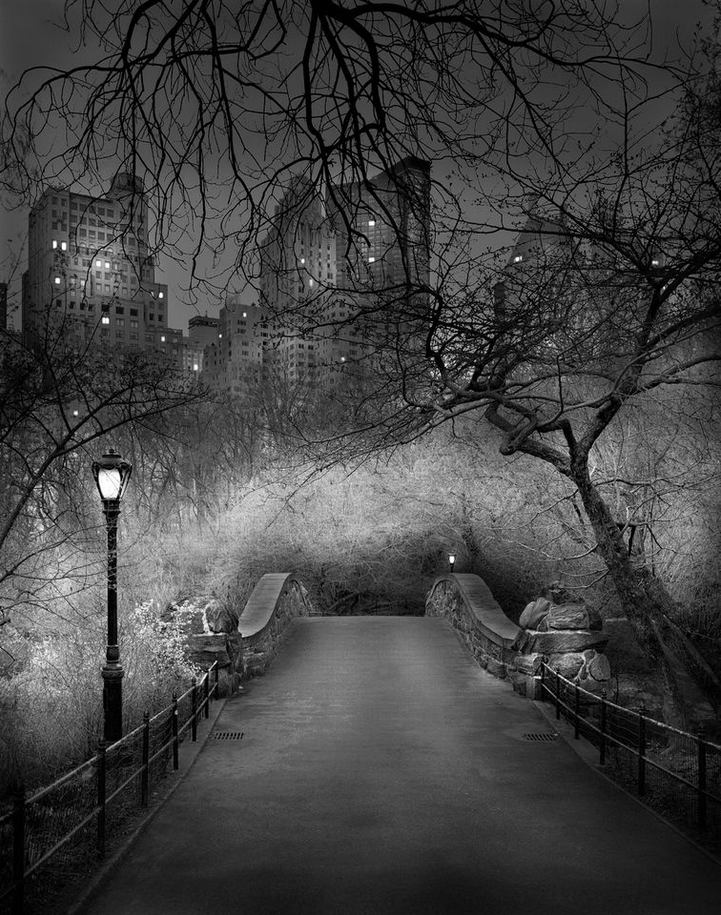
The selection below follows the same nocturnal thread: empty walks, soft light, large-format clarity. Notice how often the composition leads with a path or waterline, inviting the eye to travel as a walker would. Notice, too, how rarely a figure appears. Absence is the subject as much as landscape. Where later chapters of Massaia’s work introduce people—sleeping or sunbathing figures in Sheep Meadow, for example—the early Deep in a Dream park pictures keep the human presence offstage so the place itself can carry the emotion.
If you know Central Park only in afternoon sun, these frames may feel like another city grafted onto the same map. That is the series’ quiet argument—that a place famous for density can also be a place of solitude, and that the ordinary park bench or bridge, seen at the right hour with the right patience, can hold as much charge as any skyline vista. The night does not invent a new park; it reveals a version that was always there between the crowds.
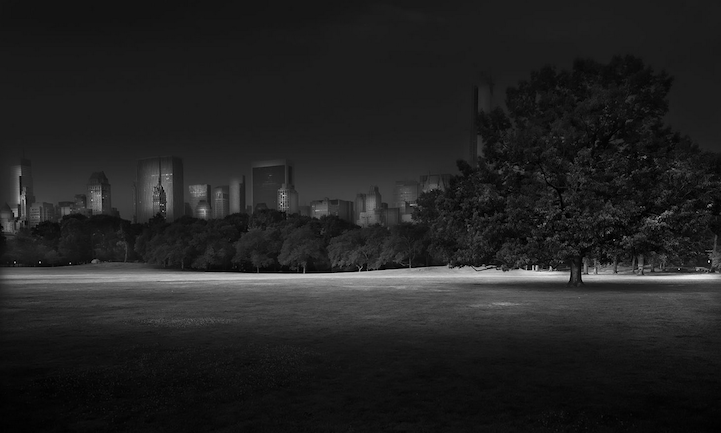
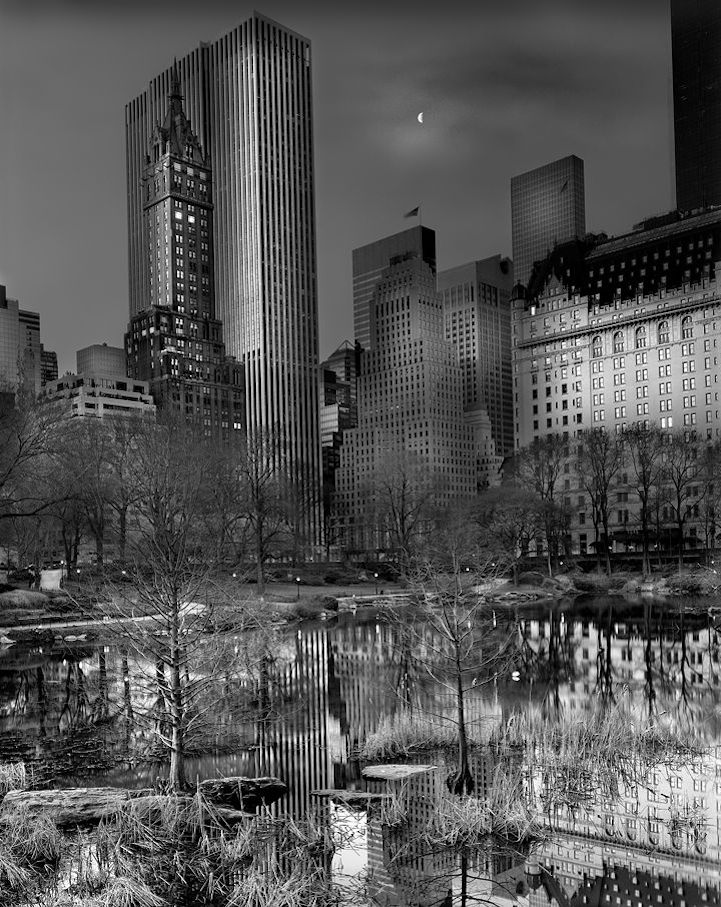
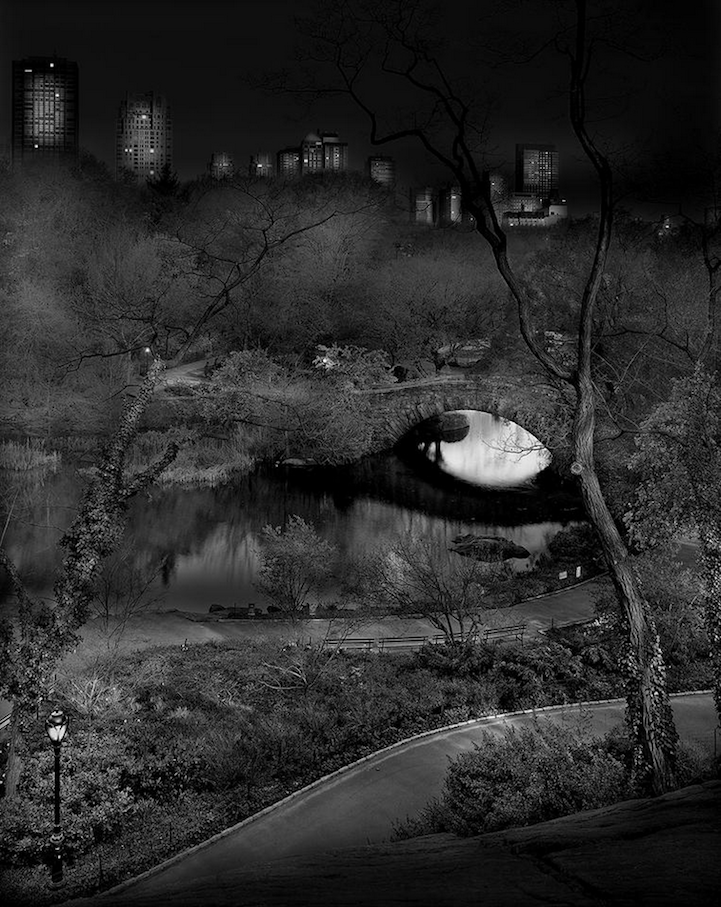
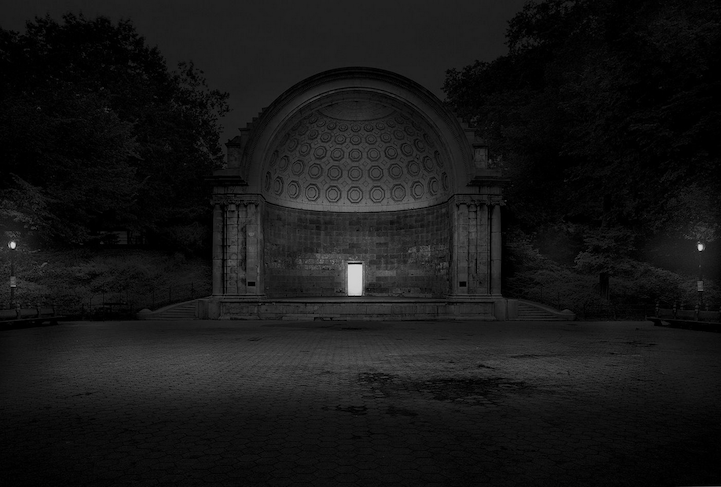
Massaia’s own site and gallery exhibitions remain the best places to follow how the series continued in later chapters. For anyone who has only scrolled the images late at night—ironically, in the same sleepless hours that first sent him into the park—the prints ask for a slower look: not as travel souvenirs of New York, but as records of a landscape briefly left alone with itself. Next time you cross the park at dusk, imagine it a few hours later, emptied, and you will understand what he went out to find.

Comments
Continue reading
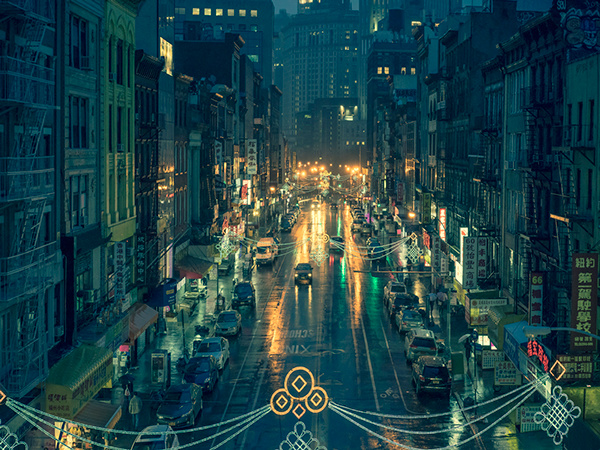
Enigmatic Pictorial of Manhattan’s Chinatown
Franck Bohbot’s 2014 nocturnal Chinatown series trades daytime crowds for deserted streets, cinematic light, and a quiet, science-fiction calm.
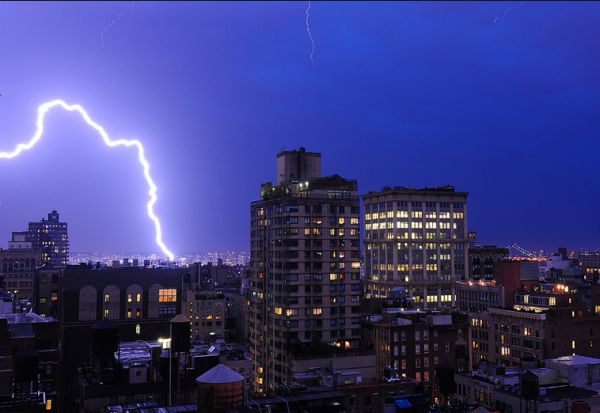
New York City Lights: Night Photographs by Ben Leshchinsky
Ben Leshchinsky’s New York night cityscapes—Midtown window grids, bridges, and long-exposure lights—from his early-2010s Flickr-era series.
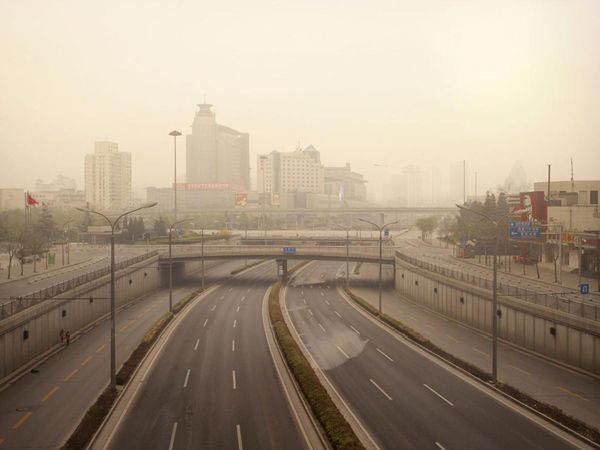
Silent World: People-Free Cities by Lucie & Simon
Paris duo Lucie & Simon empty New York, Paris, and Beijing in Silent World—long-exposure, ND-filtered visions of landmark cities with one or two symbolic witnesses left behind.