
Nicole Kidman on The Hollywood Reporter, January 2013
A historical look at Nicole Kidman’s January 2013 Hollywood Reporter Sundance cover—Ruven Afandor portraits, Stoker-era indie positioning, and the trade interview about saying no to studios.
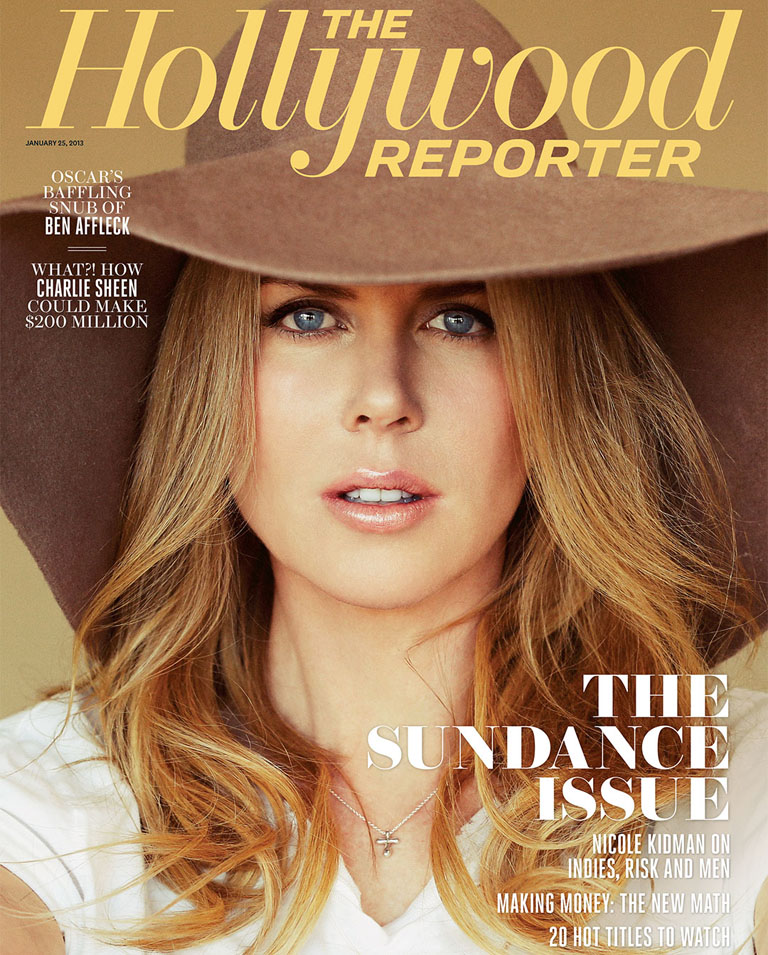
In January 2013, The Hollywood Reporter put Nicole Kidman on the cover of its Sundance-season issue—the Jan. 25 magazine dated around a Park City moment when A-list names were arriving with small films instead of only studio behemoths. Photographed by Ruven Afandor, the package framed Kidman at forty-five as an actress declaring, in the story’s memorable line, that her heart was independent. The gallery stays with that THR cover story as industry history from early 2013: festival timing, indie positioning, and the trade-paper questions a fashion glossy would not lead with.
THR’s physics differ from Harper’s Bazaar’s. A fashion monthly sells desire through clothes; a Hollywood trade sells power, choice, and positioning through access. Kidman’s January 2013 THR appearance is a career-and-business conversation illustrated by strong portraiture—not a couture portfolio with personal asides. The cover exists to stop entertainment professionals and obsessed fans alike, then deliver a reported profile about how an Oscar winner was navigating studio decline, indie appetite, and public myth.
Sundance timing and the Stoker lane
The story’s reported present tense is precise. Around January 10, 2013—days before the Golden Globes—Kidman was in Los Angeles after heavy travel: Australia with Keith Urban and their daughters, then a long haul to Europe to finish scenes for Olivier Dahan’s Grace of Monaco. At Park City she would be presenting Stoker, a stylized horror film made for just under $12 million. THR placed her among other recognizable names using Sundance that month as a marketplace for smaller bets—friends and peers in the same indie-migration weather.
That context is the cover’s industrial reason for being. January trades need a face who embodies the festival’s A-list indie paradox: too famous for the old “discovery” myth, still hungry for director-driven work studios were less eager to fund at mid-budget. Kidman’s quote about not associating with mainstream films anymore—and about turning down studio offers that did not align with who she was—gave THR a clean thesis. Training in Australian indie cinema, she suggested, made the preference feel less like a brand reinvention and more like a return.


What a trade interview asks that Bazaar does not
Contemporary coverage of the THR piece clustered around industry nerve endings. Kidman discussed sex scenes and onscreen shock in the wake of The Paperboy, including the notorious urination moment with Zac Efron. Her circulated response refused moral panic: she did not find urination especially shocking, noted a precedent as far back as Eyes Wide Shut, and argued that violence is more shocking than sex because sex is primal. That is trade-paper talk—performance boundaries, ratings-era taboos, an actress defending choice rather than modeling a gown.
She also spoke about directors as career architecture: Gus Van Sant and To Die For as a turning point; willingness to work again with Lars von Trier; Stephen Daldry described in soulmate terms, including kindness during a pregnancy when she could not do The Reader. A fashion interview might name a photographer. A THR interview maps a director graph, because directors are how serious actors narrate agency inside a chaotic industry.
Public myth around her years with Tom Cruise and Scientology remained unavoidable in 2013 profiles; THR’s own headline framing put sex scenes, Scientology, and saying no to studios in one line. The useful historical reading is not to relitigate tabloid war here, but to note what kind of magazine still felt obligated to host those topics: a Hollywood trade covering power, image management, and the residue of a marriage that had been a global media system of its own. Kidman, remarried and parenting young children with Urban, spoke from a later chapter while the old chapter’s keywords still traveled with her name.

Money and leverage appeared in the reported texture too—not as a fashion “how she spends” spread, but as explanation for indie freedom: substantial personal wealth, Urban’s American Idol judging paycheck that season, endorsement history with houses such as Chanel and Omega mentioned as part of the economic picture that made saying no to misaligned studio films feasible. THR readers expect that kind of accounting. It answers the practical question behind the romantic indie slogan: who can afford to keep their heart independent?
Afandor’s portraits and the cover’s visual brief
Ruven Afandor’s photographs for the issue gave Kidman a soft, youthful editorial look that internet commentary immediately debated—floppy-hat styling that some compared to other magazine moments of the era. Whatever one thinks of the resemblance talk, the portraits are doing trade-cover work: a recognizable star rendered freshly enough to feel like a new chapter, without needing a couture credit list as the main event. The images support the “second chapter in indies” framing THR attached to the package.

Compare the brief with a November 2012 Harper’s Bazaar cover of the same actress and the divergence is the point of keeping these galleries separate. Bazaar’s November 2012 Kidman story sold daring fashion, Terry Richardson’s flash vocabulary, Emilio Pucci on the newsstand, and personal quotes about marriage and body image beside couture inheritance. THR’s January 2013 story sold Sundance strategy, director loyalty, shock-scene defense, and the economics of refusal. Overlap exists—same age, same marriage, same upcoming Grace Kelly project—but the magazine questions differ. One asks how she looks and feels in clothes. The other asks how she chooses work when studios shrink mid-budget space for actresses over forty.
Reading the cover as January 2013 Hollywood weather
Early 2013 was a useful hinge for this narrative. Prestige television’s later rewriting of movie-star careers was not yet the default explanation. Festival circuits and specialty divisions still looked like the primary shelter for risky adult dramas and stylized genre pieces. Kidman’s THR cover sits inside that weather: Stoker as proof of appetite, Grace of Monaco as art-film continuity with Dahan, studio offers acknowledged and declined when they failed her alignment test.
She also floated a cultural question that trades love: what is a movie star now? In an age of reality television and fragmented fame, the old glamour definition felt unstable. Coming from Kidman—someone who had lived inside classic movie-star machinery—the question was not naive. It was diagnostic. THR exists to host that diagnosis.
Keep the historical fence up. This is not a scorecard of every role after 2013, and it is not a fashion-closet tour. It is a Sundance-issue Hollywood Reporter cover featuring Nicole Kidman in January 2013, with Afandor portraits and a profile about independent-minded choices at forty-five. If you are matching magazines, file Bazaar under fashion daring and THR under industry independence. Same face on the rack; different machine behind the masthead.
One last way through the gallery: look at the portraits while holding a single reported sentence—“My heart is independent”—and ask whether the styling sells softness, resolve, or both. Softness without the sentence would be only beauty. The sentence without the portraits would be only a press quote. THR’s January 2013 wager was that readers wanted the combination: a star who could still stop a trade cover, speaking like someone who had decided which kind of Hollywood she still wanted to inhabit.

Comments
Continue reading

Nicole Kidman on Harper’s Bazaar US, November 2012
A historical look at Nicole Kidman’s November 2012 Harper’s Bazaar US cover—Terry Richardson photographs, Mel Ottenberg styling, Emilio Pucci on the newsstand, and the Daring Issue interview.

Funny Animal Signs That Warn People (While Animals Ignore Them)
From a seagull on a no-birds disc to classic zoo and park ironies—why animal warning signs get funny, and what the rules are still for.
How to Find Local Amenities on Vacation: Mechanics, Haircuts & More
Locate trustworthy local services and everyday spots while traveling or settling in—using publications, reviews, map apps, neighbor tips, and low-pressure exploration.