
Photos of Beaches From Above by Gray Malin
Gray Malin’s aerial beach photographs—helicopter viewpoints, umbrella geometry, and the bright pattern language of shorelines seen from above.
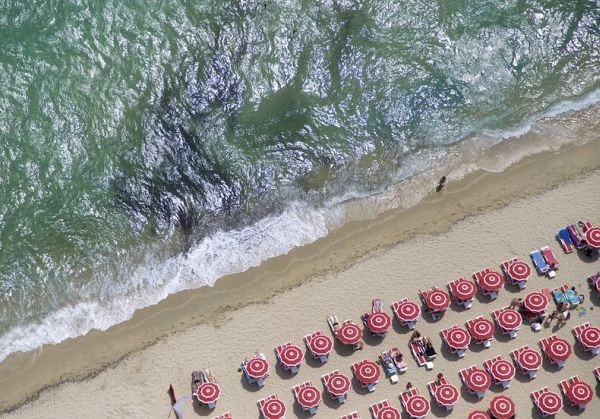
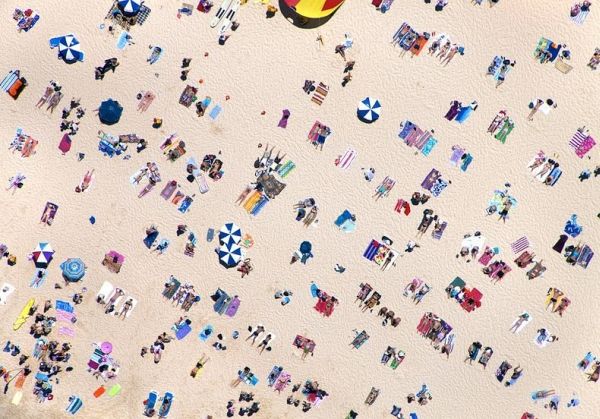
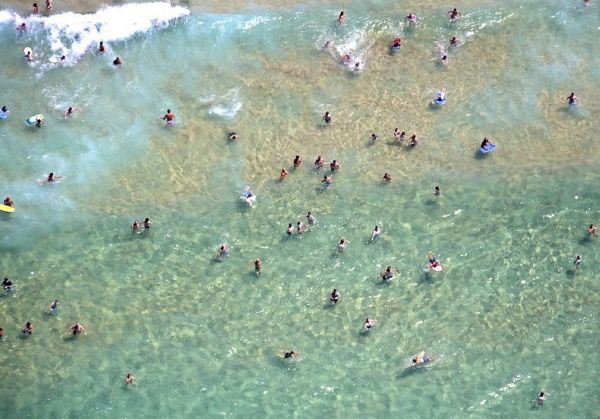
Gray Malin’s beach photographs look like postcards dreamed by a pattern-obsessed bird. Shot from above—typically from a helicopter with the door off and the photographer harnessed in—the pictures turn shorelines into compositions of umbrellas, towels, turquoise water, and tiny human punctuation marks. Dallas-raised and long based in Los Angeles, Malin built a signature from that aerial joy: bright, graphic, and oddly calming even when the beach below is crowded. The images gathered here belong to that early wave of bird’s-eye beach and pool scenes that made his name on design blogs and living-room walls alike.
How the viewpoint arrived
The origin story is almost too neat to be true, yet Malin has told versions of it consistently. On a trip to Las Vegas around 2011, a high hotel window overlooked a busy resort pool. Umbrellas and swimmers arranged themselves into a living diagram. He photographed the view; the file became a desktop screensaver; staring at it for months turned into a series idea. Roof access to glamorous pools proved difficult—hotels were not eager to hand a young photographer the keys to their skyline edges. Helicopters, improbably, were more cooperative.
An early flight over Miami—initially aimed at pools during Art Basel season—opened onto South Beach itself. From the air, chaise loungers and umbrellas locked into geometry that felt closer to Busby Berkeley than to a tourist snapshot. Malin was hooked. He began chasing beaches across continents, releasing collections that treated leisure as graphic design without draining the scenes of warmth. Australia, Hawaii, Rio, California strands, European clubs, African coasts—the map widened, but the question stayed simple: what does pleasure look like when height turns it into pattern?
What hanging out of a helicopter demands
These are not drone composites assembled in software—at least not in the classic Malin method that defined the look. A pilot removes a door; Malin straps in, leans into wind, and shoots manually while the aircraft moves fast. Aperture and shutter decisions happen in fractions of a second with tears streaming from the wind. Weather can cancel a day. Empty sand can ruin a hoped-for pattern. Clouds can flatten the turquoise that makes a frame sing. The craft is equal parts nerve, timing, and an eye for when scattered towels suddenly rhyme.
Altitude and clearance rules change by city, so the exact distance to subject shifts. Sometimes the frame is intimate enough to read a swimsuit stripe; sometimes it is a wide abstract of coastline. Color grading and print choices later polish the optimism—Malin’s beaches tend to feel vacation-eternal—but the underlying geometries are found, not invented from nothing. People really did plant those umbrellas that morning. That factual base matters. The pictures are stylized, not fictionalized; they are edited realities rather than pure fantasy islands.
Physical risk is part of the myth and also part of the method. Flying doorless at speed is thrilling once familiarity sets in, Malin has said, but it never becomes casual. The body is a tripod that shakes. The hands must still find exposure. The eyes must still find the moment when a cluster of beachgoers completes a shape worth keeping.
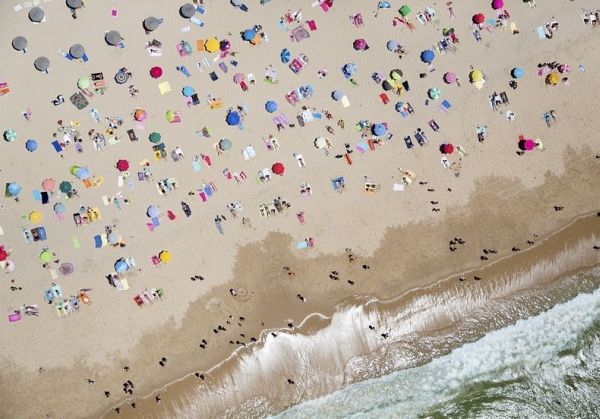
Reading beaches as pattern
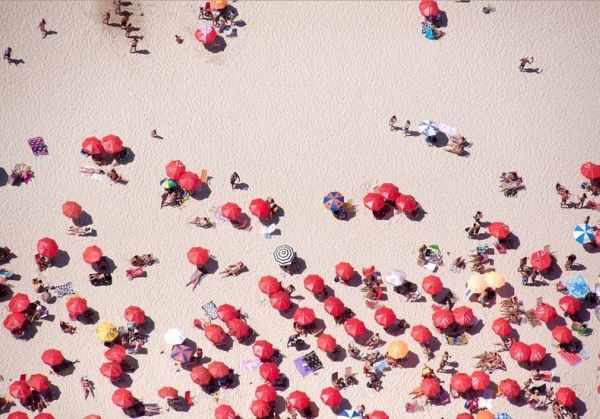
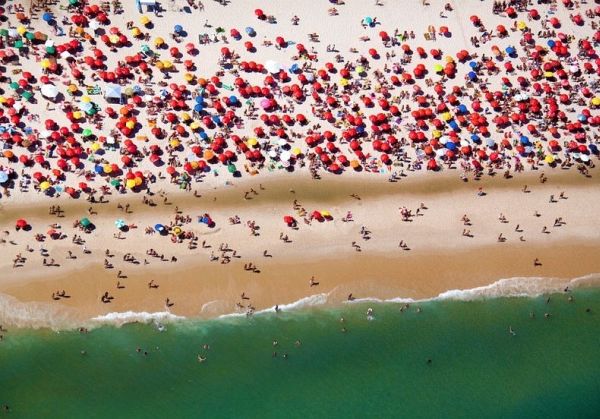
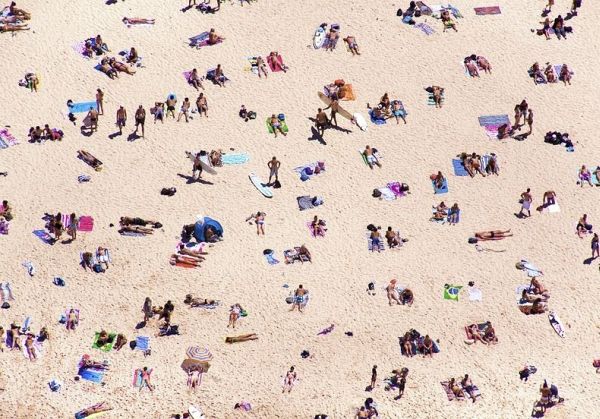
From above, individuality softens into rhythm. A red umbrella becomes a dot in a score. A lone swimmer becomes a comma in turquoise. That abstraction is why the pictures travel so well as décor: they offer landscape without demanding you know the GPS pin. At the same time, enough human detail remains that you can invent stories—who arrived earliest, which group dragged the coolest cooler, where the shoreline drops off into serious water.
Pools appear beside beaches in the wider project, sharing the same overhead logic: water as field, furniture as motif, bodies as scale. Whether the site is a famous strand or a resort rectangle, Malin hunts repeating shapes and color chords. The mood is generous. These are not critiques of overcrowding so much as celebrations of collective play seen from a distance that turns noise into design. If social photography often isolates faces, this work dissolves faces into choreography and somehow makes the crowd feel lighter, not heavier.
Notice how empty space works. Malin needs open water and open sand the way a graphic designer needs margins. Too much clutter and the pattern collapses into documentary grit; too little activity and the frame goes inert. The sweet spot is a shore busy enough to sparkle and ordered enough—by accident or by resort planning—to read as composition.
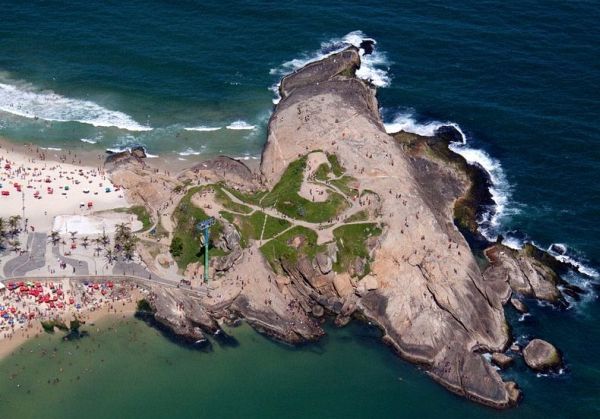
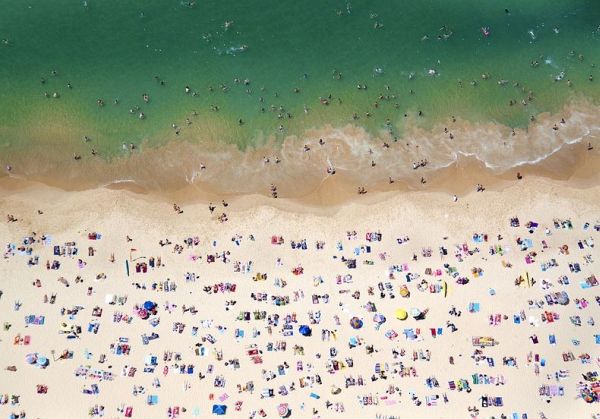
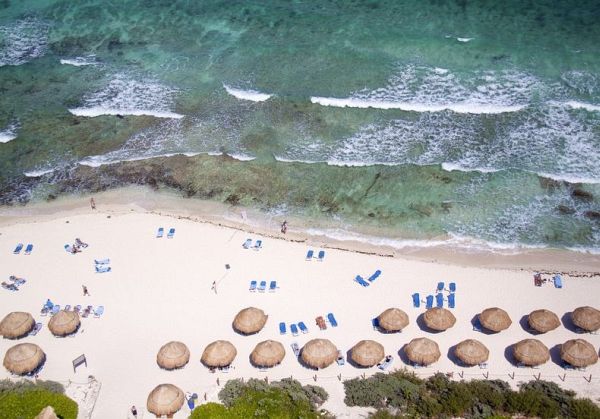
Travel, print culture, and the joy brief
Malin’s career arc—from selling prints at a Los Angeles flea market to monographs, collaborations, and global recognition—matters less here than the consistent brief: evoke wanderlust and lightness. Beaches, for him, are places where freedom looks similar across cultures even when the architecture of leisure differs. A striped umbrella in one country and a thatched shade in another both become circles and shadows from altitude. That universality helps the photographs function in hotels, homes, and magazines without heavy captioning.
Print culture amplified the work. Large, colorful editions turn walls into temporary vacations. Social media later multiplied the same appetite for overhead joy, but Malin’s early helicopter series predates the drone-everywhere era and still feels handmade in its risk. Later projects stretched the aerial habit to deserts, cities, snow, and colder extremes, yet the beach set remains the doorway most viewers enter first. Looking at this selection, you can almost hear rotor wash and smell sunscreen that never quite reaches the altitude of the lens. The distance is physical; the invitation is emotional.
There is also a quiet democratic joke inside the glamour. You do not need a suite on the sand to enjoy these views. The expensive vantage becomes a shared image. That is one reason the pictures caught on so widely in the early 2010s: they offered luxury perspective as accessible delight.
A way to walk the gallery
Try sorting the frames by dominant color—blues that go icy, blues that go lagoon, sands that warm toward gold. Then resort by density: sparse shores versus packed holiday geometry. Finally, pick a single umbrella or swimmer in one image and imagine the ground-level soundscape around that speck—radio, kids, a cooler lid, wind in a rental cabana. The jump between abstract pattern and imagined noise is where Malin’s pictures keep working after the first pretty hit fades.
If you have ever stood on a balcony and felt the urge to photograph the pool below, you already understand the seed. Malin simply raised the balcony until it became a flight path, then kept flying until beaches worldwide answered with their own accidental choreography. These photographs keep that choreography visible—bright, orderly, and still somehow free.

Comments
Continue reading

Dramatic Photo Art by Sukron Ma’mun (Ipoenk Graphic)
Cirebon, Indonesia photographer Sukron Ma’mun uses theatrical natural light to frame village life, play, and place in lyrical photo art.

Bird’s-Eye Views: Florian Beaudenon’s Instant Life
Paris photographer Florian Beaudenon’s Instant Life series captures people in their rooms from above—intimate, collaborative overhead portraits of everyday joy.
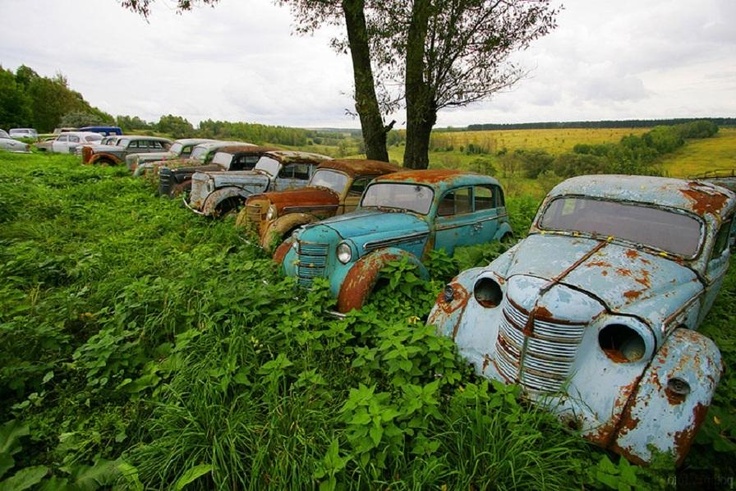
Abandoned Cars Reclaimed by Nature: Rust, Growth, and Quiet Ruin
When neglected vehicles are left outdoors long enough, rust, moss, and trees rewrite them into strange still lifes—sad, photogenic, and slowly returning to the ground.