
Irresistable Adorables #4: Outdoor Faces, Daisy and Bray
A daisy on a dog’s nose and an alpaca mid-laugh—why two outdoor faces can carry a whole adorables chapter.
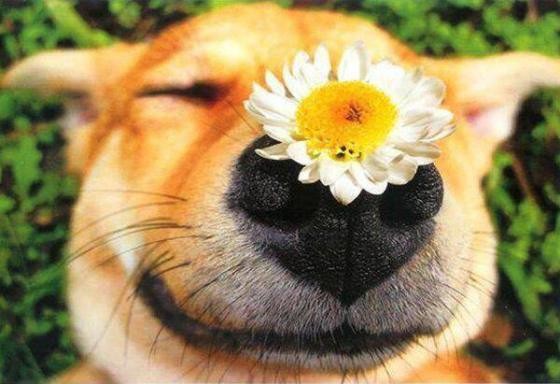
Irresistable Adorables #4 keeps a short gallery on purpose: two outdoor faces that behave like complete essays. A tan dog with a daisy balanced on its nose. A white alpaca mid-laugh, wool curtain nearly covering one eye. After prop comedy and scramble-and-stare chapters, this installment slows down and asks what happens when the whole joke lives in a muzzle, a mouth, or a single petal.
Fewer images do not mean less to say. Face-first outdoor photography has its own craft—light direction, working distance, timing a blink versus a grin—and these two frames are useful teachers. One is gentle still-life comedy. The other is kinetic facial chaos. Together they sketch a pocket course in expression without needing a clothesline or a curb.
The daisy-on-the-nose still life
A golden-tan dog lies in bright grass, eyes squinted shut, a white-and-yellow daisy perched on the tip of a textured black nose. Whiskers fan outward. The crop is tight enough that the flower and the snout share equal billing. Nothing else needs to enter the frame: no costume trunk, no holiday hat, no kitchen mug. The prop is a single bloom, and even that feels accidental in the best way—as if the dog and the meadow negotiated a truce.
Why it works:
- Closed eyes signal ease. Squinted contentment reads differently from a hard stare. Viewers relax because the dog looks relaxed.
- One object, centered. The daisy is small, high-contrast, and placed on the most recognizable dog landmark—the nose tip.
- Outdoor color does quiet work. Green grass blur and warm fur keep the palette simple so the white petals pop.
- Texture pairings. Soft petals against a leathery nose make the photo tactile even on a phone screen.
Try a similar shot only with a willing dog and a lightweight bloom (or a soft fabric stand-in if pollen is a concern). Do not glue, tape, or balance anything that could fall into eyes or be inhaled. The charm collapses the moment the animal looks worried. If the daisy will not stay, photograph the dog smiling in the grass without it—the face still carries the chapter.
Lighting tip: late morning or late afternoon side light deepens the grass without bleaching the flower center. Overhead noon sun can flatten the snout and create harsh catchlights if the eyes open. Here the closed lids solve that problem elegantly.
The alpaca that cannot keep a straight face
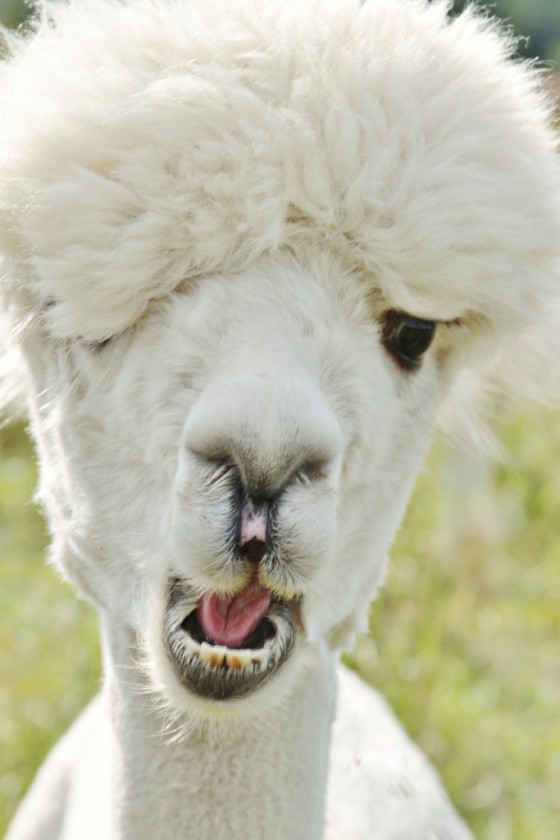
The second face is louder. A white alpaca fills the frame, wool mop nearly swallowing the eyes, mouth open wide enough to show bottom teeth and a pink tongue. Green pasture softens behind. One dark eye peeks through fringe like a punchline delayed by hair. If the daisy dog is a quiet chuckle, this is a bark of laughter.
Open-mouth animal portraits succeed when they feel mid-vocalization rather than forced. You can almost hear the bray. The wool texture does as much work as the expression: crimped white fiber turns the head into a comic pom-pom before you even notice the teeth. Outdoor brightness helps separate white wool from a pale sky; against a green field, the contrast stays friendly instead of clinical.
Working distance matters with camelids. Close portraits look intimate, but animals need an exit path and a calm handler. Fill the frame with a longer lens when you can, so you are not looming into a personal bubble. Wait for a natural vocalization or a curious stretch rather than startling a sound out of them.
Composition note: vertical crops favor long faces and hanging fringe. Leave a little pasture in the corners so the alpaca still belongs to a place, not a seamless studio void. Place is part of the joke—this face belongs to open air.
Why a two-image chapter still earns its title
Series installments often sprawl. #4 refuses that habit. Two strong outdoor faces can teach more than twenty mild indoor poses if you study them. Compare the pair:
- Energy: dog = still contentment; alpaca = explosive vocal face.
- Prop load: dog = one daisy; alpaca = none, unless you count the wool as nature’s costume.
- Eye strategy: dog hides the eyes; alpaca half-hides them in fringe while the mouth takes over.
- Sound you imagine: soft grass quiet versus an unmistakable bray.
That contrast is the editorial point. Irresistable Adorables #2 stacks household objects. #3 chases climbs, dives, and stares. #4 says a face in good outdoor light can carry an entire page if you give it room to breathe and a caption that pays attention.
It is also a useful reminder for anyone editing their own pet album: deletion is a creative act. Keeping only the frames where expression is unmistakable often yields a stronger gallery than padding with near-duplicates.
A short field guide to outdoor animal faces
Use these criteria the next time you are in a yard, pasture, or park with a camera:
- Find the mouth and the eyes first. If neither is readable at thumbnail size, move closer or reframe.
- Prefer side light over flash. Soft directional sun sculpts fur and keeps outdoor color honest.
- One idea per frame. Daisy or laugh—not daisy plus hat plus tennis ball plus sibling.
- Watch the wind. Breeze that lifts fringe or whiskers adds life; gale that makes eyes squint in irritation does not.
- Respect pollen, heat, and footing. Cute photos are not worth itchy eyes or slippery grass injuries.
- Shoot a burst, then choose. Open-mouth moments live between frames; still-life nose props may only work once.
Phone shooters can play too. Portrait mode helps separate a snout from busy grass, but turn it off if the daisy edge looks fake. Natural depth from getting closer often beats a heavy blur filter.
Reading faces without over-humanizing
It is tempting to write full human dialogues onto animal mouths. A little anthropomorphism is inevitable—that is partly why these photos spread—but accuracy keeps the writing kind. The dog may be resting, smelling, or simply enjoying sun, not “posing for a flower crown tutorial.” The alpaca may be calling to a herd mate, not telling a joke. Describing what you see (closed eyes, open mouth, balanced petal) stays truer than inventing a monologue.
That restraint also differentiates this chapter from meme pages that slap captions over every frame. The images here are strong enough to stand with careful observation instead of a punchline sticker.
How this fits the wider adorables sequence
Read in order, the installments sketch a map of cuteness strategies:
- Pocket and companion novelty as an opening mood elsewhere in the series.
- Prop-led domestic comedy in #2.
- Effort, eye contact, and motion in #3.
- Concentrated outdoor facial expression in #4.
You do not need all four strategies in one afternoon shoot. Pick the chapter that matches your day’s conditions. Rainy indoor day? Props and quiet beds. Snow and patience? Scrambles. Bright pasture and cooperative faces? Come back to #4’s playbook.
If you only take one camera note from these two pictures, take this: step close enough that the expression is the subject, then stop adding things. A daisy is optional. A laugh is enough. Grass and sky will finish the sentence.

Comments
Continue reading
Irresistable Adorables #3: Stares, Scrambles, and Tiny Effort
Duckling climbs, fox dives, and big-eyed portraits—adorable photos driven by intention, not laundry-line props.
Irresistable Adorables #2: Prop Comedy and Household Cameos
Laundry lines, Santa hats, mugs, and dinner plates—how staged domestic props turn soft animals into short stories.
Irresistible Adorables, Part 1: A First Round of Animal Cuties
The opening gallery in a four-part cute-animal series—sugar gliders, patient dogs, comedy cats, a chipmunk heist, and a few wilder guests from late 2012.