
Irresistable Adorables #2: Prop Comedy and Household Cameos
Laundry lines, Santa hats, mugs, and dinner plates—how staged domestic props turn soft animals into short stories.
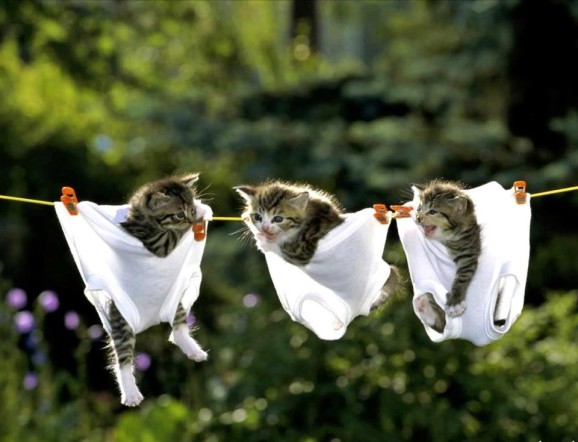
Some animal photos win because the subject is soft. Others win because the setting is ridiculous on purpose. Irresistable Adorables #2 belongs in that second camp: laundry lines, Santa hats, ceramic mugs, patterned diapers, dinner plates, and a tiny black cape that turns a chick into a stage actor. The animals remain the stars, but the human props do half the storytelling.
This installment is not another generic pile of “more cute pets.” It is a guided walk through staged domestic comedy and unlikely household cameos, with farm tenderness and a rescue-minded joey included so the set does not float away into pure gag. If you are looking for pocket-exotic companions as the whole thesis, that is a different mood. Here the joke is usually an object you already own—or a room you already live in.
Think of the chapter as a short film about scale. Adult clothing language meets creatures that still fit in two hands. Kitchenware becomes architecture. A garden clothesline becomes a theater fly system. The editorial test for every frame is simple: if you removed the prop, would the story shrink? If yes, it belongs here.
Laundry-line theater and holiday hats
Three tabby kittens perched in white briefs on a yellow clothesline is prop comedy at full volume. Soft garden blur behind them, orange clothespins as punctuation, mouths open as if they are gossiping about the laundry schedule. You notice the setup first, then the faces. That order is intentional for this chapter: the object frames the animal, and the animal pays the object back with personality.
Clothesline shots only work when the animals look settled rather than stranded. Short sessions, soft weather, and a handler who can lift everyone down the moment curiosity turns into fuss keep the gag kind. The photo is funny because the kittens seem to accept the premise, not because they are trapped in it.
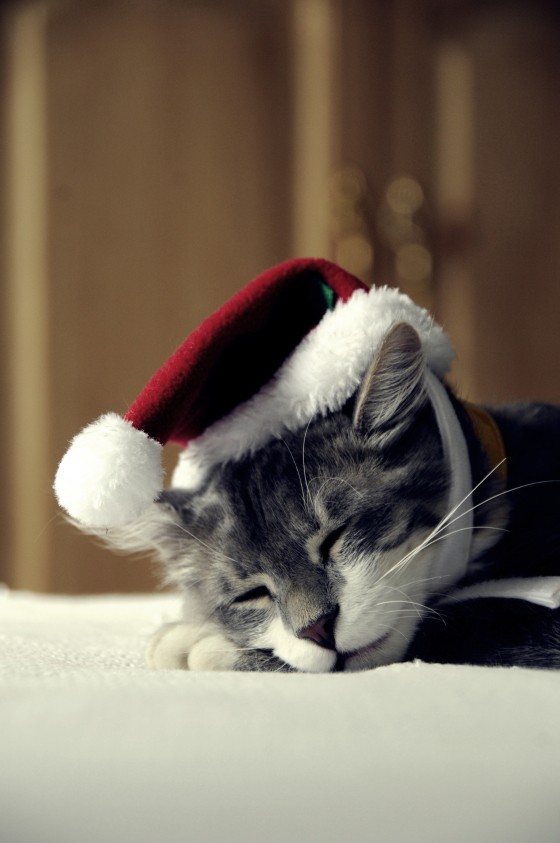
A sleeping grey-and-white tabby in a miniature Santa hat uses the same logic with less chaos. Soft white trim, chin strap, closed eyes—the costume is tiny, the trust is large. Holiday props are easy to overdo into glitter overload; this one stays quiet because the kitten is genuinely asleep. Costume photos land when the animal looks comfortable enough that the hat feels incidental, like a guest who fell asleep at the party still wearing a paper crown.
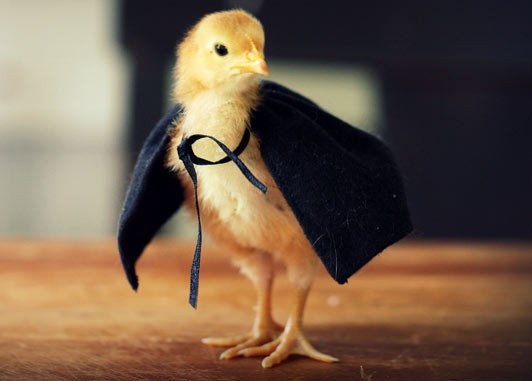
The chick in a black felt cape pushes the idea into costume design. A ribbon bow at the neck, downy yellow body, dark backdrop—the scale of the cape against the bird is the punchline. Prop comedy thrives on mismatch: superhero language on a creature that still looks like a handful of warm fluff. Keep the cape session measured in seconds, not minutes; chicks tire fast, and the best frame is usually the first calm one.
Mugs, plates, and pocket-scale guests
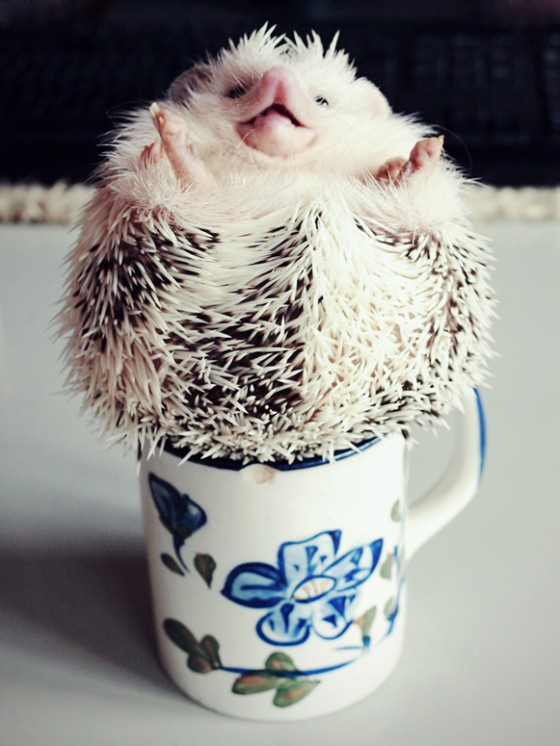
A pale hedgehog on its back in a blue-floral mug is the pocket-scale extreme of household staging. Quills against ceramic, paws in the air, a chipped rim that somehow makes the shot feel more honest than a pristine studio prop. Container photos invent a temporary “home” smaller than the animal’s usual world. Viewers love them because they can imagine the mug on their own shelf.
Use wide, stable vessels, never force a curl, and stop if the hedgehog balls tightly in stress rather than sprawling in trust. The adorable version of this idea is always the voluntary sprawl.
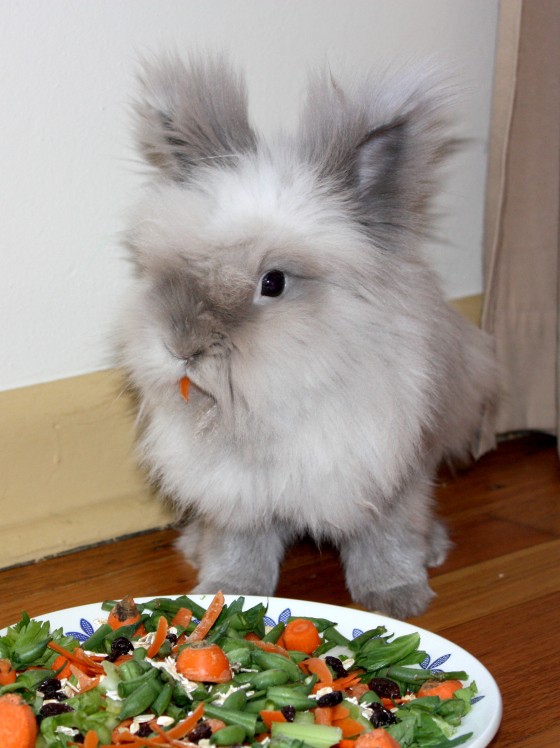
The fluffy rabbit beside a piled salad plate flips the prop from costume to feast. Carrot scrap in the mouth, floral rim, wooden floor—the plate turns a pet into a dinner guest who arrived early and started without you. Food props risk looking messy or unsafe; here the abundance is part of the charm, but the practical rule remains: only offer foods that are actually appropriate for the species, and keep human seasoning far away.
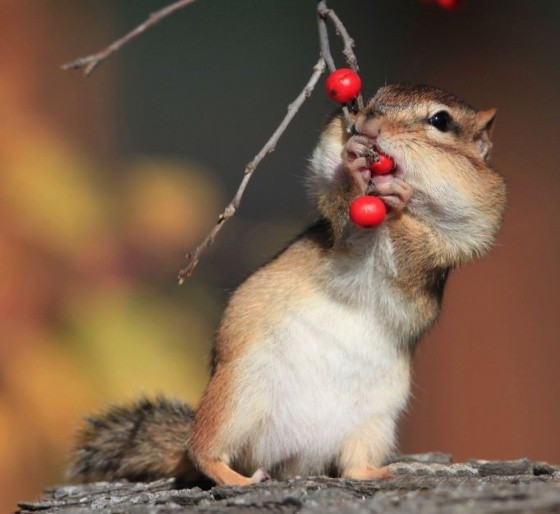
The chipmunk with berry-stuffed cheeks is wilder staging: no costume, but still a prop story. Twig, bark, glossy red fruit, pouches stretched like shopping bags. Nature supplies the props; the photographer waits for the grocery run. It belongs in this installment because the object—those berries—still drives the narrative as hard as the animal’s face. Cheek-pouch photos are basically still lifes with a pulse.
Soft faces between the gags
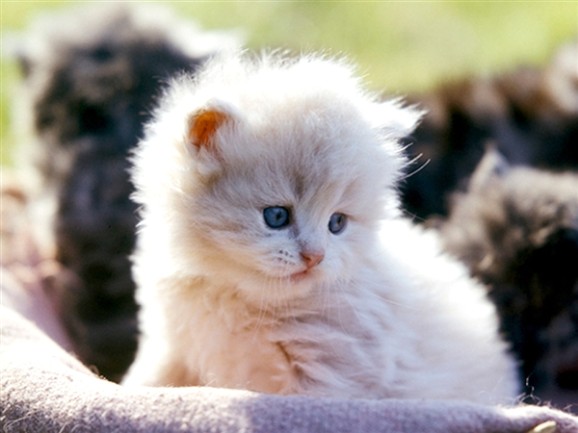
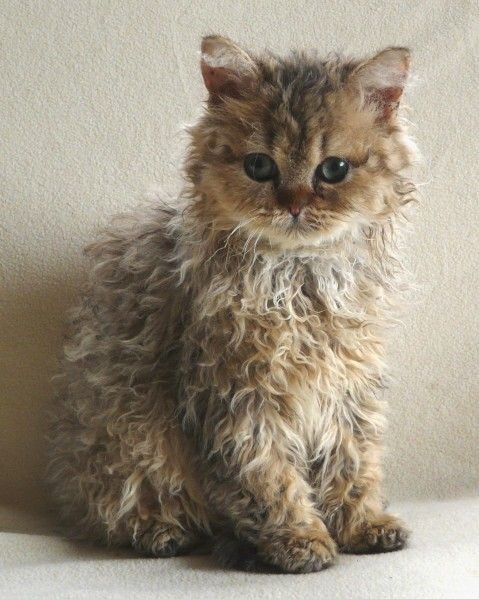
Not every frame needs a punchline. A cream longhair kitten with blue eyes in a mauve nest resets the eye after the laundry-line gag. Sun catches a halo of fur; other kittens blur behind. Pure texture photos remind you why props work at all—they borrow from a baseline of softness people already love. Without these palate cleansers, a prop gallery starts to feel like a novelty shop.
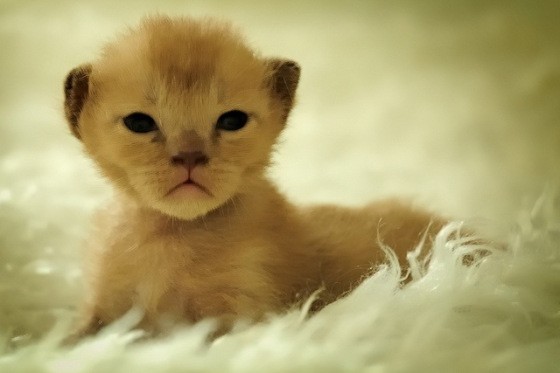
The tiny tan kitten with rounded ears and a serious expression is another reset: almost lion-cub proportions, dark eyes, shaggy white rug. No hat, no mug—just scale and stillness. In a prop-heavy gallery, quiet portraits keep the set from reading as a costume party only.
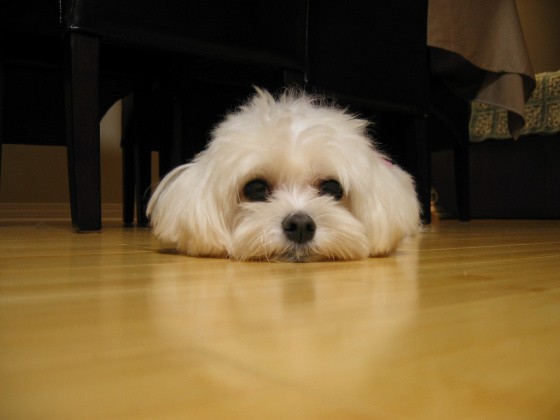
A silky white dog chin-down on the floor under a table uses furniture as architecture rather than costume. Chair legs frame the face; the low camera does the rest. Domestic architecture is a subtler prop: the animal borrows the human room and turns it into a hideout. If you shoot pets at home, get under the table once—people recognize that viewpoint instantly.
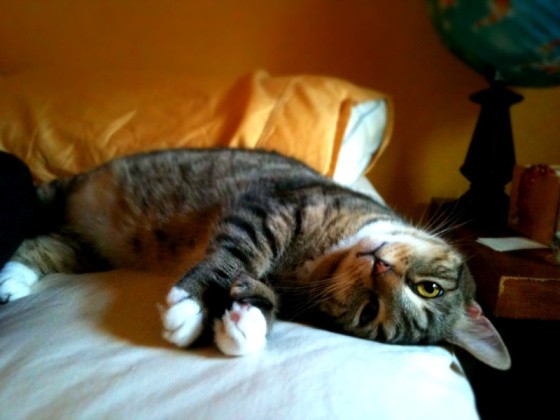
The upside-down tabby on white sheets with an orange pillow is household comedy without added clothing. One amber eye locked on the camera, paws tucked, lamp blur in the corner. Beds are props too—familiar stages where pets rehearse their best angles. The “upside-down hello” is a classic for a reason: it looks like an invitation, not a product shot.
Care, farm warmth, and shy gestures
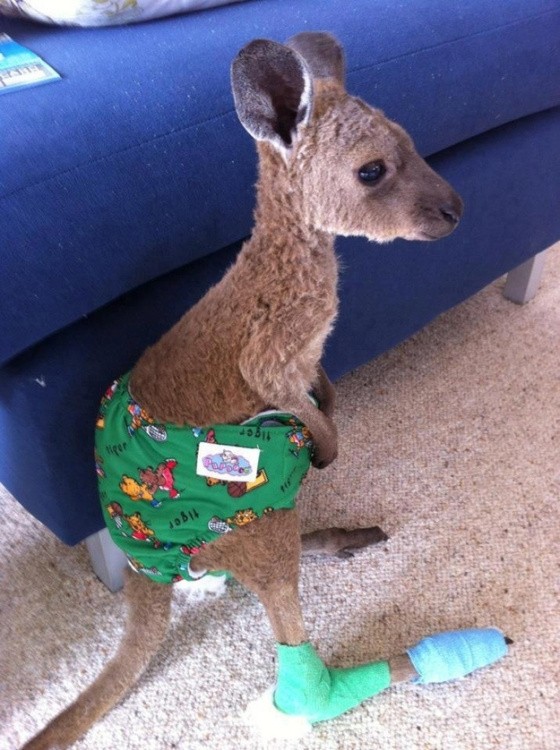
The joey in a cartoon diaper with a bandaged hind foot shifts the mood from gag to care. Blue couch, green wrap, long tail on carpet—the “prop” is medical and practical, not decorative. Including a rescue-adjacent moment in a comedy gallery matters. Cuteness is not only performance; sometimes it is patience while a leg heals. Viewers can tell the difference between a costume joke and a care routine, and both can belong in the same chapter if the tone stays respectful.
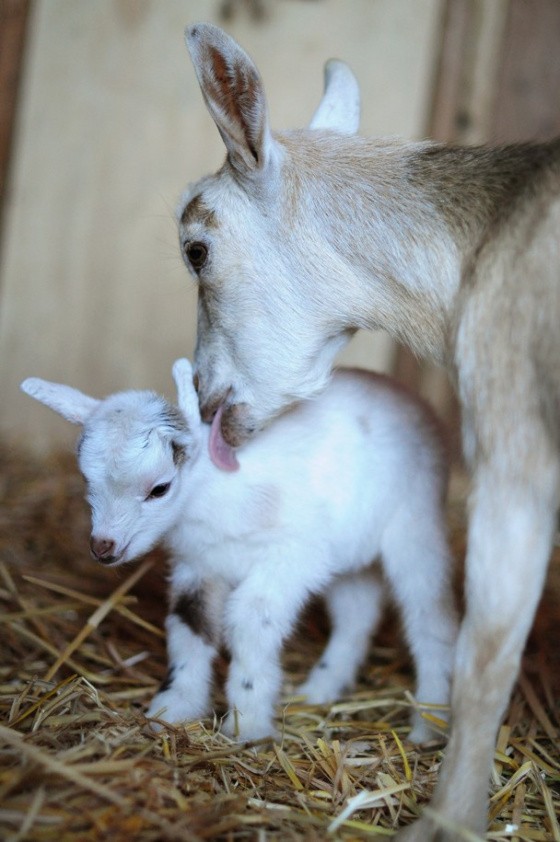
A doe licking her spotted kid on straw is classic farm tenderness. No costume required. Straw becomes the stage, maternal grooming the action. After diaper jokes and Santa hats, this frame grounds the set in ordinary animal life—the kind of moment that happens whether or not a camera is present.
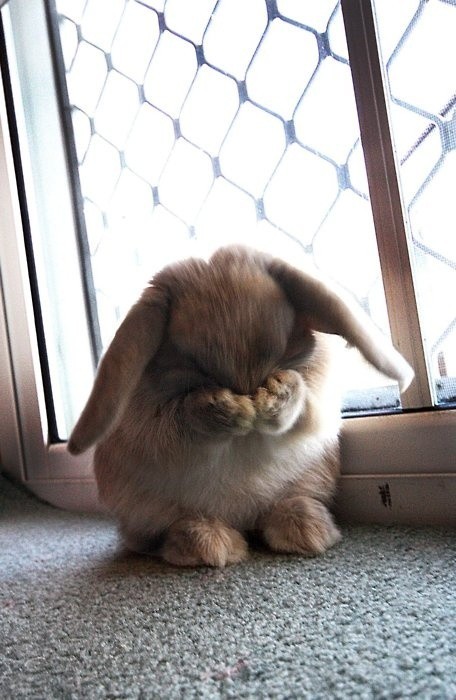
The lop rabbit covering its face by a bright window reads like a shy human gesture. Security-screen glow, backlit fur, paws over eyes—the “prop” is body language. Anthropomorphic poses are risky when forced; here the rabbit’s own grooming or play does the work. Gesture cuteness sits between prop comedy and pure portraiture, which makes it a useful bridge inside this set.
More small scenes from the same set
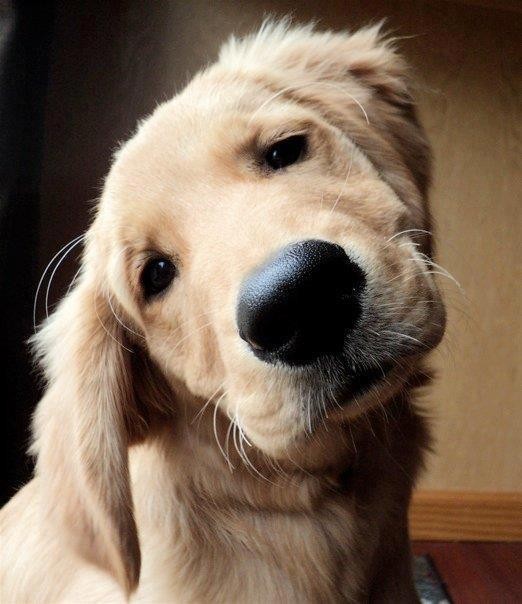
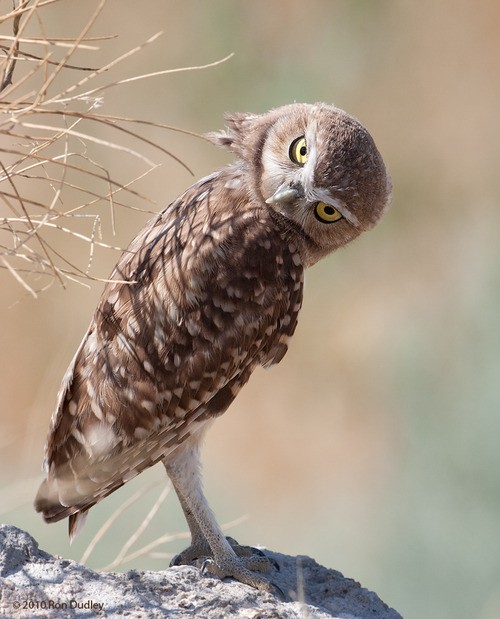
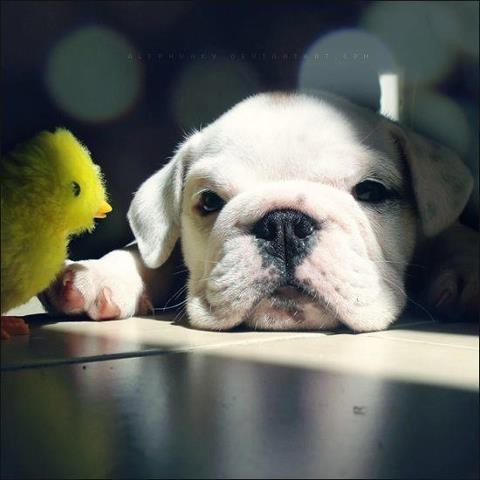
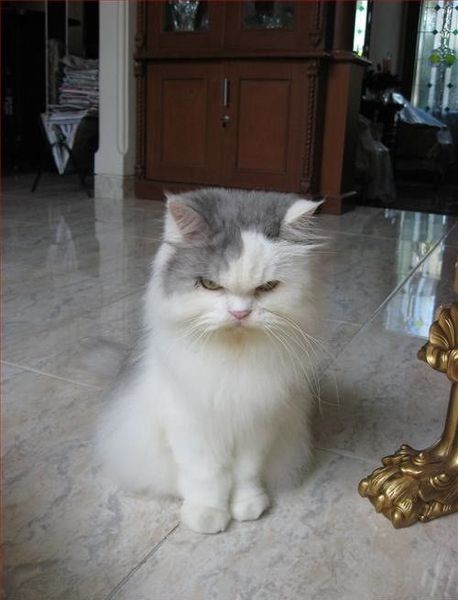
The remaining frames keep the same editorial rule: look for the object, the corner of a room, or the gesture that turns a sweet animal into a short story. Prop comedy ages better when it is gentle—no stress signals, no forced grins, plenty of soft light, and sessions short enough that the animal still wants to hang out afterward.
If you are sorting your own camera roll, try labeling shots “object story,” “room story,” or “face only.” This chapter is mostly the first two labels. Later installments lean harder into stares, scrambles, and outdoor faces. Keeping the labels separate is how a series stays readable instead of becoming four identical scrapbooks.
How to shoot your own prop-led adorables
- Choose one object, not five. A mug or a hat beats a cluttered costume trunk.
- Keep sessions under a few minutes; stop if the animal leans away, freezes, or tries to escape the frame.
- Use familiar rooms—beds, floors, garden lines—so the pet is not also navigating a strange set.
- Shoot slightly wider than a face crop so the prop stays readable in a thumbnail.
- Save a few unstyled portraits in the same batch; contrast makes the gags land harder.
- Never prioritize the joke over temperature, footing, or the animal’s ability to leave.
Which ordinary thing on your shelf would make a tiny animal look legendary—and would you still like the photo if the prop were gone? That second question is how you know whether you are making a memory or only making a meme.

Comments
Continue reading
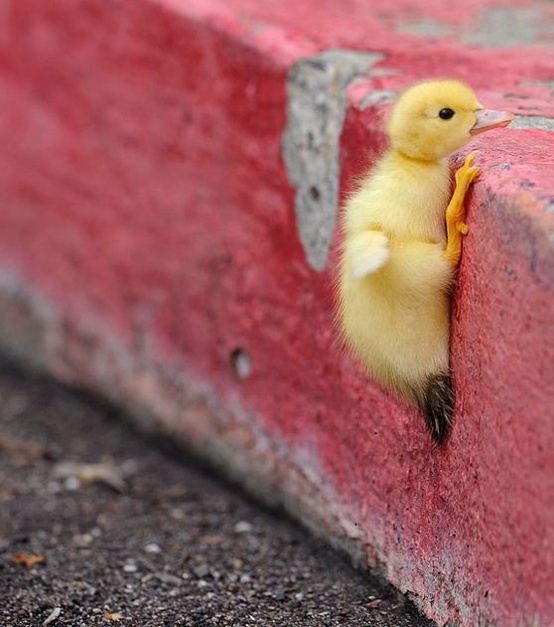
Irresistable Adorables #3: Stares, Scrambles, and Tiny Effort
Duckling climbs, fox dives, and big-eyed portraits—adorable photos driven by intention, not laundry-line props.
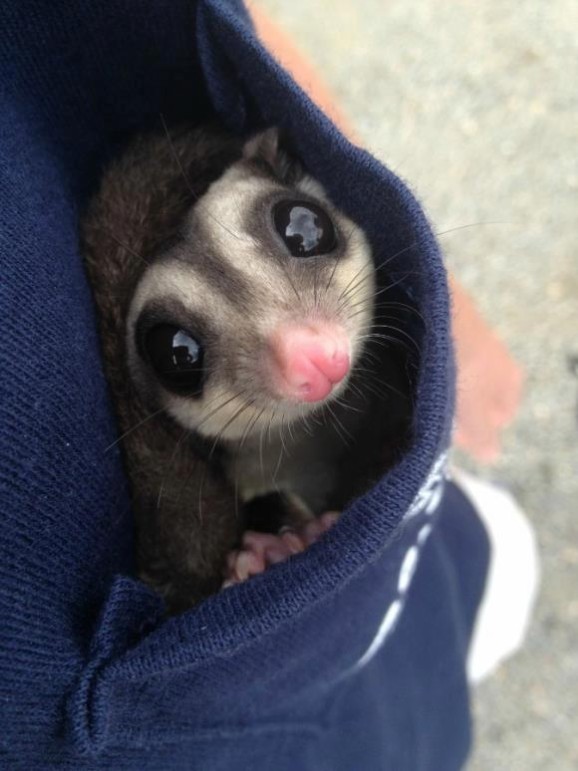
Irresistible Adorables, Part 1: A First Round of Animal Cuties
The opening gallery in a four-part cute-animal series—sugar gliders, patient dogs, comedy cats, a chipmunk heist, and a few wilder guests from late 2012.
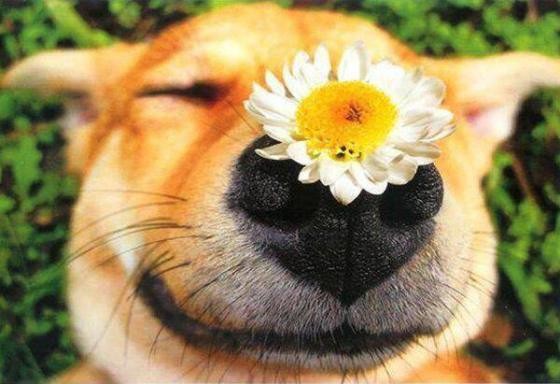
Irresistable Adorables #4: Outdoor Faces, Daisy and Bray
A daisy on a dog’s nose and an alpaca mid-laugh—why two outdoor faces can carry a whole adorables chapter.