
Peter Callesen’s A4 Paper-Cut Sculptures: One Sheet, Figure and Void
Danish artist Peter Callesen cuts and folds a single A4 sheet so a standing figure rises while its exact silhouette remains as an empty window in the page.
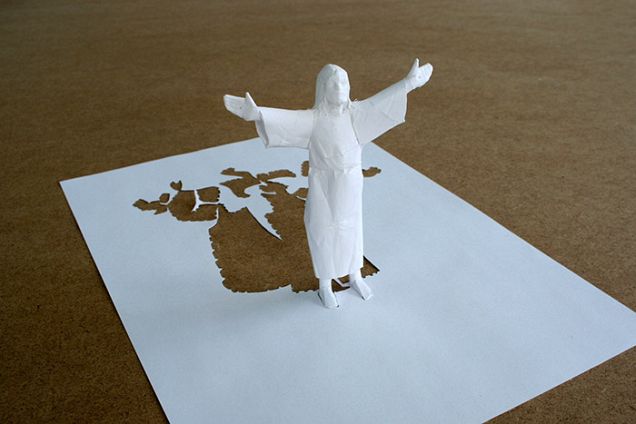
A sheet of A4 is one of the most ordinary rectangles in modern life: printer trays, school essays, office trays. Danish artist Peter Callesen treats that modest format as a complete world. From a single white page he cuts a figure, folds it upright, and leaves the empty silhouette behind like a shadow that forgot to lie down. Nothing is added. The sculpture and its absence share the same pulp.
The work shown here is emblematic of that vow. A white rectangle rests on a brown, grainy surface. From it rises a long-haired figure in a robe, arms stretched wide and slightly upward, feet still tabbed to the sheet. Behind the body, a jagged aperture traces the exact outline of the cut. Through that hole the table shows. Soft light from the upper left throws the standing form’s shadow back onto the page, proving height with the simplest physics.
One sheet, two states
Callesen’s A4 pieces are often described as paper sculpture, pop-up art, or cut-outs, but the conceptual engine is conservation. The standing figure is not glued on. It is the page rearranged. When viewers understand that rule, the hole stops being damage and becomes evidence. The negative space is the receipt: proof that volume was paid for with flatness.
That economy gives the work moral and poetic charge without needing caption sermons. Arms open wide can suggest welcome, surrender, blessing, or balance on a precipice. The robe and hair keep identity slightly open—human, iconic, almost liturgical—while the brown ground through the void keeps the scene stubbornly domestic. Miracle and desk share a frame. That tension is Callesen’s recurring wit.
A4 matters as a constraint the way a sonnet’s fourteen lines matter. Unlimited paper would tempt collage, props, hidden supports. A single office sheet forces every cut to count. Too aggressive and the structure collapses; too timid and the figure never leaves the plane. The tabs at the feet are engineering as much as poetry—hinges that keep the person belonging to the page even while standing apart from it.
Light, shadow, and the photograph of paper
These works live twice: once as objects on a table, again as photographs that travel. The image here depends on directional light. Shadows under the arms and along the robe clarify that the figure occupies air. A softer shadow of the whole sheet on the brown surface reminds you the paper itself has thickness and edges. Without those cues, a white-on-white cut can flatten into graphic design. With them, the piece reads as a tiny stage.
Photographers of Callesen’s work usually favor plain grounds and careful angles so the hole remains legible. Legibility of absence is crucial. If the background matched the paper too closely, the void would vanish and the magic would shrink to a freestanding cutout. Seeing the table through the silhouette completes the loop: what was removed is still “present” as window.
There is also a quiet drama in scale. A4 is human-hand sized. The standing figure is smaller still, yet the open-arm pose borrows monumentality from public statues and sacred imagery. Miniaturization does not dilute the gesture; it concentrates it. You can almost cup the whole scene, which makes the emotional reach of the pose feel strangely large.
The craft behind the calm
Precision cutting looks serene in finished photos and is anything but casual in process. Grain direction, humidity, and blade sharpness decide whether a narrow ankle or fingertip survives. Callesen’s figures often keep simplified contours—clear silhouettes rather than lace filigree—because structural integrity and readable voids both demand clarity. Hair may be suggested in a few locks; sleeves fall in long planes; feet become functional tabs. Ornament yields to load-bearing outline.
Folding is the second craft. A fold that is too soft droops; too hard creases into a bruise. The upright figure must meet the base at an angle that photographs as confident verticality while remaining physically stable. Shadows then finish the collaboration between hand and light. In that sense the artist shares authorship with whoever lights and shoots the piece—another reason these works circulate so well as images.
White paper is not neutral. It carries associations of purity, bureaucracy, drafts, and disposability. Cutting a body from it can feel tender or violent depending on the viewer. Callesen repeatedly walks that edge: the cut is irrevocable, yet the tone is often gentle, even hopeful. The outstretched arms in this piece lean toward offering rather than wound, though the ragged hole keeps a hint of cost.
Where this sits in paper art
Paper cutting has deep folk and liturgical histories—from silhouette portraits to scherenschnitte and temple decorations. Contemporary artists have pushed the medium toward installation scale, colored stacks, and laser precision. Callesen’s A4 series stakes a different claim: intimacy and rule-bound transformation. The format is recognizable worldwide. Anyone who has loaded a printer understands the starting rectangle. That shared knowledge accelerates wonder. You know exactly how much material was available.
Compared with origami, which usually folds without cutting (in its classical ideal), Callesen cuts in order to fold into life. Compared with pop-up books, which hide mechanisms inside engineered spreads, many of his tabletop works keep the mechanism honest and visible. The hinge is right there at the feet. The void is unapologetic. Illusion is secondary to logic. You are invited to reconstruct the sequence: draw, cut, lift, witness the hole.
That reconstructive pleasure is part of the audience experience. People do not only admire the standing figure; they mentally reverse the process, lowering the person back into the silhouette to test the fit. When the mind confirms the match, satisfaction clicks. Art that teaches its own making without a tutorial often travels farther than art that hides its labor.
Reading the open-arm figure
Gesture carries the emotional thesis. Arms extended horizontally and slightly up can echo crucifixion iconography, a greeting at a doorway, a tightrope walker steadying balance, or someone measuring the width of the world. Because the face remains simplified, projection rushes in. Viewers bring their own stories. The brown texture showing through the hole grounds those stories in a specific room—someone’s table, someone’s light—so transcendence never fully escapes the everyday.
Notice how little else competes. No printed text, no second color, no glued props. The composition is almost diagrammatic: rectangle, figure, void, shadow. That spareness is modern in spirit even when the pose feels ancient. It also respects the viewer’s intelligence. You are not told what the figure means. You are shown a transformation and trusted to feel its weight.
There is humor, too, if you want it. Office paper performing a sacred stance is gently absurd. Sacred feeling performed by office paper is gently moving. Callesen allows both readings to sit together without canceling. That double valence—wry and sincere—is a hallmark of the A4 works that made his name in design and art blogs over the years.
Constraints as generosity
Artists sometimes treat limits as enemies. Callesen treats the A4 edge as a gift that concentrates attention. Within those centimeters he can stage birth and absence at once. The standing person is arrival; the hole is departure; together they are one event. For anyone making with scarce materials, the lesson is practical: invent rules that force clarity. For anyone looking, the lesson is perceptual: negative space can be as eloquent as form.
Return to the photograph and follow the outline of the void with your eye, then follow the outline of the body. They should nearly rhyme. That rhyme is the artwork’s handshake. Peter Callesen’s A4 paper-cut art keeps offering the same elegant wager—give me one ordinary sheet, and I will show you how little it takes for flatness to stand up, open its arms, and leave a perfect emptiness where it used to sleep.
On another day the same sheet might have become a memo. Here it becomes a small figure practicing courage in white. The table shows through. The shadow falls. The arms stay open. That is enough theater for a page.

Comments
Continue reading
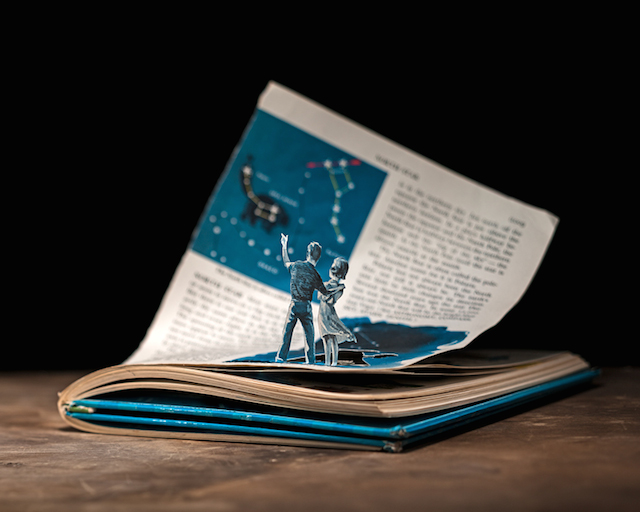
Thomas Allen’s Book-Cut Illustrations
Michigan illustrator Thomas Allen cuts pulp paperback figures into 3D tableaux, photographs them in shallow focus, and gathers the practice in his Aperture book Uncovered.

Original Handmade Papercuts by Dmytro and Iuliia
DreamPapercut’s Ukrainian duo cut interconnected silhouettes from a single sheet—nature, love motifs, and typography held together by patient knife work.
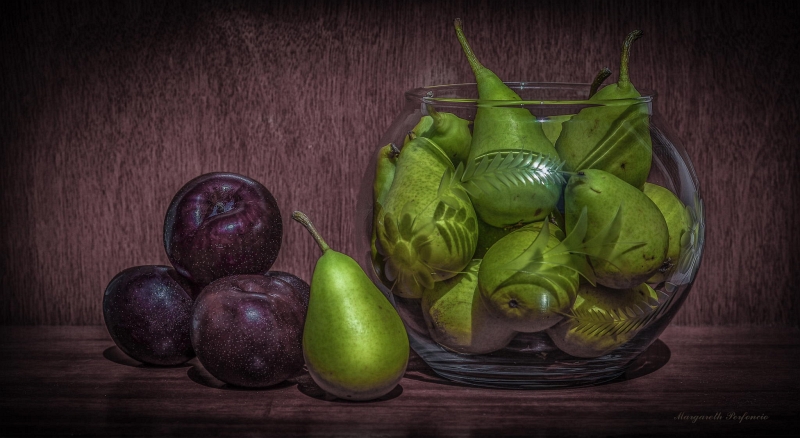
Still-Life Photography by Margareth Perfoncio
São Paulo photographer Margareth Perfoncio’s still lifes of food and flowers—Old Master light, dark wood, and tables that feel inevitable.