
Original Handmade Papercuts by Dmytro and Iuliia
DreamPapercut’s Ukrainian duo cut interconnected silhouettes from a single sheet—nature, love motifs, and typography held together by patient knife work.
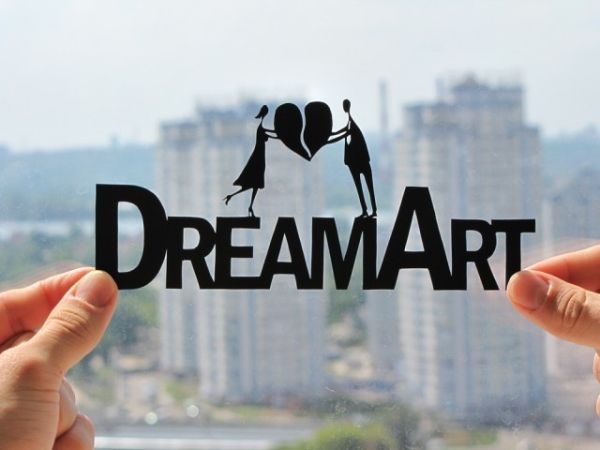
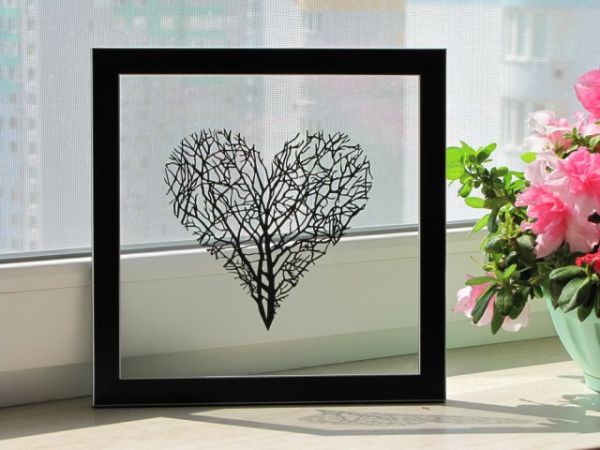
Dmytro and Iuliia cut paper the hard way. Working together as DreamPapercut from Ukraine, they create hand-cut silhouettes from a single sheet so that every figure, letter, branch, and heart stays interconnected. Nothing is layered on afterward. Nothing floats free. The finished artwork is one continuous web of paper, held together only by the thin bridges the knife deliberately leaves behind.
Their own account of the craft has always been personal: handmade objects carry the inner world of the people who made them, and paper cutting became the language they chose to share. By about 2010 they were working professionally. Within a couple of years their nature-and-love motifs were traveling through design blogs and collectors’ feeds. The photographs gathered here show that work as it asks to be seen—held to daylight, edged in black, fragile and exact.
The discipline of one sheet
Papercutting traditions exist across many cultures, from folk scherenschnitte to ceremonial cut paper. DreamPapercut’s rule is especially strict: one sheet, every element linked. That constraint reshapes design before the first cut. A couple cannot lean together over a heart unless the cut path leaves enough paper to join figures, heart halves, and base. A nest cannot hold customizable eggs unless negative spaces are planned so names and dates can enter later without collapsing the structure.
The couple has told the origin story without false glamour. Childhood classes in painting, drawing, and paper craft sat in the background even when university study took them into other fields. A greeting card with hand-cut elements for a friend’s birthday helped them recognize that art belonged at the centre of their lives. They taught themselves first by cutting silhouettes from printed images, then moved into designing their own compositions—often refining shapes digitally before the blade touched the sheet. The knife still had to prove the design in real paper, where a pretty screen mockup can hide a bridge that is too thin to survive.
Time is honest in their process. A cleaner motif may take several hours; a dense lace of lines can take several days. Because every piece is interconnected, a single slip can orphan a whole section. There is no second layer to hide a broken bridge. That risk is visible in the finished work as confidence: curves are clean, letter interiors are emptied without chewed edges, and joining tabs sit exactly where the design needs structural truth. Viewers often underestimate how much planning lives inside what looks like a spontaneous silhouette.
How the partnership works
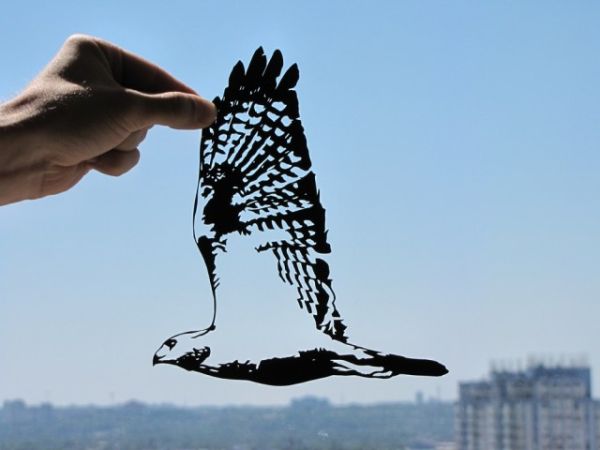
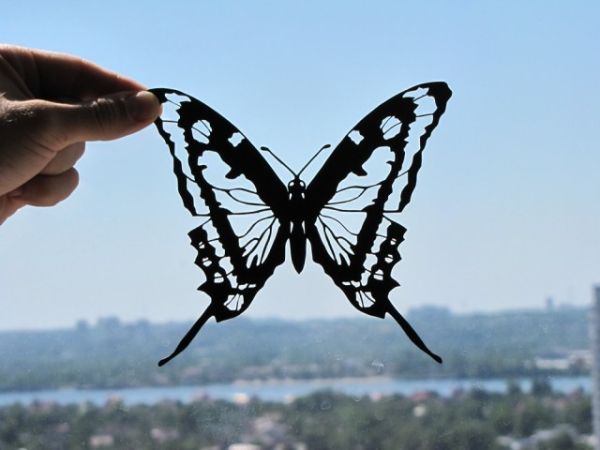
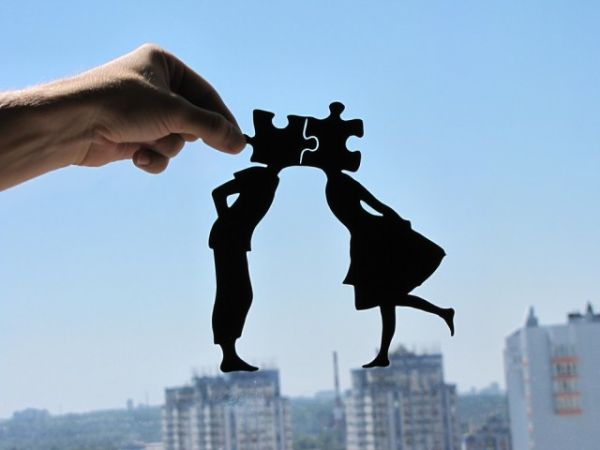
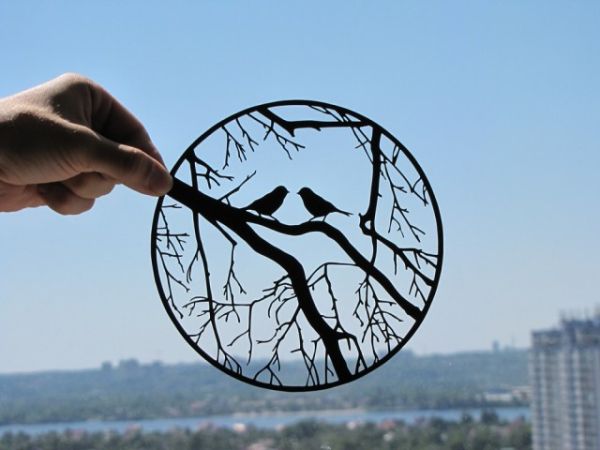
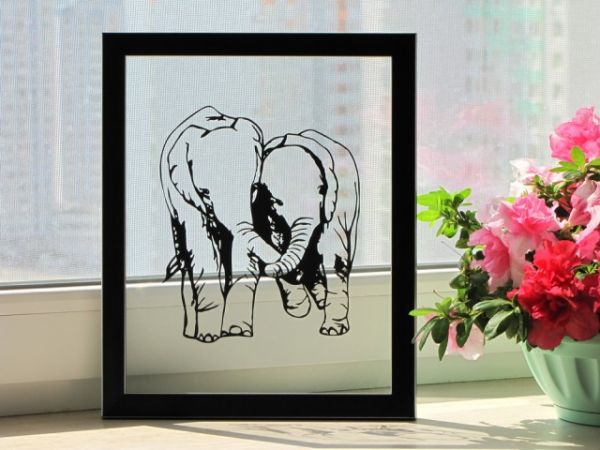
Dmytro and Iuliia work as a partnership rather than a divided factory. Ideas begin together. In periods they have described publicly, cutting often fell to Dmytro while Iuliia handled email, online shops, critique, and photography. That split makes sense when you look at the images: paper art dies in flat, careless scans. Holding a black silhouette against a soft city skyline, a bright window, or open landscape reveals thickness, tremor, and the way daylight turns negative space into glow. Photography is part of the craft’s public life, not an afterthought.
Material supports that clarity. Fine Italian paper appears in later accounts of their practice—strong enough to survive lace-like cutting, smooth enough for crisp edges, dark enough to read as pure silhouette. The medium looks humble until you notice how little paper remains and how much air the design still contains. Typography is architecture, not caption. In the opening photograph, bold letterforms form a continuous base; figures stand on the word and complete a heart above it. The letters share a foot so the word remains one object; the characters above stay tied into that base. It is graphic design executed with a craft knife.
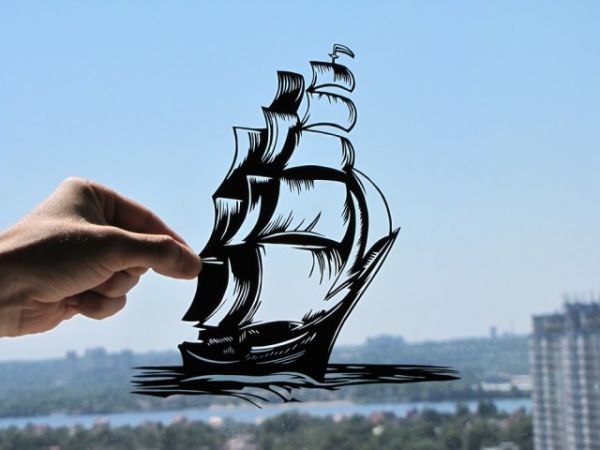
Look for the places where the sheet thickens for strength and where it thins to suggest hair, leaf veins, or lace. The story often lives as much in the holes as in the black. That is why these pieces photograph so well outdoors or against blurred urban backdrops: the world behind them becomes temporary stained glass made of absence. A hand at each edge reminds you the object is light enough to lift—and fragile enough to demand care.
Motifs built for recognition and for gifts
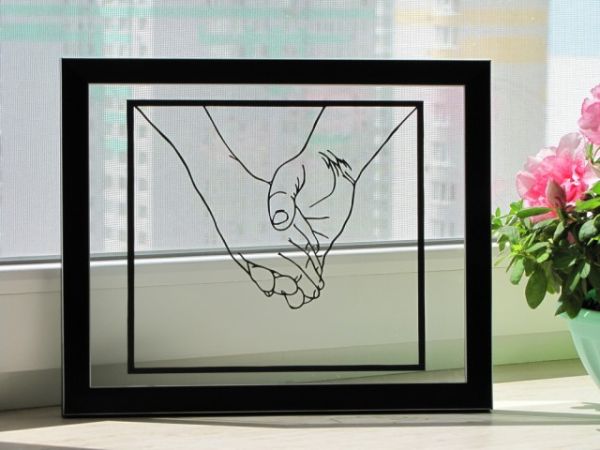
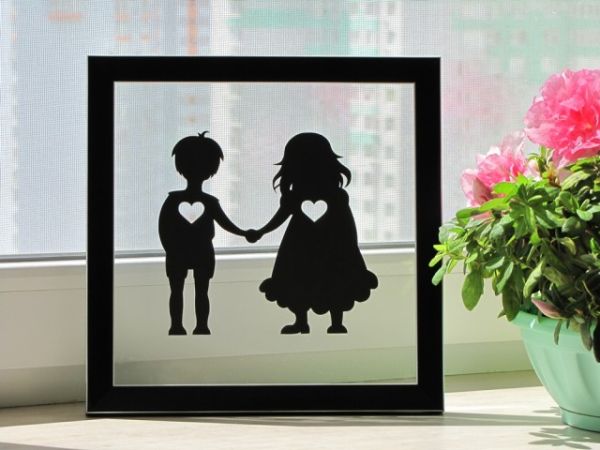
The themes that made DreamPapercut recognizable are deliberately universal. Couples lean together to complete a heart. Birds nest with space for names and wedding dates. Animals, trees, balloons, and quiet romantic scenes weave through open frames or sit atop letterforms. The silhouettes read across a room at a glance, then reward closer looking when you follow how one curve becomes another without breaking the sheet.
Customization is built into the design language, not stuck on later. Initials on a balloon, a wedding date inside a nest, a counted clutch of eggs—these are planned voids and bridges that can accept personal detail while the sheet remains one object. That balance between repeatable motif and personal inscription helped the work travel well beyond Kyiv. Collectors across Europe, North America, and further afield responded to pieces that felt both handcrafted and intimate—suitable for anniversaries, weddings, and quiet gifts that still carry a maker’s hours.
There is no reliance on colour gradients or heavy texture. Drama comes from edge and light. In a culture flooded with digital illustration, a single patient sheet still surprises people because the labour is visible and the rule is absolute. You can sense the hours even if you cannot count them.
How to look, and what to notice
Start at the outer contour and travel inward along the unbroken path of paper. Ask where the design thickens to survive handling and where it thins to suggest delicacy. Check the negative spaces: birds, initials, and hearts often appear as carefully shaped absences. Imagine the sheet flat on a cutting mat with no second chance. Then imagine the concentration required to keep every connection intact while the composition still feels light enough to float against a city skyline.
Compare two pieces in this gallery side by side and you will see the same grammar: continuous black, open air, motifs of affection and nature, and a refusal to cheat with collage. That consistency is a signature. Dmytro and Iuliia did not invent paper cutting, but they made a clear personal version of it—Ukrainian makers, one sheet, interconnected everything—and shared it with people who could feel the hours in the edge of a heart.

Comments
Continue reading
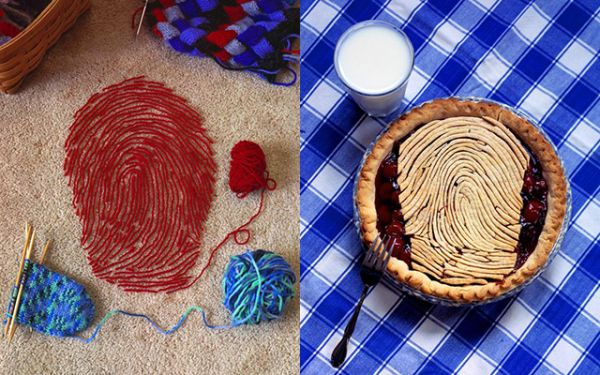
Fingerprint Art by Kevin Van Aelst: Autobiography in Ridges
Connecticut photographer Kevin Van Aelst rebuilds each of his ten fingerprints from mustard, wool, snacks, and other memory-laden materials—turning biometrics into still-life self-portraiture.
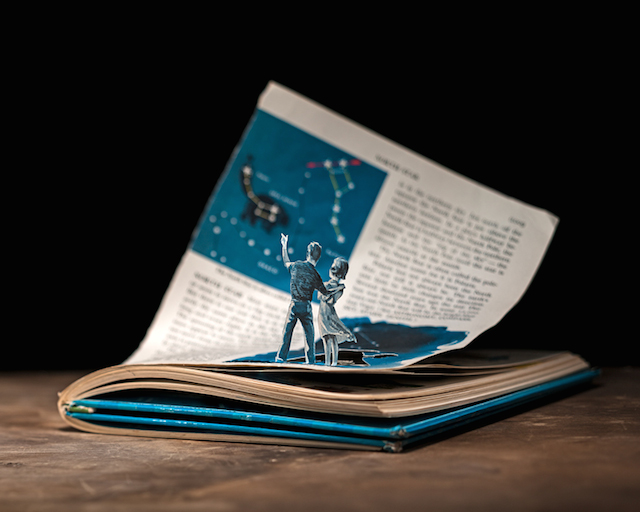
Thomas Allen’s Book-Cut Illustrations
Michigan illustrator Thomas Allen cuts pulp paperback figures into 3D tableaux, photographs them in shallow focus, and gathers the practice in his Aperture book Uncovered.
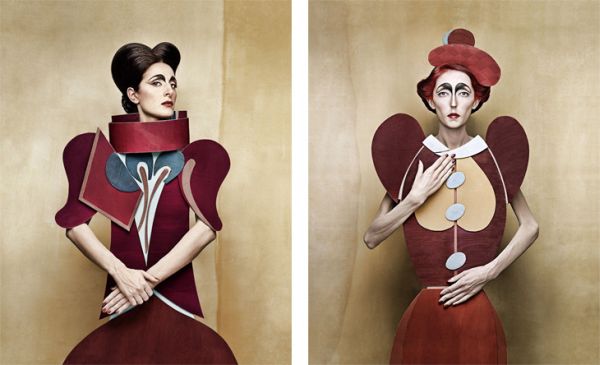
Cardboard Ladies (Dame di Cartone) by Christian Tagliavini
Christian Tagliavini’s Dame di Cartone portraits dress women in handmade cardboard couture—baroque, fifties, and cubist echoes built as craft photography.