
Continuous Delivery to the Cloud Wreaks of Humanity
Why cloud continuous delivery still depends on mission, talent, trust, and humane engineering—not only pipelines and platforms.
Cloud migration plans and continuous delivery roadmaps usually lead with platforms, pipelines, and infrastructure diagrams. That is understandable: APIs are easier to schedule than culture. Yet the phrase in this title is deliberate. Continuous delivery to the cloud still “wreaks of humanity”—it smells like people—and that is not a defect to automate away. The fastest, safest release systems are still staffed by teams who trust each other, own a mission, and treat deployment as ordinary work rather than a seasonal ordeal.
The observation became a recurring theme at industry gatherings such as SpringOne Platform in the late 2010s: tools matter, but mission-driven teams, humane engineering habits, and deliberate talent practices decide whether those tools actually shorten the path from idea to users.
Delivery speed is a people outcome
Digital transformation slides often promise lower cost, higher velocity, and more customer value through agile methods and continuous delivery. Cloud-native platforms can remove friction—self-service environments, faster provisioning, fewer ticket queues for basic infrastructure. None of that automatically produces a healthy release cadence. If engineers spend their iteration fighting opaque change boards, brittle handoffs, or blame-heavy outages, the platform becomes wallpaper.
Continuous delivery, in the sense popularized by practitioners who treat deployability as a daily property of the codebase, is a social agreement as much as a technical one. Code stays releasable. Tests and automation catch what humans should not have to catch at midnight. Deployments shrink until they are boring. Boring is humane. Heroic weekend releases are not.
Mission first: when the work already matters
Public-sector examples are useful because the stakes are visible. Teams at United States Citizenship and Immigration Services (USCIS) have described digital innovation work against a mission that is anything but abstract: administering lawful immigration benefits at national scale, with enormous daily throughput and long backlogs in areas such as asylum. When a delivery team internalizes that mission, process changes stop feeling like theater. Pairing, test-driven development, frequent refactoring, simple design, continuous integration, and collective code ownership—classic Extreme Programming habits—become ways to protect people waiting on life-changing decisions, not merely ways to look modern.
Reported outcomes from that kind of transformation are concrete: paths that once took roughly a month from development to staging with sparse releases compressing toward daily movement; deployments treated as routine events measured in minutes rather than as ceremonies. Zero-downtime goals and the belief that “deployments should not be big events” are cultural statements encoded as engineering practice. Platforms help—elastic runtimes and paved roads reduce toil—but pride in mission is what keeps the practice honest when the novelty wears off.
Talent is part of the delivery system
You cannot staff continuous delivery with a hiring process designed only for waterfall project managers and then wonder why pipelines stall. Organizations serious about cloud delivery tend to combine retraining with creative hiring. Financial institutions that rebranded themselves as technology companies in the mid-2010s—DBS Bank is a frequently cited case from that conference circuit—invested in deep technical hiring and reskilling while modernizing architecture. Events that blend hackathon intensity with hiring (sometimes branded along the lines of Hack2Hire) let employers see collaboration under realistic pressure instead of trusting résumé keywords alone.
Those programs matter for CD because continuous delivery amplifies team skill. Automated promotion of bad design simply fails faster. Hiring for pairing comfort, test discipline, and operational curiosity is therefore not an HR side quest; it is release-risk management. Culture that attracts people—internal tech talks, community meetups, space to work on meaningful problems in domains such as energy, health, or civic services—also reduces the churn that resets every pipeline initiative every eighteen months.
Remove work that is not the product
Engineers are asked to own more than ever: features, quality, security hints, cost awareness, sometimes on-call. When they are also asked to curate base images, chase cloud tickets, and reinvent secure defaults every sprint, motivation collapses. Consultancies and platform teams that study modern engineering often frame the fix in three moves: improve what already sits in the engineer’s domain (testing, build automation), expand the domain toward self-service continuous delivery where trust allows, and reduce angst-causing work outside their control through better business and operations engagement.
Insurance, aerospace, and banking speakers on the same circuit repeatedly described the same before-and-after picture. Before a shared application platform, weekly iterations leaked into operational chores—keeping cloud accounts healthy, patching instances, integrating services by hand. After a small platform team owned the paved road, product engineers spent more of the iteration on business change. Treating developers as customers of the platform is a human-centered design choice with delivery metrics attached: shorter time-to-market, fewer blocked stories, less quiet resentment.
That is the humane reading of “platform.” Not a logo on a keynote slide, but a decision about whose evenings get interrupted.
Trust, controls, and the end of deployment theater
Regulated industries cannot wish away controls. Continuous delivery does not mean shipping without oversight. It means encoding oversight so that every release does not require a unique negotiation. Automated checks, environment promotion rules, audit logs, and gradual traffic shifts can satisfy compliance better than infrequent, high-stress launches—if leadership is willing to trust evidence over ceremony.
Trust accumulates. Early automation may feel slower than a heroic manual push. Over months, validated controls and boring pipelines change the emotional weather of the team. People stop hoarding “the only person who knows how to release.” Collective ownership becomes believable. Burnout drops when production stops being a personality test.
Paying the human benefits forward
Conference seasons also surface the reminder that software skill can serve missions beyond quarterly metrics: nonprofit and humanitarian collaborations that use modern delivery practices to coordinate aid, cash distribution networks, or environmental work. Whether or not any single corporate program endures, the underlying point fits this URL’s thesis. Continuous delivery is a capability that people wield. When organizations treat talent, pairing, mission, and recovery from failure as first-class design inputs, the cloud stack finally does what the slide deck promised.
So when your transformation plan lists Kubernetes versions and pipeline tools in bold and lists “change management” as a footnote, invert the emphasis for a week. Ask who owns the mission. Ask who can ship on a Tuesday without fear. Ask which toil still belongs to product engineers for no good reason. The answers will smell like humanity—messy, specific, and more predictive of delivery speed than another unchecked box labeled “adopt CD.”

Comments
Continue reading
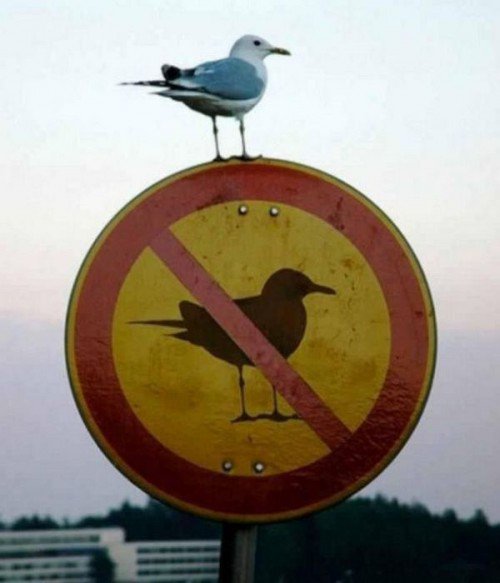
Funny Animal Signs That Warn People (While Animals Ignore Them)
From a seagull on a no-birds disc to classic zoo and park ironies—why animal warning signs get funny, and what the rules are still for.

How to Find Local Amenities on Vacation: Mechanics, Haircuts & More
Locate trustworthy local services and everyday spots while traveling or settling in—using publications, reviews, map apps, neighbor tips, and low-pressure exploration.

Kristen Stewart for V Magazine, Spring Preview 2013
V81’s Wild at Heart cover story—Kristen Stewart shot by Inez & Vinoodh, styled by Joe McKenna, in pale minimal spring glamour.