
Hyperrealistic Oil Paintings by Linnea Strid
Stockholm painter Linnea Strid’s hyperrealistic oils put faces and bodies through water—ripples, breath, and emergence—including work tied to Breaking free.
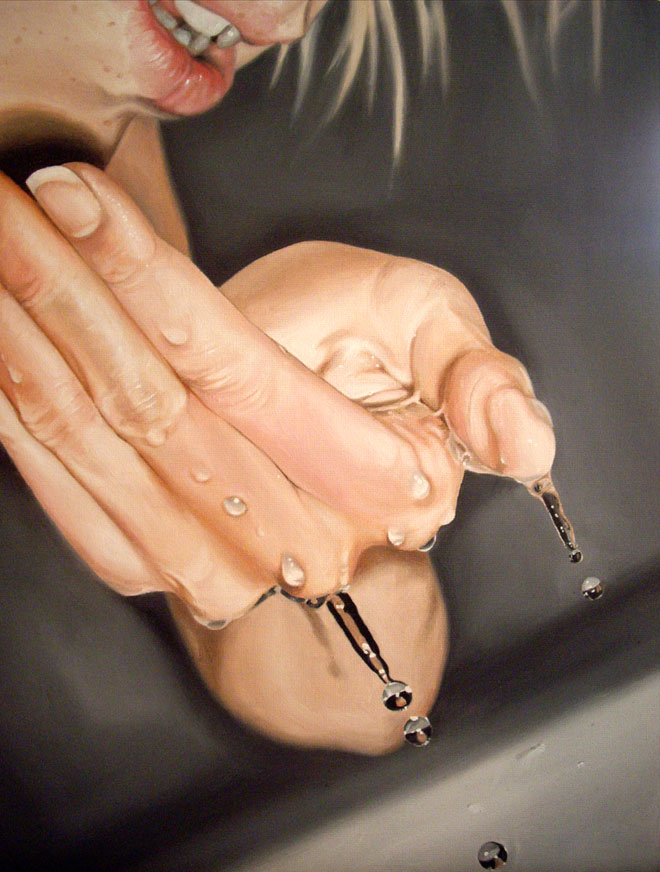
Linnea Strid paints water as if it were both veil and spotlight. Faces and bodies appear through ripples, droplets, and submerged light; skin looks wet enough to fog the glass of a camera lens, yet every highlight is oil carefully placed. Based in Stockholm, Sweden, Strid has built an international following for hyperrealistic portraits in which water is never only scenery. It bends emotion, delays recognition, and turns a quiet moment into something psychologically charged.
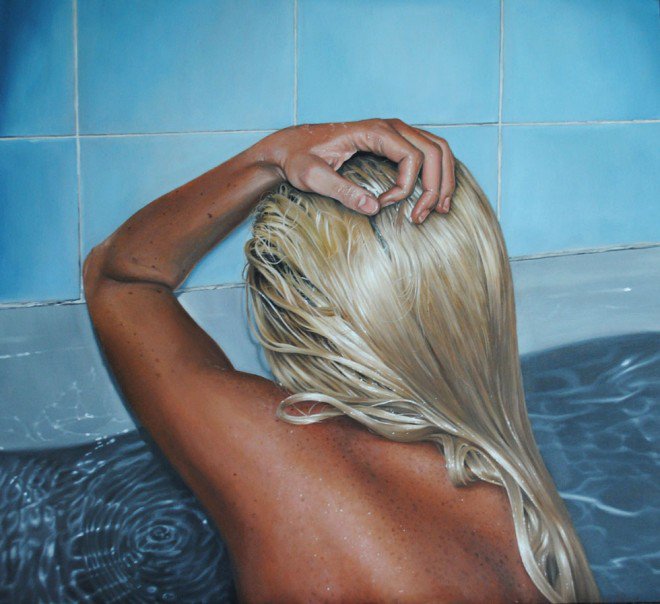
When this page first circulated widely, attention gathered around her water-figure work of that period—including paintings associated with the title Breaking free—in which people seem to emerge from, or remain held by, liquid. The appeal was immediate for anyone who loves photorealism: you lean in expecting a photograph, then notice brush discipline instead of a shutter click. Stay longer, and the pictures stop being tricks. They become studies of breath, pressure, calm, and release.
Who Linnea Strid is
Linnea Strid was born in Sweden in 1983 and spent formative years between Sweden and Southern Spain, where her commitment to art deepened as a teenager. She has lived and worked in Stockholm while exhibiting across Europe, the United States, Asia, and Australia. From early solo shows in the 2000s onward, her reputation grew through patient realism—hours spent on reflections, micro-highlights, and the awkward honesty of facial expression.
She is frequently described as fascinated by light on water and by portraits that feel exposed rather than glamorous. That combination matters. Many painters can render a droplet. Fewer can make a droplet sit on a face that also seems to be thinking, bracing, resting, or breaking into air. Strid’s pictures often walk a line between serenity and strain: the same clear water can read as baptismal calm or as something closer to overwhelm, depending on the mouth, the eyes, and the angle of the head.
What “hyperrealistic” means in her hands
Hyperrealism here is not a cold inventory of pores for their own sake. It is a persuasion technique. When water looks optically correct—refraction along a cheekbone, a meniscus at the lip, a distorted ear under the surface—the viewer’s brain accepts the scene as witnessed. Only then does the emotional reading land with full weight. If the water were approximate, the faces might still be interesting. Because the water is convincing, the faces feel unavoidable.
Strid works patiently at small scales of detail while keeping large compositional clarity: where is the brightest light, where does the figure break the surface, where does darkness pool? That dual attention keeps the paintings from dissolving into texture samples. You always know where to look first—usually a mouth seeking air, an eye half-lidded under a film of water, or a shoulder cutting a bright plane through darker liquid.
Oil is a fitting medium for this subject. It allows translucent glazes, soft blends in submerged zones, and crisp specular hits where light kisses wet skin. Wood panel and canvas supports both appear in her practice; what stays constant is the negotiation between softness (water’s blur) and sharpness (the human edge that refuses to disappear).
Water as psychology, not only as effect
Commentators often note themes of vulnerability, anxiety, mortality, loneliness, and the fear of living as much as the fear of dying—emotion carried through aquatic situations rather than through overt narrative props. You rarely need a symbolic object to “explain” the painting. The body in water is already a story about control: floating can look like trust; submersion can look like panic; emergence can look like relief earned the hard way.
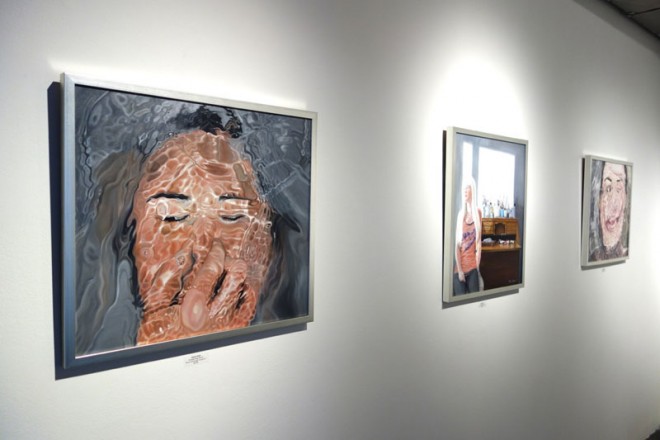
That range is why a gallery of Strid’s water portraits does not feel repetitive even when the motif repeats. One figure lies back as if listening to the ceiling of the world. Another squeezes eyes shut and holds breath. Another bursts upward with droplets arrested midair, as if time stalled for the painter’s sake. Each pose asks a different question about what the water is doing to the person—and what the person is doing to stay themselves inside it.
Autobiographical honesty is part of how Strid has framed her interest in human emotion. Viewers do not need a private biography to feel the charge, but it helps explain why the faces seldom look like fashion mannequins. They look like people mid-feeling.
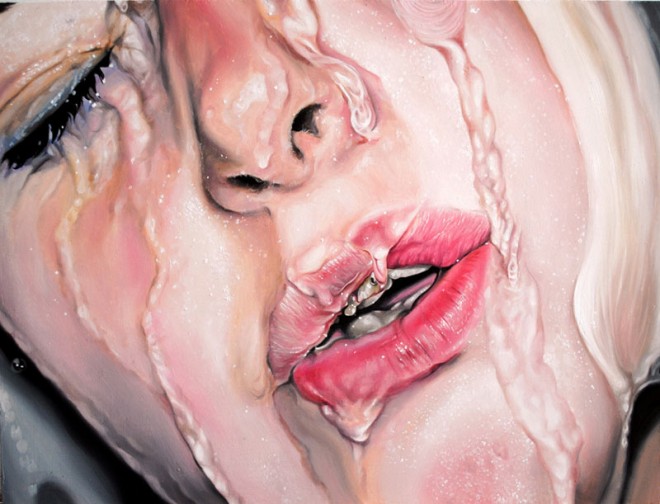
Looking closely: a practical pass
If you want more than a first “wow,” try a short looking method:
- Find the air line. Where does water end and open space begin? That boundary is often the painting’s drama hinge.
- Track distortion. Notice which features the water warps and which it leaves sharp. Distortion is expressive, not accidental.
- Read the mouth and hands. Breath and grip tell you whether the moment is rest, struggle, or transition.
- Inventory the highlights. Tiny white notes sell wetness; their placement is a map of the light source.
- Name the emotion without forcing a plot. Anxiety, peace, exhaustion, and resolve can coexist. Ambiguity is allowed.
This kind of looking turns the hyperreal surface back into a human encounter. The craft invites the zoom; the face rewards the stay.
Breaking free and the moment of emergence
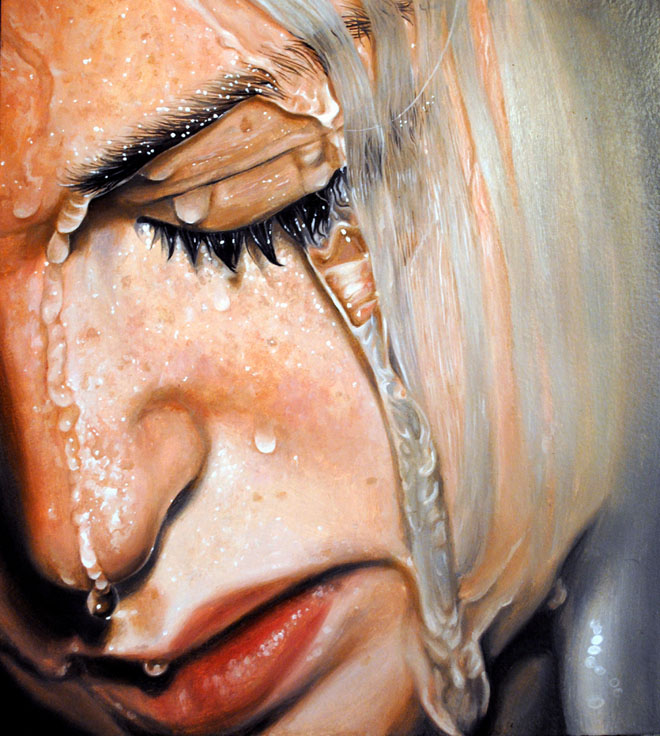
Breaking free—documented on Strid’s own site as an oil-on-wood-panel work from 2013—fits the broader fascination with figures negotiating water’s hold. Whether in that painting or in related images from the same era of attention, emergence is more than a sports-photo splash. It reads as psychological weather: the body insisting on air, the face caught between control and surrender.
Online audiences in the early 2010s were primed for this kind of image. Photorealistic painting traveled well in blog galleries because it rewarded both skimming and zooming. Strid’s work thrived in that ecosystem without being reducible to it. Behind the shareable shock of “this is paint” sits a steadier studio ethic: obsession with reflections, patience with detail, and a willingness to let emotion stay complicated.
Why these paintings still hold attention
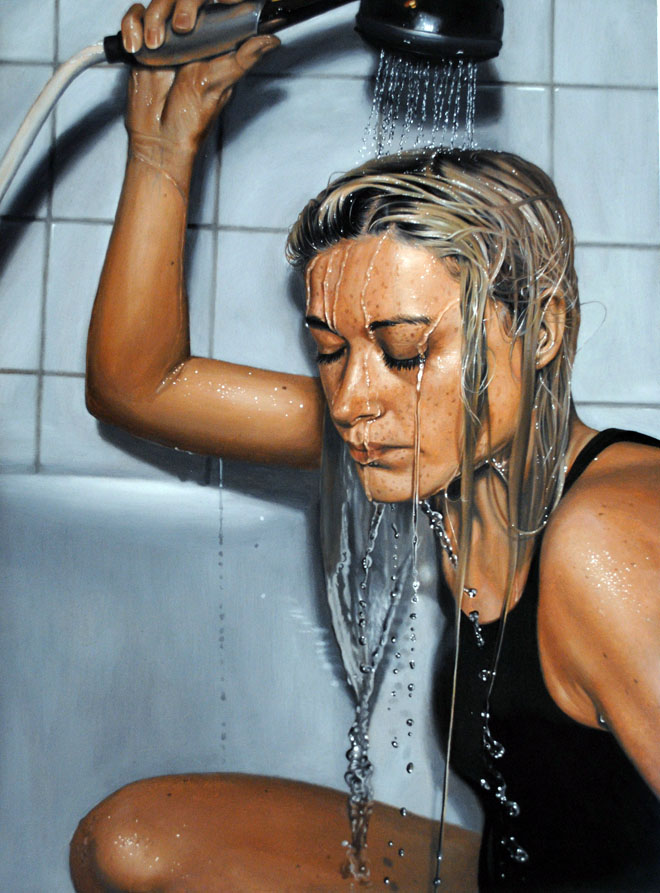
Trends in digital art come and go; wet skin and clear water remain difficult to fake convincingly in oil. Strid’s pictures also resist pure decorative calm. Even when a scene looks tranquil, something in the expression or the depth of the water suggests stakes. That tension keeps the work from becoming spa-poster realism.
For painters, the lesson is not “add droplets.” It is to decide what water does to identity in the frame—softens, threatens, baptizes, isolates, renews—and then make every optical choice serve that decision. For viewers, the invitation is similar: enjoy the illusion, then ask what feeling the illusion is protecting or revealing.
Where to go next
Strid’s paintings are best judged in series, where repeated motifs reveal range rather than repetition. Look for how light temperature changes from piece to piece, how close the crop sits to the face, and how much of the body remains below the surface. Those variations are the difference between a single viral image and a sustained practice.
If a particular figure stays with you after you close the tab—the one still holding breath, or the one finally breaking into air—that is the painting doing its real work. Linnea Strid’s hyperreal water is a technical achievement, yes. It is also a way of making emotion visible without speech, using the oldest trick in figurative art: a human face, interrupted by the world, insisting on being seen.

Comments
Continue reading
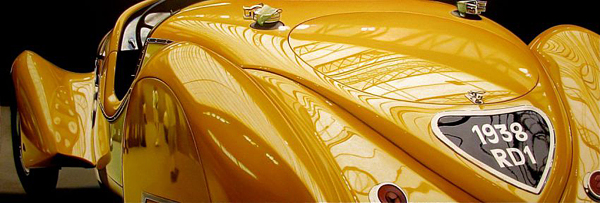
Photo-Realistic Muscle Car Paintings by Cheryl Kelley
Cheryl Kelley’s glossy oil paintings of classic muscle cars—photo-based realism, chrome reflections, and a feminine take on automotive glamour, with gallery images.
Ray Massey’s Hand Paintings: Trompe-l’oeil Athletes, Castles, and Everyday Objects
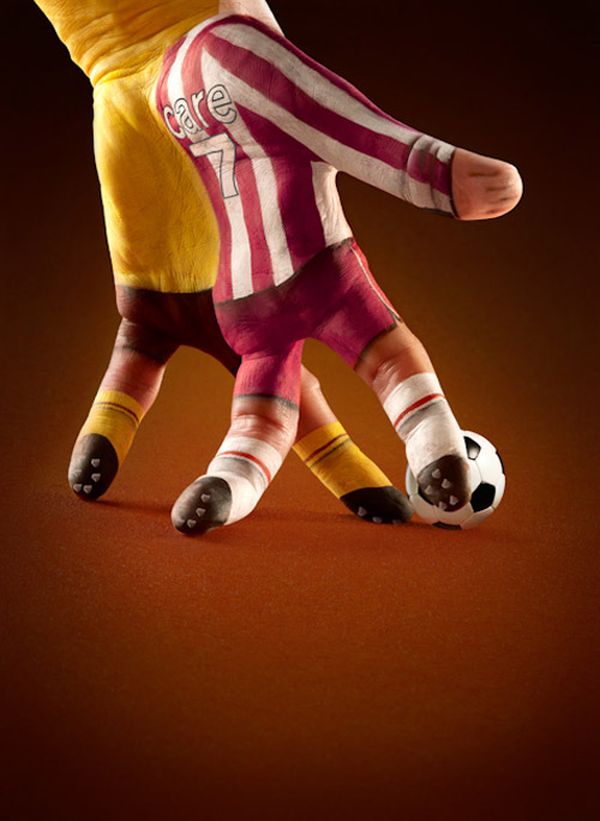
Ray Massey’s painted-hand photographs turn fingers into footballers, sprinters, castles, pencil cups, and bananas—studio trompe-l’oeil with lasting wit.

Evgeny Lushpin’s Evening Journey: Twilight Cities, Canals, and Cable Cars
A gallery walk through Evgeny Lushpin’s twilight paintings—from St. Petersburg roofs and European canals to Montmartre rain and the San Francisco Evening Journey canvas.