
Extraordinary Chair Designs: Harp Cords, Wire Saddles, and Gallery Seating
A curated look at extraordinary chairs—from Høvelskov’s cord Harp Chair to chrome wire grids, Mondrian acrylic, and copper angles—judged by structure, material, and whether they are for sitting or for staring.
Chairs are the most intimate furniture we own. We trust them with weight, posture, and hours of conversation. That intimacy makes extraordinary chair design oddly high-stakes: a wild silhouette still has to negotiate gravity, materials, and the human body. The pieces below come from the speculative end of that negotiation—gallery objects, concept furniture, and a few classics that still look like ideas first and seating second.
Look at them with criteria, not only with wow. Spectacle without a clear design argument fades quickly; a clear argument without comfort may still belong in a museum. The best extraordinary chairs know which game they are playing.
Criteria for judging a chair that refuses to be ordinary
- Structural honesty. Can you see how load travels from seat to floor?
- Material conviction. Does wood, metal, cord, acrylic, or cork feel inevitable—or stuck on?
- Sitability vs. statement. Is this for daily use, occasional perch, or pure display?
- Silhouette from across the room. Would you recognize it in three seconds?
- Detail at arm’s length. Joinery, edges, tension, and finish should reward a closer look.
- Context. Some chairs need white space; others need a lived room. Misplaced drama becomes kitsch.
Cord, shell, and skeleton
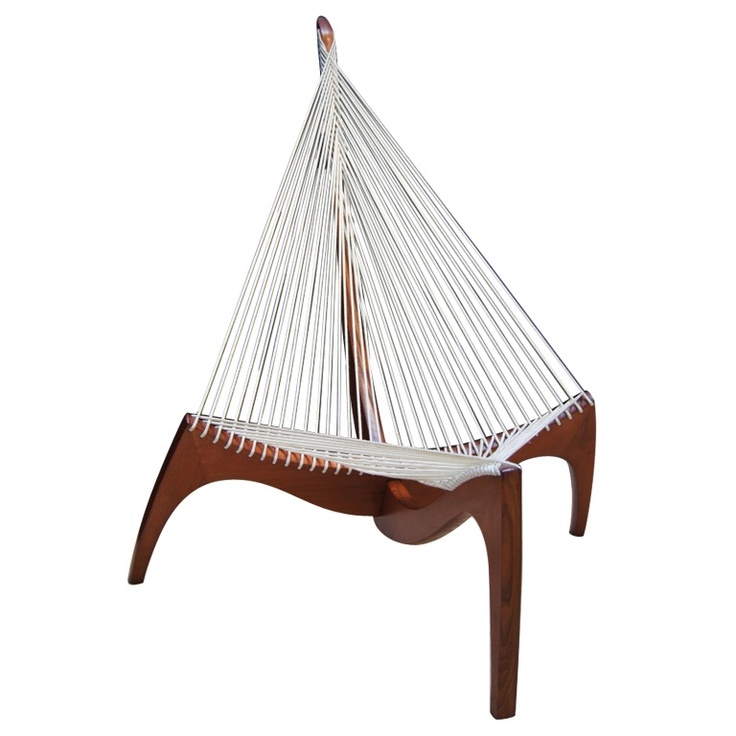
Harp geometry. Jørgen Høvelskov’s Harp Chair (late 1960s) remains a master class in tension seating. Dark curved wood forms a tripod and mast; white cord fans from a single high point into a triangular web that is both back and seat. Negative space does as much work as material. Criteria score high on honesty and silhouette: you understand the physics in a glance, and the musical-instrument metaphor never feels forced. It is extraordinary because it replaces upholstery with a ruled surface of string—and still reads as a place to sit, not only a drawing of one.
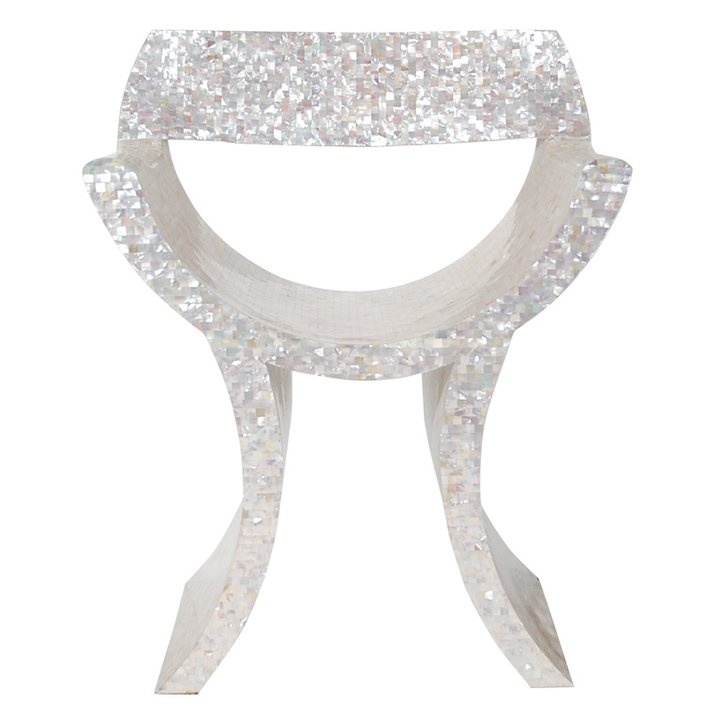
Mother-of-pearl shell. A continuous sculptural form—deep circular void, cradle seat, flared legs—covered entirely in small iridescent tiles. Light skates across nacre in soft pinks, greens, and silvers. This is material conviction at maximum volume: the chair becomes jewelry at furniture scale. Sitability is secondary to presence; place it where reflections can work, not buried in a dark corner under a throw.
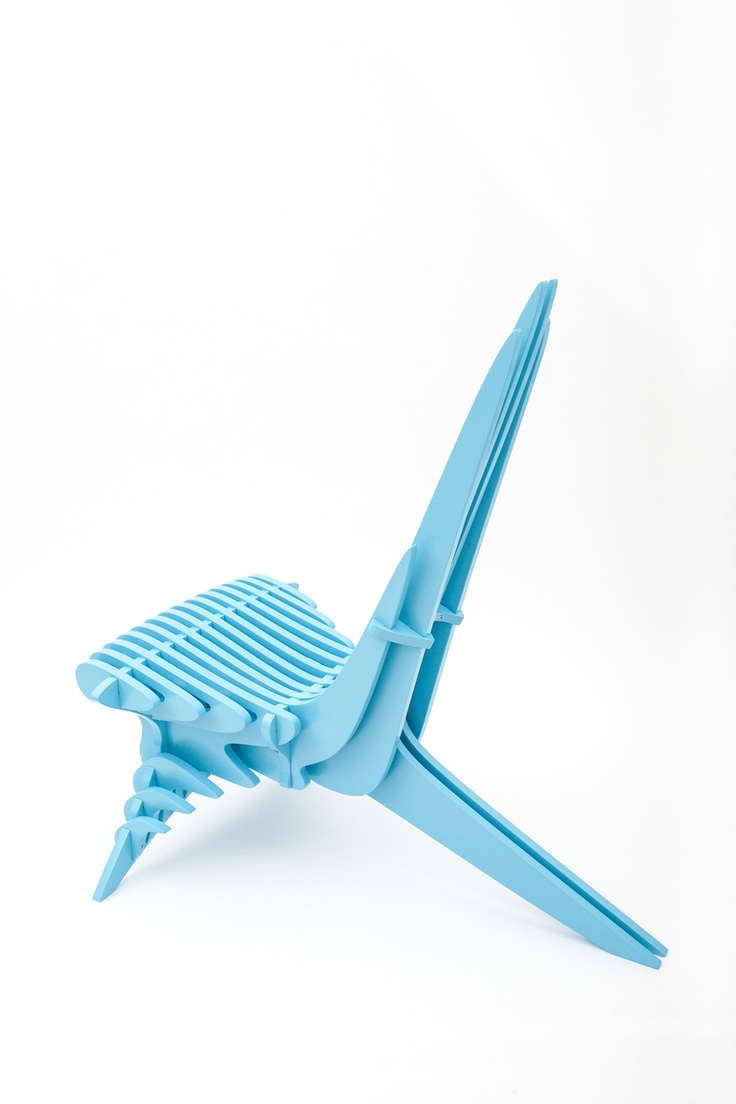
Blue ribs. Flat planes slotted into a skeletal lounge: horizontal seat ribs, tall reclined back, a long diagonal rear support. Uniform sky blue makes the parametric assembly read as one organism. Digital fabrication energy is obvious—CNC logic, interlocking tabs, shadow play through gaps. Judge it as a prototype language for how chairs can be cut and assembled without traditional joinery theater.
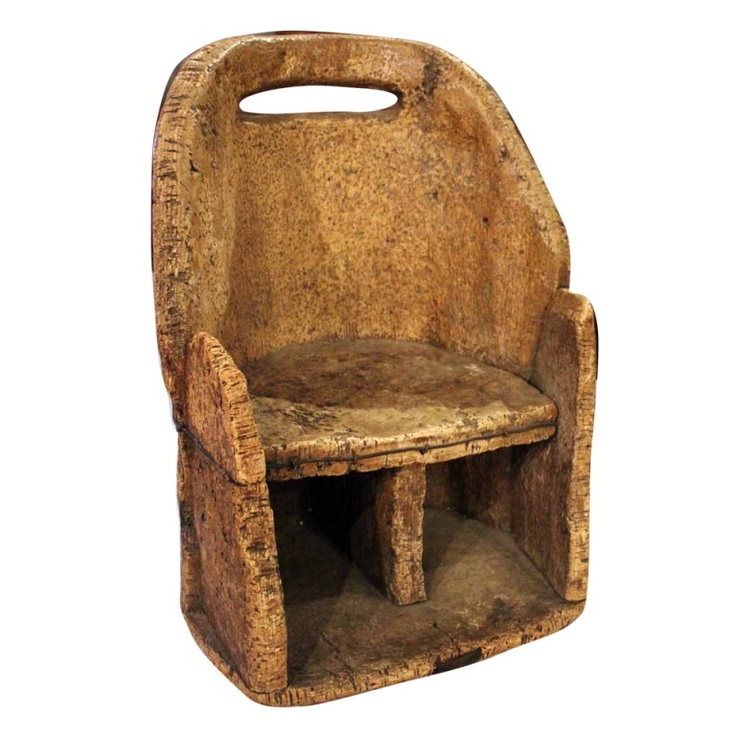
Monolith with cubbies. A thick, porous, cork-like armchair—rounded back with a handle cutout, low arms, U-shaped base split into open storage under the seat. The surface is pitted and honest; the mass looks prehistoric until you notice the practical voids. Extraordinary here means refusing slender elegance in favor of carved presence. It asks whether comfort can come from bulk and softness of material rather than from cushions.
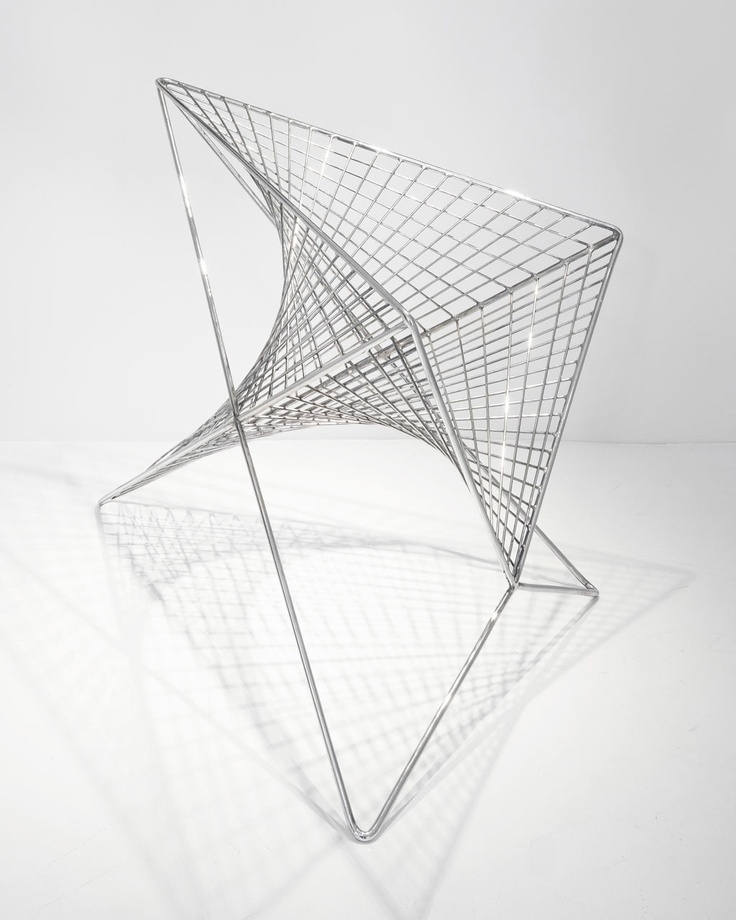
Wire hyperboloid (the mind-twister). Polished metal rods build a saddle: intersecting V frames, a fine grid stretched into a ruled surface that twists between seat and back. From certain angles it looks impossible; the shadow on the floor restates the math. This is the piece that rewards a slow walk-around. Criteria: structural clarity is high if you read it as a continuous mesh; sitability depends on how the grid is spaced and edged. As gallery furniture, it wins by making geometry visible.
Color panels, found wood, and dual jobs
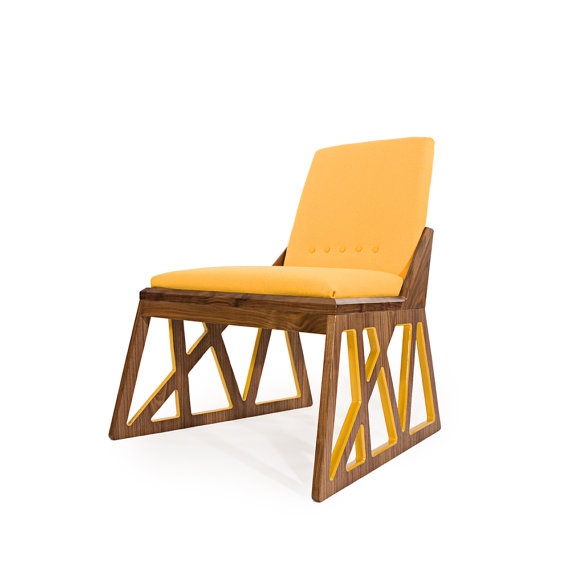
Yellow lattice lounge. Dark wood side panels cut with irregular geometric voids, interiors edged in the same bright yellow as the buttoned cushions. The base replaces ordinary legs with architectural slabs. From across a room you read contrast first—walnut versus lemon—then the cutouts as a second rhythm. It is more domestic than the pure wire piece, yet still far from anonymous seating.
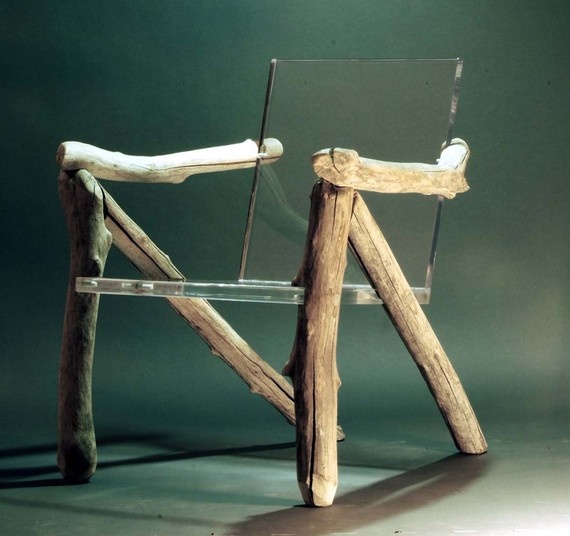
Driftwood and acrylic. Weathered branches form legs and arms; clear rectangular panels slot in as seat and back. Rough nature frames industrial clarity. In a dark studio light, the acrylic edges catch highlights while the wood’s cracks stay tactile. The design argument is juxtaposition: if either material alone would be ordinary, together they become a conversation about what “natural” furniture means when glass-smooth planes enter the frame.
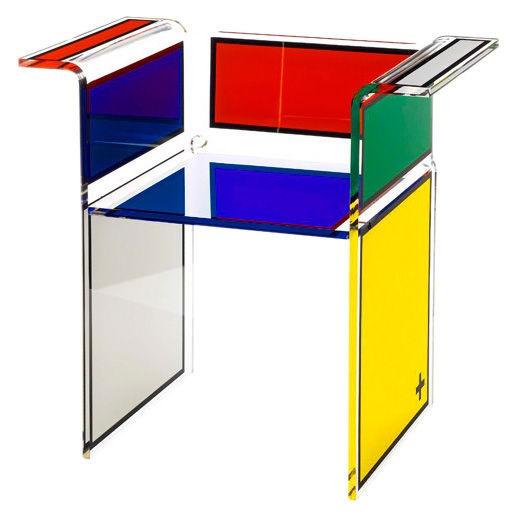
Acrylic homage to Mondrian. Translucent planes in blue, red, yellow, green, and clear assemble into a boxy armchair—De Stijl logic pulled into three dimensions. Overlaps tint the light; a small plus mark on a yellow panel feels like a signature wink. Functionally it is hard seating; culturally it is furniture as painting you can occupy. Extraordinary because it refuses neutral wood and fabric in favor of pure color architecture.
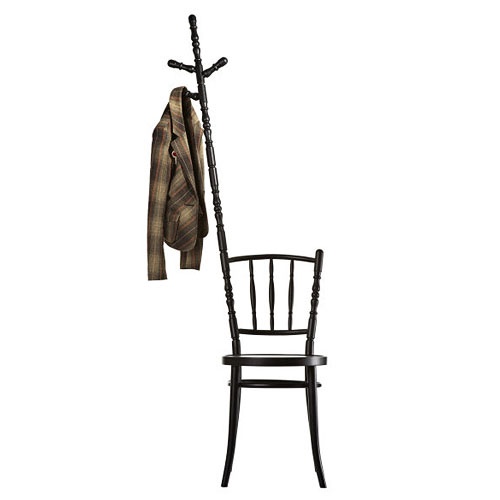
Chair-plus-coat-rack. A black spindle-back seat grows one absurdly tall post capped with pegs; a plaid blazer hangs ready. Valet furniture with surreal proportions. The design criteria shift toward entryway systems: sit to change shoes, hang the jacket, save floor space. Humor is part of the structure, not a sticker applied afterward.
Nest, cellular mass, tactility, metal warmth
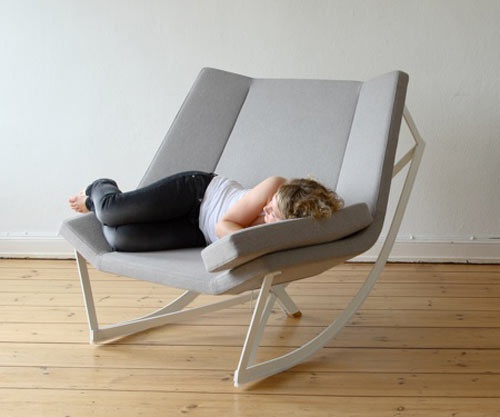
Wide rocker cradle. Faceted gray upholstery on white rockers, scaled so an adult can curl sideways. Enclosure is the brief: wings, deep seat, gentle motion. Compared with the Harp Chair’s open air, this piece sells nest psychology. Extraordinary scale—almost a soft room—sets it apart from ordinary lounge chairs that only face forward.
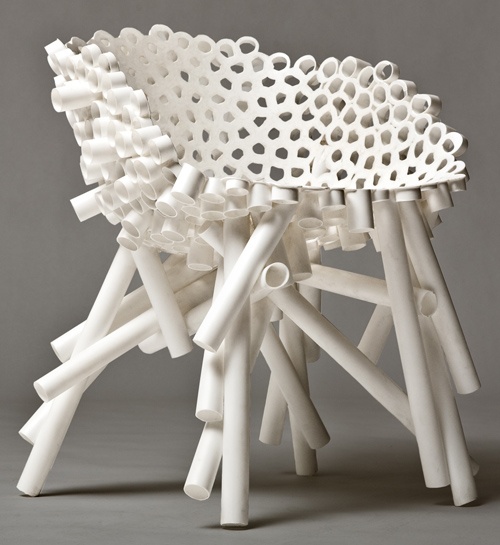
Cellular white tubes. A bowl of short cylinders fused into a honeycomb shell, lifted on longer tubes that crisscross as a base. Repetition becomes ornament and structure at once. It looks fragile until you read the thicket of supports. Gallery voice fits: this is a study in one geometry pushed until it becomes furniture.
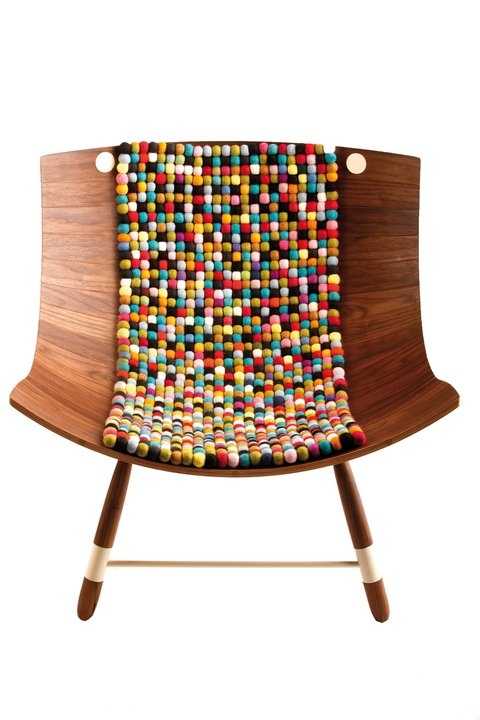
Felt-ball spine. Dark curved wood frames a vertical river of multicolored felt spheres down back and seat, white cuffs on tapered legs. Soft textile punctuates hard carpentry. You want to touch it before you sit—an intentional invitation. Extraordinary detail lives in the craft of packing those spheres tightly enough to read as a single mosaic stripe.
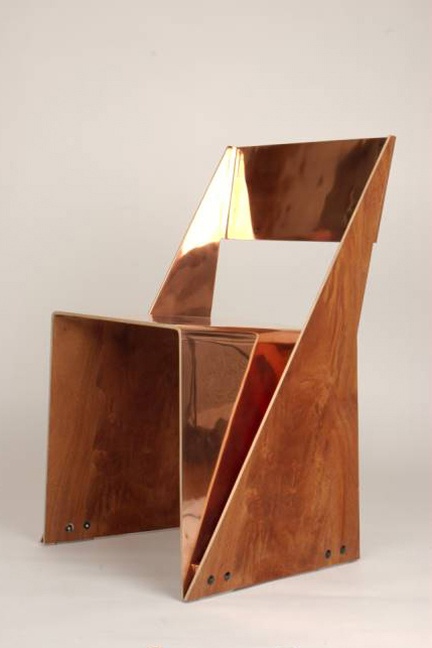
Copper and wood angles. Mirror-polished copper forms seat, back cutout, and front drop; triangular wood panels brace the sides with visible fasteners. Warm metal meets warm grain. Reflections animate the piece as you move. It closes the set with industrial luxury rather than whimsy—proof that “extraordinary” can mean refined aggression of line, not only novelty.
How to use a gallery like this
If you are shopping for a daily desk chair, most of these will (and should) lose to ergonomics. If you are choosing one statement seat for a room that already has quiet sofas and tables, the criteria flip: silhouette, material story, and whether the piece still looks inevitable after a month of living with it.
A practical pass when you revisit the images:
- Name the primary material in one word.
- Point to where your weight would go.
- Decide: daily, guest, or display-only.
- Imagine it beside a boring table—does it elevate the room or fight it?
- Keep only the chairs that still interest you after the novelty joke fades.
The wire saddle may remain the sharpest puzzle in the group; the Harp Chair may remain the clearest classic; the coat-rack hybrid may remain the most useful surprise. Extraordinary chair design does not require agreement—only that each piece makes its argument strong enough that you can disagree with precision.

Comments
Continue reading
5 DIY Chair Makeovers Before and After: Paint, Weave, Victorian, Weekend, Director’s
Five before-and-after DIY chair makeovers—paint and upholstery, woven backs, a kid-friendly Victorian, an easy weekend redo, and refreshed director’s chairs.
Garden Decoration Beyond Beds: Lace, Mosaiculture, and Upcycled Yard Art
From dressed topiary and floral cyclists to license-plate dragonflies and lace between trees—garden decorations that give a yard a voice.
Kitchen Design Ideas: Layout, Storage, Light, and Finishes That Work
Practical kitchen design ideas—work zones, cabinetry, lighting, and durable finishes—so inspiration translates into rooms that cook and gather well.