
Garden Decorations From Empty Bottles
Practical outdoor reuse: hanging bottle gardens, self-watering planters, bed borders, bottle fences, and bottle trees—with drainage, anchoring, and safety notes.
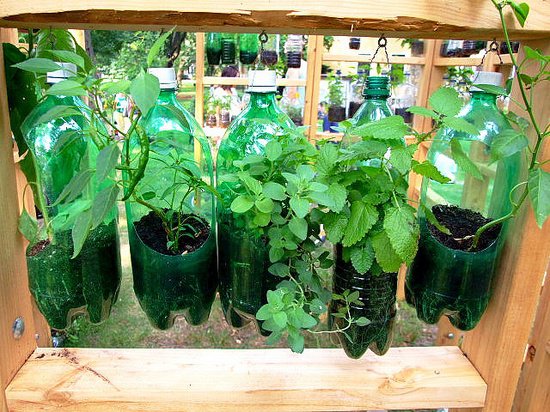
Empty glass bottles—wine, juice, soda, water—are sturdy enough for outdoor weather and already shaped for planting, edging, and light-catching screens. Practical reuse beats novelty: every project needs drainage where plants grow, a secure base against wind, and a clear plan for broken glass. The approaches below turn bottles into hanging gardens, self-watering pots, bed borders, low walls, fences, and bottle trees you can maintain through a growing season.
Rinse bottles well and soak off labels with warm soapy water; oil helps under stubborn adhesive. Sort by height and color if you want a deliberate pattern. Wear gloves and eye protection for any cutting or drilling. Discard cracked bottles—do not build with glass that is already failing.
Hanging bottle gardens
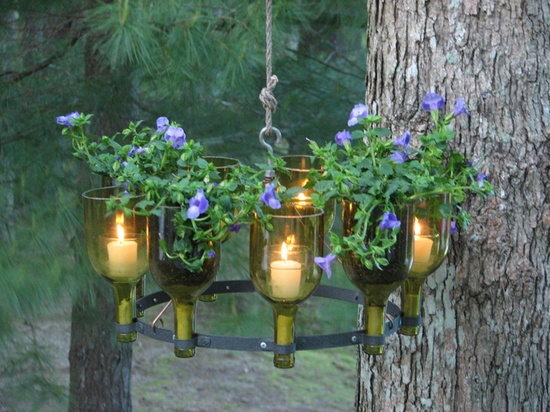
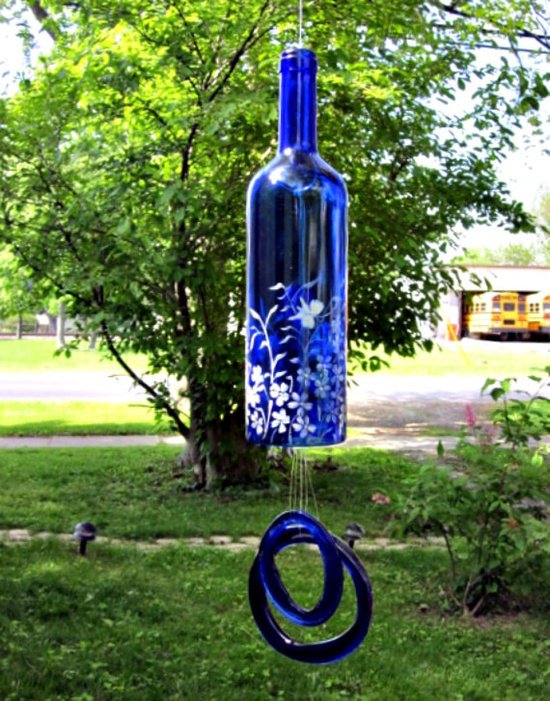
A hanging bottle garden mounts bottles sideways or at a slight tilt so you can plant through a cut window along the side. Sand cut edges until they will not cut hands or stems. Hang with wire or rope through holes near the neck, or cradle the neck in a secure loop on a fence rail, pergola beam, or balcony bar. Angle each bottle so excess water runs out the opening instead of pooling in a sealed curve.
Use a light potting mix, not heavy garden clay. Trailing strawberries, thyme, oregano, succulents, and compact annuals fit narrow volumes better than deep-rooted shrubs. Glass heats in full sun and dries fast, so check moisture more often than you would with ceramic. Confirm that hooks, joists, or rails can hold the wet weight of a full row before you plant everything at once.
Water from the open side with a narrow spout or install a simple drip line clipped along the row. Overflow should fall onto soil or a tray, not onto a downstairs neighbor’s railing. In freezing climates, empty hanging bottles for winter or bring them under cover so ice does not crack the glass.
Self-watering planters
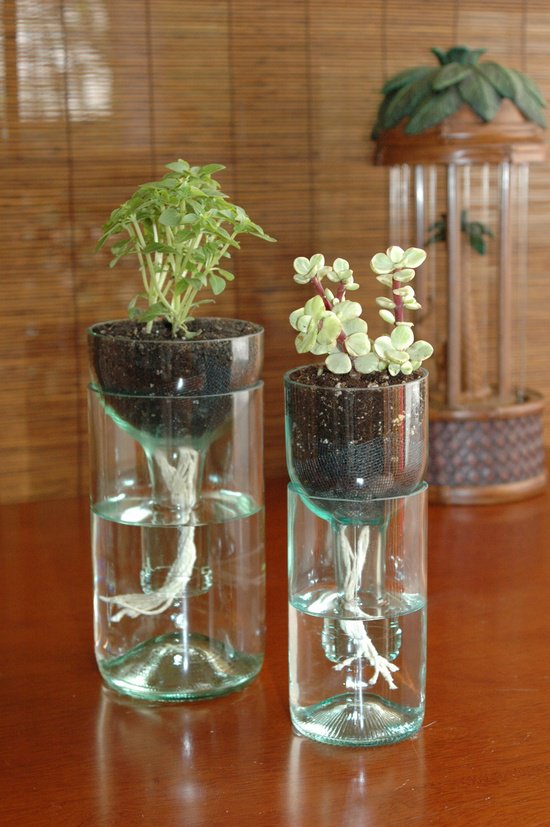
Wine bottles reverse cleanly into watering reservoirs. One reliable pattern inverts a bottle of water into a planted pot so the neck meters moisture as the soil dries. Another uses a cotton wick between a reservoir bottle and a planted bottle. Keep both bottles clean; cloudy residue invites algae and fungus gnats.
Clear reservoirs in hot sun grow algae quickly. Wrap the reservoir in fabric, paint the exterior with outdoor paint, or slip it into a sleeve, leaving a small sight window so you can see the water line. Refill before heat waves empty the bottle completely—plants that rely on the system will wilt fast once the reservoir is dry.
Self-watering setups help balcony gardeners and weekend travelers, but they are not set-and-forget forever. Flush the system occasionally, replace slimy wicks, and watch for overwatering in cool rainy weeks when soil stays wet even without the bottle.
Borders, edging, and low walls
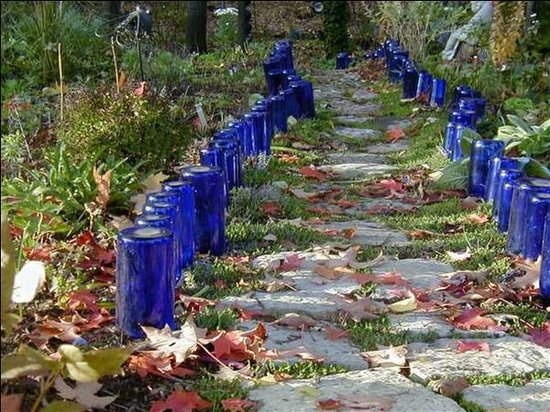
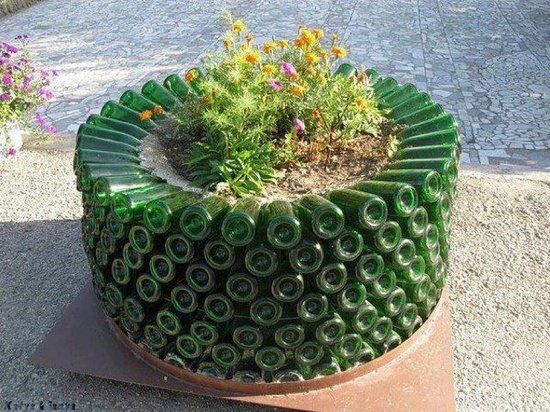
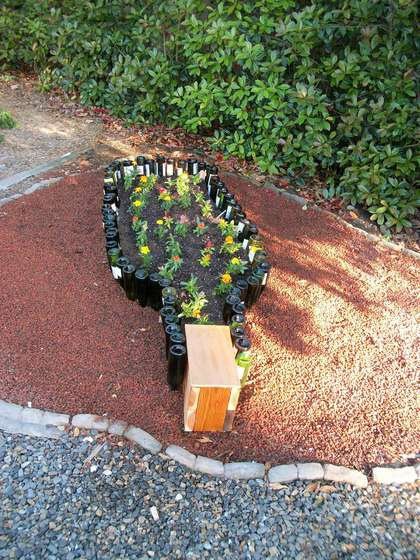
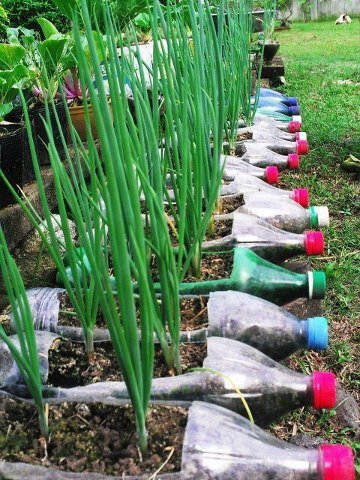
Bottles sunk along a flower bed make a bright edge that keeps mulch and soil off the path. Dig a narrow trench, set a string line for height, and pack soil firmly around each bottle. Neck-down installations show rounded glass tops; neck-up installations show colored shoulders. Either way, level as you go—an uneven edge looks unfinished and catches mower wheels.
In freeze–thaw regions, expect some heave. Reset tipped bottles in spring rather than mortar-locking a rigid line that will crack. Short bottle walls laid on their sides as courses can retain a low raised bed (under about a foot) when the base is level and water can escape through gaps. Treat these as garden edges, not building walls; do not lean heavy structures on bottle masonry without proper engineering.
Leave weep spaces so rainwater does not pond behind an edge and push bottles outward. A gravel strip on the path side reduces mud splash that dulls the glass.
Vertical screens and bottle fences
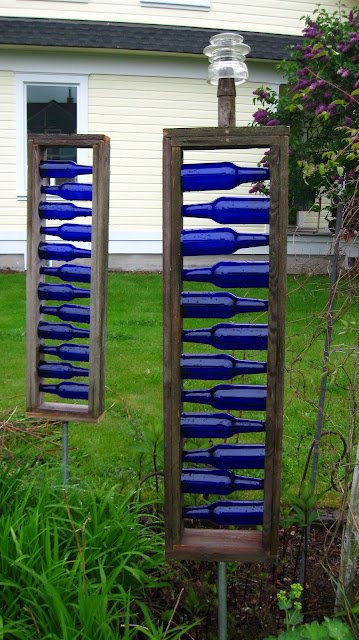
Bottle fences thread intact bottles onto rebar, steel rod, or wooden frames so colored light passes through while air still moves. Many builds slide bottles onto vertical rods set in concrete footings or deep posts. Space rods so bottles cannot jump off in wind, and cap the tops.
Site screens away from play areas and barefoot paths. Broken glass is the main hazard. Inspect after storms for chips and loose rods. A bottle screen along a driveway or behind an herb bed defines space without the heat trap of a solid privacy fence—useful in hot yards where airflow matters.
Gather bottles of similar diameter when you can; mixed necks jam on rods. Friends and restaurants are good sources if you need dozens for a long run. Start with a short panel to test the look before committing a full property line.
Cut planters, candles, and path markers
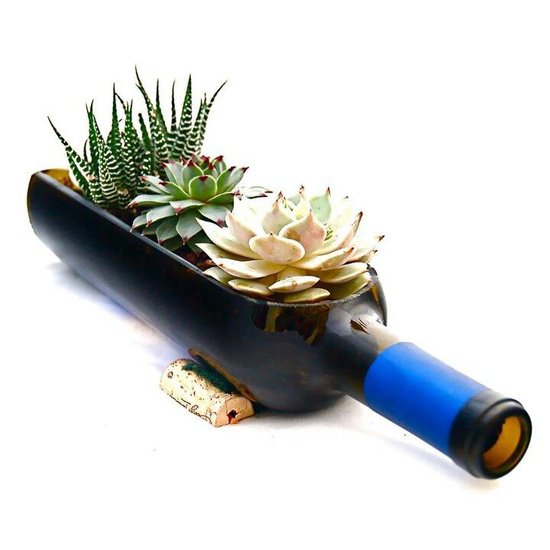
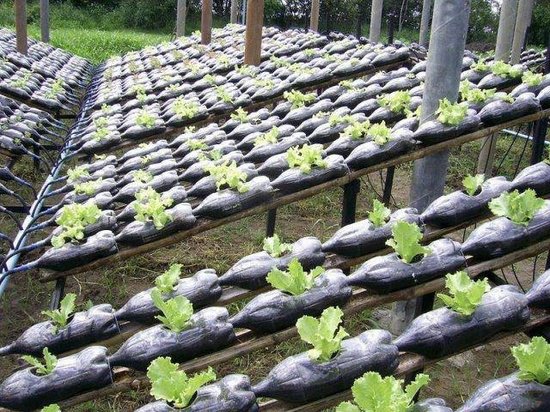
Bottles with tops cut off become tall planters if you drill drainage holes in the base with a glass bit and steady pressure. Without drainage, use the bottle only as a cachepot around a plastic nursery pot you can empty after rain. Sharp rims need sanding or a silicone edge guard if hands will reach inside often.
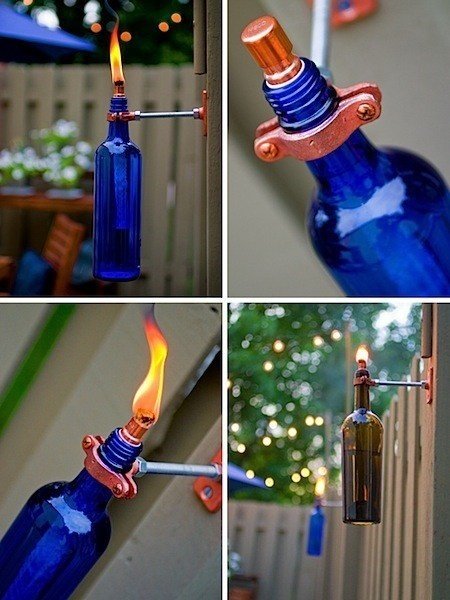
Whole bottles filled with sand hold taper candles on a patio table. Keep flames away from dry mulch and never leave candles burning unattended. Painted path markers work when you use exterior-rated paint and sealer; craft acrylic alone flakes into soil. Skip glitter and glued-on trims that shed microplastics outdoors.
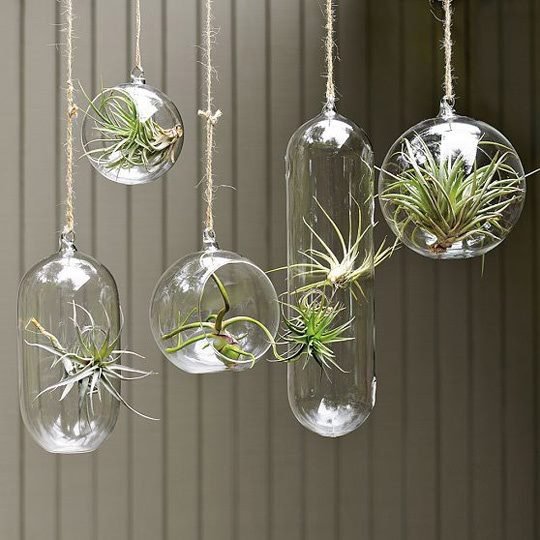
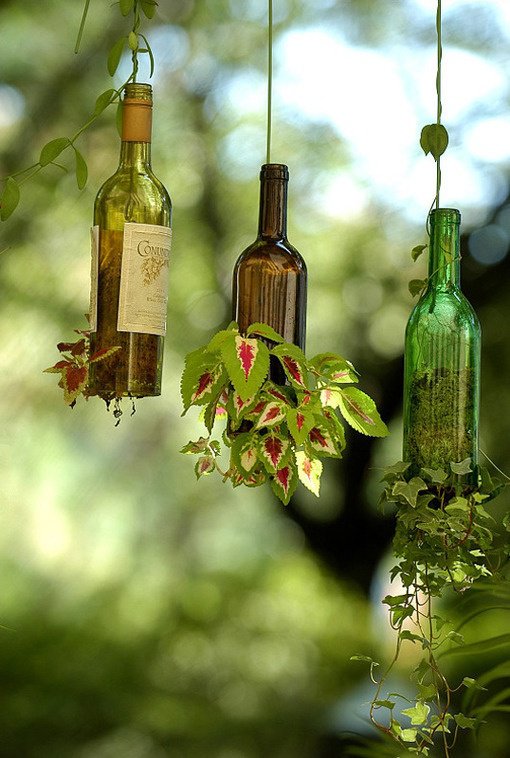
Bottle trees and vines
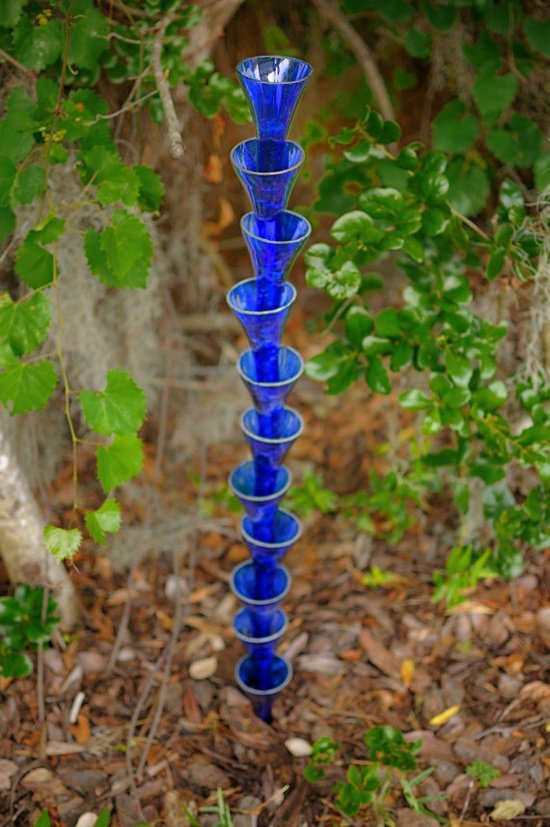
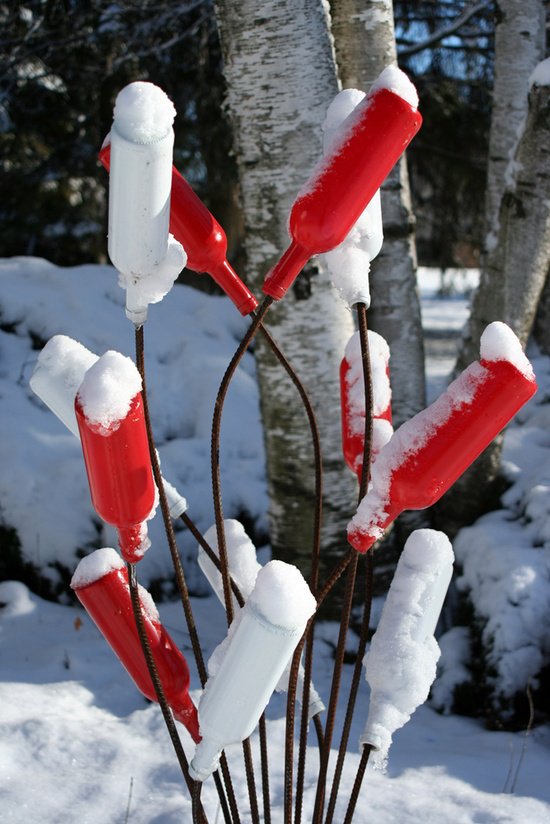
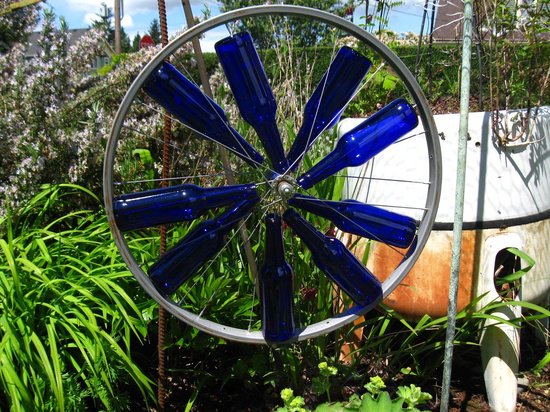
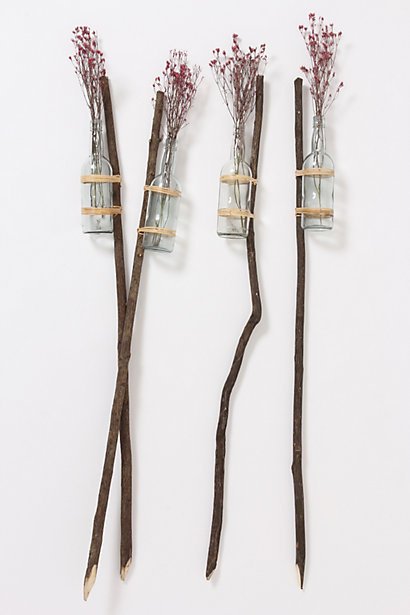
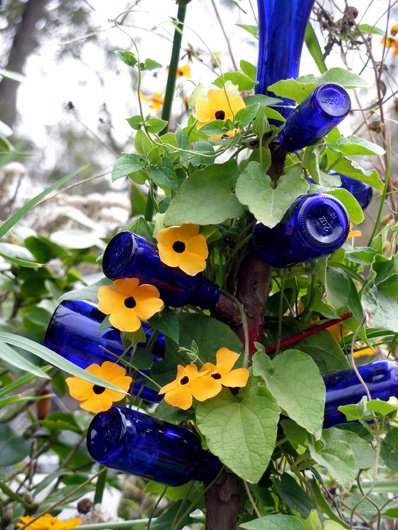
Bottle trees—wooden branches or metal frames capped with upturned bottles—display color overhead and free ground space for planting. Anchor the frame so wind cannot topple it onto a path. Sound dead wood works for a season or two; welded metal lasts longer and handles more bottles.
Train light vines up a bottle tree carefully so growth does not pry bottles loose. Aggressive woody climbers are a poor match. Glass can shade young stems on the hot side of the frame while still letting dappled light through—pair bottles with herbs or flowers at the base for a layered look that still reads as a working garden, not a dump of empties.
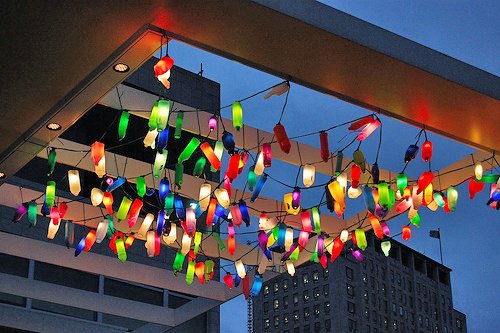
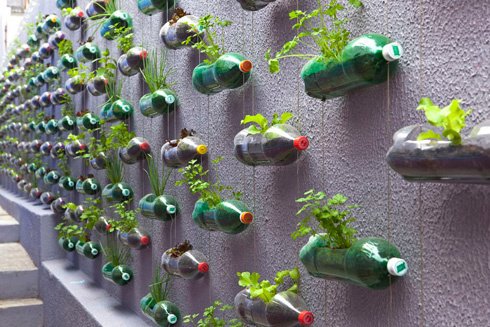
Build order that saves rework
Clean and sort bottles first. Choose one project type—edge, hang, or screen—and finish that before mixing styles in the same bed. Set anchors and trenches before planting. Add plants last so you are not watering glass that will move again. Photograph your layout on paper if the design is complex; bottle counts add up quickly.
Match plant size to bottle volume. Narrow necks and shallow side windows suit shallow roots and frequent water checks. Deep cut bottles with drainage can handle slightly larger herbs. Anything that outgrows the glass should move to a real pot rather than stay root-bound until it fails.
Practical checklist
- Clean bottles; discard cracks
- Plan drainage for every planted container
- Anchor fences, trees, and hanging rows against wind
- Keep glass risk away from play areas and bare feet
- Use outdoor-rated finishes if you paint
- Start with one bed edge or three hanging bottles before a full wall
- Recycle bottles from projects that stop working—reuse is the goal, not permanent clutter
When ice, algae, or shifting posts win, take intact bottles back to recycling and keep the lessons for the next panel. A short, stable bottle edge that lasts two seasons beats a dramatic wall that sheds glass after the first storm.

Comments
Continue reading
Garden Decoration Beyond Beds: Lace, Mosaiculture, and Upcycled Yard Art
From dressed topiary and floral cyclists to license-plate dragonflies and lace between trees—garden decorations that give a yard a voice.
DIY Dollar Store Decoration: Lamps, Vases, Mirrors, Sconces, and Candle Holders
Turn dollar-aisle glass, mirrors, and candle holders into lava-style light jars, enamel vases, a silverware starburst mirror, stone-look sconces, and finished candle bases.
How to Make Mason Jar Candles: Pour, Tint, Hang, and Gift
Clean jars, size the wick, pour wax safely, then branch into coloured glass, hanging lanterns, lavender scents, remelted stubs, floating lights, and favor-ready finishes.