
Michael Riffle’s Landscape Photography: Florida Trails, Springs, and Infrared Seeing
A look at Michael Riffle’s North Florida landscape work—scientist’s eye, patient field craft, and infrared ways of reading familiar woods and water.
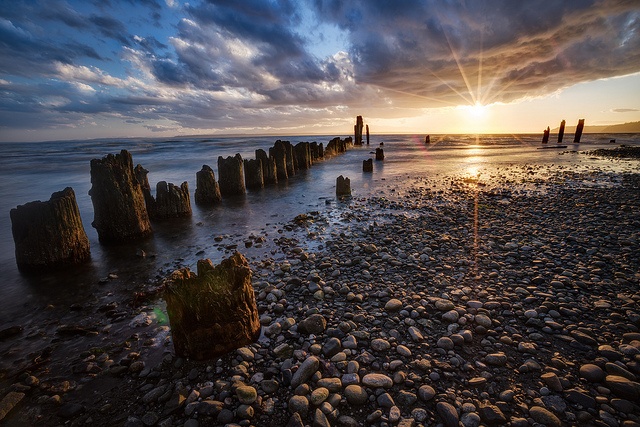
Michael Riffle’s landscape photographs ask you to look at familiar outdoor ground as if it still had secrets. Water, canopy, shore, and trail appear not as postcard labels but as working habitats—places a biologist might walk with a camera instead of a notebook. The surviving frame in this gallery is a reminder of that approach: quiet structure, natural light, and a preference for presence over spectacle.
Riffle is a North Florida–based nature photographer whose public work often centers on forests, springs, wildlife refuges, and coastal edges. He has described himself as a retired research scientist and biologist as well as a hiker and forest wanderer—credentials that show up in how he frames plants, water clarity, and seasonal detail. By the late 2010s his infrared and full-spectrum experiments were drawing local attention for the way they remade Tallahassee-area landscapes without turning them into fantasy worlds.
Scientist’s eye, photographer’s patience
Landscape photography rewards people who notice small systems. Riffle’s background in plant biochemistry and agricultural research gives him a trained habit of looking at foliage, fungi, and water as subjects with structure, not just as pretty texture. That does not mean every image is a scientific illustration. It means the camera is often aimed where a careful walker already paused: a spring run with clear blue-green water, a refuge shoreline under layered cloud, a trail corridor where green-up suddenly fills the frame.
Long exposures and slow walks belong to the same toolkit. Infrared and multi-minute shutter work demand stillness—tripod, remote release, and willingness to wait while leaves settle or clouds rearrange. The resulting pictures can feel meditative even when the color or tonal mapping is unusual. Viewers who only know Florida through beaches and theme parks often underestimate how much quiet drama lives inland: tannin-dark rivers, limestone springs, pine flats, and marshes that change mood with a single weather front.
Riffle has photographed places such as Natural Bridge State Park, St. Marks National Wildlife Refuge, Torreya State Park, and Bald Point State Park, among others. Those names matter less as a checklist than as a map of attention. Local landscape work is harder than travel trophy hunting in one respect: you cannot rely on novelty. You have to return until light, water level, and plant season finally cooperate.
Infrared as another way of seeing
Much of the conversation around Riffle’s later work involves infrared and full-spectrum converted cameras. Infrared photography records light outside the ordinary visible band; foliage and skies can trade roles, and familiar trees can look luminous or otherworldly depending on filter and processing. Done poorly, the look becomes a gimmick. Done carefully, it becomes a second reading of the same trail—an argument that “ordinary” woods still contain graphic potential.
Color-swap processing, IR Chrome–style renderings, and black-and-white infrared each solve different problems. One may emphasize sky structure; another may turn green canopy into a warm field that separates from trunks and water. The craft question is always the same: does the technique reveal form and atmosphere, or does it only announce that a filter was used? Strong infrared landscapes still need composition—foreground anchors, balanced horizons, and a reason for the eye to travel through the frame.
Full-spectrum conversions expand options but also demand discipline. You choose filters for a purpose, meter carefully, and finish with restraint so the image remains photographic rather than synthetic. Riffle’s public notes about exhibitions and process suggest a methodical temperament: test, hike, review on a large screen, then decide whether the file earned a place in a series.
Reading a quiet landscape frame
When you look at a Riffle-style landscape, start with where the light is working hardest. Is water carrying specular highlights while bank foliage holds midtones? Is the sky a simple lid, or is it doing compositional labor with cloud bands and negative space? Quiet photographs often hide their structure until you ask those questions.
Next, notice scale. A wide scene without a human figure can still imply scale through tree height, path width, or the relative size of a spring boil. Depth comes from layered planes: near vegetation, mid-distance water or meadow, distant treeline. If those planes collapse into one mushy midtone, the photograph loses the walker’s sense of being in the place.
Color temperature and saturation matter more in Florida green than many visitors expect. Midday canopy can overwhelm a sensor with chlorophyll. Early and late light, overcast diffusion, or infrared reinterpretation can all tame that problem. The goal is not always “more vivid.” Sometimes it is more readable—separating trunk from leaf, water from reflection, cloud from haze.
Field habits worth borrowing
You do not need Riffle’s exact kit to borrow his priorities. Scout loops you can repeat. Learn how a favorite spring looks after rain, after drought, and after cold fronts. Carry protection for humidity and unexpected showers. Pack spare batteries if long exposures or cold mornings are part of the plan. Keep lens cloths handy around spray and pollen.
Compositionally, look for mirrors on calm water, leading lines in boardwalks and run channels, and small subjects—fungi, blossoms, leaf litter—that reward a short walk off the obvious overlook (when rules and habitat protection allow). Respect closures and fragile banks. Springs and refuges are working ecosystems, not empty stages.
Edit with the same patience you used in the field. Pull back global contrast when edges start to crunch. Protect highlight shape on water. Correct color so mixed canopy light does not turn muddy. Infrared files especially need a finishing pass that unifies the look across a series, not a different filter recipe for every frame.
Community feedback helps. Informal critique groups, local workshops, and shared hikes can accelerate learning faster than solitary guessing. Landscape photography looks solitary in the final print; the craft often grows in conversation.
Why local landscapes still matter
Internet culture pushes photographers toward the most famous overlooks. Riffle’s Florida-centered work argues the opposite case: that devotion to nearby land can produce a body of images with continuity, ethics, and specificity. A viewer may not know Horn Spring Run by name, but they can feel whether the photographer understood the water’s clarity, the canopy’s season, and the weather’s tempo.
That understanding is useful even if your own territory is different. Substitute your river for his spring, your coastal marsh for his refuge, your hardwood ridge for his pine flat. The method transfers: return often, watch light change, choose technique that serves the subject, and finish so the place remains legible.
Before your next outing, pick one short loop you already know and photograph it as if a visitor had never seen green water or layered cloud. Wait for a weather change. Make one careful long exposure. Then ask whether the file shows a place you merely visited—or a place you actually read.

Comments
Continue reading
David Shield Landscape Photos: Blue Hour, Reflections, and Honest Color
Eighteen landscape photographs by David Shield—coastal twilight, alpine mirrors, and light-handed color that preserves place over spectacle.
10 Norwegian Landscape Photographs by Tore Heggelund
Lighthouses, skerries, winter mountains, and storm light—ten atmospheric landscape photographs by Norway-based photographer Tore Heggelund.
15 Winter Landscape Photos: Alpine Light, Snow, and Mountain Craft
Fifteen Alpine winter landscape frames—plus practical notes on cold light, snow exposure, storm weather, and field craft for mountain photography.