
Brian Mashburn’s Ominous Oil Cityscapes: Fog, Industry, and Gothic Skylines
Inspired by travel through Hong Kong, Thailand, and China, Brian Mashburn’s meticulous oil paintings stage gloomy cityscapes where nature, culture, and industry share an uneasy sky.
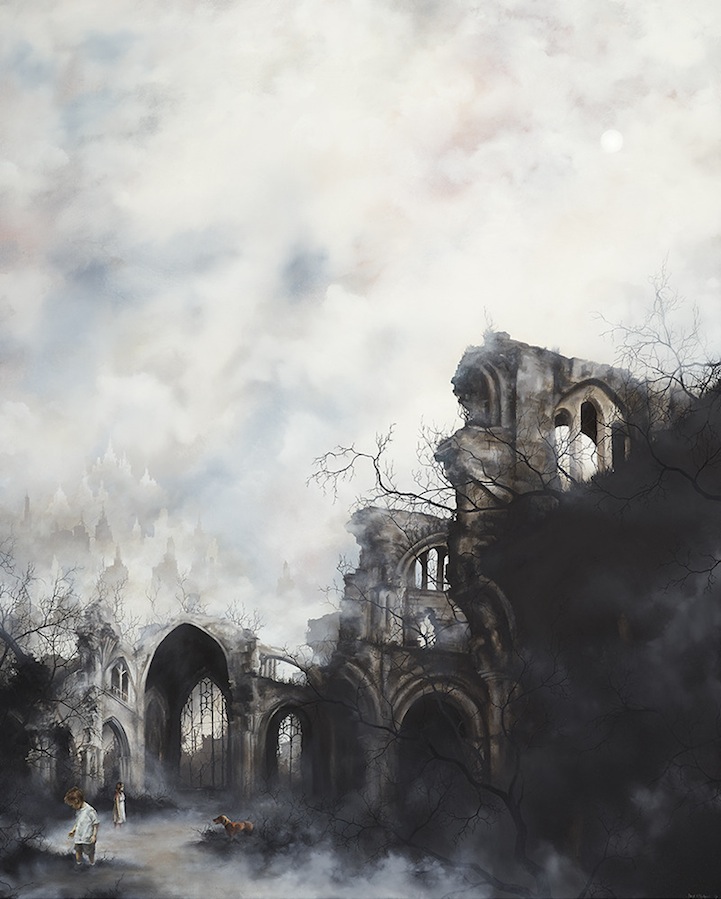
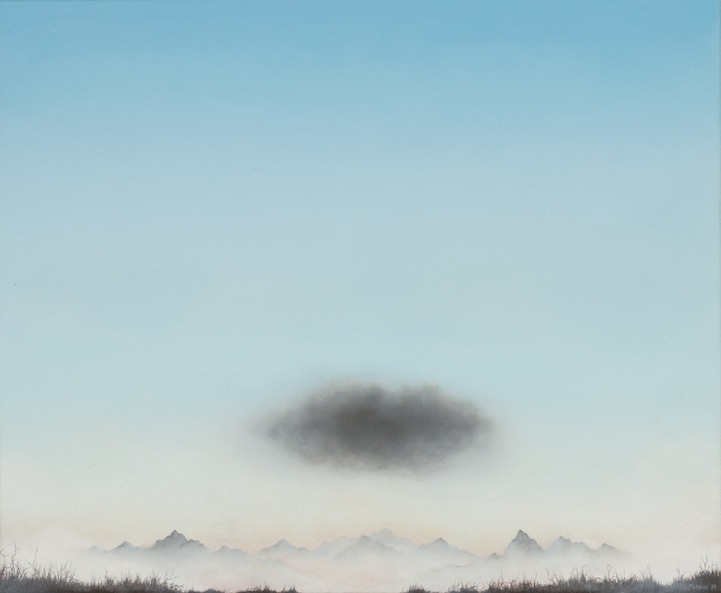
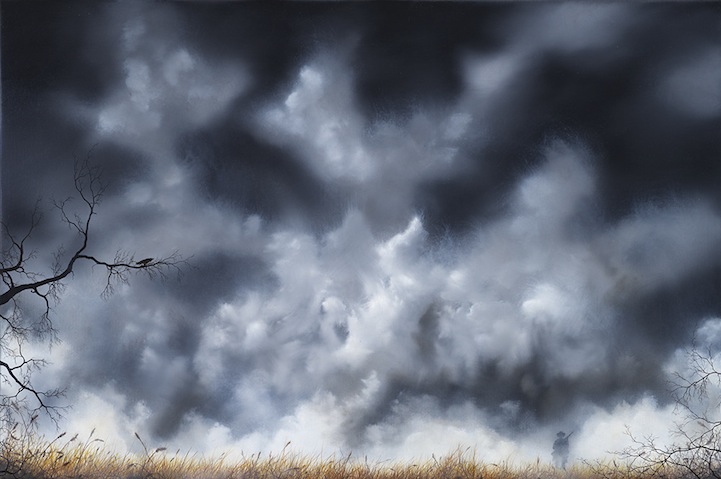
Brian Mashburn paints cities the way some people remember storms: not as tourist postcards, but as weather systems of industry, fog, and quiet dread. Travel through Hong Kong, Thailand, and China left him with skylines that refuse to sit still in memory—crowded verticals, soft horizons, and atmospheres where beauty and damage share the same air. The oil paintings gathered here turn those impressions into meticulous, gothic cityscapes: places that feel inhabited and abandoned at once.
Curator Steven Matijcio has described Mashburn’s work as a terrain where excess, alienation, degradation, and serenity bleed together. That reading fits. Between grandeur and the grotesque, these canvases stage an ambivalent endgame among nature, culture, and industry. Mashburn himself has framed painting as the soul of a hopeless romantic mixed with the dark humor of a cynic. You can feel both impulses in the soot-soft light and the careful architecture that refuses to collapse into pure fantasy.
Travel as residue, not itinerary
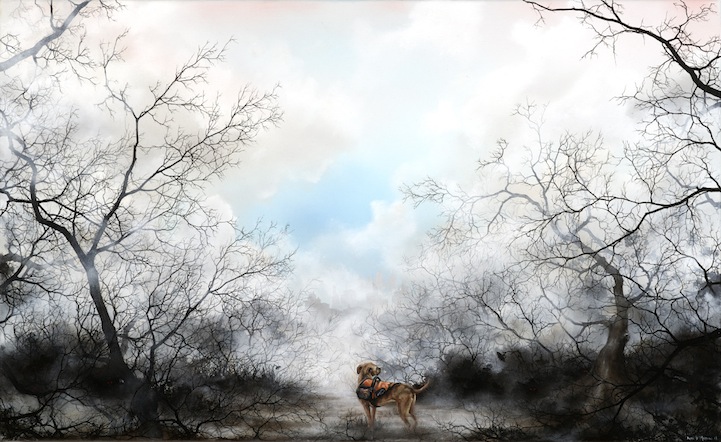
These are not illustrated travel logs. Mashburn does not ask you to identify a particular pier or hotel tower. Hong Kong, Thailand, and China operate as pressure systems: humidity that softens edges, towers that stack until the sky becomes a narrow ribbon, and coastal or river light that turns industrial forms into silhouettes. The paintings keep the emotional residue of those trips—density, distance, and the uneasy calm after rain—while inventing compositions that feel post-documentary.
That freedom matters. Literal transcription would trap the work in souvenir logic. Instead, Mashburn builds cities that behave like dreams of real places: recognizable in mood, unmoored from street names. Smoke, haze, and cloud become compositional tools as much as weather. Verticals punch upward; horizontals of water, road, or mist hold them in tension. The result is a skyline that looks measured and unstable at the same time.
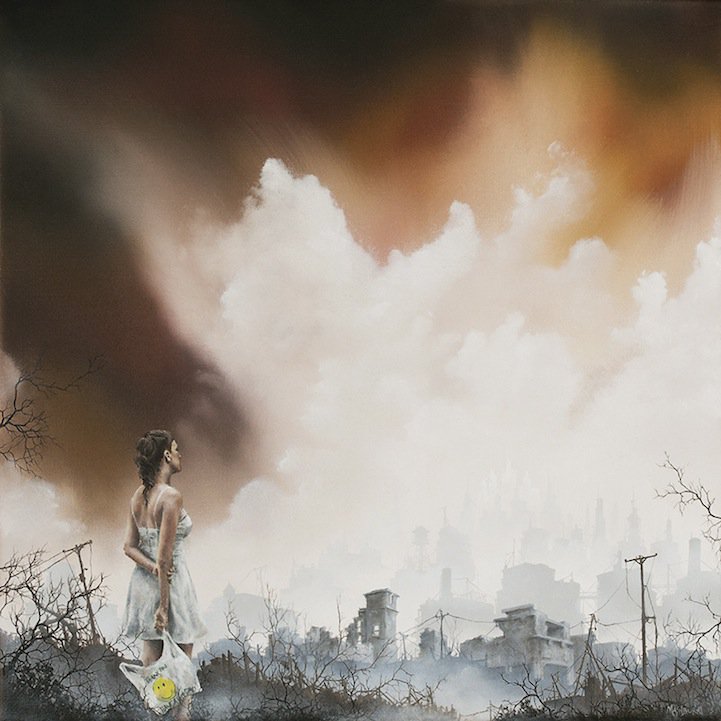
Viewers often call the scenes ominous, and the word fits without being theatrical. There is rarely a single catastrophe on view. No exploding skyline, no comic-book crater. The threat is slower: pollution as atmosphere, overbuilding as horizon, nature returning as scrub and fog rather than as triumphant wilderness. Omen lives in the gray-green air and in the sense that human order has already peaked.
Oil, patience, and gothic beauty
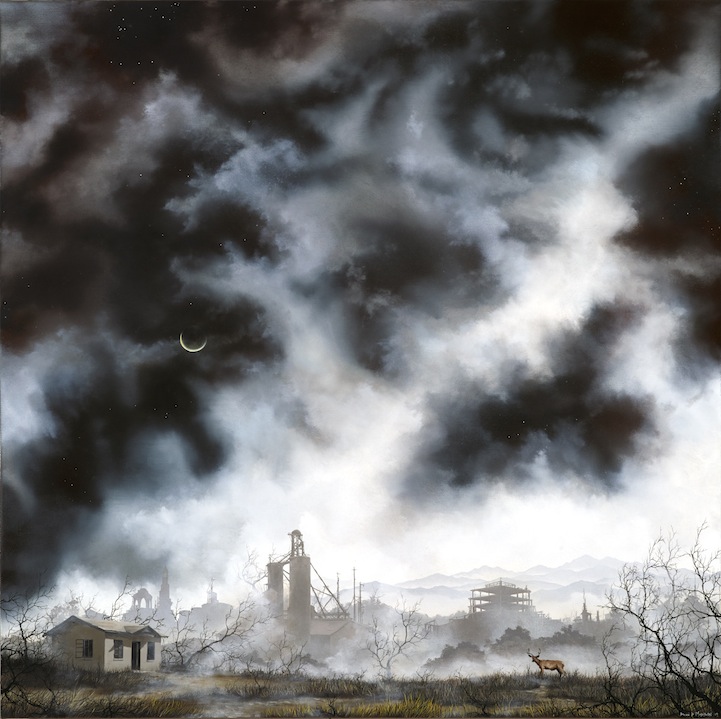
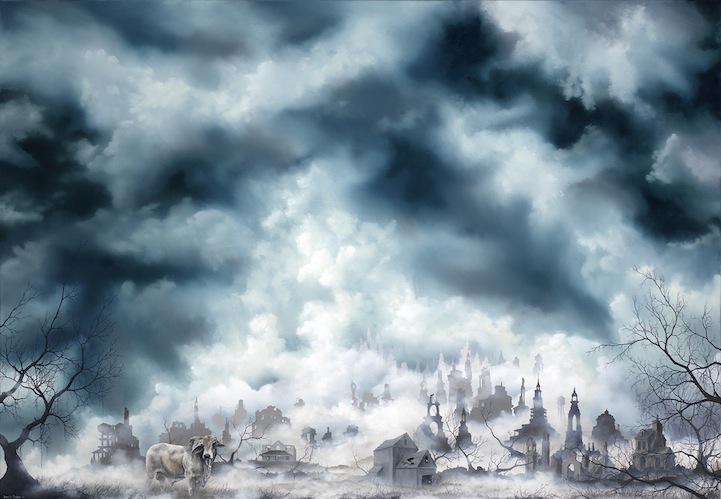
Oil painting rewards the kind of looking Mashburn demands. Layer by layer, glaze and opacity can build the thickness of smog or the thinness of late light. Hard edges of towers can sit against soft banks of cloud without the image splitting into collage. That technical negotiation—architecture versus atmosphere—is central to the work’s gothic beauty. Gothic here does not mean costume drama. It means height, shadow, and a spiritual weight placed on secular structures.
Meticulousness is part of the mood. When every window suggestion and distant crane feels considered, the city stops reading as a blur and starts reading as a system. Systems can be admired and feared in the same glance. Mashburn’s careful surfaces make alienation feel earned rather than stylish. You are not looking at a quick dystopian filter; you are looking at labor that believes the subject deserves hours.
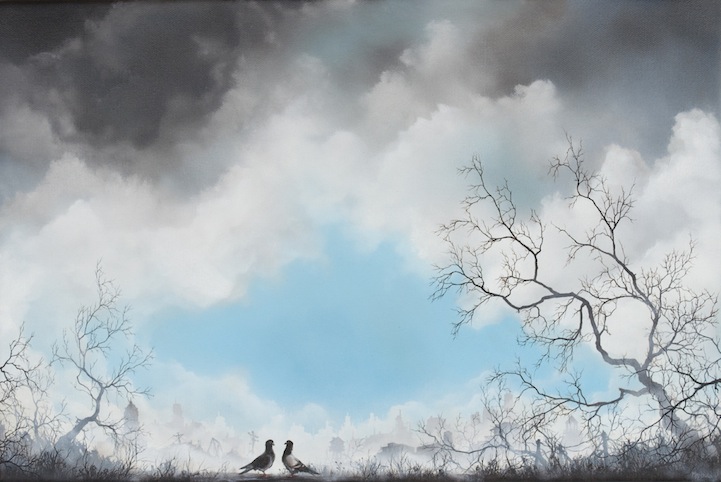
The romantic side of his stated temperament shows in the tenderness toward light. Even the darkest skyscapes often hold a pale band, a wet gleam, or a quiet break in the cloud that keeps the scene from total nihilism. The cynic appears in what that light illuminates: tangled industry, truncated nature, and human scale reduced to suggestion. Romance and skepticism share the same palette.
Nature, culture, and industry in one frame
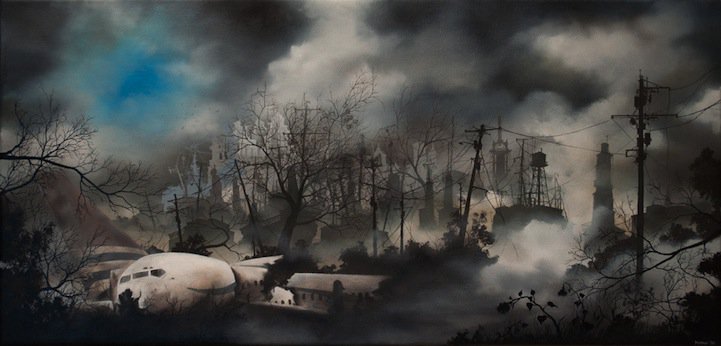
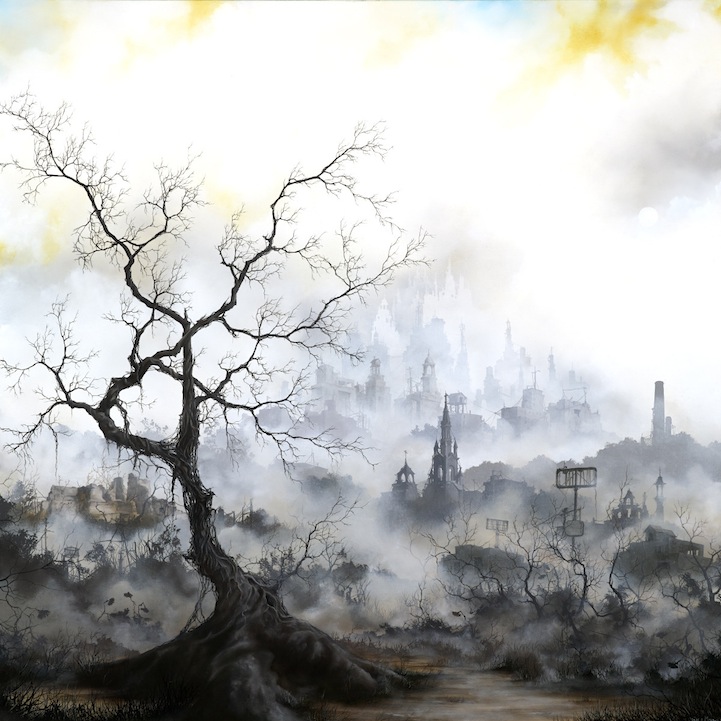
Matijcio’s language of bleeding states is useful because Mashburn rarely isolates a single theme. Nature is seldom pure green; it arrives as residual vegetation, distant hills, or weather that refuses to clear. Culture appears as architecture, signage hints, and the sheer vertical ambition of modern Asian megacities as filtered through memory. Industry shows in cranes, stacks, bridges, and the infrastructures that make density possible.
Their “endgame” is ambivalent because victory is unclear. Has industry conquered the horizon, or has atmosphere already begun reclaiming it? Are the empty-feeling streets a warning about collapse or simply the hush of a city seen from afar? Mashburn leaves those questions open. That openness is what keeps the paintings from becoming propaganda for either techno-optimism or eco-despair.
Serenity in this context is unsettling. Calm composition plus degraded air equals a paradox viewers recognize from real travel: the beautiful photograph taken on a day when the air quality app blinked red. Mashburn paints that paradox without slogans. The canvas becomes a place where you can stay with the contradiction instead of resolving it too quickly.
Scale, distance, and the missing crowd
Many of these cityscapes withhold the crowd. People, if present at all, shrink to marks or vanish into distance. That choice is not emptiness for emptiness’s sake. Removing the bustle lets architecture and weather become the protagonists. It also produces a cinematic loneliness familiar from certain science-fiction stills—except Mashburn’s worlds feel adjacent to now, not safely futuristic.
Distance does ethical and aesthetic work. From afar, towers become pattern; pollution becomes mood; the city becomes landscape. Landscape painting’s old vocabulary—recession, atmosphere, tonal unity—gets applied to contemporary density. The tradition of the sublime, once reserved for mountains and oceans, attaches itself to human-made cliffs of glass and concrete. Awe and unease arrive together.
When a painting does lean closer, detail becomes forensic. Railings, rooftops, and industrial silhouettes ask for slow looking. The closer view does not comfort; it clarifies how much engineering stands between the viewer and any remaining open sky. Mashburn’s range—from panoramic hush to tighter urban anatomy—keeps the series from repeating a single postcard of doom.
Why the darkness still invites looking
Gloomy work fails when it only performs sadness. Mashburn’s paintings invite looking because craft and ambivalence do real work. The surfaces reward attention. The compositions balance mass and void. The emotional temperature stays complex: not pure melancholy, not cheap thrill. You can admire the paint handling while feeling unsettled by what the paint describes. That double register is rare and durable.
There is also a contemporary honesty in refusing bright tourism. Plenty of images sell Asia’s cities as neon playgrounds or seamless modernity. Mashburn’s skyscapes acknowledge spectacle’s underside without denying beauty. Beauty here is tonal, structural, and atmospheric—beauty that survives bad air and unfinished edges. It is closer to elegy than advertisement.
For artists and viewers interested in urban landscape, the lesson is not “paint darker.” It is “let conflicting truths occupy one climate.” Excess and serenity can share a sky. Degradation and grandeur can share a waterfront. When those pairs hold, a cityscape stops being illustration and becomes argument without a caption.
A last walk through the fog
Look again at the sequence as a walk rather than a checklist. One canvas opens with vertical pressure and a sky that feels heavier than the buildings. Another stretches the horizon until industry becomes a low, continuous bruise. Another tightens on forms that could be monuments or ruins depending on your hour of the day. Across them, Mashburn keeps returning to the same wager: that oil paint can still make the modern city feel mythic without lying about its costs.
Inspired by journeys through Hong Kong, Thailand, and China, these paintings do not close the book on those places. They open a darker, slower room where memory edits the skyline and craft keeps the edit honest. Stay with the gray. Let the towers rise and the weather refuse to clear. In that refusal, Brian Mashburn’s ominous cityscapes find their lasting charge—not as end-of-the-world posters, but as carefully made mirrors for the mixed weather of the present.

Comments
Continue reading
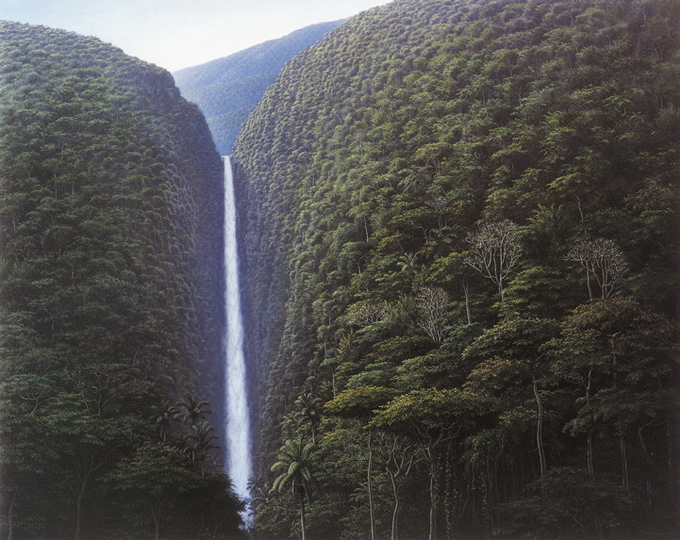
Tomás Sánchez’s Meditative Landscape Paintings
Fifteen tropical landscapes by Cuban artist Tomás Sánchez—waterfalls, flooded forests, crater voids, and tiny wanderers inside hyperreal quiet.
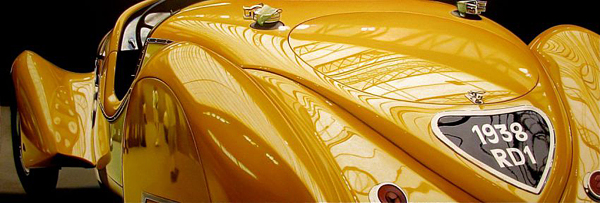
Photo-Realistic Muscle Car Paintings by Cheryl Kelley
Cheryl Kelley’s glossy oil paintings of classic muscle cars—photo-based realism, chrome reflections, and a feminine take on automotive glamour, with gallery images.

Ray Massey’s Hand Paintings: Trompe-l’oeil Athletes, Castles, and Everyday Objects
Ray Massey’s painted-hand photographs turn fingers into footballers, sprinters, castles, pencil cups, and bananas—studio trompe-l’oeil with lasting wit.