
Zara October 2012 Lookbook with Aymeline Valade
Military tailoring, burgundy coats, velvet, and monochrome separates in Zara’s October 2012 womenswear campaign.
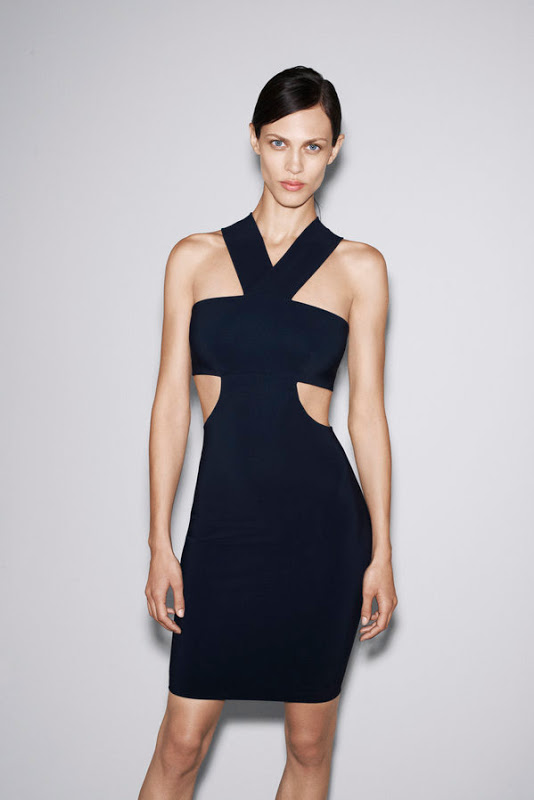
In October 2012, Zara released a womenswear lookbook that distilled early-autumn dressing into long lines, spare geometry, and a cool seasonal palette. The Spanish retailer’s monthly campaigns were already a ritual for fashion watchers: not couture theater, but a tightly edited catalogue of what would hang on racks that month. This October chapter starred model Aymeline Valade and framed fall clothes with a near-ascetic clarity—coats, shirts, military tailoring, fluid trousers, jumpsuits, and sharply cut dresses shot as a continuous silhouette study.
What follows is a look through that October 2012 campaign mood: how the clothes were styled, which textures carried the season, and why the edit still reads as a clean snapshot of high-street autumn fashion at the turn of the 2010s.
Aymeline Valade and the monthly catalogue
By late 2012, Aymeline Valade was a familiar face for Zara’s digital and print lookbooks—an angular presence that suited the brand’s preference for elongated proportions and quiet drama. Coverage at the time noted her return for the October set after earlier collaborations, and fashion press framed the month as youthful and contemporary rather than romantic or folkloric. Denim, military-inspired cuts, and monochrome separates sat beside more formal outerwear, giving the book both weekday and evening registers.
Zara’s lookbook machine in that era often paired still photography with a video catalogue. The stills did the durable work: full-length frames, minimal sets, and clothes allowed to read as product without heavy prop storytelling. October’s selection leaned into that grammar. Backgrounds stayed secondary; posture, coat length, and fabric weight did the talking.
Minimalism as a seasonal filter
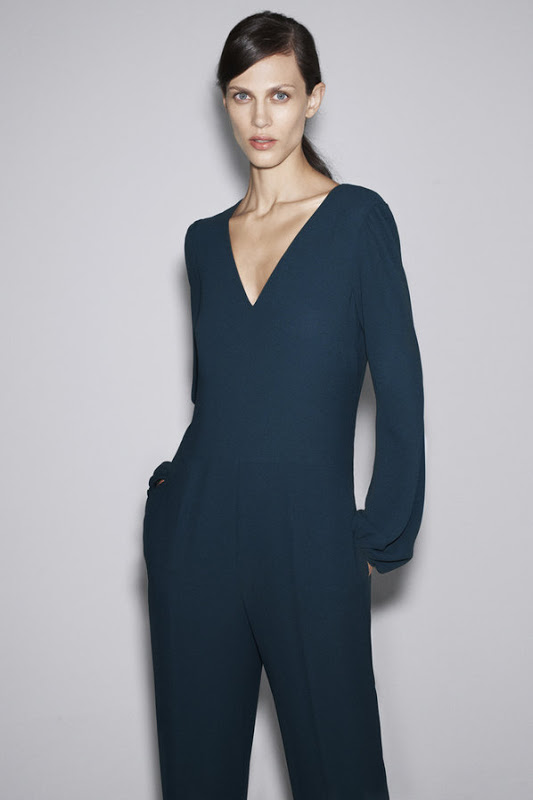
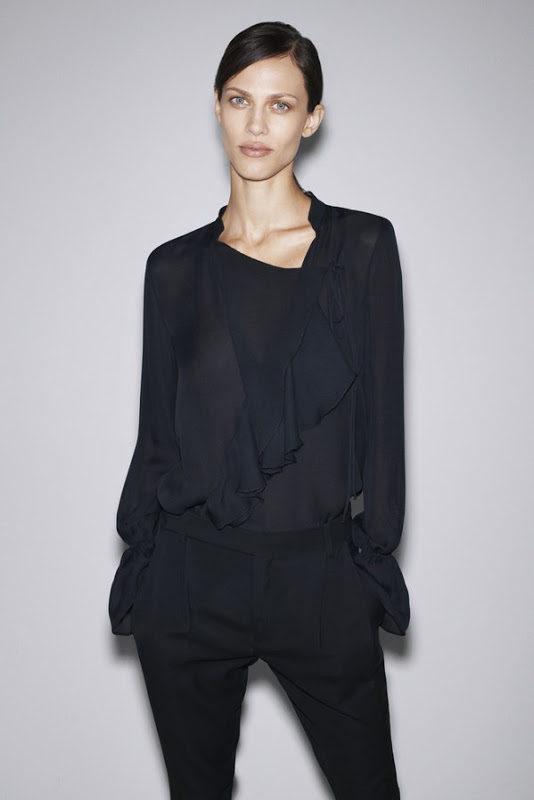
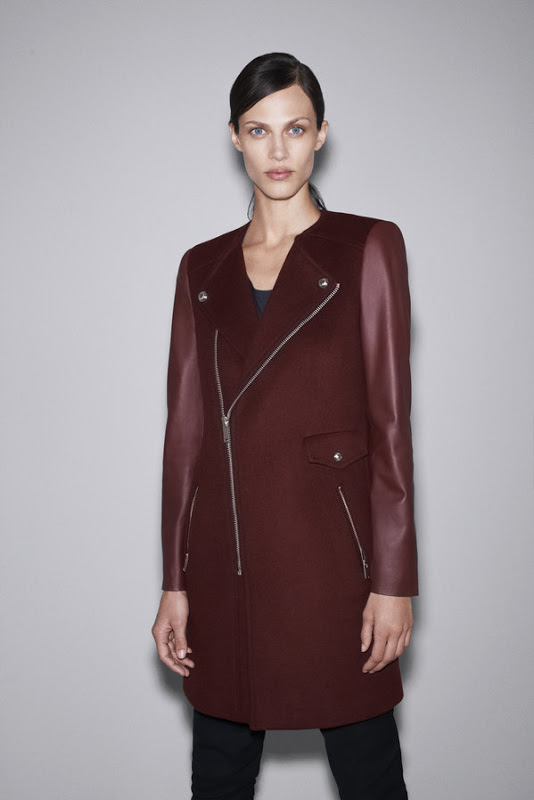
Contemporary write-ups described the October edit as minimalist almost to the point of austerity: modest surface decoration, geometric cuts, and a classic cold-weather color story that favored deep, controlled tones over loud print. Burgundy outerwear stood out as a covetable accent inside that restraint. Shirts with assertive collars, military jackets, trousers in fluid cloth, polished jumpsuits, and body-conscious dresses with a stricter, almost bondage-influenced line rounded the catalogue’s emotional range—from office-ready to evening-sharp.
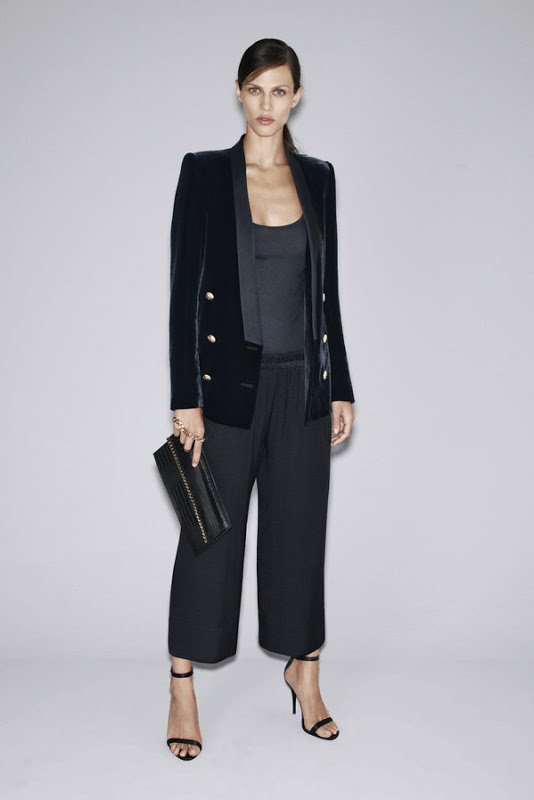
Minimalism here did not mean emptiness. It meant editing. A leather or faux-leather collar on a crisp shirt, a row of buttons on a velvet blazer, a studded waistband on trousers—these small hardware moments replaced logo shouting. The lookbook asked shoppers to notice cut and proportion first, then texture.
Textures of fall 2012 on the high street
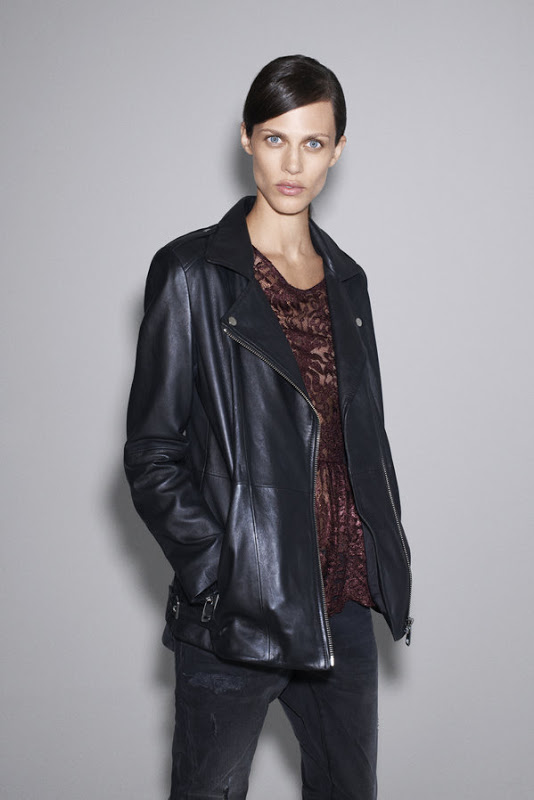
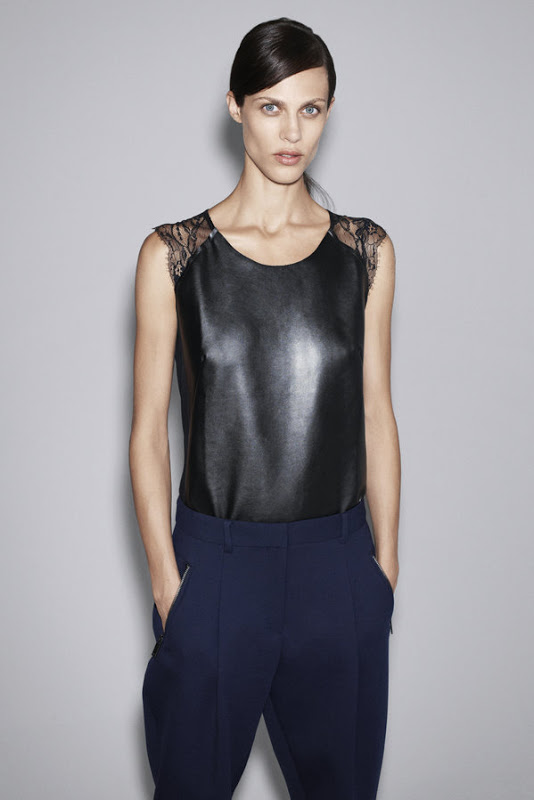
Autumn 2012 fashion media circled a cluster of materials that Zara translated quickly from runway chatter into accessible pieces: velvet, leather and faux leather, touches of faux fur, and denser wool blends for coats. Velvet blazers with metallic buttons appeared in fan roundups as favorite buys of the month. Wool-and-leather coat combinations—or the visual suggestion of them—gave outerwear a hybrid toughness that photographed well in long frames.
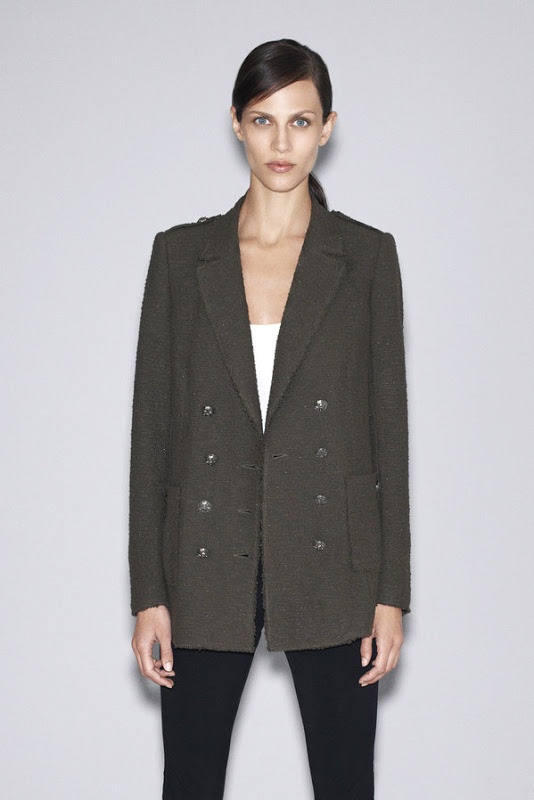
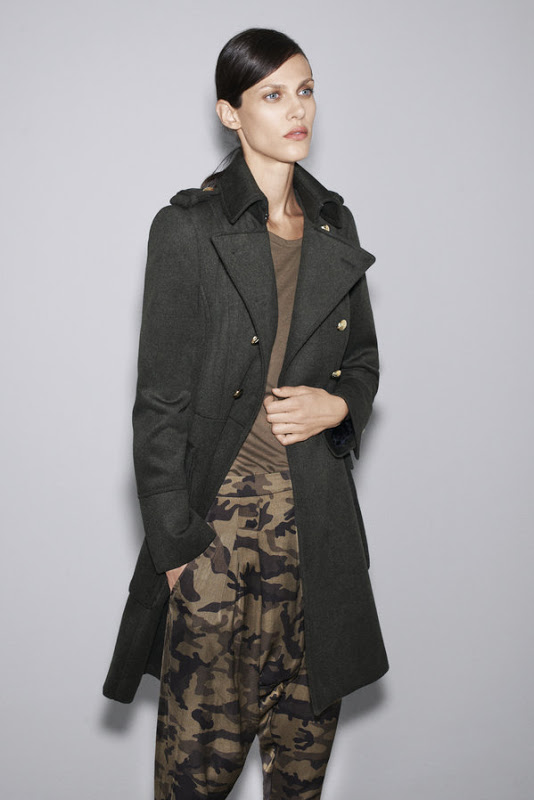
Military references showed up in jackets and coats with structured shoulders and utilitarian detailing, echoing broader Fall/Winter 2012–13 runway language without requiring parade-ground costume. Denim kept the book from floating entirely into formalwear; casual separates grounded the more severe dresses and jumpsuits. Monochrome outfits—black on black, gray stacks, tone-on-tone neutrals—made the silhouette experiments easier to read.
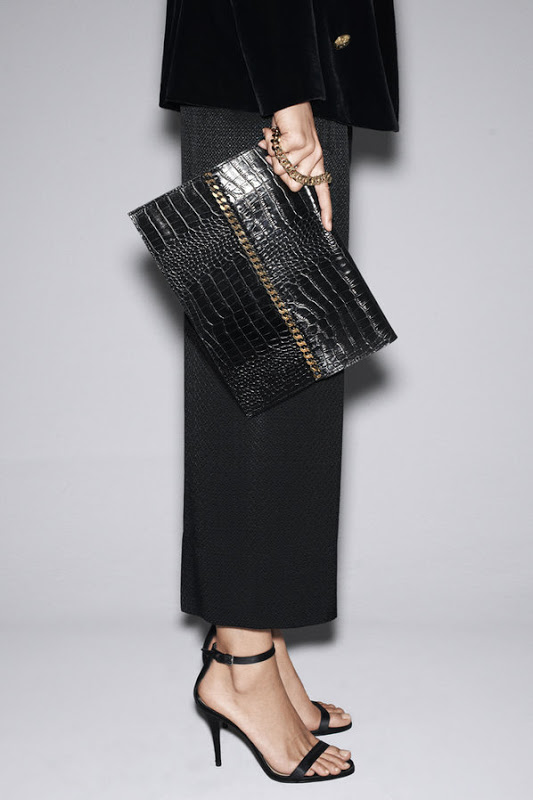
Accessories in the campaign logic of the period tended to finish rather than distract: boots that lengthened the leg line, belts that marked the waist on coats, bags kept simple so the clothes remained the subject. The October book’s power was coherence. You could imagine walking from a weekday meeting into an evening plan by swapping one layer, not rebuilding an identity.
Key silhouette stories in the book
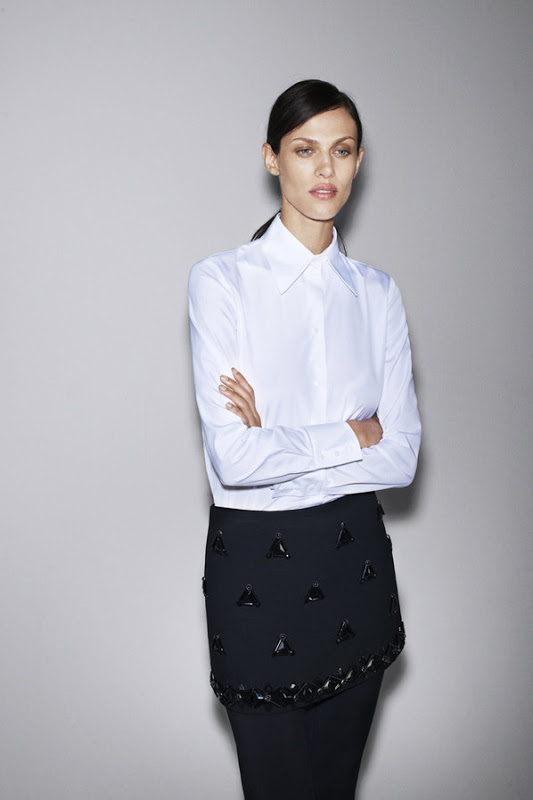
Outerwear is the emotional center of any October catalogue. Long coats in deep wine or dark neutrals set the vertical line; shorter military jackets sharpened the torso. Under them, shirts with oversized or emphatic collars created a graphic V at the neck—useful framing for Valade’s strong bone structure and for shoppers studying collar drama as a cheap way to refresh a suit.
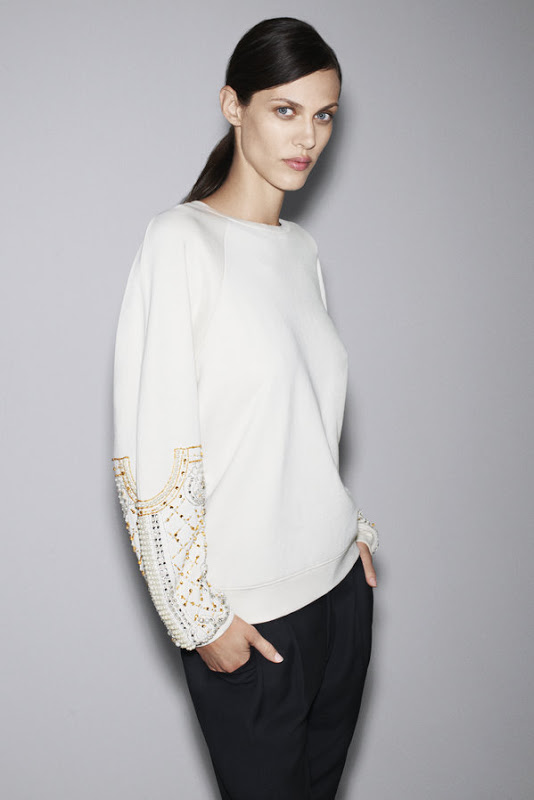
Separates did practical work. Fluid trousers softened the military edges. Denim introduced daytime ease. Jacquard or studded details on pants, called out in period blogging, offered a controlled dose of ornament when the upper half stayed plain. Tops ranged from crisp white shirts to more experimental cuts—asymmetric tees, peplum lace, embroidered sweatshirts—in wider seasonal coverage of what Zara was stocking that month, even when individual frames favored cleaner combinations.
Occasion dressing appeared through jumpsuits and fitted dresses. A polished jumpsuit gave one-piece confidence for evening without a gown’s formality. Stricter dress lines brought tension and glamour into a book otherwise defined by coats and trousers. That contrast—utilitarian daywear against sharper night pieces—is classic Zara catalogue pacing: show the wardrobe as a system, not a single hero SKU.
How to read a 2012 high-street lookbook now
Looking back from a distance, the October 2012 Zara book is useful as a document of how fast fashion absorbed runway keywords—military, velvet, leather, monochrome—and turned them into shoppable capsules within weeks. It is also a reminder that “minimalism” on a commercial site still sells desire: the desire for a longer coat, a better collar, a cleaner black outfit that photographs like intention.
Study the frames for proportion more than for trend bingo. Where does the coat hit the leg? How much volume sits in the sleeve? Is the waist marked or dropped? Those questions travel better than any single item name that has since left the rack. Valade’s casting reinforces the vertical bias of the season; clothes are styled to lengthen and streamline rather than to fluff or romanticize.
For archivists and style students, keep the date fixed. This is October 2012—mid-autumn merchandising inside the Fall/Winter cycle—not a timeless capsule invented later. Colors skew cool and serious; optimism comes from cut and confidence, not floral print. That seasonal honesty is part of the book’s charm.
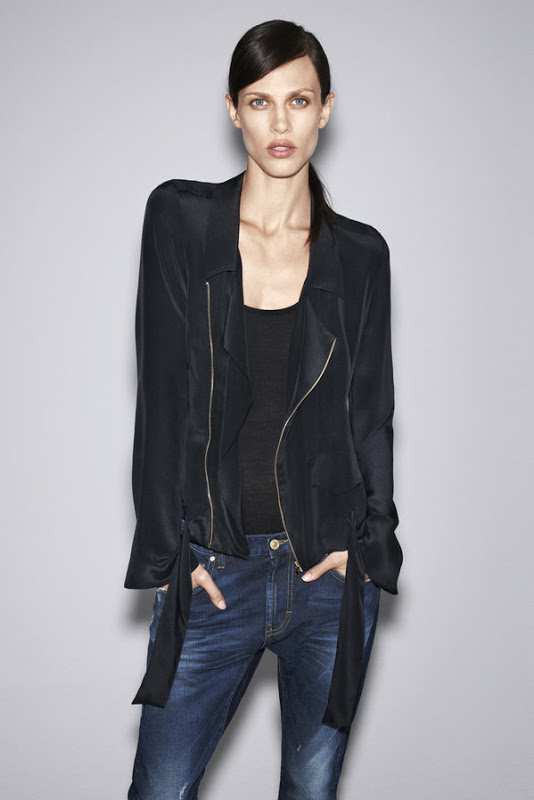
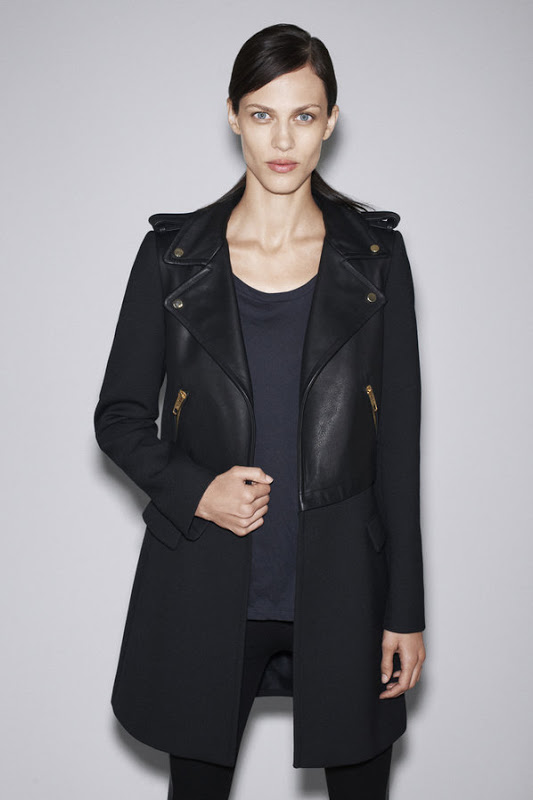
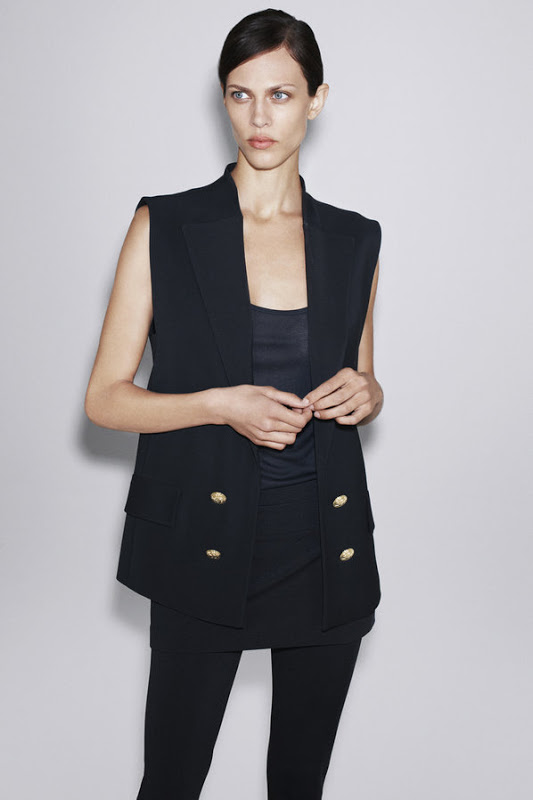
What the October edit offered shoppers
For someone dressing from a real closet in autumn 2012, the lookbook’s promise was coverage: a coat to survive colder mornings, a shirt sharp enough for work, denim for weekends, a jumpsuit or dress for plans after dark, and enough texture—velvet, leather, wool—to feel current without chasing every runway novelty. Military tailoring gave edge; burgundy gave warmth inside a dark palette; monochrome separates made mixing simple.
That is the practical afterimage of the campaign. The photographs sell atmosphere; the assortment sold a month of decisions already half-made. Scroll the images for coat length, collar scale, and how black and wine sit against skin and light. Then notice how little the set relies on clutter. In October 2012, Zara’s answer to autumn was discipline with a pulse—and Aymeline Valade carried that pulse in a straight line from first frame to last.

Comments
Continue reading
Mango Winter 2012 Collection Lookbook: Coats, Knits, and Urban Cold-Weather Style
A historical look at Mango’s Winter 2012 lookbook—wool coats, leather, lace, and layered city polish sold for short days and heated rooms.
Funny Animal Signs That Warn People (While Animals Ignore Them)
From a seagull on a no-birds disc to classic zoo and park ironies—why animal warning signs get funny, and what the rules are still for.
How to Find Local Amenities on Vacation: Mechanics, Haircuts & More
Locate trustworthy local services and everyday spots while traveling or settling in—using publications, reviews, map apps, neighbor tips, and low-pressure exploration.