
Yumiko Matsui’s Adorable Miniature Paper Tokyo
Paper artist Yumiko Matsui folds coloured sheets into detailed Asakusa streetscapes—miniature Tokyo rebuilt shopfront by shopfront.
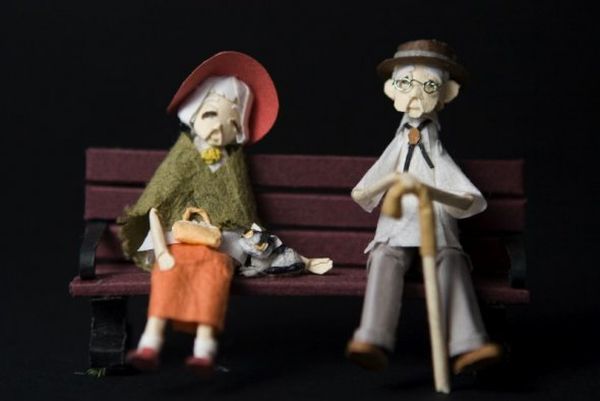
Yumiko Matsui folds colour into architecture. With paper and glue—and a patience that borders on cartography—she rebuilds fragments of city life at a scale small enough to sit on a table yet detailed enough to feel walkable. The scenes gathered here turn toward Tokyo’s Asakusa district: shopfronts, streets, and the everyday clutter of signs, vehicles, and human traffic rendered as a miniature paper city. Look quickly and you might mistake a photograph of the work for a tilted postcard of the real neighbourhood. Look longer and the craft announces itself: edges, layers, tiny façades cut and assembled by hand.
Matsui’s practice sits in a lineage of paper craft that is both humble and exacting. Paper is cheap, available, and unforgiving; it shows every hesitation in a fold. That material honesty is part of the appeal. These are not glossy resin models. They are coloured planes persuaded into streets. The Asakusa pieces aim less at futuristic skyline drama than at atmosphere—the older Tokyo texture of low buildings, dense commerce, and neighbourhood rhythm that memory tends to hold tighter than official maps do.
From painting to paper cities
Accounts of Matsui’s path often begin with painting, then a pivot. A visit to relatives who were building paper dollhouses shifted her attention from flat image to constructed space. Since then she has worked as a largely self-taught paper artist, reconstructing places tied to personal geography: Osaka, where she has roots; Tokyo as remembered from youth; later projects elsewhere, including American sites. The Asakusa Tokyo work belongs to that early fascination with hometowns and remembered districts—cities rebuilt so the maker can stand near them again at arm’s length.
Research precedes scissors. Before cutting begins, she gathers visual references and studies how a place looked in the period she wants to hold. Large city replicas can take months; reports around the Tokyo project often mention on the order of half a year of work. That duration shows in the density of signage, the variety of rooflines, and the small traffic of paper figures and vehicles that keep a street from feeling empty. Miniature cities die when they become pure pattern. Matsui’s stronger scenes stay busy in a human way.
The shift from painting also changes what “finish” means. A painted street can invent light with a brushstroke. A paper street must earn light through actual planes, shadows between layers, and the photographer’s angle. Matsui’s work therefore lives in two crafts at once: the maker’s construction and the camera’s translation. Online, we usually meet the second first. Remembering the first keeps admiration honest.
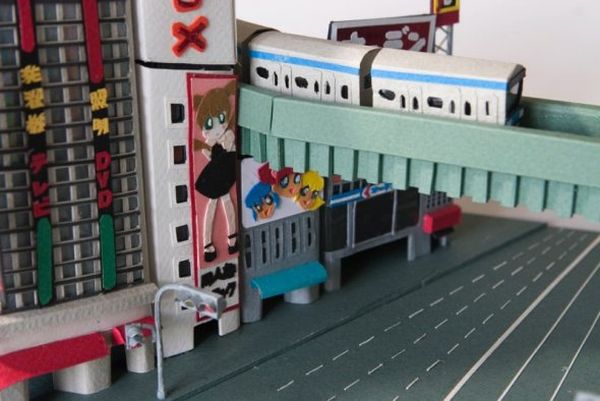
Asakusa at table scale
Asakusa carries a particular Tokyo charge: temple tourism beside everyday shopping, traditional motifs beside neon practicality, a district that performs “old Tokyo” for visitors while still functioning as a neighbourhood. Matsui’s paper version leans into that layered identity. Shop signs become typographic toys. Awnings and windows repeat like a chorus. The colour palette often feels warmly nostalgic—not faded exactly, but tuned toward memory rather than smartphone sharpness.
Part of the delight is optical. Photographers shoot these dioramas with shallow depth of field or careful angles so that paper reads as distant architecture. Your brain accepts the lie for a second, then catches a cut edge or an impossible thinness and recalibrates. That flicker between belief and craft is the entertainment. It is also the argument: a city can be loved through making, not only through walking.
Notice how vertical and horizontal elements trade dominance. Some frames emphasise stacked façades; others open into a wider street corridor. Vehicles and pedestrians, when present, set scale the way a coin does beside a model train. Without them, buildings float. With them, you sense sidewalk width and the squeeze of commerce. The cutest details—tiny lanterns, miniature cars, pocket-sized crowds—are not merely charm. They are measuring tools.
Asakusa’s real streets are loud with smell and sound: food stalls, temple crowds, train adjacency. Paper cannot reproduce those senses, so it compensates with visual density. The more signs and shopfront variations Matsui includes, the closer the eye comes to the feeling of “too much to see at once,” which is itself a Tokyo sensation. Miniaturisation does not have to mean simplification. Here it often means compression.
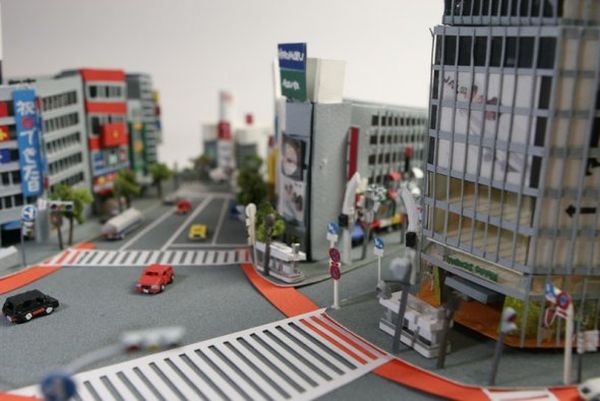
What paper can hold that photographs alone cannot
A documentary photo freezes a street as it was on one afternoon. A paper reconstruction freezes a street as it is remembered and researched—selectively complete. Matsui can emphasise the shop that mattered, the festival booth energy, the riverside glow, while letting irrelevant clutter drop away. That editorial power is closer to drawing than to surveying. Yet the work still depends on architectural legibility: windows that align, roofs that shed imaginary rain, corners that turn the way real corners turn.
For designers and makers, the lesson is modular. Complex worlds arrive from repeated simple acts—cut, fold, glue, adjust—until density appears. For city lovers, the lesson is affectionate attention. Naming a district is easy; rebuilding its signage letter by letter is a form of study. Nostalgia here is not soft-focus sentiment. It is labour.
There is also a quiet poetry to paper as medium, even without turning the work into a manifesto. The material is light. A discarded draft costs little compared with many model-making media. Accessibility matters: you do not need a foundry to begin. You need time, references, and the willingness to fail a façade and cut another. Matsui’s finished cities look inevitable; process is iterative and slow, closer to embroidery than to a weekend craft kit.
Compared with digital 3D cities, paper keeps a handmade tremor. Lines are not perfectly extruded. Colour sits on fibre. That slight irregularity reads as warmth. Viewers often call the work “adorable,” and the word fits—but adorable should not erase rigorous. The cuteness is a doorway; the architecture is the room.
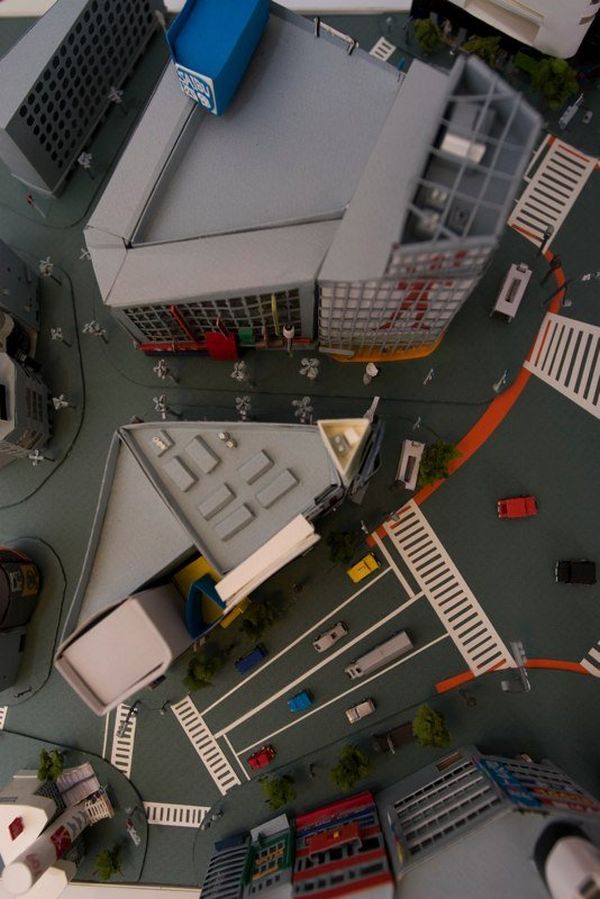
How to look at these miniatures
First pass: enjoy the illusion. Let the street read as a street. Second pass: hunt the joins. Where do colour blocks meet? Which elements are freestanding, which are bas-relief against a back plane? Third pass: think about what is missing. Are there power lines? Laundry? Seasonal decorations? Absence can be as intentional as detail.
If you make things yourself, try a single paper shopfront before you dream of a whole district. Control of scale, perspective, and colour matching is harder than it looks in finished photographs. If you only look, give the images room—full width on a screen when you can. Thumbnail scrolling flattens the very depth the work is built to create. A vertical frame, like the taller view in this set, rewards slower vertical reading: ground to signage to roof edge, the way you might scan a real alley.
Tokyo’s Asakusa will keep changing in the real world. That is what cities do. A paper Asakusa stays on its own clock: a handmade pause where daily life is folded, coloured, and held still long enough for you to notice the shop signs you would have walked past.

Comments
Continue reading

Beverly Hills Villa by William Stephenson
A renovated 1956 William Stephenson villa in Beverly Hills—four bedrooms, five baths, gallery hall, garden pool—documented from its early-2010s listing era.
Tree House Designs: Elevated Cabins, Pods, and Canopy Rooms
From classic platform forts to architect pods in the canopy—how tree-house designs balance wonder, structure, and care for the living trees that hold them.
Impressive Architectures of Spain: Sagrada Família and Guggenheim Bilbao
A travel and design look at Gaudí’s Sagrada Família in Barcelona and Gehry’s Guggenheim in Bilbao—form, light, city fabric, and how to see both beyond a photo stop.