
Vintage Suitcases for Decoration
Stack hard-shell luggage into end tables, hide clutter in steamer trunks, and style leather cases room by room—practical décor ideas that keep scuffs and travel character intact.
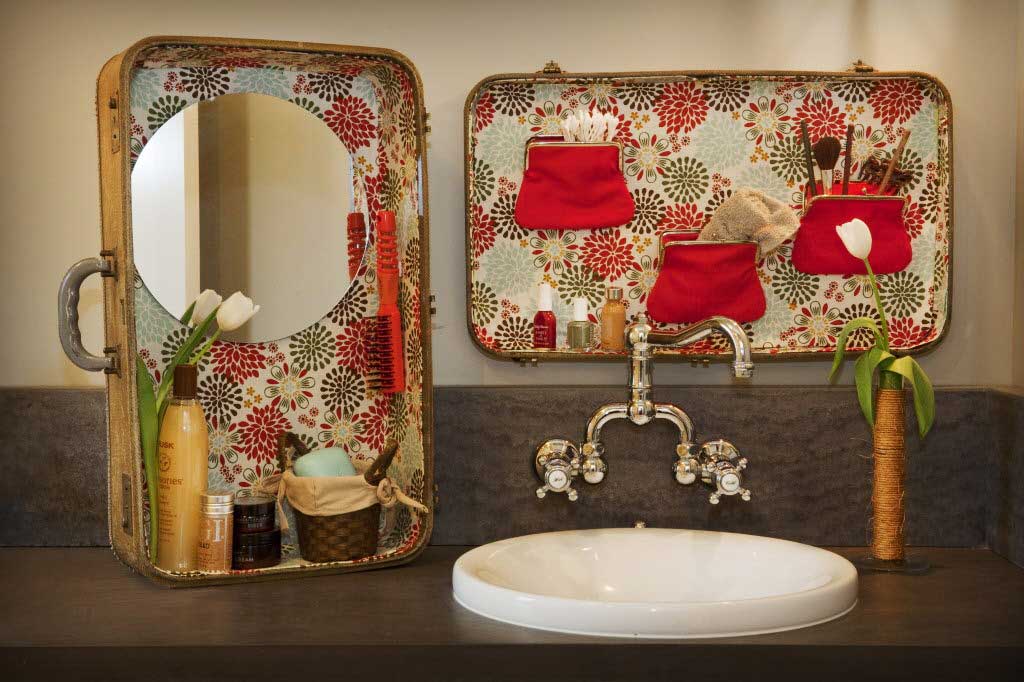
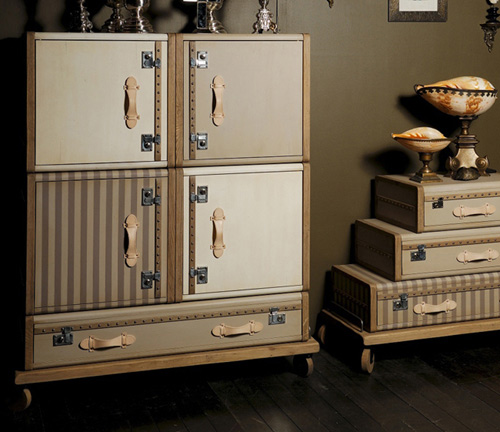
Vintage suitcases earn their keep long after the last steamer ticket. Hard cases with leather corners, brass latches, and faded travel stickers bring texture into a room that flat furniture rarely manages. Used as décor rather than luggage, they stack into side tables, hide clutter, and hint at journeys without turning a living room into a theme park.
The best suitcase décor looks collected, not staged. Mix heights and materials, leave space around the stack, and let scuffs stay visible. A single well-placed case often does more than a wall of identical props.
Why old luggage works as furniture
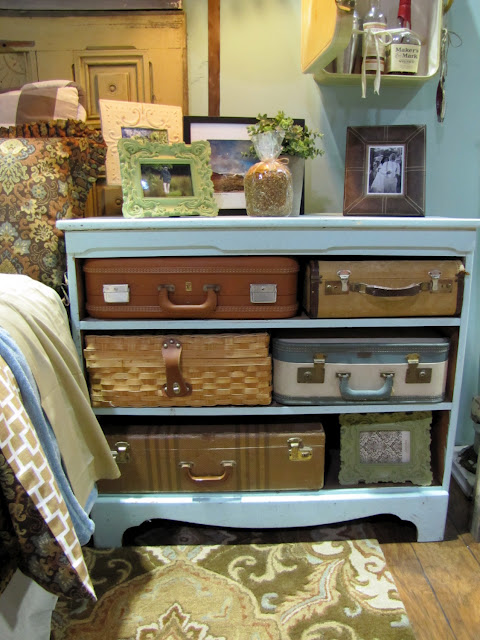
Suitcases already solve design problems. They are boxes with handles, so they store blankets, seasonal clothes, board games, or camera gear while doubling as a surface for a lamp or a tray. Their footprints are compact, which suits apartments and narrow hallways. Unlike open baskets, a closed case keeps mess out of sight.
Visually, vintage luggage sits between industrial and domestic. Leather and canvas warm up pale walls; metal trim echoes hardware on lamps and frames. Stickers, destination tags, and worn paint add narrative without needing a gallery wall of prints. That story quality is why suitcases feel different from generic storage cubes—even when both hide the same sweaters.
Choosing pieces worth keeping
Hunt for solid structure first. Cases that collapse at the corners will never make a stable stack. Prefer wood-framed hard shells or sturdy cardboard-and-canvas trunks over soft-sided bags that sag. Latches should close; straps should hold. Smell the interior—musty odor can often be aired out, but active mold is a hard pass for bedrooms.
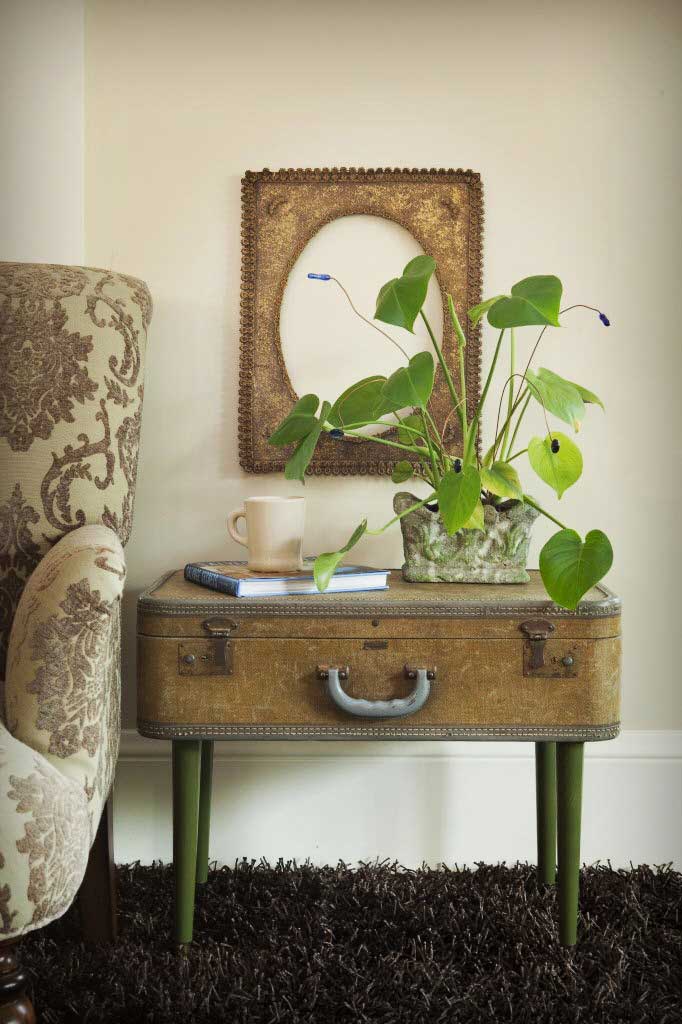
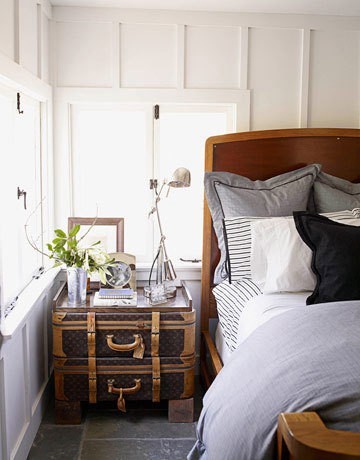
Scale matters. A steamer trunk can anchor a seating area as a coffee table; a small vanity case suits a nightstand vignette. Medium suitcase stacks of two or three work as end tables beside sofas. Very tall towers tip easily, so stop at a height you can steady with a wall or heavier base piece.
Color and finish set the mood. Cream and tan leather read soft and classic. Dark brown and black feel clubby. Painted metal in teal, red, or olive pushes toward eclectic. Mixing one bold case into a neutral stack keeps the look from turning monochrome.
Stacking, nesting, and placement
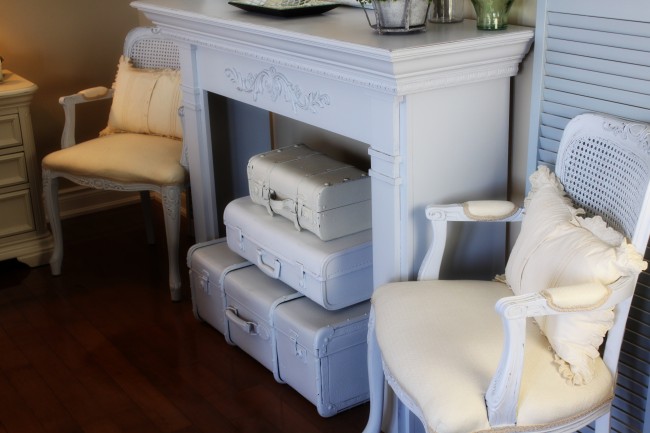
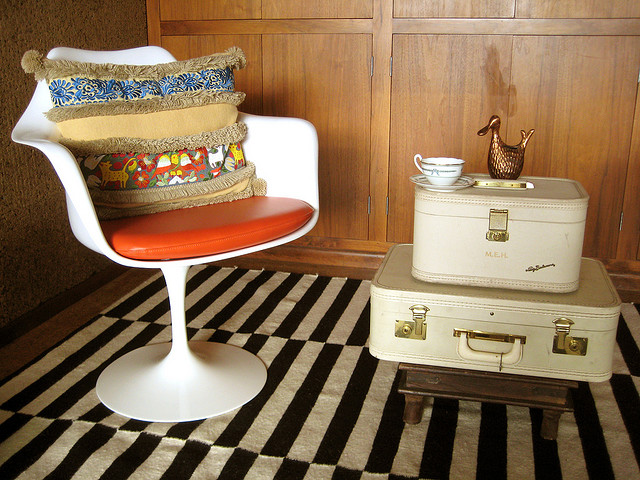
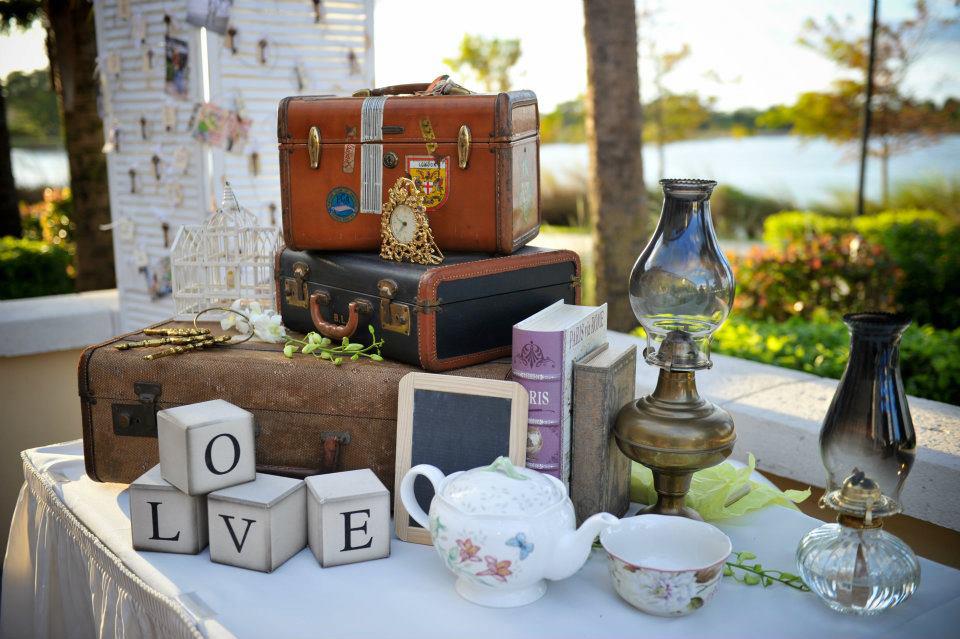
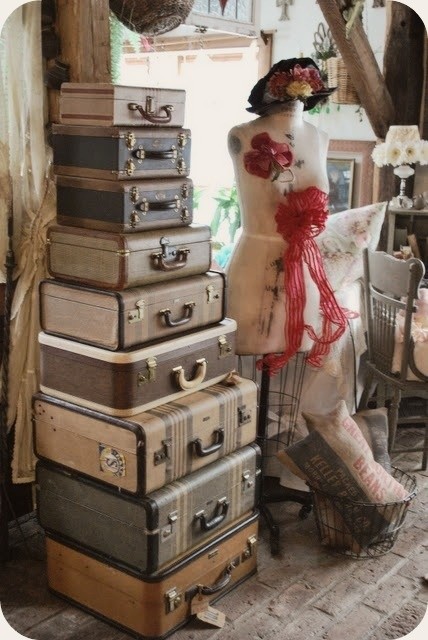
Classic styling stacks largest case on the bottom and smallest on top, like a pyramid. Leave a slight overhang so each lid edge reads clearly. Align handles on the same face for order, or rotate one case for a looser, collected look. Put felt pads between cases if you want to protect finishes and reduce sliding.
Where you place the stack changes how it reads. Beside a sofa it becomes an end table—add a coaster and a small lamp with a stable base. In an entry, a single trunk holds scarves and doubles as a perch for keys. Under a window, low luggage can support plants if you protect the top from water. At the foot of a bed, a long trunk stores spare linens and softens the bed frame’s edge.
Avoid crowding. Suitcases already have visual weight; they need breathing room from busy wallpaper and heavy curtains. Pair them with simple textiles—linen, wool, cotton—so leather and brass stay the focal texture.
Practical uses beyond looking good
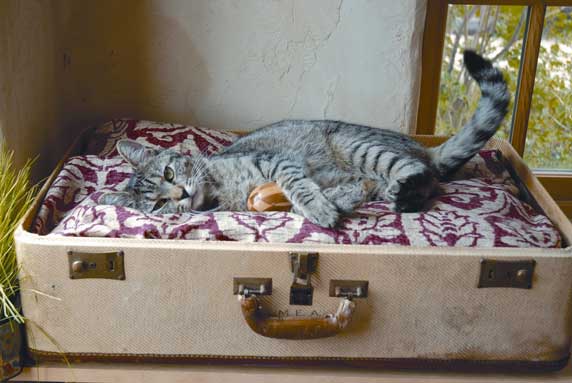
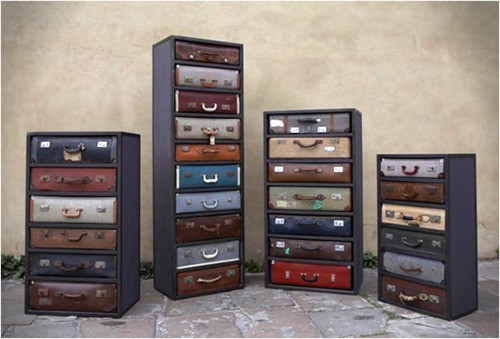
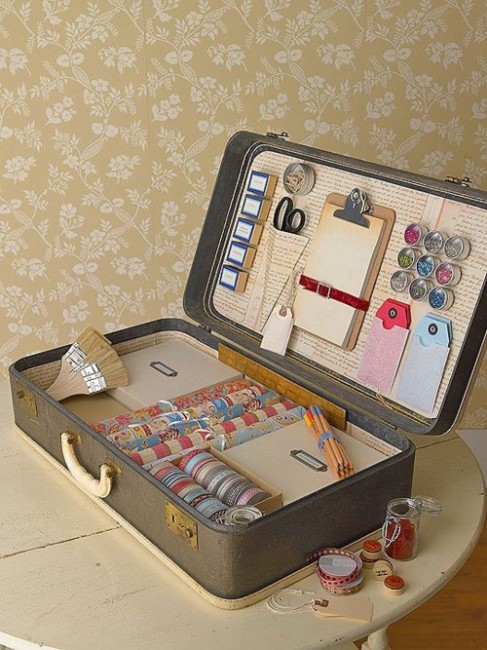
Open a case and it becomes a drawer you can move. Store off-season bedding, wrapping paper, kids’ art supplies, or projector cables. Label the underside of lids lightly in pencil if you stack multiple identical browns. For guest rooms, a suitcase with a folded throw and spare toiletries feels more personal than a plastic bin.
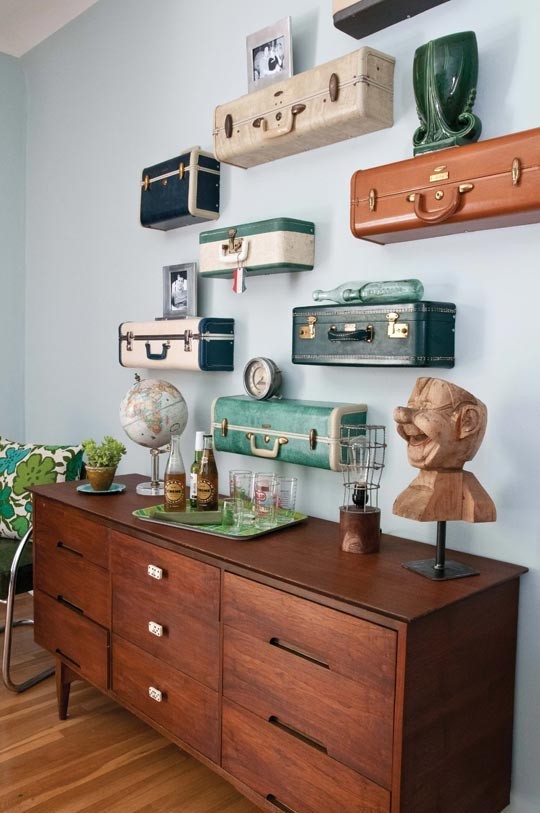
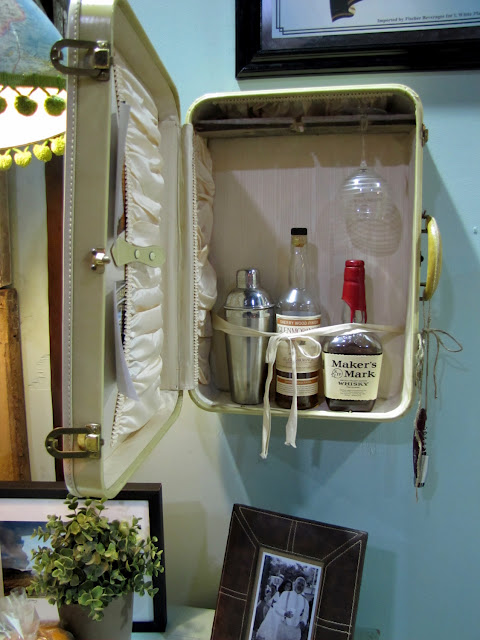
Smaller cases work as wall-mounted shelves when hung carefully—secure into studs, and only hang lighter objects. Hatboxes and train cases can hold jewelry or remotes on a dresser. A flat-top trunk makes a coffee table if you add a tray and avoid unbalanced stacks of books that encourage leaning.
In children’s rooms, lockable latches should be disabled or removed for safety. Soft interiors beat sharp metal edges near play areas. Keep heavy stacks away from climbing toddlers.
Conditioning and light restoration
Clean exteriors with a barely damp cloth and mild soap; dry promptly. Leather benefits from a quality conditioner applied sparingly—too much leaves a greasy film that attracts dust. Metal hardware can be polished gently; leave intentional patina if that is part of the charm. Interior paper linings tear easily; reinforce loose corners with archival tape rather than packing tape that yellows.
If a case will hold fabric, air it outdoors on a dry day and refresh with baking soda in a breathable pouch for a day or two, then vacuum. Skip heavy perfume sprays that cling to leather. For display-only pieces with fragile linings, leave them empty and closed.
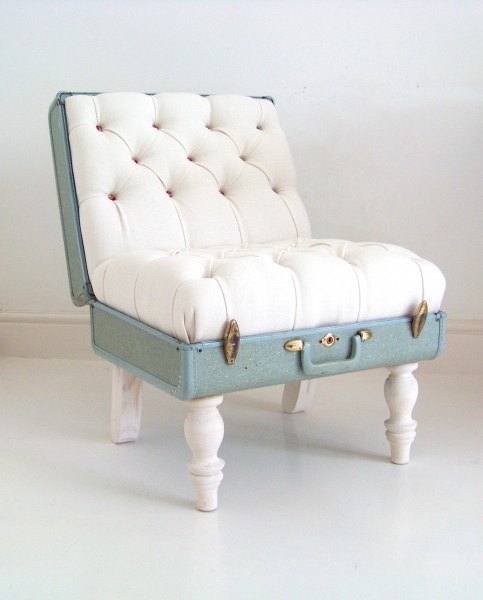
Structural repairs—new corner caps, replaced straps—are worth it when the silhouette is strong. A broken handle can be replaced with leather or rope if you treat the piece as décor rather than airport luggage.
Styling ideas room by room
Living rooms favor stacked end tables and coffee-trunk hybrids. Keep drink surfaces protected with trays. Bedrooms lean romantic: cream cases, a lace runner, a single framed photo on top. Studies and creative studios can use darker luggage as mobile filing for portfolios and sketchbooks. Bathrooms are riskier because of humidity—use suitcases in powder rooms only if they stay dry and ventilated.
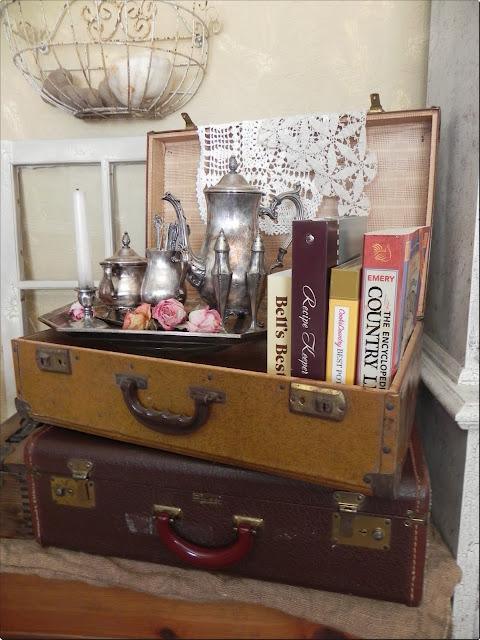
Retail and studio spaces have long used luggage walls as displays for products. At home, a similar idea works for displaying scarves, maps, or small ceramics on open lids—just do not overload hinges. Wedding and party décor often borrows suitcase stacks as card boxes or photo props; afterward, the same pieces return to everyday rooms.
Common mistakes to avoid
Do not treat every thrift-store bag as a table. Soft duffels and broken zippers look temporary. Do not pile six matching fake-vintage props from a craft store—the uniformity reads as set dressing. Avoid blocking walkways with wide steamer trunks in small apartments. Skip candles directly on lacquered lids; heat and wax damage finishes.
Also resist filling every empty corner with luggage. One strong composition—a stack, a trunk, a vanity case—beats a house that looks like a lost-and-found.
A short checklist before you buy
- Does the case sit flat without wobbling?
- Will the stack height stay stable where you plan to use it?
- Is the interior clean enough for what you want to store?
- Do finishes match—or intentionally contrast—nearby wood and metal?
- Can you reach the contents without dismantling a tower every week?
If those answers work, the suitcase is ready to stop traveling and start living in the room. Start with one honest piece, use it hard as storage or as a surface, and add companions only when the first stack already feels settled in place.

Comments
Continue reading
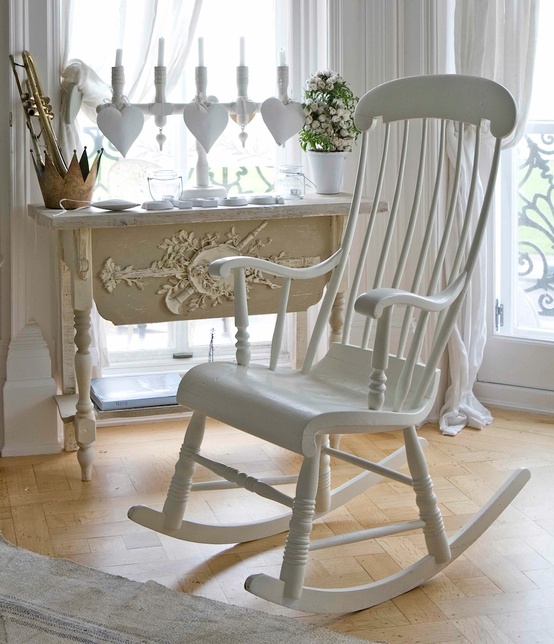
Home Dream Home: Romantic Details for Soft, Vintage Rooms
Ethereal light, French-inspired silhouettes, and weathered whites—how to add romance with sheers, candles, and inherited-feeling pieces.

Bohemian Rhapsody, Part 2: How to Layer the Look Without a Theme Park
A curatorial companion to Part 1—pavilion logic, colour spines, texture, light, and a stop-test for building bohemian rooms you can actually live in.
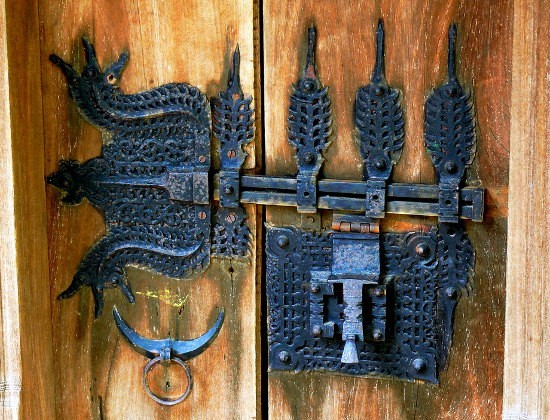
Bohemian Rhapsody, Part 1: Caravans, Colour, and Collected Atmosphere
Indian, tribal, Romany, and hippie cues in one mood—painted wagons, ornate iron, layered fashion, and interiors that feel gathered rather than staged.