
Impressive Lighthouses from Around the World
A photographic tour of lighthouses from Australia to the Great Lakes and Europe—Cape Nelson, Portland Head, Peggy’s Cove, frozen Michigan piers, and more shoreline beacons.
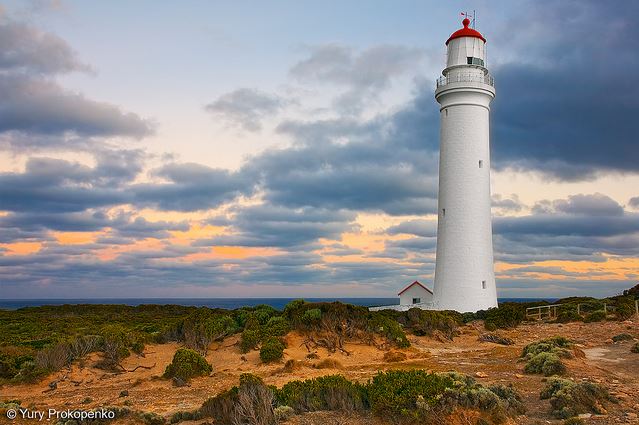
“Lighthouses don’t go running all over an island looking for boats to save; they just stand there shining.” ― Anne Lamott
Lighthouses are architecture with a job description: stay put, stay bright, mark the edge where land negotiates with water. Photographers love them for the same reasons sailors once needed them—clear silhouette, drama of weather, and a human-made vertical against horizontal sea and sky. This gallery collects impressive lighthouse photographs from Australia, North America, and Europe: frozen piers on the Great Lakes, sunlit towers on Victorian coasts, and solitary beacons that feel like punctuation marks on the shoreline.
The selection is visual rather than encyclopedic. Each frame is a place you could visit, a tower with a name and a coastline with its own light. Read it as a world tour in still images—and as a reminder that navigation history still photographs beautifully even when GPS has changed how ships find harbor. The romance survives because the form is simple and the weather never is.
Australian shores: Cape Nelson, Griffiths Island, Hornby
Cape Nelson, near Portland, Victoria, rises from rugged southern coast where the Southern Ocean can turn the air hard and bright. The tower’s white form against rock and scrub is classic lighthouse geometry: a vertical promise that landfall has rules. In photographs, Cape Nelson often reads as endurance—weathered, exposed, uninterested in drama yet surrounded by it. Wide views emphasize exposure; tighter crops emphasize the tower’s clean cylinder against broken stone.
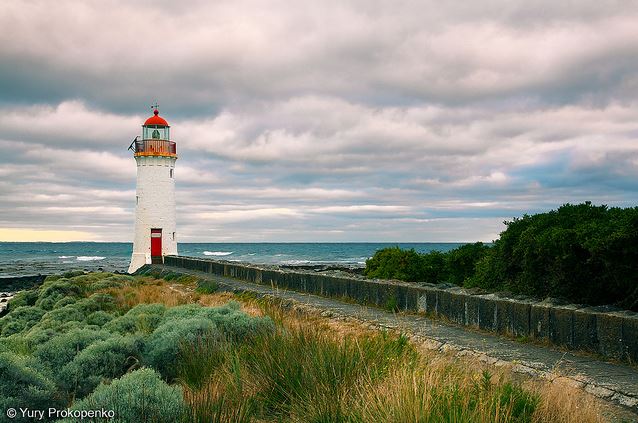
Griffiths Island, Port Fairy, offers another Victorian coastal mood: a lighthouse set in a landscape that feels almost pastoral until you remember the sea is the point. Distance and approach matter in these frames—paths, grass, and the slow reveal of the tower as you walk toward it. Photographers who include the approach path invite viewers to feel like visitors rather than aerial observers.
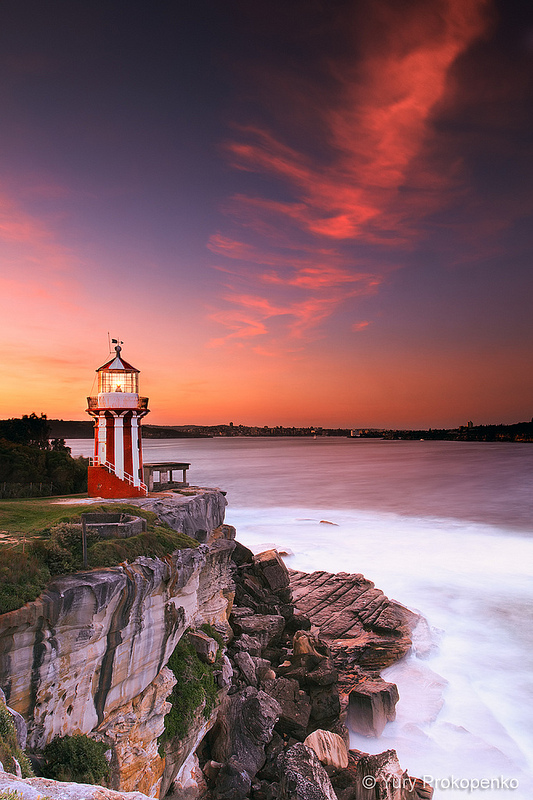
Hornby Lighthouse at sunset turns the same typology into color theater. Warm sky, cool water, and a tower catching the last practical light of the day. Sunset lighthouse photographs succeed when the structure remains readable—not swallowed by HDR fireworks—so the beacon still feels like a tool, not only a postcard prop. Edge light on white paint can be enough drama without turning the sky into neon.
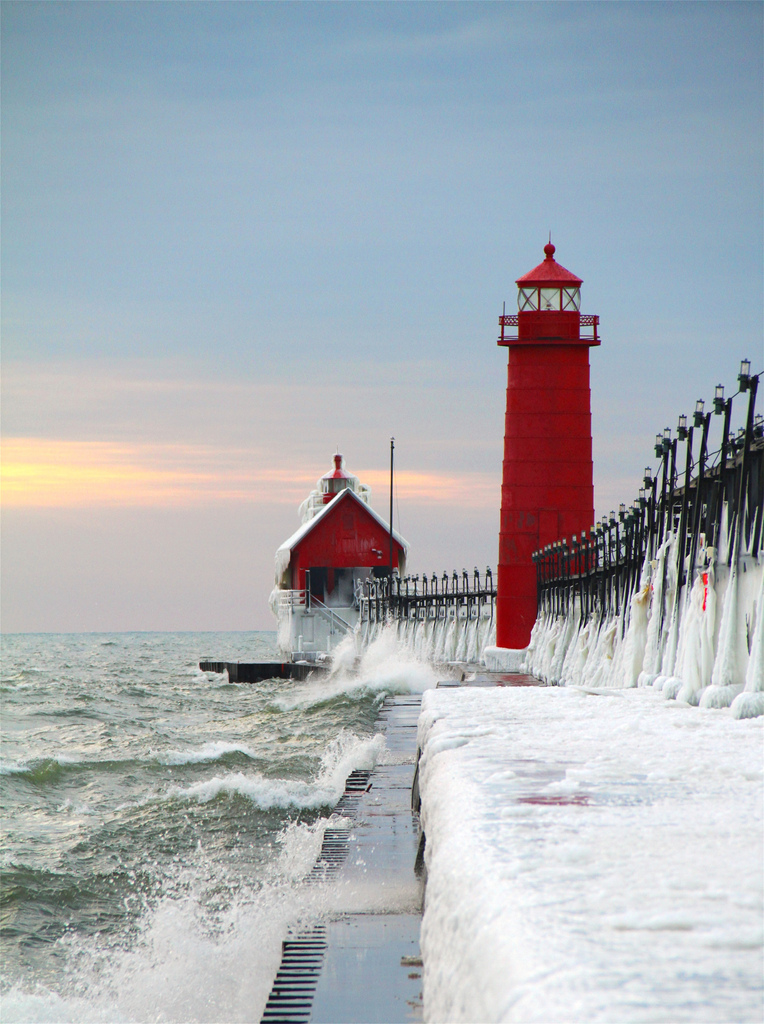
Great Lakes ice: Grand Haven and St. Joseph
Winter on Michigan’s lakeshores transforms familiar piers into sculpture. Grand Haven’s frozen lighthouse gathers ice in crusts and spikes until the tower looks armored. Photographers chase these seasons because the ordinary red-and-white navigation aid becomes something almost alien—still a lighthouse, but wearing weather as costume. The ice records wind direction and spray history; every storm leaves a different texture.
St. Joseph’s North Pier Light under ice tells a related story: the same duty, a different freeze pattern, a different vantage. These Great Lakes images remind viewers that lighthouses are not only romantic ruins of sail-era history. They stand in industrial and recreational harbors where ice, wind, and shipping still negotiate every winter. Vertical compositions emphasize height and precarious beauty; wider frames show the pier’s reach into open water.
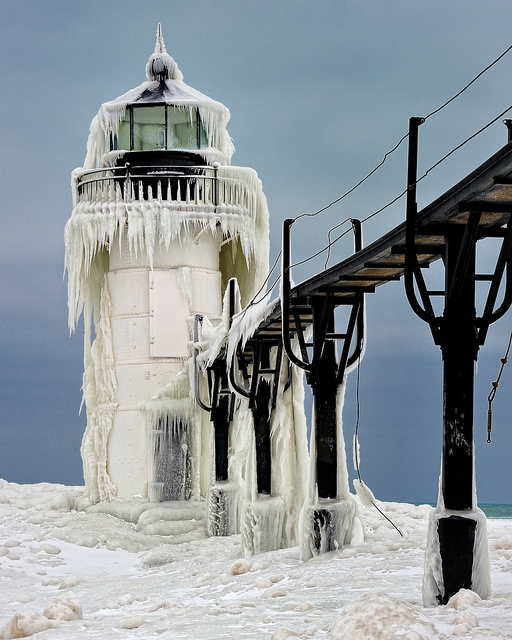
Ice photography demands patience and safety. Spray freezes on lenses; footing fails; wind cuts. The reward is texture you cannot stage in a studio—nature collaborating with architecture until the photograph becomes half documentary, half spectacle. For travelers, these images are also seasonal advice: the postcard you want may only exist for a few weeks a year.
Europe: Cap Camarat, Lindau, Seaham, Talacre
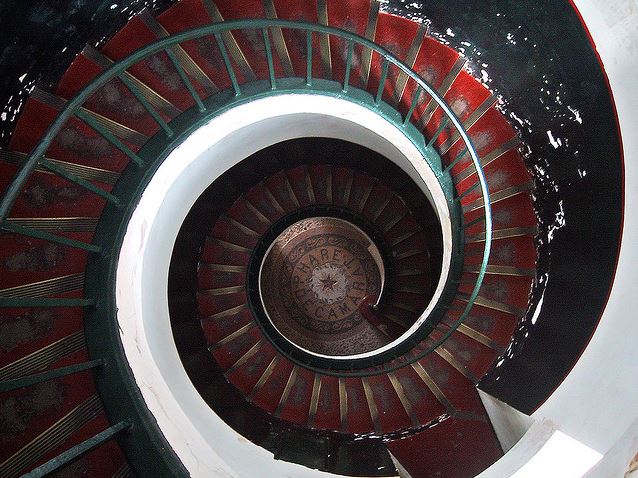
Cap Camarat on the French Mediterranean coast places a lighthouse in a sunnier grammar of rock and turquoise. Southern light hardens edges; shadows shorten; the tower becomes a clean graphic against sea and cliff. It is the opposite of Great Lakes winter—and proof that the lighthouse form adapts to climate while keeping its silhouette recognizable. Heat haze and bright water ask for careful exposure so whites do not blow out into blank paper.
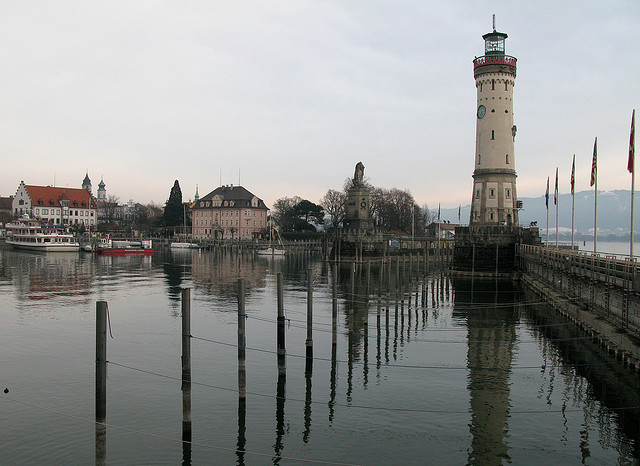
Lindau Lighthouse on Lake Constance in Germany sits in a different waterscape: a lake that behaves like a sea for local shipping, with a harbor town that photographs as both destination and working edge. The tower’s presence in an urban-water setting shows how beacons can be civic landmarks as much as remote sentinels. Include the town and you get culture; isolate the light and you get symbol.
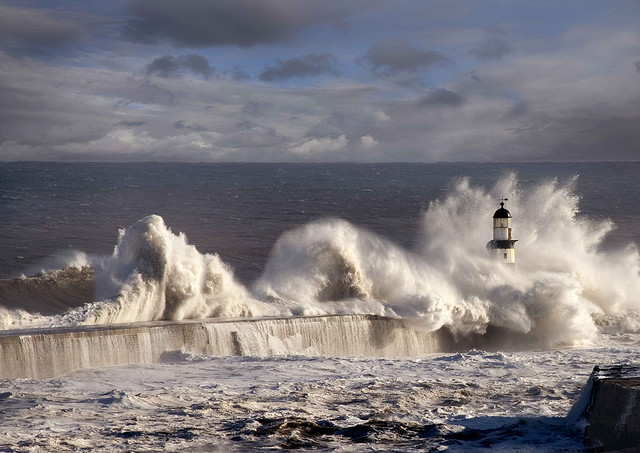
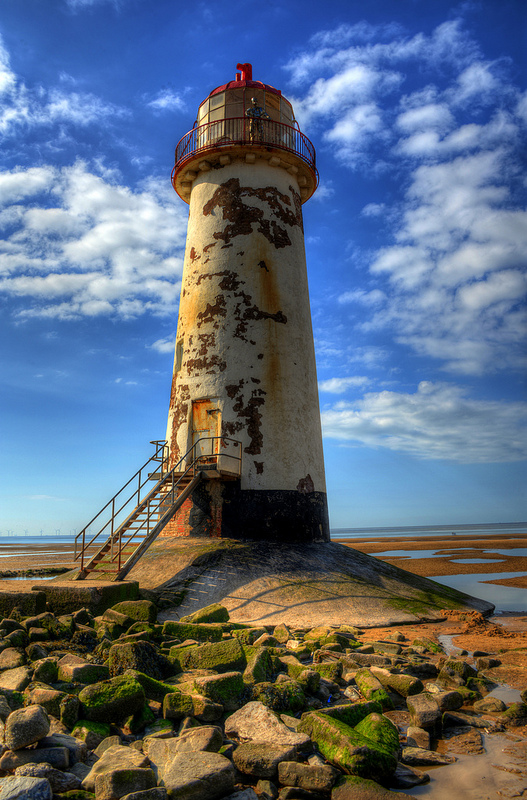
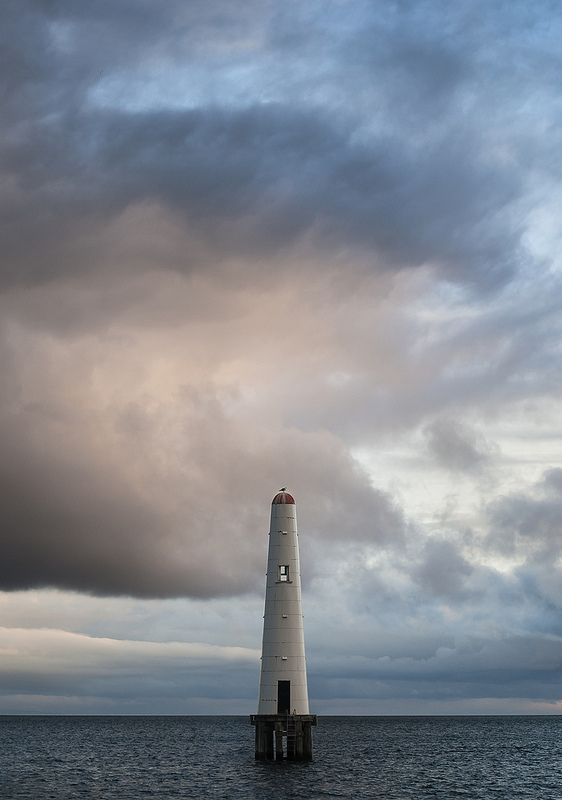
Seaham on England’s northeast coast brings industrial shoreline energy—piers, weather, and a lighthouse that feels tied to working harbor life. Talacre Lighthouse at Point of Ayr in North Wales is famous for a different reason: a remote, often lonely silhouette on tidal flats, sometimes paired with uncanny atmosphere in photographs. Both British examples show how mood changes with latitude and coast type while the subject remains the same: a tower that means “here.” Gray skies can be a gift; they turn white towers into graphic shapes without harsh contrast.
North American landmarks: Portland Head, West Point, Peggy’s Cove
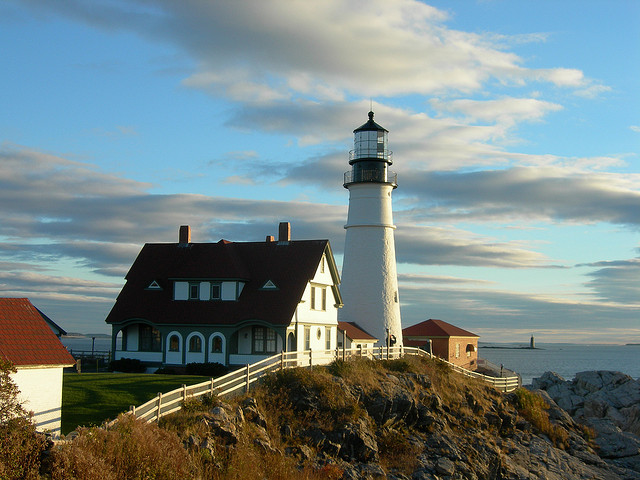
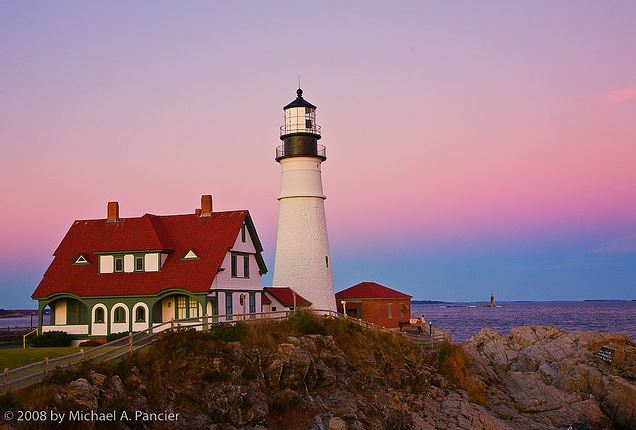
Maine’s Portland Head Light—shown here both with Ram Island Ledge in view and in closer classic angles—is among the most photographed lighthouses in the United States for good reason. Rocky ledge, white tower, keeper’s house, and Atlantic weather combine into an almost ready-made composition. Photographers still have to choose: include the house or isolate the tower, shoot storm or calm, wait for sidelight or accept flat gray. Popularity does not remove craft; it raises the bar for a frame that feels personally seen.
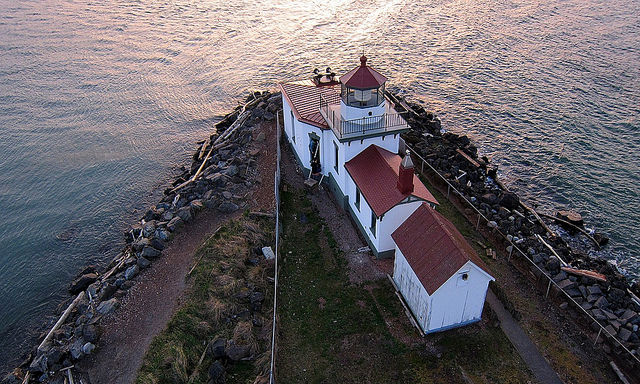
West Point Lighthouse in Seattle’s Discovery Park sits on a gentler, parkland edge of Puget Sound. The setting is recreational as much as maritime, which changes the photograph’s social feel: families, paths, and a city nearby, with the light still marking a navigational truth. Dawn and dusk soften the park into quiet; midday reveals how close urban life sits to the water’s working edge.
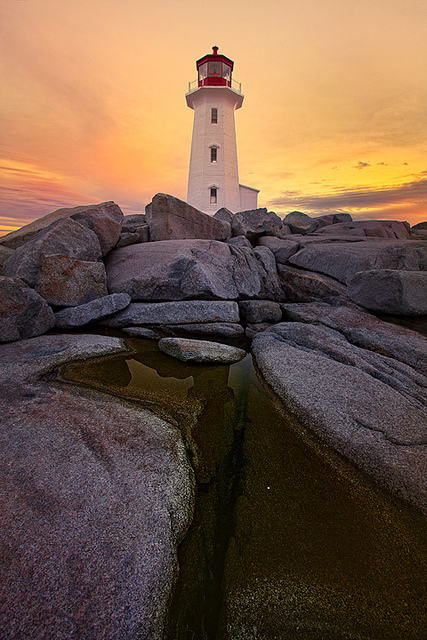
Peggy’s Cove, Nova Scotia, may be the most iconic Canadian lighthouse image for many viewers: granite shore, compact tower, Atlantic mood. Crowds, spray, and changing skies force photographers to earn a frame that still feels personal. Arrive early, watch your footing on wet granite, and decide whether the story is solitude or the human pilgrimage to a famous light.
Why the form keeps photographing well
A lighthouse is almost a ready-made graphic design: cylinder, lantern room, often a striped or white paint scheme that reads at a distance. Place that form on a cliff, a pier, or a tidal flat and you get instant hierarchy—foreground rock or water, midground structure, background weather. Photographers still have work to do: choose the hour, manage exposure on bright paint, decide whether people belong in the frame, and resist the temptation to over-process skies until the tower looks fake.
Historically, these towers were labor and logistics: keepers, oil, fresnel lenses, schedules of light. Modern photographs often omit that labor, turning the structures into pure symbol. Remembering the job description—Anne Lamott’s line about standing there shining—keeps the romance honest. The beauty is not that lighthouses chase us. It is that they keep a fixed promise in moving weather.
When you scroll these towers, try naming three things for each: coast type (rock, pier, flats, park), weather (ice, sun, storm light), and human context (remote, harbor, tourist path). That small taxonomy turns a pretty gallery into a comparative study of how one architectural idea meets many shorelines. Which coast would you visit first for the hike, and which for the photograph you have already imagined?

Comments
Continue reading
Dramatic Photo Art by Sukron Ma’mun (Ipoenk Graphic)
Cirebon, Indonesia photographer Sukron Ma’mun uses theatrical natural light to frame village life, play, and place in lyrical photo art.

Bird’s-Eye Views: Florian Beaudenon’s Instant Life
Paris photographer Florian Beaudenon’s Instant Life series captures people in their rooms from above—intimate, collaborative overhead portraits of everyday joy.
Abandoned Cars Reclaimed by Nature: Rust, Growth, and Quiet Ruin
When neglected vehicles are left outdoors long enough, rust, moss, and trees rewrite them into strange still lifes—sad, photogenic, and slowly returning to the ground.