
Kim Leuenberger’s Traveling Cars Adventures
Swiss photographer Kim Leuenberger stages vintage toy cars in real landscapes—a playful forced-perspective series about miniature road trips and story.
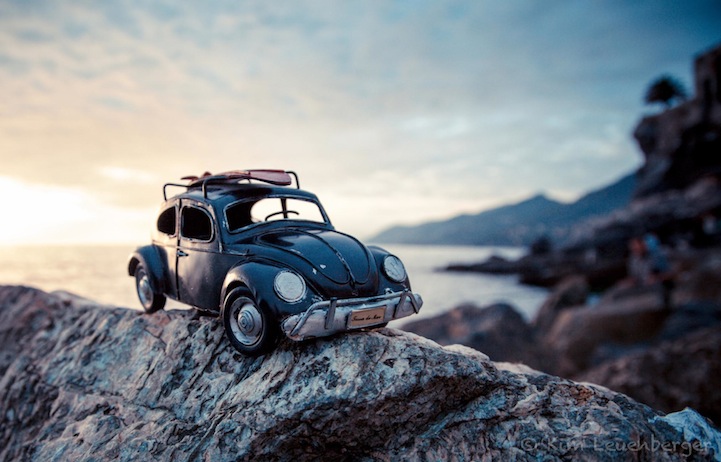
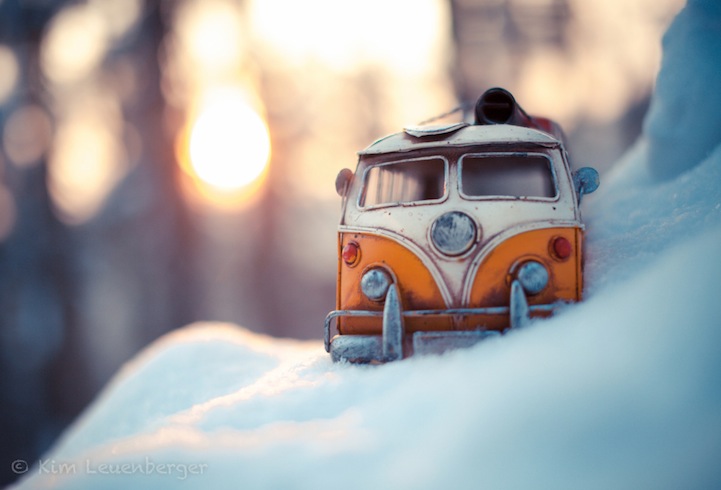
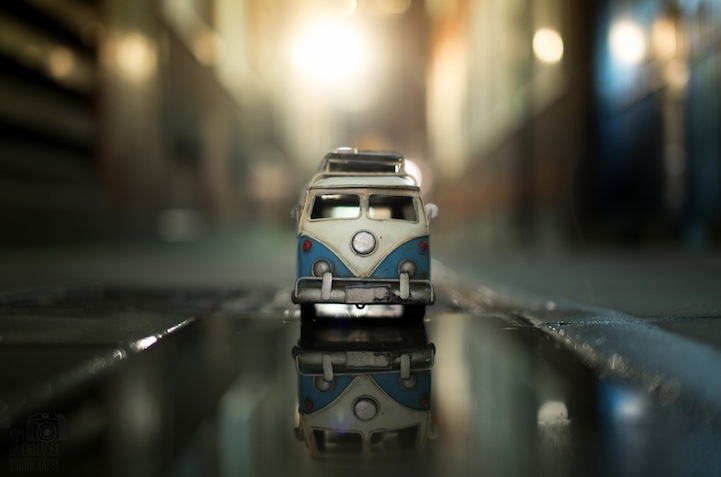
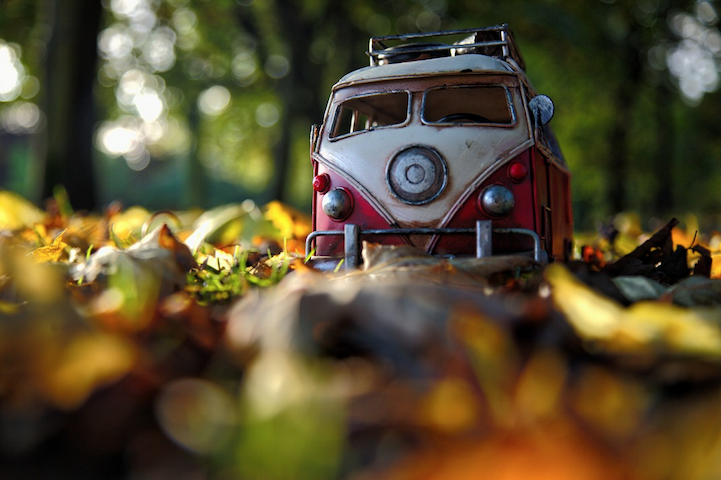
Swiss photographer Kim Leuenberger builds journeys at tabletop scale. In her series often titled Traveling Cars Adventures (also known as Travelling Cars), vintage toy cars—Beetles, camper vans, Vespas, Minis, and other small classics—stand in real landscapes while the camera treats them as travelers with errands to run. Forced perspective does part of the magic: place the toy close to the lens, let a mountain, street, or shoreline fall into softer distance, and the miniature reads as a protagonist. The rest is patience, weather, and a point of view that prefers play over postcard grandeur.
Leuenberger has described the work as beginning almost by accident in her early twenties, after she received a first DSLR as a birthday gift and began experimenting. An early image of a little blue van, made in connection with an autism-awareness effort shared online, drew a warm response. She started carrying a car in her bag “just in case,” then several cars, matching vehicle to place. Parents and travel days helped the collection grow across countries and regions. What started as a spontaneous experiment became a recognizable photographic series—nostalgic, precise, and quietly narrative—later seen in editorial features and carried forward as a long-term practice.
They had a life and want to tell you their stories, and that’s what I want to transmit with my pictures, I want them to tell a story.
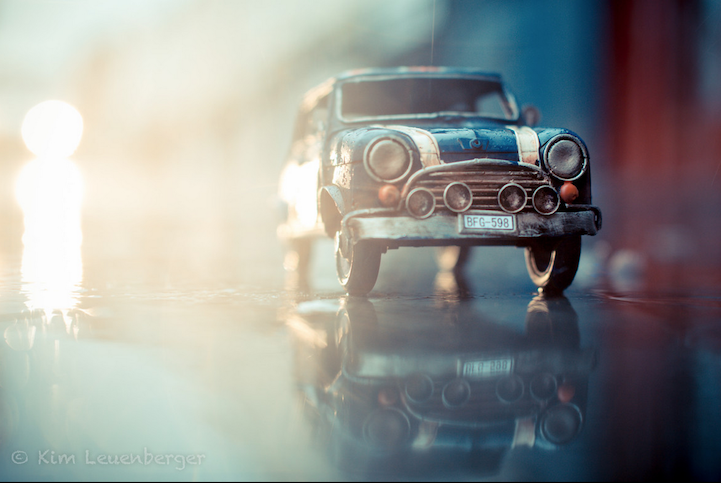
That line, from Leuenberger’s own framing of vintage toys, is the series’ thesis. The cars are not props for a product shot. They are characters with chipped paint and invented itineraries. A scratched bumper becomes biography. A bright color becomes mood. Angle and focus decide whether the vehicle is brave, lost, hurried, or simply enjoying the view.
Scale, backdrop, and the hint of place
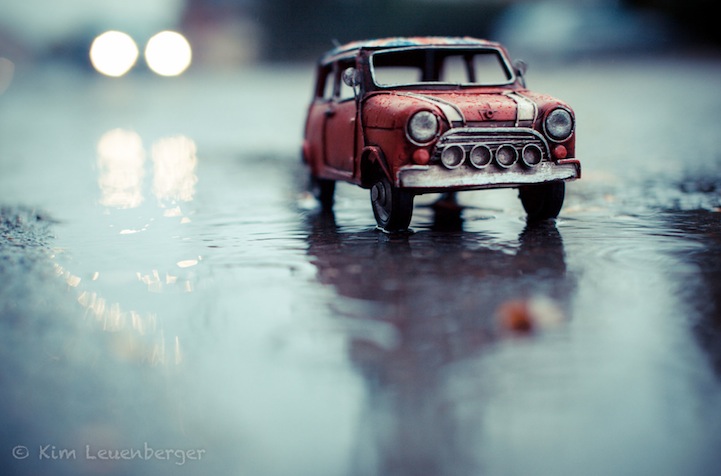
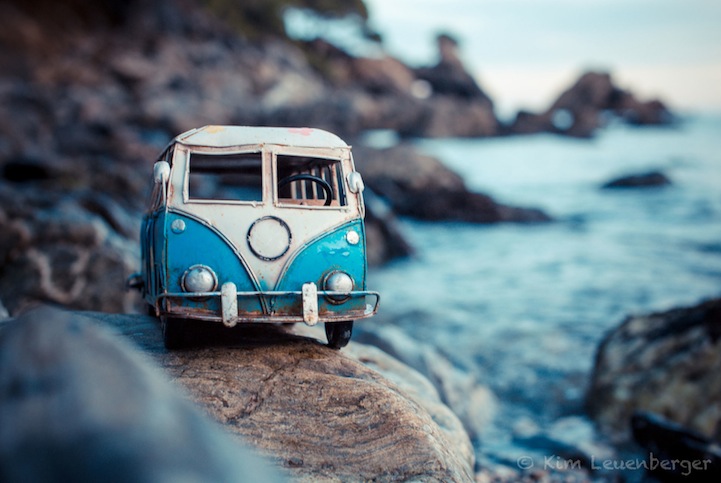
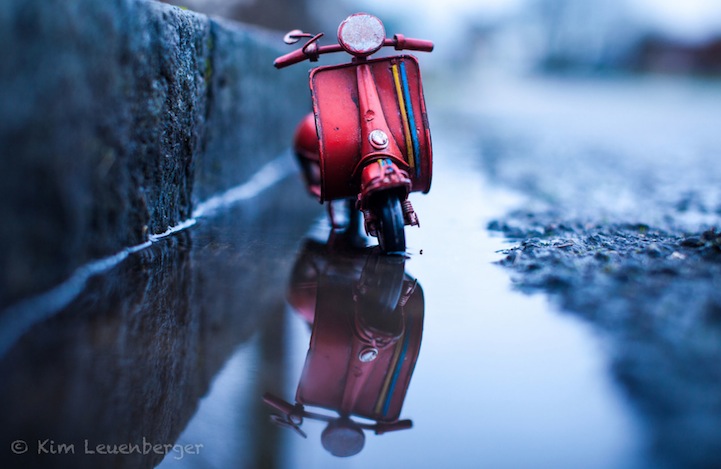
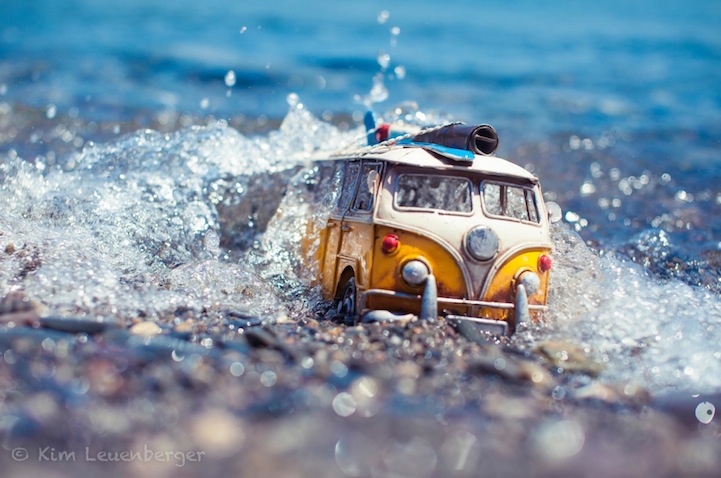
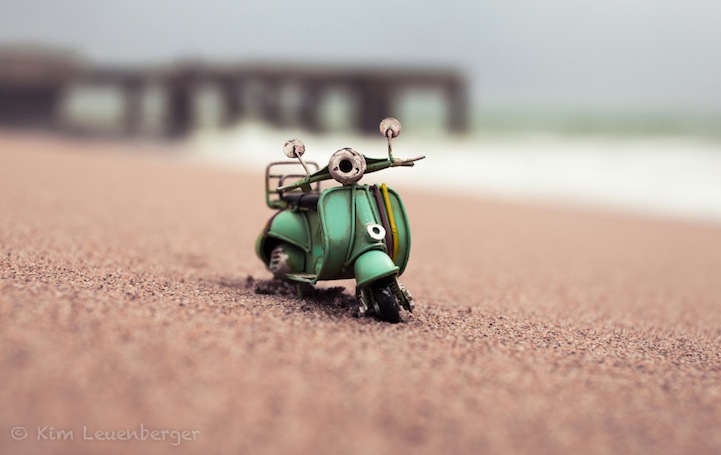
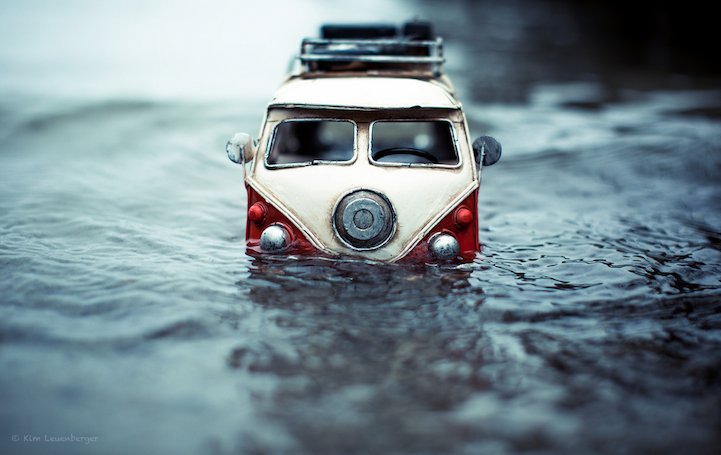
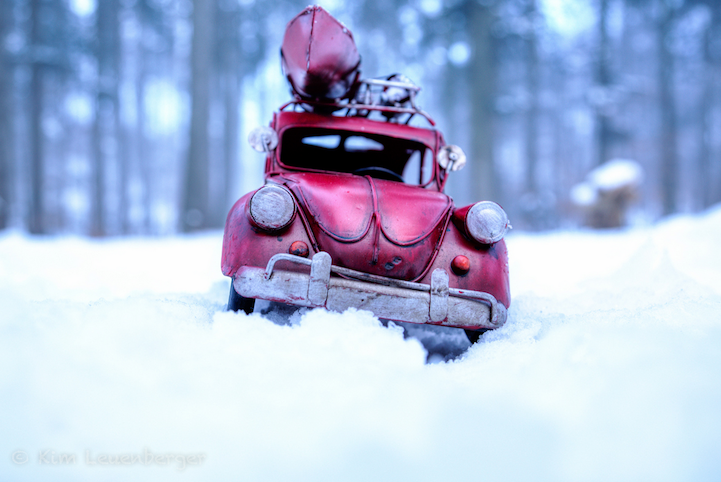
Many travel photographs chase the widest possible view. Leuenberger often does the opposite: the landmark may appear only as a soft clue—an edge of architecture, a familiar mountain profile, a stretch of coast—while the toy occupies the emotional foreground. Destinations across Europe and beyond become stages rather than trophies. Water, reflections, snow, sand, and out-of-focus color fields matter as much as named sites. She has spoken about loving play with water and blur; those tools keep the frames from hardening into pure documentation of “I was here.”
Choosing the “right car for the right place” is part of the craft. A camper suggests long road hours and overnight possibilities. A Vespa suggests town lanes and light errands. A Beetle carries a particular vintage cheer. Personality is assigned through color, angle, and implied motion—wheels aimed at a puddle, a body half in shadow, a vehicle tiny against weather that would humble a real driver. The series asks you to believe the toy has somewhere to be, then proves the belief with optical care.
Technically, the work sits at the intersection of still-life control and outdoor unpredictability. Wind moves grass that becomes forest at toy scale. Passersby stare. Light changes while you nudge a two-inch van a centimeter to the left. That friction is visible in the best frames as alertness rather than polish for its own sake.
Nostalgia without syrup
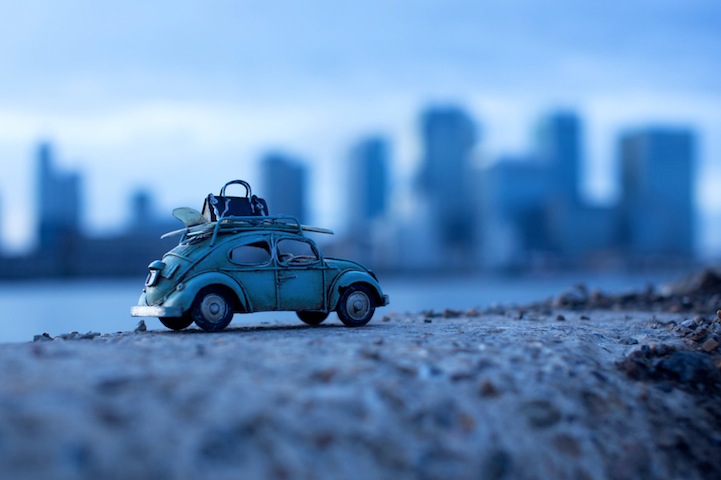
Classic toy cars already carry a positive nostalgic charge—the kind of object that reminds adults of childhood shelves and rainy-day floors. Leuenberger uses that charge without drowning the pictures in sentimentality. The landscapes are real and sometimes rough. The humor is gentle: crouching over a miniature in public looks odd, and that awkwardness is part of the practice. Escapism here means entering a focused bubble where scale resets and worry shrinks to the size of a wheelbase.
She has linked the making process to a kind of self-therapy—permission to fall back into the ease of childhood play while still operating a serious camera. That dual register is why the series works for photography audiences and for people who simply like tiny things in big places. Technical control (focus plane, depth, exposure for mixed outdoor light) serves an emotional tone (adventure, innocence, onward motion). The pictures are sweet without becoming greeting-card soft, because the ground under the tires still looks like weather and geology, not studio paper.
Nostalgia, in other words, is a tool rather than the whole message. The message is closer to: travel can be imaginative even when the miles are real; a photographer can invent companions; a series can turn collecting into storytelling.
How to look at the set
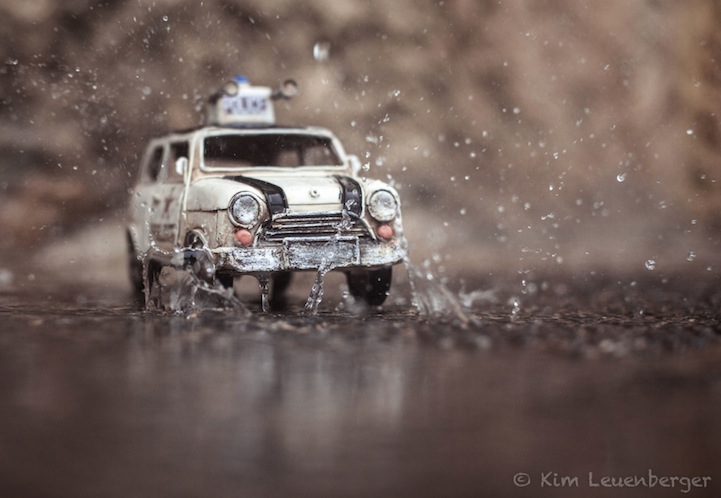
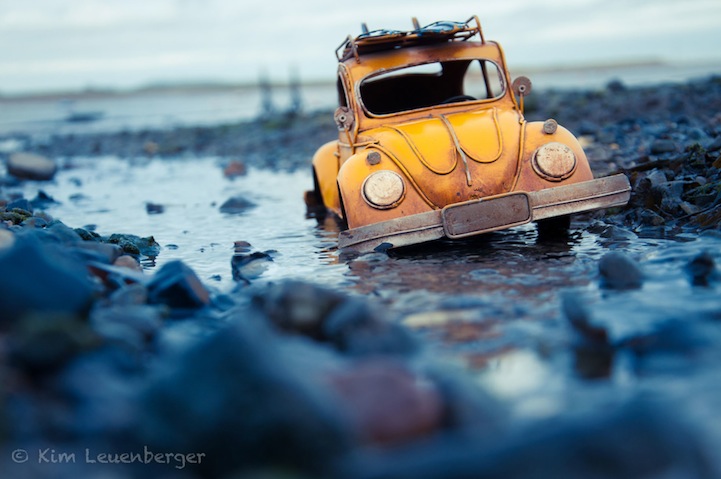
Move through the images slowly enough to notice ground texture: wet pavement, gravel, grass blades that become forests at toy scale. Notice whether the car seems to arrive, wait, or flee. Notice how often the sky or background is allowed to go soft, so the toy’s edges stay the sharpest story in the frame. If you photograph yourself, the takeaway is not “buy props and copy the gimmick.” It is “pick one recurring character and let places change around it.” Constraint invents series logic. Without a repeating subject, travel photos scatter; with one, they accumulate meaning.
- One object family, many locations, consistent lens language.
- Foreground scale negotiated carefully so the illusion holds without screaming digital trickery.
- Captions and presentation that hint at adventure rather than listing GPS coordinates.
- Permission for whimsy inside otherwise straight travel light.
- Enough optical seriousness that adults do not dismiss the work as only cute.
Try reading a few frames as film stills from a road movie that never needed human actors. Who is driving? What just happened off-screen? What is the next stop? Leuenberger does not answer those questions in text; the compositions invite you to invent answers, which is how a still photograph becomes narrative.
From private experiment to public series
As the traveling cars moved through more countries and regions, the project gathered the shape of a long-term body of work: collectible prints for viewers who wanted a favorite frame on the wall, editorial attention for the novelty of miniature road trips, and a practice Leuenberger could carry wherever a bag and a spare hour of good light allowed. Based in Switzerland and shaped by years of European travel and study—including time in London for photography education—she kept the tone exploratory rather than corporate, even as later collaborations, tourism projects, and exhibitions widened the audience.
What remains constant in the pictures gathered here is the contract with the viewer. You agree to believe, for a second, that the little car has somewhere to be. Leuenberger agrees to stage that belief with enough optical care that the second lasts. Childhood is not reconstructed as a theme park; it is borrowed as a way of seeing distance. The adult photographer does not pretend to be a child. She uses a child’s scale to refresh adult vision.
That is why the series belongs in a photography feature rather than only in a “cute finds” roundup. The repeating subject, the outdoor craft, the control of depth, and the narrative invitation are all photographic decisions. Charm is the doorway. Craft is the room you enter.
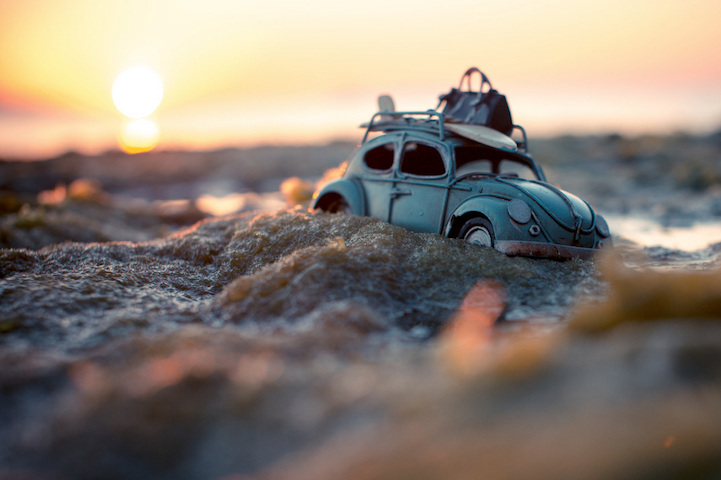
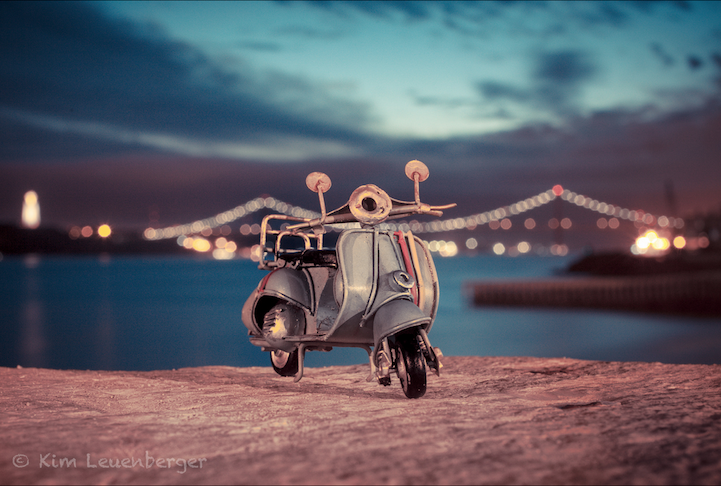
Leave the last frame on screen a moment longer than the feed usually allows. Decide which car you would pack first—and which real road you would give it. The series does not need a moral wrapped in a bow. It needs another mile of imagination, measured in centimeters of painted tin.

Comments
Continue reading
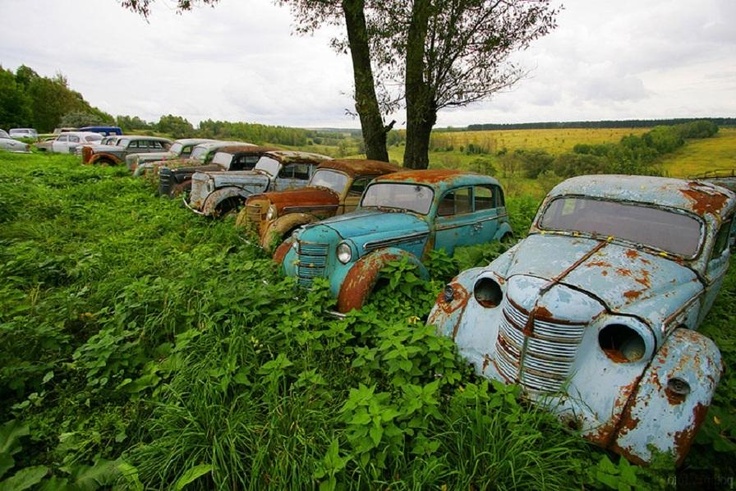
Abandoned Cars Reclaimed by Nature: Rust, Growth, and Quiet Ruin
When neglected vehicles are left outdoors long enough, rust, moss, and trees rewrite them into strange still lifes—sad, photogenic, and slowly returning to the ground.
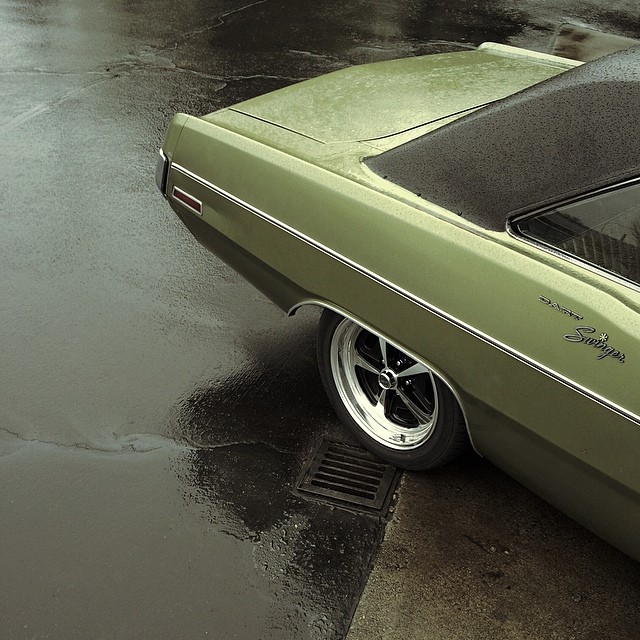
Scott Brown’s Old Car Photography: Seattle Streets on an iPhone
Seattle photographer Scott Brown (Supersangron) finds weathered classics on ordinary streets—close crops, rain light, and phone-camera honesty.
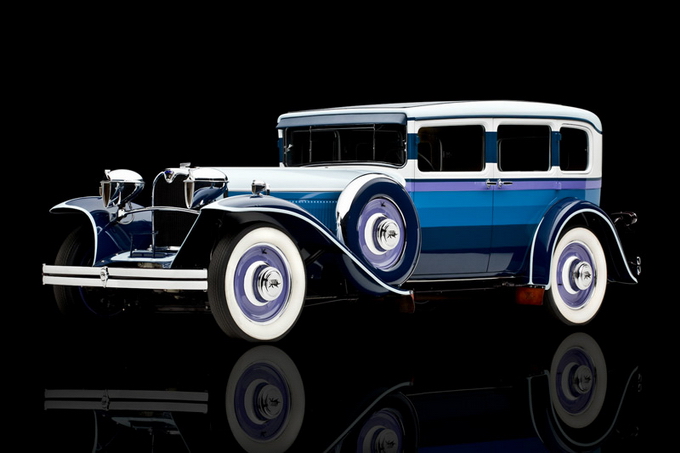
Classic Car Photography by Ken Brown: Black Studios and Polished Icons
Ken Brown’s cinematic classic-car photographs—museum-trained looking, black-box studio light, and vintage machines treated as formal portraits.