
Timeless Beauty: Madonna in Black and White
A black-and-white Madonna photo essay on reinvention, gaze, and pop-image control—metamorphic beauty distinct from Golden Age glamour archives.
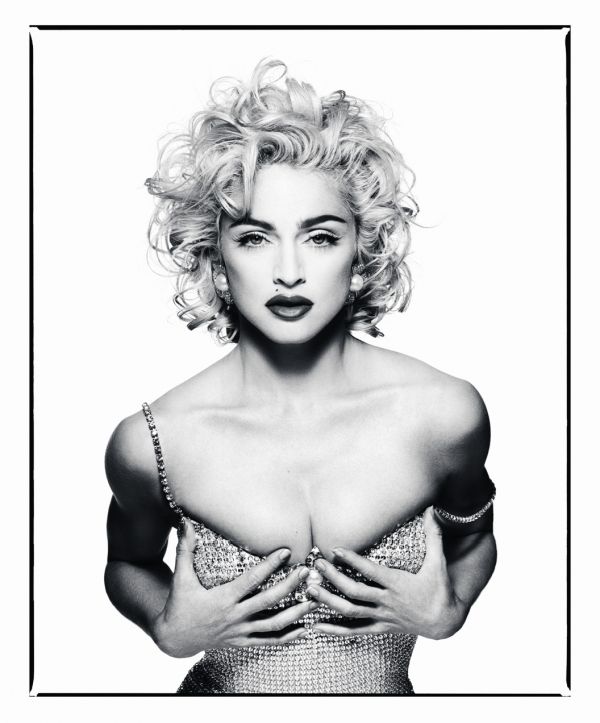
Madonna’s beauty story is not a single face frozen in studio amber. It is a sequence of reinventions—blonde ambitions, holy-shock provocations, soft-focus romance, hard-edged club armor—held together by a will to control the image. This black-and-white set reads like a compressed tour of that control: contrast, attitude, and a pop star who treated photography as seriously as chart position. Where Audrey Hepburn’s timelessness is elegance-as-editing and Ava Gardner’s is classic Hollywood glow, Madonna’s is metamorphic stamina.
She does not ask to be remembered as one silhouette. She asks to be remembered as the person who kept changing the silhouette on purpose—and made the culture chase the updates. That restlessness is why monochrome suits her so well here: without tour-merch color wars, you see the through-line in bone structure, brows, mouth, and a gaze that negotiates with the lens instead of melting for it. Beauty becomes less a fixed ideal and more a managed series of public characters.
Black and white as pop mythology
Pop photography often sells fantasy in candy hues. These frames sell authorship. In black and white, a cone-bra-era attitude and a later polished portrait can share a family resemblance. The stare stays contractual. The chin lifts. The eyes cut sideways. Pose language comes from club stages and video sets as much as from couture fittings. Hepburn’s stillness suggests a couture sketch; Gardner’s languor suggests studio night; Madonna’s angles often suggest performance mid-beat—even when she is not dancing in the frame.
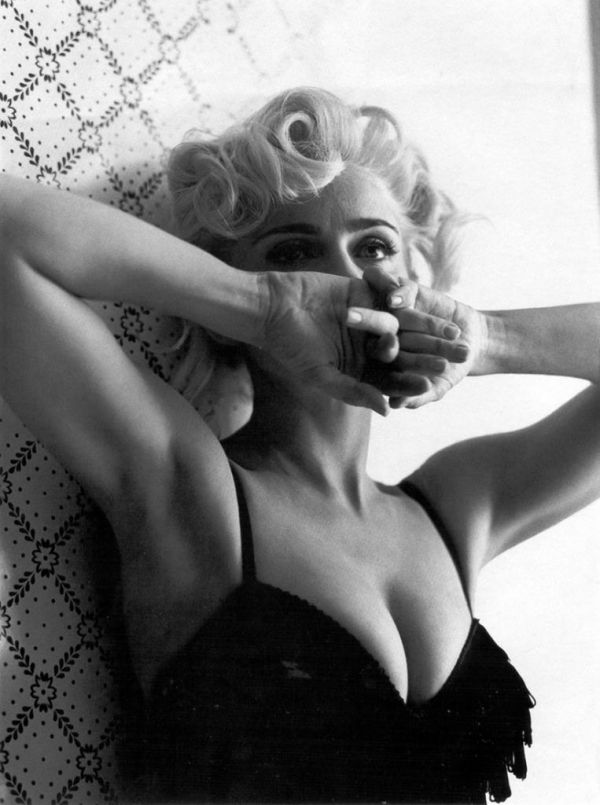
Monochrome also cools the temperature of controversy. Provocation in full color can read as tabloid; in grayscale it can sit beside fashion-plate history and rock portraiture. The same raised brow that once scandalized a living room can, decades later, be discussed as graphic design—eyebrow as logo, mouth as punctuation, hair as architecture. Context shifts. The will behind the face does not need to apologize for having been loud. Silver-and-ink contrast turns shock into craft conversation without sanding off the nerve.
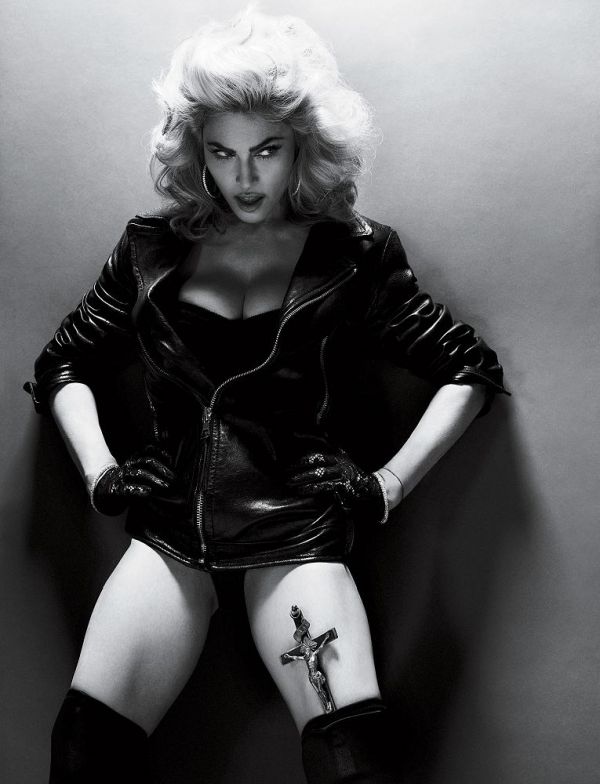
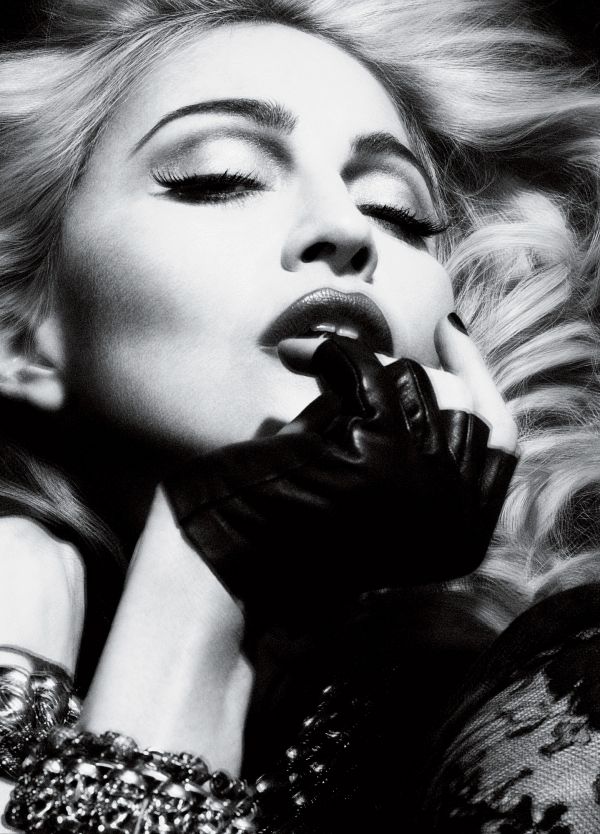
Notice how often skin is treated as a field for light rather than as a smoothness contest. Hard light carves. Soft light flatters without erasing attitude. Either way, the photographs assume a viewer who can handle a star who looks back. That reciprocity is part of Madonna’s beauty contract: she is not only displayed; she is directing the terms of display. In several frames the shoulders and hands work like stage blocking—angled to create diagonal energy inside a still.
Reinvention without apology
From early MTV through the Like a Virgin and Like a Prayer storms, from Vogue precision to electronica turns and later stage reinventions, Madonna’s public face kept recruiting new collaborators—photographers, stylists, directors—while protecting a core brand of nerve. Beauty, in her case, is inseparable from media strategy. Hair color changes. Religious symbols arrive and depart. The body is trained, displayed, debated, and redeployed. What stays is the refusal to look accidental.
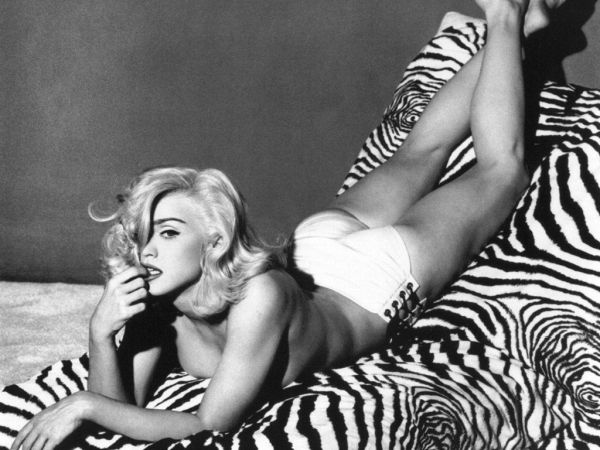
That refusal is why she belongs in a timeless-beauty conversation even when purists want only Golden Age actresses there. Timelessness here means cultural durability under change. Gardner’s glamour is a perfected mid-century dialect. Hepburn’s elegance is a lasting line drawing. Madonna’s archive is a timeline of deliberate ruptures that somehow still look like her. Continuity lives in energy, not in an unchanging hemline or an unchanging haircut.
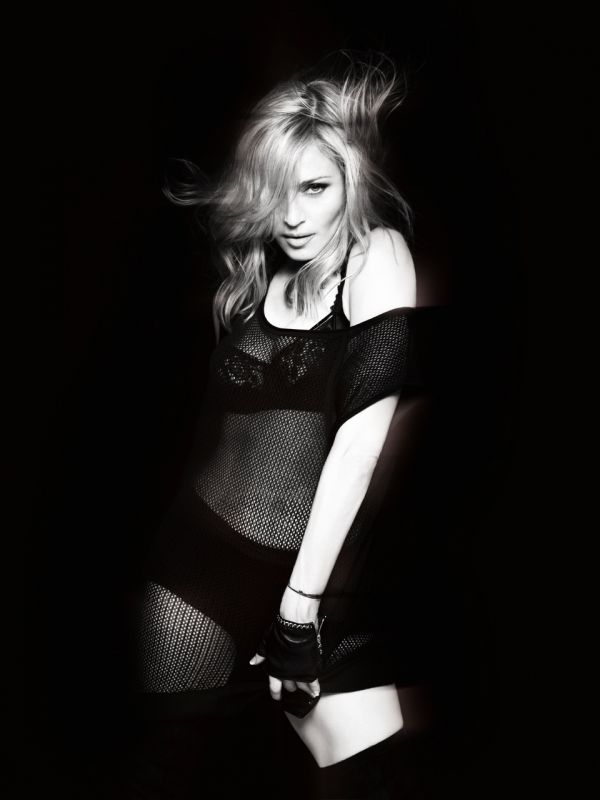
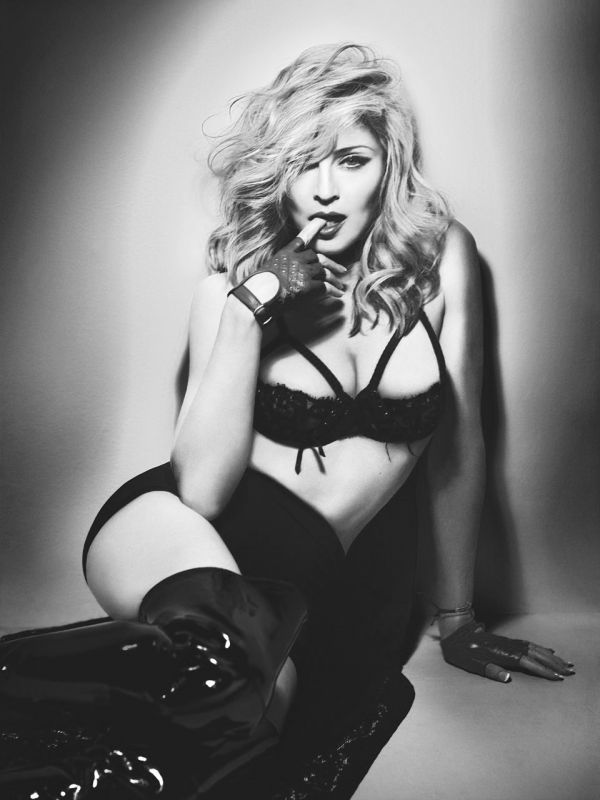
Reinvention also has a work ethic underneath the costumes. Choreography, vocal stamina, business control, and an instinct for when a look has expired—these are less photogenic than a bustier, but they explain why the photographs keep arriving with conviction. A weak reinvent looks like cosplay. A strong one looks inevitable in hindsight. Madonna’s stills usually aim for the second category: whatever era you are seeing, she seems to have already decided you would. The camera is late to a decision she made in rehearsal.
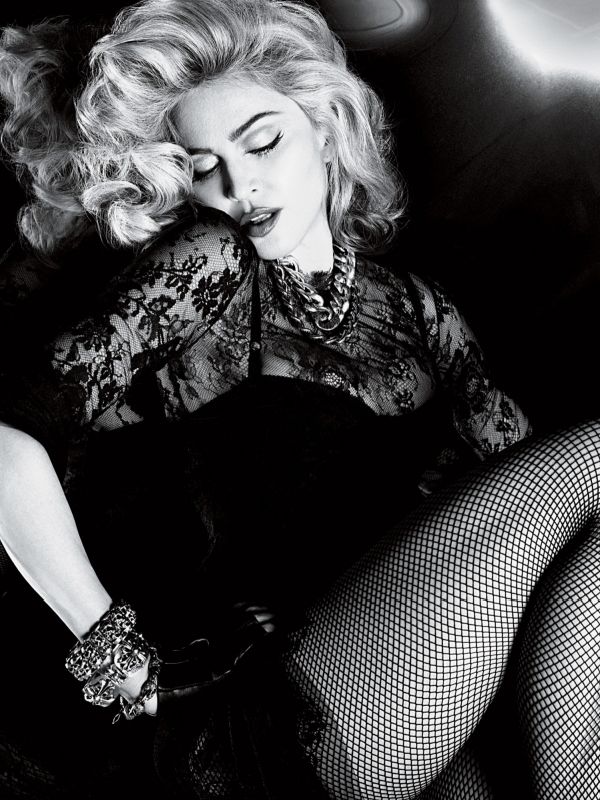
Reading the frames like a stylist
Work through this gallery for decisions, not nostalgia alone. Where is the light hard, and where is it forgiving? When does makeup graphicize the eye into a logo? When does hair become architecture—volume as crown, bleach as statement, slickness as armor? Madonna’s strongest stills treat beauty as set design for a character she is currently playing. The wardrobe is a script draft; the face is the performance that sells the draft.
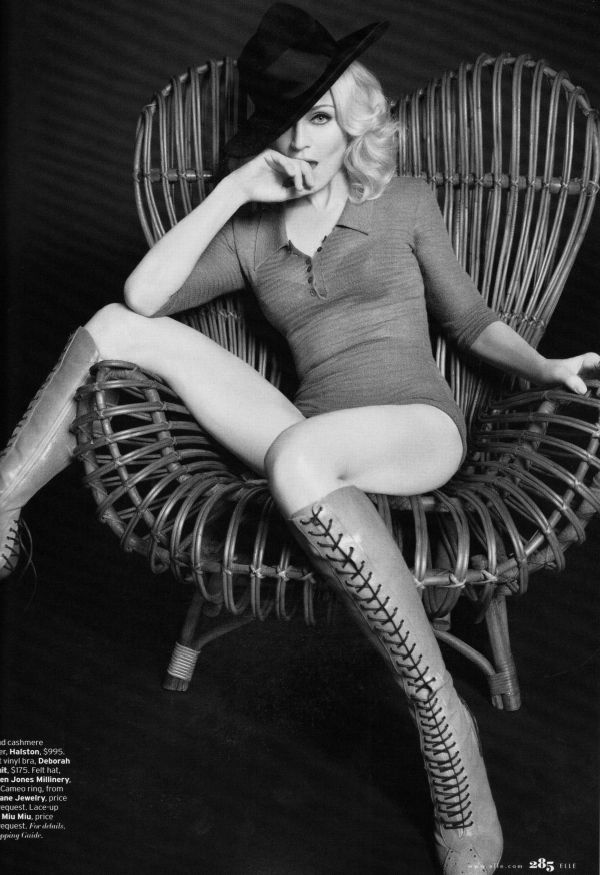
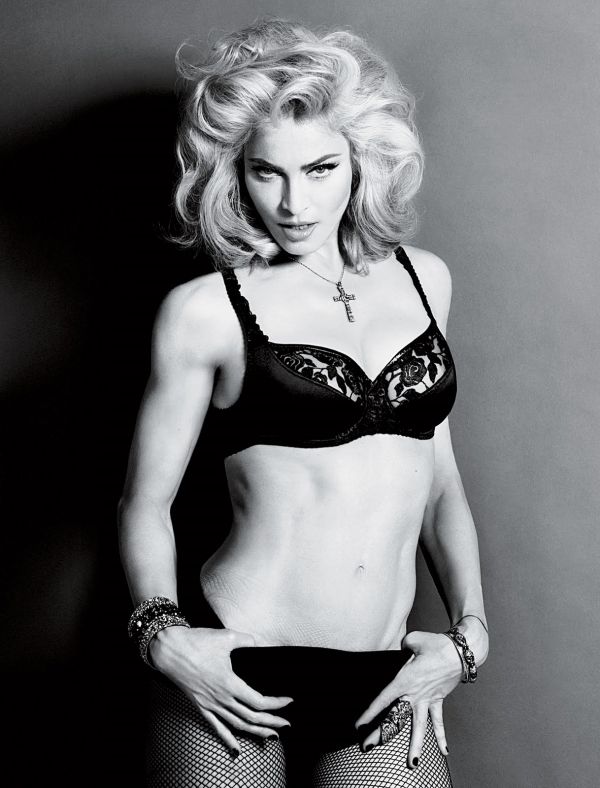
Compare jewelry and skin. Sometimes the frame wants metal and religious kitsch as punctuation; sometimes it wants bare shoulders and a confrontational clean face. The swing between ornament and exposure is part of her grammar. A Hepburn lesson might be “stop adding.” A Gardner lesson might be “let the light do the heat.” A Madonna lesson is “add or subtract until the character clicks—then commit hard enough that the photograph cannot look undecided.”
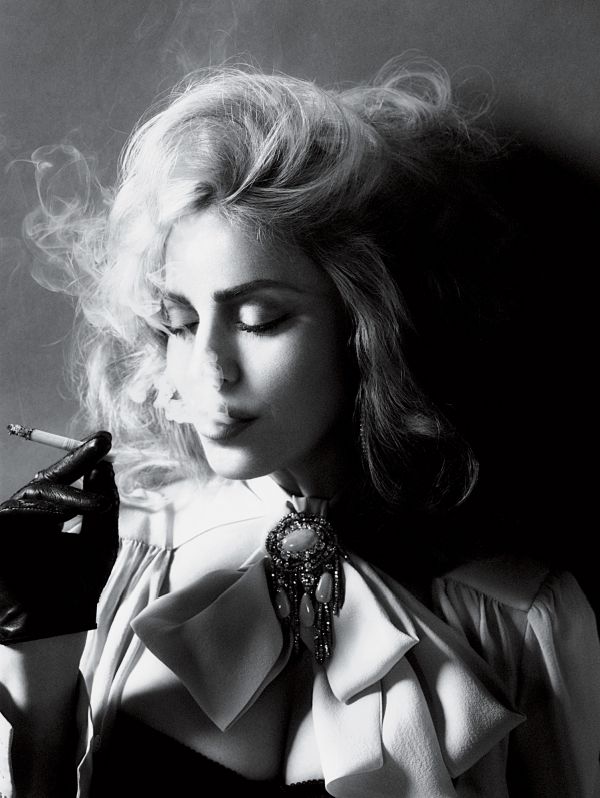
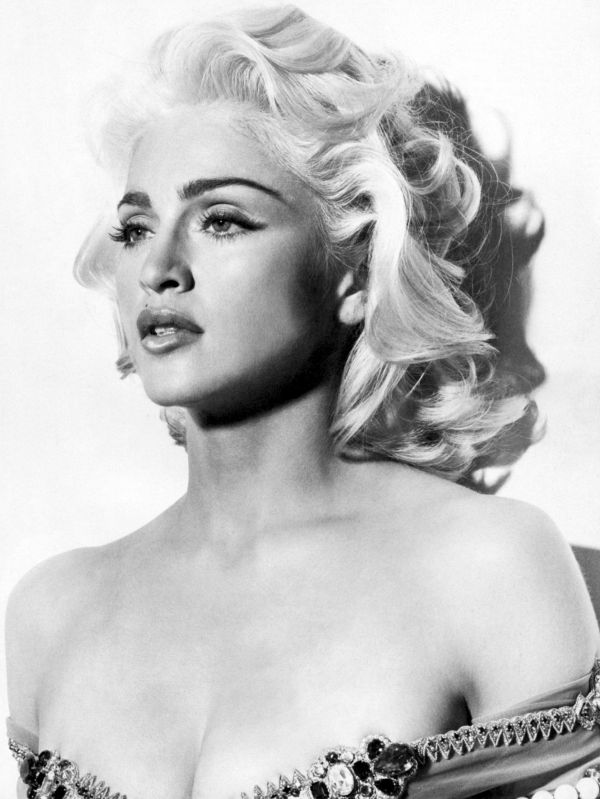
For performers and personal-brand builders, the practical takeaway is continuity under mutation. Keep one recognizable signal—an energy in the eyes, a relationship to the camera—while letting wardrobe eras expire. Madonna’s photographs show how to retire a look without retiring presence. Golden Age studios often handled continuity through typecasting; she handled it through self-directed shapeshifting. That difference is why her beauty timeline feels modern even when the print is decades old and the paper has gone fully grayscale.
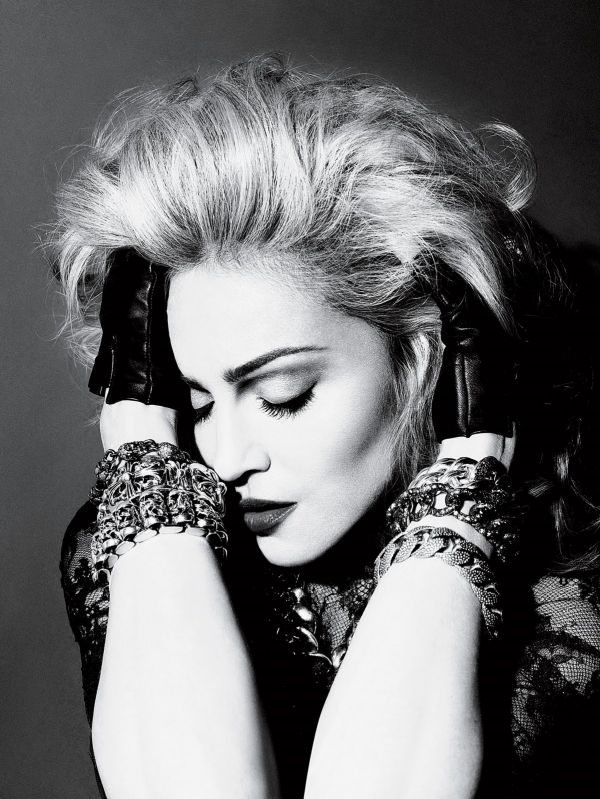
Also study negative space and crop. Some frames push in until the face becomes almost abstract geometry; others leave room for shoulders and jewelry to speak. Crop is attitude. A tight crop can feel like a challenge. A wider crop can feel like a stage. Madonna uses both, depending on whether the character of the moment wants intimacy or spectacle. Steal the crop logic before you steal the outfit.
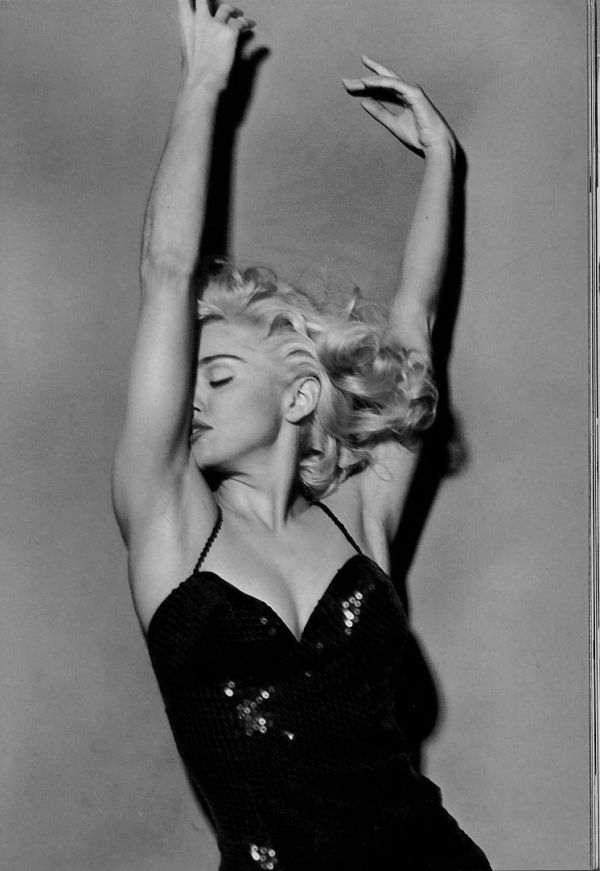
A short viewing checklist
- Spot the era cues without needing a caption—hair, brow, jewelry, hardness of light.
- Notice whether the mouth is performing sweetness, challenge, or boredom-as-power.
- Ask what would break if you recolored the frame: some of these images are built for ink-and-silver contrast.
- Separate sexiness from submission; her gaze usually negotiates terms.
- Leave with one stealable idea for your own portraits: a chin angle, a shoulder line, a makeup graphic—not a full costume replica.
- File her separately from Hepburn’s elegance folder and Gardner’s glamour folder so the lessons stay sharp.
Close on any single frame that still startles you. That startle is the point of Madonna in a beauty lineage: not a frozen ideal waiting politely in museum light, but a reminder that a face can stay famous by refusing to stay still—and that black and white, far from aging her out, can make the argument look even clearer.

Comments
Continue reading
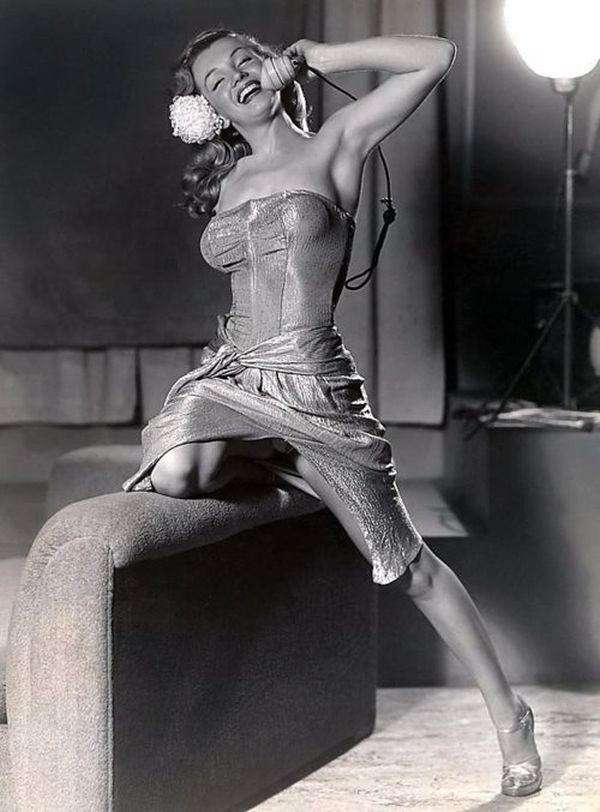
Marilyn Monroe: The Iconography of a Face
How Marilyn Monroe’s platinum silhouette became a portable cultural image—studio craft, film shorthand, Warhol’s grids, and how to read the photographs as iconography.
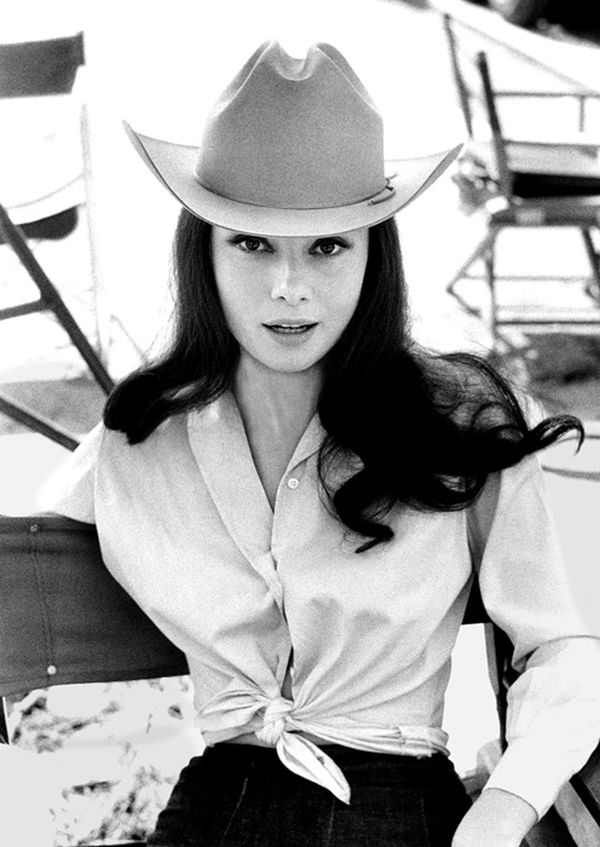
Timeless Beauty: Audrey Hepburn’s Style and Elegance
A photo essay on Audrey Hepburn as a fashion elegance icon—Givenchy lines, ballet posture, and daylight clarity—rather than gossip or bombshell myth.

Dramatic Photo Art by Sukron Ma’mun (Ipoenk Graphic)
Cirebon, Indonesia photographer Sukron Ma’mun uses theatrical natural light to frame village life, play, and place in lyrical photo art.