
Short Animation: The Final Straw
Ricky Renna’s Ringling solo thesis: a scarecrow vs. a stubborn crow—three minutes of workplace farce with score by Corey Wallace.
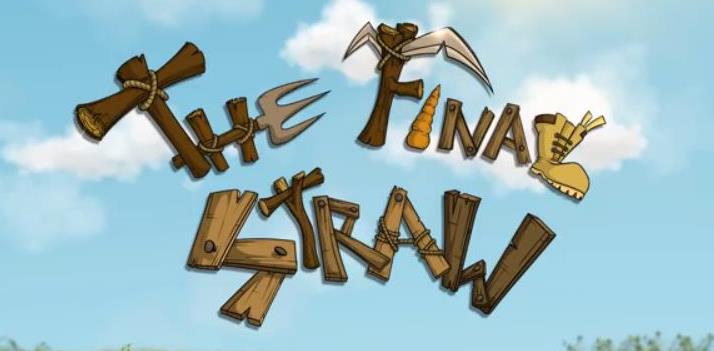
A scarecrow’s job description is brutally short: stand still, look threatening, keep birds off the crop. Ricky Renna’s Ringling College of Art and Design senior film The Final Straw (finished April 2013 after pre-production begun in 2012) asks what happens when the employee fails the only metric that matters. A stubborn crow invades the farmland; the scarecrow escalates; comedy follows from professional humiliation. Roughly three minutes long, written, directed, and animated by Renna as a solo thesis with music by Corey Wallace and sound design by Blake Johnson, the short is a clean specimen of Ringling’s computer-animation pipeline: readable characters, one location, a conflict you can pitch before the first render finishes.
Incompetence comedy, stitched from straw
Festival synopses keep the premise tight: the scarecrow gets more than he bargains for when a crow refuses to be scared. That refusal is the film’s comic engine. Scarecrows are props that pretend to be predators; animation can grant them agency and then punish that agency with a bird who will not play along. Unlike island comedies where a castaway is interrupted mid-survival, The Final Straw is about a worker whose entire identity is deterrence. If the crow stays, the scarecrow is not merely annoyed—he is unemployed in spirit.
Renna’s later interviews about studying at Ringling (BFA, Computer Animation, graduating 2013) and then pursuing an MFA at SVA underline how central this film was as a first complete short. Solo authorship on a CG thesis is a particular kind of ordeal: modeling, rigging, animation, lighting, and storytelling compressed onto one name. Credits for Wallace and Johnson acknowledge that “solo” still needs ears—score and sound are where physical gags gain punch. The crow’s flaps, impacts, and musical stings are half the performance.
Ringling clarity
Ringling’s computer-animation program has a reputation for thesis films that travel well online: strong staging, appealing character designs, comedy that does not require subtitles. The Final Straw fits that house style. Farmland is an efficient set—sky, field, post, bird—giving the camera clear graphic shapes. The scarecrow’s limited mobility (he is, after all, planted) forces inventive staging: how do you chase when your job is to stay put? That constraint is a gift to student filmmakers. Limits invent gags.
Art-Spire and other 2014 blog write-ups framed the short simply as a scarecrow who cannot scare a crow—proof that the logline survived translation into internet roundups. Years later, festival programs such as Galician Freaky Film Festival still listed the three-minute USA/Ringling entry with the same stubborn-crow synopsis. Longevity for a student comedy often means the premise remains funny without topical references. No brand integrations, no meme-of-the-week. Just job versus pest.
How the rivalry differs from other animal pests
Animation history is crowded with birds that torment larger characters. What distinguishes a good student version is specificity of want. Here the scarecrow wants professional competence restored; the crow wants the field, or the game, or simply the pleasure of winning. That asymmetry—duty versus play—keeps sympathy flexible. You can root for the straw man to succeed and still laugh when he fails, because failure reveals character. Escalation comedies live or die on whether each new tactic feels like a worse idea born from a bruised ego. Renna’s title promises a last straw; the audience waits to see which attempt finally snaps.
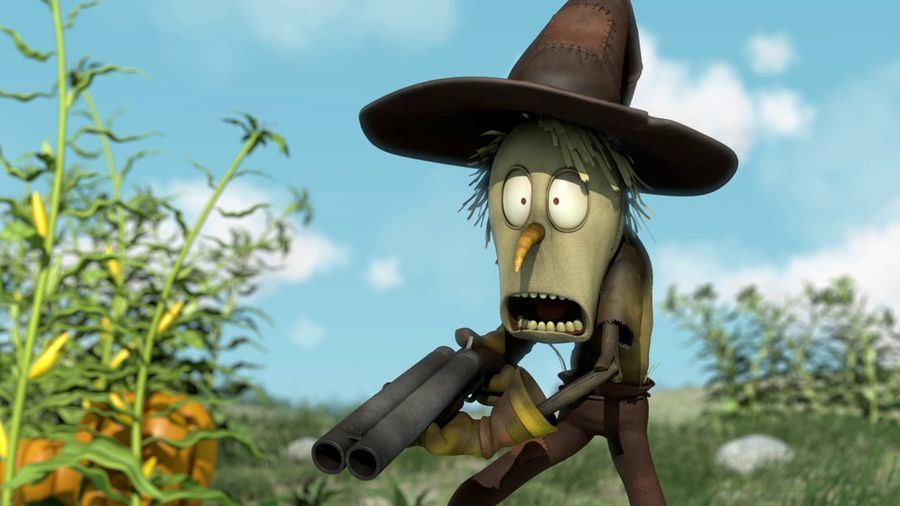
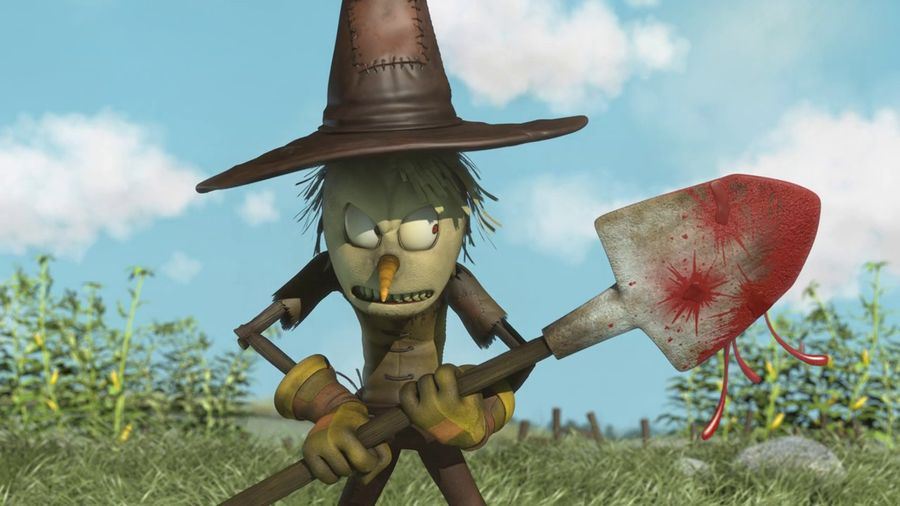
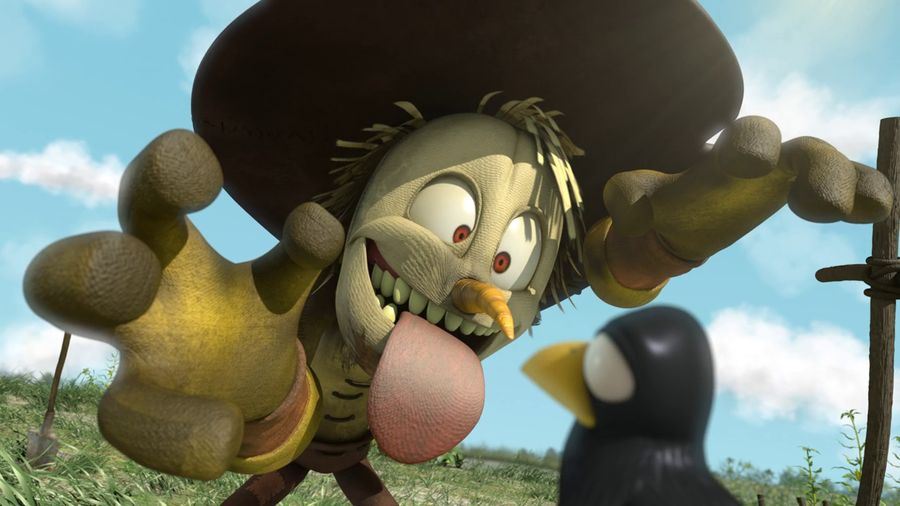
Visually, CG farmland shorts risk looking like default asset landscapes. The stills preserved with this article—wide farm compositions, character close enough to read expression—suggest Renna pushed for clarity of pose and silhouette, the fundamentals Ringling drills hard. A scarecrow is already a graphic object; the challenge is giving him acting beats that feel like choices, not wind.
Why solo theses favor this scale
A three-minute farm comedy is not a smaller ambition than a ten-minute epic; it is a different risk profile. Solo CG authors who chase too many locations often ship unfinished lighting. Renna’s choice—field, sky, two characters—keeps the polish budget focused on acting and timing. That is why Ringling films of this type still look “finished” years later on compressed web embeds. The camera is not apologizing for missing assets. Everything in frame is meant to be there.
Pre-production beginning in 2012 for an April 2013 finish also matches the academic calendar’s brutal honesty: you cannot wait for inspiration to visit the cornfield. You board, you build, you animate, you cut. Renna’s own note that friends helped even on a solo project is worth taking seriously. Peer notes, render babysitting, and sanity checks are part of how student films survive. The credit line stays singular; the labor is still social.
Comedy without cruelty to the bird
Pest comedies can tip into mean-spirited fantasies of extermination. The healthier tradition—closer to classic cartoons—treats the pest as a worthy opponent whose victories are funny because they are clever or lucky, not because pain is the point. The Final Straw’s circulating synopses emphasize stubborn invasion and escalating effort, not gore. That framing keeps the short family-friendly enough for kids’ festival sidebars while still serving adult viewers who recognize workplace futility. The scarecrow’s dignity is always slightly ridiculous; the crow’s confidence is always slightly unfair. Balance is the joke.
Title language helps. “Final straw” is an idiom about human patience, not about agricultural waste. The film asks how many failures a professional identity can absorb before the metaphor becomes literal—straw that cannot hold. Even without spoiling the ending, you can watch for the moment the scarecrow stops being a tool and starts being a person with a bad day. That transition is what character animation is for.
A way through the three minutes
First pass: track the power balance. Who controls the field after each beat? Second pass: watch the scarecrow’s timing—hesitation, overcommitment, recovery. Third pass: listen with eyes half-closed for Wallace and Johnson’s punctuation; student comedies often hide their polish in the mix. Those passes turn a fun break into a small masterclass in constrained character animation. If you teach or study animation, pause on silhouettes: can you still read who is winning when the image is a black cutout?
Renna would go on to other films and industry paths, but The Final Straw remains the calling-card shape of a Ringling comedy thesis: one workplace, one pest, one pride wound. The crow does not need a monologue. The scarecrow does not need a tragic backstory. They need a field and a reason to keep failing upward. When the last tactic lands—or doesn’t—the job description is still waiting on the post, straw arms out, as if optimism were part of the costume.

Comments
Continue reading
Still-Life Photography by Margareth Perfoncio
São Paulo photographer Margareth Perfoncio’s still lifes of food and flowers—Old Master light, dark wood, and tables that feel inevitable.
Meaningful Love Quotes for Inspiration (and Ink)
Meaningful love quotes that still feel true — short lines for tattoos, gifts, and everyday reminders, with placement and wording tips.
Christina Hess’s Animals From History: Costumed Pets as Playful Portraits
Illustrator Christina Hess reimagines historical icons as ornate animal portraits—Elvis Petme and friends—mixing puns, costume detail, and soft history lessons.