
Sculpting with Paint: Justin Gaffrey’s Dimensional Acrylics
Florida artist Justin Gaffrey builds landscapes and florals from heavy acrylic ridges—sculptural painting where color casts real shadows.
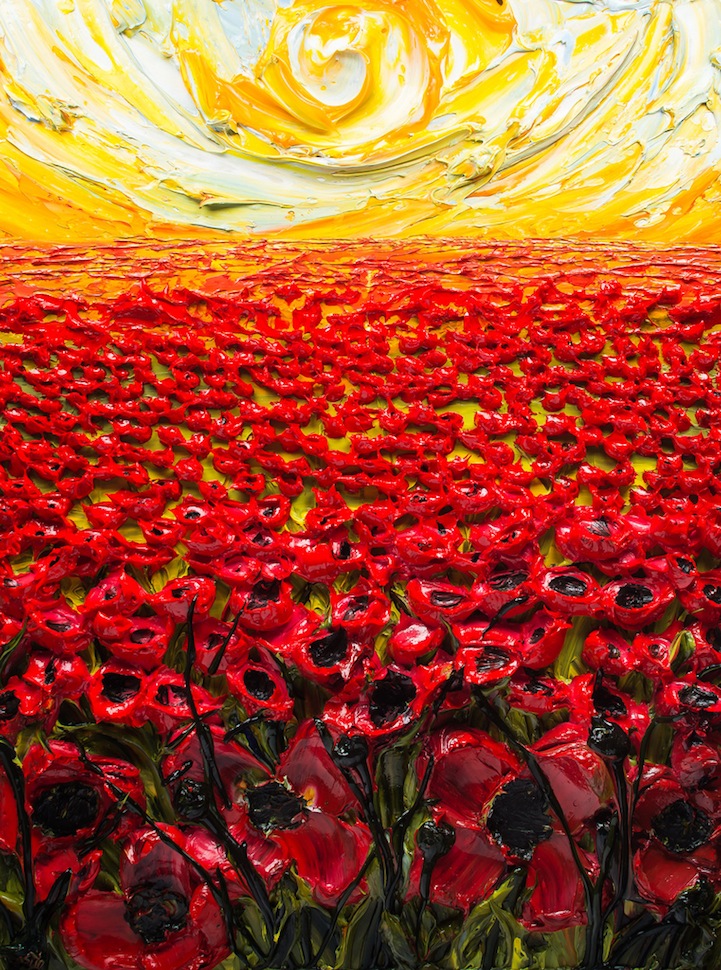
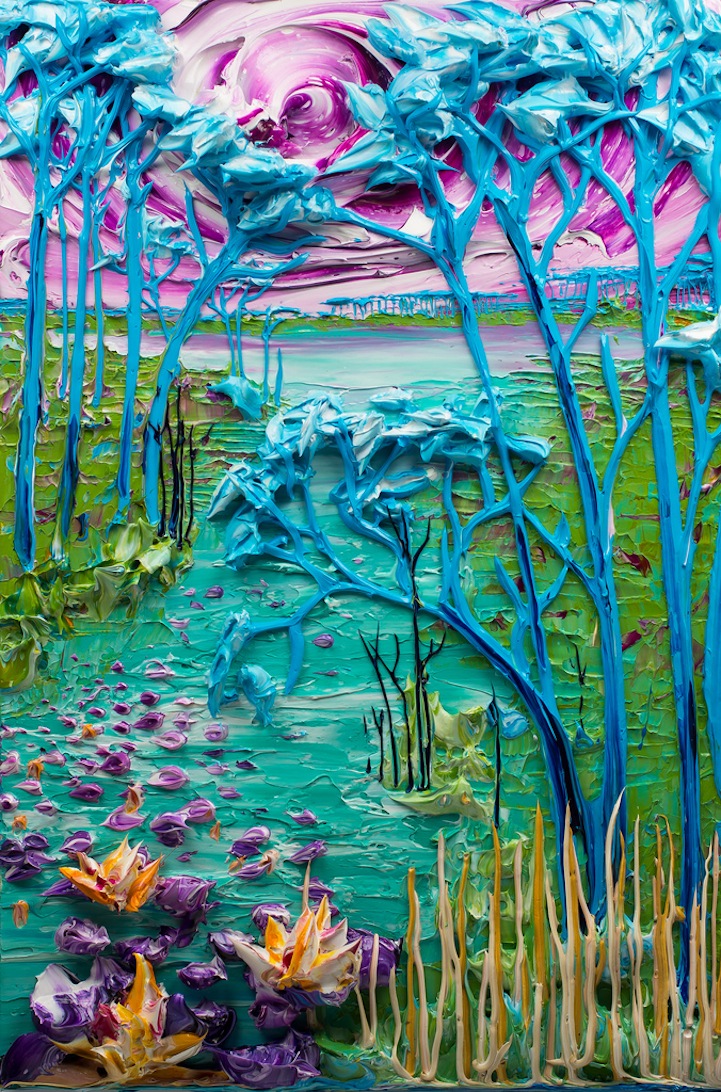
Justin Gaffrey does not treat paint as a thin skin. On his canvases, acrylic rises in ridges, petals, and crests of light thick enough to cast real shadows. The works look like landscapes and florals until you stand close; then they read as relief sculpture made from color. That hybrid practice—often called sculptural painting—is the reason his name sits in the pathname of this page, and it should stay attached to every image here.
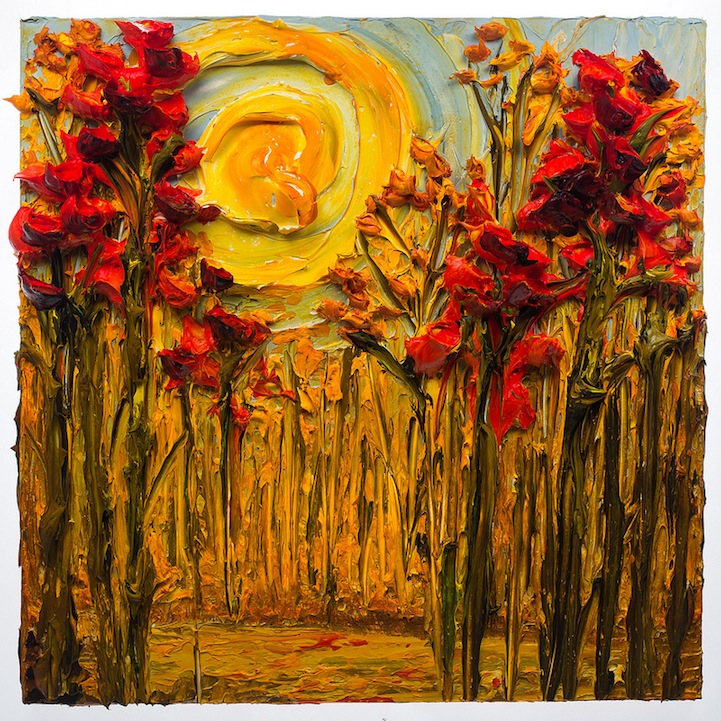
Based in Santa Rosa Beach on Florida’s 30A corridor, Gaffrey is a largely self-taught artist whose studio language grew from material experimentation rather than academic orthodoxy. Earlier years as a chef and restaurant owner left a practical residue: he knows how viscous substances behave, how piping and knife work create form, and how patience with heavy materials pays off. The paintings below show that knowledge at full volume—heat-soaked reds, swirling suns, and surfaces that refuse to stay polite.
What “sculpting with paint” means in practice
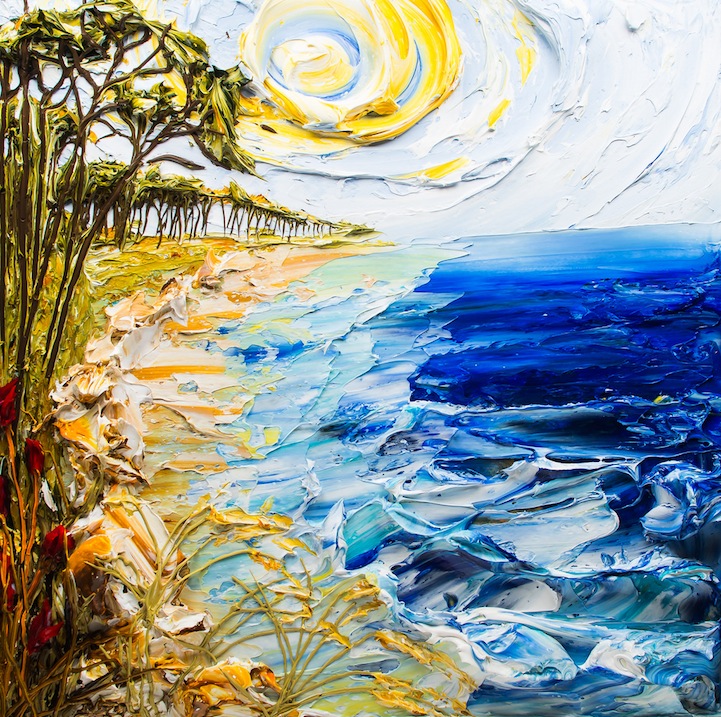
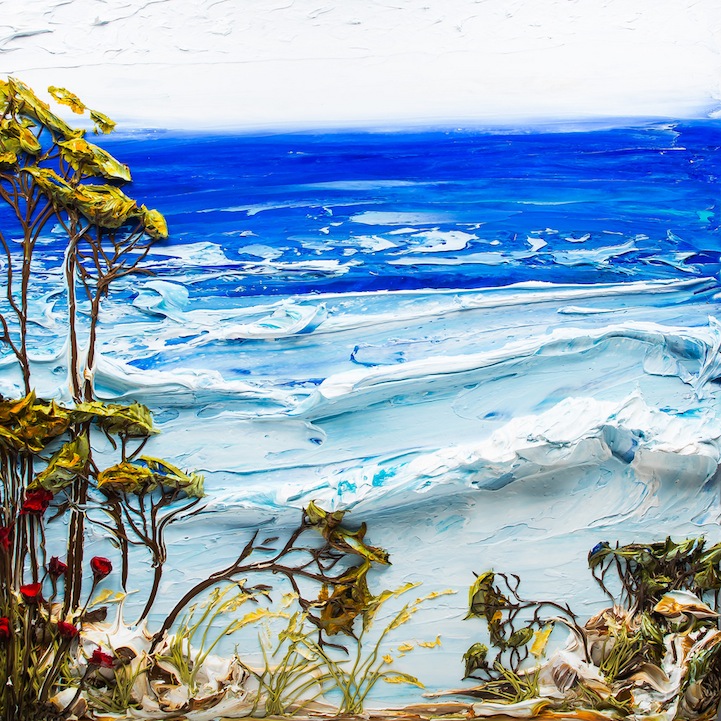
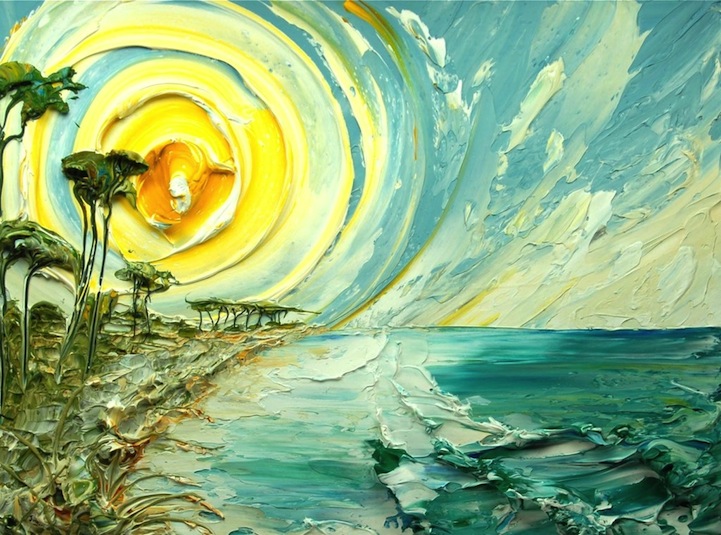
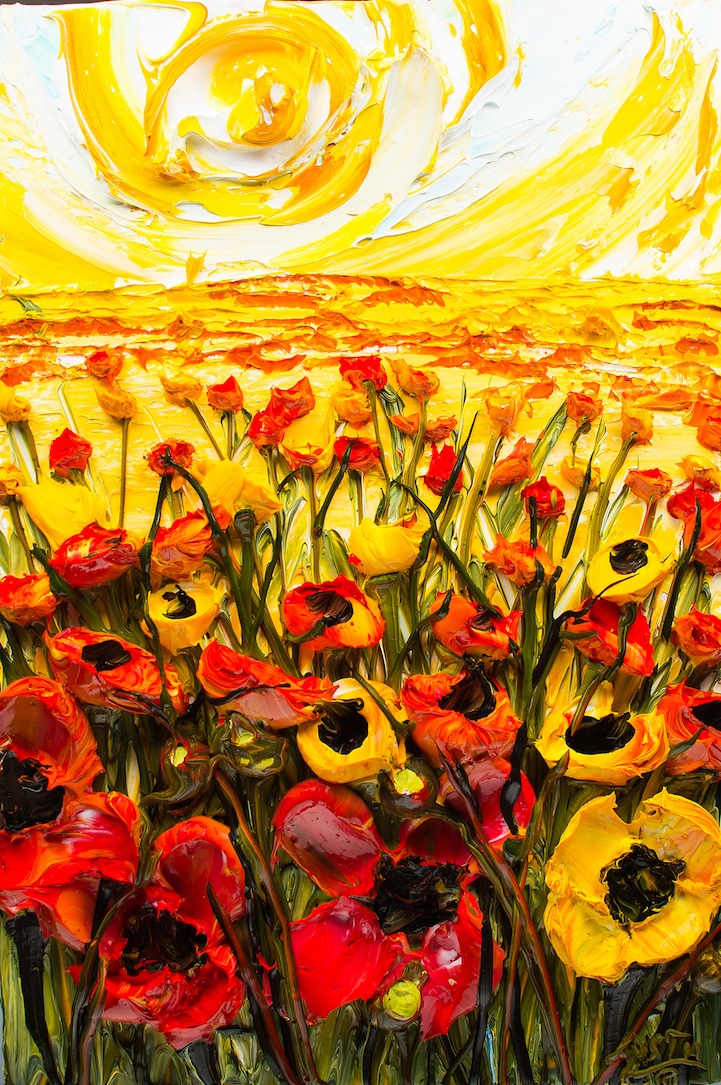
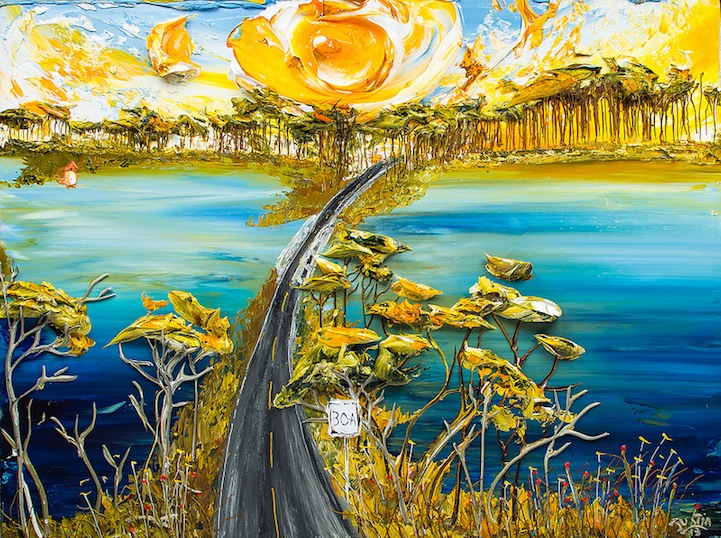
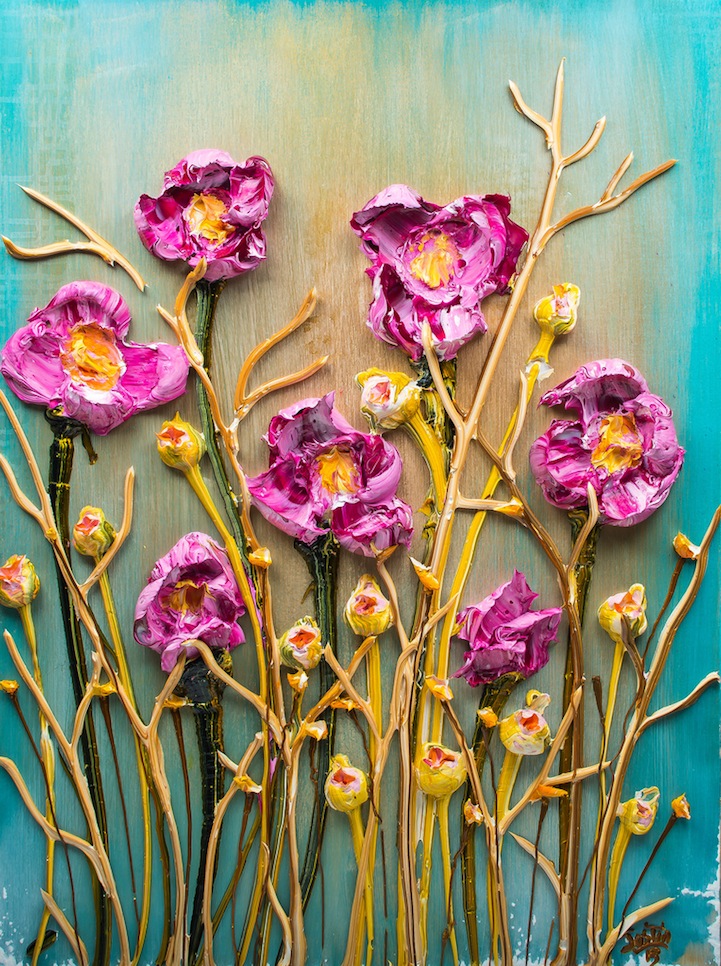
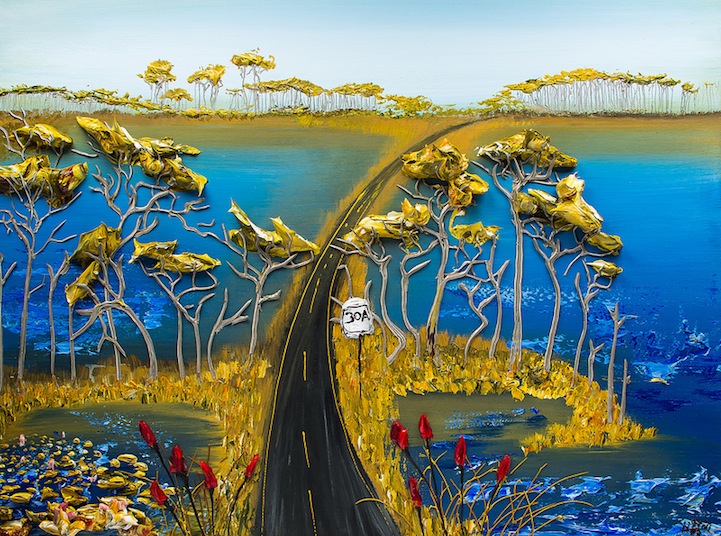
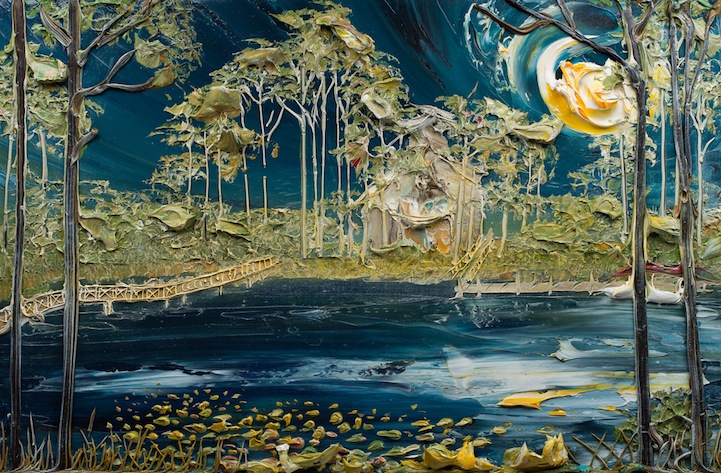
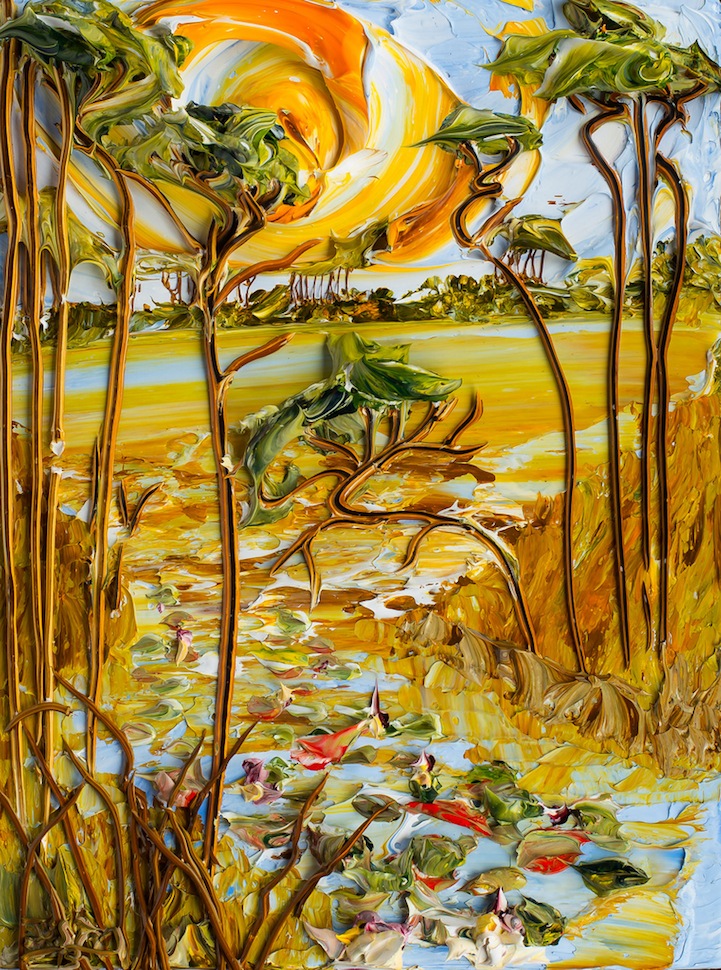
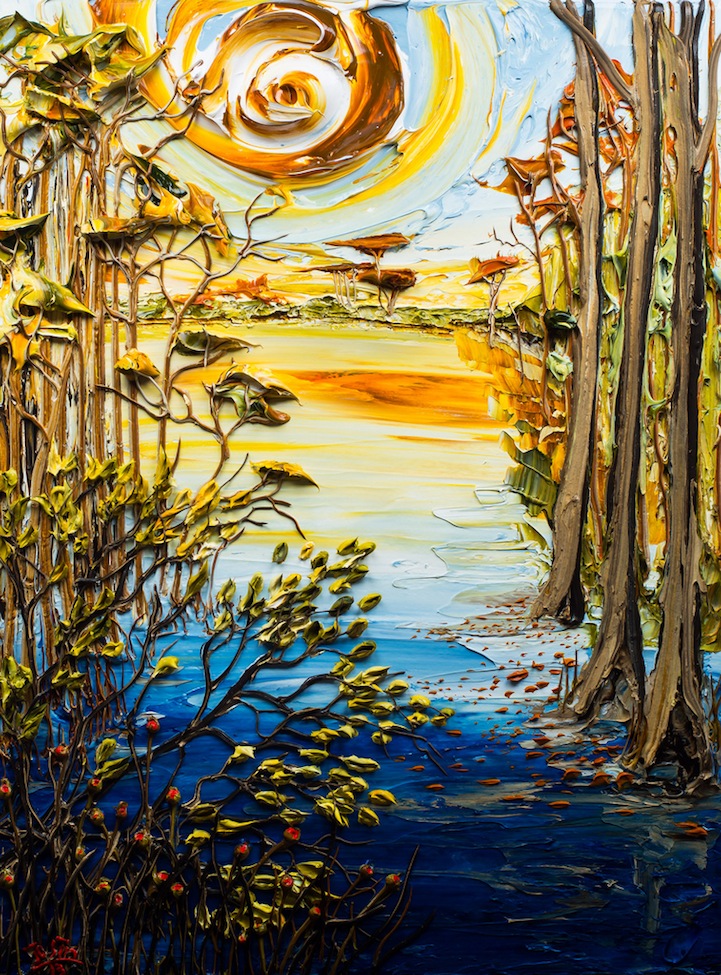
Traditional impasto already thickens the surface. Gaffrey pushes further. Heavy-bodied acrylics are built into peaks and valleys that can stand inches off the support. Petals are not suggested by brush calligraphy; they are piled and shaped until they behave like objects. Horizons are not just color shifts; they are physical shelves where light breaks. A poppy field under a swirling yellow sun is not a quiet botanical study; it is chroma and mass arguing at once.
Tools matter. Piping bags, palette knives, custom applicators, and hand modeling let him push pigment the way a pastry chef pipes icing—except the “icing” cures into a durable pictorial topography. White understructures often carry colored striations when loaded paint hits the canvas, creating movement that no flat glaze can fake. Some pieces consume gallons of material; the extravagance is structural, not decorative waste. Without enough body, the ridges collapse. With too little control, the surface becomes sludge. The skill is knowing when mass becomes form.
Because the surface is dimensional, viewing angle becomes part of the composition. Walk left and a ridge catches highlight; walk right and a recess deepens into shadow. Photographs flatten that experience, which is why the gallery here should be read as evidence of practice rather than a substitute for standing in front of the work. Still, even in photos, the cast shadows on the paint itself give the game away. Look for places where a knife swipe dragged a crest into a trough; those marks are the signature of process.
Florida light, Gulf subjects, and studio instinct
Gaffrey’s subjects often lean toward what the Emerald Coast offers: fields of color under hard sun, florals that feel heat-soaked, landscapes that tip toward memory rather than topographic survey. Humidity, glare, and the saturated greens and reds of Gulf vegetation feed a sensibility that prefers intensity over restraint. The coast is not a logo stamped on the work; it is a climate for seeing.
Self-taught studio habits also mean the imagery can wander toward folk edges—animals, dreamlike figures, found objects in later series—without apologizing for crossing categories. Sculpture and painting remain the shared grammar even when iconography shifts. That flexibility is part of why the practice feels alive rather than locked to one viral motif. Collectors may arrive for a floral and stay for a landscape that behaves like a relief map of weather.
Visitors encounter the work through his Santa Rosa Beach gallery and studio environment, a lived-in space rather than a sterile white cube. Art spills across rooms; texture invites lingering. The setting matches the art: layered, touchable, resistant to being reduced to a thumbnail. Credit stays simple and non-negotiable: Justin Gaffrey, sculptural painting, Florida. Looking further through his channels is fine; lifting the images away from his name is not.
Material invention as part of the practice
When commercial acrylics cannot hold the height or strength a technique demands, serious makers either compromise or invent. Gaffrey’s path included developing heavier texture materials suited to dimensional application—work that later extended into a paint line born from studio necessity. The chronology of product and painting matters less than the principle: the look of the art required a substance that behaved like sculpture paste while remaining pigment-rich.
That material story helps explain why the surfaces feel unique rather than generically “thick.” Not all impasto is equal. Some collapses; some cracks; some never achieves the sharp ridge that catches gallery light. Gaffrey’s pieces succeed when the cured topography stays articulate—edges readable, valleys deep, color still luminous rather than muddy. Strength and body are aesthetic decisions as much as chemical ones.
He has also worked with metal and fabricated elements in broader sculptural directions, piercing or framing pigment with harder materials. Those experiments underscore a career-long refusal to treat the canvas edge as a prison. Still, the images on this page center the paint-as-form approach that made his reputation online: canvases that occupy space the way small reliefs do, without abandoning pictorial subject matter.
How to look without flattening the work
Give each picture two passes. First, read subject and color the way you would any landscape or floral—horizon, bloom, sun, temperature. Second, ignore subject and track only topography: where paint stands highest, where it sinks, where a knife swipe changed the silhouette of the panel. Ask how daylight in a room would rake across those ridges at morning versus evening. That second pass is where “sculpting with paint” stops being a slogan and becomes a seeing skill.
Compare two florals in the set by asking which petals would catch a side light first. Compare two landscapes by asking which horizon would cast the longest internal shadow. Those questions train attention toward Gaffrey’s real medium: cured acrylic as architecture for light. Color remains essential, but color alone does not explain why the work feels physical even on a screen.
If you paint yourself, borrow constraints rather than mimic Gulf poppies. Limit yourself to a body of paint thick enough to cast a shadow under desk light. Force every mark to change the physical silhouette of the panel. You will learn quickly why the method is both generous and demanding: excess material without structural intention becomes sludge; excess with intention becomes presence. Piping, scraping, and building in layers teach patience that thin washes never demand.
Keep Justin Gaffrey’s name with these images when they travel. The technique can be described; the authorship should not be scrubbed. In a feed full of flat gradients, his canvases still argue for paint that occupies space—color you could almost trip over if it were not held to a wall. Stand with one sunlit field in mind and imagine walking three feet left: the painting you remember should change, because the ridges will.

Comments
Continue reading
Steven Backman’s Mini Toothpick Sculptures
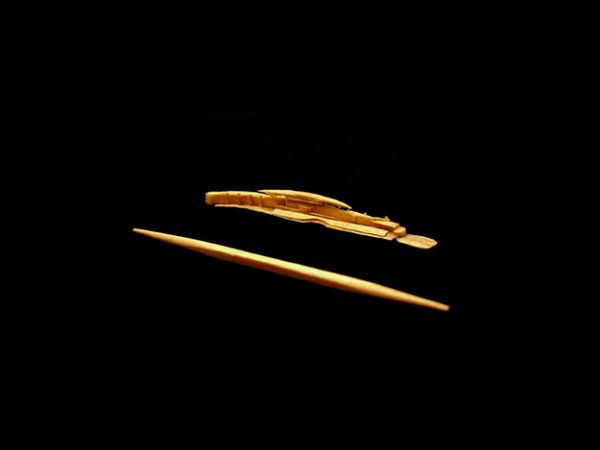
San Francisco artist Steven Backman assembles miniature sculptures from toothpicks and glue—compact lattices where joinery, patience, and structural logic replace fancy materials.
Mathilde Roussel’s Lives of Grass: Hanging Living Sculptures
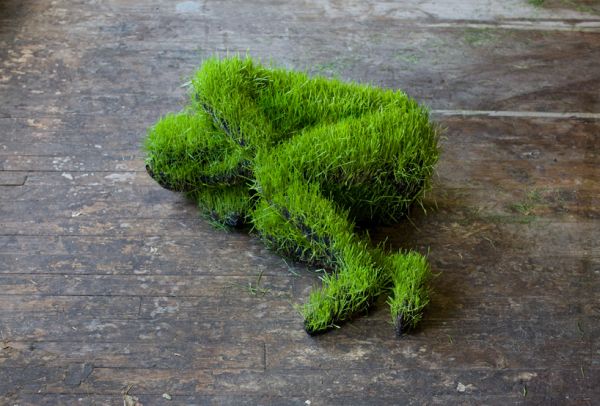
Paris artist Mathilde Roussel hangs anthropomorphic forms of recycled metal, fabric, soil, and wheatgrass—living sculptures that grow, yellow, and decay.

Monster Sculptures by Jordu Schell
Hollywood creature sculptor Jordu Schell’s clay monster busts—horned, alien, and decaying—read as character studies as much as scare pieces.