
River of Books
Luzinterruptus flooded Melbourne’s Federation Square with 10,000 LED-lit discarded books for Light in Winter 2012—Literature Versus Traffic, donated via the Salvation Army.
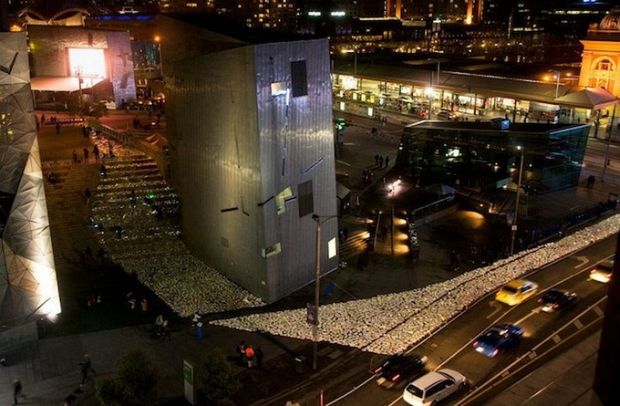
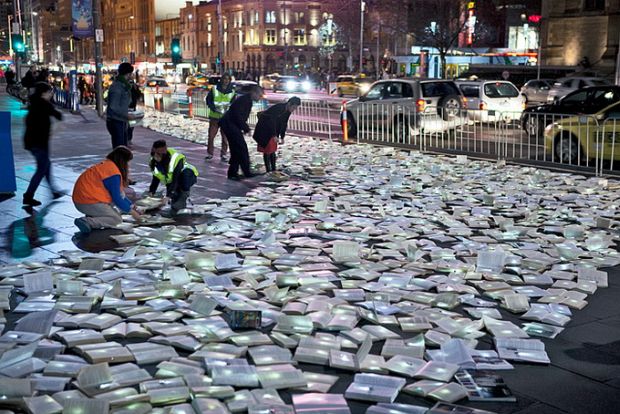
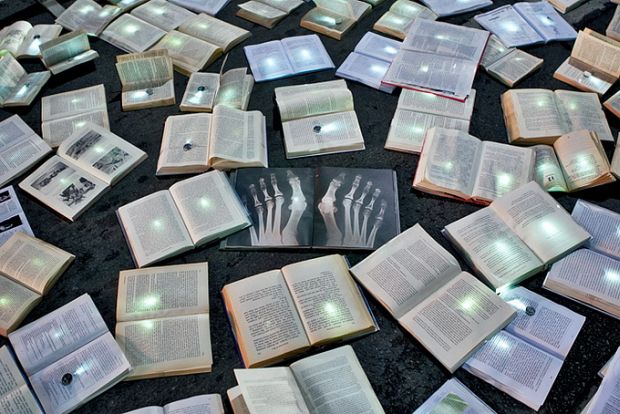
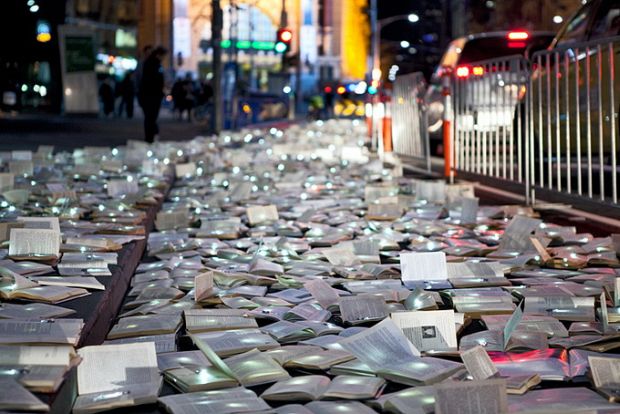
In June 2012, Federation Square in Melbourne filled with a glowing river of paper. Ten thousand discarded books—gathered and donated through the Salvation Army after public libraries retired them—were laid across pavements and into street space as part of The Light in Winter festival. Spanish collective Luzinterruptus titled the work Literature Versus Traffic. Visitors knew it simply as a river of books: covers and pages underfoot, LED light bleeding through text, winter crowds pausing where cars usually claimed the right of way.
The photographs on this page document that temporary flood. They show books as topography, light as weather, and a major civic plaza briefly rewritten as a reading room without walls. What follows is the story of the installation—who made it, why Melbourne asked for it, how the river grew over a month, how it related to an earlier New York version, and what happened when the festival ended and the books were free to leave.
Light in Winter, National Year of Reading
The Light in Winter is Federation Square’s annual winter festival of light, conversation, and temporary public art. In 2012, with reading as the festival theme—aligned with Australia’s National Year of Reading—organizers invited Luzinterruptus to scale up a piece the collective had previously staged in a more guerrilla form in New York. Melbourne offered duration and civic partnership: roughly a month on site through June, with time to assemble, adjust, and grow the river rather than drop it overnight and vanish. Contemporary festival notes placed the 2012 season under artistic leadership associated with Robyn Archer and framed light not only as spectacle but as warmth, wisdom, and public gathering in cold weeks.
Luzinterruptus works anonymously as a group specializing in temporary light interventions in public space. Their Melbourne statement described a romantic intention: to soften Federation Square’s modern, sometimes cold architecture into something intimate enough for reading and quiet. Madrid’s summer heat traded for Melbourne’s mild, rainy winter. The materials were humble on purpose—obsolete library stock, small lights, volunteer labor—and the gesture was political in a soft register. Literature would “steal” pavement from traffic, not with barricades, but with books. That softness is why the piece photographed so well and argued so clearly: nobody needed a manifesto once they saw a lane of Flinders Street yielding to paper.
From New York sketch to Melbourne flood
The Melbourne edition was not a first draft. Luzinterruptus had already tested Literature Versus Traffic in New York as a sharper, more subversive street occupation. Festival organizers asked for an expanded, month-long version that could grow in public rather than flash and disappear. That commission changed the work’s character. New York’s hit-and-run energy became Melbourne’s slow accumulation: books added, paths reshaped, the river allowed to claim more ground as weather and schedules permitted. The artists later called it their largest installation to date—an admission of scale that matches the photographs’ continuous carpet of spines.
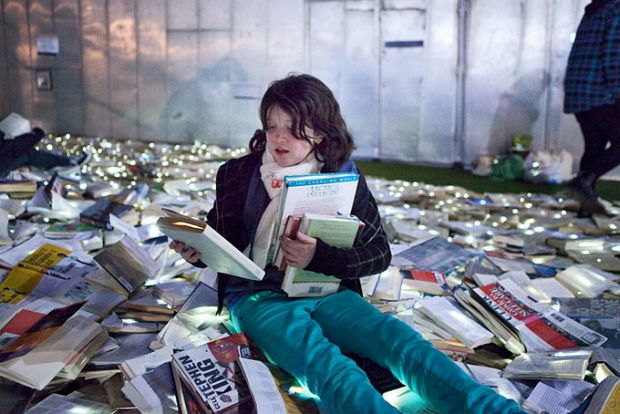
Expansion also changed the audience contract. A one-night intervention surprises. A thirty-day presence becomes civic furniture. Commuters crossed it daily. Tourists treated it as a landmark. Readers sat. Children treated the glow like a low constellation. The piece had to survive rain, footfall, and the plaza’s competing LED spectacle without turning into litter. Luzinterruptus reported a hard battle against climate and, with some pride, no damage—labor measured in weeks, exhibition measured in a month.
Ten thousand books, one symbolic lane
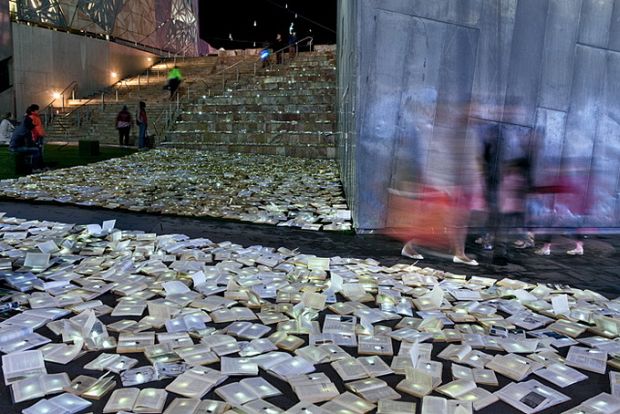
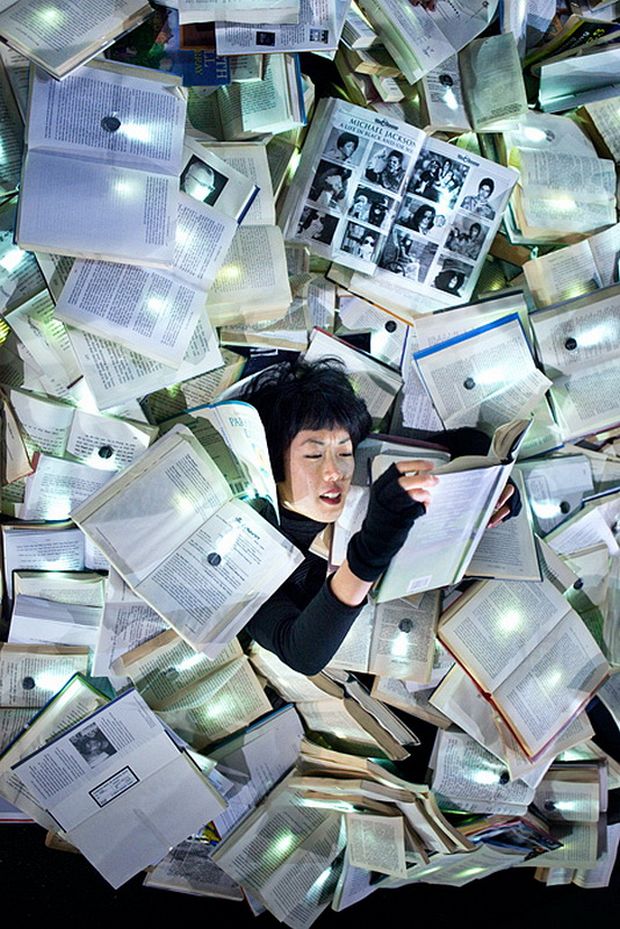
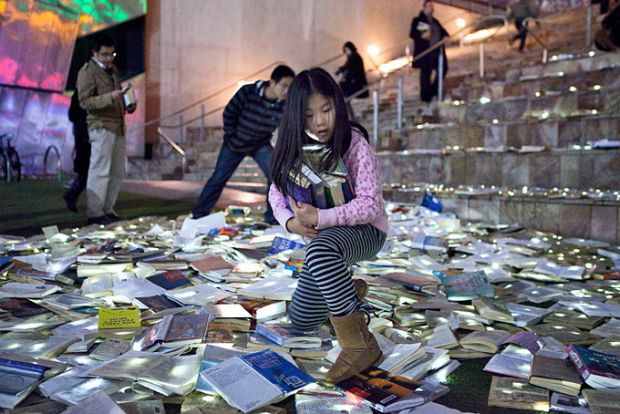
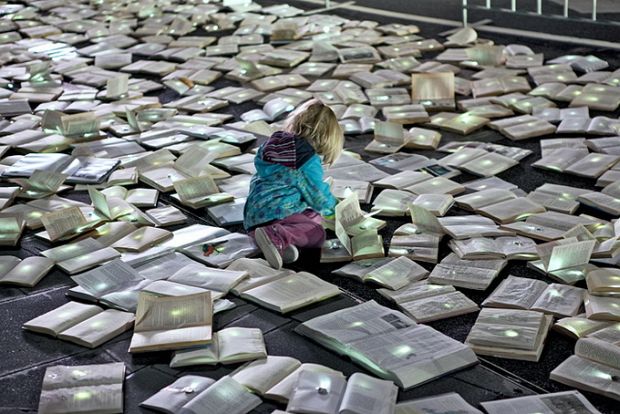
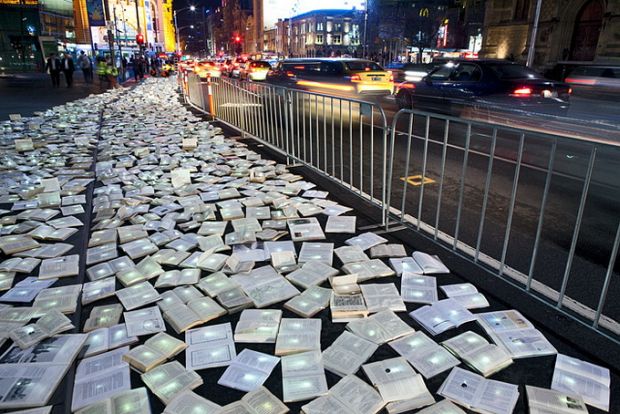
The Salvation Army’s role was practical and central: collecting and donating the discarded volumes so the artists did not stage a metaphor on empty shelves. Libraries had judged the books obsolete; the installation gave them a second public life before any final disposal. Each volume received light—LEDs placed so printed words glowed from within or beneath the page stack. From a distance the square looked flooded. Up close, titles, spines, and languages became readable topography. People walked the edges, crouched to examine a cover, or simply stood in the dim wash while Federation Square’s brighter screens competed overhead.
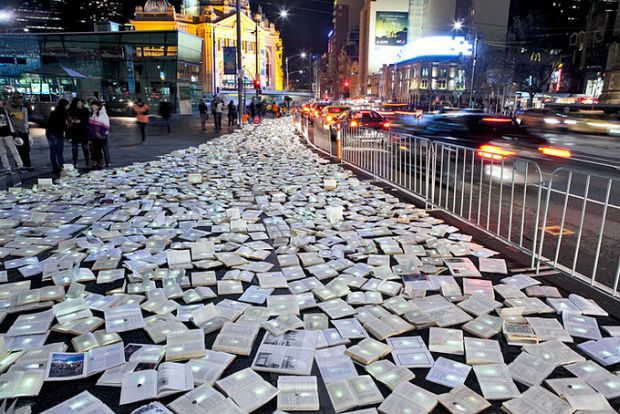
Over the month the collective and helpers reconfigured the river, letting it expand and shift. The stated objective matched the New York premise: overflow pedestrian space into lanes assigned to cars, a symbolic conquest in which the written word took temporary control of the street. By the night of 30 June, according to the artists’ own account, a lane of busy Flinders Street had become a reading room lit by the books’ modest glow. That detail matters for anyone who only knows the project from aerial-looking photos. The river was not only decorative ground cover inside the square; it pressed against the city’s traffic logic until literature held a slice of asphalt.
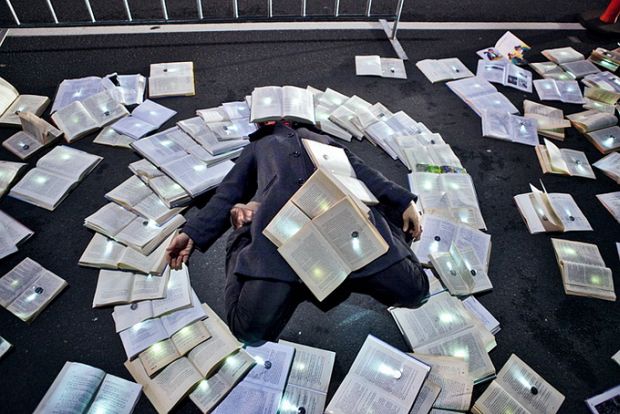
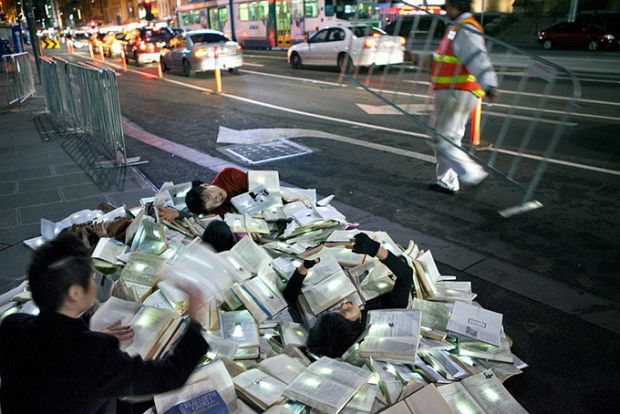
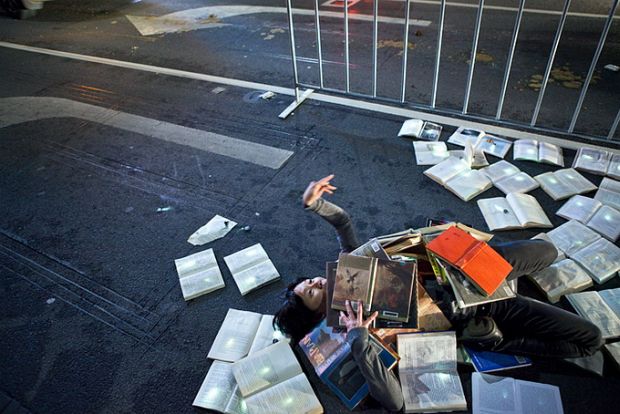
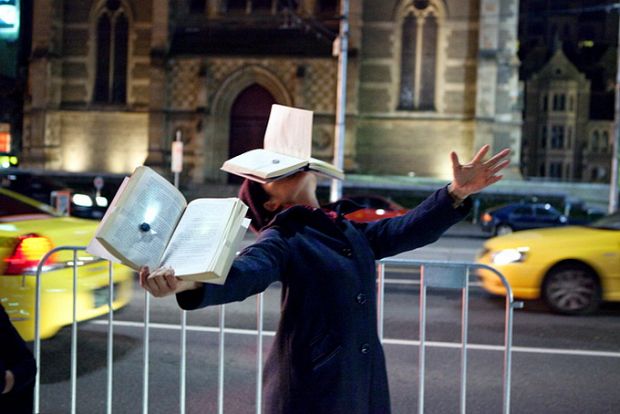
Photographs by Gustavo Sanabria and other documentation from the period emphasize scale: books as continuous ground cover, bodies silhouetted against the glow, the square’s angular architecture holding a soft interior of paper. The images on this page belong to that visual record. They are not generic “books as art” stock. They are evidence of a specific civic experiment in June 2012—Melbourne winter, festival brief, Salvation Army logistics, anonymous Spanish light artists working with local help.
Closing night: take a book, gift a car
Public art that uses discarded books always raises a question: is this celebration or waste dressed as spectacle? Some readers bristle at any artwork that lays volumes on the ground. Luzinterruptus answered at the end rather than the beginning. On the final night, visitors were invited to choose volumes from the thousands on the ground and take them home. The river emptied into private shelves. In addition, artists from the company Yumi staged an impromptu performance that closed with books offered through open car windows to drivers on the adjacent streets—startled recipients of literature’s last small conquest of traffic.
That ending matters for how the project should be remembered. The books were not destroyed for a photo. They were staged, read beside, walked around, and then redistributed. The Salvation Army’s donation, the festival’s reading theme, and the collective’s traffic-versus-literature thesis all resolve in the same practical act: paper returning to readers. A motorist receiving a mysterious gift through a window is almost too perfect a coda for a work named against traffic—but it happened as reported by the artists, not as a later myth.
How to look at these frames
Online, the images travel as beauty first—warm light on paper, a plaza made strange. Slow down and three layers return. First, material: obsolete stock, LED hardware, weatherproofing labor. Second, urban form: Federation Square’s facets, the edge where pedestrian space meets Flinders Street, the competition between modest book-glow and commercial LED boards. Third, civic argument: who owns the ground between curb and facade, and whether culture can borrow it without permanent concrete.
Notice bodies in the frames when they appear—how people crouch, point, or stand still. The river works because humans renegotiate gait. Notice also emptiness in other shots: books alone under night sky, no crowd required for the thesis to hold. Both kinds of picture tell the truth. A public reading room can be crowded or solitary; the light still asks the same question about attention.
Credit the work clearly when you share a frame: Luzinterruptus, Literature Versus Traffic, Federation Square / Melbourne, Light in Winter 2012; books via Salvation Army donation of discarded library stock; documentation including photographs by Gustavo Sanabria. The collective’s own site remains the primary artist statement. Dezeen, Laughing Squid, and contemporary festival coverage fixed the numbers that still organize memory—10,000 books, one month, a scaled-up sequel to New York.
If you stand, even in a photograph, at the edge of that paper flood, notice how ordinary the materials are and how unusual the pause feels. Melbourne did not need a monument. For one winter month it needed a river you could read—and then, on the last night, carry home under your arm while traffic kept moving beside you, briefly outvoted by paper and light.

Comments
Continue reading
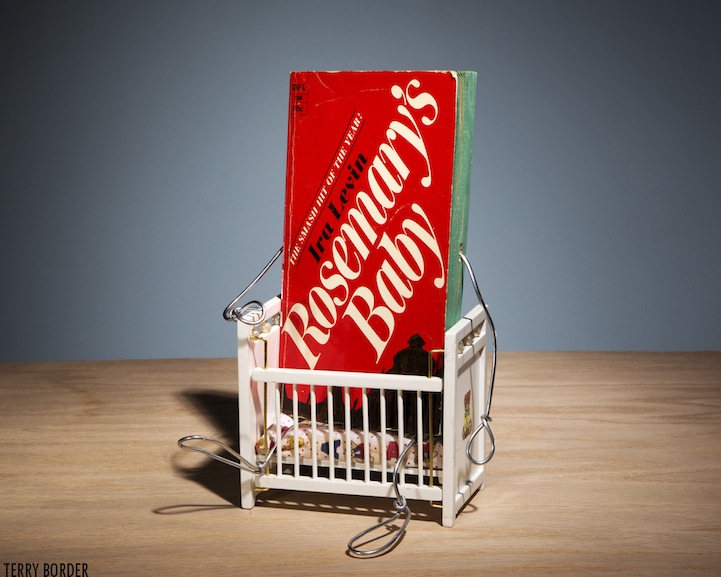
Terry Border’s Animated Old Books
Terry Border’s Wiry Limbs, Paper Backs series turns vintage paperbacks into wire-limbed characters—Bent Objects craft, literary humor, and how the photos stage each title.
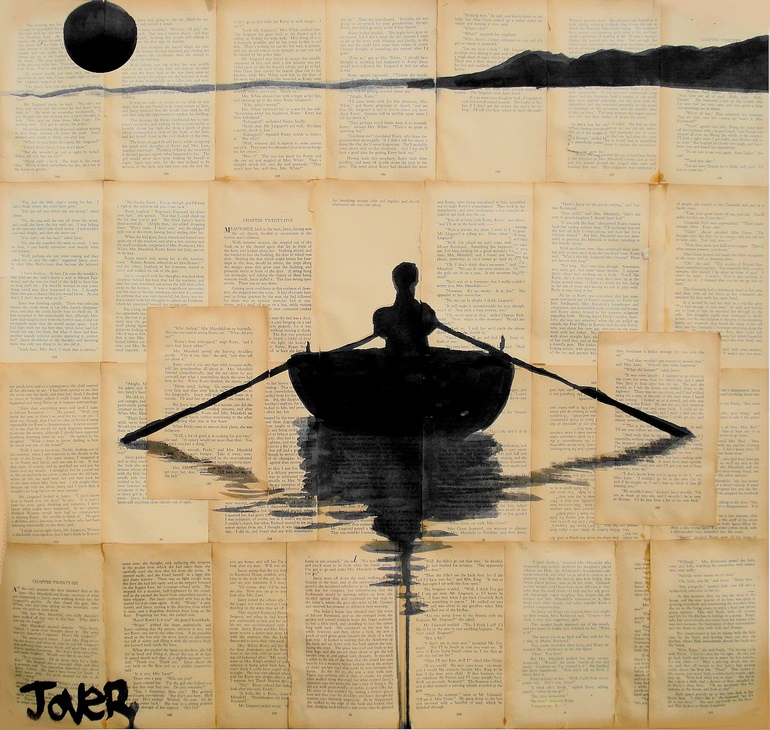
Ink Drawings on Vintage Book Pages by Loui Jover
Queensland artist Loui Jover draws in ink on collaged vintage book pages, letting printed text, fragile seams, and chance pairings deepen faces, embraces, and solitary figures.

Still-Life Photography by Margareth Perfoncio
São Paulo photographer Margareth Perfoncio’s still lifes of food and flowers—Old Master light, dark wood, and tables that feel inevitable.