
Real Fish Heads in Everyday Life by acbe
Anne-Catherine Becker-Echivard (acbe) stages dioramas of daily life with real fish heads—handmade sets, film photography, and comic allegory in Les Temps Modernes.
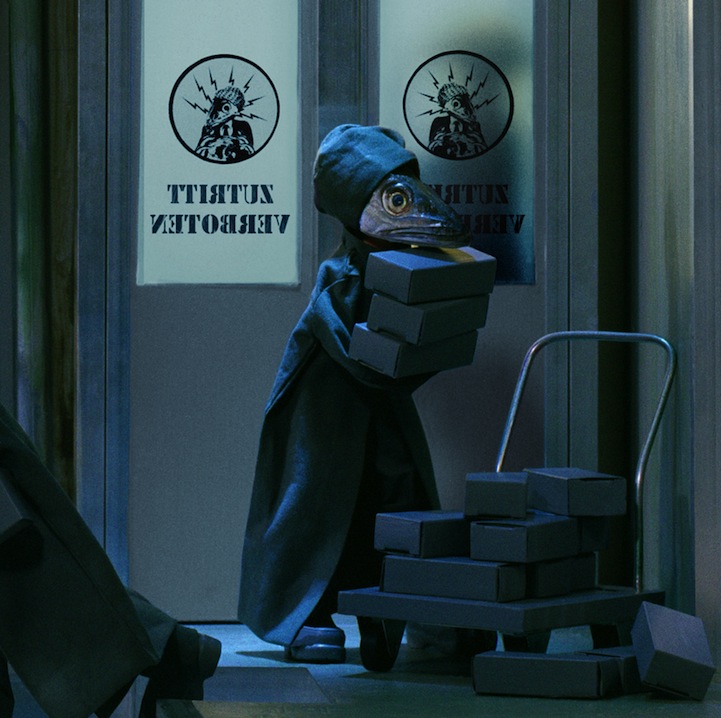
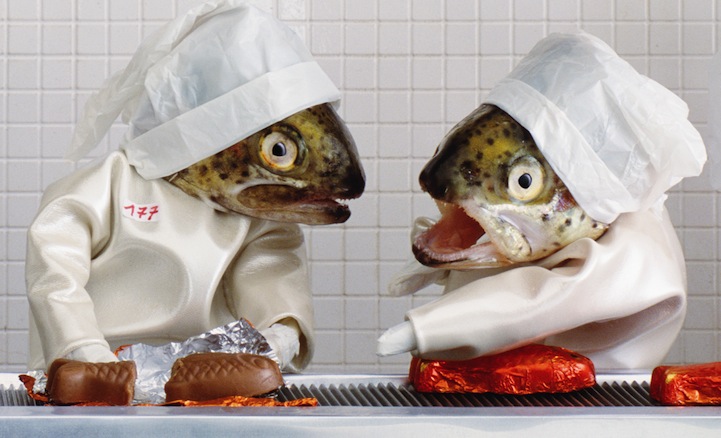
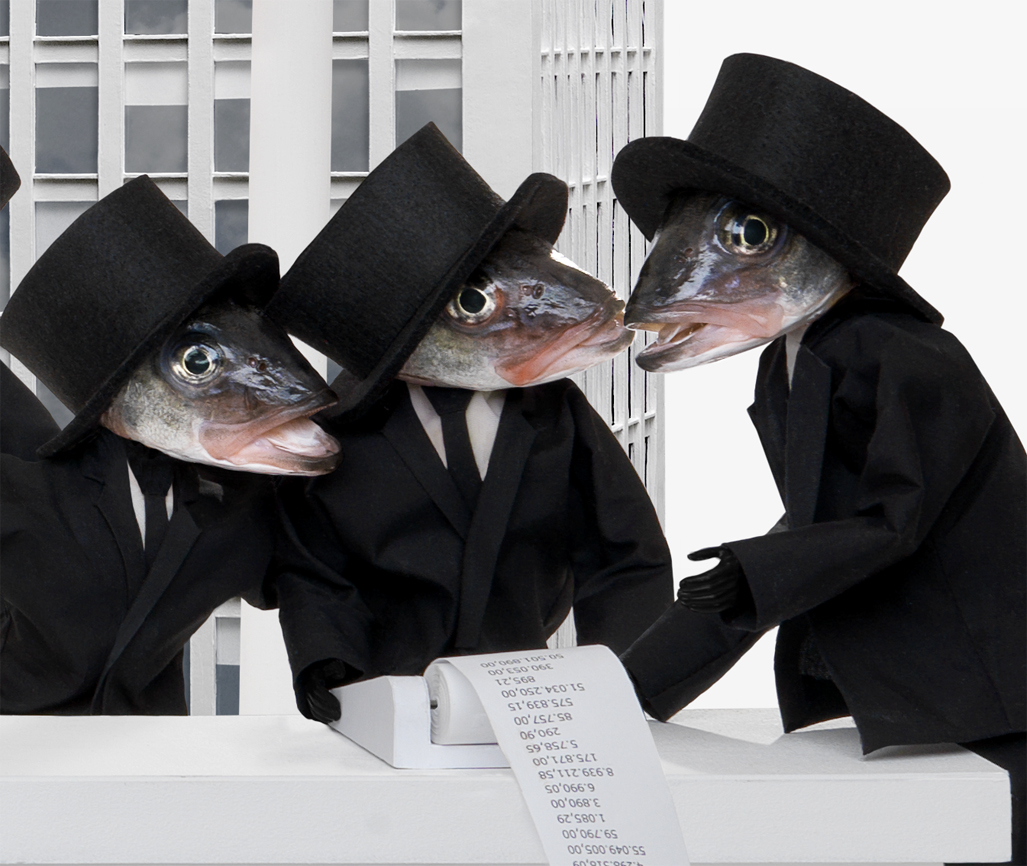
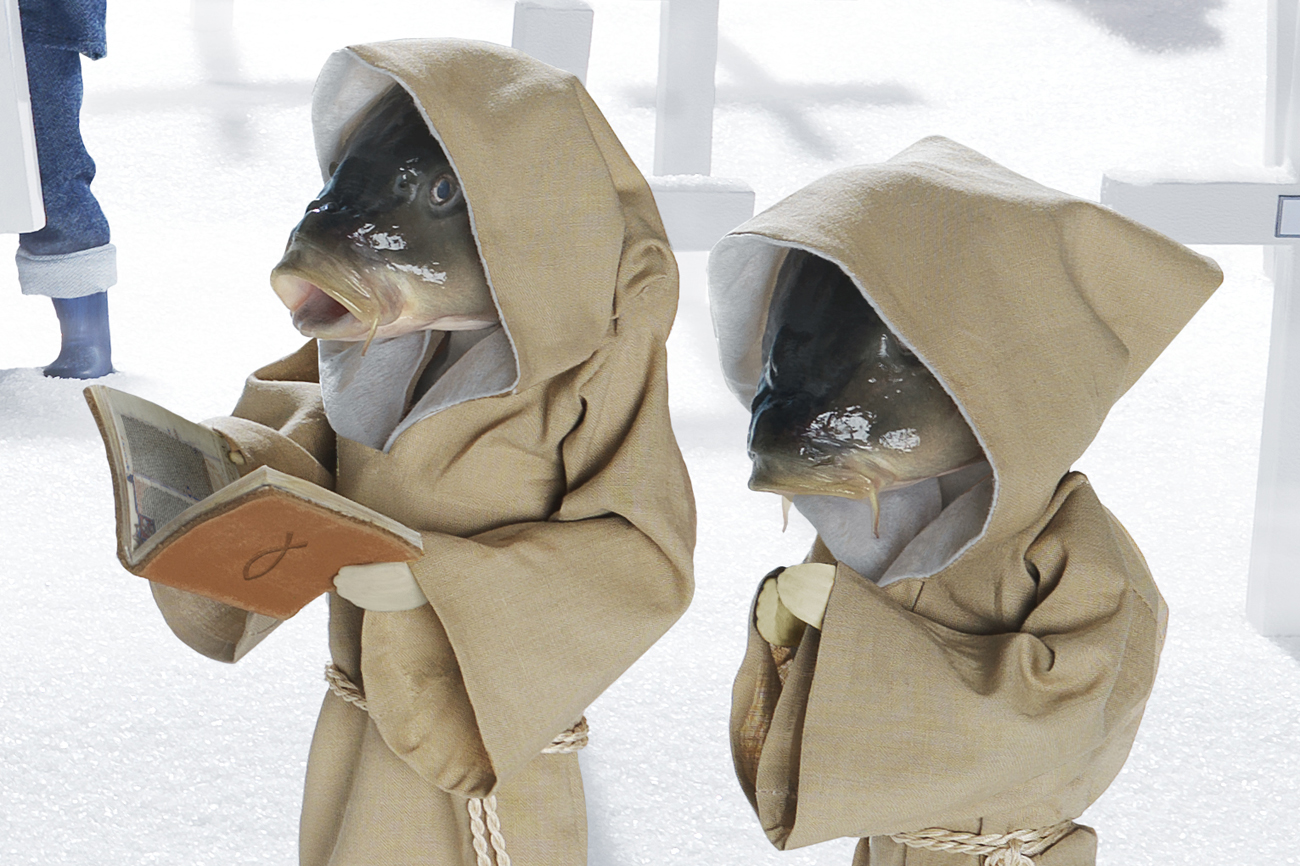
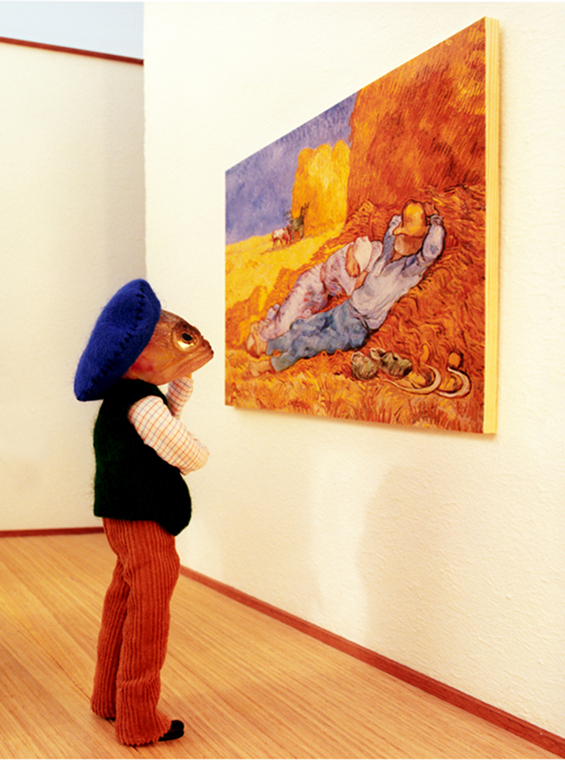
French artist Anne-Catherine Becker-Echivard—known professionally as acbe—builds miniature stages of everyday life and then casts real fish heads as the faces of her figures. The scenes look playful at first glance: workers, café sitters, shoppers, people waiting in rooms that feel almost familiar. Look longer and the comedy tightens into allegory. The fish do not glance at the floor in defeat; they occupy the set the way actors occupy a play. We recognize ourselves in their postures even while the heads insist that these are not people at all.
Her long-running photographic project is often grouped under titles such as Les Temps Modernes (Modern Times), a nod to Chaplin and to a broader silent-film inheritance—Keaton’s physical precision, the moral clarity of early cinema’s gestures. Influences she has cited in interviews also reach toward Eisenstein, Murnau, Fritz Lang, and Bauhaus discipline. The photographs are not digital mashups. They are the end of a slow, handmade process: drawing, building, dressing, lighting, then a short window when fresh fish arrive and the camera must work.
Who is acbe (Anne-Catherine Becker-Echivard)?
acbe directs a theatre she builds herself—scenario, lighting, wardrobe, decoration—then places viewers inside the fantasy. The curtain opens on something else: light comedy with serious undercurrents, boulevards that are not always funny, a sincere strike of the three blows before the scene begins.
Born in 1971 and associated with work that has circulated from Europe outward since the late 1990s, she trained in photojournalism in Paris before the fish “imposed itself,” as she has described the obsession. Growing up partly by the Normandy coast mattered: fish were food, toys, and atmosphere. In the finished artworks they become a symbol for humanity—caricature with empathy, rage at hypocrisy filtered through absurd costume.
How the scenes are made
A vague idea matures into symbols. She draws, locking lines and colors that will later drive the image’s dynamism. Drawings scale up toward constructions that can stretch roughly two meters wide and a meter high. Props, costumes, and doll-like bodies are built by hand. Setup can take nearly three months. On shoot day she buys fish—sometimes large ones—cuts the heads for the figures, and treats the bodies as food afterward. Life as recycling is part of the ethic she articulates: the fish get a second life in the photograph; nothing is only spectacle.
She has emphasized traditional negative-film photography and the refusal of Photoshop as a shortcut for the diorama’s reality. Random accidents during building are welcomed as dialogue. That fragility is not a bug in the method; it is how the scenes stay alive. Twenty-four intense hours of shooting can follow months of carpentry and sewing. Viewers who only see the final print miss the smell, the heat of lights, and the race against freshness—but the images still carry a handmade density you can feel.
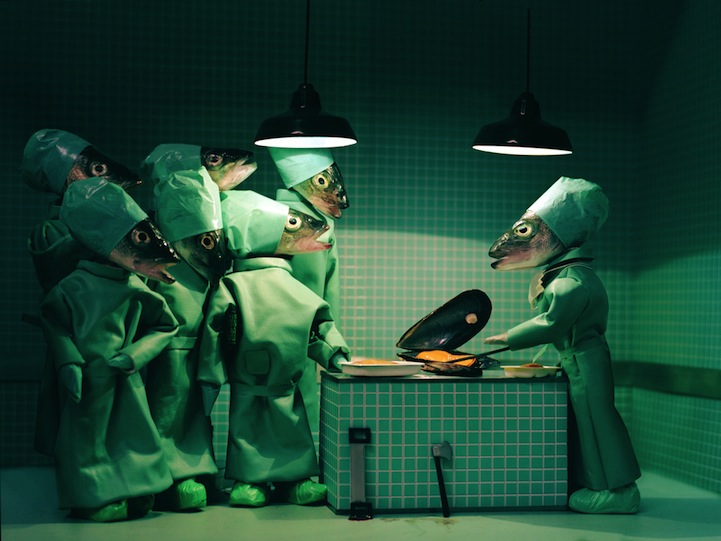
What looks like a simple joke—fish faces on tiny bodies—becomes social theatre. Factories, waiting rooms, leisure spaces, and domestic corners reappear as moral fables. Consumer culture, work routines, and the small humiliations of public life are recognizable without labels. The fish head is a mask that tells the truth by refusing a human face.
Comedy with a serious undertow
acbe’s own framing distinguishes light comedy from boulevard scenes that refuse to stay merely cute. The work distracts, then asks for reflection. Spectators often report finding private echoes in the tableaux: a job, a crowd, a posture of waiting. That ambivalence—funny and derisory at once—is the point of the theatre metaphor. You laugh, then notice you laughed at a mirror.
Merging human and animal has medieval and fable precedents; bestiaries taught ethics through hybrid bodies. acbe updates the device for contemporary life. Instead of dragons, you get sardines and mackerel performing office hours. The political temperature can rise—prisoners, media rituals, industrial labor—or drop into domestic absurdity. Across the range, the fish remains the constant actor.
Reading the everyday
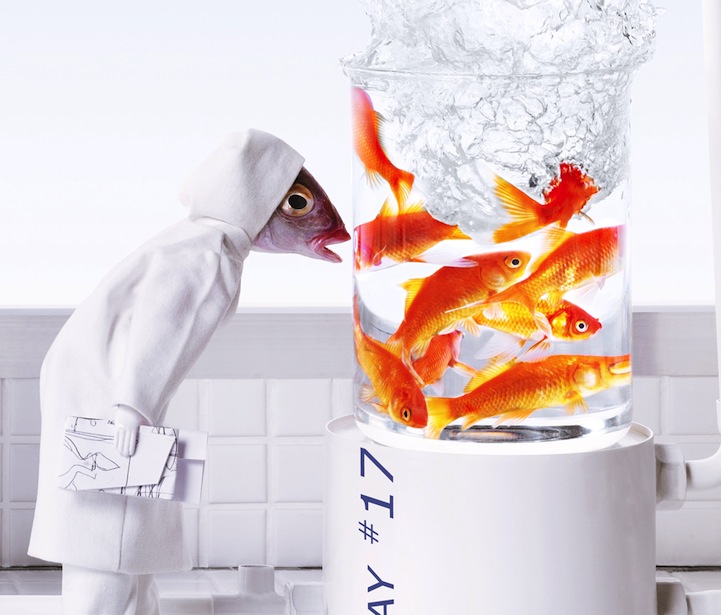
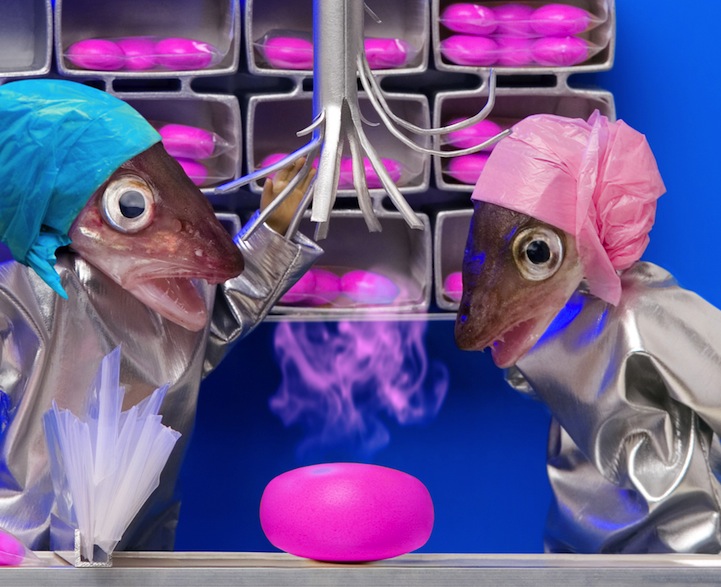
Because the sets mimic ordinary architecture and furniture, the eye accepts the room before it argues with the faces. That sequencing matters. First you believe the boulevard; then the fish interrupt belief. The interruption is gentle enough to keep you looking and sharp enough to keep you thinking. “Parts in an act, in a photograph,” the older lyric around this work suggested—and the phrase still fits. Each print is a scene from a play that never needs dialogue because costume and blocking already speak.
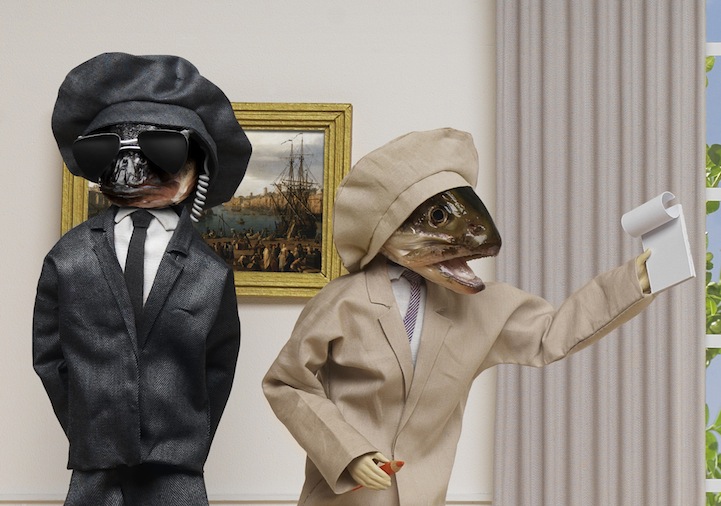
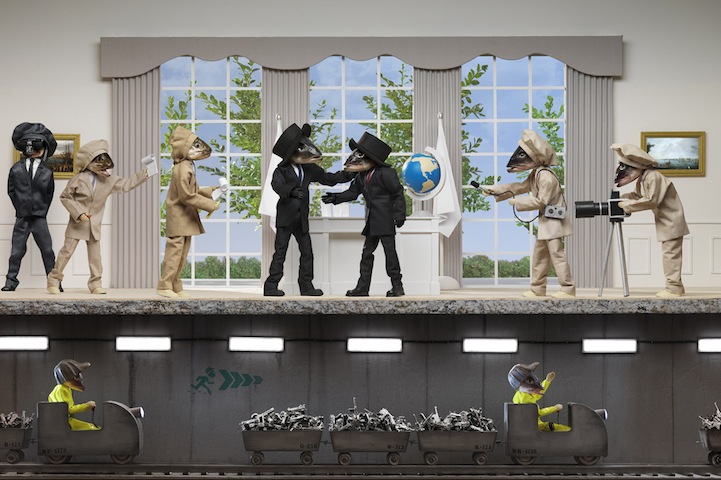
Compare the images as you scroll. Some lean toward group choreography; others isolate a pair or a single figure. Scale shifts—wider rooms, tighter corners—change the emotional weather. Color and costume do narrative work: uniforms suggest systems; leisure clothes suggest the systems’ off-hours. You do not need a checklist of “meanings” to feel the critique. The fish already carry it.
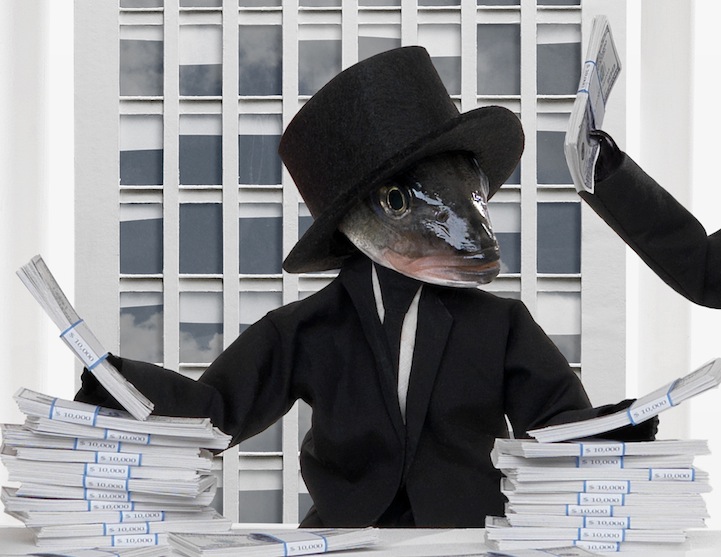
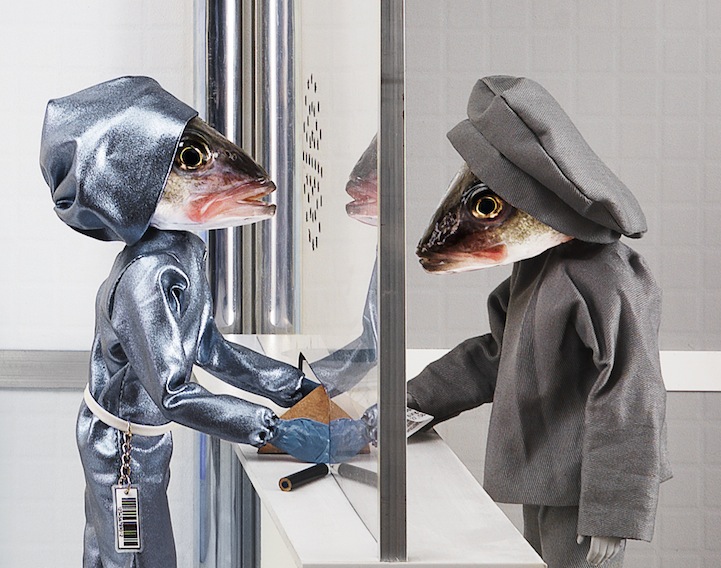
Why fish, not CGI creatures
Digital culture could fake hybrid faces endlessly. acbe’s insistence on real fish and film negatives is ethical and aesthetic. The perishable material introduces mortality into the joke. Shooting must happen; dinner follows. Empathy for the animal coexists with using it as symbol—an uncomfortable honesty she has addressed directly. The work is not cruelty-as-entertainment so much as a closed loop of craft, food, and image, argued in her own terms as respect through use.
That stance separates the series from meme surrealism. Memes remix; acbe constructs. Memes vanish in a day; a three-month set is an argument with time. When the photograph finally exists, it has already cost patience. Viewers sense that cost as density.
How to look
Start with posture. Where do the figures face? Who is central? What labor or leisure is being mimed? Then notice the set’s realism: doors, tables, tools, signage, the almost-boring accuracy of props. The more believable the room, the stranger the heads become—and the more the stranger heads accuse the room of being our own.
Finally, let the humour stay. Moral art that forbids laughter often fails; acbe allows both. The fish play. They play with us. They place us into the pieces. After the last image, the ordinary street outside the screen can look briefly like a set waiting for its cast—an afterimage that is the series’ quietest success.

Comments
Continue reading
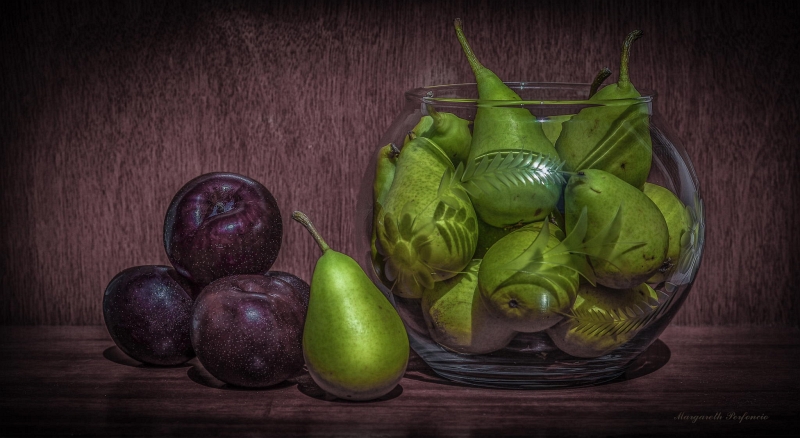
Still-Life Photography by Margareth Perfoncio
São Paulo photographer Margareth Perfoncio’s still lifes of food and flowers—Old Master light, dark wood, and tables that feel inevitable.

Meaningful Love Quotes for Inspiration (and Ink)
Meaningful love quotes that still feel true — short lines for tattoos, gifts, and everyday reminders, with placement and wording tips.
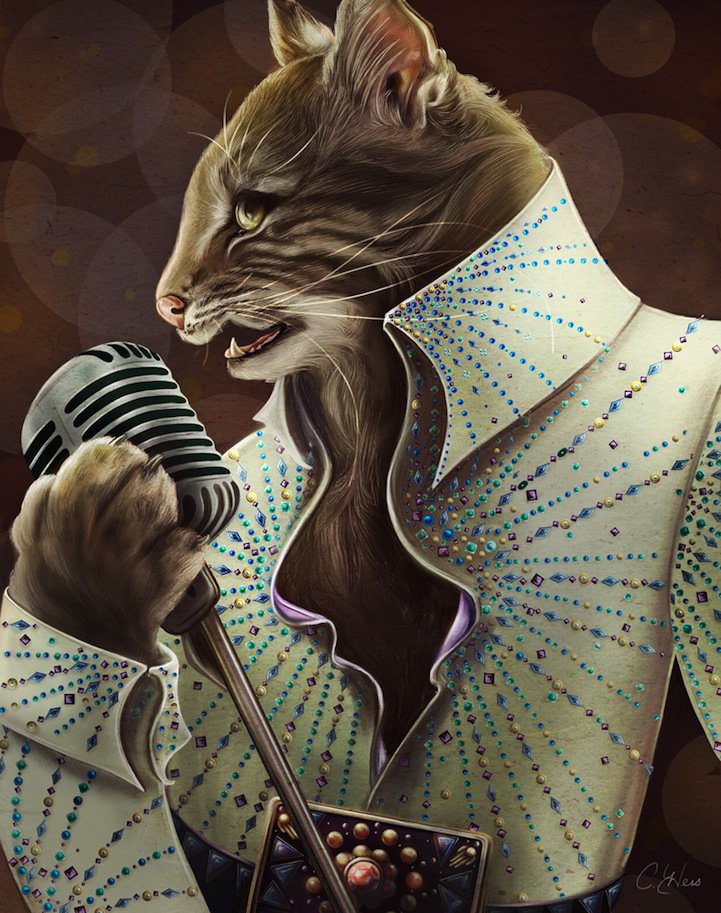
Christina Hess’s Animals From History: Costumed Pets as Playful Portraits
Illustrator Christina Hess reimagines historical icons as ornate animal portraits—Elvis Petme and friends—mixing puns, costume detail, and soft history lessons.