
Photography of Photography by Vik Muniz
Brazilian-born artist Vik Muniz builds monumental images from hundreds of found photographs—how photo-collage becomes a new picture, with portfolio images.
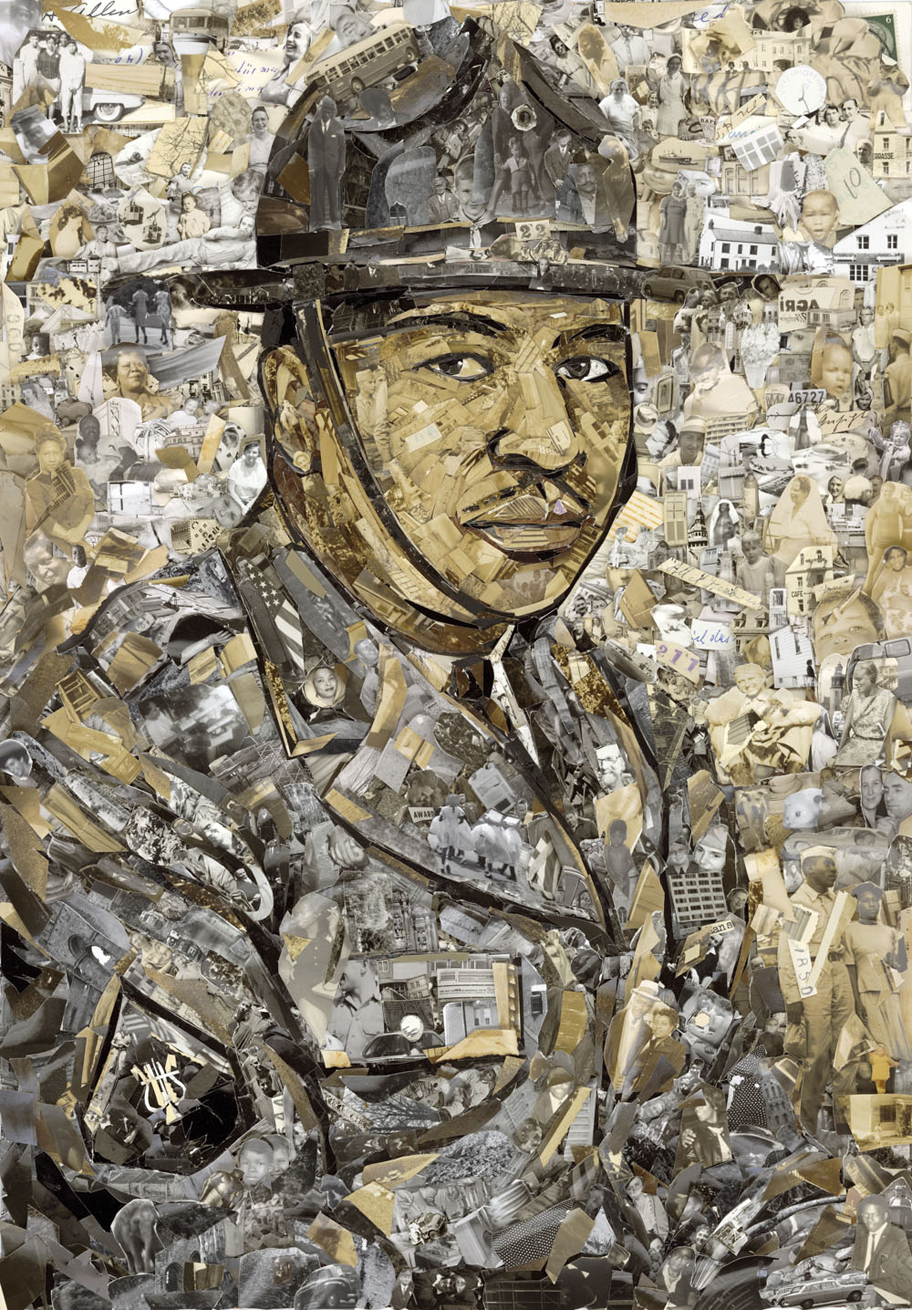
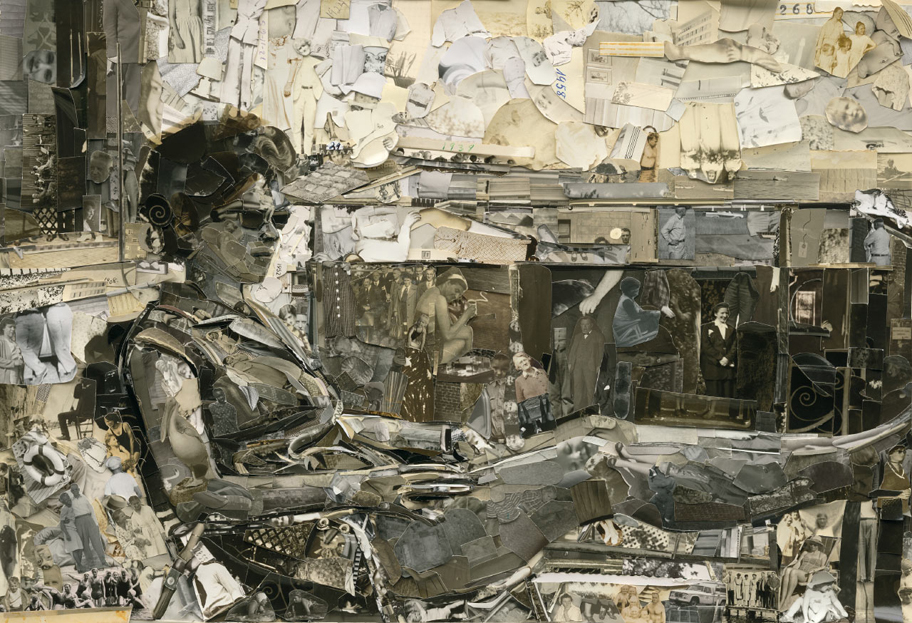
Brazilian-born, New York–based artist Vik Muniz has spent decades making pictures out of unexpected materials—chocolate syrup, sugar, junk, diamonds—then photographing the constructions so the final artwork is a photograph of a handmade illusion. In one especially meta body of work, the material is photography itself. He builds large collages from hundreds of other photographs, then shoots the assemblage so that, from a distance, a single coherent image appears. Up close, memory multiplies: faces, beaches, bikes, and faded snapshots become the brushstrokes of a bigger scene. The pieces below come from that photo-on-photo practice—sometimes nicknamed a photography of photography—where looking means zooming between whole and fragment.
Why build a photograph from photographs?
Muniz has long been interested in how pictures teach us to recognize the world. A famous painting remade in chocolate is funny and sharp because you know the original and you know dessert; the gap between recognition and material is the joke and the argument. When the “paint” is other people’s snapshots, the argument deepens. Family albums, tourist shots, and discarded personal photos carry private histories. Arranged by tone and subject, they form a new public image that still leaks those private histories at every seam.
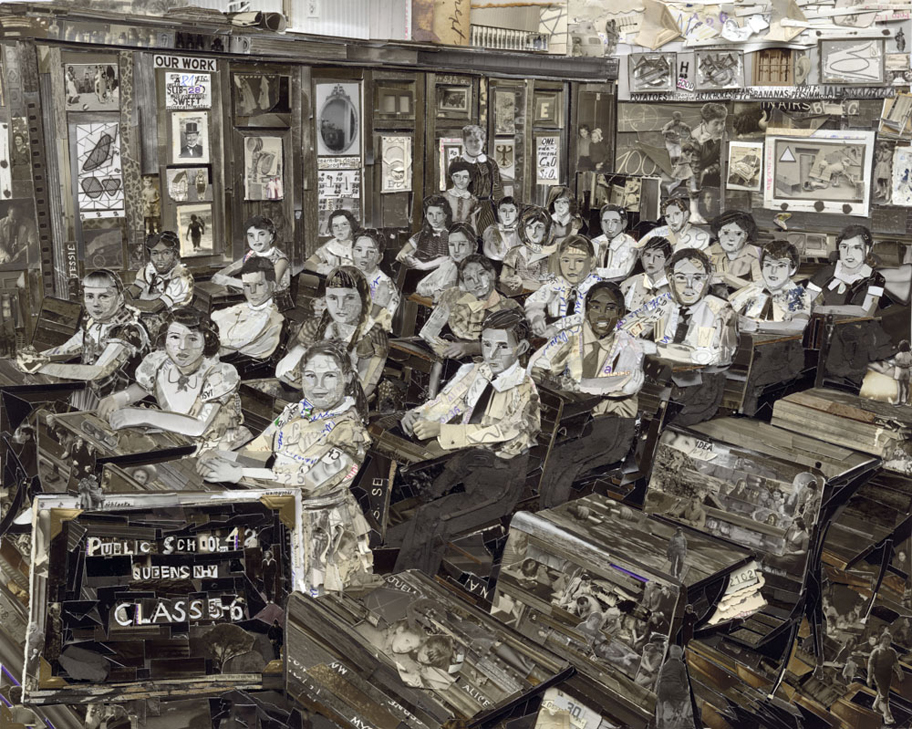
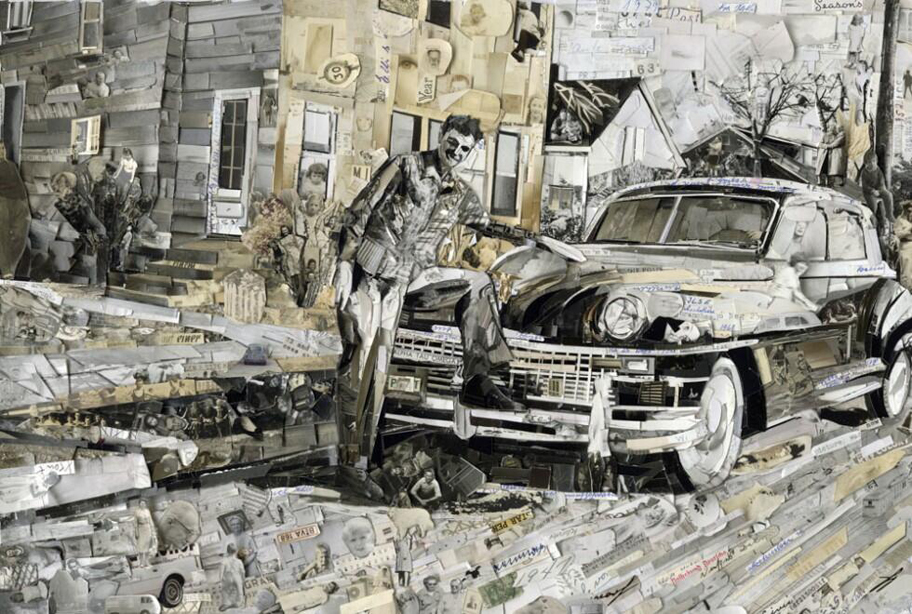
He has described seeking a vantage point that would make the picture identical to the ones in his head before he made the works—an imagination first, execution second approach. The collage is not a random patchwork. It is a controlled hallucination: the large silhouette or scene must hold from afar, while local clusters of images reward the viewer who leans in. Beach scenes gather around a sunbather; wheeled vehicles nest inside a car form; western-style portraits fill the body of a pony. Subject matter becomes both pigment and commentary.
Scale, scanning, and the Album moment
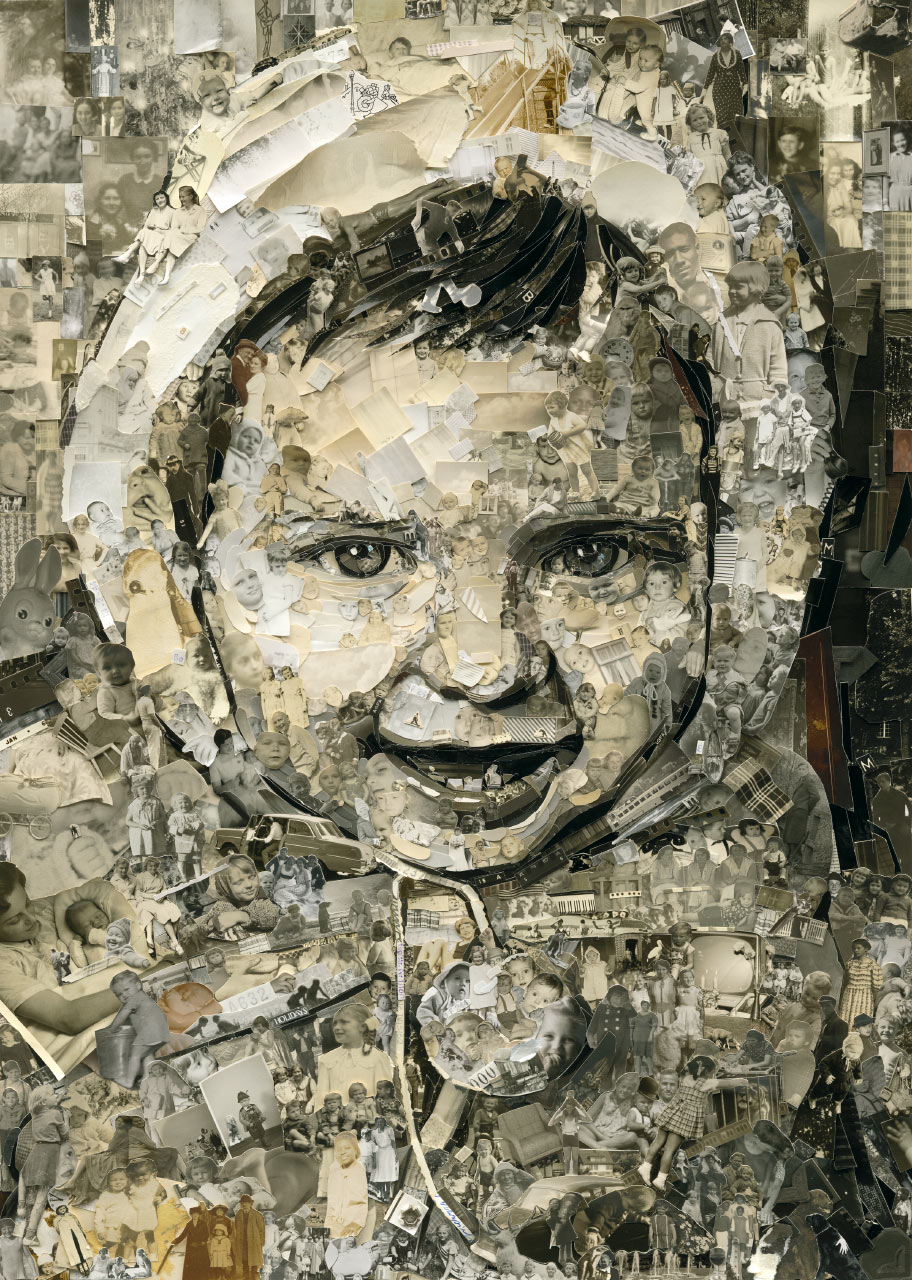
Around the early 2010s Muniz exhibited monumental works—sometimes grouped under titles like Album—built from found personal photographs. The baby portrait that looks like a soft studio shot can stand more than eight feet tall once printed. At that size, the collage stops being a clever thumbnail and becomes architecture for the eye. You walk toward it the way you walk toward a mural, then discover it is a city of tiny lives.
Process matters. Muniz and his studio collect and sort snapshots, cut and paste them into a tableau, then light and scan or photograph the construction with enough resolution that enlargement does not dissolve into mush. Backs of old photos appear too: ballpoint dates and handwritten notes introduce flecks of blue text at graffiti scale. Those backs remind you that every print once lived in a wallet or a box under a bed. The finished C-print is smooth, but the memory of paper edges and glue remains visible in the image.
This is not digital montage pretending to be handmade. The handmade stage is essential. Photography arrives as the recording instrument that freezes a temporary sculpture of paper. That sequence—build, then document—runs through Muniz’s career, whether the medium is garbage or gelatin silver relics of other people’s weekends.
How to look: far, near, and in between
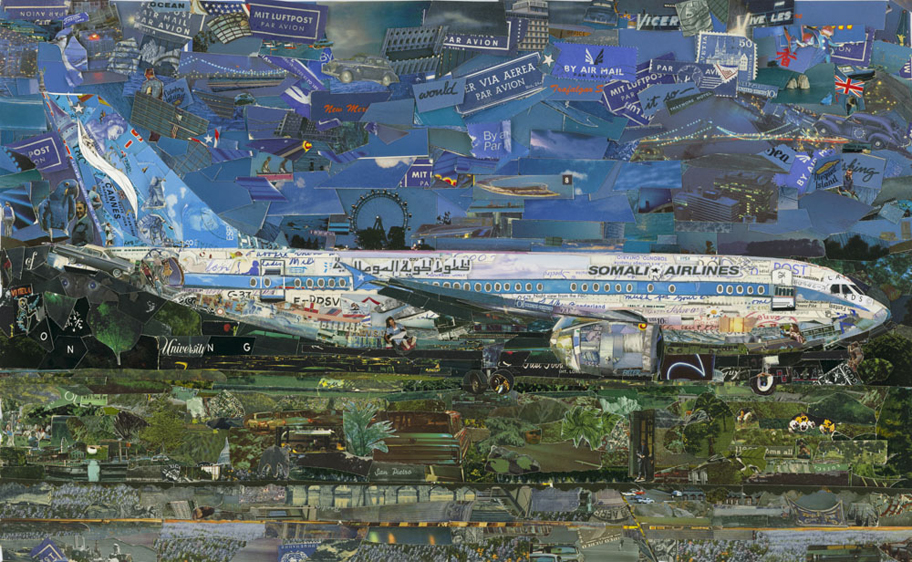
Give each image three distances. From afar, name the subject—the portrait, the animal, the figure on sand. At mid-range, watch how tonal bands of many photos assemble into cheek, tire, or wave. Up close, abandon the big subject and browse the tiny ones: birthday cakes, cars, strangers in outdated clothes, landscapes from vacations you will never take. The pleasure is double recognition—you see Muniz’s picture and, inside it, dozens of anonymous photographers who never meant to collaborate.
That collaboration is one-sided and slightly ghostly. The original snapshooters are absent; their rectangles have been drafted into someone else’s composition. Muniz’s work often plays with that ethical-aesthetic tension without turning into a lecture. He treats vernacular photography as a shared language, the way a mosaicist treats tile. Still, the emotional charge of a real wedding day or a child’s birthday inside a famous artist’s collage is hard to ignore. The pieces feel crowded with lives.
Compare this series mentally with his better-known material experiments. Chocolate Mona Lisas and sugar children from Caribbean plantations ask you to feel the gap between sweet surface and serious subject. Photo collages ask you to feel the gap between one memory and a swarm of memories. Both strategies make the viewer conscious of looking as an act of assembly.
Where Muniz sits in contemporary photography
Born in São Paulo in 1961 and long associated with New York’s gallery world, Muniz has exhibited internationally and become a reference point for artists who treat the camera as the last step rather than the first. His practice sits beside appropriation art and photoconceptualism, yet it remains stubbornly craft-forward. You can talk about Baudrillard and simulation if you like; you can also simply admire the patience of sorting grayscale clippings until a cheekbone appears.
For viewers who meet him first through these collage photographs, a useful next step is to browse earlier and later series: Pictures of Chocolate, Pictures of Dust, Pictures of Junk, and more recent surface experiments that fold painting, collage, and rephotography into layered hybrids. The through-line is perception under pressure. Muniz likes the moment when certainty wobbles—when you thought you knew what you were seeing and then the material contradicts you.
Online reproductions flatten scale, which is half the drama. Even so, the selected works here still reward a slow scroll. Pause on edges where one snapshot collides with another. Notice when Muniz matches not only value but theme, and when he allows a comic mismatch. Those choices are the drawing, even though no pencil is involved.
A small exercise for the next image
Pick one frame in this set and cover the center with your hand. Read only the periphery for thirty seconds—catalog five miniature scenes you can identify. Then uncover the center and ask whether those miniatures support the big subject or sabotage it. Muniz’s best pieces do both: they build a readable icon while letting the swarm of other people’s days keep talking underneath. If your eyes tire, that is appropriate. These works were meant for gallery walls and lingering. On a screen, lingering is still the right tool.
What remains after the trick is understood is not emptiness but denser seeing. Photography here is not a transparent window. It is a stack of windows, cut and glued until they pretend to be one. Vik Muniz makes that pretense beautiful, and then he lets you catch him at it—again and again, photo inside photo, memory inside memory.

Comments
Continue reading
Still-Life Photography by Margareth Perfoncio
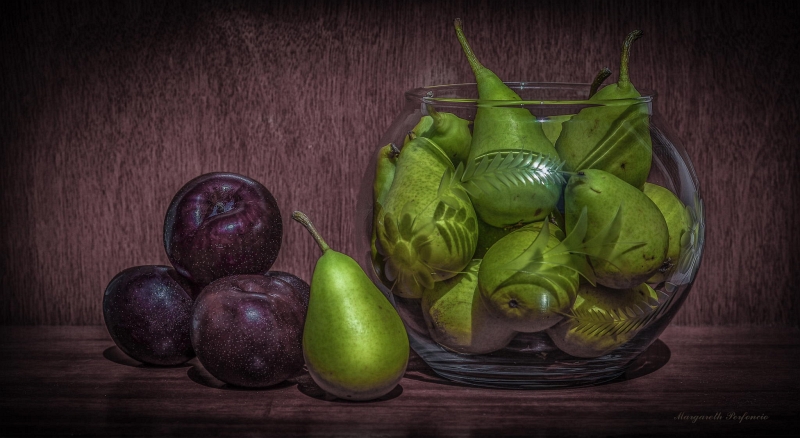
São Paulo photographer Margareth Perfoncio’s still lifes of food and flowers—Old Master light, dark wood, and tables that feel inevitable.

Meaningful Love Quotes for Inspiration (and Ink)
Meaningful love quotes that still feel true — short lines for tattoos, gifts, and everyday reminders, with placement and wording tips.

Christina Hess’s Animals From History: Costumed Pets as Playful Portraits
Illustrator Christina Hess reimagines historical icons as ornate animal portraits—Elvis Petme and friends—mixing puns, costume detail, and soft history lessons.