
Pencil Vs Camera by Ben Heine
Belgian artist Ben Heine’s Pencil Vs Camera series—how hand-drawn sketches meet photographed places, with a look at the technique and portfolio images.
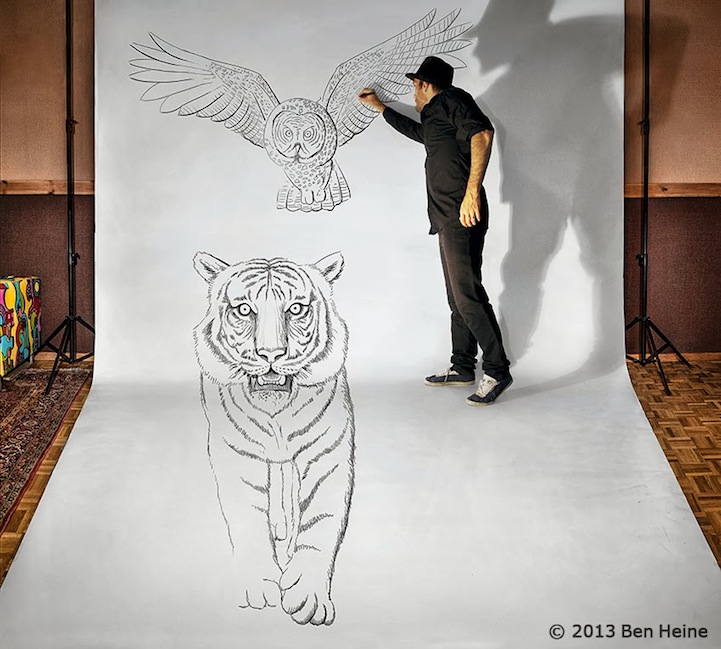
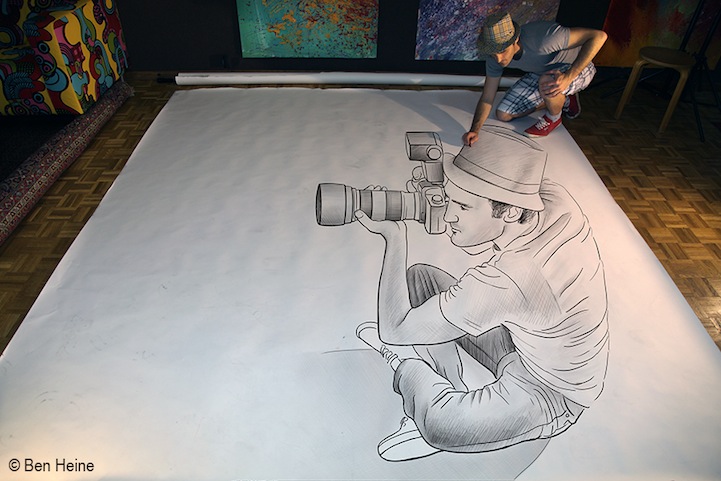
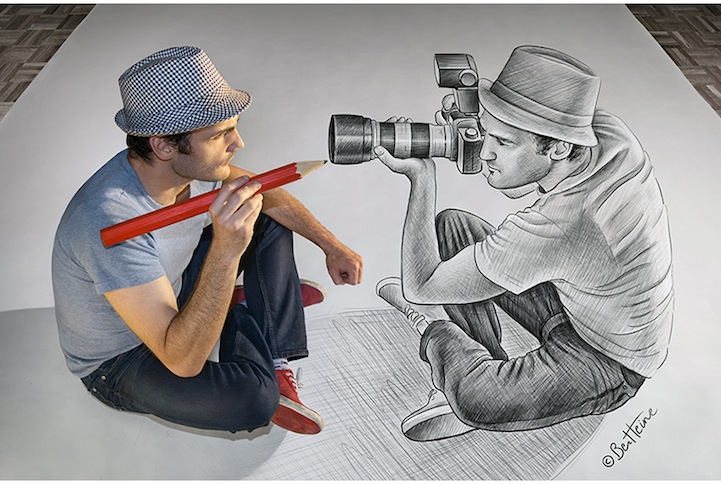
Ben Heine was born in Abidjan, Ivory Coast, in 1983 and is a Belgian multidisciplinary visual artist. Among his best-known original series are Pencil Vs Camera, Digital Circlism, and Flesh and Acrylic. Pencil Vs Camera—the focus of this gallery—is the body of work that made his name online and in exhibitions: a handmade drawing held in the frame so that graphite and the photographed world seem to finish each other’s sentences. The images below are shots from that portfolio. Look at how paper, pencil, and place lock together, and how often a visible hand reminds you that someone arranged the meeting.
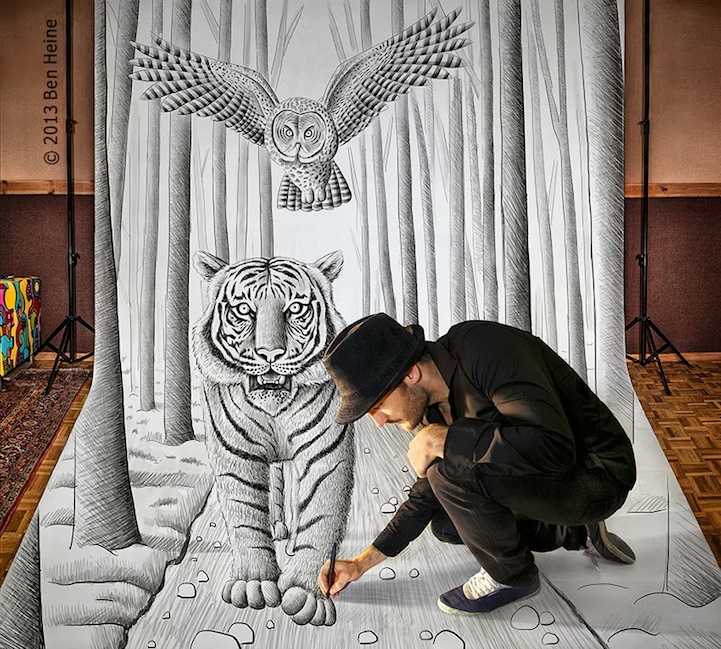
What Pencil Vs Camera actually does
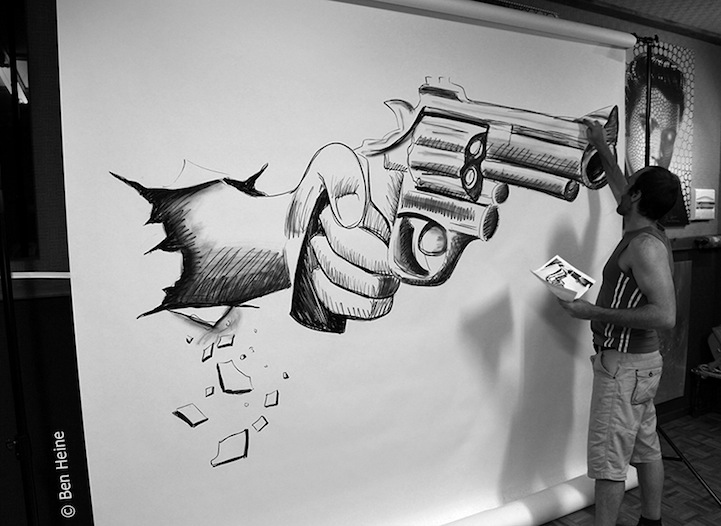
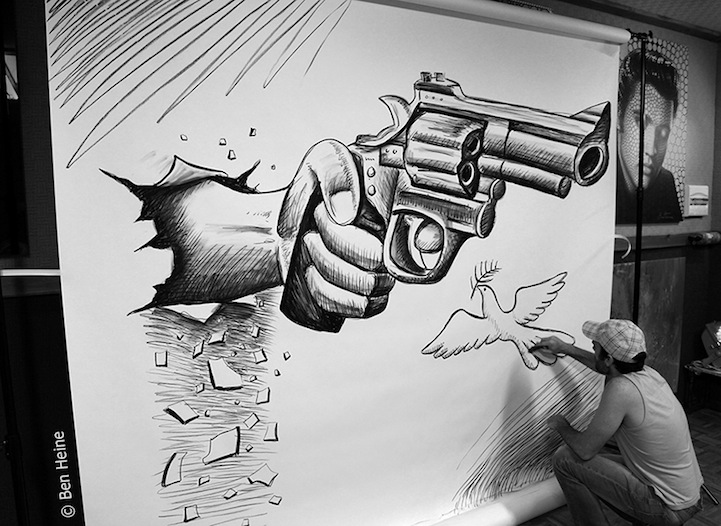
Heine’s signature move is deceptively simple to describe and exacting to execute. He draws on a sheet of paper—often at a generous scale—then positions that sheet in a real environment and photographs the combination so the sketch aligns with buildings, landscapes, or figures behind it. A hand, frequently his own, usually holds the page. That visible hand is not a casual leftover; it marks authorship and reminds you that the illusion is physical, not a silent digital collage pretending to be a single unbroken scene.
The series began to take public shape around 2010 and spread quickly through art blogs, design sites, and exhibition circuits. Viewers responded to the wit: a drawn creature completing a shoreline, an invented architectural flourish correcting a street, a romantic or surreal storyline grafted onto an ordinary place. Heine has described wanting people to dream and to feel an emotion closer to a poem or a melody than to a technical demo. The work uses illusion, but its aim is narrative and mood.
Importantly, he does not treat the photograph as a puzzle to be solved by tracing reality. The drawing reimagines the scene. Contrast between graphite invention and camera fact is the point. When the match is too literal, the piece can feel like a trick; when the match is playful or poetic, the piece feels like a short story with two narrators sharing one frame. That dual narration is why the series rewards a second look: first you smile at the gag, then you notice how carefully the horizon or a building edge was negotiated.
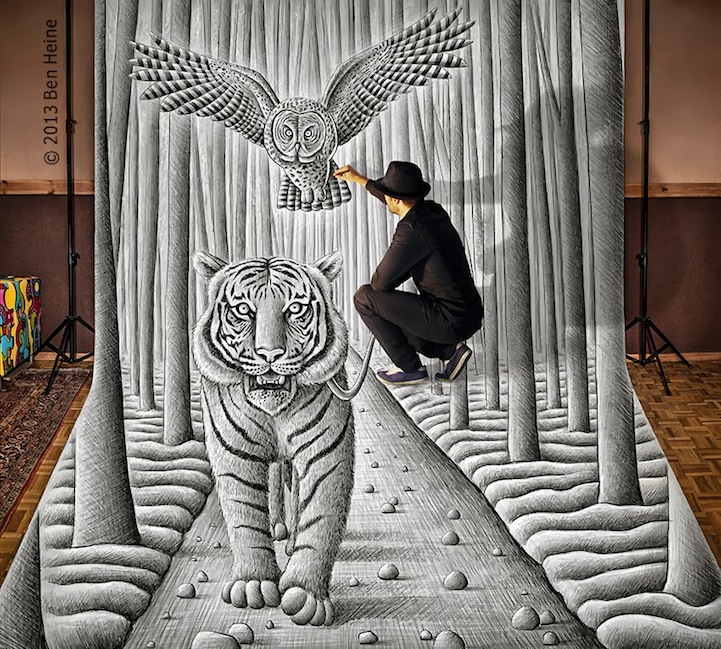
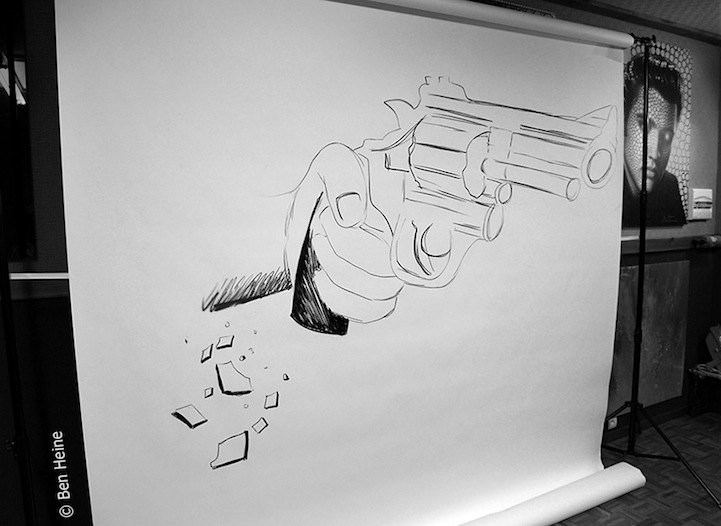
How the pictures are made
Heine has explained that the workflow can start either with the drawing or with the location. Sometimes he sketches at home and then hunts for a site that will accept the invention. Sometimes he finds a place first and draws to fit its lines, horizons, and light. Both paths demand patience: the paper must be held at the right angle, the camera must freeze alignment, and the edges of the sheet must feel intentional rather than accidental. Wind, glare, and passersby are practical enemies of the perfect hold.
Tools stay deliberately primary. Pencils, occasional charcoal or pen, paper, and a camera do most of the conceptual work suggested by the series title. Later innovations—color on the drawings, black paper, larger sheets—refreshed the look without abandoning the core duel between mark-making and photography. Heine has also acknowledged careful retouching when needed so the final image matches the intention; the craft remains rooted in handmade drawing placed into a photographed world rather than in pure software spectacle.
That handmade insistence is part of why the series stayed distinct even after smartphone apps began imitating the “drawing held in a scene” look. An app can mimic the layout. It cannot automatically supply Heine’s particular humor, draftsmanship, or choice of which fantasy belongs in which street. Scale matters too: a large sheet held in a landscape behaves differently from a postcard-sized gag. Heine’s bigger papers turn the prop into architecture of its own.
Where Pencil Vs Camera sits among his other series
Heine’s wider practice helps explain the appeal. Digital Circlism builds portraits from tonal circles—a meeting of pop and pointillist instincts in a digital key. Flesh and Acrylic turns living models into painted surfaces, again using the camera to fix a hybrid. Across these projects runs a preference for visible process: you are meant to see the system as well as the subject. Pencil Vs Camera is the most instantly readable of the three for a general audience because the props—pencil, paper, camera—are everyday objects performing an everyday miracle.
Background also shapes the tone. Heine’s path includes journalism study and self-directed training in art and photography. That mix shows up as communication-first image-making: clear premises, strong punch lines, and social or poetic messages that travel well in a feed without requiring a wall text. Exhibitions and press through the early 2010s amplified the series internationally; the pieces here belong to that era’s portable magic, when a single clever hybrid could circle the web and still hold up on a gallery wall.
Read beside his other series, Pencil Vs Camera looks like the most democratic doorway into his thinking. You do not need art-historical vocabulary to enter. You need curiosity about what happens when a drawing refuses to stay on the desk and insists on visiting the world.
How to look at this set
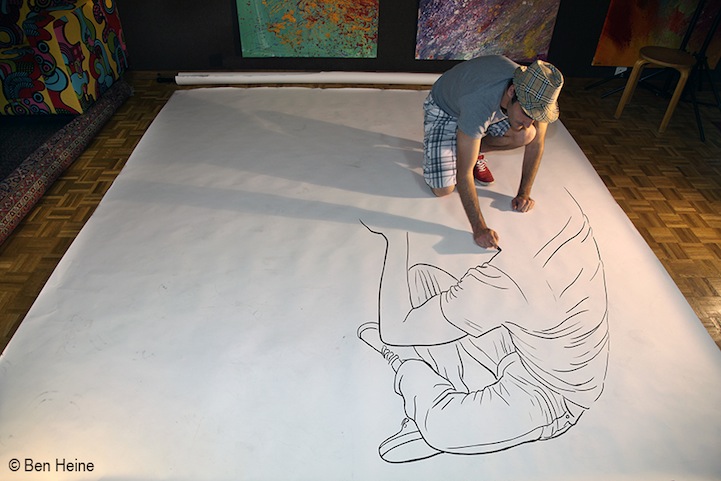
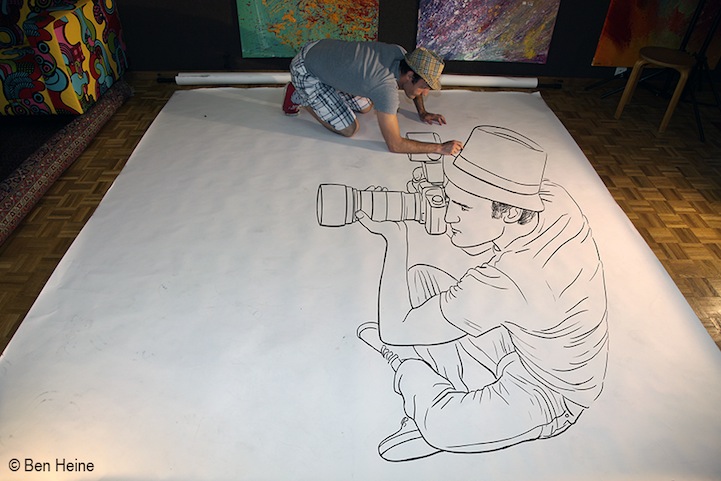
Give each image two passes. First, enjoy the gag or the romance—the moment your brain accepts the drawing as part of the world. Second, study the seam: the paper edge, the grip of the hand, the way a drawn line continues a photographed contour or deliberately breaks it. Those seams are where the art lives. They prove the meeting was arranged, not automated. Notice shadows on the paper, the slight curl of the sheet, and whether the drawn perspective agrees with the camera’s vanishing points. Small disagreements can be charming; large ones can break the spell—or create a different, more surreal spell on purpose.
If you make images yourself, borrow the constraint rather than copying a composition. Choose one invented element and one real place, then force them to negotiate. Work with actual paper when you can; the slight curl, shadow, and scale shifts teach you more than a layered file alone. Ask what story the hybrid tells that neither half would tell alone—humor, longing, satire, wonder. Limit yourself to one intervention per frame at first. Complexity is easier to add later than clarity is to recover.
Heine’s Pencil Vs Camera pieces remain satisfying because they keep the duel honest. The camera documents a place; the pencil proposes another possibility; the photograph records their temporary truce. Keep his name attached when you share a favorite frame from this gallery. The concept is his trademark, and the charm of these particular shots depends on that authorship—the hand in the picture, and the mind that decided what the pencil should win that day.
Before you leave, pick one image and cover the drawn area with your hand, then uncover it. Notice how quickly the scene goes from documentary to fable. That flicker is the series in miniature: reality holding still long enough for imagination to interrupt, then both staying visible at once.

Comments
Continue reading
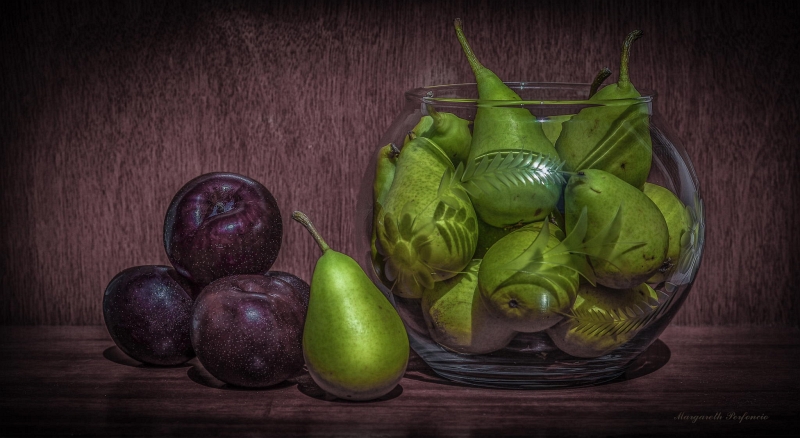
Still-Life Photography by Margareth Perfoncio
São Paulo photographer Margareth Perfoncio’s still lifes of food and flowers—Old Master light, dark wood, and tables that feel inevitable.
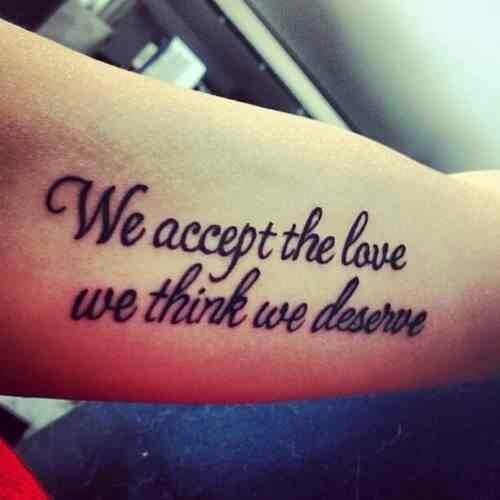
Meaningful Love Quotes for Inspiration (and Ink)
Meaningful love quotes that still feel true — short lines for tattoos, gifts, and everyday reminders, with placement and wording tips.
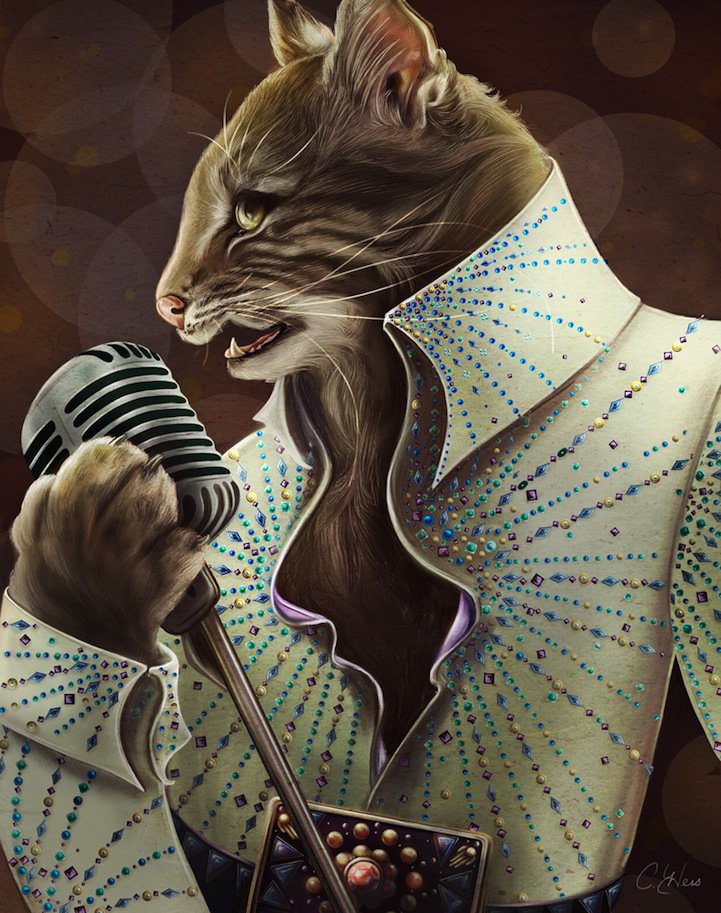
Christina Hess’s Animals From History: Costumed Pets as Playful Portraits
Illustrator Christina Hess reimagines historical icons as ornate animal portraits—Elvis Petme and friends—mixing puns, costume detail, and soft history lessons.