
Object Art by Tang Chiew Ling: Leaves Drawn into Characters
Malaysian designer Tang Chiew Ling’s Object Art turns overlooked leaves and hand drawings into playful photographed scenes—fun built from drain and garden scraps.
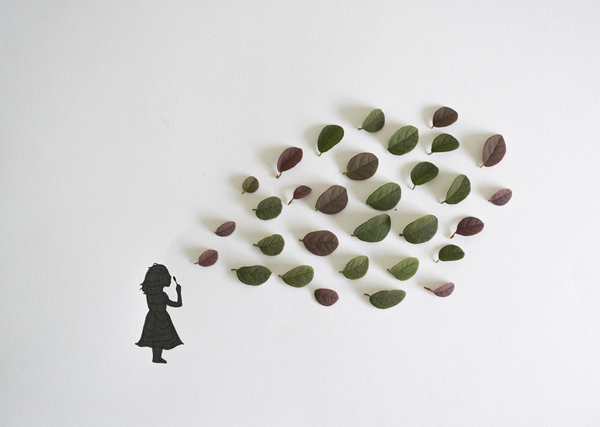
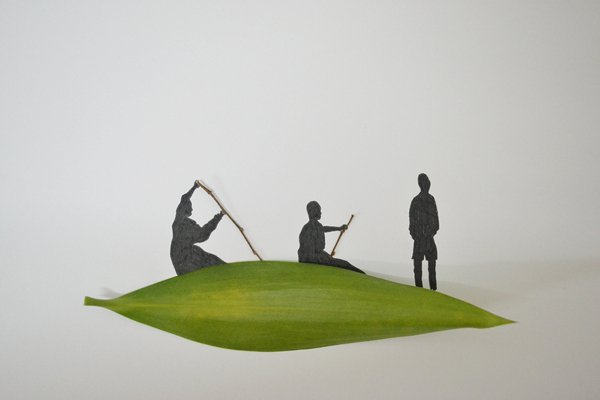
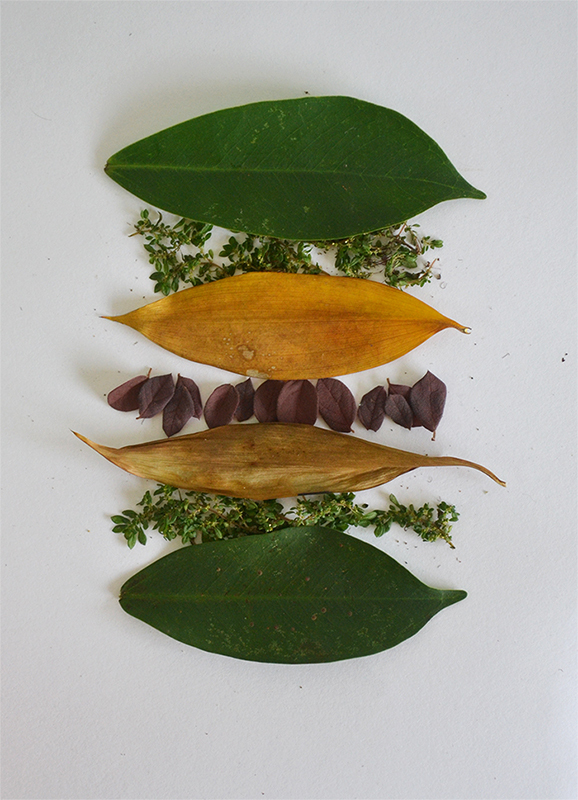
Malaysian graphic designer and illustrator Tang Chiew Ling named one of her personal projects Object Art: small scenes built from ordinary leaves and her own hand drawings, then photographed as finished pieces. The ambition she has described is straightforward—fun, hope, and happiness—made from materials most people walk past. She gathers inconspicuous or unattractive leaves from drains, her mother’s plants, and playgrounds, then spends roughly two to three days per work thinking through an idea, selecting foliage, drawing, and shooting the result.
That slow loop matters. Object Art is not a scrapbook collage thrown together in an afternoon. Each image depends on finding a leaf whose shape already suggests a body, a dress, a wing, or a prop, then completing the story with marker lines on paper so the organic edge and the drawn figure feel like one character. The finished photograph is the artwork viewers share; the studio table is only the workshop.
Leaves as characters, not decoration
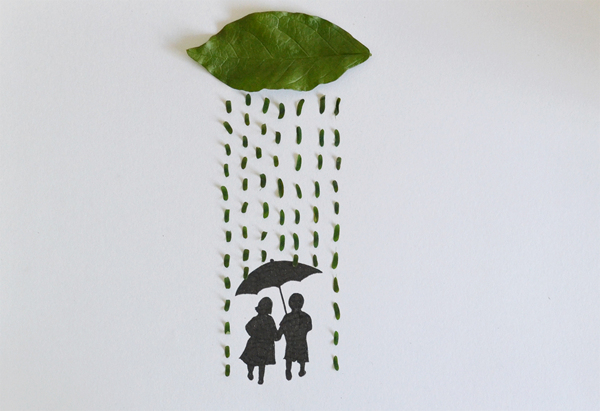
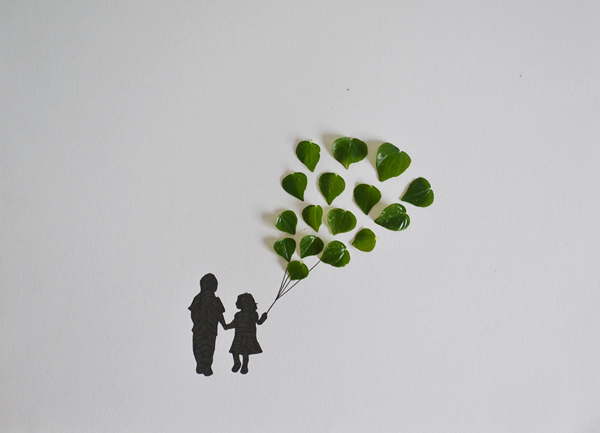
In Object Art, foliage is the actor. A bent stem becomes a spine. A spotted surface becomes fabric. A dried edge becomes hair or a silhouette. Ling’s drawings do not fight the leaf; they extend it. Faces, limbs, and small props appear in clean line work so the eye accepts the hybrid without needing a caption. The humor is gentle: humble plant scraps behaving like people with errands, outfits, and attitudes.
Collecting from drains and playgrounds is part of the concept. The project argues that beauty does not require rare botanicals. Unattractive leaves—torn, dull, overlooked—can still carry a story once someone looks at them long enough. That stance separates Object Art from decorative pressed-flower crafts that chase perfect specimens. Here the imperfect leaf is preferred because it already has personality. A jagged tear can become a sleeve. A brown blotch can become a pattern on a coat. What a gardener might discard becomes casting material.
White space around the leaf also works hard. Many frames keep the background clean so veins stay readable and the drawn marks stay crisp. The leaf is not buried in mixed-media noise. It is isolated the way a fashion sketch isolates a silhouette—except the silhouette grew on a tree or floated in a drain first.
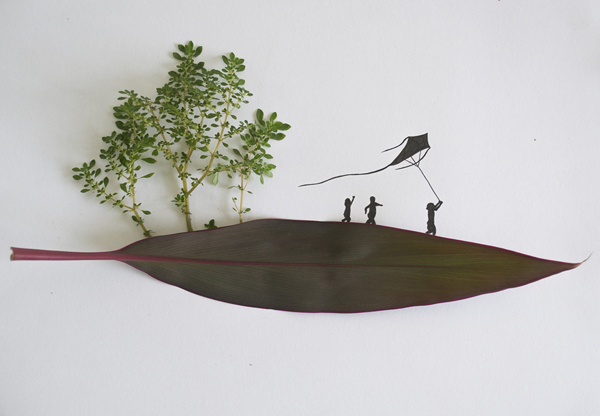
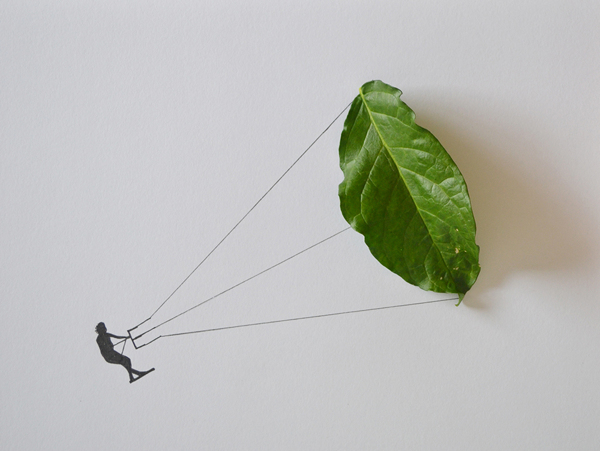
Process: idea, pick, draw, photograph
Ling’s own timing—about two to three days per piece—sketches a useful studio rhythm for anyone curious about the method:
- Idea. Start with a verb or a costume thought: walking, waiting, wearing something extravagant, carrying a tiny object, posing as if for a portrait.
- Pick. Hunt for a leaf whose contour already half-answers that idea. Shape first, color second. A leaf that only looks “pretty” may be harder to cast than one that looks decisive.
- Draw. Add only what the leaf cannot supply—expression, hands, shoes, a horizon line, a second character. Stop before the ink starts competing with the veins.
- Photograph. Flat, even light keeps structure readable and prevents the leaf from looking like a brown smear on paper. Crop tightly enough that the character feels intentional.
The photograph is the finished artwork for sharing, not a casual snapshot of a craft table. Framing, negative space, and the relationship between ink and vein pattern are deliberate. Viewers meet a clean graphic image. That cleanliness is why Object Art reads as illustration first and craft second.
Time also includes waiting for the right leaf. You cannot force a drain scrap to become a ballgown if its outline wants to be a bird. Ling’s patience—days, not minutes—protects that honesty. The leaf leads; the pen follows.
Where Object Art sits in her practice
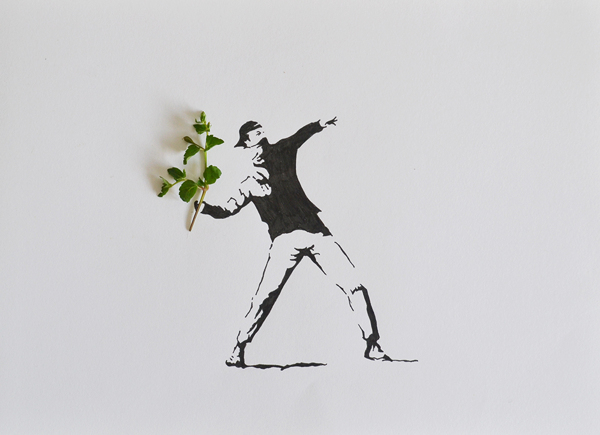
Tang Chiew Ling is based in Malaysia—often associated with Kuala Lumpur in profiles of her personal projects—and works as a graphic designer and illustrator. Object Art belongs to a cluster of works that mix found natural forms with drawing. Later series such as Fashion in Leaves push related instincts further into fashion illustration, with leaves and flowers standing in for garments and runway silhouettes. Object Art remains the clearer statement about everyday objects and overlooked plants becoming narrative props rather than décor samples.
Across the series, tone stays light. There is no grim eco-sermon and no attempt to make foliage look luxurious. The pleasure is conversion: drain leaf becomes character; playground scrap becomes costume. That conversion is why the images travel well online. They read instantly, reward a second look at the leaf’s real texture, and credit the artist’s hand without burying it under heavy concept language.
Seeing Object Art beside Fashion in Leaves also clarifies Ling’s consistent curiosity: can fashion thinking and nature scraps share a page without one dominating the other? In Object Art the answer is yes when the leaf keeps its identity and the drawing supplies only personality. In the fashion series the leaf often becomes the dress itself. Both projects treat plant matter as a collaborator, not as filler.
How to look at the gallery
When you move through the images on this page, try three passes:
- Read the silhouette of the leaf alone—what body or garment does it already suggest?
- Find the drawn lines—where does ink take over from nature?
- Notice the mood—playful, shy, stylish, silly—and how little ink it took to get there.
That last point is the craft lesson. Restraint keeps Object Art from tipping into clutter. One strong leaf plus a few decisive marks beats a table covered in mixed media. Ling’s best frames feel inevitable: of course that leaf was a person; of course that stem was a limb. If a piece ever feels busy, it is usually because the drawing tried to invent what the leaf had already said.
Also watch scale tricks. A small leaf can become a full figure if the camera treats it as monumental. A large leaf can become a gown if the drawn head is tiny and confident. Photography is not documentation here; it is casting direction.
Why the project still feels fresh
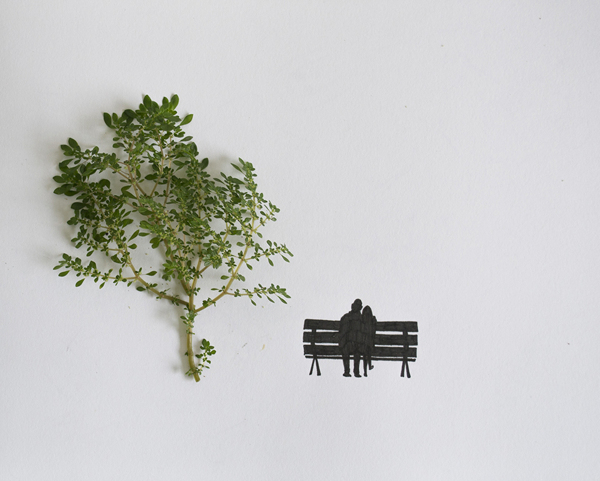
Object Art sits at a useful intersection of illustration, collage, and nature play. It asks almost nothing from expensive tools: paper, pen, a camera, and a walk. It asks a lot from attention. Finding the right leaf is half the drawing. Photographing it so veins stay legible is half the presentation. The rest is Tang Chiew Ling’s instinct for character—turning a scrap into someone you might wave to.
In a feed full of polished digital illustration, these images still cut through because the material is honest. You can see the leaf is real. You can see the line is handmade. The joy is not nostalgia for “craft”; it is the surprise that a drain leaf had a personality waiting.
If you leave this page wanting to try a version of your own, start with one leaf that already looks like it has an opinion. Draw only the missing face or hands. Shoot it before the leaf curls. You will understand quickly why each finished piece can take days: the hard part is not technique, it is waiting until the humble object and the line agree.

Comments
Continue reading
Still-Life Photography by Margareth Perfoncio
São Paulo photographer Margareth Perfoncio’s still lifes of food and flowers—Old Master light, dark wood, and tables that feel inevitable.

Meaningful Love Quotes for Inspiration (and Ink)
Meaningful love quotes that still feel true — short lines for tattoos, gifts, and everyday reminders, with placement and wording tips.
Christina Hess’s Animals From History: Costumed Pets as Playful Portraits
Illustrator Christina Hess reimagines historical icons as ornate animal portraits—Elvis Petme and friends—mixing puns, costume detail, and soft history lessons.