
Nastya Nudnik’s Emoji-nation: Classic Paintings Meet Interface Culture
Kiev illustrator Nastya Nudnik overlays emoji, alerts, and social buttons onto classic paintings—turning museum images into sharp jokes about notification culture.
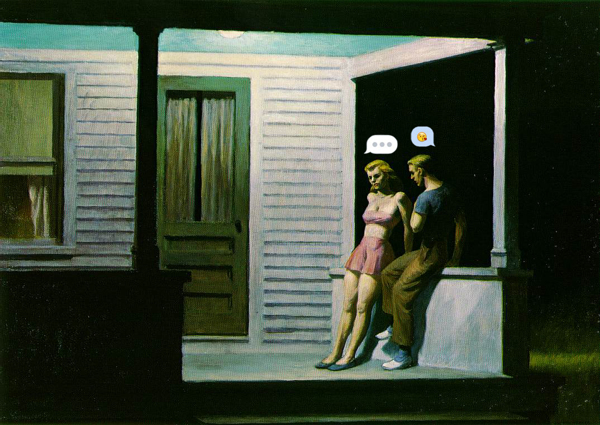
Kiev-based illustrator Nastya Nudnik—also known in some coverage as Nastya Ptichek—built a sharp joke out of a quiet observation: many of the default phone emoji already look like faces from museum walls. Once that resemblance clicked, she began placing digital interface language—emoticons, social-media buttons, system alerts, app badges—directly onto classic paintings. The series, gathered under the name Emoji-nation, does not vandalize art history so much as give it the wrong operating system. The old pictures stay recognizable; the new UI layer makes them suddenly speak the dialect of group chats and pop-up windows.
That collision is why the work traveled so widely around 2014. Viewers already knew both halves of the mash-up. They knew Hopper’s lonely rooms and Michelangelo’s reaching hands. They also knew the little icons that interrupt a phone screen every few minutes. Nudnik’s contribution was to refuse treating those two visual cultures as separate planets. She asked what happens when a Renaissance composition has to compete with a notification, or when a painted gesture is captioned by the same yellow face people send when they have nothing left to say in words.
How Emoji-nation started
Nudnik has described the spark plainly: she realized standard iOS-style emoji resembled well-known artworks, and the project grew from that resemblance. The early impulse is almost taxonomic—matching an expression in paint to an expression in a glyph set. From there the idea widened. Pairing was not enough. She began inserting the surrounding furniture of digital life: friend-request alerts, retweet buttons, Instagram-style likes, Windows-style error boxes, Google-flavored interface cues. What began as a facial resemblance became a study of how screens teach us to read emotion, status, and interruption.
She has also talked about contrast and dualism as a recurring interest across illustration, painting, and collage. Emoji-nation fits that habit. Each frame holds two systems of looking at once. Fine-art literacy asks for patience, composition, and historical context. Interface literacy asks for speed, recognition, and a thumb ready to dismiss. When both languages occupy one image, neither gets to pretend it is neutral. The painting looks newly chatty. The emoji looks newly ancient.
Behance, under the profile long associated with her work, was one of the main public homes for the series as it circulated. The point of the platform mattered: these were images designed for the same networked gaze they critique. You do not need a gallery wall to understand a friend-request overlay. You need the daily muscle memory of social software.
Classic paintings as interface hosts
The humor works best when the host painting already carries a strong emotional key. Edward Hopper’s interiors—quiet offices, porch conversations, night rooms—become especially fertile. A retweet button on Office at Night turns bureaucratic solitude into something that wants an audience. A like badge or message bubble on a summer evening scene converts withheld romance into the grammar of modern flirtation: typed, delayed, public enough to feel risky even when nothing is said aloud. Hopper already painted people who seem mid-thought; Nudnik supplies the thought’s UI.
Religious and mythological canvases invite a different joke. An alert that a user already has too many friend requests, dropped onto a crowded Ascension scene, collapses sacred throngs into the petty math of social capacity. Access-denied boxes near heavenly thresholds make bureaucracy the gatekeeper of transcendence. A “disconnected” style system message between famous reaching hands turns metaphysical near-miss into network failure. The blasphemy is mild and structural: not mockery of belief so much as recognition that modern life routes almost every longing through a dialog box.
Other strands of the project push further into remix culture—classic works restaged with the logic of movie posters, or Google’s services woven through familiar compositions. Across those chapters, the constant is appropriation with a punchline. Nudnik is not restoring paintings; she is asking whether classic art needs an interface, and what kind of interface we have already accepted as normal.
Why the joke is not only a joke
It is easy to file Emoji-nation under novelty collage and move on. The better reading is slower. Emoji are a compressed emotional alphabet. They flatten feeling into a shared, low-resolution code that travels across languages. Classic painting once performed a related public job: teaching viewers how faces, hands, and light announce grief, devotion, vanity, or power. Nudnik’s overlays make that parallel visible. The yellow face is not merely graffiti; it is a competing caption system.
There is also a timing joke built into the series’ moment. In the early 2010s, smartphone emoji and social alerts still felt new enough to be noticed as design objects. By placing them on museum-grade images, Nudnik froze that novelty against centuries of paint. The contrast ages in an interesting way. Some icons already look dated; the paintings do not. That uneven aging is part of the work’s afterlife. Digital fashion moves faster than oil, so the collages keep teaching how temporary our “universal” symbols are.
Dualism again: the pictures flatter neither high culture nor screen culture exclusively. Fine art can look pompous once a pop-up arrives. Screen culture can look childish once it borrows a masterpiece’s gravity. The laugh sits between those judgments. Viewers who love museums get the punch of recognition. Viewers who live inside apps get the same punch from the other direction.
Looking at the image on this page
Spend a moment with the frame above before treating it as wallpaper. Ask what the UI element is doing that the original painter could not have done with gesture alone. Is it labeling an emotion already present in the faces? Is it contradicting the scene’s dignity? Is it inventing a plot the painting only hinted at? Good remixes do not merely decorate; they change the sentence the picture seems to speak.
Also notice craft, not only concept. Placement matters. An alert centered like a holy tablet reads differently from a badge tucked into a corner like a sticky note. Color matters too: flat digital chroma against modeled paint and soft historical light. Scale matters: an icon too large becomes slapstick; an icon too small becomes trivia. Nudnik’s stronger frames keep the host painting legible enough that the interface feels like an intrusion rather than a total replacement. The intrusion is the point.
What the series still asks
Years after the first wave of shares, Emoji-nation remains useful because interfaces keep multiplying. New reaction icons, new status indicators, new ways of interrupting attention arrive every year. Classic paintings stay roughly where they were. The gap Nudnik opened—between slow looking and notification culture—has not closed. If anything, it has widened.
That does not mean every later remix of museum art with memes equals her project. Many copy the surface gag without her dualism: contrast as method, not only as punchline. Nudnik’s best pieces feel like two fluent languages interrupting each other mid-sentence. The viewer becomes translator. The translation is funny because it is also accurate about how people actually process feeling now: partly through inherited images, partly through a strip of colorful glyphs designed for speed.
If you leave this page with one practical habit of looking, make it this: the next time a notification lands on top of something you were trying to see clearly—an artwork, a face across a table, a quiet room—notice the collision. Nudnik simply made that collision intentional, printable, and hard to forget. Would a masterpiece still feel monumental if it had to share the rectangle with an unread-message badge? Her answer is yes, and somehow more human for the interruption.

Comments
Continue reading
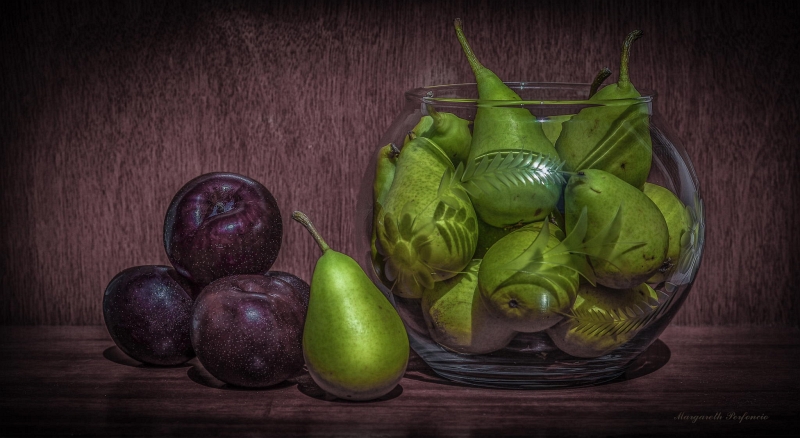
Still-Life Photography by Margareth Perfoncio
São Paulo photographer Margareth Perfoncio’s still lifes of food and flowers—Old Master light, dark wood, and tables that feel inevitable.
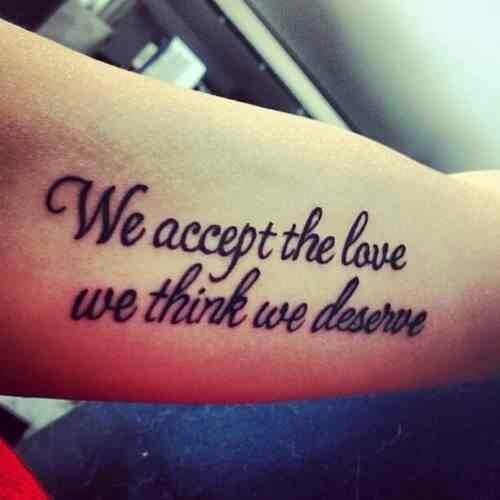
Meaningful Love Quotes for Inspiration (and Ink)
Meaningful love quotes that still feel true — short lines for tattoos, gifts, and everyday reminders, with placement and wording tips.
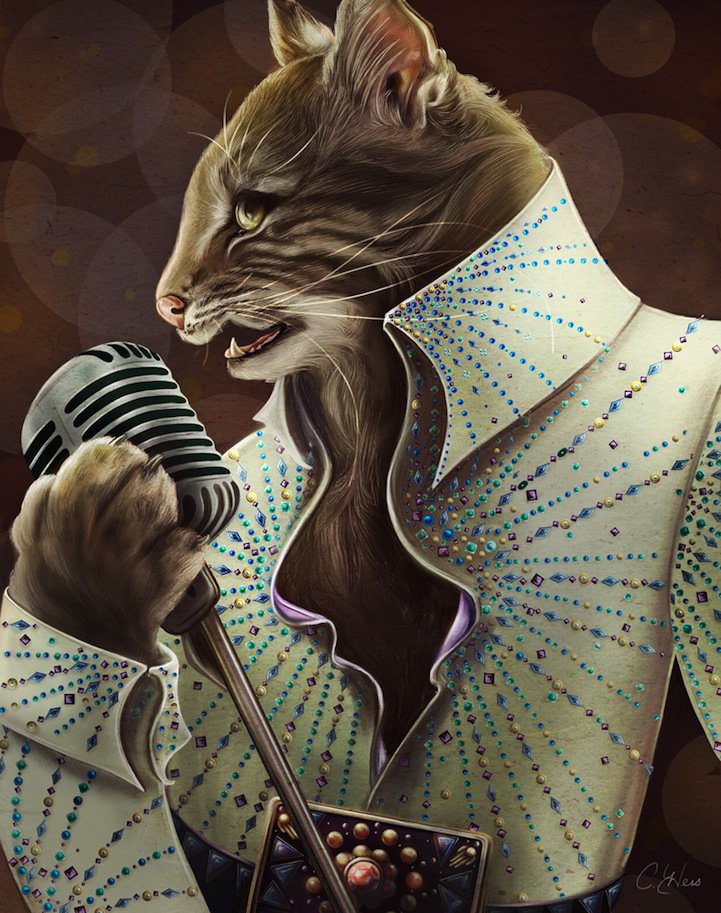
Christina Hess’s Animals From History: Costumed Pets as Playful Portraits
Illustrator Christina Hess reimagines historical icons as ornate animal portraits—Elvis Petme and friends—mixing puns, costume detail, and soft history lessons.