
Minimiam: Little People on Delicious Food Settings
Pierre Javelle and Akiko Ida’s Minimiam turns doughnuts, avocado bowls, and pastry hills into edible stages for HO-scale figurines.
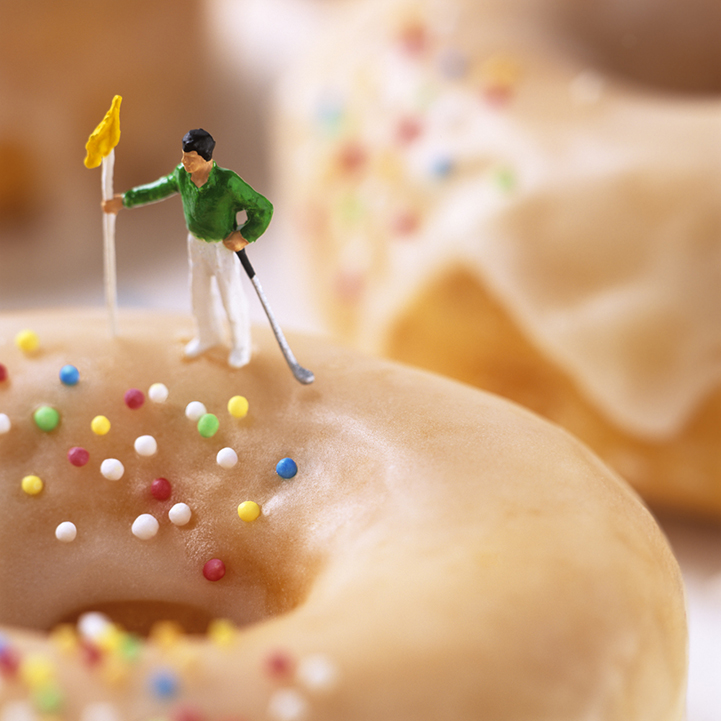
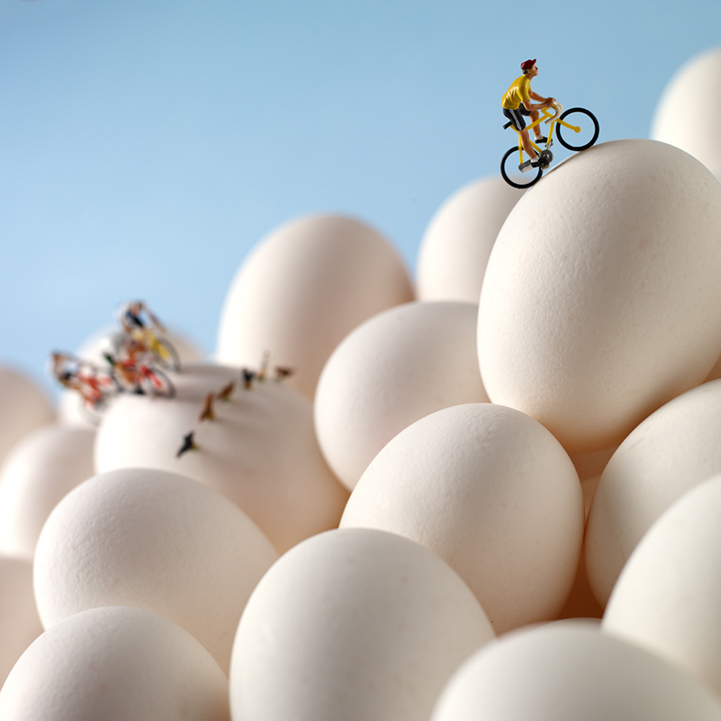
French commercial food photographers Pierre Javelle and Akiko Ida built Minimiam—a long-running series in which HO-scale train figurines live inside edible landscapes. Doughnuts become golf courses. Avocado halves become skating bowls. Egg yolks rise like hills. Meringue turns into snow. The name blends “miniature” with miam, French for “yummy,” and that double meaning is the whole project: tiny stories staged on food you can almost smell through the screen.
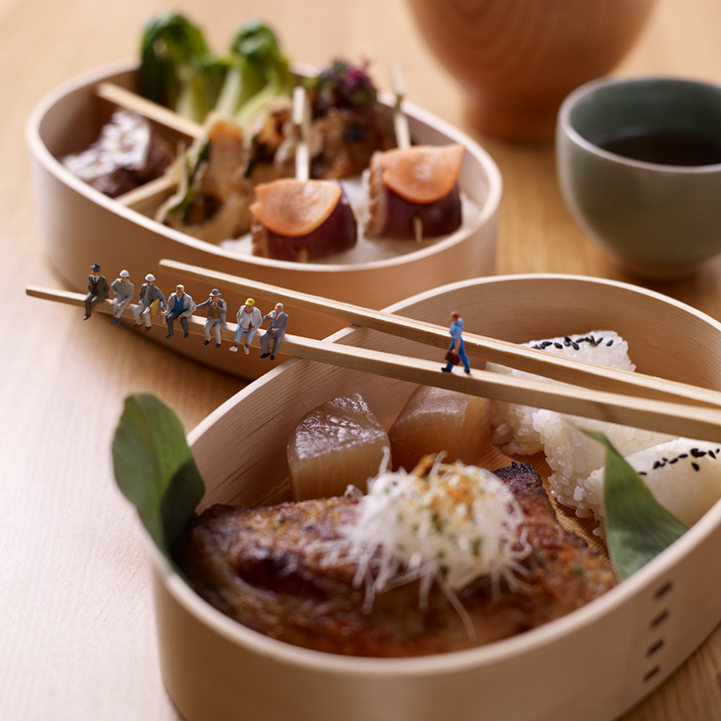
Since around 2002, the couple has treated pastry, fruit, and vegetables as terrain rather than still-life props. Their day jobs already demanded precise culinary lighting and styling for magazines and cookbooks. Minimiam keeps that craft and adds narrative play—comic-book beats for figures the size of a fingernail. Where some miniature photographers invent office cities or street corners from household junk, Minimiam stays at the table. Appetite is the set design, and the camera’s job is to make you believe a plastic commuter could really get lost in crème.
Food as landscape, not garnish
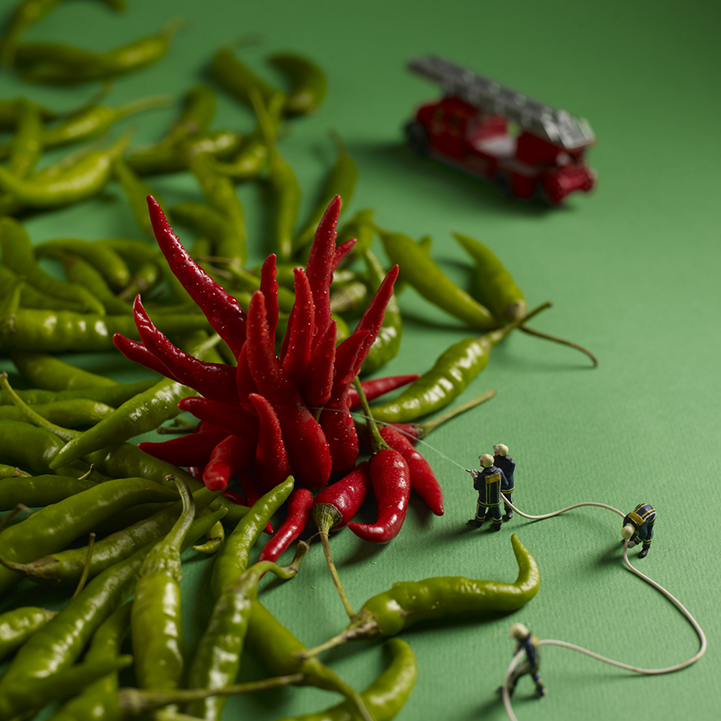
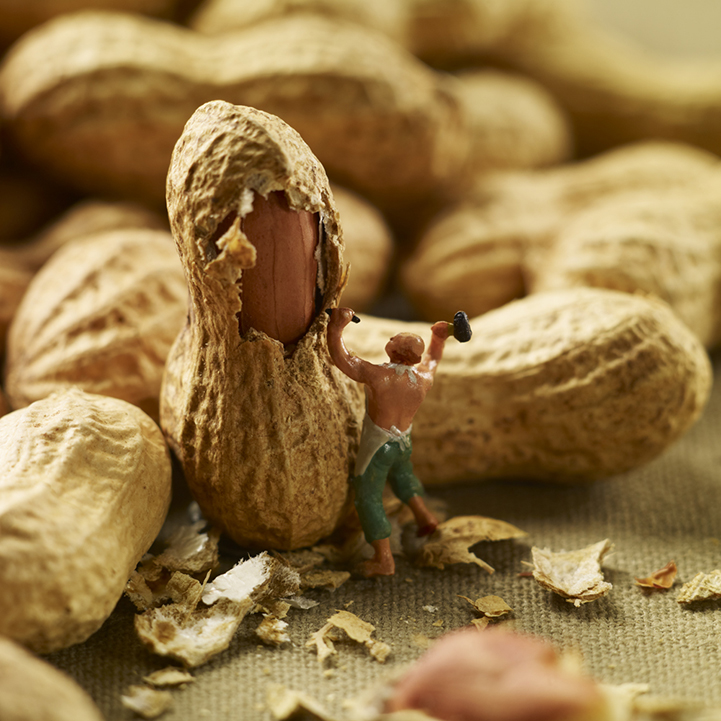
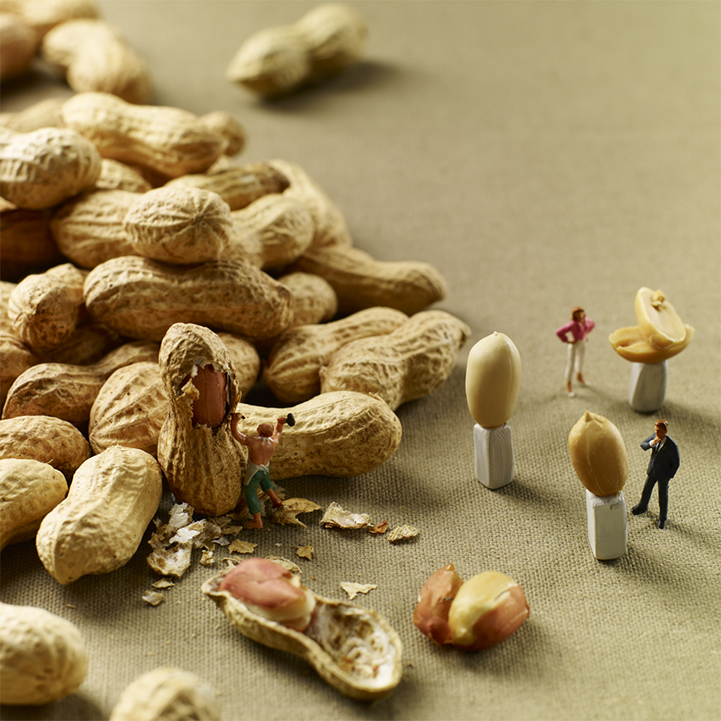
The cleverness of Minimiam is topographic. A kiwi’s fuzzy skin becomes a lawn that needs mowing. A sliced pepper becomes a fire for miniature firefighters. Peanuts become sculptures in a tiny gallery. Cream peaks become dunes or ski slopes. Because Javelle and Ida already think like food photographers, the ingredients look delicious first and metaphorical second. The joke lands harder when the “mountain” is also a pastry you would happily eat.
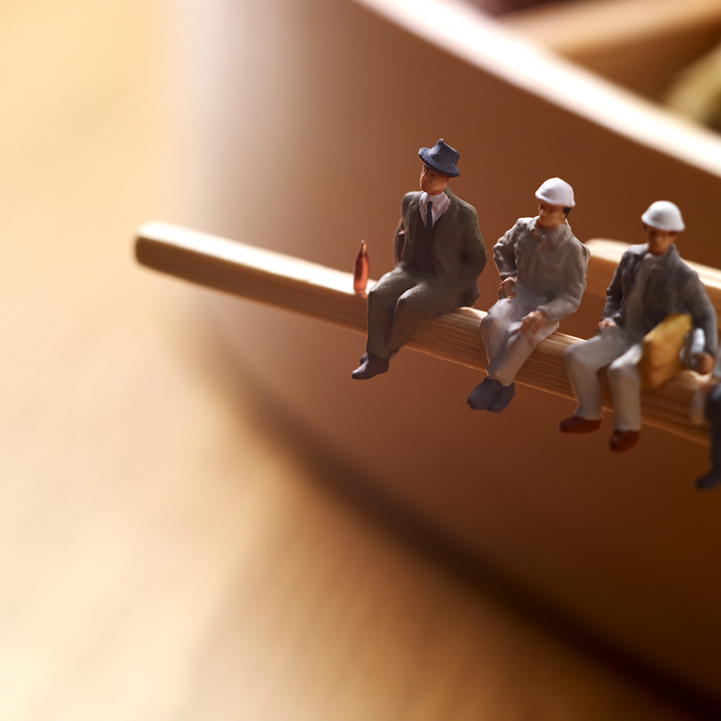
Scale choice matters. They favor roughly 1/87 model-train figures—small enough that ordinary kitchen items read as geography, large enough that faces and poses still carry story. That ratio is the engineering behind the fantasy. Too big a figure and the food shrinks into a prop. Too small and the human action disappears into crumbs. Getting that relationship right is less about buying expensive toys and more about testing which grocery item can play mountain, park, or road for a given figure height.
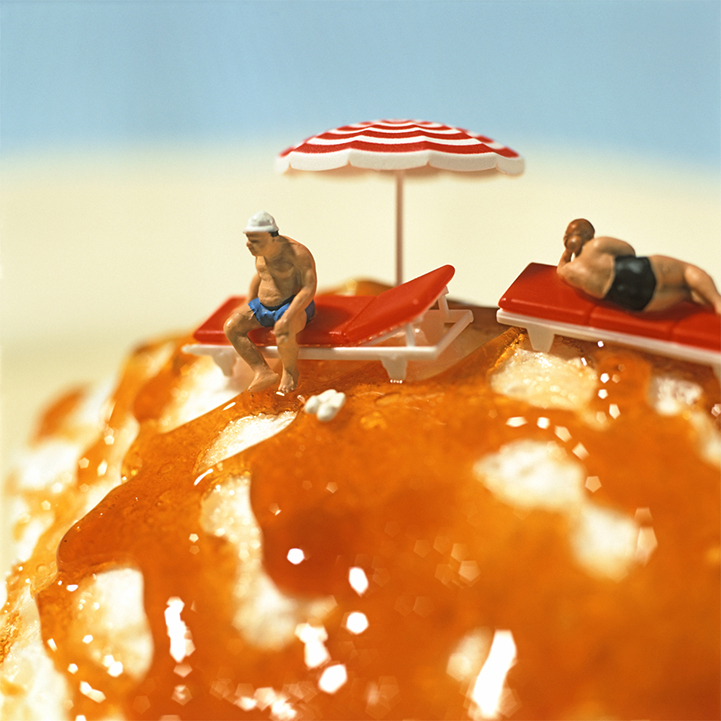
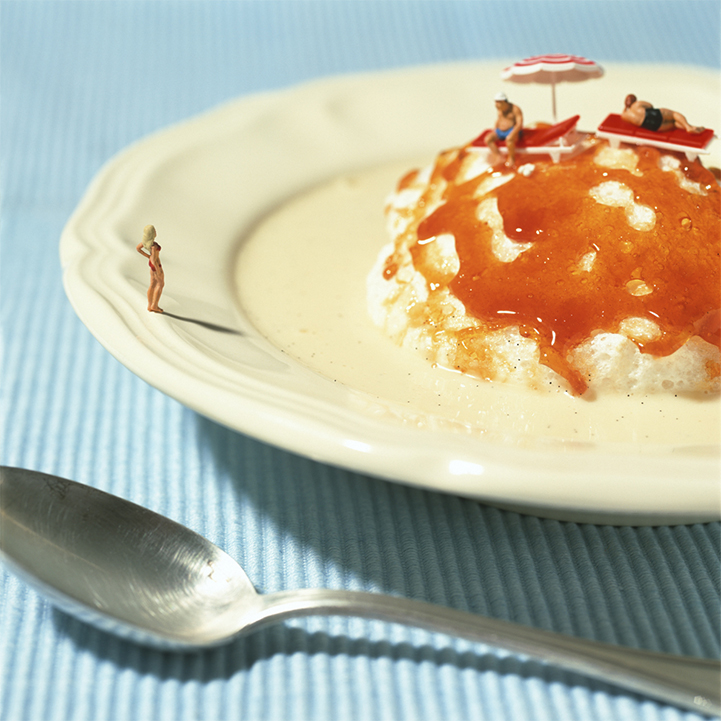
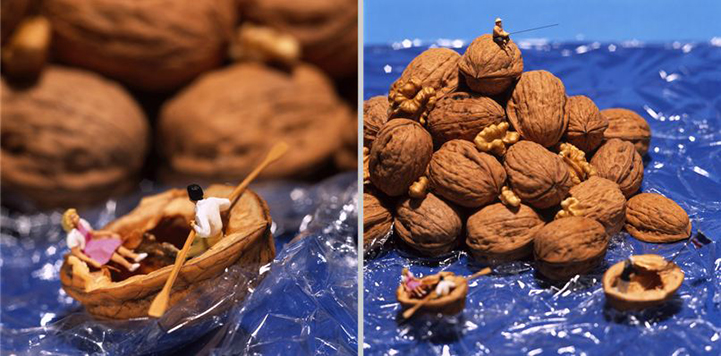
Many sets appear as diptychs: a tight crop that shows mysterious action, then a wider frame that reveals the edible world around it. The first image asks a question. The second delivers the punchline. It is a storytelling habit borrowed from comics and sequential illustration—fitting, since Javelle has spoken about growing up on comic books, while Ida has described childhood food journals and miniature culinary drawings. Minimiam joins those early instincts to professional kitchen photography and invites viewers to finish the story with their own memories of picnic tables and pastry shops.
What the scenes tend to show
Across the body of work, certain moods return again and again:
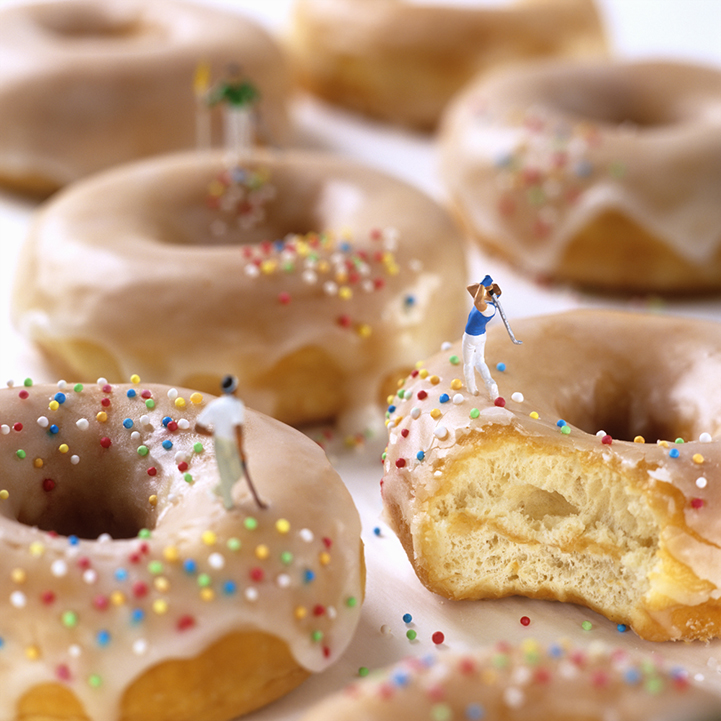
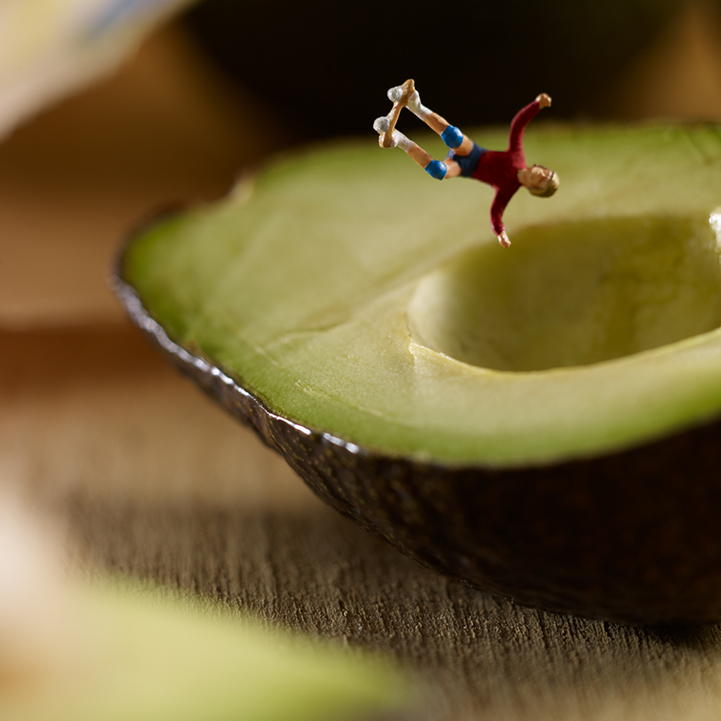
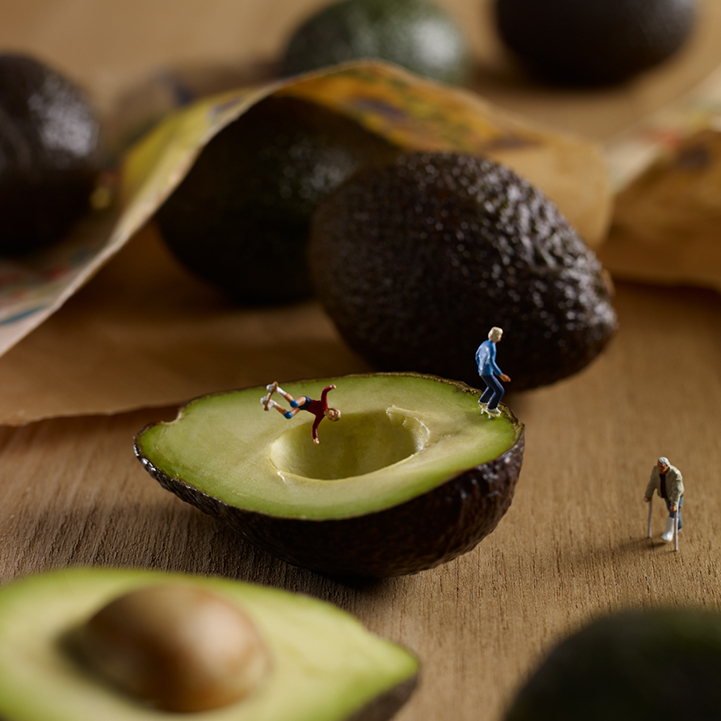
- Leisure: sunbathers on crepes, skaters in avocado bowls, golfers on doughnut greens.
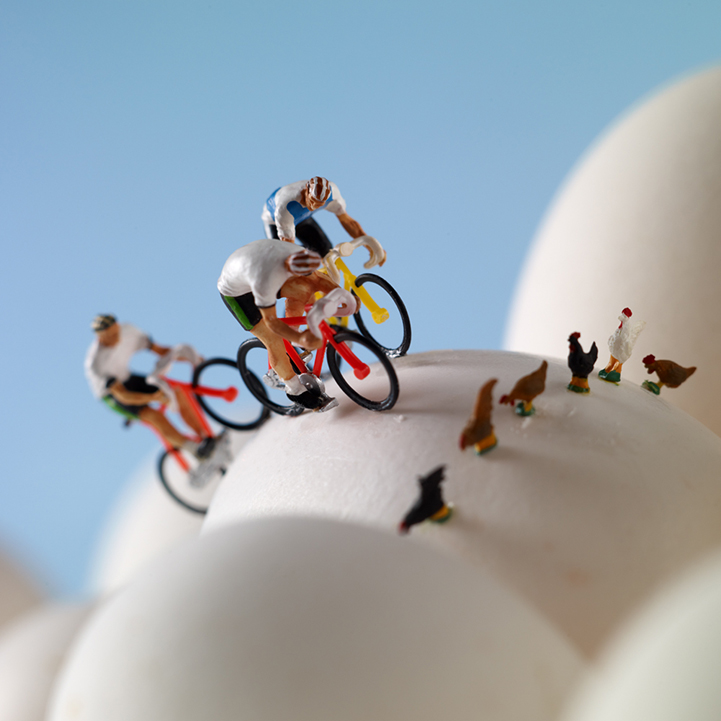
- Adventure: climbers on pastry cliffs, cyclists over egg landscapes, explorers in vegetable terrain.
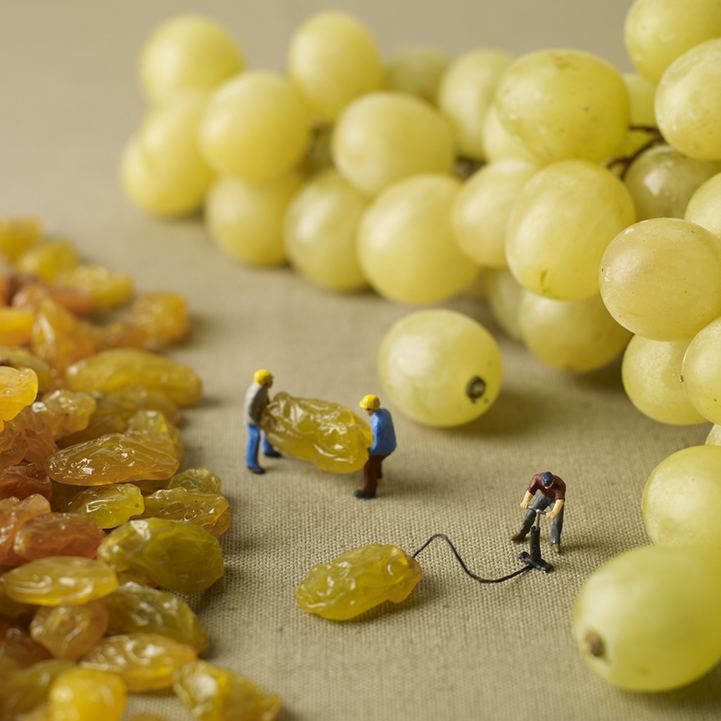
- Work and craft: tiny artists carving peanuts, workers managing “fires” of peppers, laborers treating food as industry.
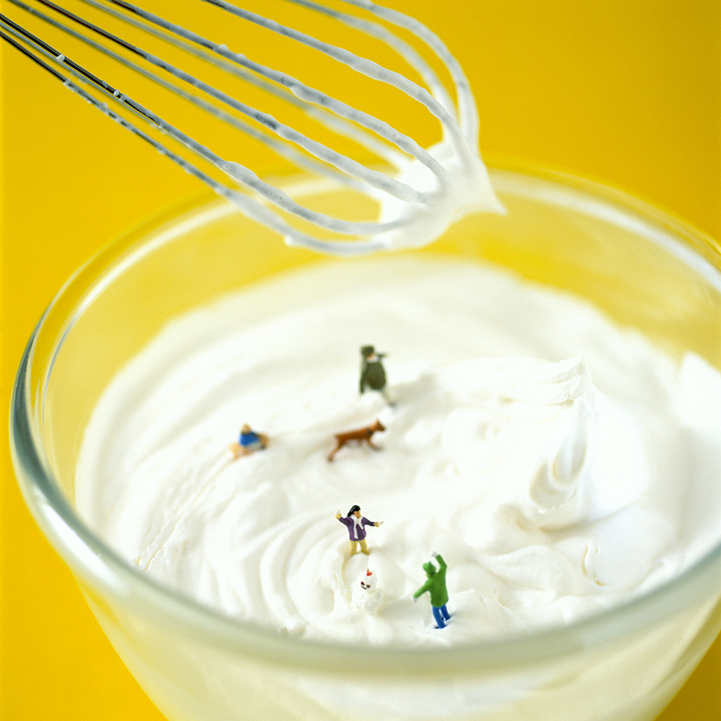
- Seasonal play: whipped cream and meringue as winter sports fields, bright produce as summer parks.
The figures are ordinary model-railroad citizens—commuters, athletes, couples—dropped into gourmet geography. That mismatch is the humor. Nobody expects a suburban dad to mow a kiwi. Nobody expects a gallery crowd to admire peanut sculpture. Minimiam thrives on the gap between grocery-store familiarity and storybook absurdity. The more recognizable the food, the faster the brain accepts the tiny people as temporary residents rather than studio props.
Color does heavy narrative work. Red peppers shout emergency. Green avocado flesh cools a skating bowl. Golden pastry crusts read as rock and sand. White cream becomes weather. In commercial food work, color sells appetite; in Minimiam, color also sells climate and genre—summer picnic, alpine climb, gallery opening, fire drill—without needing miniature billboards to explain the scene.
Craft notes for hungry eyes
Commercial food photography usually aims for appetite and clarity: glaze that catches light, steam that suggests freshness, plates styled for magazines and cookbooks. Minimiam borrows those skills and redirects them toward fiction. Surfaces still look edible. Color still sells. But the hero is no longer the recipe—it is the tiny human plot happening on top of it. That shift is why the series feels generous rather than purely commercial: you can enjoy the food and the joke at the same time.
Practical habits visible in the work include:
- Fresh staging. Wilted greens or melted chocolate kill the dream. Timing matters as much as composition.
- Controlled shine. Highlights on glaze, yolk, or fruit skin help define “terrain” the way rock faces need raking light outdoors.
- Clean negative space. Too many crumbs and the figurines drown. Selective mess sells realism; chaos sells nothing.
- Pose before garnish panic. The human gesture must read first; pretty food alone is only half a Minimiam frame.
- Camera height near the figures. Shoot from above and you get toys on a plate; lower the lens and you get citizens in a landscape.
Ida and Javelle have described the series as a way to please people and keep play alive inside a demanding profession. That motive shows. The pictures are witty without cruelty, surreal without needing digital monsters. Plastic people and real food are enough. In a decade when image culture often races toward heavier effects, Minimiam’s physical staging still reads as a craft argument: arrange it by hand, light it like food, tell the joke in two beats.
Neighboring miniature traditions
Around the same internet moment that popularized many “tiny people” galleries, viewers also met desk-and-object miniatures by artists such as German photographer Bettina Güber—office stationery turned into comic infrastructure. Those projects share a love of scale jokes, but their atmospheres diverge on purpose. Güber’s office work is cooler and satirical, built from metal, plastic, and paper. Minimiam is warmer and appetitive, built from sugar, fruit, pastry light, and the sensory memory of eating. Keeping that distinction honest helps each series stay itself: one is workplace daydream, the other is edible fantasy.
Minimiam also sits near later miniature food photographers and installation makers who expanded the genre with tabletop cities and gallery-scale dioramas. What remains distinctive in Javelle and Ida’s approach is the marriage of professional culinary styling with diptych storytelling—and the refusal to let digital spectacle replace physical staging. The food is real. The figures are real. The story is arranged by hand before the shutter clicks. That handmade limit is part of the charm: you can imagine the pair racing melting ice cream or drying avocado edges the way any food shooter races time.
How to look through the gallery
As you move through the images on this page, try reading each frame twice. First, ignore the food brand of the joke and name the human verb: skating, climbing, sunbathing, working, wandering. Second, name the ingredient that makes the verb funny. That two-step looking mimics the diptych logic even when only one photo is shown—action, then edible context. It also slows the scroll enough for texture to register.
Notice texture especially. Furry kiwi, glossy glaze, porous bread, smooth avocado flesh: each surface suggests a different kind of “ground” under miniature feet. Minimiam is as much about touch imagined at toy scale as it is about cute posing. Ask where a figure would slip, sink, or find solid footing. Those imaginary physics are often what make a scene feel inhabited.
If you are a photographer yourself, borrow the series as a training drill rather than a style to clone. Buy one grocery item with strong topography, place one figure at eye level, and shoot until the food stops looking like a prop and starts looking like a place. You will learn lighting, scale, and storytelling faster than another afternoon of abstract still-life arrangements.
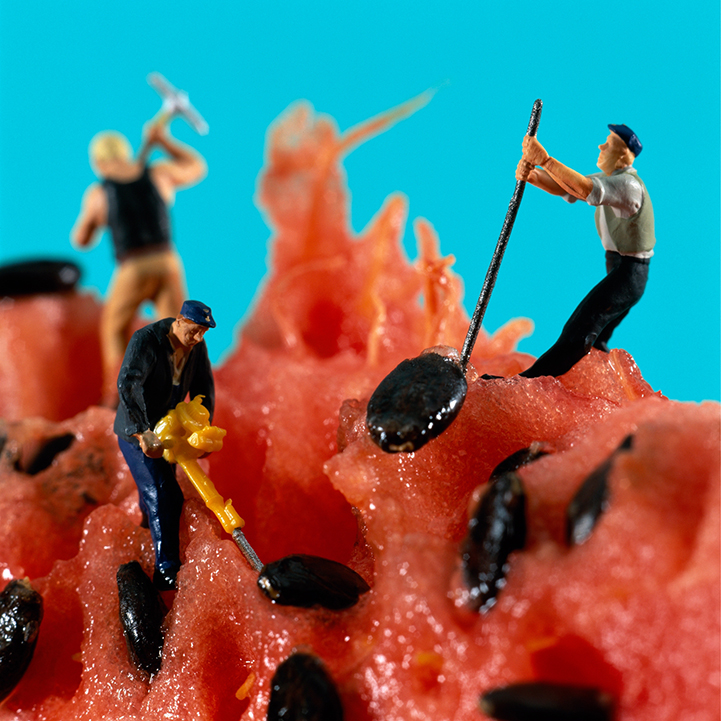
If a plate on your own table ever looks suddenly like a park or a mountain range, you are already thinking in Minimiam. Smaller shoes, better light, and a story short enough to fit on a doughnut are all that remain.

Comments
Continue reading
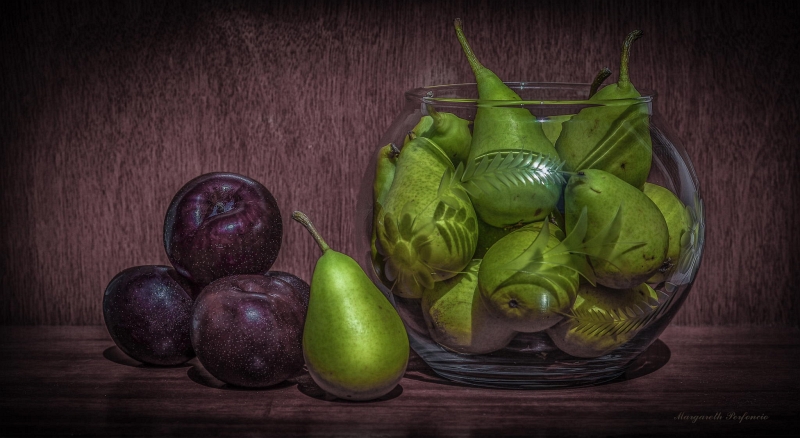
Still-Life Photography by Margareth Perfoncio
São Paulo photographer Margareth Perfoncio’s still lifes of food and flowers—Old Master light, dark wood, and tables that feel inevitable.

Meaningful Love Quotes for Inspiration (and Ink)
Meaningful love quotes that still feel true — short lines for tattoos, gifts, and everyday reminders, with placement and wording tips.
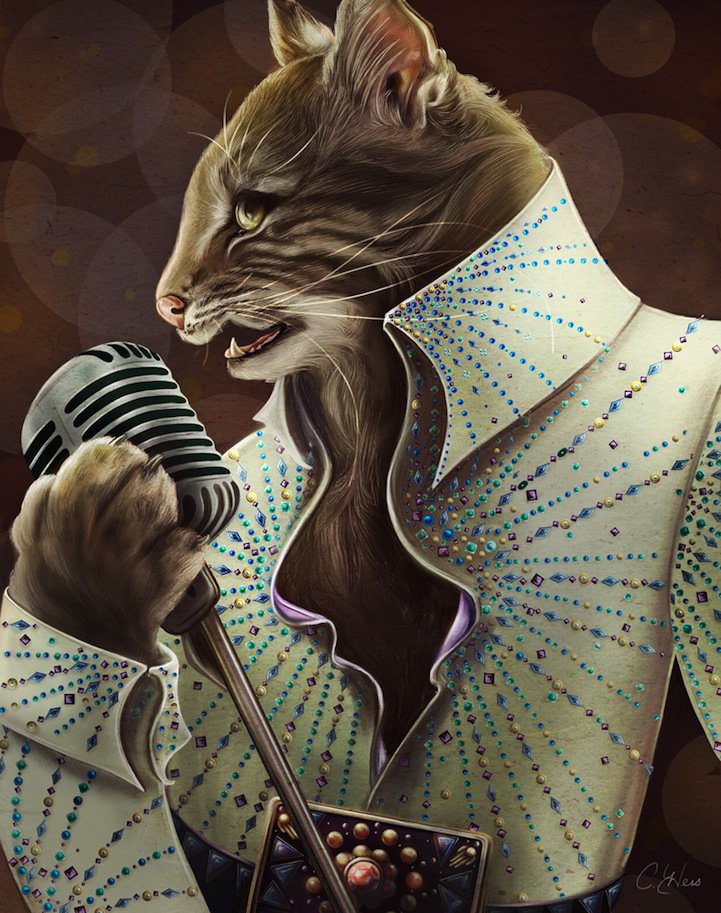
Christina Hess’s Animals From History: Costumed Pets as Playful Portraits
Illustrator Christina Hess reimagines historical icons as ornate animal portraits—Elvis Petme and friends—mixing puns, costume detail, and soft history lessons.