
Jennifer Lopez for Harper’s Bazaar, February 2013
Jennifer Lopez’s dual February 2013 Harper’s Bazaar covers—shot by Katja Rahlwes in Istanbul—framed in metallic Paco Rabanne and Fendi glamour.
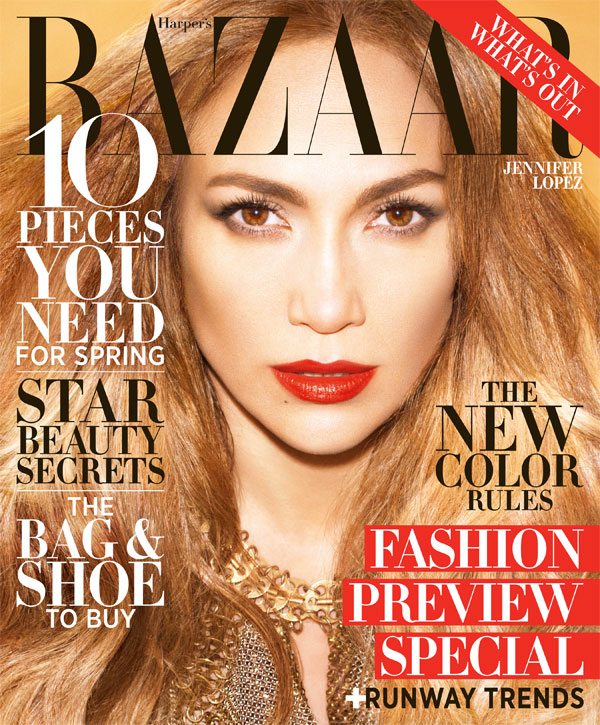
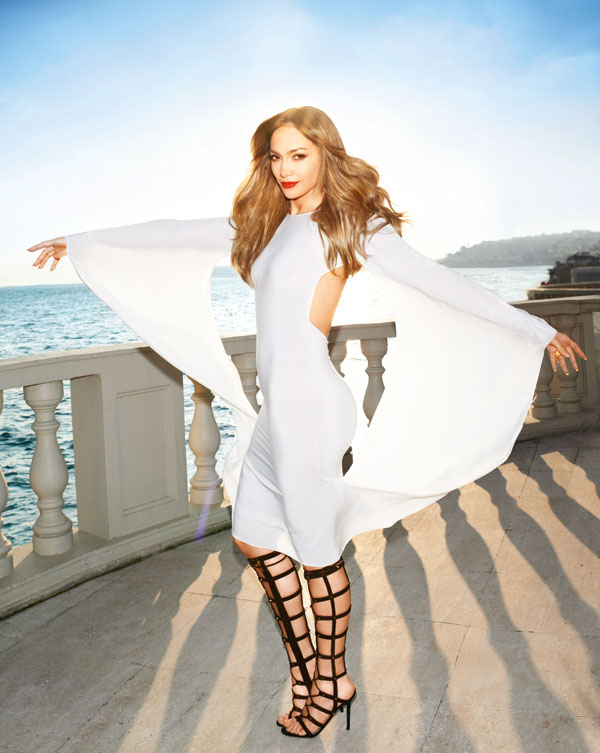
When Harper’s Bazaar put Jennifer Lopez on its February 2013 covers, the magazine was not chasing a sudden debut. It was framing a performer who had already spent roughly two decades turning music, film, television, and fashion into one continuous public brand. The issue hit newsstands in early January 2013; the photographs—shot by Katja Rahlwes with fashion editing by Jodie Barnes at Istanbul’s Çırağan Palace hotel—belong to that winter’s print cycle. This gallery gathers frames from that editorial: metallic dresses, high-glamour posing, and the particular J. Lo stare that magazines still wanted on their front pages.
The package is best read as a historical fashion feature. Lopez was then in a period of touring, judging, and relentless visibility, overlapping a Dance Again World Tour schedule with the kind of red-carpet and magazine work that keeps a pop star’s image current between album eras. Bazaar’s job was to translate that energy into couture stillness—grand location, serious clothes, an interview that mixed career talk with family life. Years later, the images still read as a clean specimen of early-2010s celebrity fashion packaging: dual covers, travel romance, and metal that catches every flash.
Two covers, one Istanbul shoot
Harper’s Bazaar US ran Lopez on dual February covers, a familiar early-2010s strategy for maximizing newsstand and subscriber appeal. The newsstand edition leaned into a chainmail-gold Paco Rabanne look from the house’s spring 2013 collection—heavy metal glamour that photographed as both armor and disco. The subscriber cover shifted to a silver embellished Fendi dress with Tom Ford over-the-knee boots, a colder, more architectural shine. Inside, the editorial continued through Balmain, Versace, Tom Ford, and other high-fashion houses that could match Lopez’s appetite for drama without shrinking her silhouette.
Location did half the work. The Çırağan Palace hotel on the Bosphorus offered terraces, ornament, and a sense of imperial scale that flat studio paper cannot fake. Magazine features of this type often use travel as a status signal: the star is not merely dressed; she is placed. Istanbul, for a 2013 American fashion title, also suggested cosmopolitan reach—Europe and Asia in one skyline, a backdrop that felt both exoticized and luxurious in the language of that era’s travel fashion stories. The architecture gives the eye a second rhythm so sequins and mesh are never floating in void.
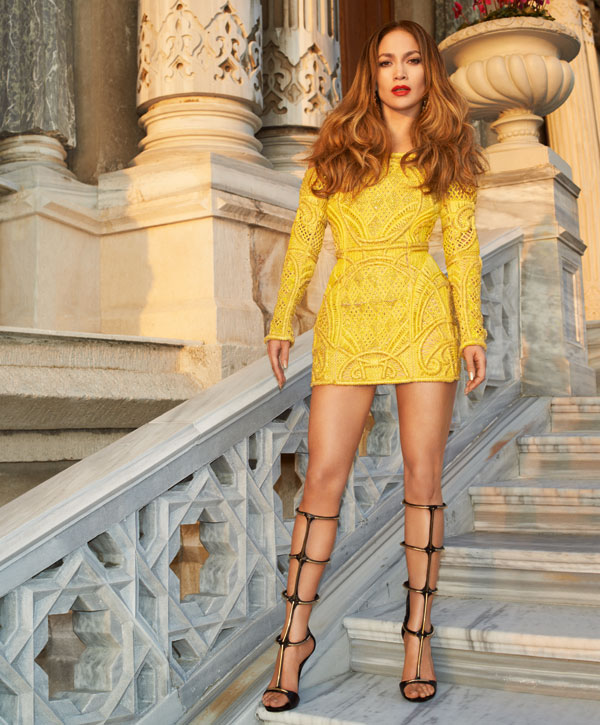
Behind-the-scenes accounts from the shoot describe Lopez toggling between play and precision: joking, doing the robot, then locking into the camera with the professionalism of someone who had been doing this for twenty years. That flip is part of her magazine value. She can break tension on set and still deliver the face that sells an issue. Fashion photography needs both moods; only one ends up on the cover. The published frames favor the locked stare—shoulders claimed, mouth set, eyes selling the trademark.
What the fashion said about J. Lo in 2013
Lopez’s style conversation in the Bazaar interview tracked an evolution she had narrated for years: from a boyish, hip-hop-adjacent early look—hoops, sneakers, tank tops, big curly hair—toward a blend that also claimed classic movie-star glamour and a sharper sexiness. By 2013 that mix was settled enough to feel like a signature rather than an experiment. Metallic dresses, statement jewelry, and strong makeup were not costume; they were continuity with the performer audiences expected when they bought a February issue with her name on it.
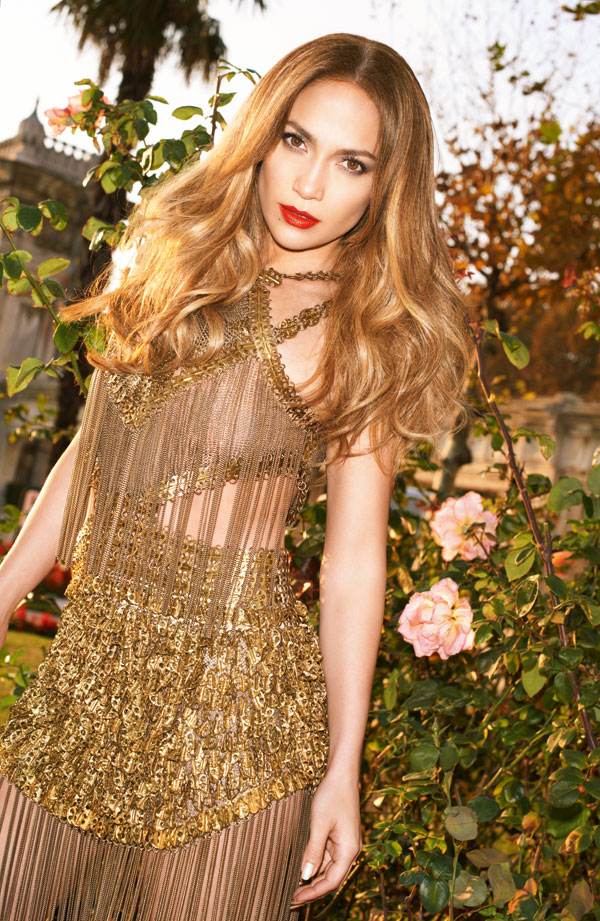
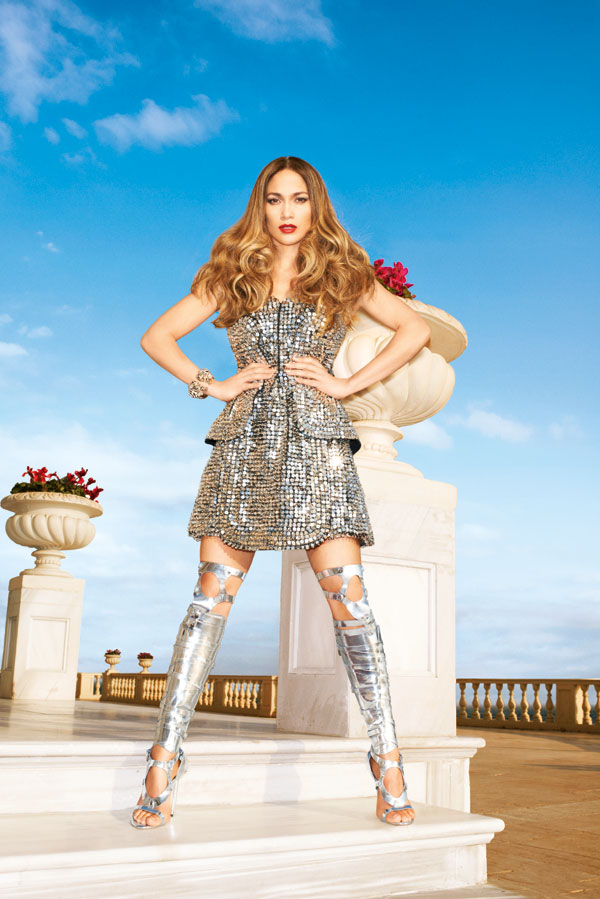
Look at the frames for silhouette lessons. Lopez’s magazine images almost always protect a clear hourglass line and a confident stance—shoulders back, hips claimed, eyes forward. Designers who dress her successfully either celebrate that shape or build architecture around it. The Paco Rabanne metal mesh, the Fendi sparkle, the Versace drama inside the book: each look treats the body as the headline. Accessories and hair finish the sentence; they do not rewrite it. Warm undertone lipstick and glowing skin in the published set also match the era’s beauty preference for high-definition glamour rather than the later decade’s more muted ideals. This is 2013 beauty: visible contour, lacquered mouth, lashes that read on newsprint and on phone screens alike.
Studying historical editorials means noticing those dated codes without mocking them. They are part of how that winter’s fame was supposed to look—polished, metallic, and unapologetically staged for the magazine rack.
Career, family, and the magazine interview
Laura Brown’s interview material around the cover mixed work and domestic texture. Lopez spoke from a life that included twins Max and Emme, a touring schedule, an entourage that could fill a yacht on the Bosphorus between concert dates, and the constant negotiation between private jokes and public myth. She could talk about rocks she wanted rather than rocks she already owned, giggle over a magazine cuff, then switch into the focused performer the photographer needed. That oscillation is not filler; it is the point of celebrity profiles in fashion magazines. Readers buy the clothes and the access narrative together.
The feature also touched the archive of Lopez fashion history—most famously the green Versace Grammy dress, which she described keeping at home in a way that turned a cultural meme into a personal object. Magazine interviews love that move: the iconic look becomes a household story, which makes the new cover clothes feel like the next chapter rather than a random rental. Continuity is the product as much as Paco Rabanne is.
Newsstand logic in early 2013
Print covers still functioned as event objects that winter. A February Bazaar with Lopez on both editions was timed for post-holiday newsstand traffic and for a star whose calendar mixed tour dates with fashion obligations. Dual covers let the magazine test two temperatures of the same persona: gold heat for impulse buyers, silver severity for the mailbox. Neither look invents a new Jennifer Lopez; both refine a version readers already knew how to want.
That is why the gallery rewards slow looking even without the full interview text beside it. Metal as light source, palace columns as counter-rhythm, pose economy over busy gesture—these are craft decisions, not only celebrity trivia. If you archive early-2010s fashion features, file this set under Istanbul metallics and leave it dated 2013 on purpose.
- Metal as light source: Chainmail and sequins bounce flash and daylight differently; watch where highlights sit on the torso.
- Palace architecture: Columns, terraces, and ornamental walls keep expensive clothes grounded in place.
- Pose economy: One strong hip line and a locked gaze often beat a busy gesture.
- Dual-cover logic: Gold heat for impulse buyers; silver severity for the subscriber edition.
- Brand continuity: Even in couture, the images still read as Jennifer Lopez—not as an anonymous model in expensive clothes.

Comments
Continue reading
Nicole Kidman on Harper’s Bazaar US, November 2012
A historical look at Nicole Kidman’s November 2012 Harper’s Bazaar US cover—Terry Richardson photographs, Mel Ottenberg styling, Emilio Pucci on the newsstand, and the Daring Issue interview.

Funny Animal Signs That Warn People (While Animals Ignore Them)
From a seagull on a no-birds disc to classic zoo and park ironies—why animal warning signs get funny, and what the rules are still for.
How to Find Local Amenities on Vacation: Mechanics, Haircuts & More
Locate trustworthy local services and everyday spots while traveling or settling in—using publications, reviews, map apps, neighbor tips, and low-pressure exploration.