
Boat Safety Kit Checklist: Gear Criteria That Actually Work
A full boat safety kit is more than a legal minimum—fit PFDs, signaling, a watertight emergency box, and a pre-departure walk-through that keeps gear usable under stress.
Open water rewards preparation more than optimism. A calm morning can turn into fog, a sudden squall, an engine fault, or a person overboard—and the difference between a story and a crisis is often what you packed, where you stored it, and whether anyone aboard knows how to use it. A full safety kit is not a shopping-list flex. It is a set of practical criteria matched to your vessel, your waters, and the people you carry.
Legal minimums vary by country, state or province, and by boat length and type. Treat regulations as a floor, not a ceiling. The checklist below focuses on criteria that keep a kit usable under stress: fit, condition, accessibility, and practiced response. Before each season—and before unfamiliar trips—walk the boat with this frame in mind.
Start with the legal and vessel-specific floor
Required gear changes with hull length, propulsion, and operating area (inland lakes versus coastal waters, for example). As owner or operator, you are responsible for knowing what your jurisdiction demands and for carrying it in working order. That typically includes personal flotation devices in the right numbers and types, visual distress signals where required, a sound-signaling device, fire extinguishers suited to the boat, and navigation lights when operating after dark or in reduced visibility.
If you trailer between regions, do not assume last year’s kit still matches this year’s rules. Print or save the official checklist for your waters, then add the extras this article covers. A kit that impresses at the dock but fails inspection—or fails in use—is not a full kit.
Life jackets and throwables: fit beats quantity
The most important safety items aboard are personal flotation devices that people will actually wear or can don quickly. Criteria that matter:
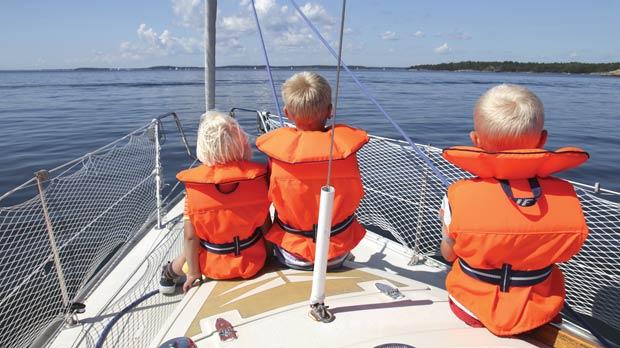
- One suitable PFD per person, sized correctly—including children. “Adult universal” does not fit a toddler.
- Condition: no broken straps, crushed foam, or rotten stitching. Inflatable types need charged cartridges and intact oral tubes; check service dates.
- Accessibility: not buried under coolers. In a sudden fall overboard, seconds count.
- Wear policy: on small boats, in cold water, and with weak swimmers, wearing a PFD underway is far safer than storing it “nearby.”
A buoyant heaving line or throwable flotation device gives you a way to reach someone in the water without entering it yourself. Practice the throw on a calm day. A line that looks neat in a locker but that no one has ever cast is half as useful as you think.
Communication and signaling when things go wrong
Phones fail when they get wet, lose signal, or drain. A marine VHF radio—installed or handheld, as appropriate—remains a core tool for distress and for routine traffic. Know channel 16 protocols, keep the radio charged or powered, and protect handhelds from dunking. Where required or wise for your route, add approved flares or electronic visual distress signals that are in date and dry. A waterproof flashlight or dedicated signaling light helps after sunset.
Share a float plan with someone ashore: where you are going, who is aboard, and when you expect to return. That simple habit is part of the safety system even though it does not live in a plastic box.
What belongs in the watertight emergency kit
Store a dedicated kit in a sealed, labeled container you can grab with one hand. Revisit the contents every season. A practical kit typically includes:
- First aid: bandages, antiseptic, gloves, seasickness remedies you personally tolerate, tweezers, and any personal medications in waterproof bags
- Water and calories: sealed drinking water and dense snacks sized for everyone aboard for longer than you “plan” to be out
- Sun and heat protection: sunscreen, spare hats, and light cover—UV injury ruins judgment as surely as cold does
- Tools and spares: basic hand tools, spare fuses, tape, line, and the fasteners or plugs your engine and fittings actually use
- Navigation backup: charts or a chart app with offline maps, plus a simple compass; GPS is excellent until batteries or satellites disappoint
- Fire response: extinguisher(s) rated for your boat, mounted where you can reach them from the helm and galley, and checked for pressure
Fuel planning is part of the kit in spirit: know your range, reserve margin, and refuel points. Running out of fuel turns a safety kit into a waiting exercise.
Operator readiness is equipment too
A complete kit cannot compensate for an untrained operator. Valid local licensing or certification, where required, is only the start. You should be able to start and stop the engine under stress, deploy an anchor, recover a person in the water with the crew you have, and use the radio without scrolling menus. Brief guests before casting off: where PFDs are, how to use the radio’s distress function if you are incapacitated, and where the extinguisher and first-aid kit live.
Weather literacy belongs here as well. Check marine forecasts, not just a phone’s city weather icon. Have cancel criteria before you leave the ramp—wind speed, visibility, lightning—so you are not negotiating with peer pressure on a pitching deck.
Maintenance criteria: present is not the same as ready
Walk this loop before departure:
- Count PFDs against heads aboard; confirm children’s sizes.
- Open the emergency box; replace expired flares, dead batteries, and damp bandages.
- Test the horn or whistle; confirm navigation lights.
- Check extinguisher gauges and mounts.
- Confirm bilge pump operation and that scuppers are clear.
- Verify fuel, oil, and cooling water behavior during a short idle.
- Secure loose gear so a wave does not create projectiles.
After trips, rinse salt, dry textiles, and note what you used or wished you had. Kits shrink in usefulness when they become time capsules of last decade’s good intentions.
Match the kit to the trip
A quiet afternoon on a small lake near shore asks for a different depth of kit than a coastal run with limited landing options. Cold water raises the priority of immersion protection and rapid recovery tools. Night trips demand lighting and signaling discipline. Fishing with kids demands worn PFDs and a clear “everyone sits until docked” rule. Scale up thoughtfully rather than assuming one plastic crate covers every ambition.
If you boat with friends’ vessels often, ask what they carry and where it lives. Courtesy and safety overlap: knowing the host boat’s radio and throwable locations is part of being a useful crew.
Before you next untie the lines, open the locker and ask one blunt question: if someone went overboard in the next two minutes, could every person on board float, be reached, and be called in for help with gear that works today? If any answer is fuzzy, restock and rebrief until it is not. Fun on the water lasts longer when the kit—and the habits around it—are already doing their quiet job.

Comments
Continue reading

Funny Animal Signs That Warn People (While Animals Ignore Them)
From a seagull on a no-birds disc to classic zoo and park ironies—why animal warning signs get funny, and what the rules are still for.

How to Find Local Amenities on Vacation: Mechanics, Haircuts & More
Locate trustworthy local services and everyday spots while traveling or settling in—using publications, reviews, map apps, neighbor tips, and low-pressure exploration.

Kristen Stewart for V Magazine, Spring Preview 2013
V81’s Wild at Heart cover story—Kristen Stewart shot by Inez & Vinoodh, styled by Joe McKenna, in pale minimal spring glamour.