
Invisible Man: Liu Bolin’s Camouflage Art and Hiding in the City
Chinese artist Liu Bolin—the Invisible Man—paints himself into city walls and markets. How Hiding in the City began, how the camouflage is made, and what the photographs argue.
Liu Bolin stands so still that the world seems to paint over him. Born in Shandong, China, in 1973 and long based in Beijing, the contemporary artist became internationally known as “the Invisible Man” for self-portraits in which his body is camouflaged into walls, markets, monuments, and city rubble. Assistants cover his clothes and skin with careful layers of paint until his silhouette nearly dissolves. What remains is a photograph that asks a hard question: what happens to a person when the surroundings refuse to see them?
By the early 2010s, when this kind of work was circulating widely online and in museum programs, Liu Bolin’s method looked like a magic trick. Look longer and the trick becomes something else—performance, political commentary, and patient craft fused into a single frame. The paint is temporary. The photograph is the durable object. The disappearance is the argument.
This feature looks at how Liu Bolin’s camouflage practice works, where the “Hiding in the City” series began, and why the Invisible Man nickname stuck without reducing the work to novelty alone.
From sculpture training to vanishing acts
Liu Bolin studied art formally: a Bachelor of Fine Arts from the Shandong College of Arts in 1995, then a Master of Fine Arts from the Central Academy of Fine Arts in Beijing in 2001, with sculpture as a core path. That background matters. Camouflage painting on a human body is not casual costume design; it is color matching, edge control, and spatial judgment applied under strain. The body becomes a three-dimensional canvas that must align with architecture, posters, shelves, or stone.
He belongs to a generation that came of age as China moved through rapid economic change after the Cultural Revolution. His practice often returns to the tension between the individual and systems larger than any one life—development, slogan culture, consumer abundance, memory, and the pressure of cities that remake themselves overnight. Disappearing is not escapism in his vocabulary. It is a way to make invisibility visible.
International recognition grew through exhibitions in Beijing, Paris, New York, Milan, Rome, and elsewhere. Festival and gallery circuits helped the photographs travel, but the images themselves were already built for wide reading: you do not need a long caption to feel the jolt when a human outline finally appears inside a wall of goods or a painted slogan.
Hiding in the City: where the series began
Liu Bolin’s best-known body of work, Hiding in the City, began as performance art in 2005 after the demolition of Suo Jia Cun, a Beijing artists’ village where he had been working. The clearance—linked in public accounts to development pressures around the approach to the 2008 Beijing Olympics—left studios and community infrastructure gone. For Liu Bolin, the event was personal and structural at once: artists could be displaced with little protection, and the city could overwrite a cultural enclave as if it had never mattered.
His response was quiet and stubborn. He stood in Beijing sites while assistants painted him into the background. The finished photographs document that endurance. Early contexts included demolished lots, walls dense with political or commercial messaging, and ordinary urban textures that most pedestrians ignore. By forcing his body into those surfaces, he asked viewers to notice both the environment and the person the environment can erase.
He has described disappearing as a method rather than the whole point—a way to pass on anxiety about how human beings relate to the worlds they build. That distinction keeps the work from collapsing into pure optical cleverness. The camouflage is the delivery system. The subject is social pressure, vulnerability, and the uneasy fit between citizen and city.
How the camouflage is made
A Liu Bolin Invisible Man photograph usually starts with site selection. The background must be visually busy enough to hide a body, yet readable enough that the match will be impressive once complete. Markets stacked with products, mural walls, historic landmarks, and industrial debris all offer different problems: repeating patterns, reflective surfaces, deep shadows, uneven brick.
Liu Bolin poses and holds still for long stretches while assistants mix and apply paint. Clothes, face, hands, and sometimes hair receive the same treatment. Edges are the hardest part—shoulders against a poster seam, a shoe against pavement grit, a cheek against a gradient of sky. A slight shift of weight can ruin hours of work. When the match is close enough, the camera records the performance. Later, viewers hunt for the human shape the way they hunt for a figure in a puzzle book. Discovery becomes part of the meaning: looking carefully is an ethical act as well as a visual one.
Because the process is physical and slow, the photographs carry a documentary weight that digital cut-and-paste camouflage rarely matches. You can sense labor in the stillness. The body is not deleted in software; it is negotiated into place under daylight and weather.
What the images argue
Across the series, settings change while the core tension stays steady. In commercial aisles, disappearance can read as commentary on consumer culture and the way people dissolve into brands. Against monumental or historic architecture, the figure can seem tiny beside national myth. In rubble or construction zones, camouflage echoes literal erasure—homes and studios scraped away for a new skyline.
Slogan-heavy walls are especially pointed in Liu Bolin’s Beijing work. Familiar messages can become background noise through repetition. By painting himself into that noise, he interrupts habit. The viewer who finds him also rereads the wall. The photograph turns propaganda or advertising from furniture into subject matter again.
Later projects extended the method beyond Beijing—Italian cities rich with Western art history, New York sites loaded with finance and memorial culture, and other international collaborations. The nickname “Invisible Man” traveled with those images, sometimes flattening nuance into viral amazement. The stronger reading keeps both layers: the wow of perfect match and the discomfort of why someone would need to vanish to be noticed.
Performance, photography, and the finished object
Is Liu Bolin primarily a performance artist or a photographer? The useful answer is both. The live act—standing painted into a place—is essential. Without that ordeal, the social claim weakens. Yet most audiences meet the work as a photograph: a fixed rectangle that can hang in a gallery, circulate online, or enter a book. The photograph freezes a temporary body-paint state that would otherwise wash off. It also controls framing, scale, and the exact moment when camouflage is most complete.
Sculpture training still shows. Composition treats the body as volume in space. Color decisions resemble relief painting more than fashion makeup. Even when the final product is a print, the thinking is spatial and material.
Collaborations with fashion houses and other artists later demonstrated how adaptable the camouflage language could be. Those projects widened public awareness, but the emotional center of the practice remains the earlier city hidings: an artist using his own skin to mark places that threaten to forget him.
How to look at an Invisible Man photograph
If you treat the image as a game of “spot the person,” you will find Liu Bolin eventually. Try a second pass with different questions:
- What kind of place is this? Market, monument, demolition site, museum wall—each setting changes the politics of disappearance.
- Where do the edges fail? A shoe, an ear, a shadow mismatch often reveals the human cost of the illusion.
- Who holds power in the frame? Brands, slogans, architecture, and crowds can dwarf the painted figure even when he is centered.
- What would the picture mean without camouflage? If ordinary standing in the same place feels empty, the paint is doing conceptual work, not only decorative work.
Those questions keep the nickname from eating the art. “Invisible Man” is a useful headline. Liu Bolin’s photographs are more demanding than a headline: they ask whether society’s backgrounds are designed to include people—or to absorb them until nothing distinct remains.
Next time a camouflage image stops your scroll, linger past the first surprise. Find the outline, then ask what the outline is standing inside—and whether that place would have noticed him if the paint had never gone on.

Comments
Continue reading
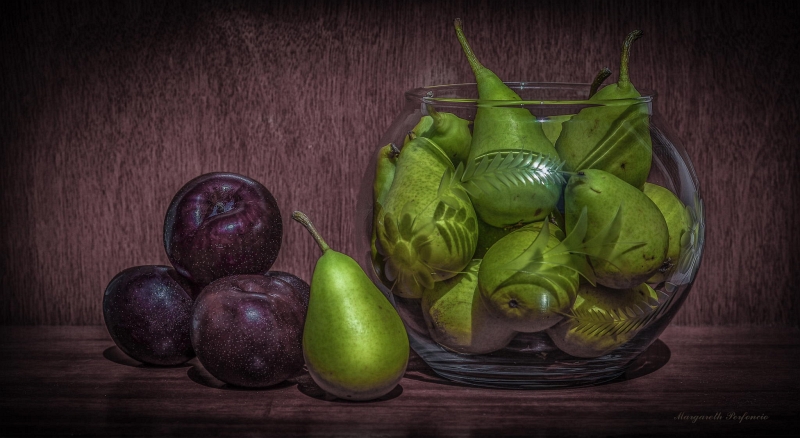
Still-Life Photography by Margareth Perfoncio
São Paulo photographer Margareth Perfoncio’s still lifes of food and flowers—Old Master light, dark wood, and tables that feel inevitable.

Meaningful Love Quotes for Inspiration (and Ink)
Meaningful love quotes that still feel true — short lines for tattoos, gifts, and everyday reminders, with placement and wording tips.
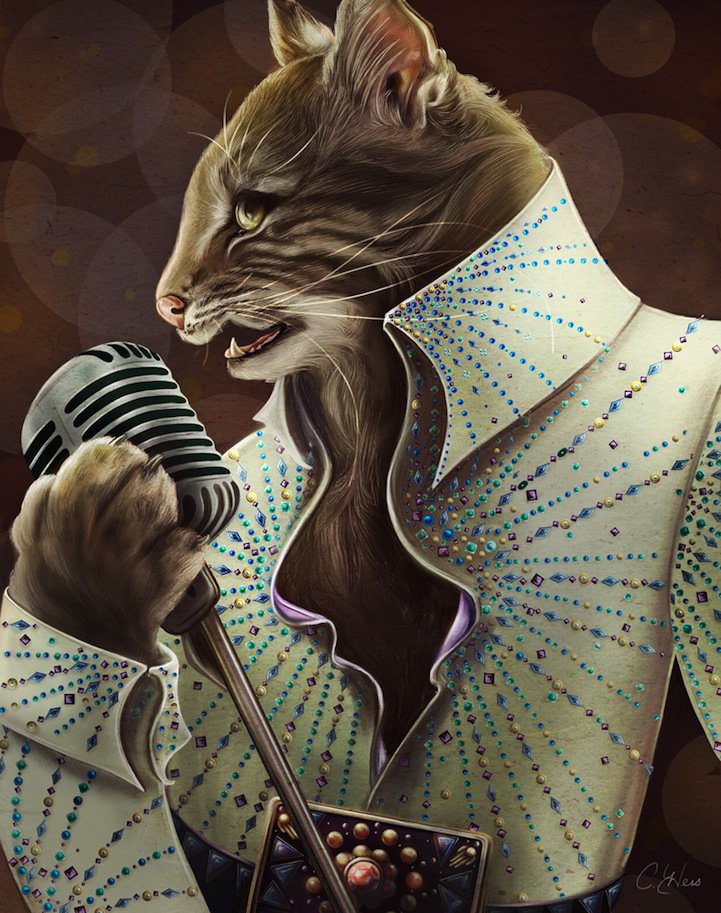
Christina Hess’s Animals From History: Costumed Pets as Playful Portraits
Illustrator Christina Hess reimagines historical icons as ornate animal portraits—Elvis Petme and friends—mixing puns, costume detail, and soft history lessons.