
20 Cool Wall Mural Approaches That Change How a City Block Feels
From giant portraits and trompe-l’oeil to botanical walls, lettering, and ghost-sign dialogues—twenty mural approaches that turn blank façades into public art worth looking at twice.
A blank wall is never really blank for long. Someone paints a slogan, a landlord rolls gray over it, a festival funds a mural, rain softens the edges, and the street keeps arguing about what belongs in public view. Cool wall murals are not wallpaper with ambition. They are architecture’s loudest temporary residents—color and narrative that have to survive weather, traffic, and the indifference of people who walk past them twice a day.
This guide walks through twenty mural approaches that keep showing up in cities that treat outdoor walls as shared canvas. You do not need a plane ticket for every type. You need a sharper eye for how paint meets brick, how scale changes a block, and how a mural either talks to its neighborhood or talks over it.
1. Full-building portrait murals
Giant faces on residential ends still stop traffic. The best ones treat windows as part of the composition rather than obstacles—eyes aligned with openings, hair flowing around pipes, a collar that swallows a fire escape. Portrait murals work when the person depicted belongs to the place: a local musician, a community elder, a fictional character that the block already claims. Scale without relationship just becomes billboard vanity.
2. Trompe-l’oeil windows and doors
Illusion murals fake depth on flat façades—false balconies, painted courtyards, doorways that open into painted gardens. They reward a second look from the sidewalk and photograph well because the brain keeps trying to walk into them. Success depends on perspective locked to a primary viewing angle; from the wrong street, the trick collapses into decorative noise.
3. Botanical wall forests
Oversized leaves, vines, and flowers turn gray concrete into a vertical greenhouse. Botanical murals soften industrial districts without pretending the building is a park. Artists who study real plant structure—veins, shadow under canopies, the weight of a bloom—beat generic “pretty leaf” stencils every time. These pieces age interestingly as sun fades greens into quieter olives.
4. Animal guardians
Owls, wolves, whales, and foxes appear again and again because animals read clearly from a distance and carry symbolic freight without a caption. Cool animal murals avoid zoo-poster flatness. They use texture—fur suggested by roller noise, feathers built from layered spray—and they place the creature so architectural lines become habitat: a whale wrapping a corner like a current, a bird perched on a real ledge.
5. Lettering-as-architecture
Typography murals treat words as structure. Tall letterforms can replace cornices in visual weight; script can follow brick courses like a second mortar line. The coolest lettering walls are readable without shouting. They choose one message and give it room to breathe. Crowded motivational quotes usually fail in public space; a single strong word or short phrase often lasts longer in memory.
6. Abstract color fields
Not every mural needs a narrative character. Soft gradients, hard geometric planes, and rhythmic stripes can reorganize how light hits a street. Abstract walls are especially strong on modern glass-and-concrete blocks where figurative work can look stuck on. When color fields respect the building’s grid—aligning bands with floor lines—the mural feels designed with the architecture, not pasted onto it.
7. Historical scene reconstructions
Some neighborhoods commission murals that stage local history: markets that vanished, workers from a closed mill, a waterfront before the towers. These pieces function as outdoor textbooks. They coolest versions research costume, tools, and street layout carefully enough that older residents nod in recognition. Cartoon history with vague “old-timey” costumes reads as tourism filler.
8. Surreal hybrids
A house growing legs, a fish swimming through apartment windows, a clock melting across a roofline—surreal murals earn their keep when the impossible feels inevitable in that specific place. The joke or dream has to lock to the wall’s shape. Random weirdness without architectural logic becomes noise after the first scroll past.
9. Children’s-eye murals
Playful walls near schools and playgrounds use simpler shapes, brighter palettes, and characters kids can point to. Cool does not mean childish clutter. Strong kids’ murals leave negative space, keep silhouettes clear, and invite touch with the eyes rather than with sticky hands. Durability matters more here; scuffs and graffiti tags arrive faster beside play areas.
10. Black-and-white graphic walls
Monochrome murals look expensive even when the budget is spray cans and scaffolding. High-contrast line work photographs cleanly, ages with dignity, and sits well beside brick and stone. Artists who can draw with economy—few lines, strong shadows—make walls that feel like permanent ink drawings on the city. Color accents, if used at all, land harder against that restraint.
11. Community quilt murals
Panel-by-panel collaborations let many hands share one façade. Each square may hold a different motif, but a shared palette or border system keeps the wall from fracturing. These murals are cool because the process shows: you can feel negotiation, humor, and neighborhood authorship. They also age as living documents—repainted squares mark repair, grief, or celebration.
12. Night-glow and reflective strategies
Some murals are designed for after dark—UV-reactive layers, reflective beads, or compositions that assume streetlamp pools. Daytime photos miss half the piece. Cool night-aware walls treat lighting as medium, not accident. If you photograph them, return after dusk; if you commission them, plan fixtures and vandalism risk with the same seriousness as the paint schedule.
13. Roofline silhouettes
Murals that climb to the eaves and use the building’s silhouette as a second frame feel more intentional than boxed-in rectangles floating mid-wall. A figure whose hair becomes the pitched roof, or waves that crash against a real parapet, makes architecture collaborate. From across an intersection, the whole building becomes the artwork’s outline.
14. Political and protest murals
Public walls have always carried argument. Protest murals cool when they stay specific—names, dates, demands—rather than recycling generic fists and slogans. Specificity makes them historically useful and harder to dismiss as décor. Ethics matter: documenting these walls means respecting mourners, not treating grief as backdrop for a portfolio shot.
15. Food and market walls
Fruit crates, coffee steam, fish on ice, spice piles—food murals turn commercial districts into appetite theaters. The best ones study real produce color under real light instead of cartoon yellow bananas forever. They also work as wayfinding: a painted taco wall can mark a block more clearly than a plastic sign cluster.
16. Map and cartography murals
Neighborhood maps, transit diagrams, and stylized coastlines help people locate themselves while decorating. Cool map murals choose what to include and what to leave out—emphasis is editorial. Overlabeled maps become unreadable from the street; selective maps with a few beloved landmarks become meeting points.
17. Texture-first walls
Some artists refuse to hide the surface. They let brick pattern show through washes, or build relief with thick paint and collage. Texture-first murals look different in rain and in harsh noon sun. They reward walking close, which is rare in a culture that photographs everything from across the avenue. Close looking becomes the point.
18. Temporary festival murals
Not every cool mural is meant to last a decade. Festival walls accept a shorter life cycle: bold ideas, faster execution, willingness to be painted over next year. That freedom produces experiments permanent commissions avoid. Photograph them while they exist. Their coolness includes vanishing—the city keeps moving, and so does the paint.
19. Interior feature murals
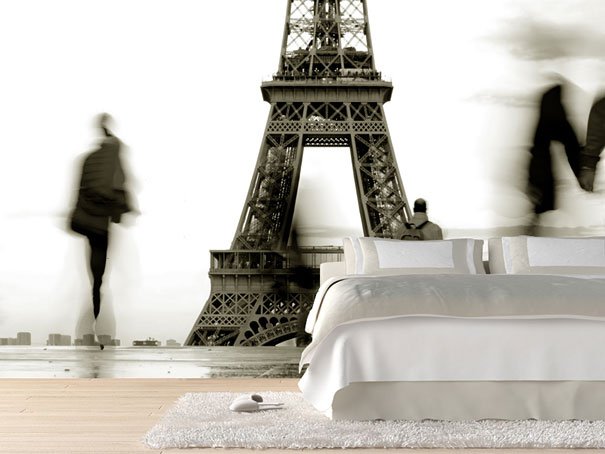
Wall murals are not only outdoor spectacles. Café stairwells, lobby atriums, and bedroom accent walls borrow street-art energy for private or semi-public rooms. Interior murals cool when they respect scale: a motif that worked on a five-story end can overwhelm a twelve-foot living room. Lighting, acoustics, and furniture paths become part of the composition.
20. Adaptive reuse of old ads
Ghost signs and faded commercial painted ads are murals by accident—layers of commerce turned archaeology. Contemporary artists sometimes restore, frame, or gently overwrite them so history remains legible under new work. That dialogue between eras is one of the coolest mural strategies available: the wall keeps its memory while gaining a new voice.
How to judge a mural on the street
Ask whether the piece needed that wall. If you could move it to any blank surface without losing meaning, it may be generic decoration. Ask who maintains it, who commissioned it, and who lives beside it. Ask what happens at night, in rain, after five years of sun. Cool is not only first-day saturation; cool is how the mural keeps earning its place in ordinary life.
If you make murals yourself, learn scaffolding safety, local permitting, and primer chemistry before chasing style. If you only look, walk more slowly. Cross the street for a full view, then step in for brushwork and roller seams. Leave residents’ doorways clear. Credit artists when you share photos. The wall will outlast your visit—or it will not—and either way, attention without entitlement is the only lasting courtesy public art asks for.

Comments
Continue reading
Attic Bathroom Design Ideas: Light, Layout, and Roof-Friendly Fixtures
Design ideas for converting an attic into an extra bathroom—working with slopes, skylights, wet-zone materials, eaves storage, and fixture placement.
Ladder Shelving Repurpose Ideas: DIY Bookcases, Dividers & More
Turn an old ladder into shelving, a room divider, towel rack, or narrow desk—practical DIY steps, safety checks, and styling tips with photo ideas.
Cool Home Lifehacks That Actually Save Time
Practical household tricks—kraft-paper lists, safer nailing, fridge bottle stops, mint-tin drawers, phone stands—using things you already own.