
Ladder Shelving Repurpose Ideas: DIY Bookcases, Dividers & More
Turn an old ladder into shelving, a room divider, towel rack, or narrow desk—practical DIY steps, safety checks, and styling tips with photo ideas.
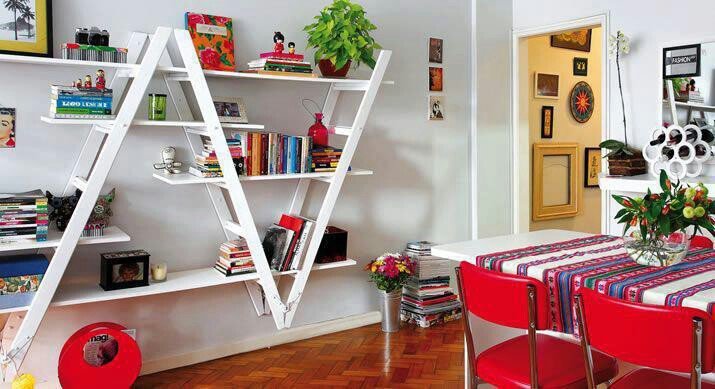
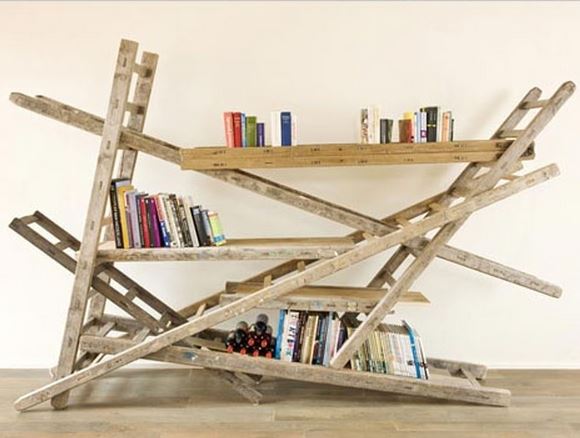
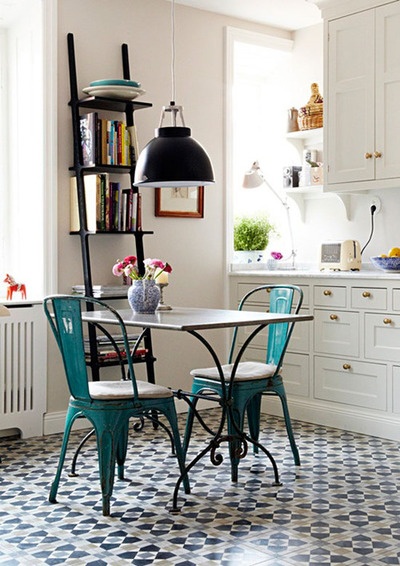
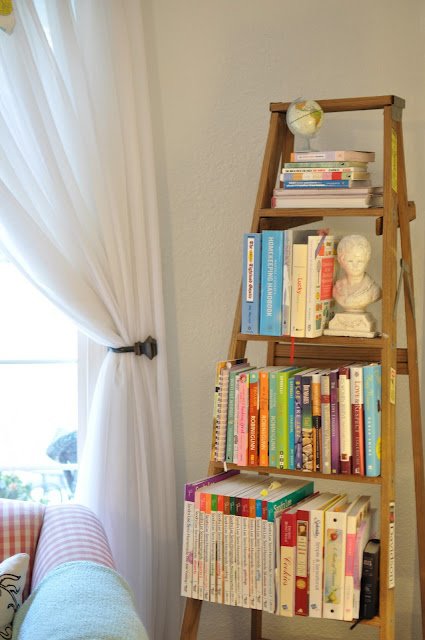
An old ladder does not have to end its life as scrap. Lean it, brace it, or rebuild it, and the same geometry that once held a painter’s weight becomes shelving, a room divider, a towel rail, or a narrow desk support. The ideas below treat ladders as furniture skeletons: ready-made uprights, built-in rungs, and a silhouette that already looks intentional in loft, cottage, and vintage rooms. Study the photos, then translate what you like into measurements, load limits, and finishes that match your space.
People often search for ladder bookcases first, and that remains a strong use. A ladder shelf holds paperbacks, plants, and baskets without the bulk of a built-in. But the same frame can do more: display blankets in a living room, stage towels in a bath, hold cookbooks beside a kitchen counter, or split an open plan into two soft zones. The point is not novelty for its own sake. It is finding a second life for wood you already own—or for a thrifted piece—while keeping the structure safe enough for everyday reach.
Start with the ladder you have
Before you cut or paint, inspect. Reject ladders with cracked side rails, rotten rungs, or loose hardware. A decorative shelf that fails under a stack of hardcovers is not a design win. Wooden A-frames and straight extension ladders both work, but they behave differently. Straight ladders lean cleanly against a wall and invite horizontal boards between the rails. A-frames stand free and can become towel towers, plant stands, or double-sided book displays if you stabilize the feet and lock the hinge.
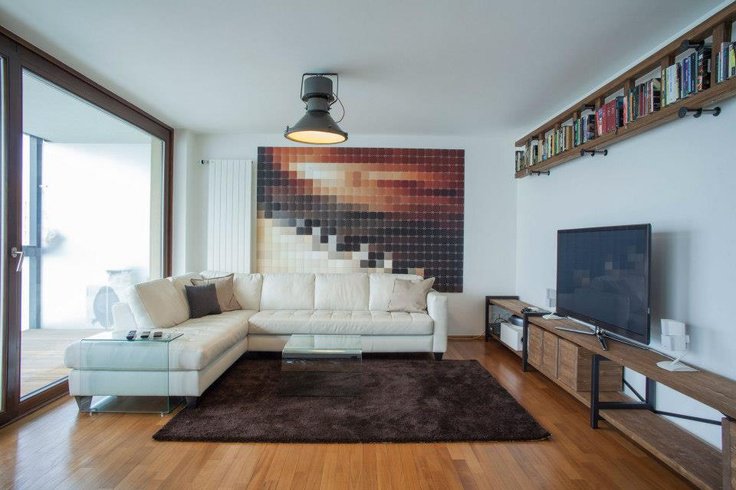
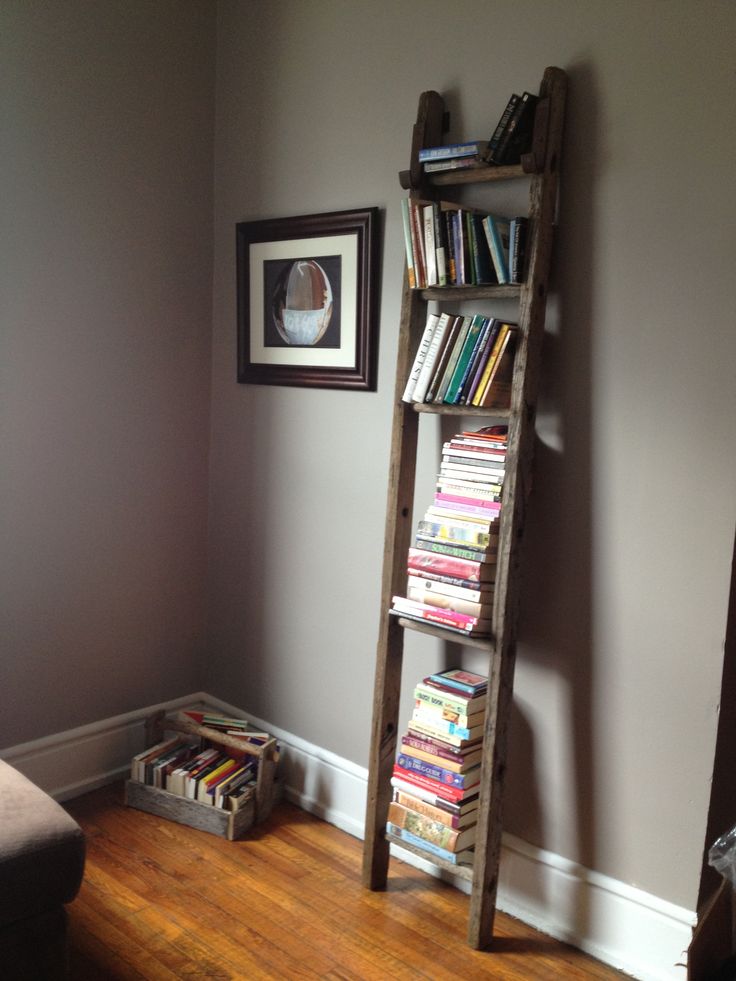
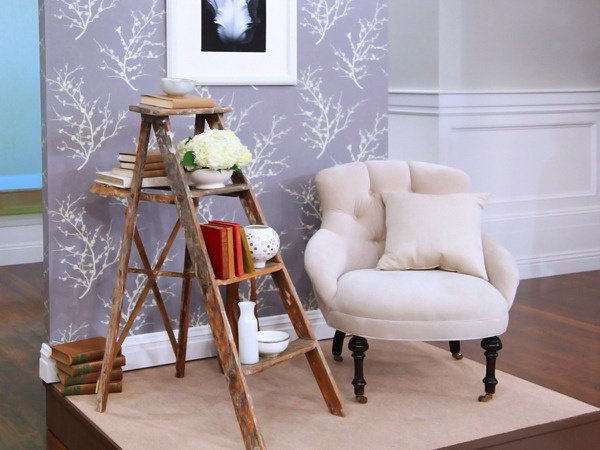
Clean thoroughly. Old paint may contain lead; if the finish is unknown and the piece is old, treat it carefully—wet sanding, sealed finishes, and common-sense caution beat aggressive dry sanding indoors. Tighten screws and replace broken rungs with stock that matches the original thickness. Lightly sand sharp edges so books and fabric do not catch. Decide early whether you want the ladder to look weathered or freshly painted. Vintage rooms often prefer the scars; modern rooms often prefer a solid color that disappears into the wall palette.
Leaning bookcase and wall shelf
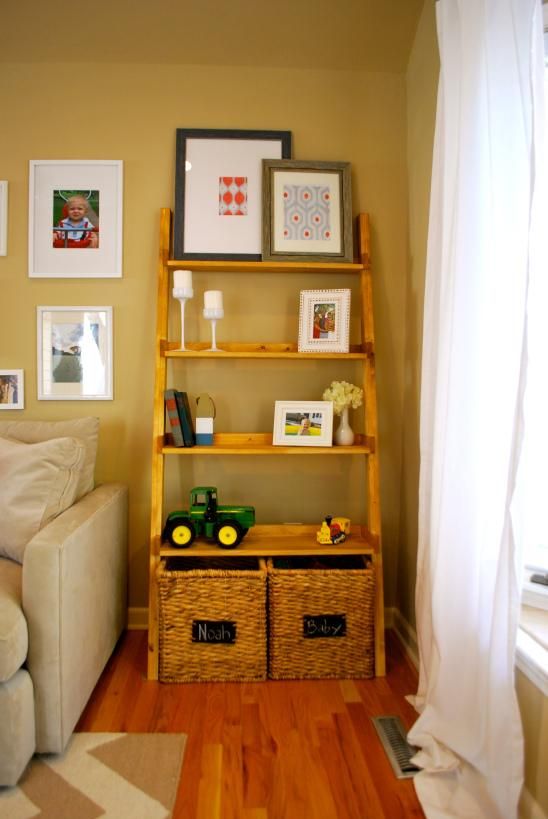
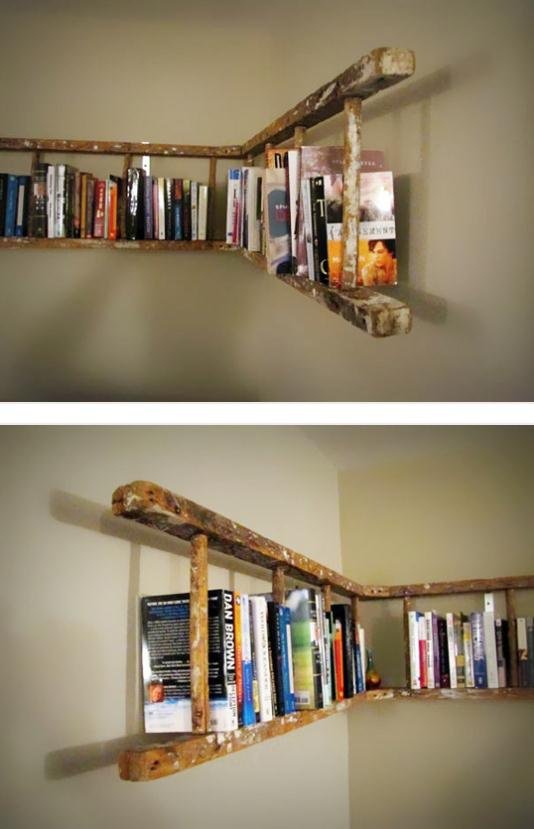
The classic approach is simple: lean a straight ladder against a wall at a safe angle, then rest boards across the rungs or screw shelf planks between the side rails. Keep heavier volumes low. Leave breathing room at the top so the ladder does not tip forward when you reach for a book. In earthquake-prone areas—or in homes with kids and pets—anchor the top rail to a stud with a discreet strap or L-bracket. A beautiful lean that can be yanked over is unfinished work.
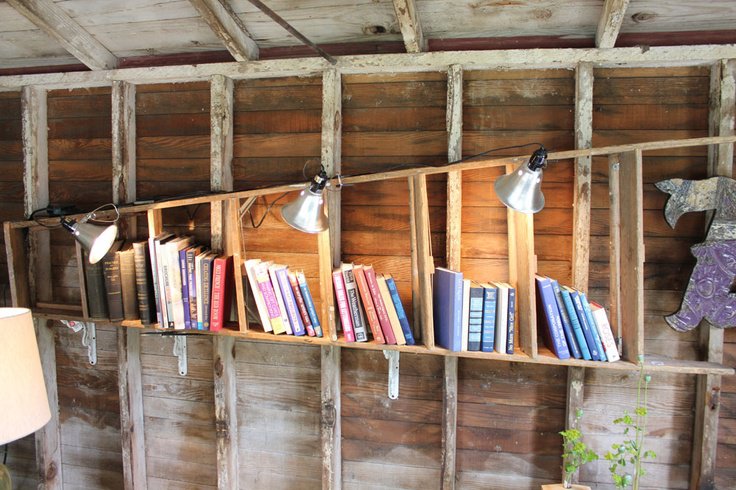
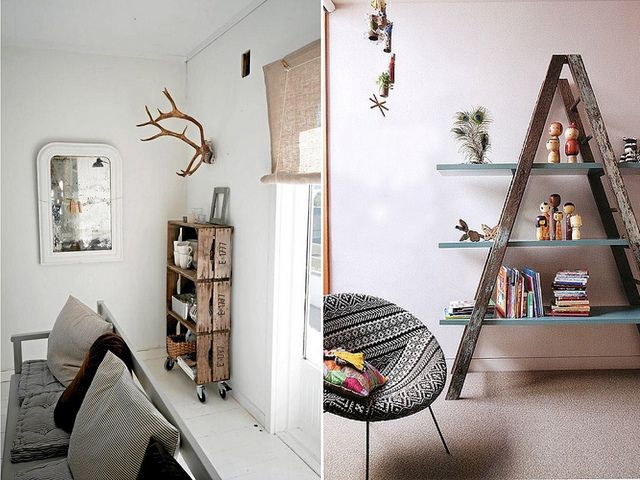
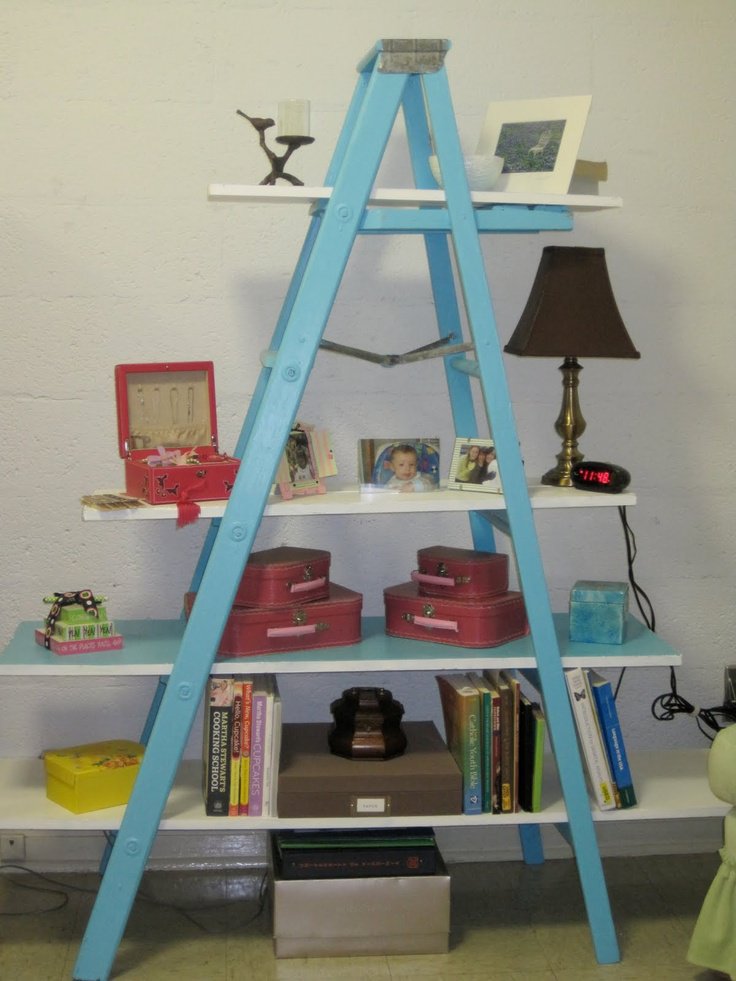
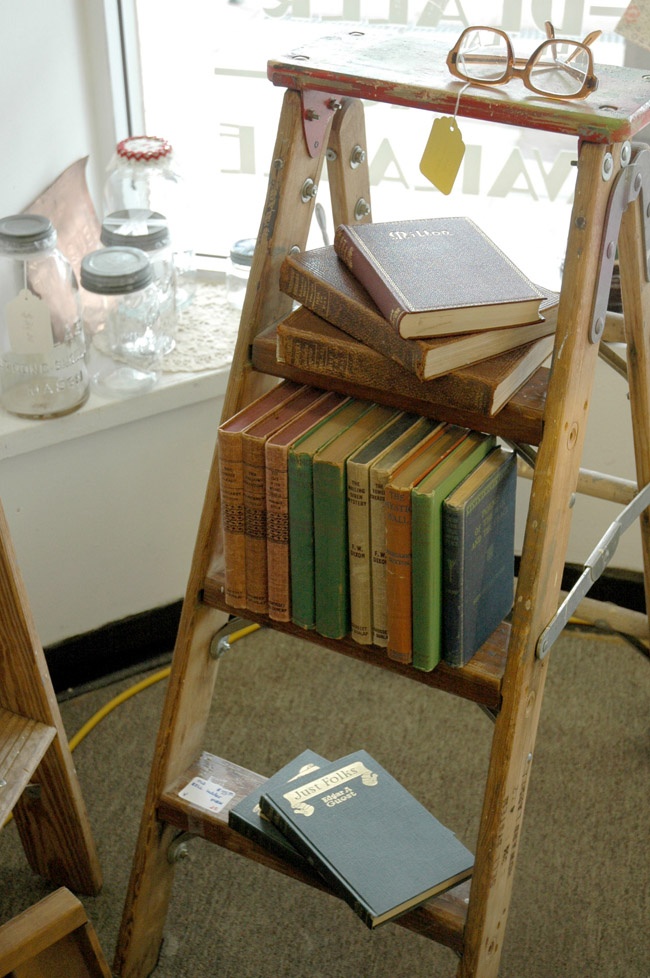
Shelf depth should match what you store. Paperbacks tolerate shallow boards; art books and baskets need more depth and stronger fasteners. If you add new shelves, use screws into the rails rather than relying only on friction against rungs. For a vintage living room, an antique-looking ladder with warm wood and uneven wear can finish a composition the way a found object finishes a vignette—especially when the rest of the room already speaks in aged metals, linen, and soft light.
Room dividers, displays, and dual-sided storage
In open plans, a ladder can mark a boundary without building a wall. Hang fabric panels, macramé, or lightweight curtains from the top rail to soften sight lines. Or leave it open and use both sides: books facing the living room, baskets facing a desk. Dual-sided storage works best when the ladder is freestanding and braced—often as a locked A-frame or as two ladders tied into a narrow free-standing tower with cross braces. Test stability by loading the lowest shelves first and gently rocking the frame before you trust it with glassware.
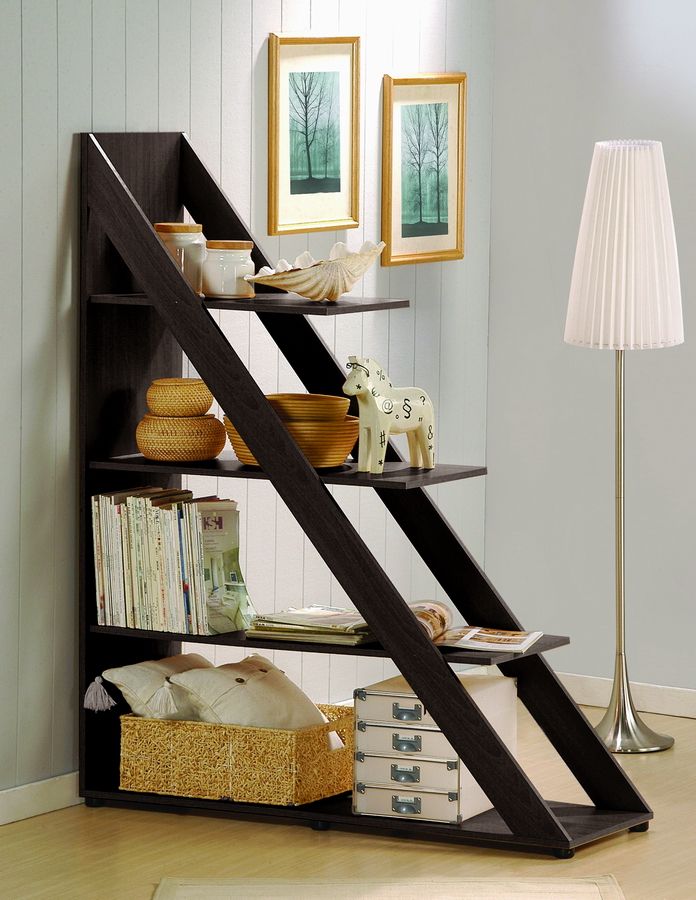
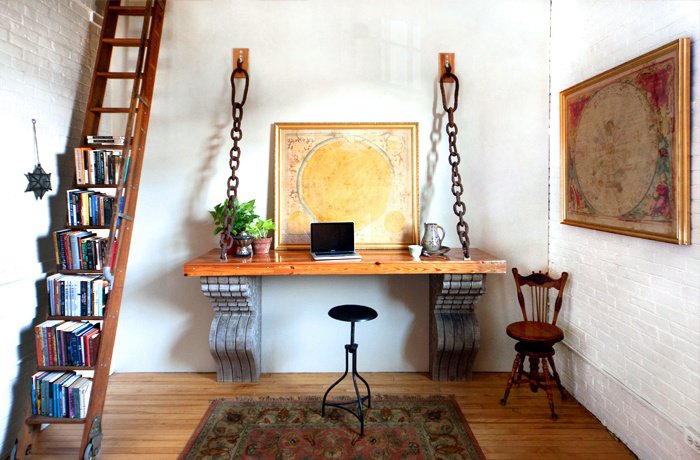
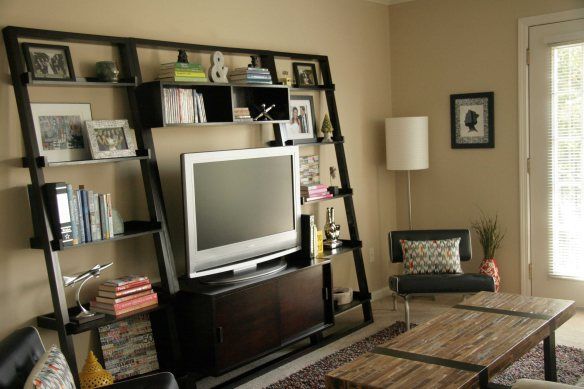
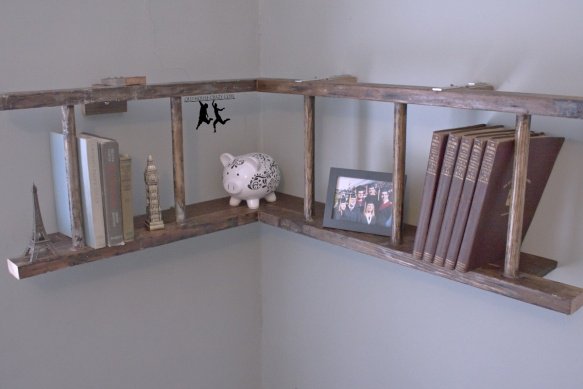
Display uses are lighter than book storage and often more forgiving. Magazines, framed photos, and folded throws look intentional on open rungs. In a shop or studio, a ladder can stage product without a bulky cabinet. Keep weight modest and center of gravity low. If you hang anything from S-hooks, confirm the rung can take the load and that hooks cannot slide off when someone brushes past.
Kitchen, bath, and desk adaptations
Kitchens favor short A-frames beside a counter: cookbooks below, herbs or oil bottles higher, with the top rail free for a hanging rail of utensils if you reinforce it. Bathrooms love ladder towel racks—hang towels across rungs, keep toiletries in a small basket on a mid shelf, and choose finishes that tolerate humidity. Seal wood well in damp rooms; unfinished pine will swell and stain.
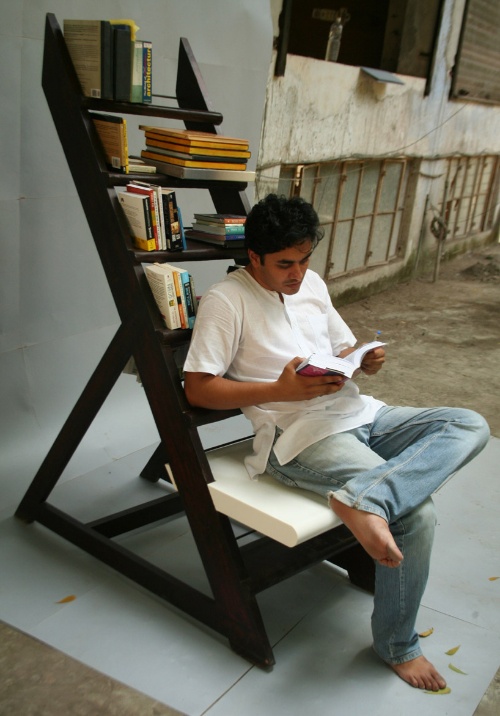
For a narrow desk, two matching ladders can support a thick plank: one ladder at each end, plank screwed to the side rails, cable management clipped underneath. This works in lofts and guest rooms where a full desk would dominate. Check that the plank does not rock, and avoid overloading the top with monitors unless the ladders are stout and the joints are solid. A laptop and notebook are a kinder first test than a dual-monitor setup.
Finish, style, and everyday maintenance
Paint unifies mismatched wood. Stain deepens grain. Clear oil keeps character visible. Match the finish language of nearby furniture so the ladder reads as planned, not abandoned. In farmhouse or cabin rooms, leave hardware honest. In minimal rooms, paint the ladder the same color as the wall so only the shelves and objects announce themselves.
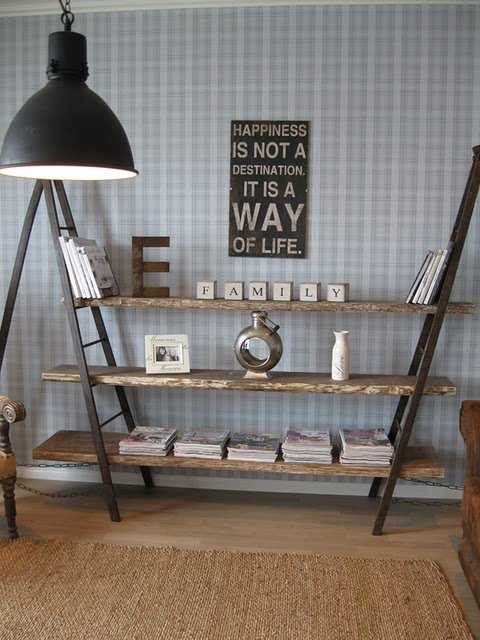
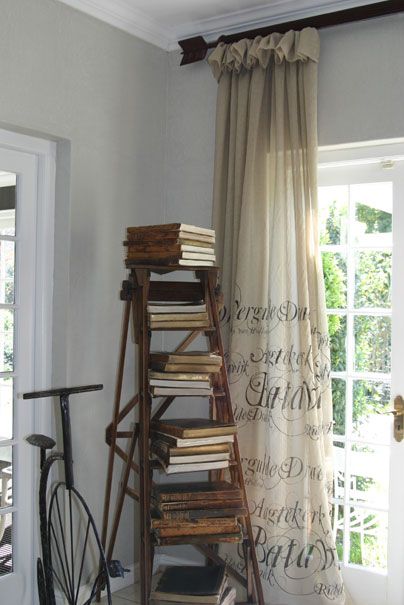
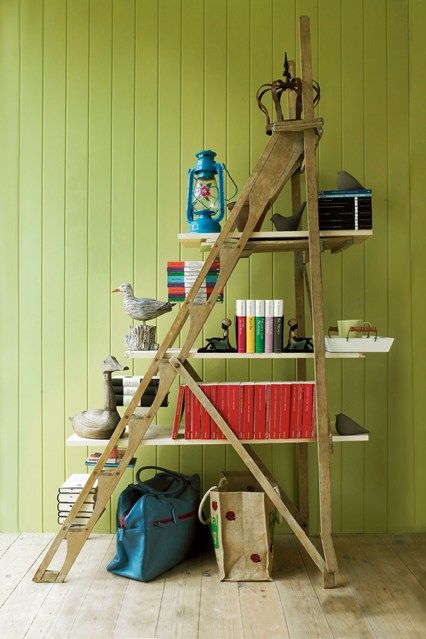
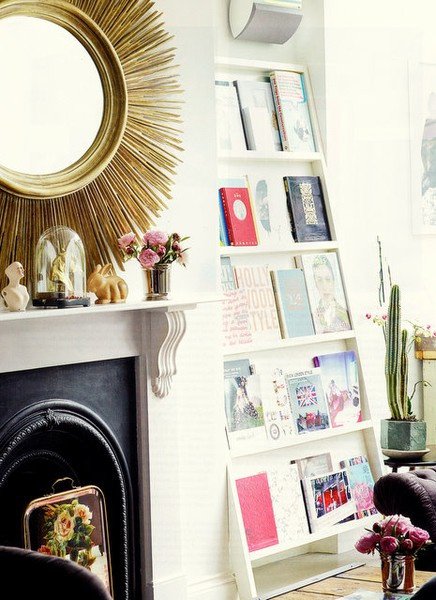
Style with restraint. Empty rungs are useful negative space. Alternate vertical book stacks with a plant or ceramic so the eye can rest. Dust open ladders more often than closed cabinets; wipe rungs before grit embeds in finish. Recheck anchors seasonally. Wood moves with humidity, and screws that were snug in winter may loosen by late summer.
Quick build checklist
- Inspect: no cracked rails, no rotten rungs, hardware tightened.
- Plan load: heavy items low; shelves screwed, not merely balanced.
- Stabilize: wall strap for leaning pieces; locked hinge or brace for freestanding.
- Finish for place: seal wood in kitchens and baths; match nearby tones elsewhere.
- Live with it a week: adjust shelf heights before you call the project done.
If one image in this set already feels like your room, start there: measure the wall, test the lean angle with an empty ladder, then add a single shelf and a few books. The best ladder shelves usually grow from that first stable span, not from a shopping cart full of extras.

Comments
Continue reading
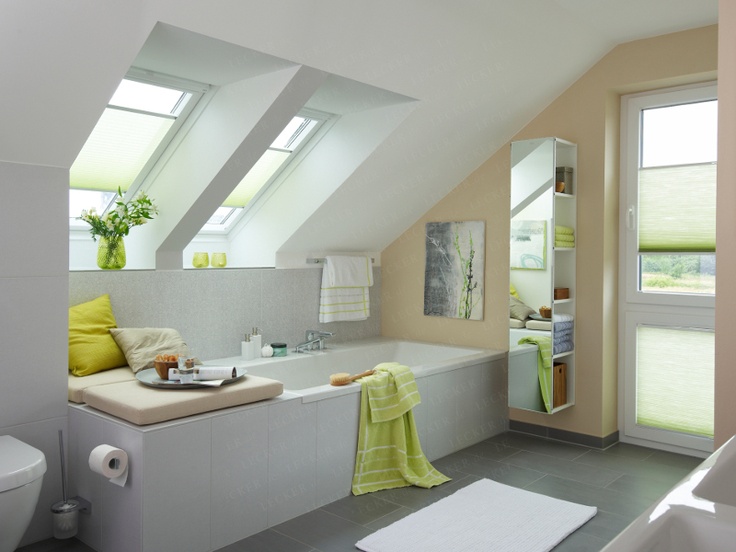
Attic Bathroom Design Ideas: Light, Layout, and Roof-Friendly Fixtures
Design ideas for converting an attic into an extra bathroom—working with slopes, skylights, wet-zone materials, eaves storage, and fixture placement.
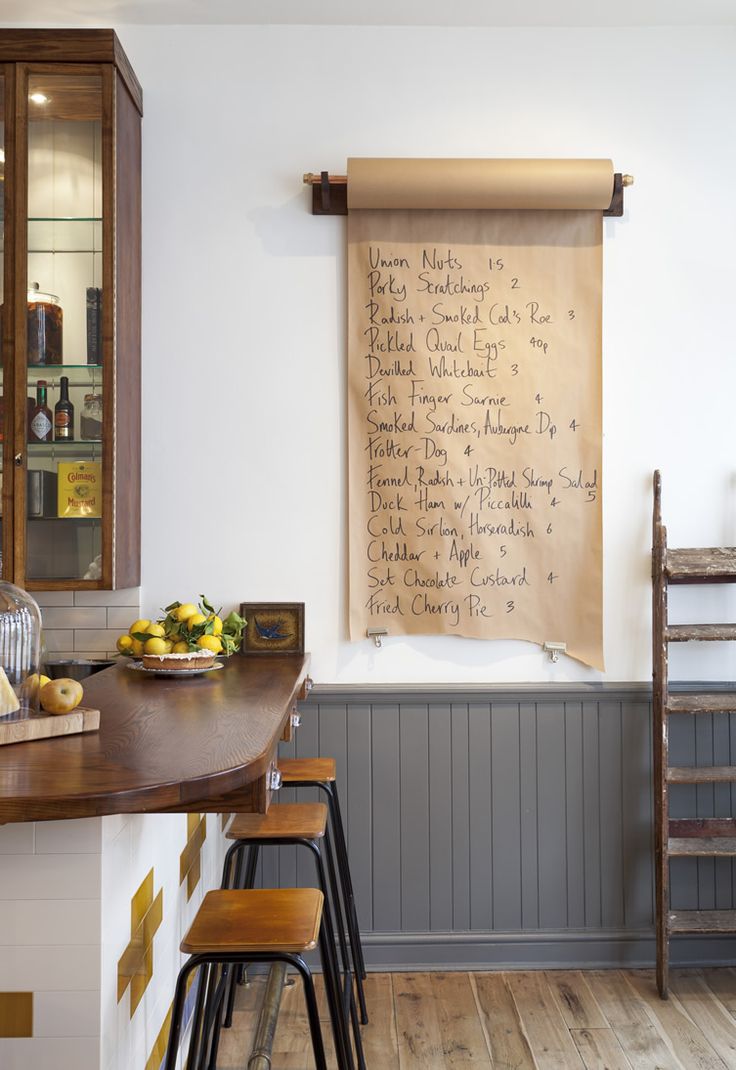
Cool Home Lifehacks That Actually Save Time
Practical household tricks—kraft-paper lists, safer nailing, fridge bottle stops, mint-tin drawers, phone stands—using things you already own.

Beverly Hills Villa by William Stephenson
A renovated 1956 William Stephenson villa in Beverly Hills—four bedrooms, five baths, gallery hall, garden pool—documented from its early-2010s listing era.