
Photo Manipulations by Caras Ionut: Whimsical Surreal Composites
Romanian artist Caras Ionut blends his own photographs into dreamlike Photoshop manipulations—whimsical surreal scenes taught through tutorials as carefully as they are shown.
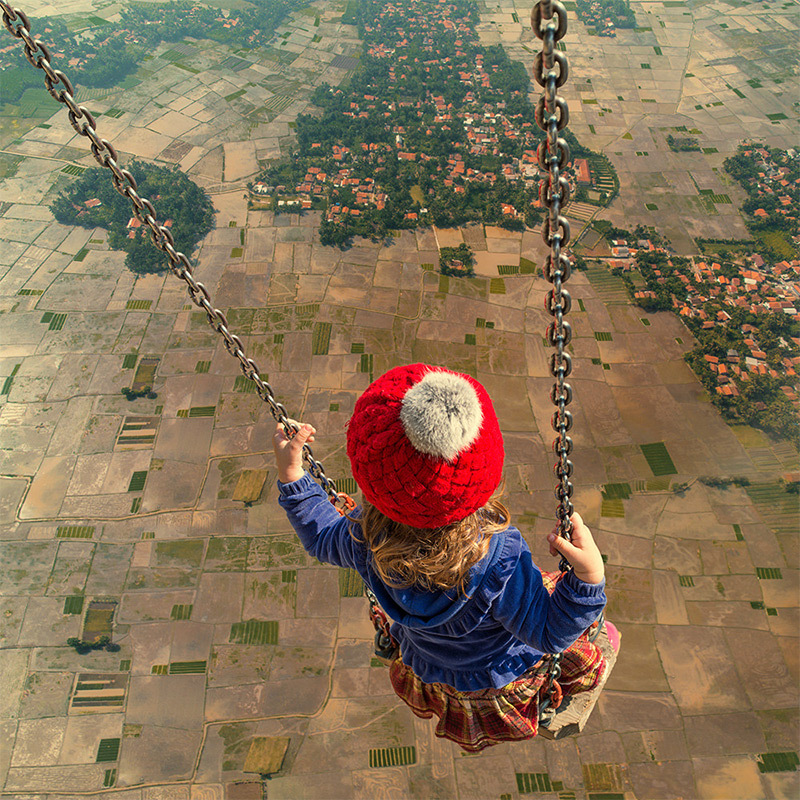
Caras Ionut builds worlds in layers. The Romanian photographer and digital artist—often associated with Iași—starts with photographs, frequently his own, then reassembles them in Photoshop until landscapes and portraits obey dream logic instead of physics. Children swing toward clouds, animals occupy impossible rooms, ordinary fishing scenes tip into myth. He has described an ambition to get out of this world with something special; the images below are what that ambition looks like when craft meets whimsy.
This is photo manipulation as fine spectacle: not a quick filter, but constructed surrealism. In the early 2010s, when these works circulated widely on portfolio sites and design blogs, Caras Ionut also shared tutorials and workshops so other artists could study the seams—how a composite holds together when light, perspective, and texture agree. The gallery that follows rewards both kinds of looking: the first glance that enjoys the dream, and the second glance that asks how the dream was bolted together.
Surrealism with photographic bones
Good manipulation still depends on photography. A weak base image becomes a weak fantasy. Caras Ionut’s stronger pieces feel grounded because fragments look photographed: real skin texture, real foliage, real water, then rearranged into scenes that could not have been captured in one exposure. He has called himself a kind of “photo mechanic”—someone who repairs reality into a stranger machine. That metaphor fits the work’s tone: mechanical patience underneath playful outcomes.
Themes lean whimsical rather than horror. Autumn and winter color moods appear often: muted golds, cold blues, fogged atmospheres that make the impossible feel quiet instead of loud. Dreams, in his framing, are not only escape; they are dual—beautiful and slightly unsettling, playful and lonely. A deer on a battered sofa in a wasteland can be funny and melancholy in the same glance. A girl riding an enormous fish can feel like a children’s book page drawn with adult technique. The emotional temperature stays soft even when the subject is strange, which invites longer looking.
Using largely his own photography matters for coherence. Personal archives share lenses, habits, and light preferences, so composites begin closer to unity than random stock piles do. When outside elements enter, the artist’s job is to persuade them into the same climate. That persuasion is the craft viewers sense even when they cannot name the tools.
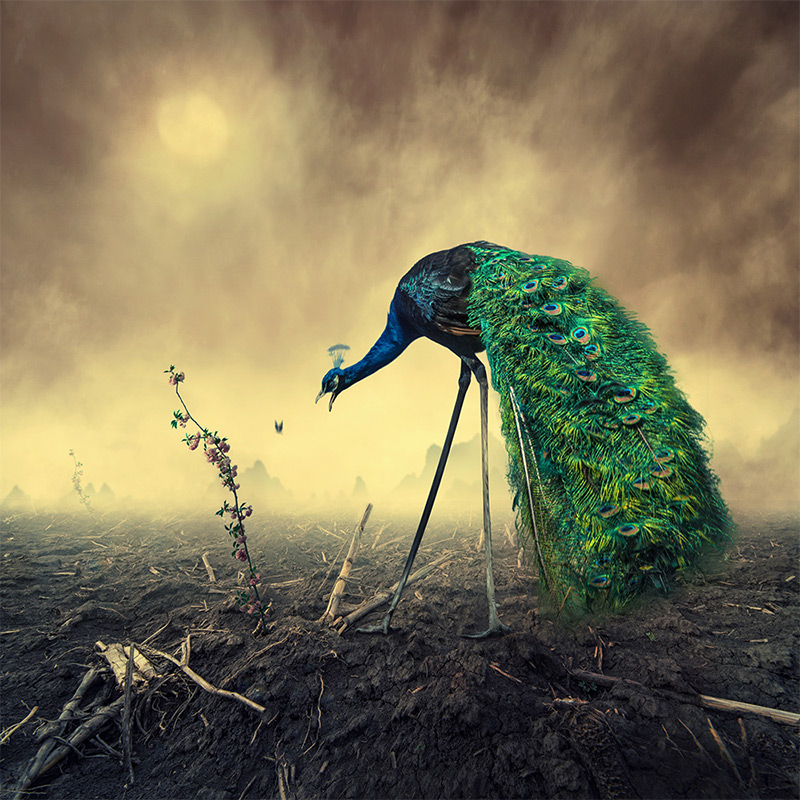
How the composites convince
Viewers forgive impossible subjects when the light matches. A figure cut from a cloudy day cannot sit cleanly under a hard noon sky unless the artist rebuilds shadows and color temperature. Perspective is the second test: horizon lines, vanishing points, and scale relationships must agree or the eye rejects the dream. Texture is the third—noise, sharpness, and edge softness need to feel like one camera’s afternoon, not a scrapbook of different resolutions.
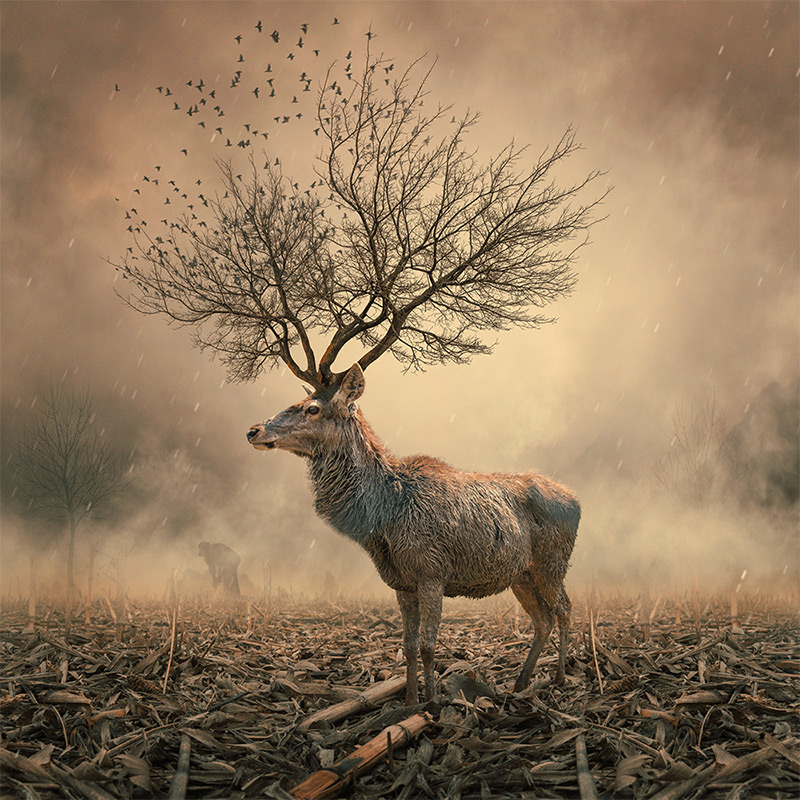
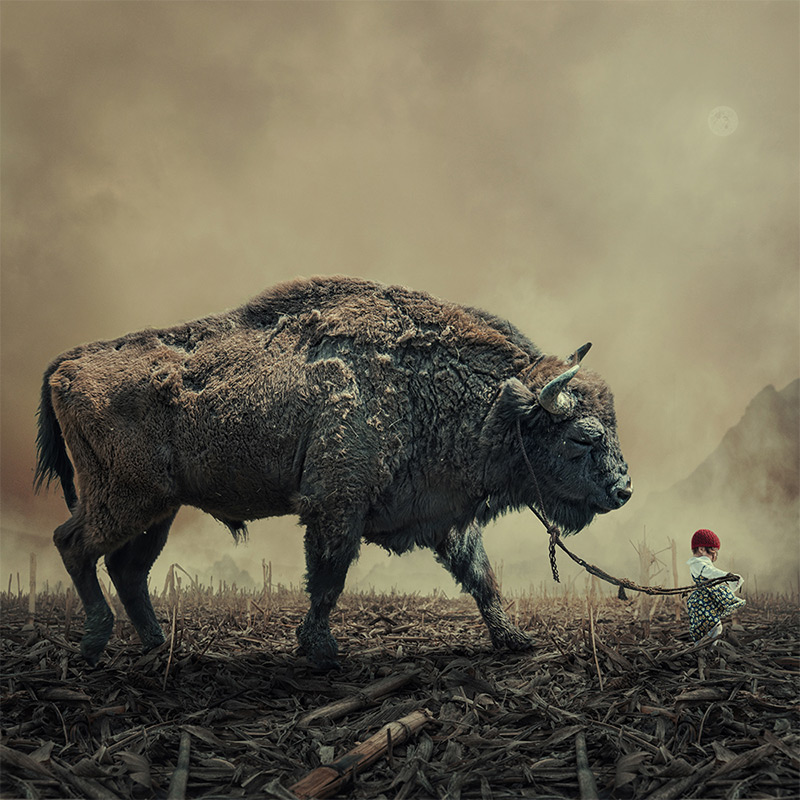
Caras Ionut’s gallery pieces reward that technical reading. Look for contact shadows under floating or misplaced objects. Notice how atmospheres—mist, vignette, shared grain—glue layers into a single climate. Watch scale tricks: antlers becoming trees, animals enlarged or domesticated into human furniture settings. The joke lands because the rendering is serious. Whimsy without craft reads as collage; whimsy with craft reads as another world with rules.
That seriousness is why tutorials mattered in his public practice. Teaching compositing shows that surreal images are decisions: mask quality, dodge and burn for volume, color grading for unity, and the courage to remove anything that breaks the spell. Workshops and process files turn mysterious portfolios into learnable craft without draining the wonder from the final frame. Retouching skill and imaginative direction meet in the same file.
Failure modes are instructive too. Hard cutouts, mismatched grain, and competing light sources shatter belief. Over-sharpening makes edges scream. Over-saturating autumn moods turns poetry into candy. The better manipulations in this set avoid those traps by letting atmosphere do quiet work.
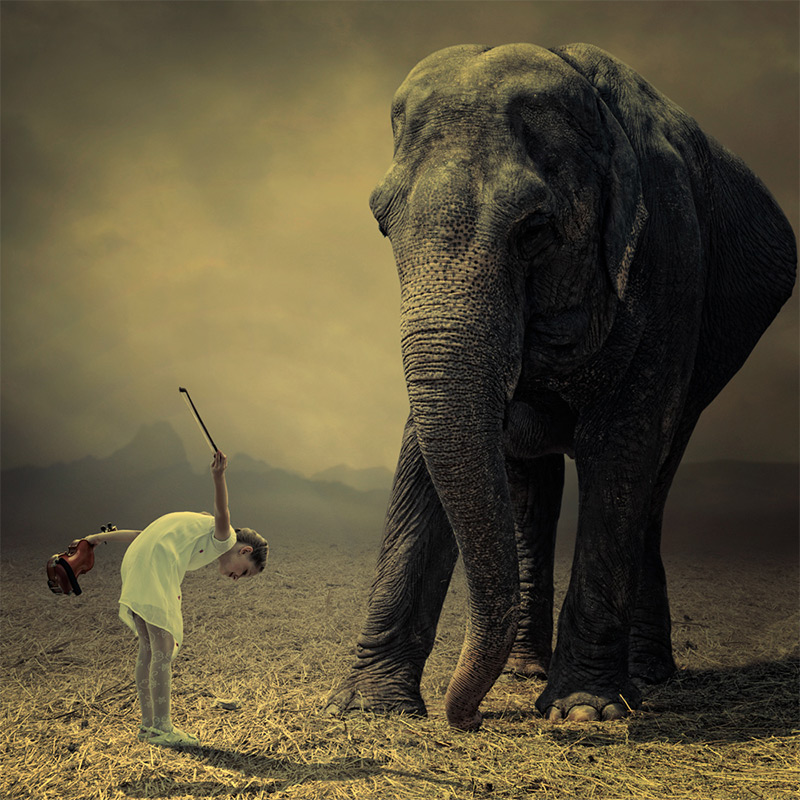
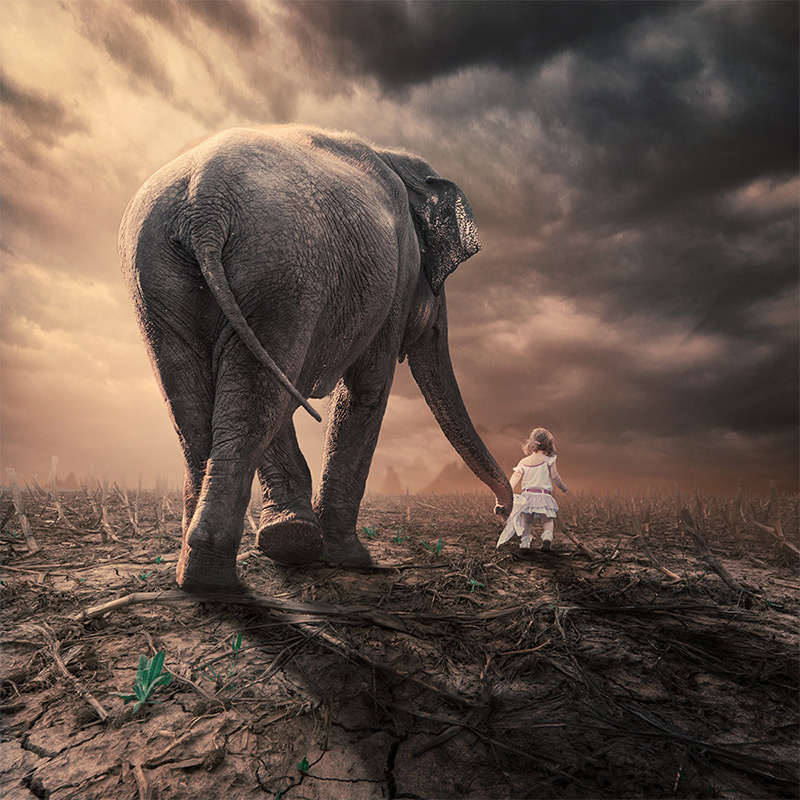
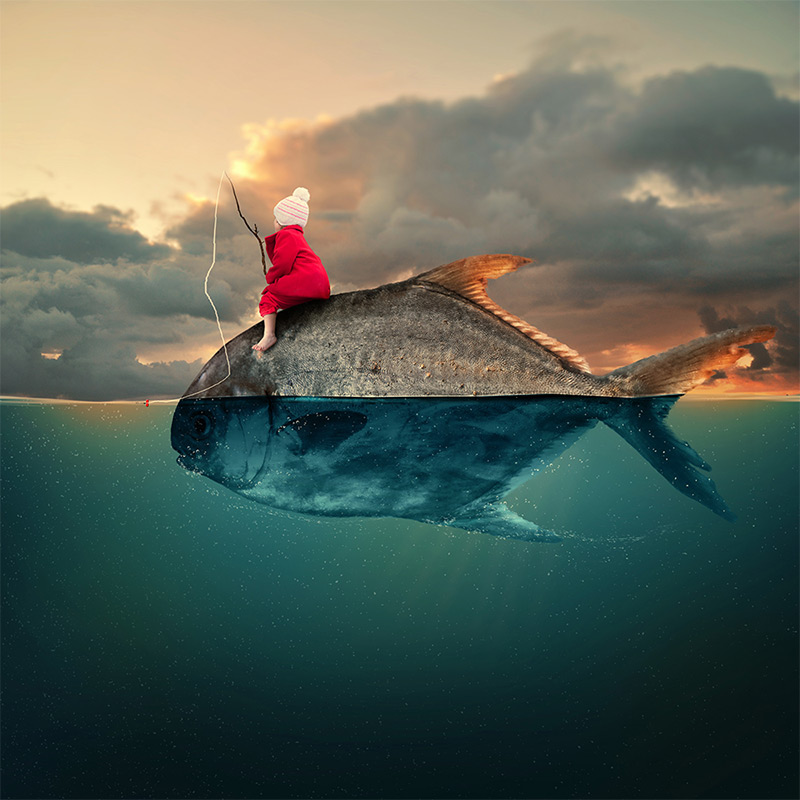
Whimsy with an edge
Not every surreal portfolio stays gentle. Caras Ionut’s better-known images often keep a soft emotional temperature even when the subject is strange. That choice invites longer looking. Horror surrealism shocks; whimsical surrealism invites you to invent a backstory. Who left the sofa in the mud? Why does the swing reach the sky? What rule of the dream world makes a fish a vehicle?
Those questions are the point of the genre for many viewers. Photo manipulation becomes a narrative art when the impossible event feels specific. Vague floating objects bore; a precise collision of ordinary and extraordinary holds attention. Caras Ionut’s work, at its best, is specific: named actions, clear characters, environments with weather. Specificity is also what makes tutorials useful—students can reverse-engineer a concrete scene instead of chasing a vague “surreal look.”
It also sits in a lineage with other early-2010s digital surrealists who used stock and personal photography as raw clay. What distinguishes a memorable artist in that crowd is taste—knowing when to stop adding layers, when a muted grade serves better than neon, when one strong incongruity beats five competing tricks. Restraint is a special effect.
Compare this approach with in-camera surrealism built from handmade props and film, and you see two roads to wonder. One engineers the dream in physical space; the other engineers it in the composite file. Caras Ionut’s road is openly digital, and that honesty is part of its charm. The magic trick admits the workshop behind the curtain, then still manages to enchant.
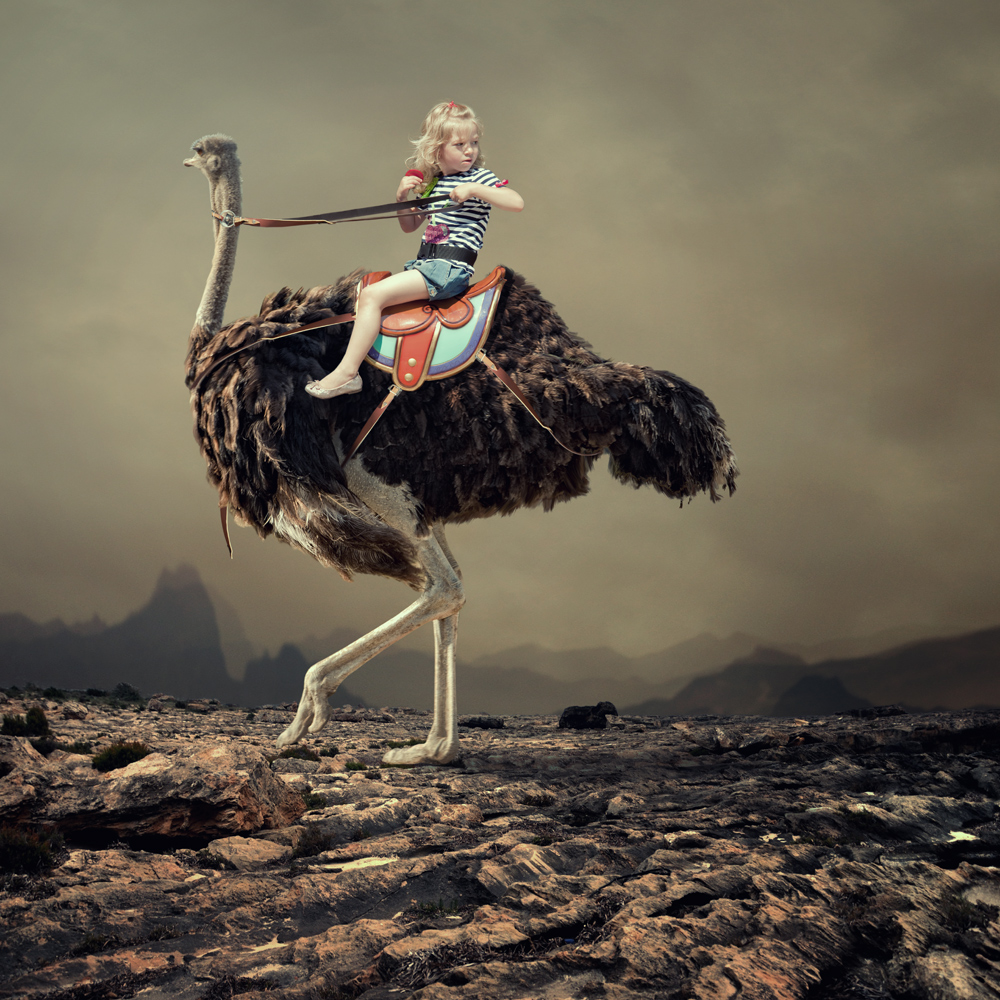
Learning from the seams
If you make manipulations yourself, steal discipline more than motifs. Shoot your own plates when you can so color and sharpness begin aligned. Build a small library of skies, grounds, and textures with consistent cameras. Grade late, after structure works. Keep a checklist for light direction before you chase fancy brushes. And when the scene is finished, ask whether it still feels like a photograph that dreamed—or like a collage that forgot to sleep.
Studying someone else’s finished file is harder without the PSD, but looking remains useful. Squint to test value structure. Flip the image horizontally in your mind to see if balance holds. Cover the “impossible” object and ask whether the remaining landscape still feels composed. Those exercises train the eye even when you never open Photoshop.
A viewer’s checklist
Use this set as practice for reading composites:
- Light match: Do all elements share one sun direction and color temperature?
- Scale story: Is the size change the joke, the threat, or the wonder?
- Edge honesty: Soft masks and shared atmosphere beat hard cutouts.
- Emotional temperature: Cute, eerie, lonely, playful—name it.
- One idea: Could you summarize the image in a single sentence?
Caras Ionut’s images earn another look when the craft disappears into mood. Start with the feeling; then, if you want to learn, reverse-engineer the layers. The dream holds because someone stayed patient in Photoshop until reality agreed to pretend.

Comments
Continue reading
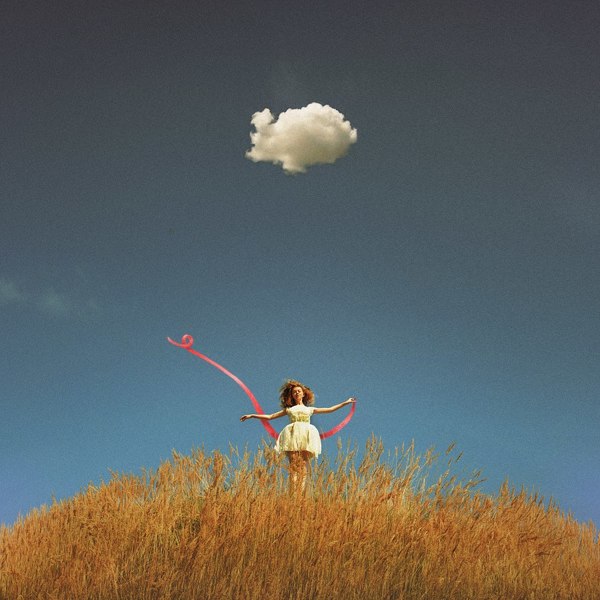
Surreal Photography by Nikita Sergyshkin
Belarusian photographer Nikita Sergyshkin stages dream-logic portraits—fashion-adjacent light, controlled estrangement, and surreal mood without collage monsters.
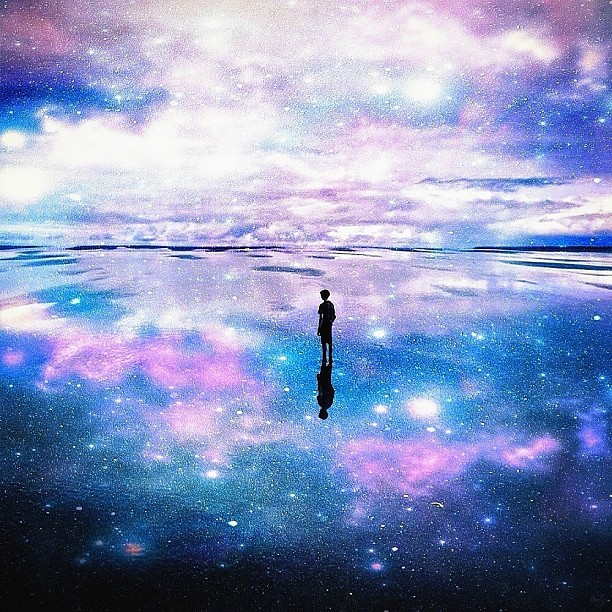
Surreal Worlds by Nois7: Robert Jahns’s Dream Composites
Hamburg artist Robert Jahns—known as Nois7—builds travel photographs into seamless surreal scenes. A look at the mood, craft, and Instagram-era gallery that made his work famous.
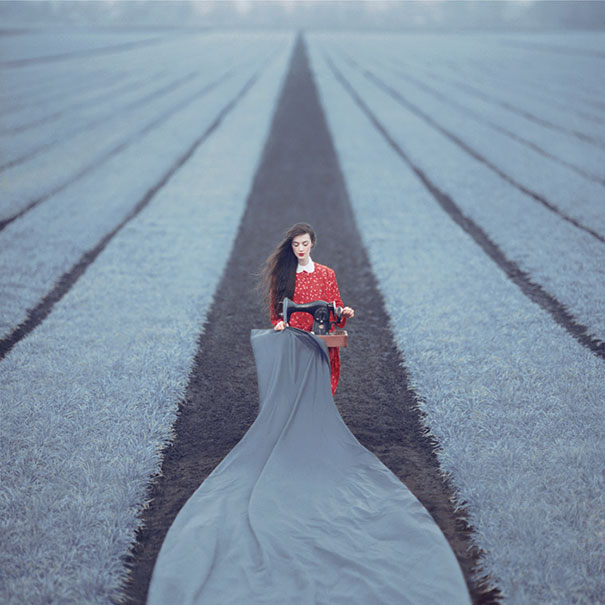
Oleg Oprisco’s Surreal Film Photography on Kiev 6C and Kiev 88 Cameras
Kyiv photographer Oleg Oprisco builds dreamlike conceptual scenes on older Kiev medium-format film cameras—soft color, quiet staging, and surreal mood without the rush of digital spray-and-pray.