
Oleg Oprisco’s Surreal Film Photography on Kiev 6C and Kiev 88 Cameras
Kyiv photographer Oleg Oprisco builds dreamlike conceptual scenes on older Kiev medium-format film cameras—soft color, quiet staging, and surreal mood without the rush of digital spray-and-pray.
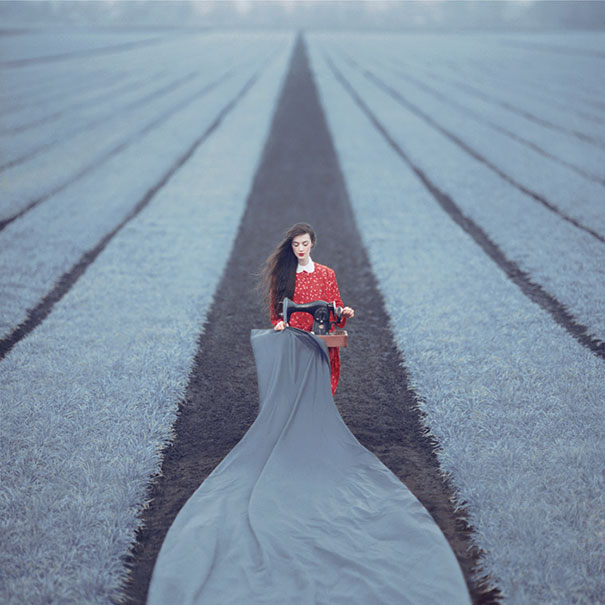
Oleg Oprisco’s photographs do not behave like ordinary records of a place. They behave like scenes remembered from a dream you almost understood. Soft color, careful staging, and figures caught in quiet rituals turn the frame into a small theater. Based in Kyiv, Oprisco has built a reputation for conceptual and surreal fine-art photography that feels handmade rather than assembled from stock effects. The images here come from a portfolio shot on older Kiev medium-format film cameras—the Kiev 6C and the Kiev 88—tools that reward patience and leave a tactile signature on the final print.
Film is not nostalgia for its own sake in this work. It is a collaborator. Grain, tonal compression, and the slight unpredictability of emulsion push the pictures away from clinical sharpness and toward atmosphere. That atmosphere is the point: a world where color is slightly enchanted, gesture is slowed down, and the ordinary object becomes symbolic without needing a caption to explain it.
A Kyiv voice in conceptual photography
Oprisco’s practice sits in a lineage of photographers who treat the camera as a studio for invention. Locations, costumes, props, and weather become materials, not backgrounds. The resulting images often feel European in their restraint—less shout, more whisper—yet they travel easily because emotion, not geography, carries the story. Viewers who first meet his work through fine-art portfolios tend to remember the color first: muted pastels, dusk blues, warm amber that seems lit from inside the scene.
Conceptual photography can collapse into cleverness. Oprisco’s stronger frames avoid that trap by anchoring strangeness in human presence. A figure holds a balloon, a book, a length of fabric, or simply stands still as if listening. The surreal arrives through arrangement and light rather than through aggressive digital collage. Even when the picture is carefully constructed, it still reads as something that could have happened for one quiet minute if the world briefly agreed to cooperate.
That sense of cooperation matters. Surreal photography that looks pasted can entertain for a second and then evaporate. Work that looks inhabited lasts longer. Oprisco’s images ask for a second look not because they hide a puzzle, but because their mood settles slowly—like fog thinning enough to reveal a path you did not notice at first.
Why old Kiev film cameras still matter
The Kiev 6C and Kiev 88 belong to a family of medium-format cameras that many photographers associate with deliberate shooting. You load film, meter carefully, compose with intention, and accept that each frame costs attention. That economy changes behavior. When you cannot spray hundreds of near-identical files, you stage with more care. You wait for wind to settle. You check the edge of a dress against the horizon. You decide what the photograph is about before you press the shutter.
Medium format also changes the look of space. The larger negative gathers detail and tonal nuance differently than a small sensor racing through automatic brackets. Soft focus falloff, creamier midtones, and a slightly rounded rendering of highlights can make staged scenes feel less like advertisements and more like paintings that somehow happened outdoors. For surreal or fairy-tale work, that softness is useful. Hard digital edges can make magic feel industrial. Film’s gentle failures often make magic feel intimate.
None of this means film is morally superior to digital. It means tools shape habits, and habits shape pictures. Oprisco’s choice of older Kiev bodies is part of the signature: craft visible as patience, not as a software watermark. Viewers may not know the camera model, but they can feel the tempo. The photographs do not hurry.
Color, costume, and the quiet ritual
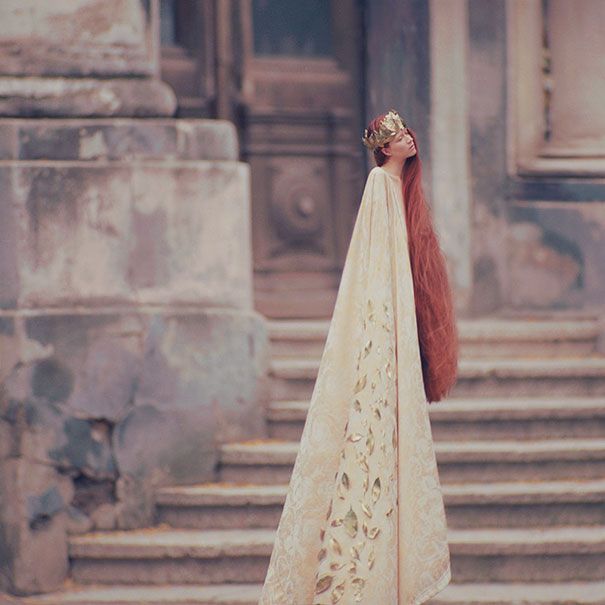
Look across a set of Oprisco images and patterns emerge. Clothing often functions as architecture—volume, silhouette, and color blocks that organize the frame. Fabrics catch breeze and become moving lines. Hats, umbrellas, and hand-held props create focal points that feel ceremonial. The models rarely mug for the camera. They inhabit roles that sit somewhere between fairy tale, theater, and private daydream.
Color is disciplined. Instead of neon shock, you get controlled palettes that let one accent speak. A red detail against cool air. Cream against moss. Pale blue against dusk. That restraint keeps the surreal from tipping into carnival. It also helps the film look intentional: emulsion quirks become part of a designed world rather than accidents the photographer forgot to correct.
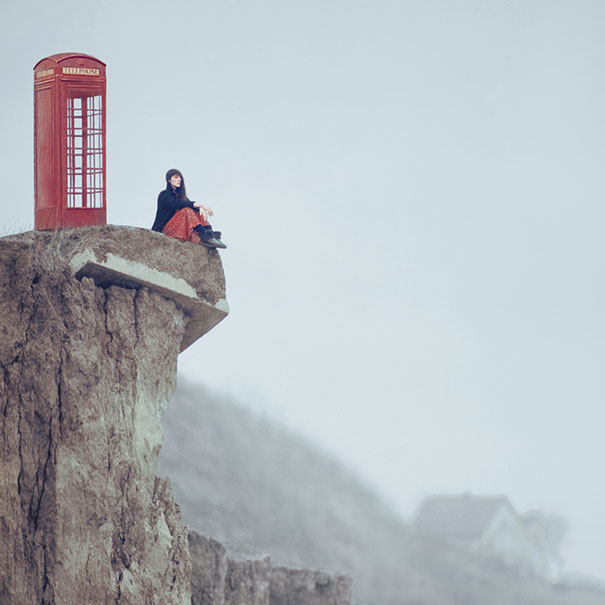
Compositionally, the work often favors open space. Figures can be small in the frame, surrounded by sky, field, water, or empty road. Negative space is not empty; it is pressure. It tells you the person is alone with an idea. In conceptual photography, loneliness is not always sadness—it can be concentration, wonder, or the hush before something unnamed begins.
When the camera moves closer, gesture takes over. Hands matter. The tilt of a head matters. A glance that refuses the lens can feel more powerful than a direct stare. Oprisco’s portraits-within-scenes work because they respect that quiet. They do not demand applause. They invite lingering.
How to look at these frames
Start with the literal inventory. What is present—person, prop, weather, ground? Where is the light coming from? Is the horizon level or gently tilted into dream logic? Then ask what feels slightly wrong or unusually right. Surrealism in photography often lives in that narrow gap: almost believable, then suddenly more poetic than documentary.
Next, track emotion before technique. Are you calmed, unsettled, nostalgic, amused? Technique explanations can wait. If the first response is only “nice colors,” stay longer. Notice whether the color carries temperature—warmth that comforts or coolness that distances. Notice whether the figure seems protected by the landscape or exposed to it.
Then consider craft without letting craft become the whole story. Film grain, soft focus, and muted contrast are tools. Ask whether they serve the mood. In Oprisco’s case, they usually do: softness becomes tenderness; limited sharpness becomes memory. A clinically perfect file of the same staging might feel colder, even if it were “better” by a laboratory metric.
Finally, read the image as a short scene rather than a single trophy. Many conceptual photographs imply a before and after. What happened just before this moment? What will the figure do when the wind changes? You do not need a correct answer. The invitation to invent one is part of the art.
Staging as authorship
People sometimes draw a hard line between “found” photography and “created” photography, as if only one counts as honest. Conceptual work like Oprisco’s belongs firmly to creation—and honesty still applies. Honesty here means coherence: light that belongs to the weather, props that feel motivated, a color world that does not contradict itself. The photograph can be invented and still be true to its own rules.
Staging also demands logistics that viewers rarely see. Locations must be reachable with costumes intact. Wind can ruin a carefully held pose or, on a lucky day, perfect it. Film adds another layer of risk: you may not know until later whether exposure and focus landed. That risk can discipline an artist. It can also produce the small imperfections that keep a dream from looking machine-made.
For photographers learning from this approach, the lesson is not “buy an old Kiev and copy the palette.” The lesson is slower making. Decide the feeling first. Build a simple visual sentence—one figure, one prop, one weather condition. Shoot fewer frames with more intention. Edit for mood rather than for maximum sharpness. Let emptiness stay empty if emptiness is doing work.
Surreal photography in a crowded feed
Online galleries are full of effects that mimic wonder in one tap. Filters can fake dusk. Generators can invent impossible scenes overnight. In that climate, hand-built surrealism earns its keep through authorship you can feel: recurring motifs, a stable emotional temperature, a sense that the artist is chasing one weather system across many pictures rather than chasing novelty for a single viral hour.
Oprisco’s film-based conceptual work belongs to that slower stream. It shares DNA with fine-art photographers who treat reality as raw clay—bendable, rearrangeable, still tethered to light and gravity enough to persuade the eye. The Kiev cameras are part of the mythos, but they are not the whole myth. The myth is a practiced ability to make the uncanny feel tender.
That tenderness is easy to underestimate. Shock is cheap. Soft strangeness is harder. Soft strangeness asks the viewer to trust the image long enough for emotion to arrive. When it works, you leave the page quieter than you arrived—not because the pictures shouted, but because they held a hush you recognized.
What remains after looking
These frames do not need a manifesto. They need attention. Stand with the color. Notice how the figure occupies space. Let the film’s texture remind you that photographs can still be made slowly, with bodies, weather, and a finite roll of chances. Oleg Oprisco’s surreal portfolio—shaped in part by older Kiev 6C and Kiev 88 cameras—offers that reminder without lecturing.
If you make pictures yourself, borrow the tempo more than the props. Find one quiet idea. Stage it with care. Accept that imperfect emulsion can be more eloquent than a flawless file. If you only look, borrow the patience. Give a conceptual photograph the same minutes you would give a short poem. The reward is not a solved riddle. It is a lingering mood—half fairy tale, half memory—that stays with you after you close the tab.

Comments
Continue reading
Surreal Photography by Nikita Sergyshkin
Belarusian photographer Nikita Sergyshkin stages dream-logic portraits—fashion-adjacent light, controlled estrangement, and surreal mood without collage monsters.
Surreal Worlds by Nois7: Robert Jahns’s Dream Composites
Hamburg artist Robert Jahns—known as Nois7—builds travel photographs into seamless surreal scenes. A look at the mood, craft, and Instagram-era gallery that made his work famous.
Photo Manipulations by Caras Ionut: Whimsical Surreal Composites
Romanian artist Caras Ionut blends his own photographs into dreamlike Photoshop manipulations—whimsical surreal scenes taught through tutorials as carefully as they are shown.