
Creature Cups by Yumi Yumi: Hidden Animals at the Bottom of Your Mug
Designer Yumi Yumi’s Creature Cups hide sculpted animals—octopus, otter, and more—under your drink so each sip slowly reveals a ceramic surprise.
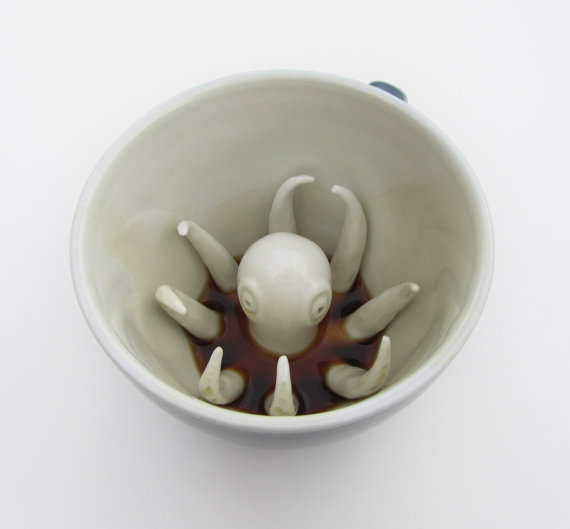
Most mugs ask for nothing beyond heat retention and a comfortable handle. Creature Cups, designed by Yumi Yumi, ask for a second look—literally. Fill the cup and it behaves like ordinary tableware. Drink, and a small sculpted animal rises from the bottom as the liquid line falls. The octopus that “creeps” along the base is the mascot of the idea: a little startled when you catch it, faintly mischievous when you do not.
That reveal is the whole product thesis. Surprise is built into the geometry of everyday use, not pasted on as a slogan. The cups became a design-blog staple in the early 2010s because they solved a charming problem with ceramic craft instead of novelty printing alone.
Who is Yumi Yumi?
Yumi Yumi is the designer behind Creature Cups—an avid coffee drinker who has described the project as growing out of late-night brainstorming in a Brooklyn studio. Early cups went to friends and family first. Feedback pushed the concept from a private joke into a small line people actually wanted to own. Over time the operation moved to Austin, Texas, but the core promise stayed stable: handcrafted ceramic mugs with three-dimensional creatures waiting at the bottom.
Inspiration, in the designer’s own framing, ranges widely—from morning coffee rituals to architectural grotesques like cathedral gargoyles. That mix matters. The cups are playful without being childish, and slightly gothic without becoming dark. An octopus, otter, lobster, crocodile, or dinosaur can sit in the same product family because the humor is structural: something is living (or pretending to live) where your last sip hides.
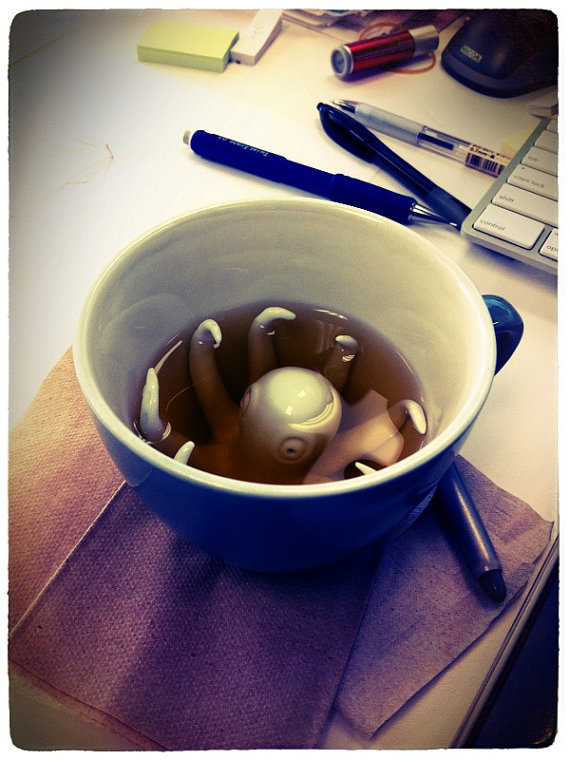
How the “hidden creature” trick works
Functionally, each Creature Cup is an 11-ounce (approximately) ceramic vessel with a sculpted form integrated into the interior base. When the mug is full, opaque liquid conceals the figure. As you drink, the creature emerges gradually—first a tip of a tentacle or snout, then the full character. The pacing is part of the charm. Instant gags get one laugh; a slow reveal turns an ordinary coffee break into a tiny performance.
Material choices support that performance. High-fire ceramics give the cups the durability expected of daily drinkware. Early coverage emphasized that the mugs are dishwasher-safe and microwaveable—practical claims that keep the design from being shelf-only art. Complexity of the sculpt affects production difficulty, which is why different creatures historically sat at slightly different price points, but the user experience stays consistent: drink, discover, smile.
From a product-design angle, three constraints had to align:
- Visibility: the figure must read clearly once liquid drops, even in a curved interior.
- Comfort: the sculpture cannot make drinking awkward or trap residue in impossible crevices.
- Character: each animal needs a personality strong enough to justify a whole mug, not just a generic blob.
Yumi Yumi’s copy for the octopus—“up to noooo good”—shows how naming and sculptural attitude work together. The product is half object, half character design.
Why the line spread so quickly online
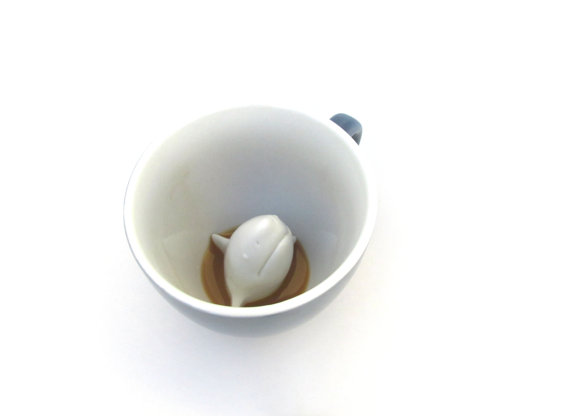
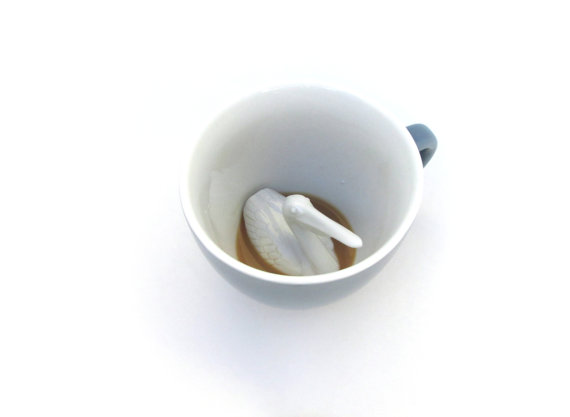
Around 2012–2013, design and lifestyle sites repeatedly featured Creature Cups for a simple reason: the idea photographs well and explains itself in one sentence. You do not need a long manifesto to understand an otter waving from the bottom of a latte. HuffPost Taste and countless independent blogs treated the mugs as kitchenware that doubled as conversation pieces—gifts that feel personal without requiring the giver to explain a complicated craft tradition.
The cups also sat at a useful intersection of maker culture and mass appeal. They were associated with Etsy-era independent design, yet the form language is clean enough for mainstream kitchens. Sets of two or four encouraged gifting and matching collections. Later expansions—more animals, plant-inspired pieces, astrology-themed Stargazer cups—show a brand extending a single mechanic rather than abandoning it.
What did not drive the early buzz was affiliate clutter or hard-sell urgency. The images did the work. A clear photo of a half-empty mug with a creature emerging is already a complete argument.
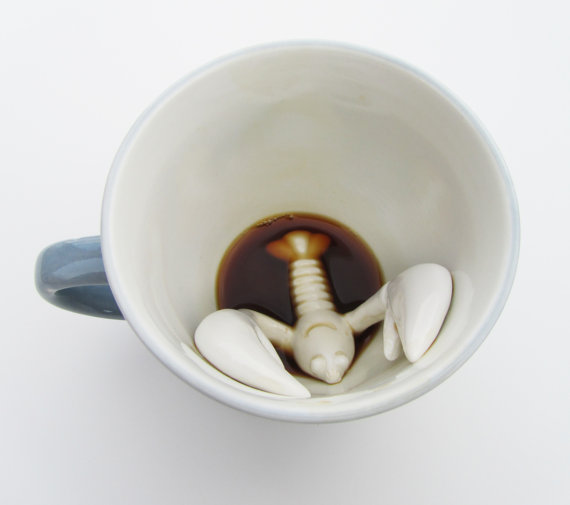
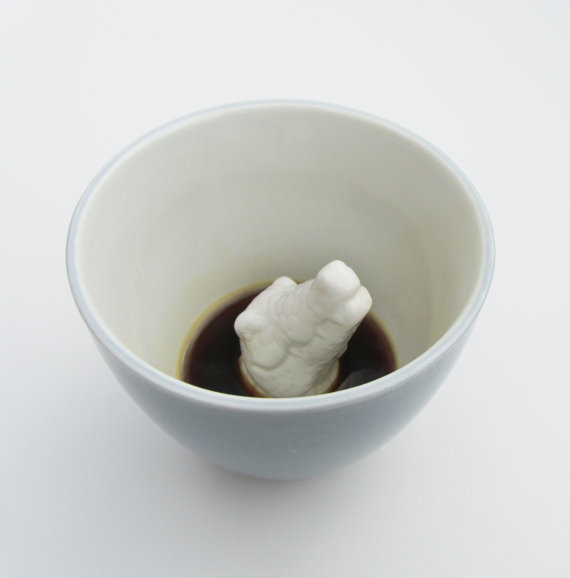
Reading the gallery: what to notice
Looking at the photos collected here, pay attention to scale and glaze as much as to the animals themselves. The creatures are sized to the cup’s footprint, not oversized toys dropped into a vessel. Glaze transitions matter: a matte exterior with a brighter interior can frame the reveal like a stage. Handles and silhouettes stay relatively classic, which is a smart restraint—if the outside screamed novelty, the inside surprise would compete with itself.
Also notice how different animals change the mood of the same mechanic. An octopus feels sly. An otter feels friendly. A dinosaur feels playful in a different register. That range is why a “creature at the bottom” concept can support a whole catalog instead of one viral SKU.
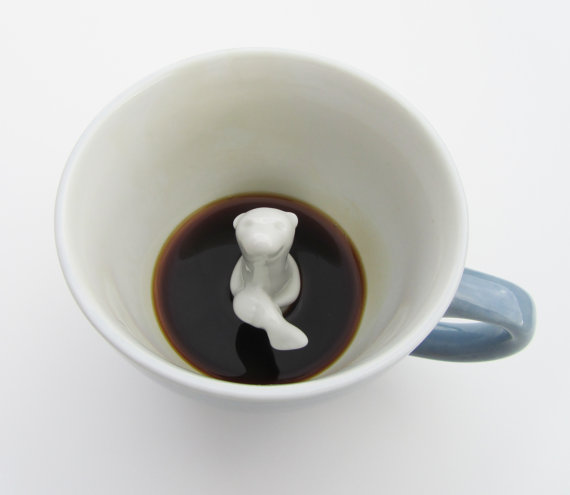
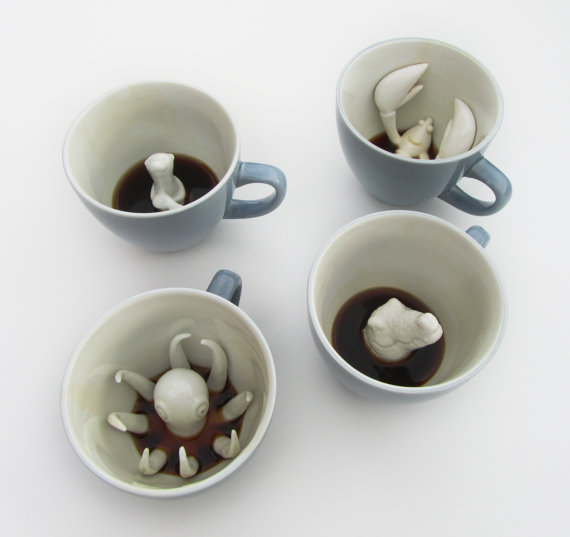
Design lessons hiding in a coffee mug
Creature Cups are useful teaching objects for anyone interested in product design, whether or not they collect ceramics:
- Hide and reveal beats constant spectacle. The mug looks calm when full; delight arrives through use.
- Character writing belongs in industrial design. A short personality line for the octopus is not fluff—it tells the sculptor how bold the pose should be.
- Daily objects need daily tolerances. Microwave and dishwasher claims keep whimsy attached to real kitchens.
- One strong mechanic can carry a brand. New creatures are variations on a proven interaction, not unrelated pivots.
Those lessons travel beyond drinkware. Apps, packaging, and even architecture play with deferred discovery. Yumi Yumi simply put the principle where your hands already go every morning.
Living with a Creature Cup
Owners quickly learn practical habits. Opaque drinks (coffee, tea with milk, hot chocolate) hide the sculpture better than clear liquids. Hand-washing around detailed forms still helps longevity even when a piece is labeled dishwasher-safe. And because the creature is a raised form, rinsing the base thoroughly keeps the joke sanitary as well as funny.
As gifts, the cups work best when matched to the recipient’s humor. Some people want the sly octopus. Others want the gentle otter. The design invites that small act of knowing someone—not a generic “world’s best whatever” print.
If you only take one idea from Yumi Yumi’s cups, make it this: the most memorable household objects often change during use. A Creature Cup does not decorate your shelf so much as it stages a tiny scene between the first sip and the last. The octopus was never only decoration; it was a reminder that ordinary rituals can still surprise you—especially when a designer is willing to put the punchline at the bottom of the cup.

Comments
Continue reading
Bookcase Design Ideas: Hidden Doors, Built-Ins, and Sculptural Shelving
From hidden bookcase doors to freestanding towers and quiet built-ins—design ideas that balance storage, scale, styling, and everyday use.

Attic Bathroom Design Ideas: Light, Layout, and Roof-Friendly Fixtures
Design ideas for converting an attic into an extra bathroom—working with slopes, skylights, wet-zone materials, eaves storage, and fixture placement.
Ladder Shelving Repurpose Ideas: DIY Bookcases, Dividers & More
Turn an old ladder into shelving, a room divider, towel rack, or narrow desk—practical DIY steps, safety checks, and styling tips with photo ideas.