
Jeremy Mann’s Figurative Cityscapes in Oil
Jeremy Mann’s atmospheric San Francisco cityscapes—oil on panel, rain light, and figurative urban mood—plus how to look and what painters can learn.
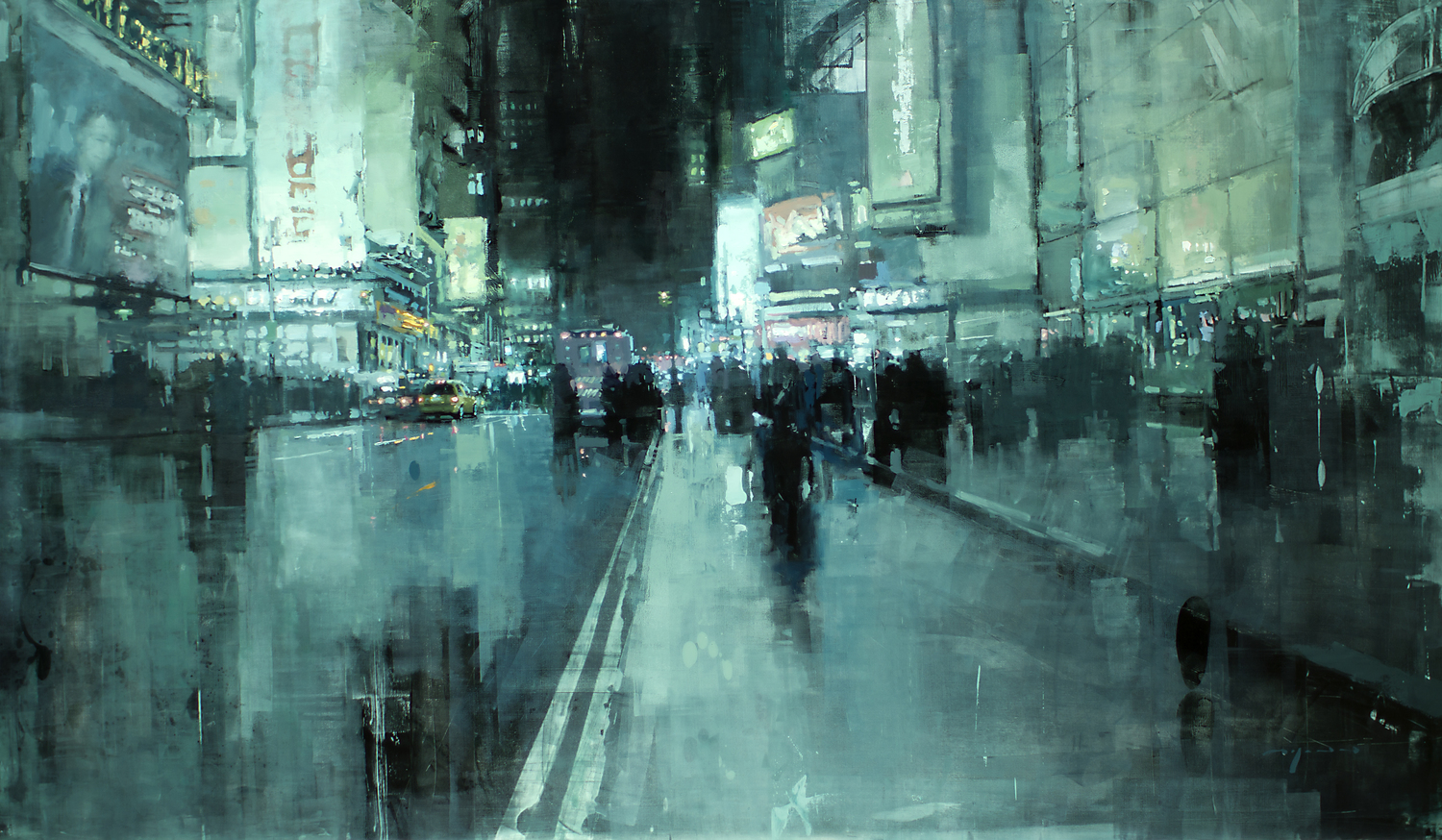
Jeremy Mann paints cities the way some writers describe weather: mood first, map second. In oil on panel, the American painter builds scenes where rain-slick streets, fogged distances, and night windows matter as much as street names. Figures appear, yet urban atmosphere often carries the drama—light as character, pavement as mirror, architecture as a stage for solitude.
After a BFA in painting at Ohio University, Mann moved to San Francisco for an MFA at the Academy of Art University, finishing with high honors and later teaching. Downtown life gave him subjects at walking distance: steam vents, freeways, alleys, plazas changing color by the hour. Critics and collectors responded to cityscapes that feel both observed and invented—recognizable urban energy filtered through tonal, cinematic light rather than postcard clarity.
Mann works across figures, objects, landscapes, and cityscapes, but the urban nocturnes and rain pieces are an especially clear door into his approach. They show how a painter can be figurative without becoming illustrative, and atmospheric without dissolving into fog for its own sake.
City as emotional weather
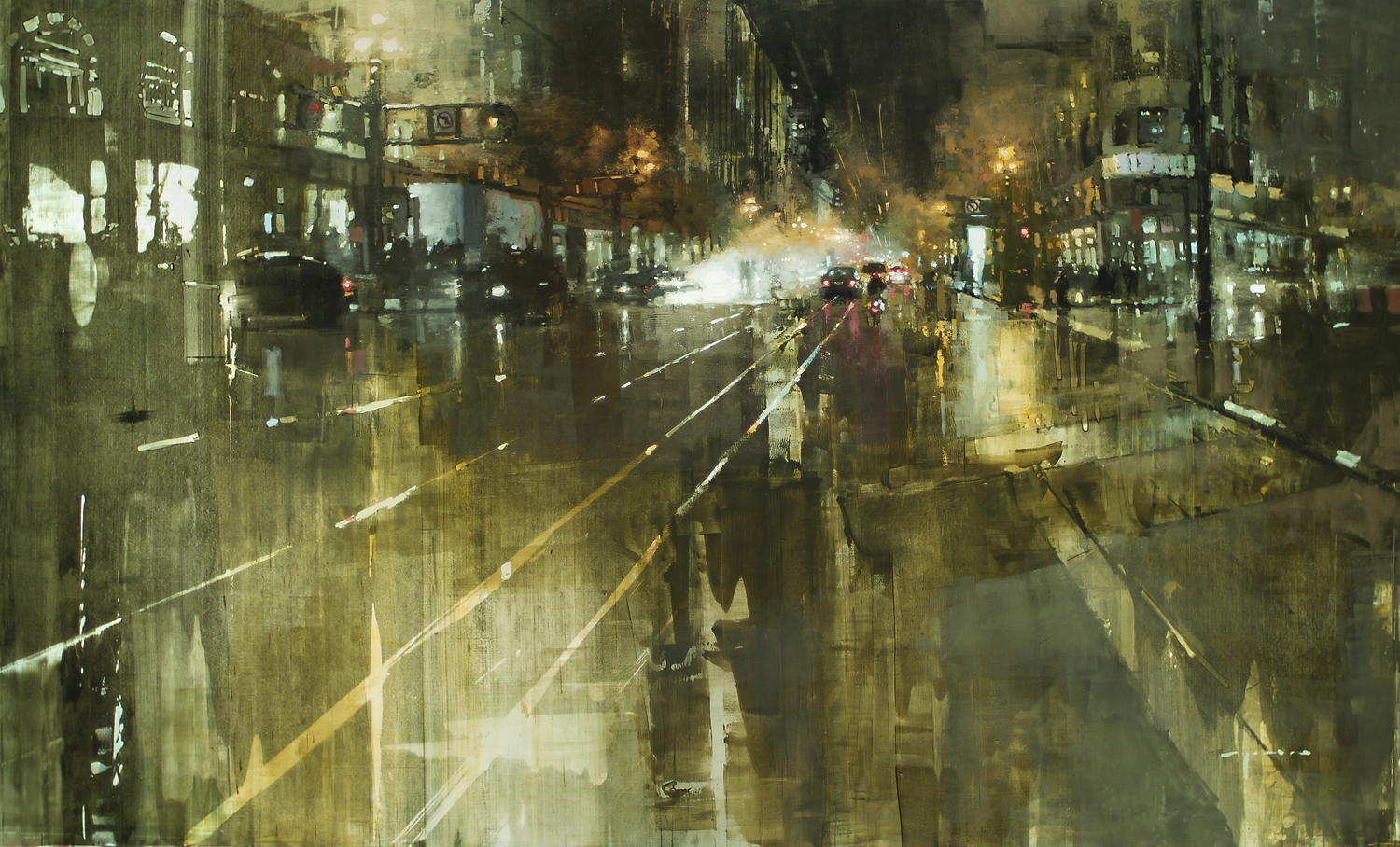
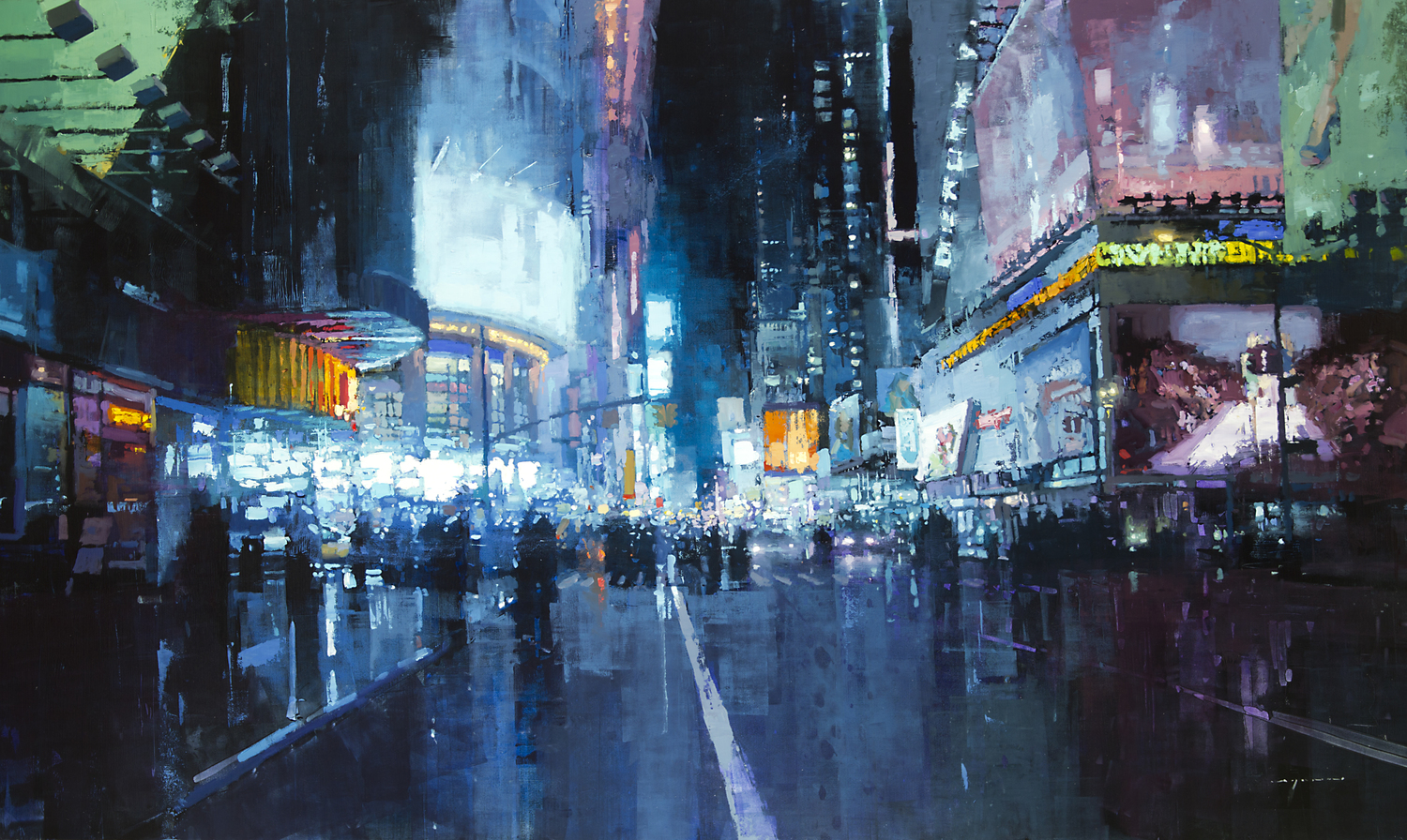
Mann’s urban paintings rarely chase photographic sharpness. Edges soften; forms suggest rather than inventory every window mullion. Wet pavement becomes a second sky for streetlamps and neon. Fog erases upper stories so a few glowing signs hold the skyline. The viewer’s eye completes what the brush withholds.
That restraint is why the work feels figurative even when buildings dominate. A distant walker, a lit room upstairs, a taxi smear—small human traces keep the city from pure abstraction. When Mann turns to figures and interiors, the same interest in presence, restlessness, and quiet remains. The city is not a different painter’s subject; it is the same sensibility outdoors.
He has spoken about putting heart and long hours into a single image. Duration shows on the surface: marks that look spontaneous sit on structures that had to be planned. The paintings invite slow looking even when they depict speed—traffic, weather fronts, night changeovers. That contradiction is part of their charge.
Tools that make atmosphere physical
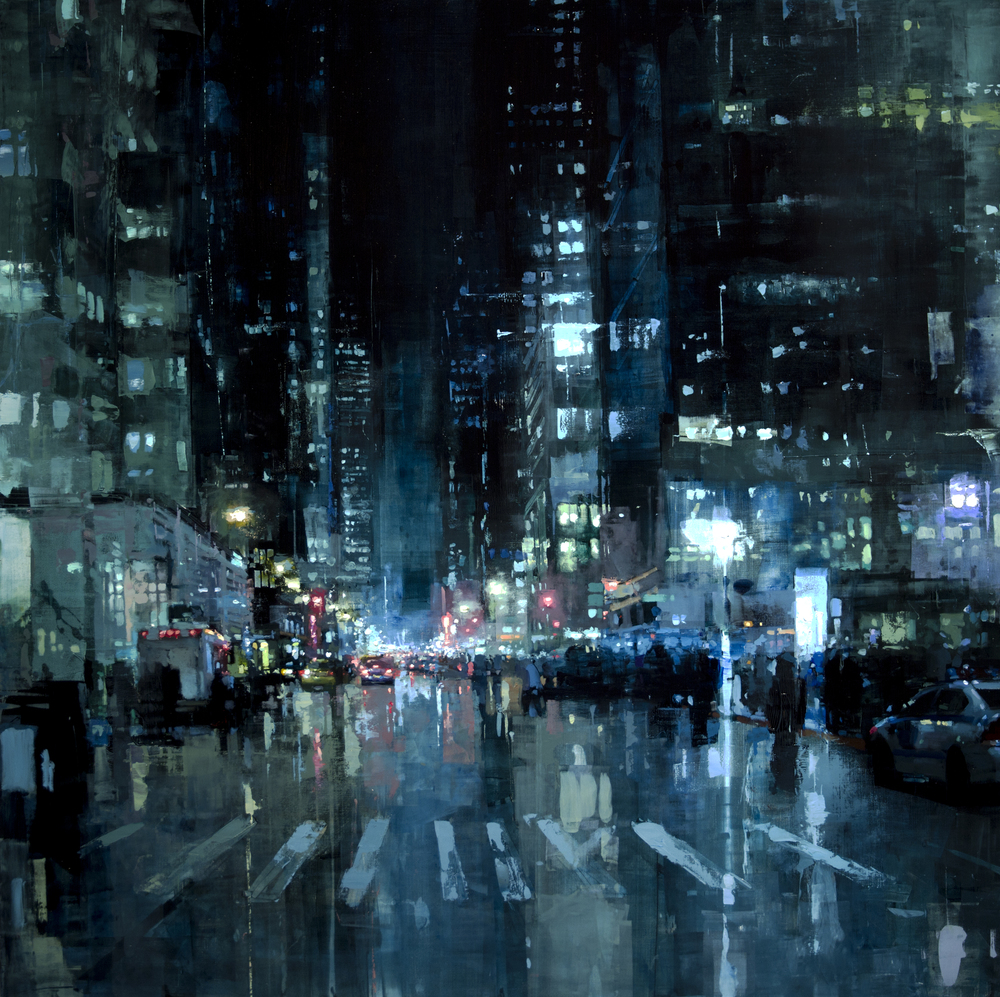
Working on wood panels lets Mann handle paint aggressively. Descriptions of his process mention staining the surface, wiping with solvents, and laying broad marks with brayers, scrapers, palette knives, and fingers. Those tools create grit and smear that read as rain, steam, tire spray, and traffic haze—effects hard to fake with only small soft brushes.
Color stays vivid yet subordinated to value. Yellow windows punch through violet dusk. Green morning light settles on wet asphalt. Red signals cut grey air. The palette can feel romantic without turning sugary because darks stay heavy and lights stay specific. A single bright reflection often anchors an otherwise soft field, giving the eye a place to land before it wanders the street canyon again.
Panel support also matters psychologically. A rigid surface invites scraping and lifting in ways stretched canvas sometimes discourages. Mann uses that permission. The city arrives as layers of decision and revision, not as a single polite pass of description.
San Francisco nights and other streets
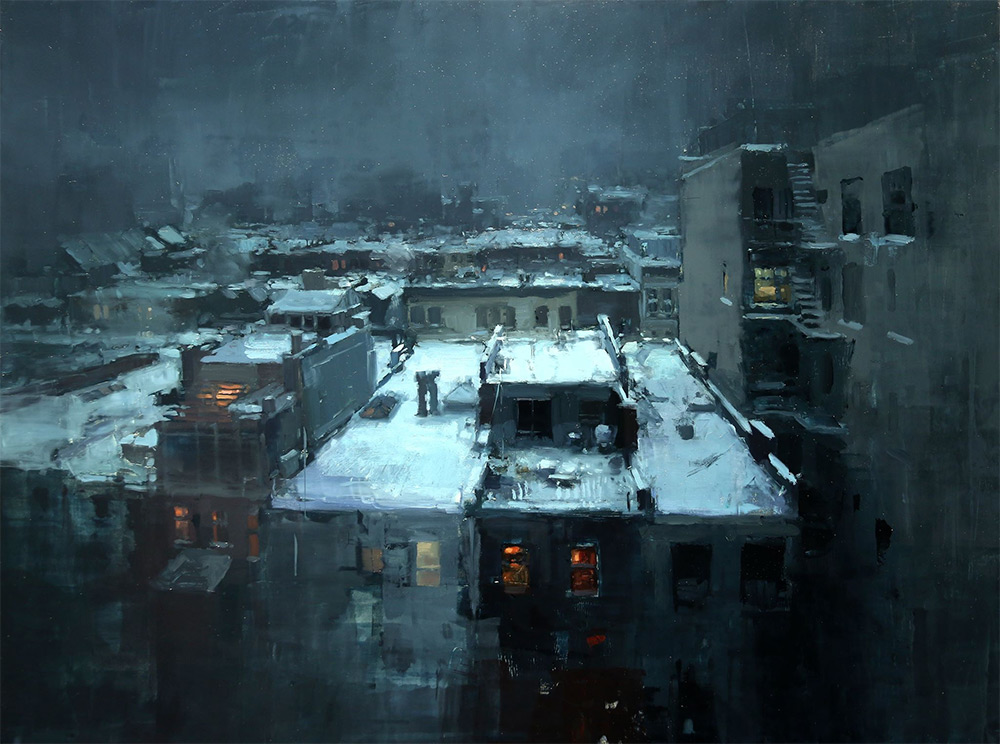
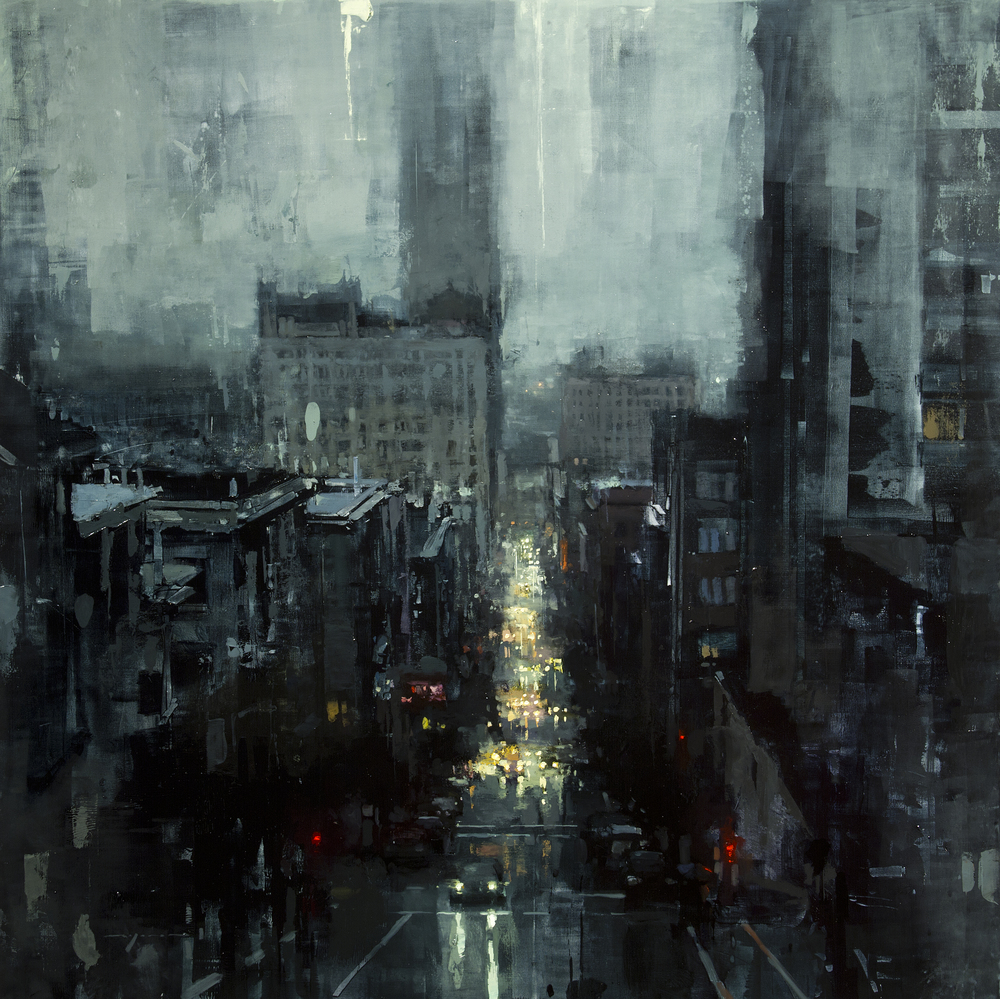
Living downtown offered Mann a repeating laboratory: Market Street weather, under-freeway gloom, Union Square yellows, bay light arriving late through fog. The paintings do not behave like tourist souvenirs. They feel like nights remembered by temperature and sound—the hiss of tires, the blur of a crosswalk—more than by landmark checklists.
Parallel and later work expands to other cities and quieter genres, yet the San Francisco nocturnes and rain pieces remain a clear introduction to how he thinks. Find drama in ordinary infrastructure. Return to the same blocks under different weather. Paint until the panel holds that weather without explaining every brick. The city becomes a partner in tonal invention rather than a subject to be copied.
Viewers who know San Francisco may map corners; viewers who do not still recognize the emotional weather. That portability is a mark of strong city painting: place is specific, feeling is transferable.
How to look
Spend a minute on value before subject. Where is the brightest note—a sign, a puddle highlight, a break in cloud? How large is the darkest mass—a building slab, an underpass, a night sky? Mann often composes so those extremes pull you diagonally through the street canyon.
Then notice omissions. Missing detail is not unfinished homework; it is invitation. Your mind supplies lettering, brick, the face of a passerby. That collaboration between painter and viewer is part of why the cityscapes feel inhabited.
Finally, read humidity. Are lights hard points or soft blooms? Is the air rinsed after rain or thick with fog? Mann’s strongest urban pieces make moisture visible as structure, not as afterthought glaze. If you squint until color drops away, the painting should still hold as a pattern of darks and lights. If it collapses, the drama was only local color.
Figurative currents inside the street
Even when no large figure dominates, the paintings stay figurative in spirit: they imply bodies moving through systems larger than themselves. When figures do appear—women in interiors as restless as the city, solitary walkers—they share the same tonal hush. The city is not backdrop; it is co-actor.
Academic training gave Mann command of form; downtown years gave him subject matter that rewards obsession. The combination produces work that can satisfy viewers who want craft and viewers who want mood without splitting into two different painters. Technique serves weather; weather serves feeling; feeling returns you to the street as if you had just stepped off a curb in the rain.
Studio takeaways for painters
Useful habits without costume-imitation:
- Build the city with value masses before window-counting.
- Let tools other than small brushes create weather—rollers, knives, rags.
- Treat reflections as composition partners, not decorative extras.
- Keep one sharper human or light accent so soft edges have somewhere to land.
- Paint the same street at different hours until atmosphere, not architecture, leads the design.
- Stop adding information once the emotional weather is clear; more windows rarely equal more feeling.
- Study how Mann’s panels use verticals of buildings against horizontal rush of street and light streaks—those axes organize chaos.
Those habits travel to any city. Jeremy Mann’s panels simply make the lesson vivid: a wet street under lamps can hold as much feeling as a posed portrait if the painter stays with the light long enough for the panel to remember it.
Pick one image here and follow a single reflection from curb to glass. Where that bright path breaks, brightens, and disappears is often where the painting’s real narrative runs—less a story with characters than a story with weather, time of night, and the brief evidence that someone is still awake upstairs.

Comments
Continue reading
Photo-Realistic Muscle Car Paintings by Cheryl Kelley
Cheryl Kelley’s glossy oil paintings of classic muscle cars—photo-based realism, chrome reflections, and a feminine take on automotive glamour, with gallery images.

Ray Massey’s Hand Paintings: Trompe-l’oeil Athletes, Castles, and Everyday Objects
Ray Massey’s painted-hand photographs turn fingers into footballers, sprinters, castles, pencil cups, and bananas—studio trompe-l’oeil with lasting wit.
Evgeny Lushpin’s Evening Journey: Twilight Cities, Canals, and Cable Cars
A gallery walk through Evgeny Lushpin’s twilight paintings—from St. Petersburg roofs and European canals to Montmartre rain and the San Francisco Evening Journey canvas.